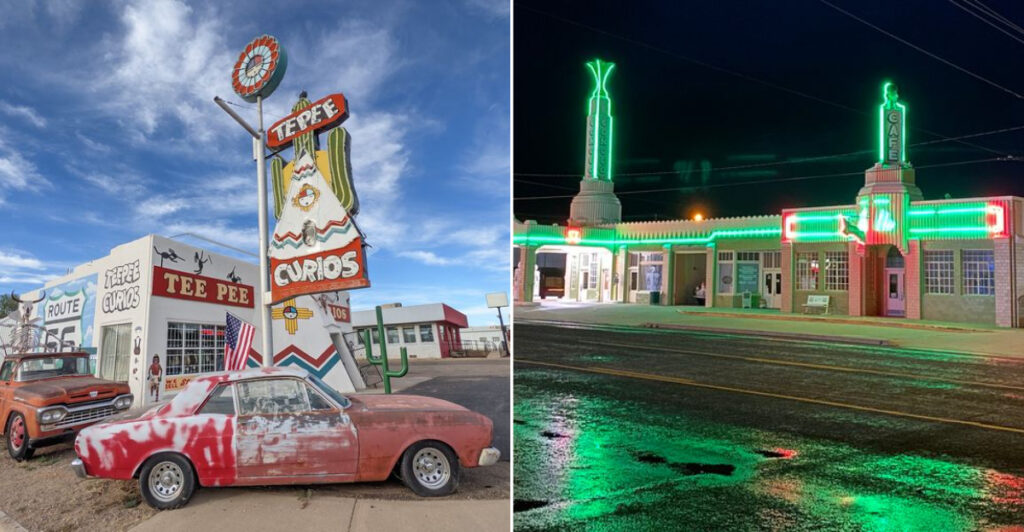
There is something about a glowing neon sign that makes a street feel alive in a way that modern LED screens just cannot replicate. Across the United States, certain towns have held onto their vintage signs with real pride, turning old roadside advertising into a form of public art and local identity.
From the desert highways of the Southwest to the beach towns of New Jersey and the music streets of Tennessee, these places offer a rare chance to see American history still lit up and shining. Whether you are a road trip enthusiast, a history lover, or just someone who appreciates great design, this list covers towns worth going out of your way to visit after the sun goes down.
Las Vegas, Nevada
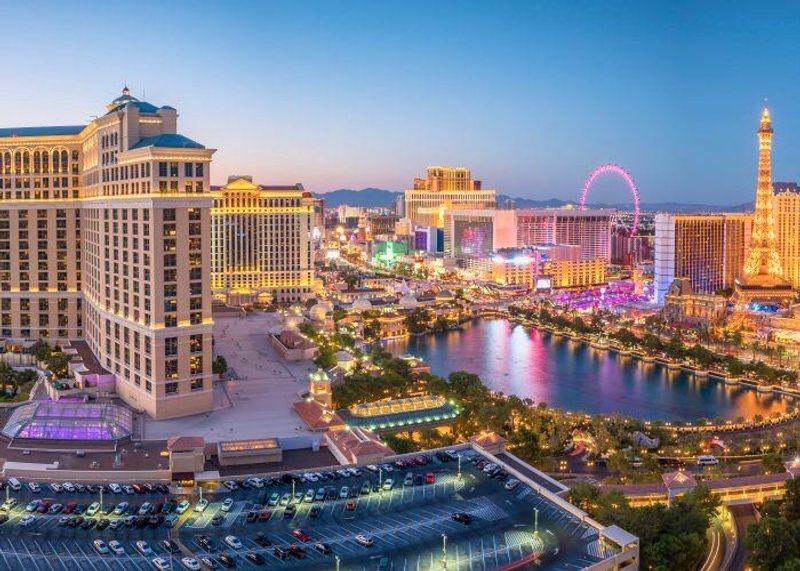
No American city made neon more central to its identity than Las Vegas. Long before massive LED screens took over, casinos, wedding chapels, restaurants, and roadside motels competed for attention with some of the most elaborate neon displays the country had ever seen.
Many of those original signs disappeared when old properties were demolished, but Las Vegas has done more than most cities to preserve what survived. The Neon Museum’s outdoor Neon Boneyard holds more than 200 signs from the city’s history, including pieces connected to the Stardust, Riviera, Sahara, and Binion’s Horseshoe.
The museum remains open to visitors, making it one of the most accessible collections of historic neon in the country. Downtown’s Fremont Street also keeps the tradition alive with a concentration of vintage-style signage that still draws crowds every night.
If neon has a hometown, Las Vegas is it.
Tucumcari, New Mexico
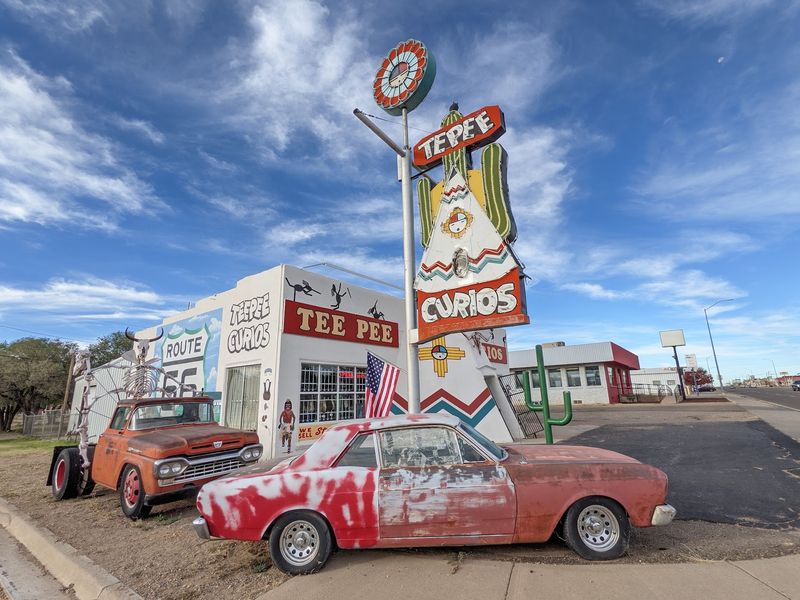
Pulling into Tucumcari after dark feels like driving straight into a postcard from 1955. The town sits along Route 66 and has held onto its roadside character better than almost any other stop on the Mother Road.
Its most recognizable landmark is the Blue Swallow Motel, a classic motor court that has welcomed travelers since 1939. This is not an abandoned property preserved for photographs.
The Blue Swallow is still family-owned and operating, and guests can book rooms there today.
After sunset, the famous neon swallow and the motel’s colorful roadside signage turn the property into something that feels genuinely time-stamped. One detail that stands out: the sign still advertises “100% Refrigerated Air,” a reminder of an era when air conditioning was a luxury worth putting on the biggest sign beside the highway.
Tucumcari’s concentration of vintage roadside architecture makes it one of the defining neon stops anywhere on Route 66.
Albuquerque, New Mexico
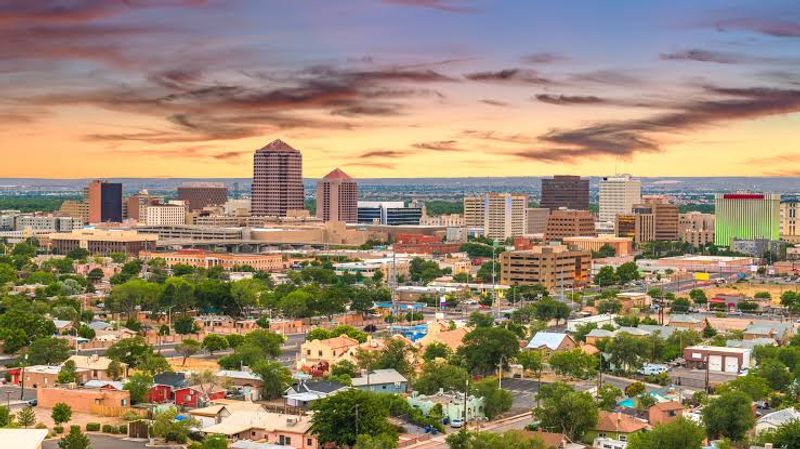
Central Avenue through Albuquerque follows the city’s historic Route 66 corridor, and traces of its neon-heavy roadside culture remain visible throughout the stretch. Albuquerque contains the longest continuous urban segment of Route 66 within a single city, which gives it an unusual density of surviving mid-century commercial character.
The city’s tourism organization actively encourages visitors to cruise Central Avenue in the evening specifically to take in the vintage signage. One especially worthwhile stop along the way is El Vado Motel.
Originally opened in 1937 to serve Route 66 travelers, El Vado was thoughtfully restored rather than torn down.
Today it operates again as a lodging, dining, shopping, and community gathering destination while keeping its historic appearance intact. Driving Central after dark is one of the more honest ways to understand why neon signs became so inseparable from the mythology of the Mother Road.
Albuquerque earns its place on this list.
Tucson, Arizona
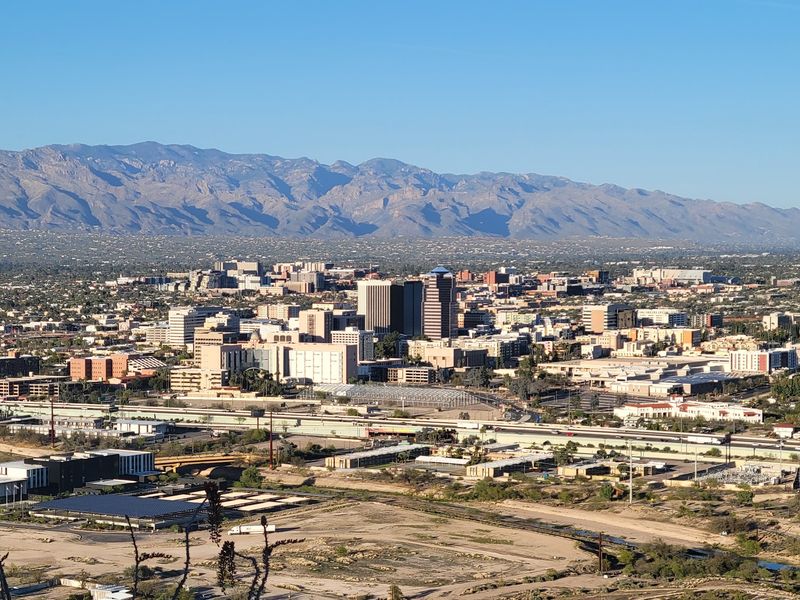
Tucson has approached neon preservation with a level of seriousness that sets it apart from most cities its size. The Tucson Historic Preservation Foundation spent years documenting the city’s historic signs and produced a guide called The Neon Pueblo, focused specifically on Tucson’s mid-century vintage advertising.
The organization continues its preservation work today, treating old roadside signage as architecture rather than disposable commercial clutter. Along former commercial corridors like Miracle Mile, neon once helped motels, restaurants, gas stations, and shops catch the eye of motorists heading through the desert.
Rather than letting that signage fade or disappear, Tucson has supported restoration projects for distinctive roadside landmarks, including the historic Tucson Inn sign. The city’s approach reflects a broader understanding that these signs are not just old advertisements but records of how people traveled and lived.
For anyone drawn to the artistic side of vintage neon, Tucson deserves serious attention.
Wildwood, New Jersey
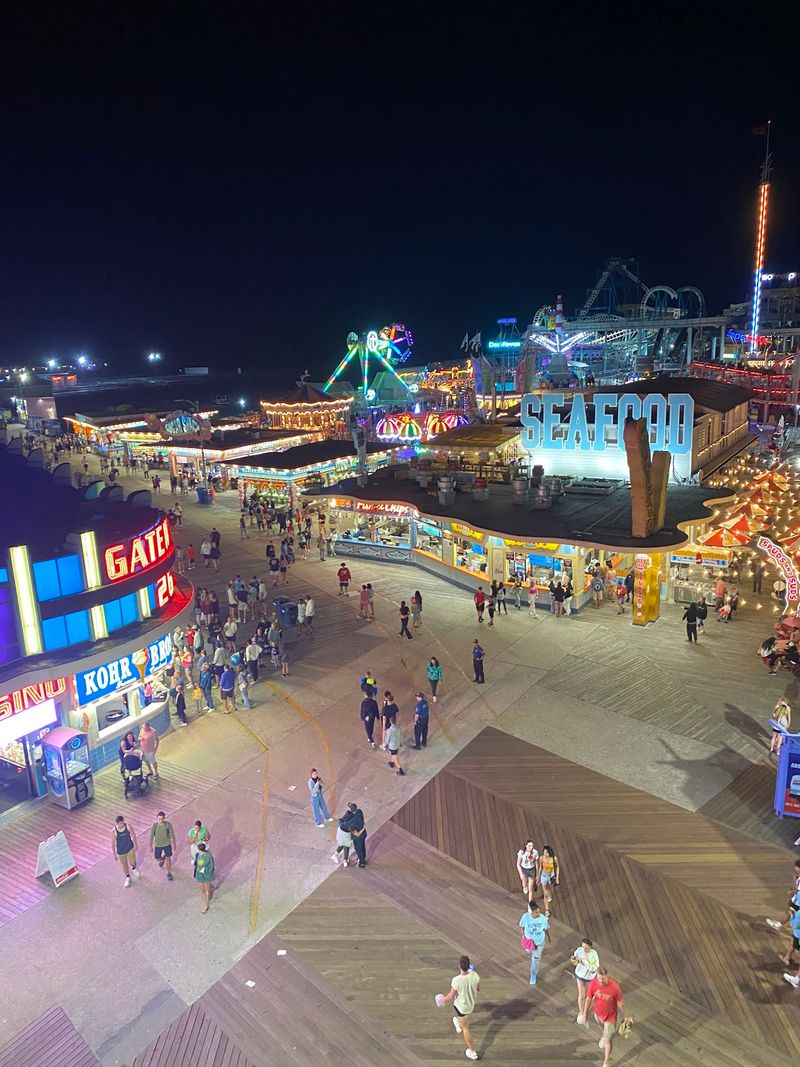
Classic neon is not a phenomenon limited to Route 66 or the desert Southwest. Wildwood, New Jersey, built its own version of roadside spectacle during the postwar tourism boom of the 1950s and 1960s, and a remarkable amount of it is still standing.
The Wildwoods became famous for their exuberant “Doo Wop” motel architecture, a style defined by sweeping rooflines, tropical themes, futuristic shapes, plastic palm trees, and oversized neon signs that competed loudly for the attention of vacationing families. Local tourism officials describe the area as home to the country’s largest collection of mid-century resort architecture.
The Doo Wop Experience Museum and Neon Sign Garden preserves signs and memorabilia connected to that era, and the attraction continues to offer popular Neon Night trolley tours through the resort area. Seeing those signs illuminated beside classic motel buildings gives Wildwood a character unlike any other beach town on the East Coast.
Tulsa, Oklahoma
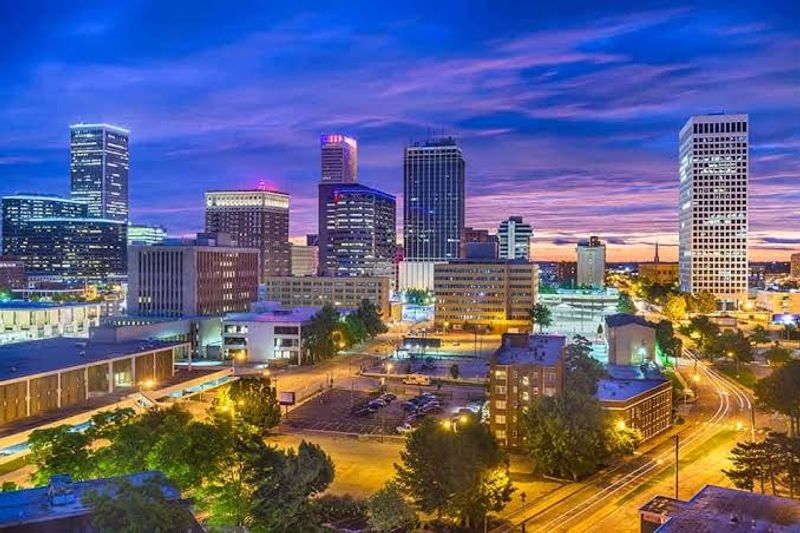
Route 66 runs straight through Tulsa, and one oversized neon advertisement has become a symbol of the city’s commitment to preserving what the highway left behind. The Meadow Gold sign originally went up in the 1930s to advertise Meadow Gold Dairy, making it one of the older surviving pieces of roadside neon in Oklahoma.
When redevelopment threatened the structure supporting it, the historic sign was saved, carefully restored, and relocated about a mile west to a pavilion built specifically to display it. Today the enormous red-and-yellow neon letters glow again beside Route 66.
What makes this particularly worth noting is that Tulsa did not simply move the sign indoors. The city returned it to the roadside environment where signs like this were always meant to be experienced.
As Route 66 celebrates its centennial in 2026, the Meadow Gold sign remains one of the most recognizable surviving pieces of neon along Oklahoma’s section of the highway.
Amarillo, Texas
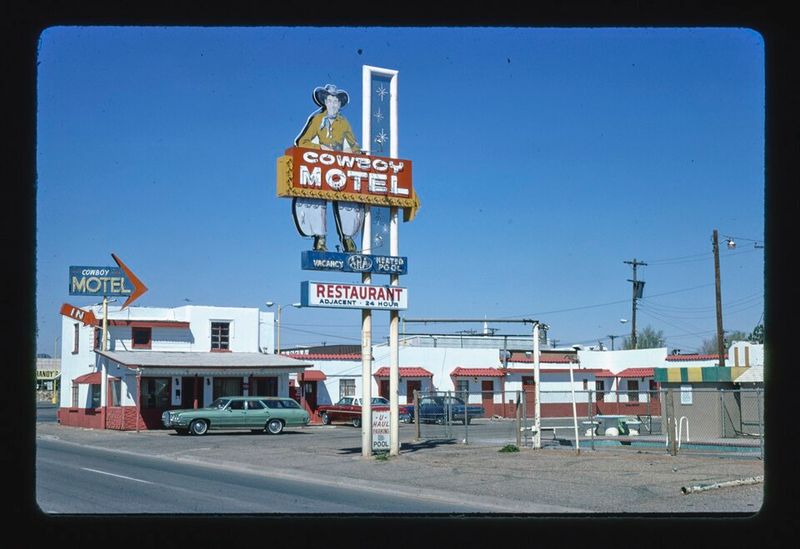
Amarillo’s Historic Route 66 District preserves several blocks of the kind of commercial streetscape that once defined cross-country travel in America. The former Route 66 alignment along 6th Avenue is lined with historic buildings, antique stores, restaurants, and old-style signs that give the area a distinctly retro personality, especially after dark.
One longtime anchor of the district is the GoldenLight Cafe, which Visit Amarillo describes as the longest continuously operating restaurant on Route 66. The neighboring GoldenLight Cantina continues to host live music, adding some energy to the vintage surroundings.
Most visitors arriving in Amarillo make a beeline for Cadillac Ranch, which is fair enough. But anyone genuinely chasing classic roadside Americana should spend time cruising the old Route 66 district after sunset as well.
The combination of surviving storefronts and period signage tells a different kind of story than the famous buried Cadillacs do, and it is one worth slowing down for.
Shamrock, Texas
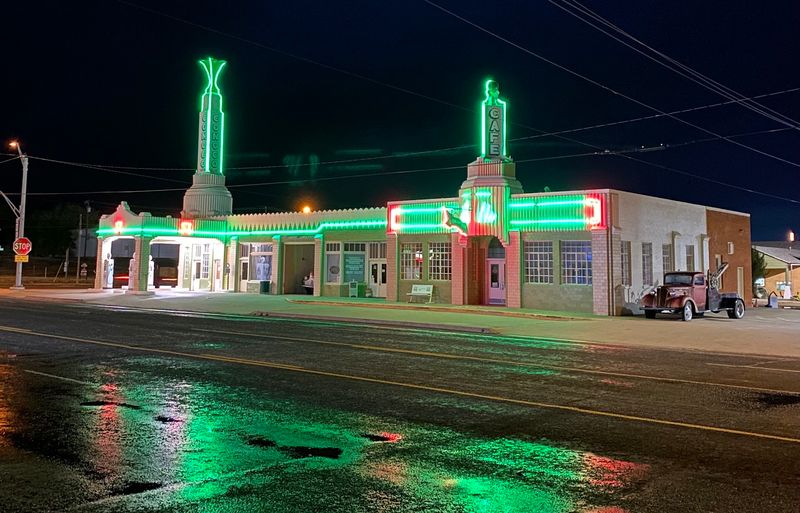
Few surviving Route 66 buildings look more cinematic than Shamrock’s Tower Station and U-Drop Inn Cafe. The dramatic Art Deco structure features a tall tower and sweeping lines that stand out against the flat Texas landscape, and restored neon traces its architectural details in glowing green after dark.
According to the National Park Service, the building has been fully restored by the City of Shamrock and now functions as a visitor center, chamber of commerce office, and community gathering space. Visitors are welcome inside, which makes this stop more than just a roadside photo opportunity.
The building carries an extra layer of pop culture recognition as well. Its design helped inspire Ramone’s House of Body Art in Pixar’s Cars, which means younger travelers often arrive with some familiarity before they even step out of the car.
At night, the glowing neon makes the Tower Station one of the most memorable sights along the entire Texas stretch of Route 66.
Gallup, New Mexico
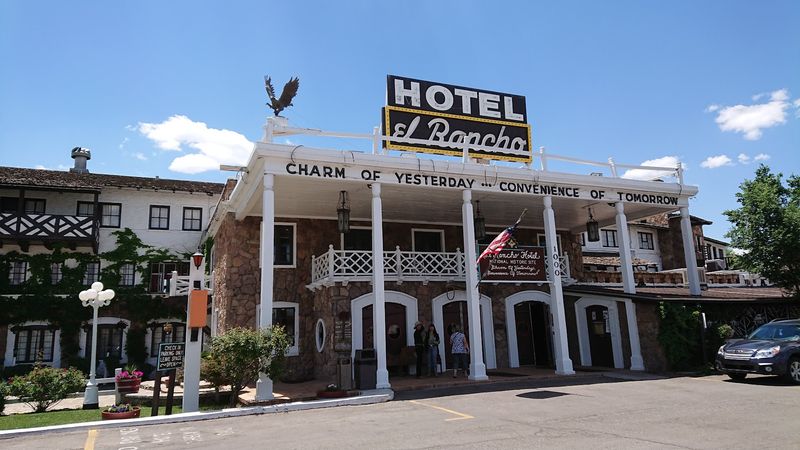
Gallup’s most famous piece of neon belongs to one of its most celebrated buildings. The historic El Rancho Hotel stands beside Route 66 and announces itself with a glowing sign that promises the “charm of yesterday” and the “convenience of tomorrow.” That combination of vintage language and actual operating hospitality makes the sign feel particularly honest.
El Rancho opened during the golden age of Western filmmaking and became associated with actors and film crews working throughout the surrounding region. Visit Gallup still lists the hotel as one of the city’s signature historic experiences, whether visitors choose to stay overnight or simply stop for a meal.
The property remains in operation today, which is what separates it from so many other roadside landmarks on this list. The neon is not illuminating a roped-off exhibit or an empty building.
It is advertising a functioning Route 66 hotel that has kept its character across decades. That living connection is exactly what makes Gallup worth visiting after sunset.
Kingman, Arizona
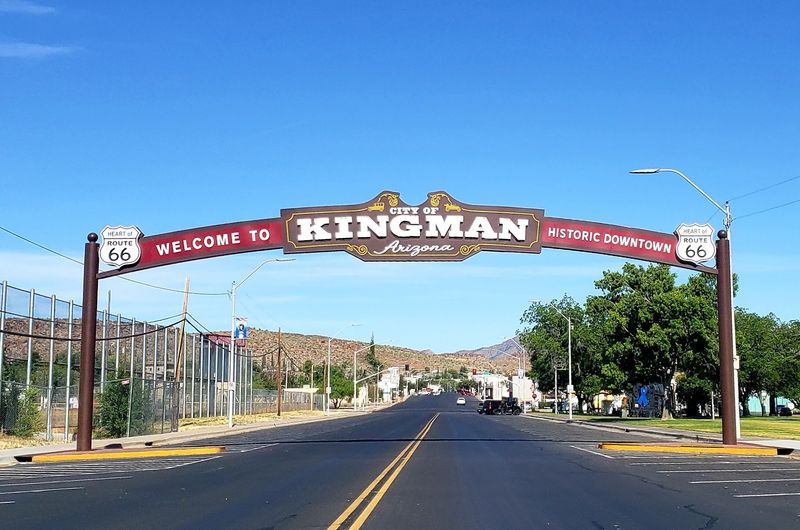
Kingman takes its position on the Mother Road with genuine seriousness, and the results are easy to see downtown. The Arizona Route 66 Museum occupies the historic Kingman Powerhouse and remains open to visitors, with displays covering vintage automobiles, highway artifacts, and historic neon connected to the Route 66 story.
Beyond the museum, Kingman’s neon revival has extended back onto the streets. In 2026, the long-dark Hotel Beale neon sign was illuminated again after roughly four decades of going unlit, giving downtown Kingman another restored connection to its roadside past.
That kind of effort matters because it returns history to its original context rather than locking it behind glass.
Combined with the city’s preserved Route 66 buildings and businesses, the signs help establish Kingman as one of Arizona’s strongest stops for travelers specifically looking for classic highway character. It rewards the kind of slow, deliberate road trip that the Mother Road was always designed for.
Reno, Nevada
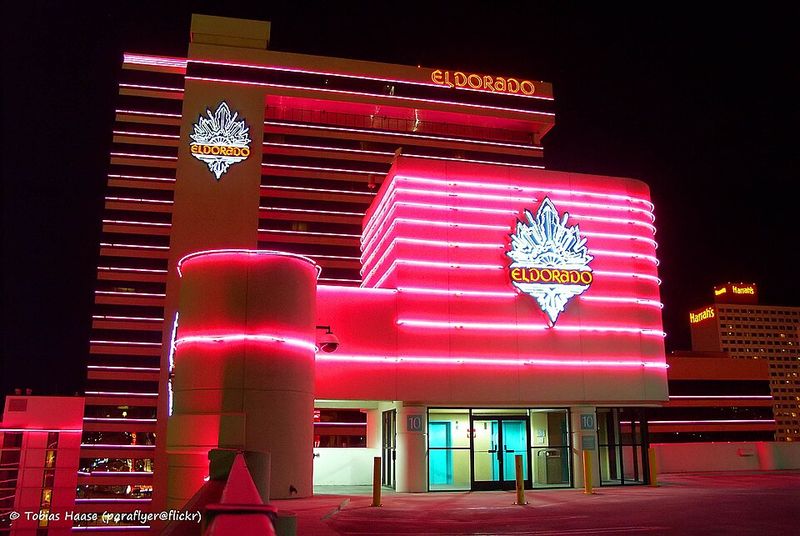
Reno tends to get overshadowed when people talk about Nevada neon, but the city developed a glowing identity that is entirely its own. Nothing represents that better than the Reno Arch, which has served as the city’s most recognizable landmark for roughly a century.
Versions of an illuminated arch have greeted visitors along Virginia Street since the early 1900s. The current structure continues to display the city’s famous “Biggest Little City in the World” slogan, a phrase that has appeared on Reno signage long enough to feel genuinely historic rather than promotional.
Multiple versions of the arch have existed over the decades, each one reflecting the sign-making technology and design sensibility of its era. That layered history is part of what makes Reno’s signage genuinely interesting to think about.
The arch is not just a decoration. It became part of the city’s public identity in a way that very few signs anywhere in America have managed to achieve.
Austin, Texas
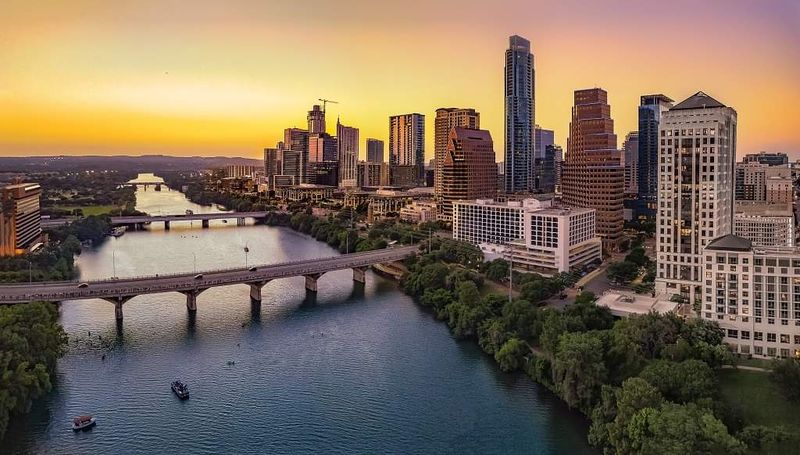
Austin’s skyline has changed dramatically over the past two decades, but pockets of old neon have held their ground. One of the city’s best-known surviving examples hangs above the Continental Club on South Congress Avenue, a sign that has been marking the spot for longer than most of the surrounding businesses have existed.
The club first opened in 1955 and remains an active live-music venue today. Its own website describes the classic neon sign above the entrance as a South Congress landmark, which is a fair description given how thoroughly the surrounding neighborhood has been redeveloped and polished.
That is what makes the Continental Club sign worth stopping for. The sign has not been retired to a museum or restored as a decorative nod to the past.
It continues doing what it has always done: advertising a working music club on a street that has changed almost everything else around it. Seeing it lit up after dark offers a surviving fragment of a grittier, older Austin.
Memphis, Tennessee
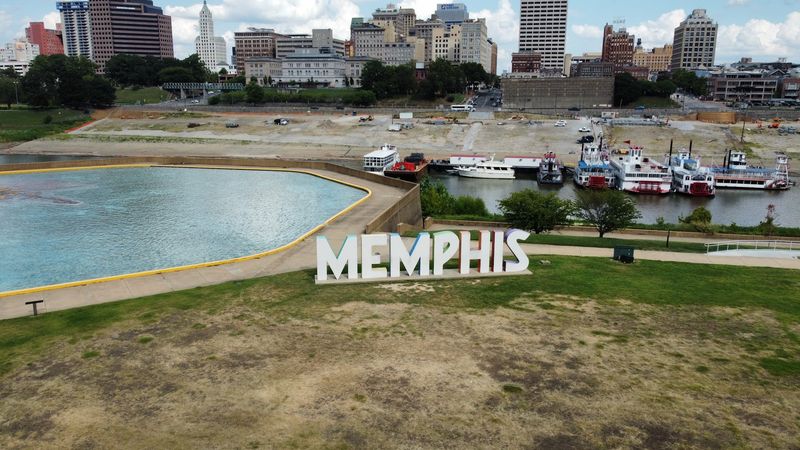
Neon feels completely at home in Memphis. The city’s history of blues, rock and roll, barbecue joints, record stores, and Beale Street nightlife created exactly the kind of commercial environment where colorful signs thrived and stuck around.
One of the most recognizable stops is Sun Studio at 706 Union Avenue. The legendary recording studio remains open seven days a week and continues welcoming visitors to the building where Elvis Presley, Johnny Cash, Jerry Lee Lewis, and Carl Perkins all recorded during the early years of rock and roll.
Its vintage roadside appearance and famous signage pair naturally with a night exploring Beale Street and the surrounding downtown. In many cities, historic neon survives primarily as museum-grade preservation.
In Memphis, some of it still feels connected to the music and nightlife culture that originally created it. That organic connection is harder to manufacture than a restored sign, and it is a big part of why Memphis belongs on this list.
Cincinnati, Ohio
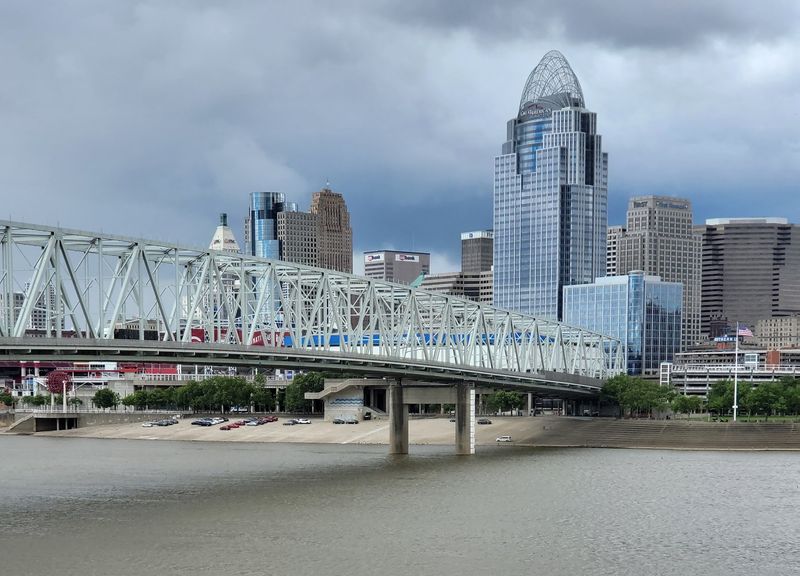
Cincinnati is not the first city most people associate with neon, but serious sign enthusiasts have one of the best reasons in the country to make the trip. The American Sign Museum preserves more than a century of American commercial sign history, with spectacular examples of neon advertising featured throughout its collection.
The museum stays open Wednesday through Sunday and also operates Neonworks, a space where visitors can get a closer look at the actual craftsmanship behind traditional neon sign-making. That hands-on element sets Cincinnati apart from destinations where neon is simply displayed.
The broader exhibits trace how American advertising evolved from hand-painted and bulb-lit signs into the elaborate neon creations that defined countless downtowns, motels, diners, gas stations, and highways across the country. For travelers who want to understand how vintage neon was designed and fabricated rather than just photograph it from the sidewalk, Cincinnati offers the most educational experience on this entire list.
Bakersfield, California
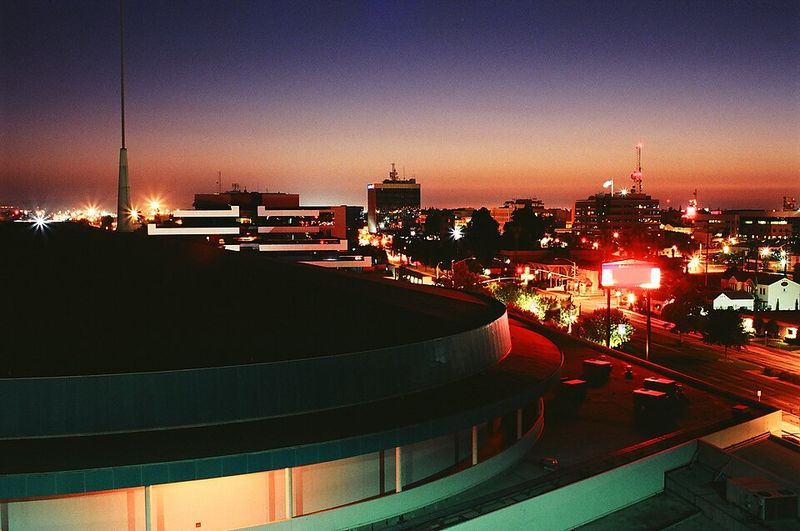
Downtown Bakersfield holds onto several wonderful pieces of California neon history that most travelers passing through on Highway 99 never stop to notice. Among the most recognizable is the marquee of the historic Fox Theater, which opened in 1930 and remains an active entertainment venue today.
The Fox Theater’s current calendar extends well into 2026 and beyond, with concerts, comedy performances, and touring shows keeping the old venue in use. A glowing theater marquee that still advertises real events carries a different kind of energy than one preserved purely for historical display.
Bakersfield’s neon story does not stop there. Visit Bakersfield also highlights the roughly 75-year-old Guthrie’s Alley Cat neon sign, describing it as the beacon for a longtime local institution.
Vintage Woolworth signage remains visible downtown as well. Together, these signs give parts of Bakersfield the feel of an older California commercial district, one where a well-lit sign once told you everything you needed to know about what was happening inside.
Share this story