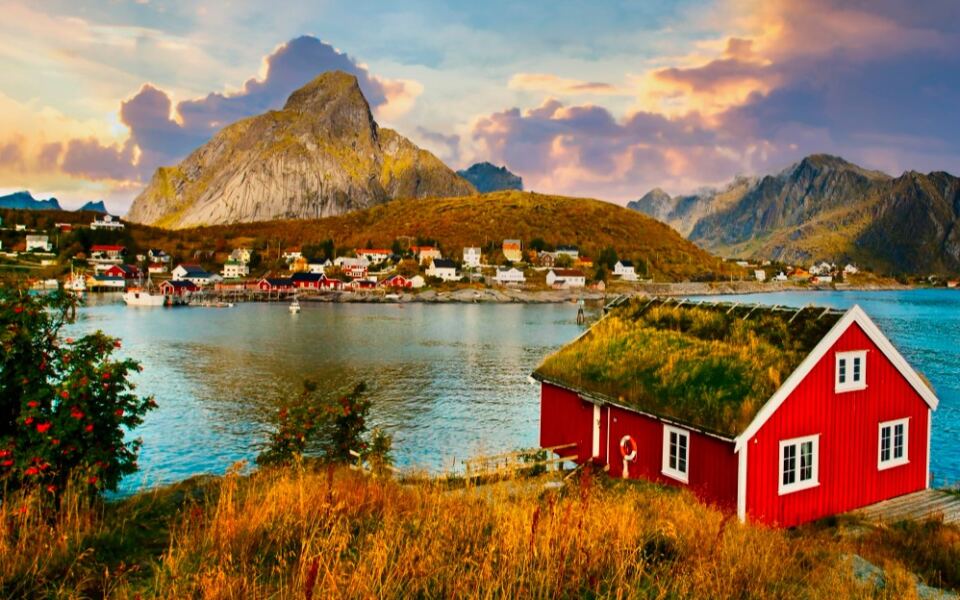
Mountains shoot straight out of the sea in Norway’s Lofoten Islands, and a single road ties it all together. Bridges hop from island to island, red fishing cabins hug the shore, and white beaches glow under the Arctic sky.
You could drive the whole route in a day, but a few days lets you taste the best of it. Buckle up, because these stops are worth every kilometer.
Austnesfjorden Viewpoint
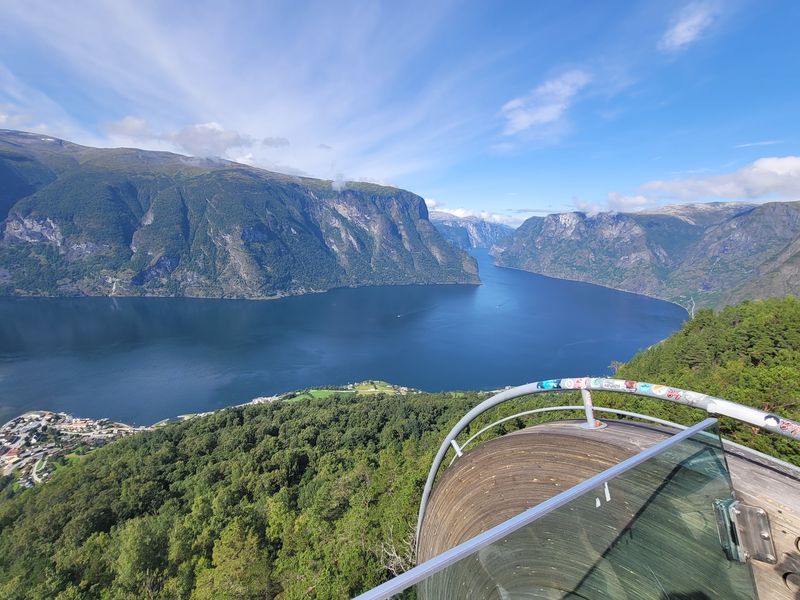
Your first jaw-drop moment comes before you even reach Svolvær. A wooden walkway curls along the hillside at Austnesfjorden, and the view opens up like a curtain being pulled back.
Down below, a small white chapel sits on a thin strip of land. Water surrounds it, and tall mountains stand guard behind it.
It looks almost too neat to be real, like someone placed it there for the photo.
The best part is how easy it is. A roadside stopping area sits close by, so there is no sweaty climb needed.
Park, stroll the walkway, and let the fjord do the showing off.
Winter paints the peaks in snow against dark water, which makes a sharp, moody picture. Summer brings long daylight and bright green slopes.
Either way, bring your camera and keep it ready.
Since this is the first big view when arriving from the mainland, it works as a welcome sign to Lofoten. Take your time here.
The road ahead has plenty more surprises, but this one sets the mood nicely.
Pack a warm layer too, because the wind off the fjord can be sneaky, even on sunny days. A quick thermos of hot chocolate makes the pause even better.
Svolvær
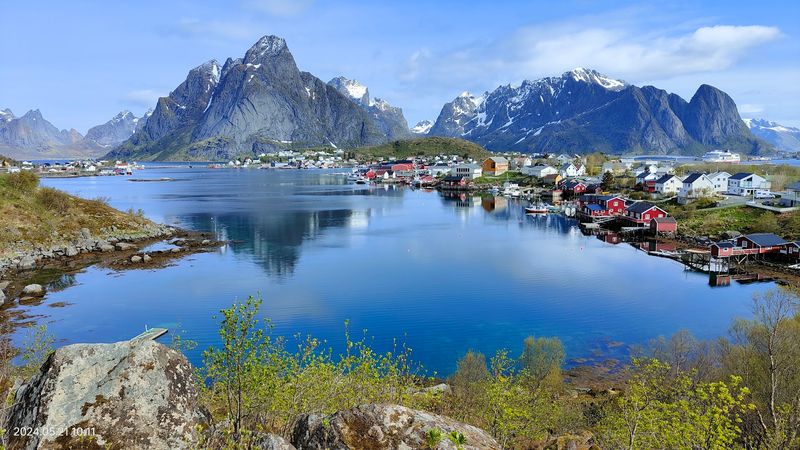
Think of Svolvær as the base camp of eastern Lofoten. It has the shops, fuel stations and hotels that become rare once you head west, so this is the place to stock up.
The harbor is lively, lined with restaurants, galleries and old fishermen’s cabins. Grab a table, order some fresh Arctic seafood, and watch the boats come and go.
Look up and you will spot Svolværgeita, a rock formation shaped like two goat horns. Experienced climbers love to leap between the horns, but you can simply admire it from the ground with a coffee in hand.
Boat trips leave from the harbor and head for nearby Trollfjord, a narrow, steep-walled fjord. With luck, you may even see white-tailed eagles gliding overhead.
Their wingspan is huge, and spotting one feels like winning a small prize.
Spend an evening wandering the waterfront and learning how local people have lived off the sea for centuries. Then fill your tank and your snack bag.
The quieter villages ahead are beautiful, but they are not famous for their supermarkets.
Kabelvåg
Cod made this town rich, and you can still feel it. Centuries ago, fishermen gathered near Kabelvåg each season, and a medieval trading center called Vågar grew up around the catch.
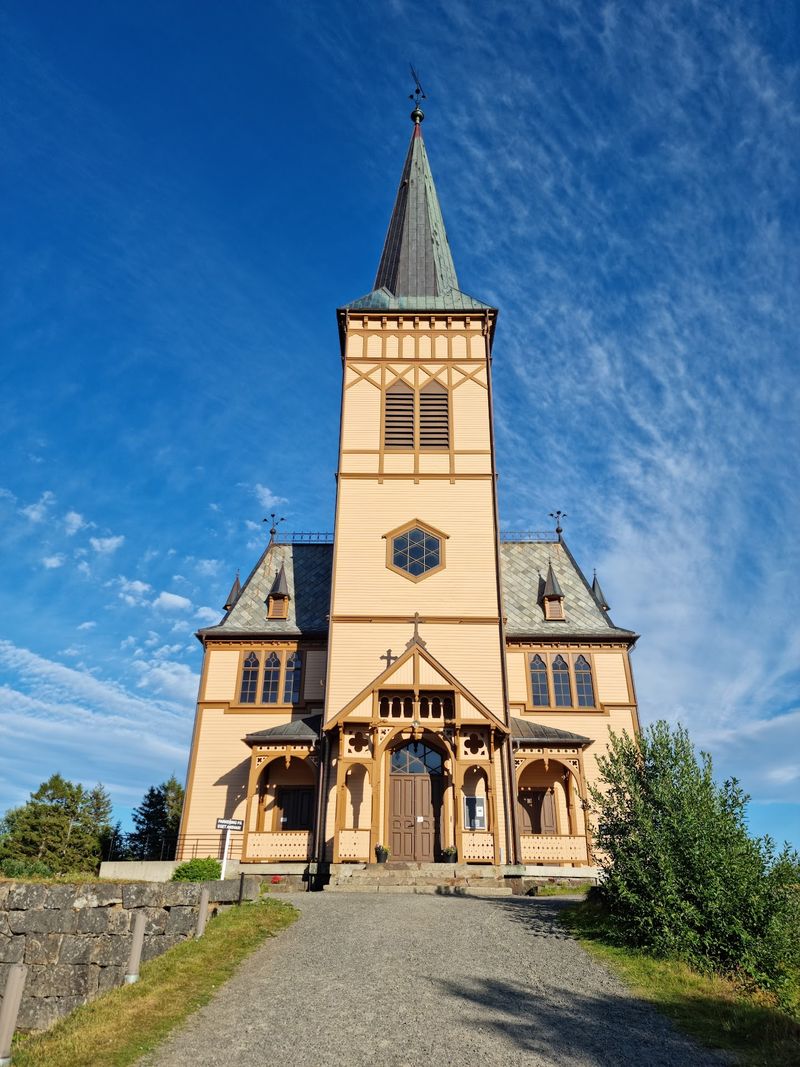
Today the harbor is calm and the wooden buildings look freshly dressed in Sunday colors. Towering above the town is Vågan Church, nicknamed the Lofoten Cathedral.
It is big, bold and a little surprising to find in a fishing community.
Families will enjoy the SKREI complex, where exhibits explain the life of Atlantic cod, the sea around it and the communities that depended on it. It is easy to follow and full of curious facts.
Art fans can pop into the Espolin Gallery, which honors the artistic traditions of northern Norway. The dark, dramatic drawings capture the spirit of the region well.
After the wild scenery you will meet later, Kabelvåg gives your brain a different kind of treat. It is a gentle history lesson with a view, perfect for a slow morning and a long lunch.
Walk the harbor path if the weather is kind. You will understand why people settled here.
Henningsvær
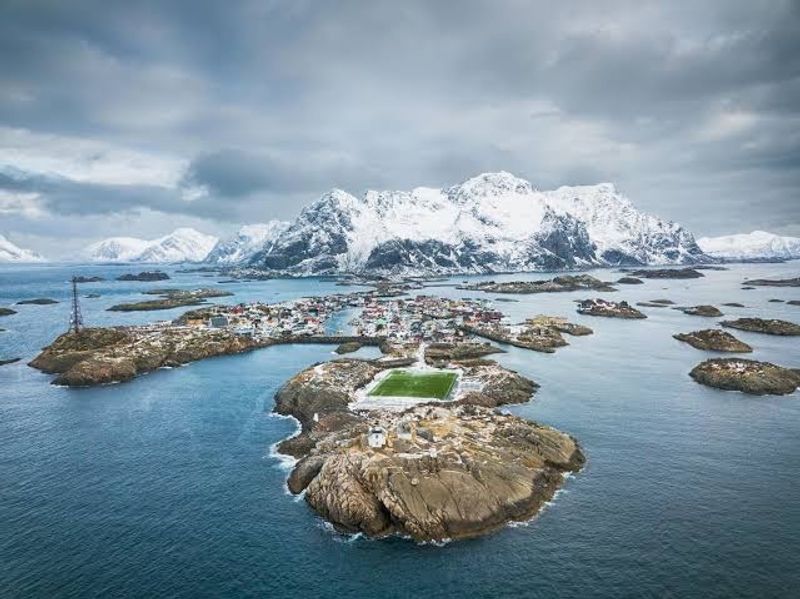
Here is a place where footballers need good aim, because a missed kick might splash into the sea. Henningsvær’s famous pitch sits on rocky ground right beside open water, and it may be the most photogenic field on Earth.
Getting there is half the fun. A narrow coastal road winds past mountains and small islands before reaching the village, which is spread over several islets joined by bridges.
Old fish-processing buildings now hold galleries, cafés and shops. The KaviarFactory, once a real caviar plant, now showcases modern art.
Wander in and see what surprises hang on the walls.
Walking is the best way to explore. Stroll along the harbor, peek into little stores, and stop for a seafood lunch with a water view.
Fish soup tastes better when boats are bobbing nearby.
Henningsvær has become popular, so arrive early or late in the day for a quieter feel. Even with the crowds, the village still keeps its fishing roots close.
You can smell the sea, hear the gulls, and see the racks where fish dry in the wind.
Lofotr Viking Museum, Borg
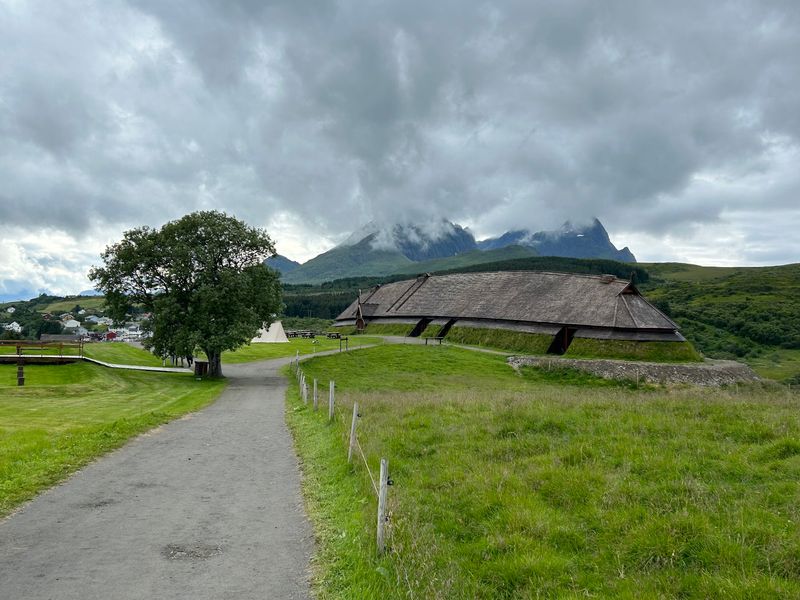
Stepping inside a giant wooden longhouse feels like walking into a saga. At Borg, archaeologists found traces of a powerful Viking chieftain’s home, and the museum rebuilt it at full size.
Inside, the air smells of wood and smoke. Guides and displays show how Vikings cooked, dressed and made tools.
Some days you can try crafts yourself, which is much harder than it looks.
Fun fact: this chieftain’s hall was one of the largest Viking buildings ever found. That is a lot of room for feasts and tall tales.
In the warmer months, the museum offers outdoor activities and traditional meals. Axe throwing and boat trips on the nearby lake bring the past to life in a hands-on way.
The countryside around the site is lovely for a stroll. Green fields roll toward the sea, and you can imagine longships sliding along the shore.
The museum sits close to the E10 highway, so it is an easy detour. If you have kids along, or just a kid-like sense of fun, give yourself a couple of hours here.
Eggum
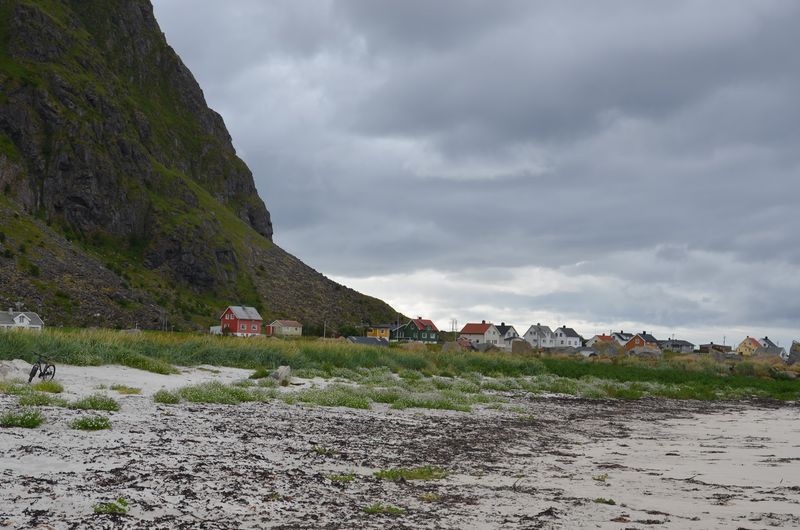
Out on the northern edge of Vestvågøy, the road feels like it is about to run out of world. Eggum sits where steep mountains meet the open Norwegian Sea, and the horizon seems endless.
The architecture firm Snøhetta designed a scenic rest area here, with an amphitheater that fits the rugged land. It is a fine spot for a picnic with the best seats in the house.
Nearby stands a puzzling sculpture by Swiss artist Marcus Raetz. Walk around it and the shape seems to change.
Kids love this, and so do adults who pretend not to.
Coastal paths lead away from the parking area, so lace up your shoes and wander. The wind is strong, the air is crisp, and the sea hits the rocks with real drama.
Summer brings the midnight sun, and Eggum is a wonderful place to see it, since nothing blocks the northern view. Stormy days are exciting too, with waves crashing hard against the shore.
Bring a jacket whatever the forecast says. Eggum likes to keep visitors on their toes.
Unstad
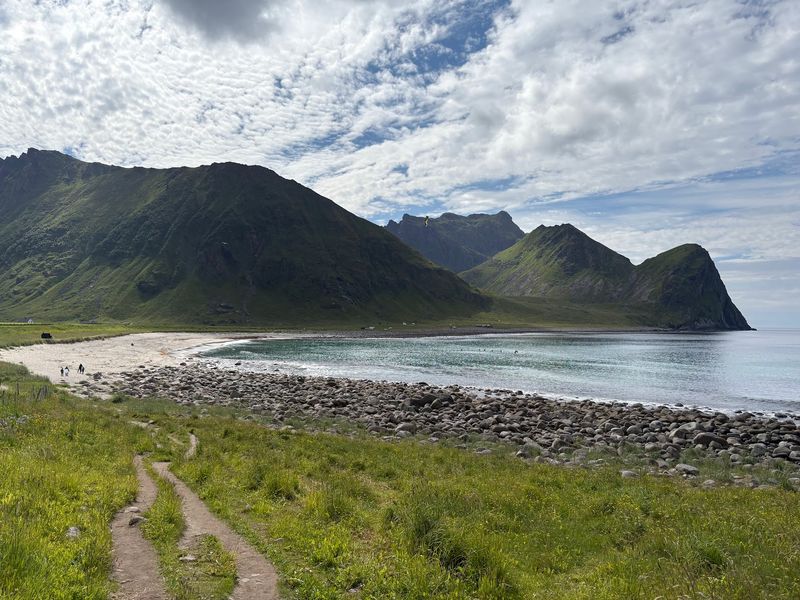
Surfing in the Arctic sounds like a joke until you see wetsuit-clad riders carving waves at Unstad. This tiny community has become a global name for cold-water surfing.
Big Atlantic swells roll into the beach, and the mountains behind make the scene look like a postcard. Experienced surfers chase the best waves, while local instructors help beginners get started when conditions are safe.
Thick wetsuits, boots, gloves and hoods keep people warm enough to enjoy it. Even so, expect a few shivers and a lot of laughing.
Not into the water? No problem.
Walk the sand, snap photos, or warm up with a hot drink at a local café while you watch the show. Spectating is a perfectly respectable sport.
The road to Unstad twists and turns, and the drive is a highlight by itself. The scenery feels wilder and quieter than the busy fishing villages elsewhere in Lofoten.
Go slowly, enjoy the curves, and pull over only in safe spots. When you arrive, you will see why surfers keep coming back to this remote edge of the map.
Haukland Beach
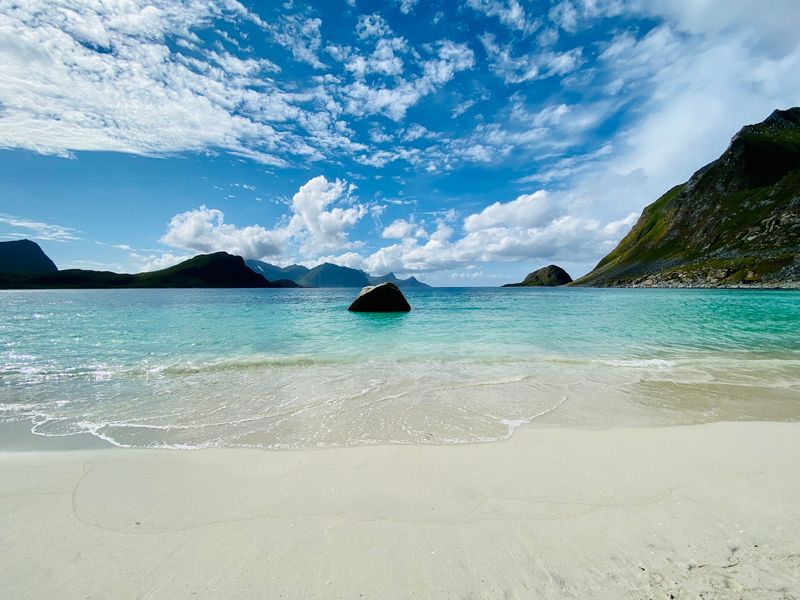
Rub your eyes, because yes, that water really is turquoise. Haukland Beach looks like a tropical postcard, yet it sits well north of the Arctic Circle.
Pale sand curves around a sheltered bay, and steep mountains rise right behind it. On a bright day the colors almost glow.
Even on a gray day, the contrast between rock, sand and sea feels special.
Visitors can paddle in a kayak, walk along the shore, or simply spread out a picnic. The water is cold, so most people keep to wading, but a few brave souls splash in anyway.
A newer visitor facility offers a café, better parking and other amenities. It helps protect the delicate landscape while making the stop comfortable for everyone.
Best of all, Haukland is easy to reach. You do not need to climb a mountain or carry heavy gear.
Just park, stroll a few steps, and enjoy one of Lofoten’s most beautiful views.
If you can, visit at different times of day. The light changes the bay in remarkable ways.
Uttakleiv Beach
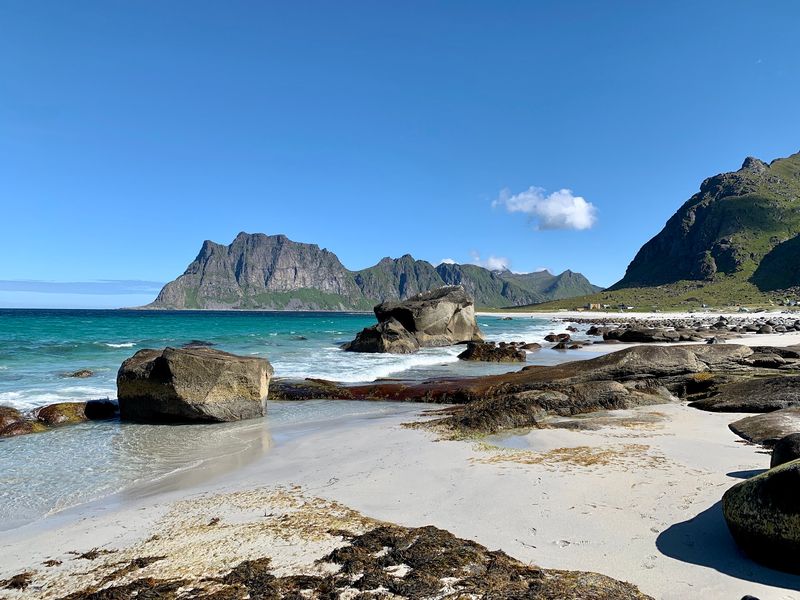
Photographers whisper about Uttakleiv at sunset, and for good reason. The sand glows, the rounded rocks shine, and the sea stretches out in a long, calm sweep.
Just beyond Haukland on Vestvågøy’s outer coast, this beach faces the open Norwegian Sea with nothing in the way. In summer the midnight sun hangs low and paints everything gold for hours.
Come in autumn or winter on a clear night and you might catch the northern lights dancing above the mountains. Bring a tripod and a warm hat, because waiting for green ribbons takes patience.
A walking trail links Uttakleiv with Haukland. It is a pleasant way to see both beaches and to catch new views of the coast along the way.
Remember that this is a working community. Use the marked parking areas, and respect the farmland nearby, which locals depend on.
A little care keeps the place welcoming for everyone.
Whether you stay for ten minutes or a full evening, this beach rewards you with quiet beauty.
Vikten
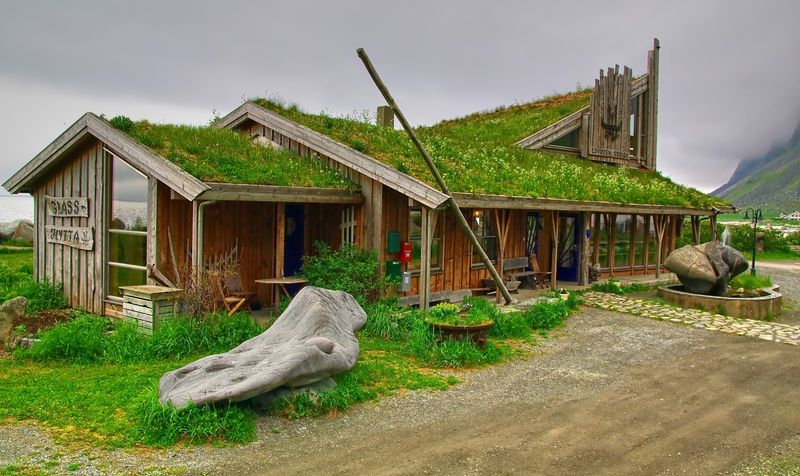
Molten glow, a puff of breath, and a bubble of glass appears. At Vikten, you can watch artists turn fire and sand into shining objects at the Glasshytta workshop.
The pieces take their colors and shapes from northern Norway itself. You may spot swirls like ocean waves or tones like misty mountains.
Taking one home gives you a souvenir that is far more special than a fridge magnet.
Outside, the shoreline is dotted with smooth, rounded stones, and big mountain shapes frame the open sea. It is a different mood from the sheltered harbors found in other villages.
Vikten sits on the outer coast of Flakstadøya, a short detour off the E10. That extra bit of driving pays off with quiet roads and fewer crowds.
Plan a slow visit. Browse the workshop, stroll the beach, and listen to the waves.
This is a good place to stretch your legs and your creativity.
If you enjoy discovering small, unhurried corners of Lofoten, Vikten is exactly your kind of stop.
Nusfjord
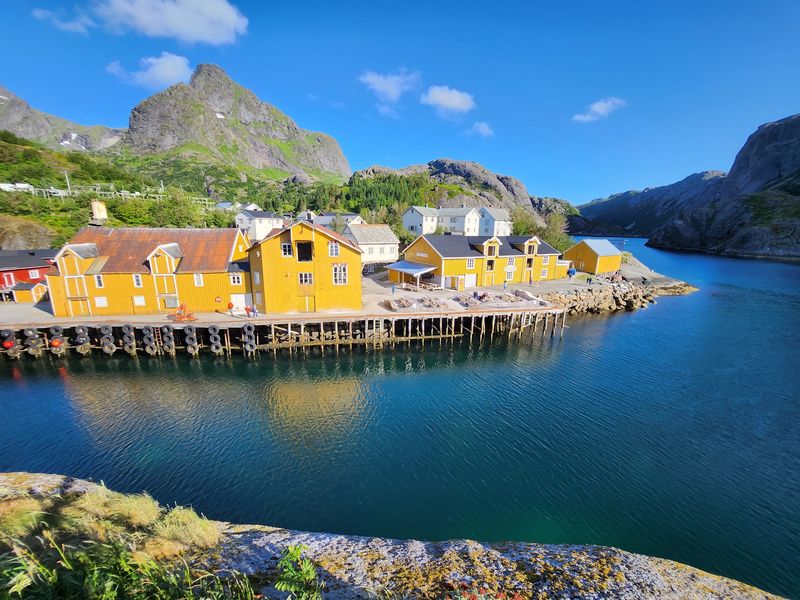
Some places feel frozen in time, and Nusfjord is one of them. Red and yellow wooden houses crowd around a slim harbor, with steep mountains rising right behind.
This village is one of Norway’s best-kept fishing settlements. Cabins, warehouses and old work buildings show how people lived and worked during the cod boom.
Peek inside and you can almost smell the salt and the fish.
Walk the lanes slowly. Every corner offers a view worth a photo, and the creaky boards underfoot add to the old-time feel.
Hungry or tired? Grab a snack with a harbor view, or book a night in a converted rorbu.
Sleeping in a fisherman’s cabin is a treat that many travelers remember long after the trip ends.
The road down to Nusfjord twists through the mountains, with new views at each bend. Drive carefully, and pull over only where it is safe.
For anyone who loves history as much as scenery, Nusfjord delivers both in one tidy, colorful package.
Ramberg
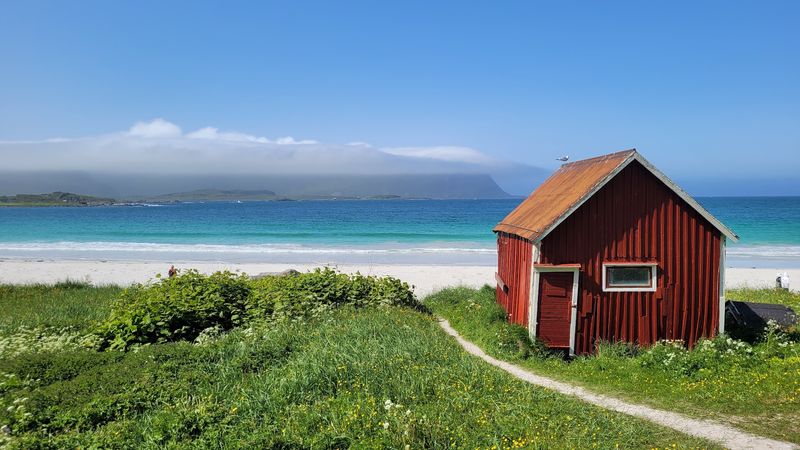
A tiny red building on a white beach: that is the picture that made Ramberg famous. It sits beside Jusnesvika Bay on Flakstadøya, and the scene looks perfectly arranged.
Rambergstranda is a wide, sandy beach framed by green hills and sharp mountain peaks. A wooden walkway and roadside stopping area make it easy to reach the shore, even in muddy weather.
Take off your shoes, if you are brave, and feel the cold, fine sand. Watch the sea shift from green to blue to deep gray as clouds drift past.
It is hard to get bored of this view.
Walks along the water are peaceful, especially in the evening when the light is soft. Many travelers linger longer than planned, and nobody blames them.
Ramberg also has places to sleep and eat, making it a handy overnight stop. After a long day of driving, a calm beach nearby is a lovely way to unwind.
When you do leave, you will head west with sandy shoes and a full camera roll.
Hamnøy
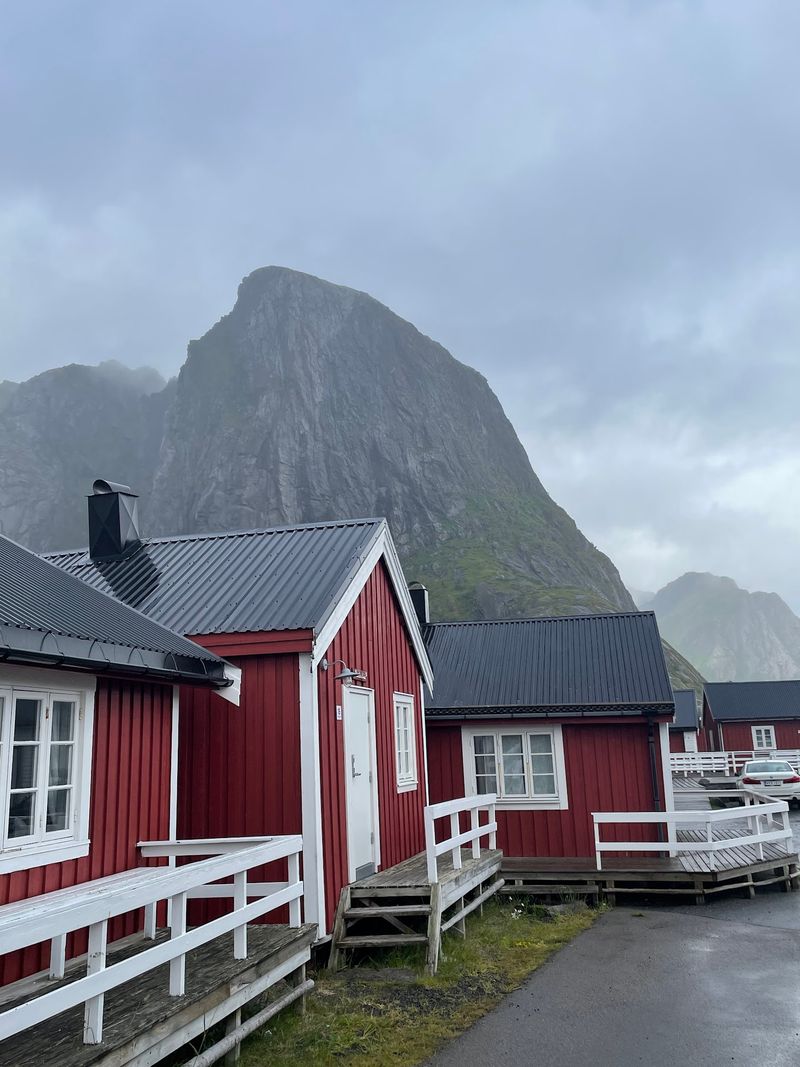
If Lofoten had a cover photo, it would probably be Hamnøy. Red fishermen’s cabins cling to the rocky shore, and the mountain Festhæltinden towers behind them like a stone giant.
The view near Hamnøy Bridge draws photographers from around the world. Sunrise, fresh snow and northern lights all make the scene even more dramatic, so many people return more than once.
Some of the old cabins now offer places to stay. Spending a night here lets you see the village after the day visitors leave, when the water is still and the lights flicker on.
Bridges link Hamnøy with Sakrisøy and Reine, and each stretch of the E10 here is packed with views. You will want to stop constantly, and that is fine, as long as you do it safely.
Please use the marked parking areas instead of stopping on the road. The street is narrow, and locals need to get through.
Give yourself time, patience and a fully charged phone. This spot deserves all three.
Reine
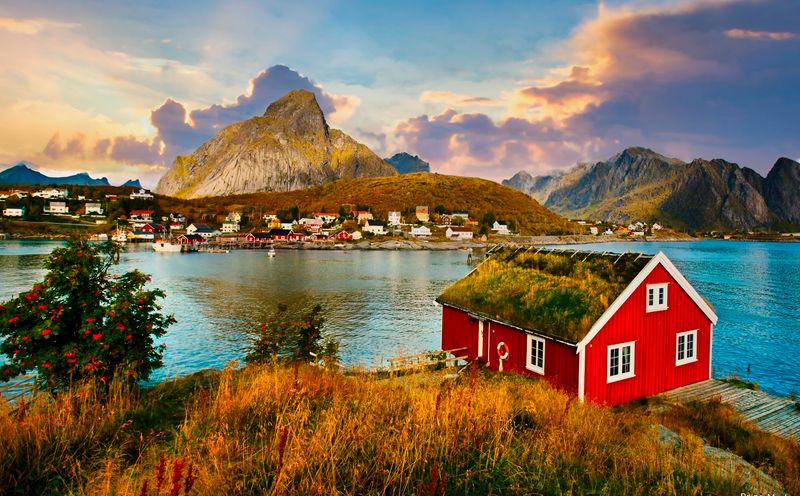
Ask people to name the prettiest village in Norway, and Reine often wins. Peaks leap straight from the water, red cabins line the waterfront, and the fjord glitters in between.
Wander the harbor, then sit down for some local seafood. Fish stew with a mountain view is hard to beat.
Boat tours into Reinefjord let you see the cliffs from the water, which gives a whole new sense of scale.
Energetic hikers can tackle Reinebringen, where a steep staircase climbs to a famous high viewpoint. It is best in suitable summer conditions, and your legs will remind you of the effort the next day.
Prefer to keep your feet flat? Head to Reinehalsen, an official roadside viewpoint with a wide panorama and no huffing required.
Staying overnight is a smart idea. The Arctic light changes by the hour, and early morning or late evening can turn the fjord into a painting.
Reine is busy in peak season, but its beauty easily wins out over the crowds.
Å
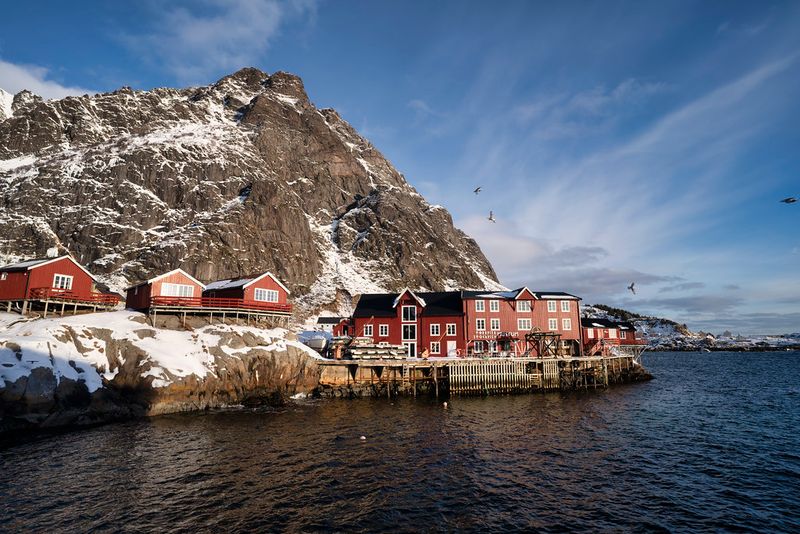
The road ends here, with a village named after a single letter. Å marks the western end of the E10 highway, and it is a perfectly fitting finish to the journey.
Historic wooden buildings crowd the shoreline, and the Norwegian Fishing Village Museum takes up many of them. Inside you will find a 19th-century bakery, a blacksmith’s workshop, a boathouse and even a cod liver oil factory.
The last one has a smell that visitors rarely forget.
Exhibits show how fishermen, merchants and families lived during the busiest years of the fishing trade. Stories of long, cold seasons make you appreciate your cozy rental car even more.
Step outside and the mountains and rugged coast remind you how remote this corner of Norway really is. Waves slap the rocks, gulls call overhead, and the sea air tingles in your nose.
Take a final walk around the harbor before turning back. You have crossed bridges, climbed paths and passed countless fjords.
Å gives you one last glimpse of the maritime traditions that shaped Lofoten. Not a bad way to end a trip.
Share this story