Europe has swimming spots so clear that you can count the pebbles on the seabed. Some sit in tiny Mediterranean coves, while others hide in mountain lakes high in the Alps.
Some are easy to reach, and others take a hike or a boat ride, which makes the swim feel like a real adventure. Pack your goggles, because these places will make you want to jump right in.
Cala Goloritzè, Sardinia, Italy
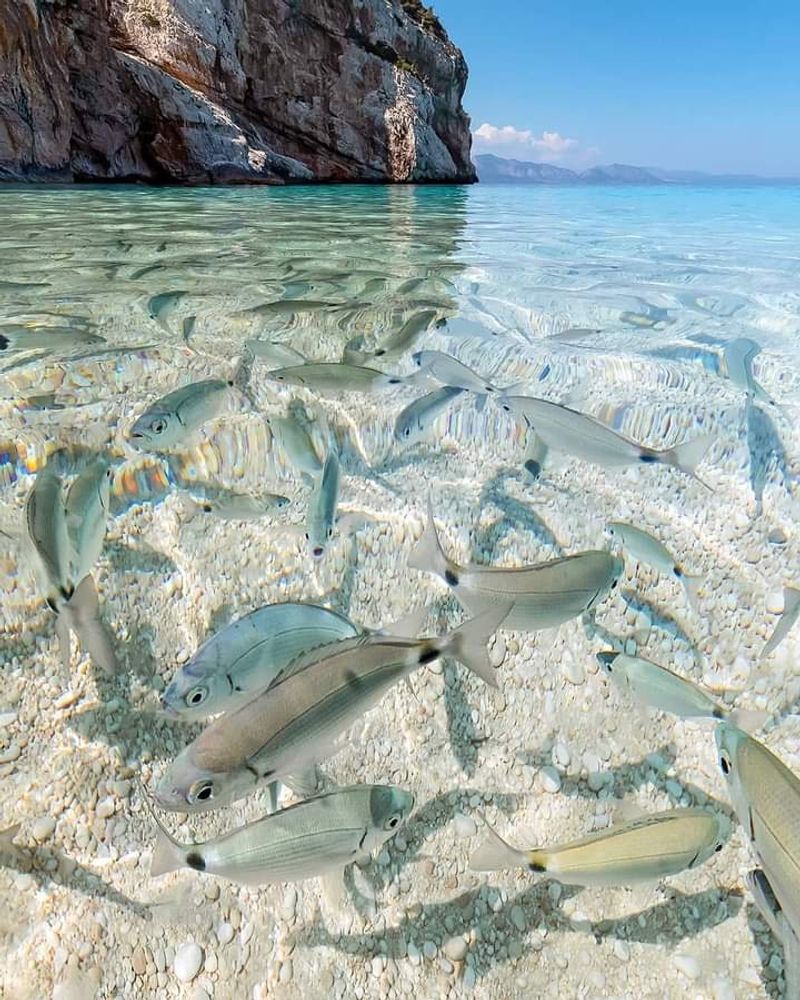
Picture a beach where the water looks like a freshly polished gemstone. Cala Goloritzè, on Sardinia’s Gulf of Orosei, is hugged by pale limestone cliffs and lined with smooth white pebbles.
A 143-meter rock spire stands guard over the cove like a very tall lifeguard.
The seabed is so clear that it often looks Caribbean. Freshwater springs bubbling up beneath the surface help keep it that way.
Swimmers float above a bright, shimmering bottom and can spot fish without even trying.
Getting here takes some effort, and that is part of the charm. Visitors either hike down a trail or swim ashore from boats that must stay offshore.
Rules limit access to protect the cove, so the beach never feels like a crowded resort strip.
Bring sturdy shoes for the walk and water shoes for the pebbles. Pack snacks and water too, since there are no shops on the sand.
Go early in the day if you want the cove nearly to yourself.
Snorkelers will love the clear shallows near the rocks. The reward for the hike is a swim that feels far away from everyday life.
Formentera, Spain
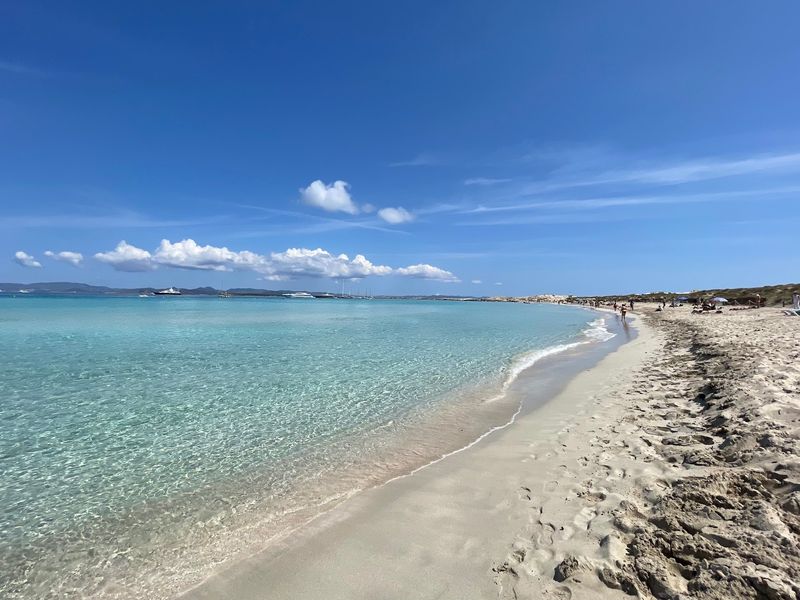
Ask a sailor where the Mediterranean looks most tropical, and many will say Formentera. The star here is Ses Illetes, a narrow beach in the north with pale sand and shallow, glassy water.
The color shifts from mint to turquoise to deep blue as you wade out.
The beach is only about 450 meters long, yet it packs a huge visual punch. Underwater meadows of Posidonia seagrass grow offshore as part of a protected marine area.
These meadows help keep the water clean and clear.
Calm days are the best days. When the sea is flat, snorkeling feels like gliding over a living map.
Sailing trips from nearby Ibiza are popular, and many boats anchor just off the sand.
Try to arrive early in summer, since the beach fills up by midday. Wear reef-safe sunscreen to protect the seagrass and the fish living in it.
A light hat helps too, because shade is scarce on the sand.
Walk a little farther along the shore and the crowds thin out. The water stays just as clear, and the views stay just as bright.
Menorca, Spain
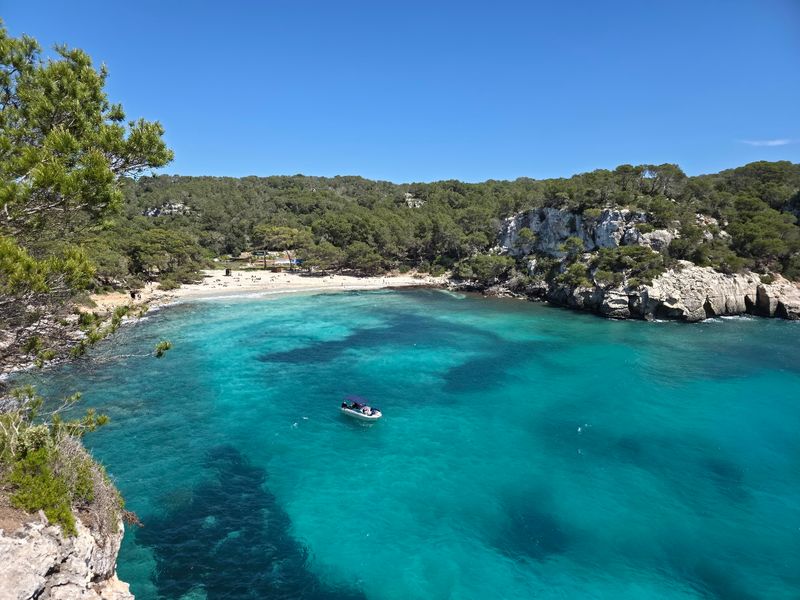
Menorca is a treasure chest of small coves, and each one seems to hide a different shade of blue. Cala Macarella and its little neighbor Cala Macarelleta are the stars.
Steep limestone walls wrap around calm, see-through water, while pine trees lean over the cliffs.
Spain’s tourism authority points out that clean, clear water is the one thing shared by the island’s varied coastline. That is easy to believe once you wade in.
The sand is pale, the shallows are warm, and the sea stays gentle on most days.
Macarelleta feels more secluded, and a short walk from Macarella gets you there. The path is easy, so flip-flops will do.
Once you arrive, the cove feels like a private pool.
Menorca has stayed less built up than other Balearic islands. Protected landscapes keep the coast looking natural.
That means fewer high-rises and more pine, rock and sea.
Visit in the morning or late afternoon for fewer crowds. Bring a mask, because the fish near the rocks are curious and plentiful.
Lefkada, Greece
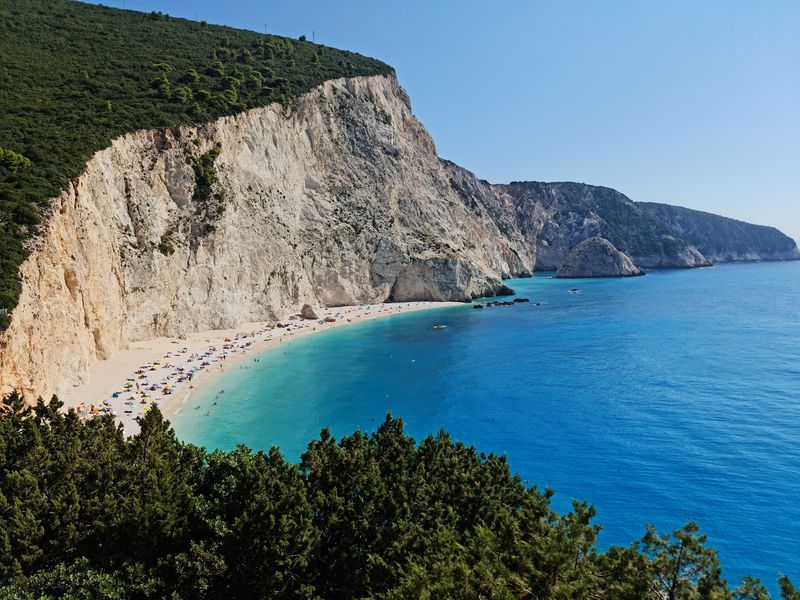
Few beaches look as dramatic as the ones on Lefkada’s western coast. Porto Katsiki and Egremni sit under enormous white cliffs, and the Ionian Sea below glows an almost electric turquoise.
Photographers love it, and swimmers do too.
Greece’s tourism authority calls Lefkada an island of striking coves, with Porto Katsiki among the most photographed. The bright pebbles make the water look even more vivid.
On sunny days the sea seems lit from below.
Want something calmer? Try Agiofylli or Afteli, smaller spots with gentler water and good snorkeling.
They are a nice break if the big beaches feel busy.
Here is a handy bonus: a bridge connects Lefkada to the Greek mainland. No ferry is needed, which makes the island unusually easy to reach.
Rent a car and you can hop between beaches in a single day.
Some beaches have steep steps or rough roads, so wear good shoes. Arrive early for parking and a quiet swim.
Waves can pick up on the west coast, so check the sea before jumping in.
Milos, Greece
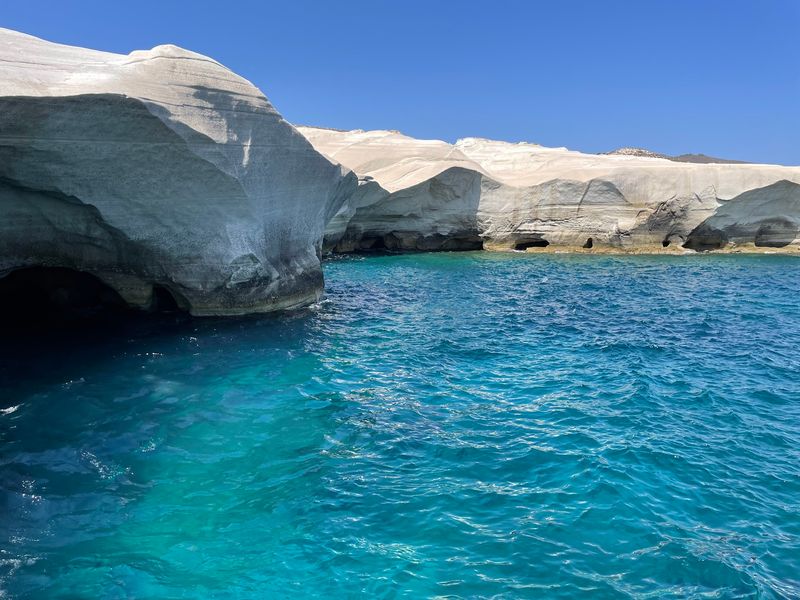
Milos looks like a movie set designed by a volcano. The island has more than 70 beaches, from sandy sheltered coves to the bright white rock waves of Sarakiniko.
Against that pale stone, the Aegean looks impossibly blue.
Kleftiko is the swimmer’s jackpot. Sea caves, arches and huge white rock formations rise from the water, and most of it is reachable only by boat.
Pirates once hid here, and you can see why.
Greece’s tourism authority describes the coast as a mosaic shaped by volcanic activity, wind and sea. That mix creates colorful cliffs, hidden caves and quiet anchorages.
Each bay has its own mood.
Book a boat tour if you can. Most trips include swim stops, so you can hop off the deck straight into clear water.
Snorkeling around the rocks is a highlight.
Bring a waterproof camera, since the contrast between white stone and blue sea is hard to resist. Pack a hat and sunscreen, because shade is rare on the boats.
Choose a calm day for the best visibility.
Antipaxos, Greece
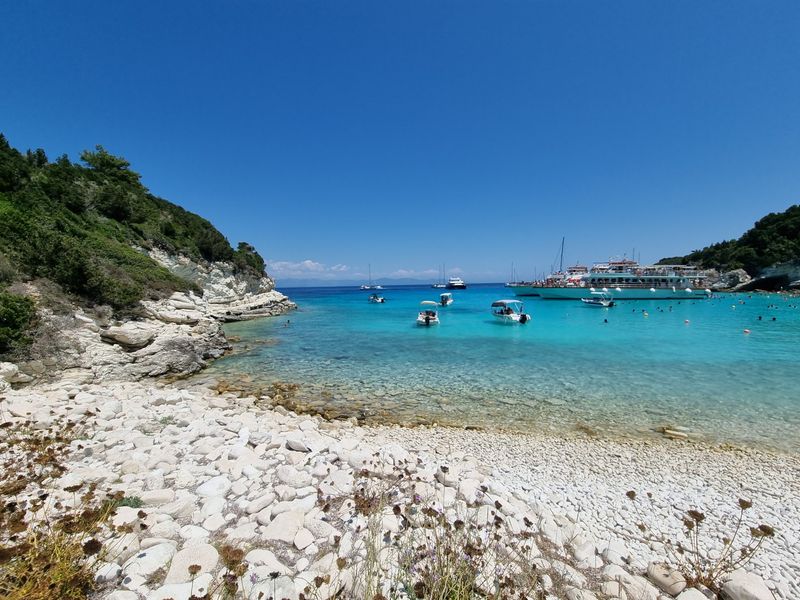
Tiny Antipaxos is the kind of island that makes people say, wait, is this really Europe? Its star is Voutoumi Beach, where pale pebbles and sand meet bright turquoise water.
Green hills roll down behind it.
Greece’s tourism authority calls the island an earthly paradise with crystal-clear waters and coral reefs. That is a big claim, but the sea backs it up.
On a calm day you can see the bottom from a boat deck.
The island is small and reached mainly by boat from nearby Paxos or Corfu. That keeps things more intimate than at larger beach destinations.
Day trips are common, so mornings and late afternoons are quieter.
Swimming from the shore is lovely. Arriving by boat adds more, because you can reach small coves along the rocky coast.
Many skippers will drop anchor for a snorkel stop.
Pack water shoes for the pebbles and a mask for the fish. Bring snacks, since the island is quiet and options are limited.
Check the weather, as rough seas can cancel boat trips.
Cape Greco and Protaras, Cyprus
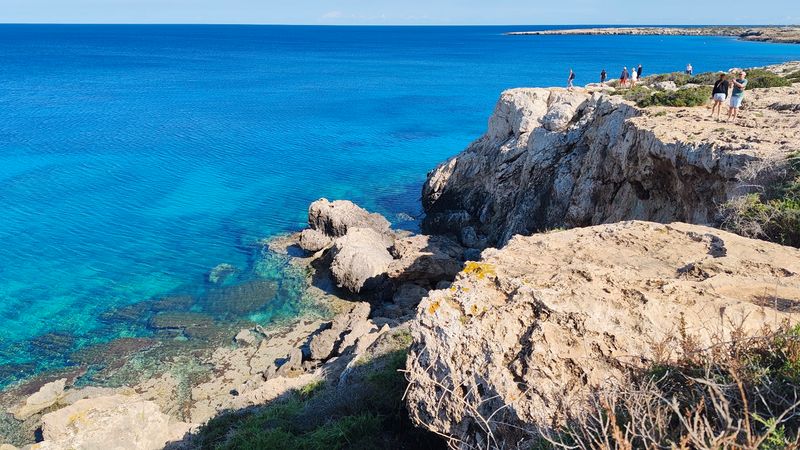
Along the coast between Ayia Napa and Protaras, the sea behaves like a giant swimming pool. Konnos Bay sits below pine-covered slopes inside Cape Greco National Forest Park.
Winds rarely bother it, so the water stays calm and clear.
Fig Tree Bay is the easy-going cousin. It has clear water, soft sand and plenty of facilities, which suits families and anyone who likes a sunbed and a cold drink nearby.
You can walk straight in and float.
Cyprus tourism describes both areas as having crystal-clear seas. Nearby sea caves and coves such as Limnara give you even more places to explore.
Snorkelers can spend hours hopping from rock to rock.
The island also holds many Blue Flag beaches each year, a sign of good bathing-water quality. That is reassuring when you are about to put your face in the sea.
Visit Konnos early for a peaceful swim before the tour boats arrive. Bring a mask and fins if you have them.
Walk the coastal trails afterward for views of the cliffs.
Comino, Malta
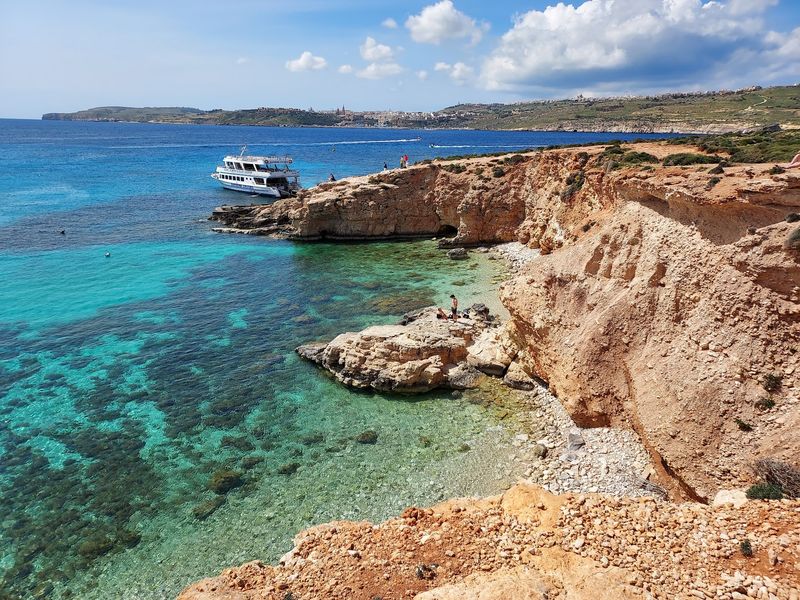
Malta’s tiny island of Comino has a very big reputation. Its lagoons and rocky coves glow in shades of turquoise and deep blue.
The Blue Lagoon is the famous one, and the quieter Crystal Lagoon is a lovely backup.
Malta’s tourism authority promotes the islands for exceptionally clear swimming water and strong underwater visibility. Floating here, you can often see your own toes and every ripple of sand below.
Fish drift by like they own the place.
Comino has very little permanent development. There are no big resorts, so the day revolves around boats, swimming and sunshine.
It feels refreshingly simple.
The catch is crowds. In summer the Blue Lagoon can get extremely busy, with boats lined up like toys in a bathtub.
Go early in the morning or late in the afternoon for more space.
You can also choose smaller nearby coves for a calmer swim. Bring water, a hat and sun protection, as shade is limited.
A snorkel mask turns an ordinary dip into a mini safari.
Corsica, France
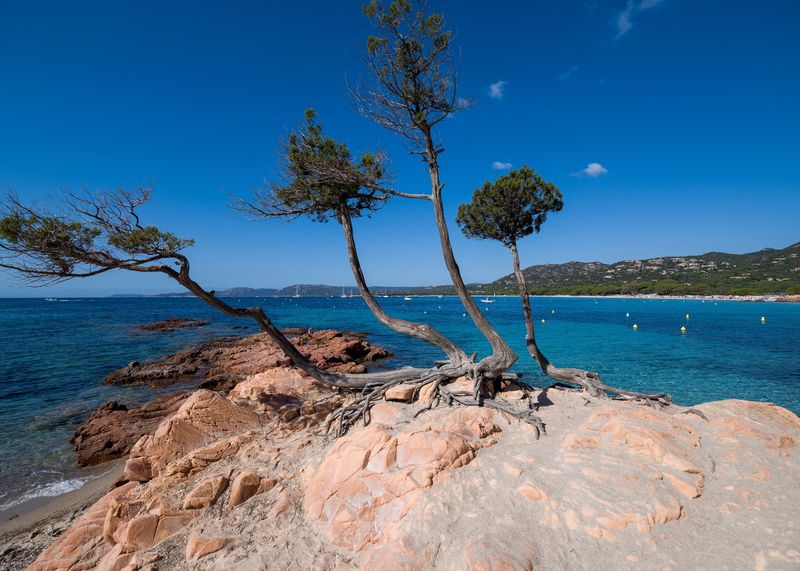
Mountains on one side, a tropical-looking beach on the other: that is Corsica’s trick. In the south, Palombaggia, Santa Giulia and Rondinara have pale sand, shallow turquoise water and rocky points covered in fragrant green shrubs.
France’s tourism authority highlights the island’s crystal-clear waters. It even compares Santa Giulia to a tropical lagoon.
Wade in and the comparison makes sense, since the water is calm, shallow and wonderfully see-through.
Much of the coast is protected, so many beaches still feel close to nature. Rugged land behind the shore keeps big developments away.
You often hear birds and waves instead of traffic.
Clear water also makes Corsica a favorite for snorkeling and diving. Rocky edges are full of life, from small silver fish to colorful sea stars.
A simple mask is all you need.
The swimming season often stretches into early autumn, so you do not have to rush in July. Rondinara’s heart-shaped bay is a nice stop for photos.
Arrive early in summer to find parking.
Mljet, Croatia
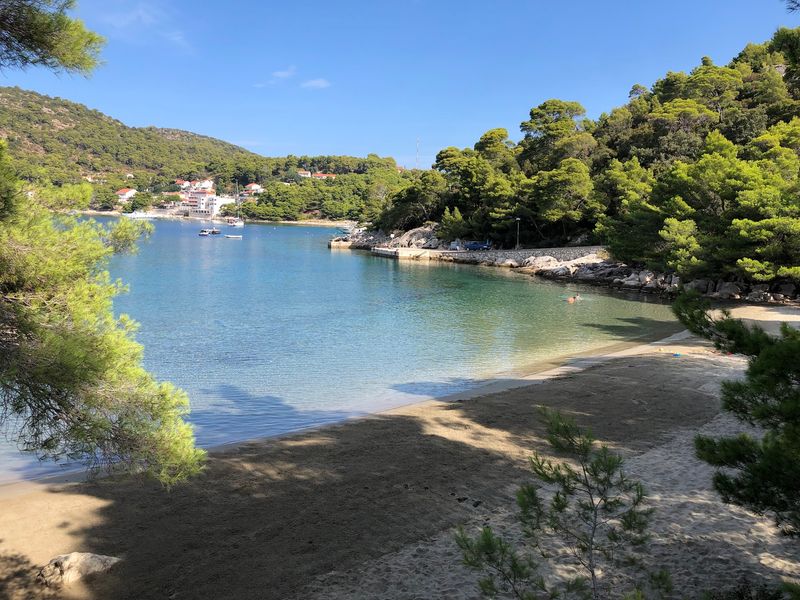
Mljet is Croatia’s quiet, leafy escape. Thick forest runs right down to the water, and the Adriatic below is clear and blue-green.
It feels a bit like a secret the other islands forgot to tell.
Croatia’s tourism authority describes the island as having a crystal-clear sea along with lakes, islets and rich natural scenery. Much of western Mljet lies inside a national park.
That protection keeps things peaceful and keeps the coast tidy.
You can swim along the open coast, where rocky platforms make easy entry points. Or head to the park’s famous saltwater lakes, which are calmer and warmer.
Rent a bike or a small boat to explore them.
Dense Mediterranean plants and clear water give the island a secluded mood, even in peak season. Footpaths wind through the pines, so a swim can follow a short walk.
The cicadas provide the soundtrack.
Bring water shoes, since many spots are rocky. Pack lunch, because services are limited away from the villages.
Take the ferry early to enjoy a long day.
Mošćenička Draga, Croatia
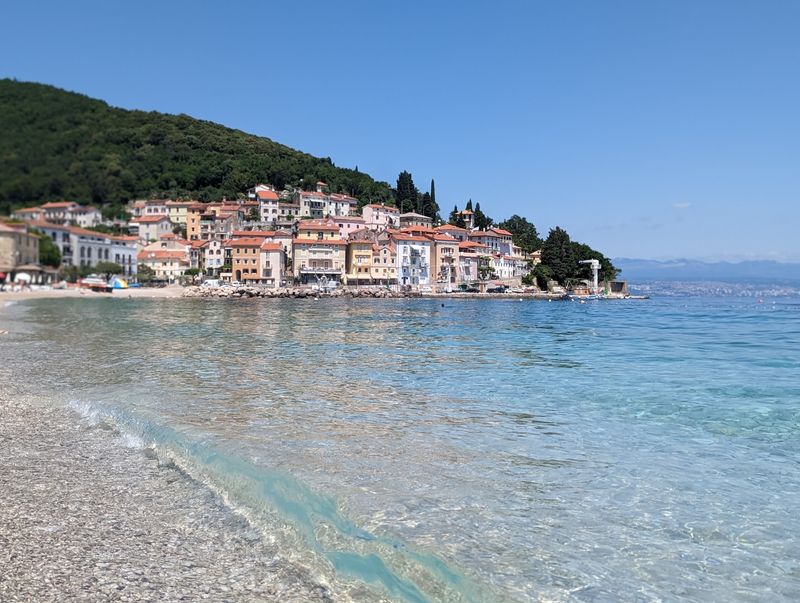
Steep green hills tumble down to the sea at Mošćenička Draga, and the water below looks polished. This small spot on Croatia’s Kvarner coast has long pebble beaches that make the Adriatic look extra transparent.
Light stones on the bottom bounce the sunshine right back up.
The local tourism site describes the sea as crystal clear and inviting for swimming. Sipar and Sveti Ivan are the best-known beaches.
Both have snorkeling and diving facilities close by, so gear is easy to find.
One of the best parts is the setting. Mountains rise almost straight behind the shore, so a day can mix a long swim with a walk through an old stone village.
Hiking routes begin close to town.
Everything is compact, which makes planning simple. You can swim before lunch, wander the lanes after, and still catch the sunset.
No long drives needed.
Pebbles can be hard on bare feet, so pack water shoes. Bring a small cushion or mat for comfy lounging.
Go in the morning for the stillest, clearest water.
Montenegro’s Adriatic Coast, Montenegro
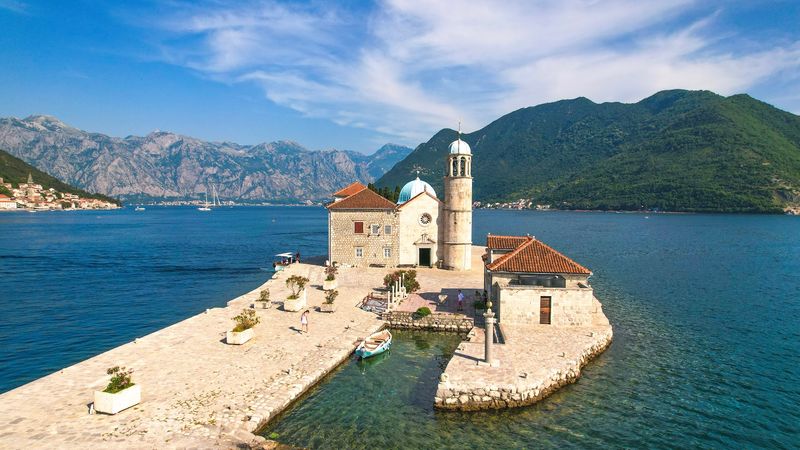
Montenegro’s coastline is short, but the water makes up for it. The national tourism authority reports sea transparency of roughly 38 to 56 meters.
That means a lot of see-through sea, stretching from Herceg Novi down to Ulcinj.
For quiet swimming, seek out hidden spots. Crystal Beach near Kruč and Red Rock Beach near Bar are favorites with people who like fewer neighbors.
Many are easiest to reach by boat or kayak, which keeps them peaceful.
Prefer something simpler? Sveti Stefan, Petrovac and the Budva Riviera offer clear-water swimming with easier access.
Cafes and sunbeds are nearby if you need a snack. Mountains rise right behind the coast, so every view has a dramatic backdrop.
Renting a kayak is a fun way to find your own cove. Paddle out in the morning, when the sea is calm.
Pull up on a pebble beach and enjoy a swim before anyone else arrives.
Wear water shoes for rocky entries. Bring a dry bag for your phone and snacks.
Check the weather before heading out in a small boat.
Lake Bohinj, Slovenia
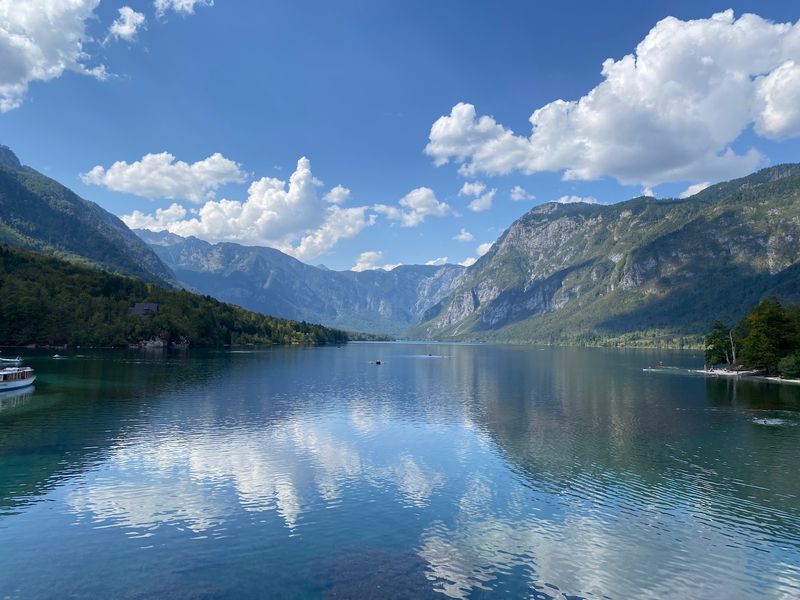
Salt is optional for a perfect swim. Lake Bohinj sits in the Julian Alps and holds freshwater so clear it seems to vanish.
Forest and steep mountain walls surround it, and the view is half the fun.
Slovenia’s tourism authority calls it the country’s largest permanent lake and recommends swimming in its crystal-clear waters. Ukanc and Fužine Bay are popular spots where you can slip in from natural shores.
Look down and you can see stones, branches and the occasional fish.
Fair warning: the water is much cooler than the Mediterranean. A quick gasp is normal.
On a hot summer afternoon, though, that chill feels fantastic.
Bohinj suits people who want more than a beach. You can hike to waterfalls, paddle a kayak or ride a bike around the shore.
Then you can end the day with a swim to cool off tired legs.
Bring a quick-dry towel and a warm layer for after. Water shoes help on stony entries.
Go in July or August for the warmest water.
Algarve, Portugal
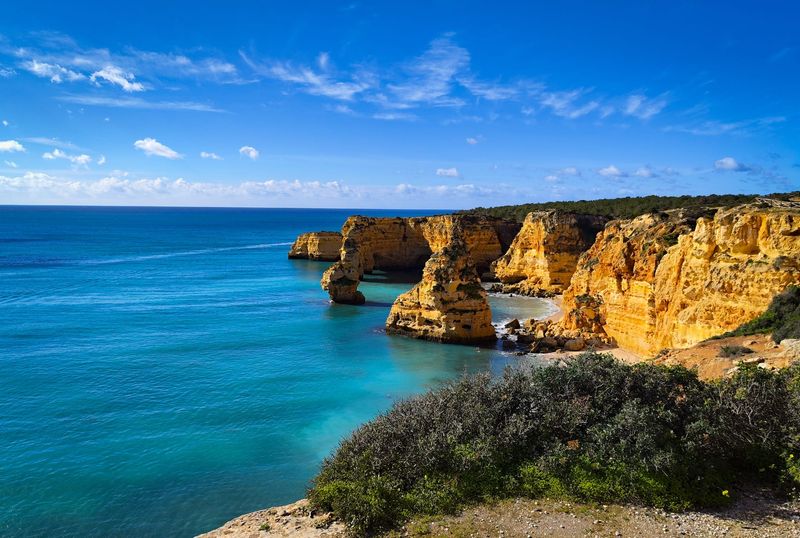
Sea caves, golden cliffs and hidden beaches give the Algarve a storybook look. Near Lagoa, coves such as Benagil and Praia da Marinha sit between sculpted limestone formations.
The Atlantic here is surprisingly clear and bright.
Portugal’s tourism authority describes Benagil as part of one of the Algarve’s prettiest stretches. A calm sea and coastal caves make it ideal for exploring by boat.
Some sections of coast cannot be reached by road at all, so a boat trip opens up hidden corners.
Kayaks and small tour boats are popular choices. Paddling into a sea cave while sunlight pours through a hole in the roof is a memory that sticks.
Swimmers can slip in at calm stops along the way.
Be ready for cooler water. Atlantic temperatures in summer sit around 20 to 22 degrees Celsius.
It is refreshing rather than chilly, and the scenery makes up for it.
Go early to avoid busy tour traffic. Check sea conditions, because swell can close the caves.
Bring a rash vest if you feel the cold.
Sardinia’s Costa Smeralda, Italy
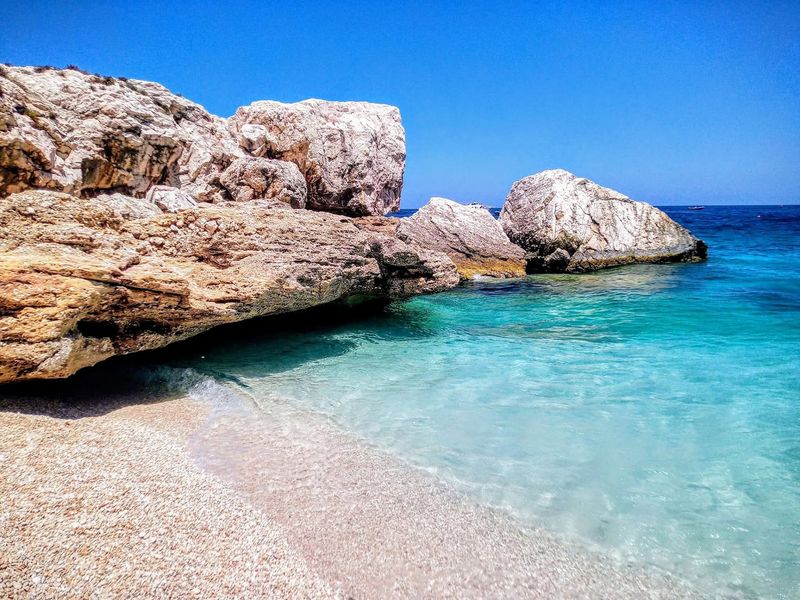
Sardinia has more than one trick up its sleeve. Along the northeast coast, Costa Smeralda stretches through coves framed by pale granite, white sand and intensely clear sea.
The name means Emerald Coast, and the water lives up to it.
Italy’s tourism authority describes the area as 55 kilometers of enchanting beaches, granite formations and crystal-clear water. That is a lot of shoreline to explore.
You could swim somewhere new every day of a week.
Cala Brandinchi, farther south, is nicknamed Little Tahiti because of its shallow turquoise sea. You can wade out a long way and still be knee-deep.
Kids and nervous swimmers love it.
For more remote bays, head to the La Maddalena Archipelago. Boats carry visitors to quiet beaches with pink-tinted sand and glassy water.
Many tours include snorkel stops.
This region suits travelers who want variety. Rent a car or join a boat tour and sample several beaches.
Book parking or entry early in summer, since popular spots limit visitors.
Nissi Bay, Cyprus
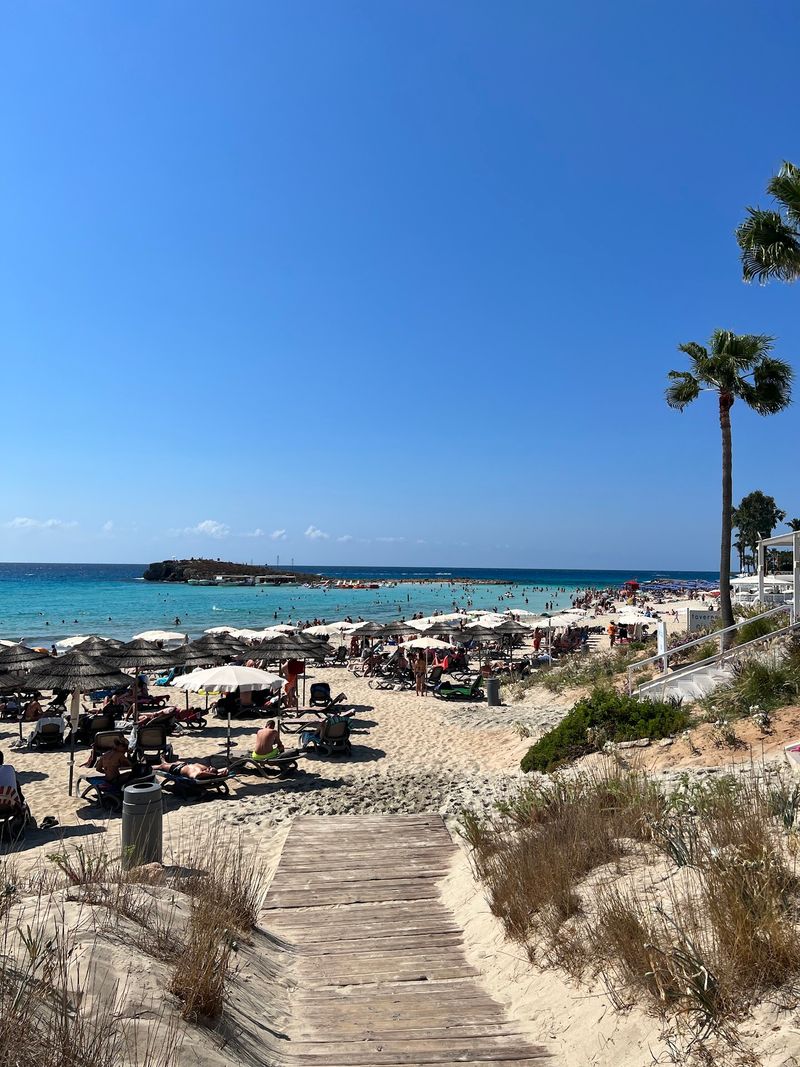
Walk on water, almost. At Nissi Bay, a natural sandbar stretches toward a small islet, and the shallows around it glow in vivid turquoise.
On a windless morning the sea looks like poured glass.
Cyprus tourism describes the water as calm and crystal clear, with fine golden sand beneath it. The bay is sheltered, so waves stay small and swimming feels easy.
Toddlers, grandparents and beginners all feel at home here.
Do not expect a hidden hideaway. Nissi is lively, with music, cafes and sunbeds lined up along the sand.
If you want a secluded cove, places like Cala Goloritzè or Lake Bohinj are better matches.
What you get instead is convenience. Warm water, good facilities and easy access sit side by side with striking clarity.
You can swim, snack and nap, all within a few steps.
Head out early for the calmest water and the fewest people. Wade across the sandbar to the islet for a fun little adventure.
Bring a hat, since the sun is strong all day.
Share this story