Some guitarists are famous for the notes they play. But behind those legendary riffs are real human stories full of accidents, struggles, reinvention, and surprising twists that most people never hear about.
The six-string heroes on this list changed music forever, but their backstories are just as powerful as anything they ever recorded. From a homemade guitar built from fireplace wood to a blues icon whose myth overshadowed his actual genius, these stories remind us that greatness rarely travels a straight road.
Jimi Hendrix’s Breakthrough Came After Years of Being Misunderstood
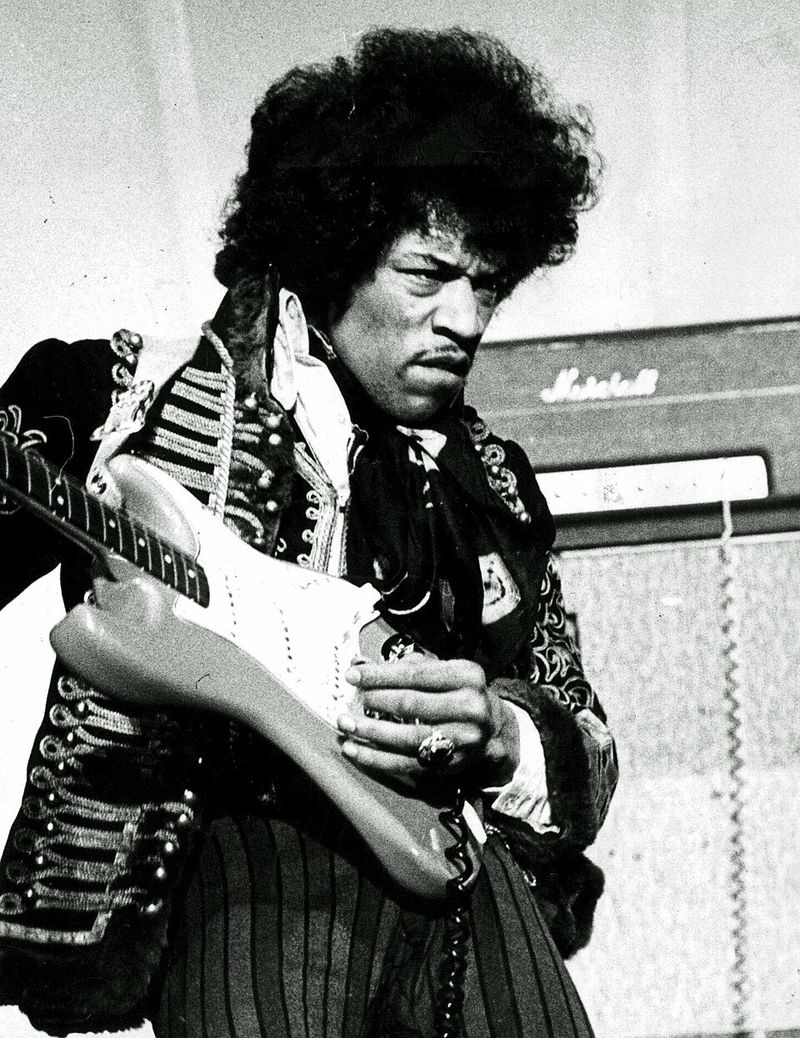
Playing under the name Jimmy James at small Greenwich Village clubs, Jimi Hendrix was not yet the icon the world would come to know. He had already left behind a career as a backing guitarist, formed a band called Jimmy James and the Blue Flames, and was grinding through New York’s competitive music scene with almost no recognition.
The turning point came when Animals bassist Chas Chandler caught his set at Cafe Wha? and recognized something the New York crowd had not fully embraced yet. Chandler helped bring Hendrix to London, where the right support and the right audience finally matched his vision.
That gap between talent and recognition is the real story. Hendrix was not hidden because he lacked ability.
He was waiting for the right context to make his sound land the way it deserved. London gave him that moment, and rock history changed because of it.
Eddie Van Halen Built a New Guitar Language Without Reading Music
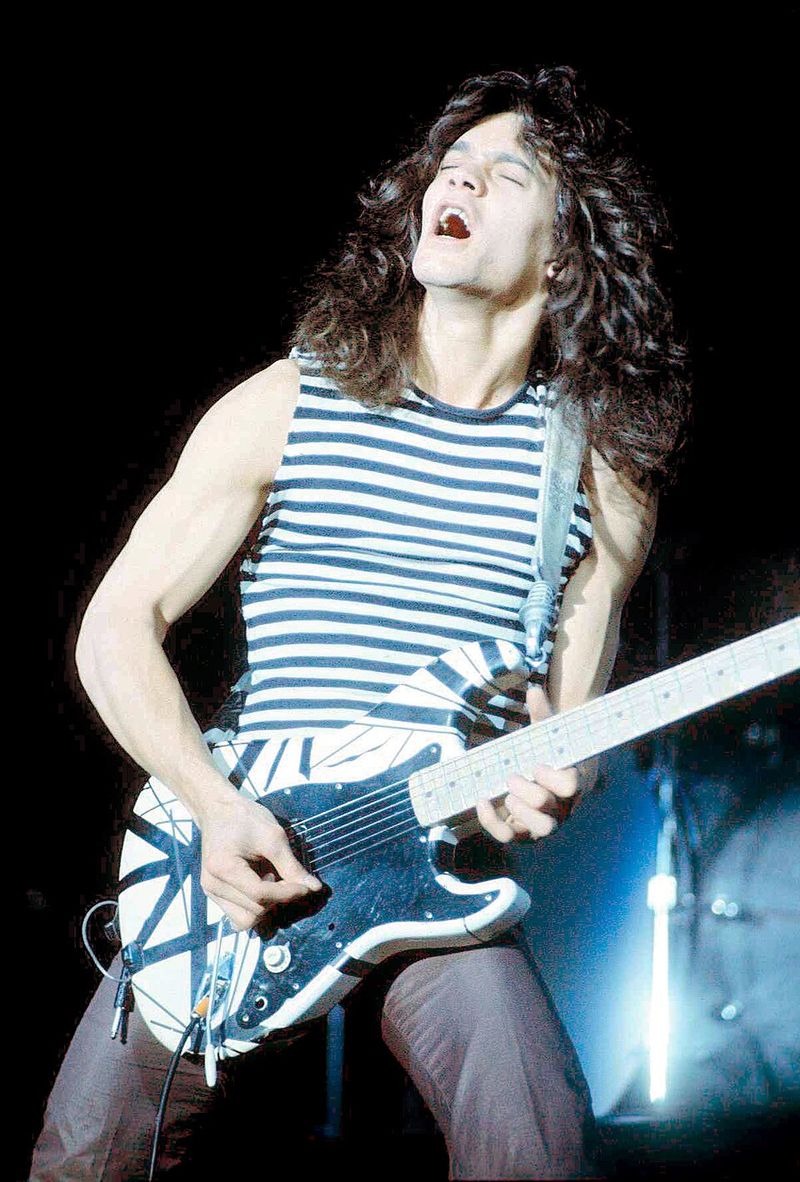
When Van Halen first hit radio stations and arenas in the late 1970s, Eddie Van Halen’s playing sounded like nothing anyone had heard before. The speed, the fluidity, and the two-hand tapping technique felt almost impossible to explain, especially once people learned he could not read a single note of sheet music.
In an EVH Gear interview, Eddie admitted that his inability to read music actually limited him when he tried to learn from songbooks. But that same limitation pushed him to develop everything by ear, to experiment with tone and technique without the guardrails of formal training.
His story challenges the idea that there is only one correct path to mastery. Imagination and obsessive experimentation filled the space where theory could have lived.
Generations of rock and metal guitarists still feel the impact of what Eddie built from pure instinct and curiosity, without a single lesson in music notation.
Stevie Ray Vaughan’s Hands Paid the Price for His Sound
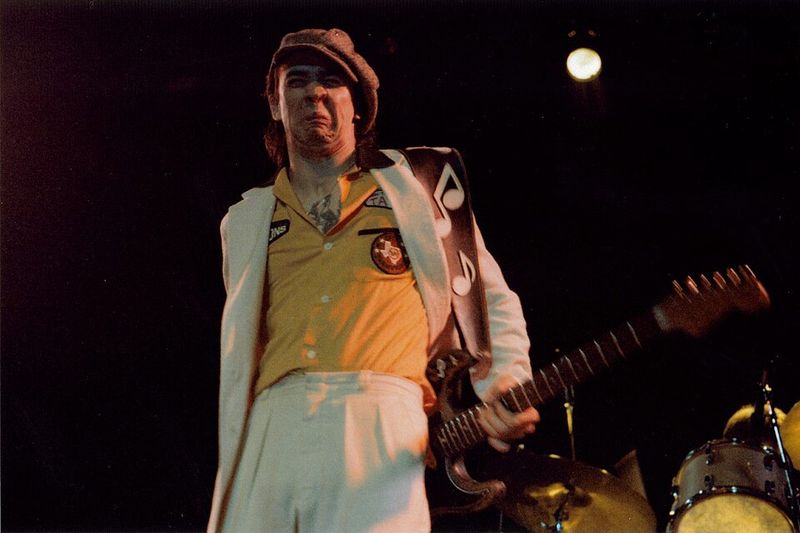
Stevie Ray Vaughan did not approach the guitar gently. His heavy string gauges, aggressive picking, and intense string bending created a tone that felt physical, emotional, and almost violent in the best possible way.
That approach came with a real cost to his body.
Accounts connected to his guitar tech Rene Martinez describe Vaughan turning to super glue and quick fixes when his fingertips were torn up mid-tour. Playing through that kind of wear was not just dedication.
It was a refusal to let anything get between him and the sound he was chasing.
That detail reframes what made Vaughan special. His blues playing was not just technically impressive.
It carried the physical reality of someone who pushed past comfort every single night. The pain behind the performance became inseparable from the power of the music, and listeners could feel that tension without ever knowing exactly why.
Prince’s Guitar Mystique Was Part of the Performance

Prince’s solo during “While My Guitar Gently Weeps” at the Rock and Roll Hall of Fame induction ceremony in 2004 remains one of the most replayed guitar moments of the modern era. It was technically stunning, emotionally charged, and ended with the guitar disappearing into the crowd in a way that felt completely planned and completely spontaneous at the same time.
Prince often played Telecaster-style Hohner Mad Cat guitars and replicas, and his longtime tech Takumi Suetsugu has spoken about the care that went into maintaining his gear. But the gear was only part of the equation.
Prince used mystery as a creative tool, keeping the technical side of his performance just out of reach.
Every element of a Prince guitar moment served the larger performance. The notes mattered, but so did the wardrobe, the movement, and the deliberate sense that something larger than music was happening.
That combination is what made him impossible to imitate.
Randy Rhoads’ Story Is One of Rock’s Greatest What-Ifs

Randy Rhoads arrived in rock at exactly the right moment. Ozzy Osbourne’s early solo career needed a guitarist who could carry classical influence into heavy metal without losing the raw power the genre demanded.
Rhoads delivered that balance in a way no one else had managed quite so cleanly.
His life ended on March 19, 1982, when he was 25 years old, in a plane crash near Leesburg, Florida, during a U.S. tour. The tragedy was compounded by reports that Rhoads had a genuine fear of flying, though not every detail of that account can be fully confirmed.
What remains undeniable is the size of the loss. Rhoads had already built a reputation that placed him among rock’s elite in just a few short years.
His story did not end with a long career or a slow decline. It froze mid-sentence, leaving fans and musicians to wonder what might have come next.
Django Reinhardt Reinvented Guitar After a Devastating Injury
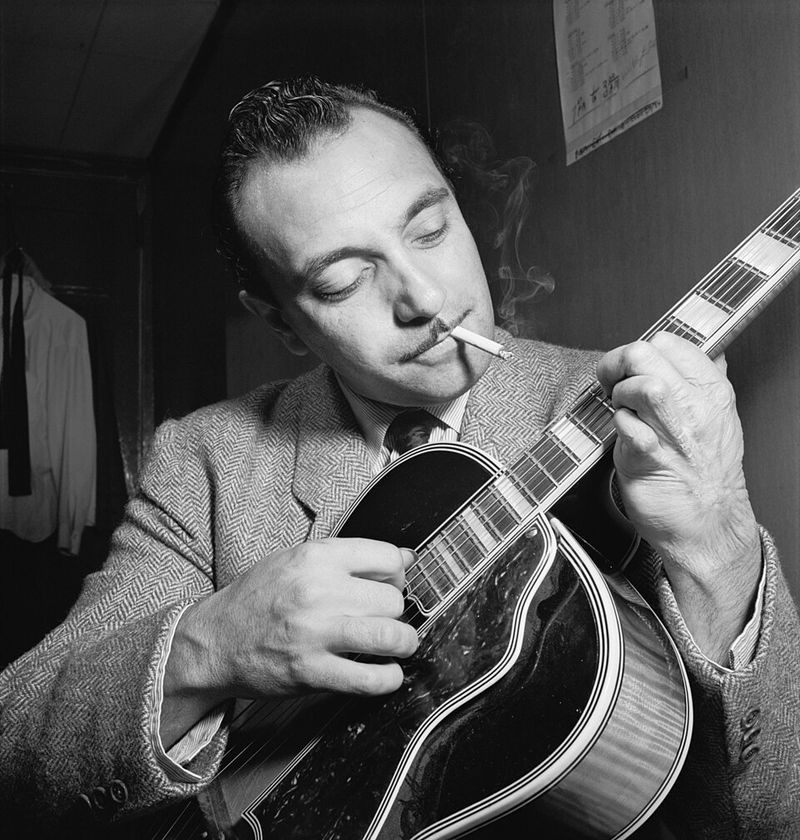
A fire tore through Django Reinhardt’s caravan in 1928, and the damage to his fretting hand was severe. His ring finger and little finger were left bent and partially paralyzed.
For most musicians, that kind of injury would have meant the end of a guitar career before it truly began.
Reinhardt refused that conclusion. The New Yorker described how he developed an entirely new approach to the instrument, relying primarily on his index and middle fingers while his damaged fingers contributed where they could.
The result was not a compromise. It was a new language.
His playing still sounds fluid, inventive, and fully alive today. Reinhardt became one of the defining jazz guitarists of the 20th century, and his gypsy jazz style continues to inspire players across genres.
The injury did not limit what he could say on the guitar. It shaped how he said it, and that difference became his legacy.
Chuck Berry’s Most Famous Riff Had Older Roots

Few guitar openings in history are more instantly recognizable than the intro to “Johnny B. Goode.” That opening riff helped define rock and roll for an entire generation, and Chuck Berry’s name became permanently attached to it.
But the riff had a predecessor that most listeners never knew about.
Guitar World points to Louis Jordan’s 1946 recording “Ain’t That Just Like a Woman,” where guitarist Carl Hogan played a line that Berry later reshaped into something sharper, faster, and more explosive. Berry took the raw material and transformed it into something new enough to stand entirely on its own.
That process is how music actually works across generations. Influence travels, gets absorbed, and comes back changed.
Berry’s genius was not in inventing from nothing. It was in recognizing a strong idea, understanding what it could become, and delivering it with enough energy and personality to make it feel completely fresh and completely his.
Yngwie Malmsteen’s Talent Came With a Complicated Reputation
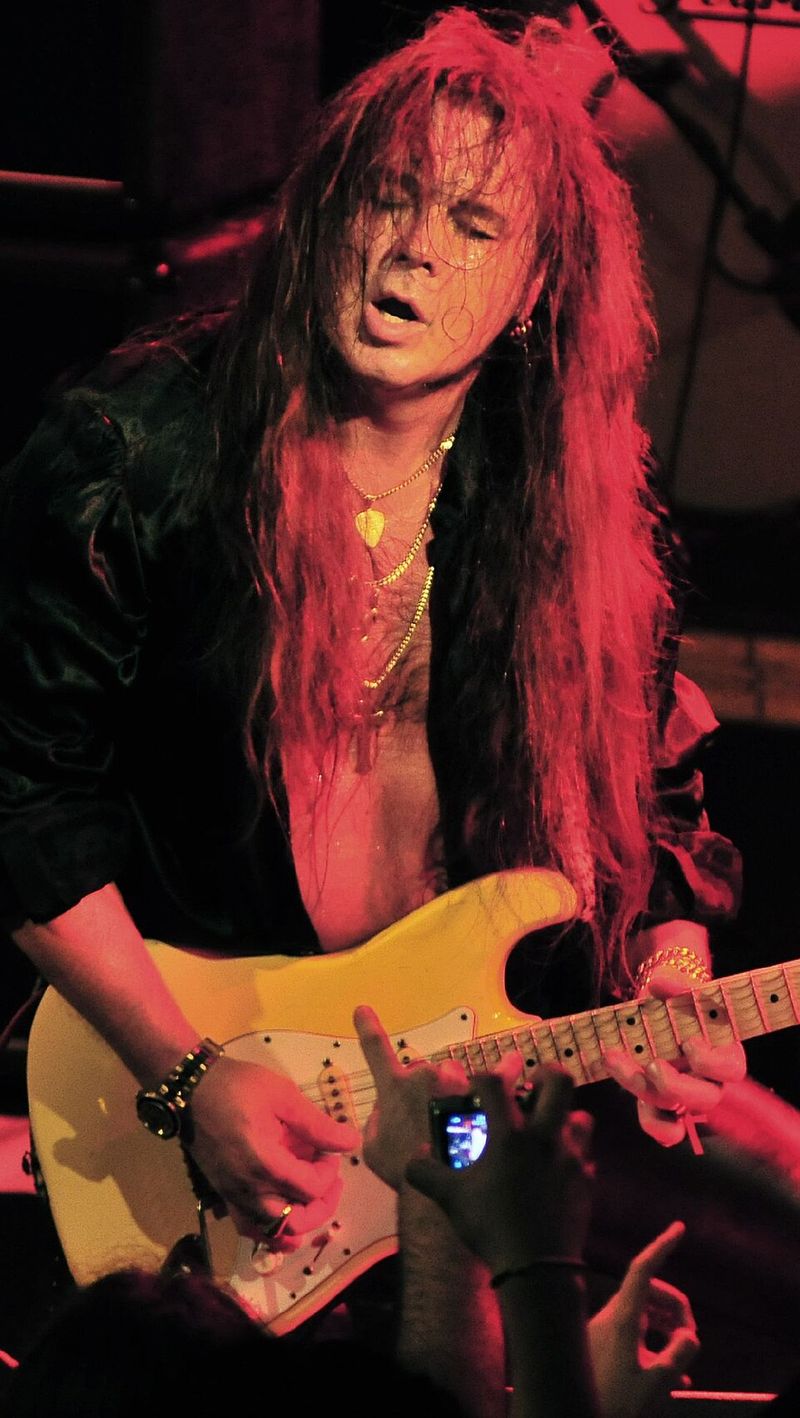
Yngwie Malmsteen arrived in the 1980s with a technique so fast and precise that he genuinely changed what rock guitarists thought was possible. His neoclassical approach, blending Baroque influences with hard rock aggression, created a style that spawned an entire subgenre of imitators who never quite caught up to the original.
But the conversations around Malmsteen have never been purely about his playing. Singer Graham Bonnet, who worked with him in Alcatrazz, later described a stage presence that could overshadow other performers and a personality that made collaboration difficult.
Those accounts followed Malmsteen through much of his career.
The honest version of his story holds both things at once. His technical ability was never seriously questioned by anyone who listened carefully.
But virtuosity and teamwork do not always travel together easily. Malmsteen’s career became a case study in what happens when extraordinary skill shares space with an outsized competitive drive that rarely switches off.
Brian May Built His Signature Sound at Home
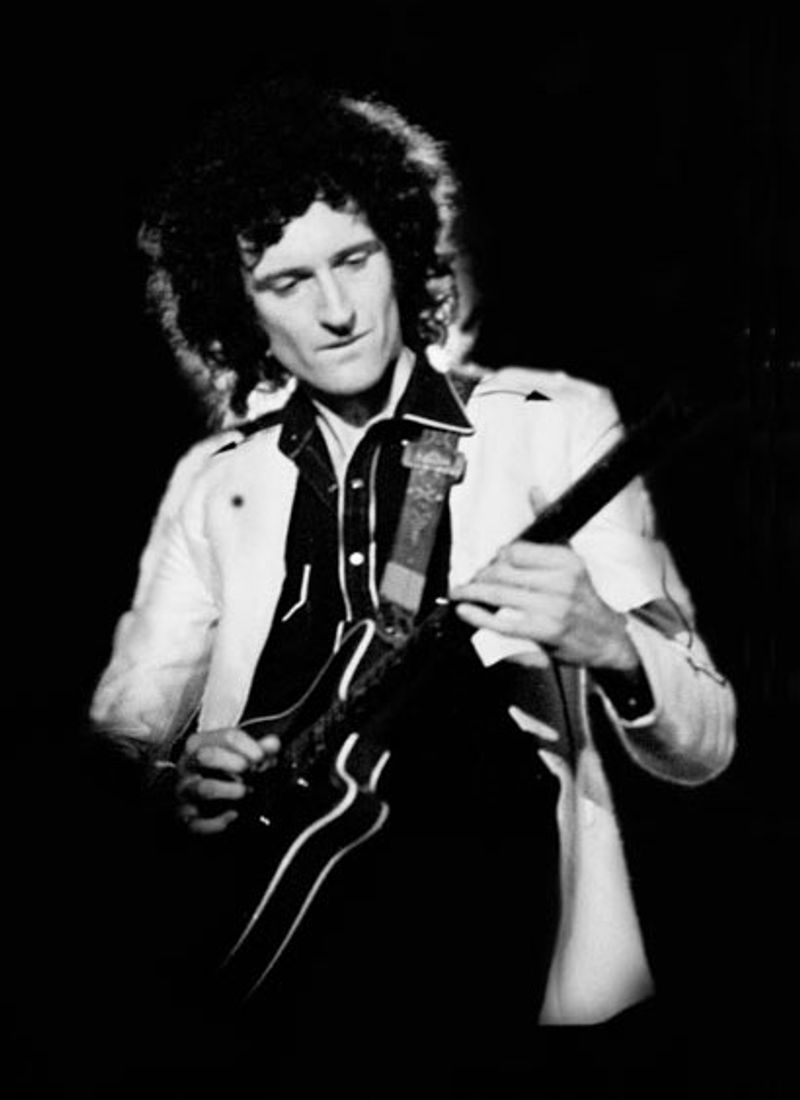
Most iconic guitars in rock history were purchased. Brian May’s was built.
He and his father Harold constructed the Red Special at home using whatever materials they could find, including wood taken from an 18th-century fireplace mantel that a family friend had been planning to discard.
Brian May’s official site documents the construction in detail, describing the creativity and patience that went into building an instrument that would eventually be heard on some of the biggest albums in rock history. The Red Special became inseparable from Queen’s sound, showing up on recordings from “Bohemian Rhapsody” to “We Will Rock You.”
May’s story pushes back against the assumption that great sound requires expensive gear. What it actually requires, at least in his case, was a curious mind, a willing partner, and enough patience to build something from scratch.
The fireplace mantel became a rock artifact, which is the kind of origin story that feels almost too good to be real.
Kurt Cobain Knew Smells Like Teen Spirit Was Not Purely Original

“Smells Like Teen Spirit” arrived in 1991 and turned Nirvana into one of the biggest bands on the planet almost overnight. The riff was simple, the quiet-loud dynamic was perfectly timed, and the cultural moment was exactly right.
But Kurt Cobain had complicated feelings about all of it almost from the beginning.
He openly admitted that he was trying to write something in the style of the Pixies, a band he genuinely admired. Multiple accounts record his own explanation that the song was his attempt at a Pixies-inspired pop anthem.
He was not hiding that influence. He was being honest about how songwriting actually works.
That candor is part of what made Cobain interesting beyond the music. He understood that influence is not the same as theft, but he also grew uncomfortable with the scale of the song’s success.
The riff he borrowed from his heroes ended up defining a generation he was not sure he wanted to represent.
B.B. King Proved Feeling Can Matter More Than Chords
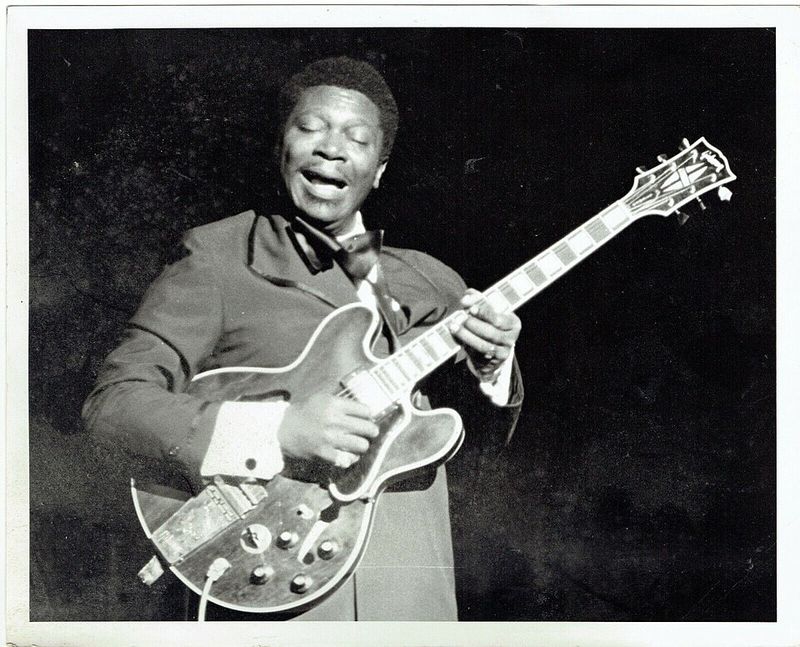
B.B. King’s approach to the guitar was built around a simple but radical idea: one note played with complete feeling is worth more than ten notes played without it.
He was not known for dense chord voicings or complex harmonic structures. His power lived in single-note lines, perfectly timed bends, and a vibrato so distinctive it became his signature.
His official biography recalls a moment when he joked to U2 that he did not “do chords,” a line that perfectly captured his philosophy. King stripped the guitar down to its emotional core and found that the space between notes could carry as much weight as the notes themselves.
That approach influenced virtually every blues guitarist who came after him, and its lessons extended far beyond blues. King demonstrated that restraint is a form of confidence.
Knowing what to leave out requires as much skill as knowing what to play, and few musicians ever understood that balance as completely as he did.
Tony Iommi’s Factory Accident Helped Shape Heavy Metal

At 17 years old, Tony Iommi was working in a sheet metal factory when an accident removed the tips of his right middle and ring fingers on his fretting hand. His official biography describes how he nearly gave up guitar entirely before a friend played him a Django Reinhardt record and showed him that limitation does not have to mean surrender.
Iommi built homemade prosthetic fingertips from plastic and melted detergent bottles to protect the sensitive ends of his fingers. He also tuned his guitar down significantly, which reduced string tension and made playing more manageable.
That lower tuning gave Black Sabbath’s riffs a darker, heavier, more ominous character.
The accident that could have ended a career instead helped define a genre. Metal’s characteristic heaviness owes something real to a factory injury, a homemade solution, and a young guitarist who refused to stop.
Iommi’s adaptations became part of the genre’s foundation in ways that most fans never fully realize.
Sister Rosetta Tharpe Deserved More Credit From the Beginning
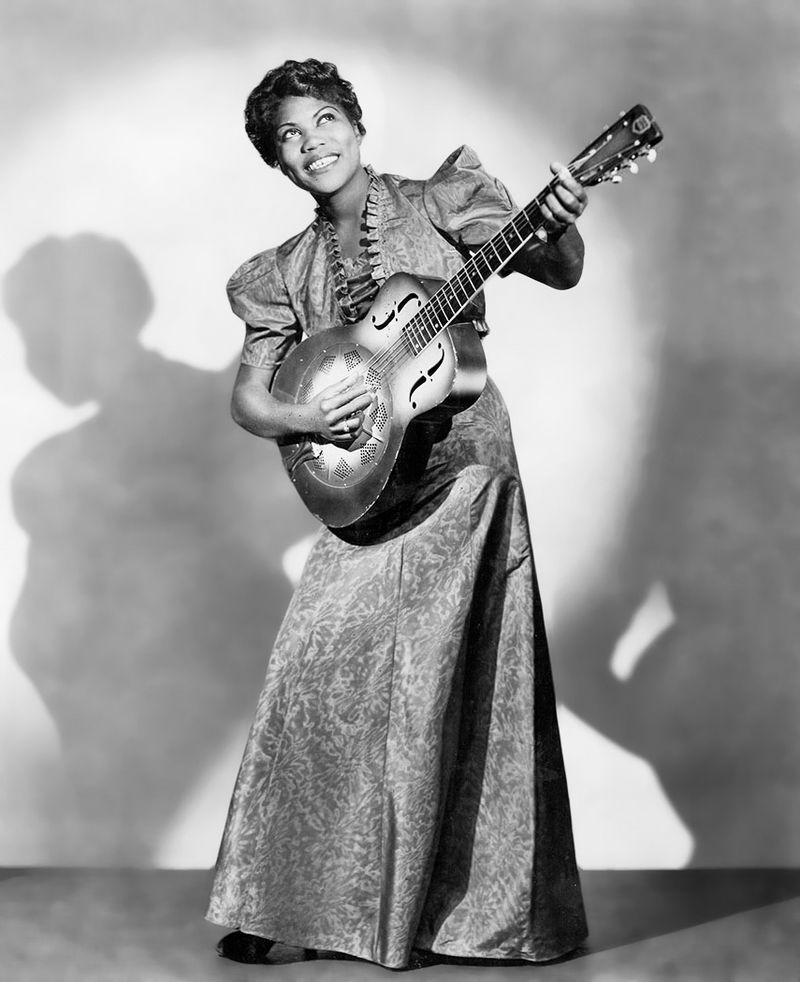
Long before Chuck Berry perfected the duck walk or Little Richard turned up the volume, Sister Rosetta Tharpe was already doing something radical. She was playing electric guitar with gospel fire and a showmanship that influenced nearly every major figure who came after her.
The Smithsonian has documented her direct influence on Chuck Berry, Elvis Presley, Jerry Lee Lewis, and Little Richard.
For too long, her name was left out of the conversation about rock and roll’s origins. She was a Black woman working in gospel and spiritual music at a time when the industry had narrow ideas about who could be a guitar hero.
That combination of factors pushed her contribution to the margins of official history.
Recognition came slowly and partially. She was inducted into the Rock and Roll Hall of Fame in 2018, decades after many of the musicians she influenced had already been honored.
Her story is a reminder that history does not always record its sources accurately the first time around.
David Gilmour’s Pink Floyd Story Is More Complicated Than a Firing Rumor

Pink Floyd’s history is full of tension, lineup changes, and creative battles that stretched across decades. David Gilmour’s official biography credits his guitar playing, vocals, and songwriting as central pillars of the band’s worldwide success, particularly on landmark albums like The Dark Side of the Moon and Wish You Were Here.
Some accounts have described Gilmour as being fired from the band at various points, but those specific claims are difficult to pin down through reliable sources. What is more clearly documented is that Floyd’s internal dynamics were complicated, and that Gilmour’s calm, melodic approach to the guitar often served as an emotional anchor during periods of significant creative conflict.
His playing style is a study in patience. Where other guitarists reach for speed or complexity, Gilmour reaches for space.
A single sustained note in the right moment can carry more emotional weight than an entire solo played faster. That instinct for restraint made him one of the most beloved guitarists in rock history.
John Frusciante’s Departures Were About More Than Rock-Star Drama

John Frusciante’s relationship with the Red Hot Chili Peppers has been one of the stranger ongoing stories in modern rock. He first quit the band in 1992, during a period when his personal struggles were intensifying in ways that made continued touring nearly impossible.
His later return brought some of the band’s most celebrated recordings.
He confirmed a second departure during the group’s hiatus in the late 2000s, and the reasons were rooted in creative direction rather than conflict. Frusciante has always been candid about wanting his solo work and outside projects to have room to grow, and the Chili Peppers’ demands made that balance difficult.
Colorful folklore sometimes surrounds the story of why he left the first time, but the more factual account is about someone navigating the emotional weight of fame while trying to stay creatively honest. His returns to the band consistently produced strong work, suggesting that absence, for him, was sometimes a necessary part of the creative cycle.
Link Wray Turned a Damaged Speaker Sound Into Rock History

“Rumble” arrived in 1958 and immediately sounded like a threat. The guitar tone was dirty, aggressive, and deliberately unsettling in a way that most recordings of that era carefully avoided.
Link Wray got that sound by punching holes in his speaker with a pencil, according to a Washington Post account, recreating the raw distortion he heard in his head.
The song was reportedly banned from airplay in major markets including New York and Boston. An instrumental guitar track with no lyrics was considered dangerous enough to keep off the radio, which says something remarkable about how threatening that tone actually sounded at the time.
The Washington Post also credits “Rumble” with helping introduce the power chord as a foundational rock element. That combination of distortion, aggression, and raw electric attitude predates most of what people think of as the beginning of hard rock.
Wray built something genuinely new from a damaged piece of equipment, and the genre has been living with that discovery ever since.
Paco de Lucia’s Brilliance Was Built on Brutal Discipline

Paco de Lucia’s flamenco playing had a quality that seemed almost beyond what ten fingers and six strings could produce. The speed, precision, and emotional depth of his technique placed him in a category that most guitarists could admire but not realistically approach.
What made that level of mastery possible was not mysterious. It was relentless work.
The Guardian’s obituary described a childhood shaped by his guitarist father’s intense demands, with practice sessions reportedly running 10 to 12 hours a day. That kind of training does not leave much room for a normal childhood, and Paco later spoke about the weight of that upbringing alongside his gratitude for what it produced.
His later career expanded flamenco’s boundaries, bringing it into dialogue with jazz and classical music without losing the emotional directness that makes the tradition so powerful. Paco’s story complicates the romantic idea of natural genius.
The gift was real, but it was sharpened through years of work that most people would find genuinely difficult to sustain.
Share this story