Some rock songs tell unforgettable stories. Others barely need words at all.
A great guitar hook can become the part everyone waits for, the few notes that identify a song before the singer has even opened their mouth. Sometimes the lyrics are perfectly good, but the guitar is so memorable that everything else feels secondary.
From the Rolling Stones and Deep Purple to AC/DC and Guns N’ Roses, these 20 songs prove that sometimes the guitar gets the best line.
1. Smoke on the Water by Deep Purple
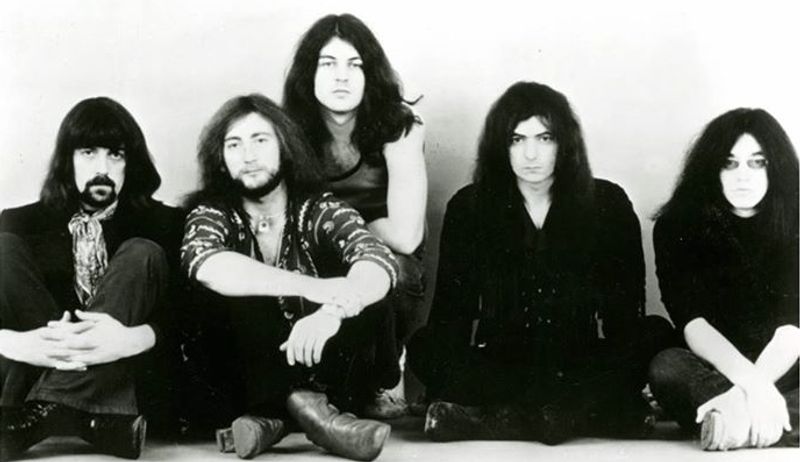
Few guitar parts have ever achieved the instant recognition of Ritchie Blackmore’s opening to Smoke on the Water. Released on Machine Head in March 1972, the song recounts a fire that broke out on December 4, 1971, in Montreux, Switzerland, during a Frank Zappa concert at the casino complex.
Deep Purple had booked the casino with the Rolling Stones Mobile Studio to record their album. The lyrics are unusually literal, documenting the incident while the band recorded at the Grand Hotel.
But the riff became bigger than the story. Blackmore developed a four-note blues scale melody in G minor, harmonized in parallel fourths.
The guitar made it immortal.
2. Day Tripper by The Beatles
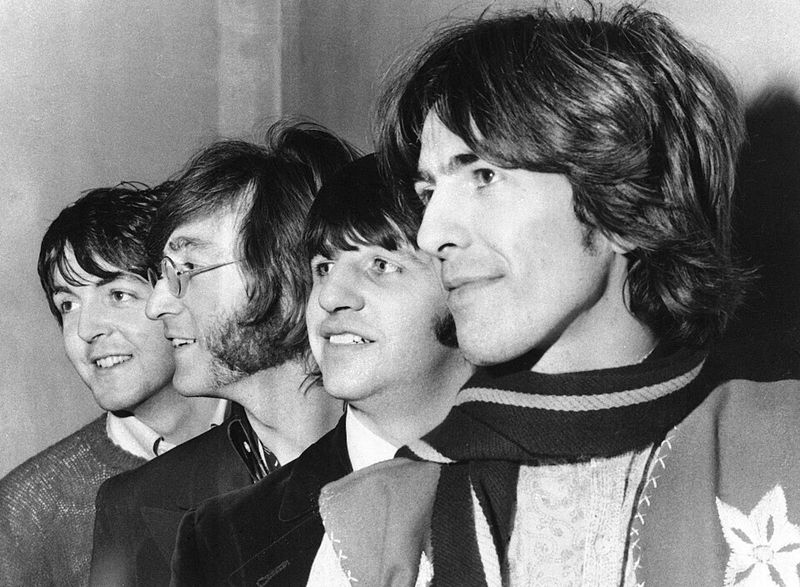
John Lennon once claimed full ownership of Day Tripper, stating, ‘That’s mine, including the lick, the guitar break and the whole bit.’ Released on December 3, 1965, as a double A-side with We Can Work It Out, the riff Lennon conceived was largely played by George Harrison on the recording.
The words are deliberately ambiguous, referencing both casual tourism and psychedelic culture. But the riff needs no interpretation.
It establishes the entire personality of the recording before the vocals arrive. A handful of carefully placed guitar notes did most of the work.
3. Sunshine of Your Love by Cream
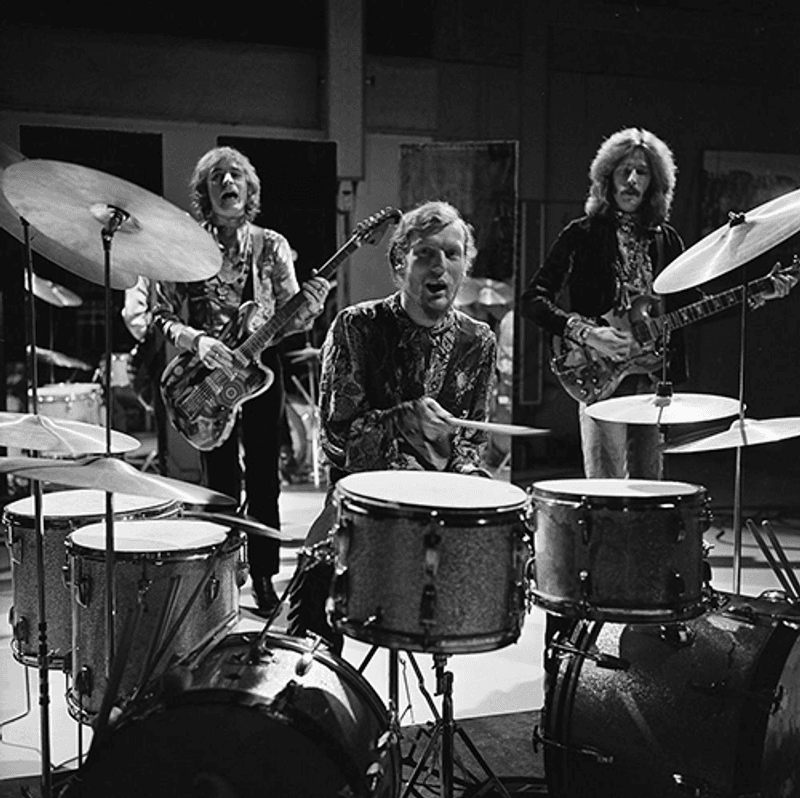
Cream had three extraordinary musicians, but Sunshine of Your Love belongs to its riff. Jack Bruce developed the central bass figure after attending a Jimi Hendrix Experience concert at the Saville Theatre in London on January 29, 1967.
Ginger Baker later added a distinctive tom-tom drum rhythm around it.
Released on Disraeli Gears in November 1967, the song combines psychedelic rock with blues and a heavy rhythmic pulse. The lyrics are straightforward romantic longing.
Clapton’s solo employed his famous woman tone, achieved by using the neck pickup with the tone knob fully lowered through a Marshall stack. The guitar sounds considerably more dangerous than the words.
4. Whole Lotta Love by Led Zeppelin
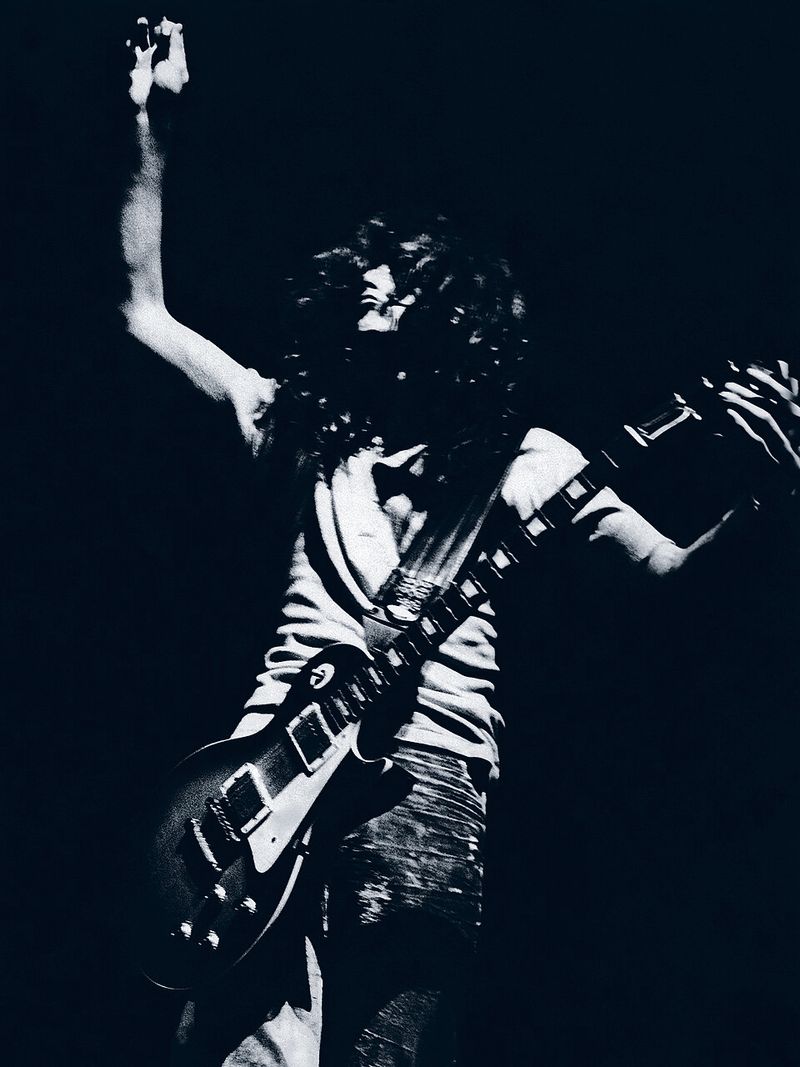
Jimmy Page needed only a few notes to announce Whole Lotta Love. He developed the guitar riff in the summer of 1968, playing two strings in unison while bending one to slightly alter the pitch, creating a sound like twin guitars.
John Paul Jones doubled the part on bass.
Released on Led Zeppelin II in October 1969, the song helped establish the enormous sound that defined the band throughout the 1970s. Some lyrics drew from Willie Dixon’s You Need Love, leading to a 1985 lawsuit and subsequent songwriting credit.
The guitar riff had no such identity problem. In 2014, BBC Radio 2 listeners voted it the greatest guitar riff of all time.
5. Satisfaction by The Rolling Stones
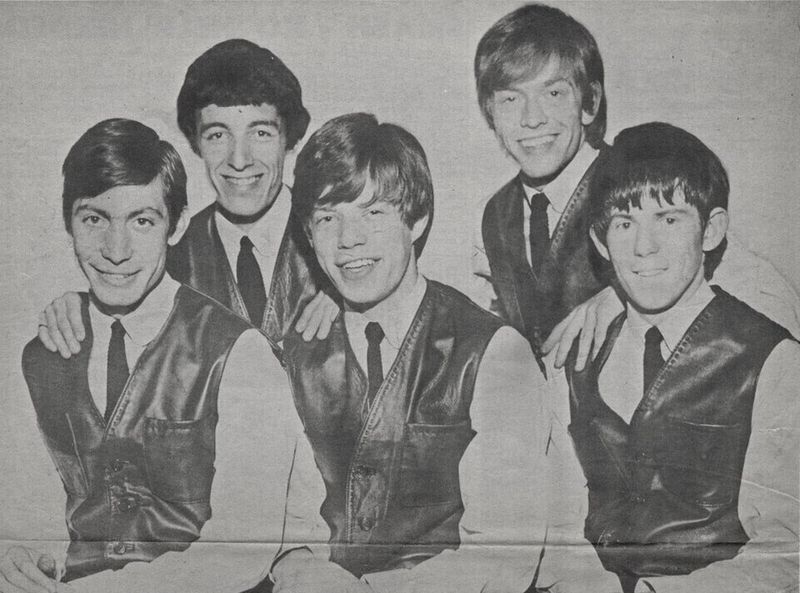
Keith Richards reportedly conceived the riff to (I Can’t Get No) Satisfaction while half asleep, recording about two minutes of acoustic guitar on a Philips cassette player before falling back asleep and snoring for forty minutes. That sleepy fragment became one of rock’s most famous sounds.
Released in the United States on June 4, 1965, the song turned Richards’ fuzz-covered guitar line into a worldwide anthem. Mick Jagger’s lyrics tackled frustration, advertising, and consumer culture.
Richards initially imagined horns playing the figure, using a Gibson Maestro Fuzz-Tone pedal as a placeholder. The distorted version became so iconic it sold out fuzzbox stock across the country by year’s end.
6. Oh, Pretty Woman by Roy Orbison
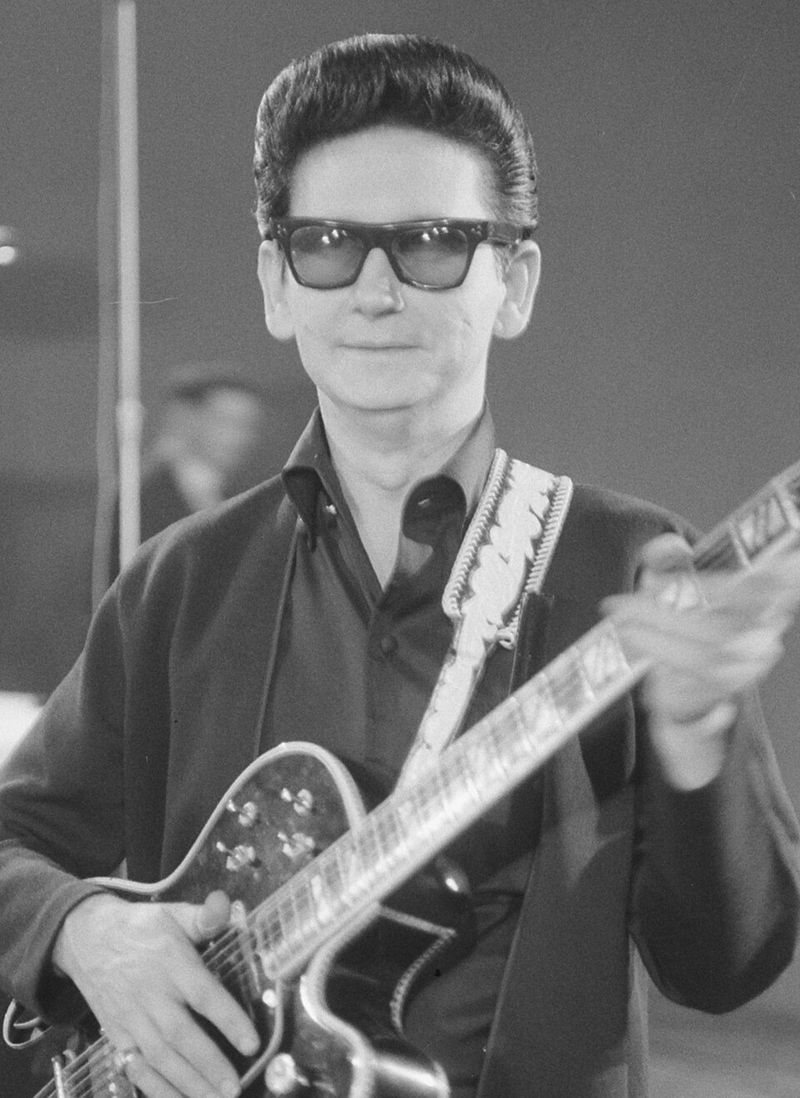
Roy Orbison possessed one of popular music’s most extraordinary voices, and yet Oh, Pretty Woman gives the guitar a genuine chance to compete with him. Co-written by Orbison and Bill Dees, the song was inspired by Orbison’s wife, Claudette.
Session guitarist Billy Sanford played the song’s distinctive introductory riff.
Released as a single in August 1964, the muscular guitar figure immediately separated it from the smoother ballads for which Orbison was already famous. The lyric follows a man watching an attractive woman pass on the street.
The song was inducted into the Grammy Hall of Fame in 1999 and named among the Rock and Roll Hall of Fame’s 500 Songs that Shaped Rock and Roll. The guitar gets the first unforgettable moment.
7. You Really Got Me by The Kinks
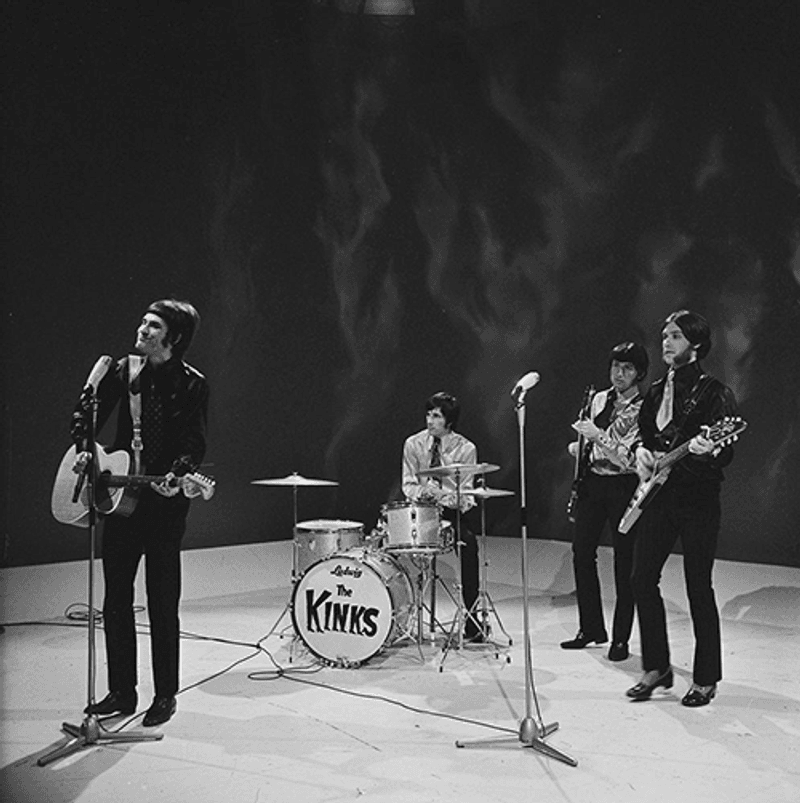
Dave Davies helped change rock guitar by attacking his amplifier. Seeking a dirtier tone, he famously slashed the speaker cone of his small green Elpico AC55 amplifier with a razor blade and a knitting needle, creating a uniquely aggressive sound that became central to You Really Got Me.
Released in the UK on August 4, 1964, the song is built around a brutally simple riff. Ray Davies originally conceived it on piano with a jazz feel, imagining a saxophone playing the hook.
Dave’s distorted guitar gave the record its revolutionary aggression. Musicologists have called it one of the first songs built entirely on the power chord, influencing generations of rock, punk, and metal musicians.
8. Iron Man by Black Sabbath
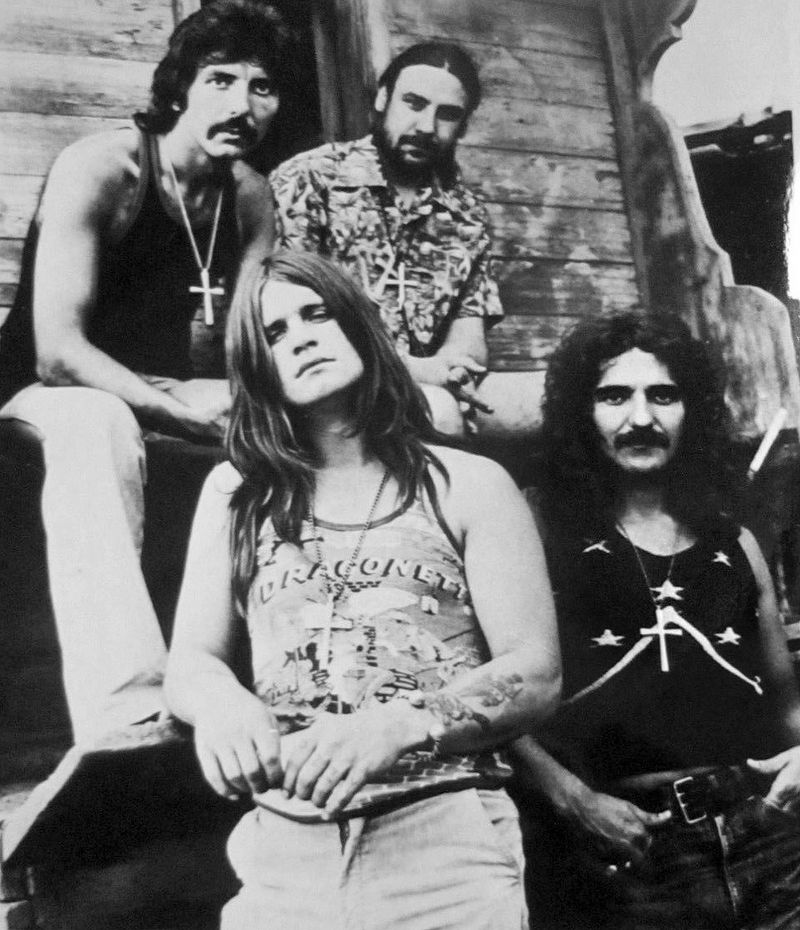
Tony Iommi created the main riff while jamming with drummer Bill Ward, who was laying down a heavy bass drum beat. The riff’s slow tempo and use of power chords in E minor give it extraordinary weight.
Geezer Butler later wrote the science-fiction narrative about a time-traveler transformed into steel.
Released on Black Sabbath’s Paranoid album on September 18, 1970, in the UK, the song became one of heavy metal’s defining recordings. Ozzy Osbourne’s distorted opening vocal was likely achieved through a ring modulator.
VH1 ranked Iron Man as the greatest heavy metal song of all time. Decades later, those opening notes remain the quickest way to summon the entire sound of early heavy metal.
9. Rebel Rebel by David Bowie
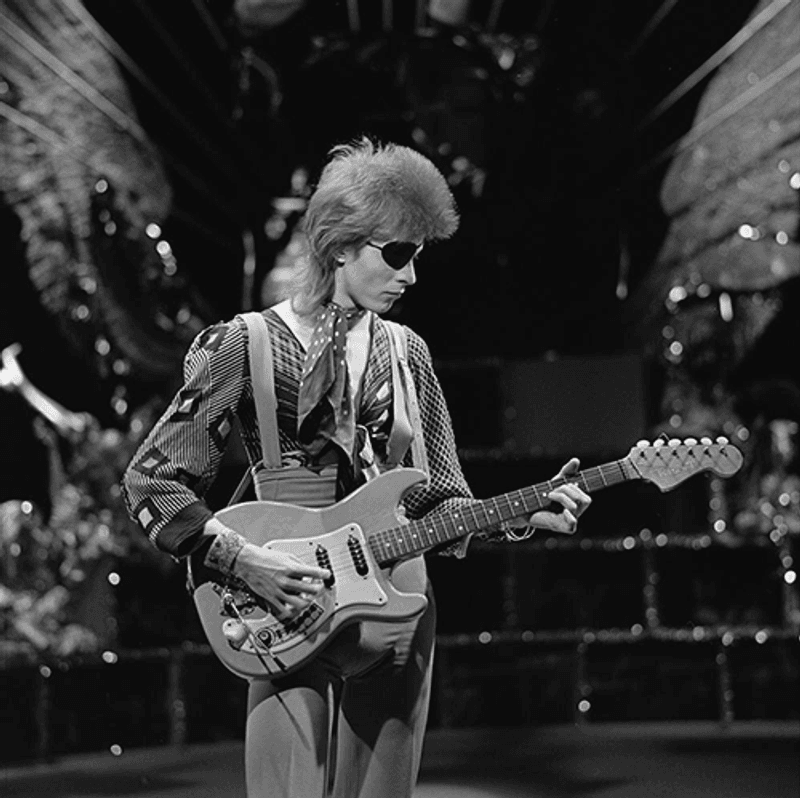
David Bowie did not need a famous guitar hero to create one of glam rock’s greatest riffs. He largely handled the guitar himself on Rebel Rebel, released as a single in February 1974.
The hook circles relentlessly through the song, giving it a raw rock quality that contrasted with Bowie’s more elaborate productions.
The lyrics play with identity, rebellion, and gender ambiguity, all familiar territory during the Ziggy Stardust and Aladdin Sane era. But the riff is what makes the record irresistible.
Bowie was celebrated primarily as a songwriter, singer, and conceptual artist. Rebel Rebel is a useful reminder that he could also produce a guitar hook capable of carrying an entire hit on its own.
10. Layla by Derek and the Dominos
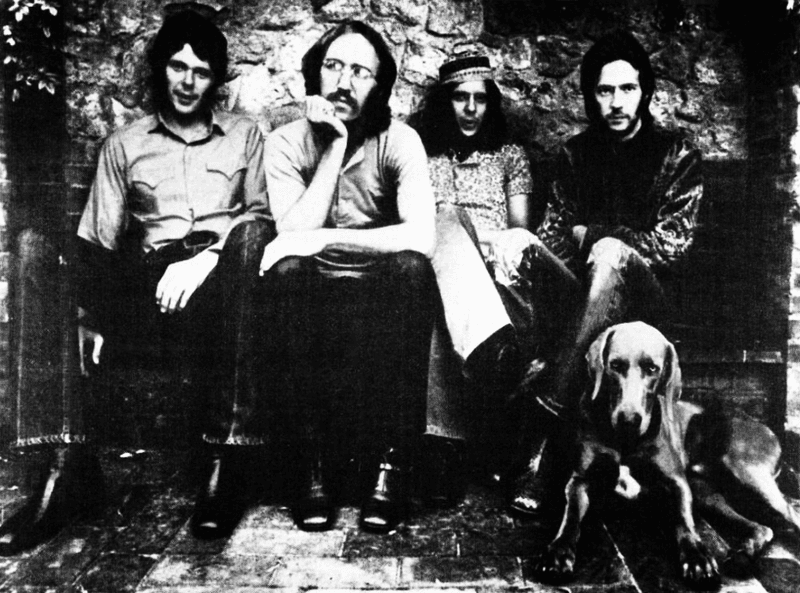
Layla contains enough emotional turmoil for several songs. Eric Clapton and Jim Gordon received songwriting credit, and Clapton’s lyrics were inspired by his intense feelings for Pattie Boyd, who at the time was married to his friend George Harrison.
Yet before listeners encounter that story, they encounter the riff.
Duane Allman and Clapton’s interlocking guitar work gives the opening an almost frantic intensity. Then the song changes completely, opening into a lengthy piano-led coda decorated by soaring slide guitar.
The lyrics explain the desperation behind Layla. The instruments communicate it even more effectively.
It is impossible to imagine the song without those guitars.
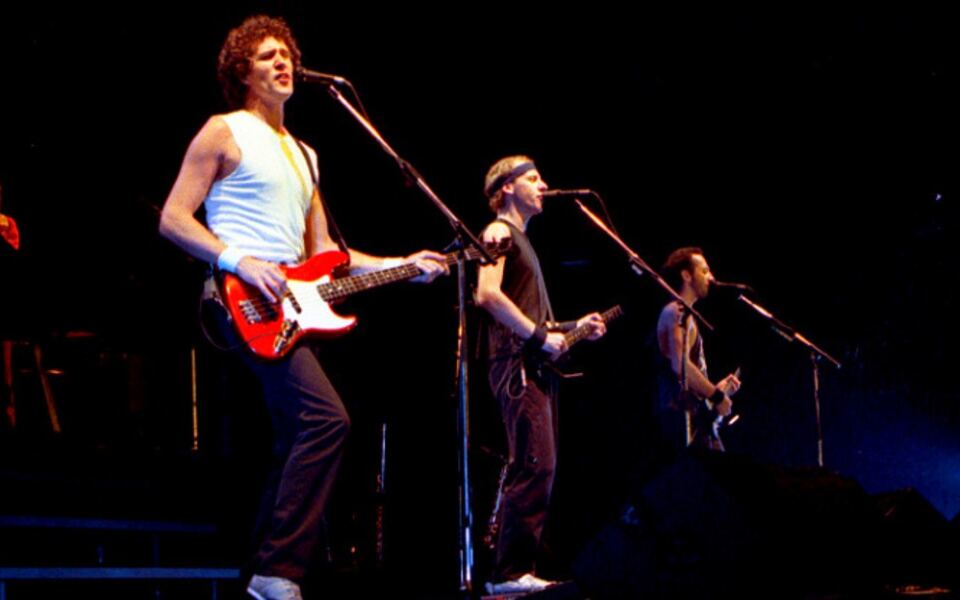
11. Money for Nothing by Dire Straits
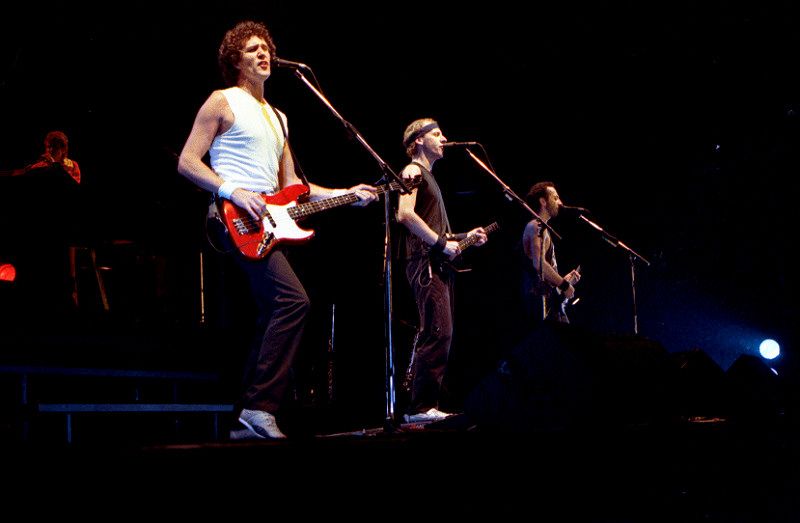
Mark Knopfler’s guitar on Money for Nothing sounds almost mechanical, a deliberate departure from his usual clean fingerstyle approach. Released in 1985 on Brothers in Arms, the song emerged from observations Knopfler made while listening to appliance store workers comment on music videos playing on television sets around them.
The lyrics deliberately adopt the voice of an ignorant narrator, which has made some broadcasts and reissues controversial. The guitar presents no such ambiguity.
Knopfler used a Schecter Custom Stratocaster through a Mesa/Boogie amplifier to achieve the massive distorted tone.
After Sting’s opening vocal, that riff takes possession of the recording entirely. The MTV-era production sounded futuristic in 1985.
The guitar sounded timeless.
12. Sweet Child o’ Mine by Guns N’ Roses
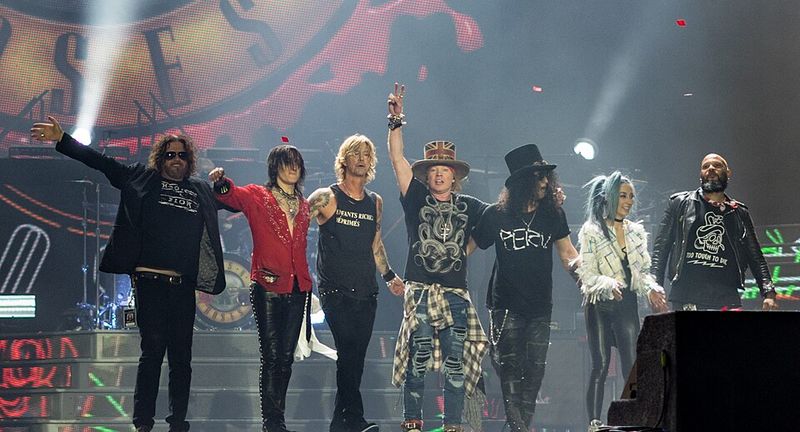
Slash reportedly began playing the opening figure as a warm-up exercise during a band rehearsal. Duff McKagan recognized a song in it and encouraged the band to develop it further.
That accidental beginning became one of rock’s most iconic opening guitar passages.
Sweet Child o’ Mine appeared on Guns N’ Roses’ 1987 debut Appetite for Destruction and eventually became the band’s only number one single on the Billboard Hot 100. Axl Rose’s lyrics were inspired by his relationship with Erin Everly and are considerably more tender than the band’s reputation suggested.
The repeating pattern sounds intricate without losing melodic simplicity. Millions of guitarists have tried to reproduce it since.
The guitar made it unmistakably Guns N’ Roses.
13. Walk This Way by Aerosmith
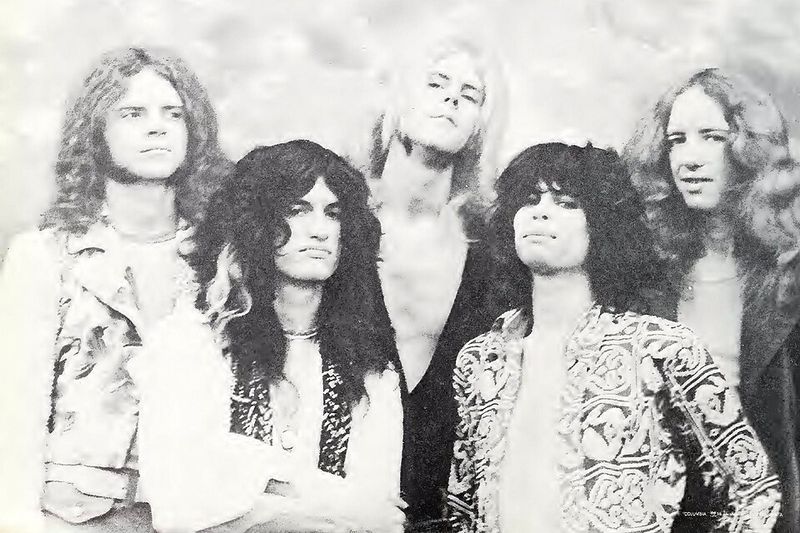
Joe Perry’s opening riff carries so much personality that Aerosmith could build an entire song around it, and they did. Released originally on Toys in the Attic in 1975, Walk This Way combines hard rock guitar with a rhythmic groove that had something unusually funky about it from the start.
Steven Tyler’s rapid-fire lyrics are packed with teenage energy and wordplay. But it was Perry’s riff that ultimately allowed the song to cross into another musical world entirely.
When Run-D.M.C. recorded their groundbreaking version with Tyler and Perry in 1986, the same guitar hook became a bridge between rock and hip-hop audiences. Few riffs in rock history have proved that culturally adaptable.
14. La Grange by ZZ Top
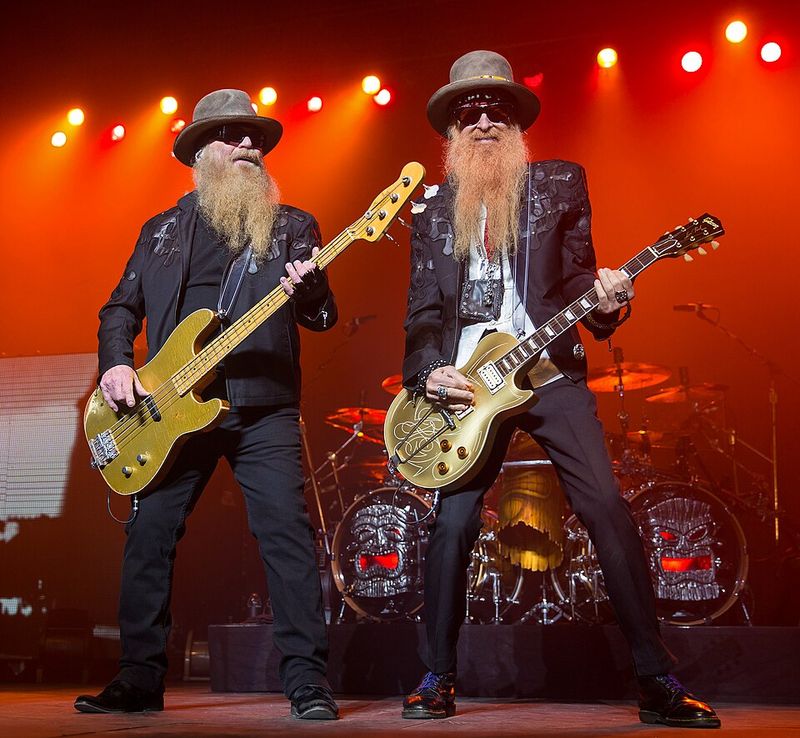
La Grange does not need complicated lyrics because Billy Gibbons’ guitar communicates almost everything. Released in 1973 on Tres Hombres, the song was inspired by a Texas establishment later made famous by the musical The Best Little Whorehouse in Texas.
Gibbons delivers more murmurs and vocal sounds than actual words throughout.
The song begins with a restrained boogie pattern before exploding into a heavier section. Its rhythmic foundation drew on the blues tradition of John Lee Hooker’s Boogie Chillen, recorded in 1948.
ZZ Top transformed that language into something distinctly their own. If ever a rock song proved a guitarist could communicate more through tone and rhythm than through lyrics, La Grange is it.
15. Barracuda by Heart
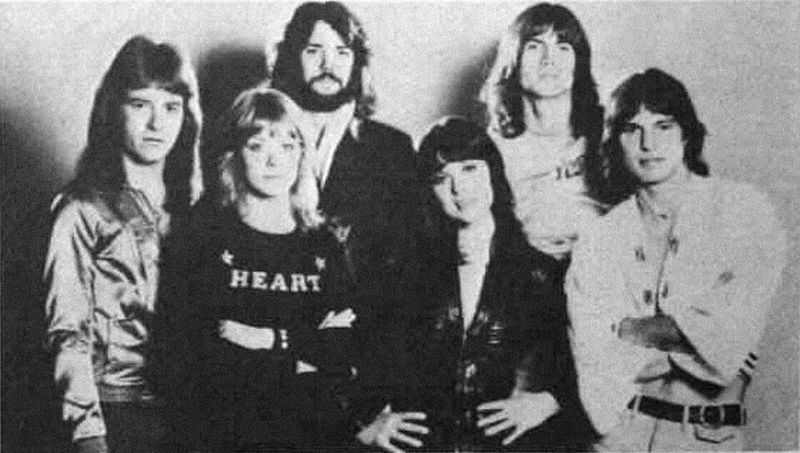
Barracuda begins as if the guitar is charging directly at the listener. Heart released the song in 1977 after tensions with their record label and misleading publicity surrounding sisters Ann and Nancy Wilson helped inspire its confrontational lyrics.
The words are biting, but the guitar is even more effective.
Roger Fisher and Nancy Wilson developed the galloping riff that drives the recording, while the rhythm section gives it relentless forward momentum. The riff has become so closely associated with Heart that only a few seconds are necessary to identify it.
Ann Wilson’s vocal performance is powerful enough to compete with the guitar. Barracuda contains one of rock’s strongest singers, yet the guitar still manages to steal the opening entirely.
16. Can’t You Hear Me Knocking by The Rolling Stones
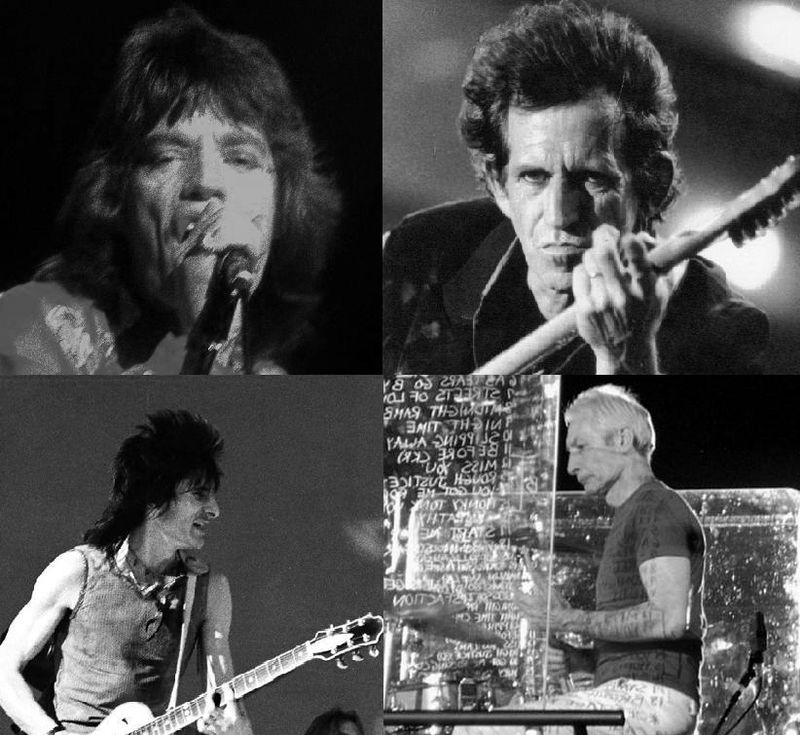
The opening of Can’t You Hear Me Knocking is Keith Richards at his loosest and most recognizable. Released on Sticky Fingers in April 1971, the track begins with an economical guitar riff that sounds as though it simply appeared in the room.
Mick Jagger enters quickly, but the guitar has already established the song’s attitude.
Then something unexpected happens. The tightly constructed rock song opens into an extended instrumental jam featuring saxophone from Bobby Keys and lead guitar from Mick Taylor, running well past the seven-minute mark.
What began as a compact Stones riff becomes something far more expansive. The lyrics are almost beside the point by then, as the musicians gradually take full control of the recording.
17. China Grove by The Doobie Brothers
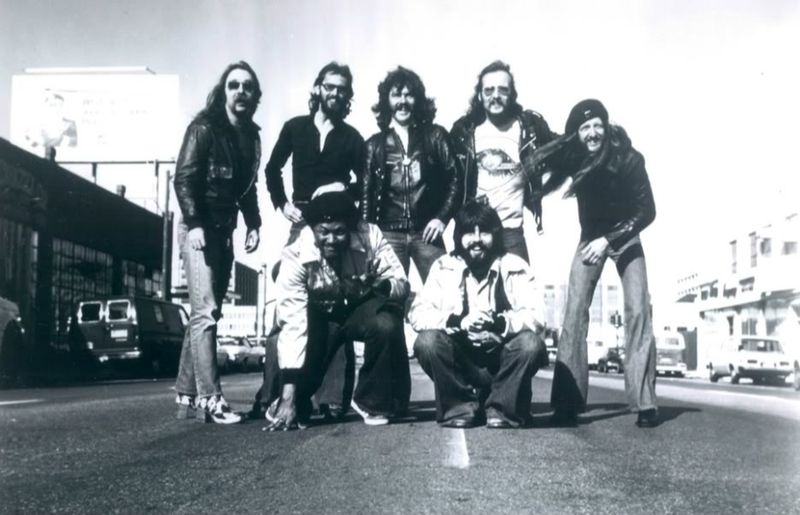
China Grove starts with a guitar figure built for large speakers and loud rooms. Tom Johnston wrote the song and supplied the riff that helped turn it into one of the Doobie Brothers’ most recognizable tracks.
Released on The Captain and Me in 1973, it became a staple of early FM rock radio.
The track takes its name from the real community of China Grove, Texas, although Johnston has explained he knew little about the actual town when writing his imaginative lyrics. The words create a colorful fictional version of the place.
The riff is considerably more concrete than the lyrics. It is punchy, rhythmic, and immediately recognizable.
Most listeners probably need only the opening guitar to know exactly where they are headed.
18. Mississippi Queen by Mountain
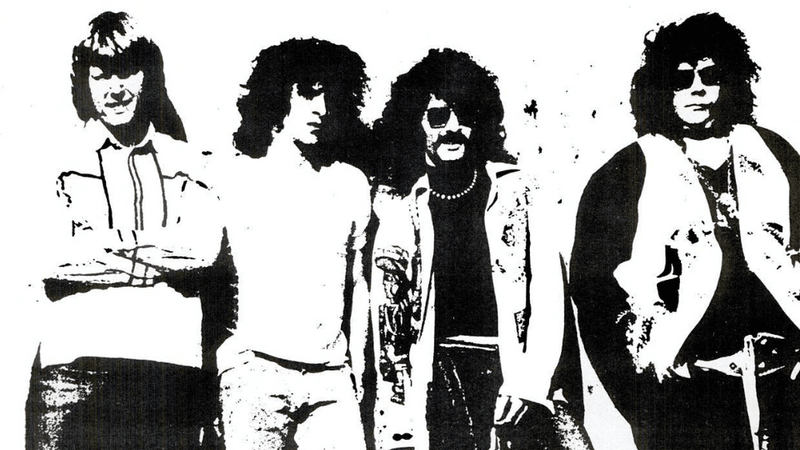
Leslie West produced one of hard rock’s great guitar tones on Mississippi Queen. Released in 1970 on Climbing, the song wastes almost no time before unleashing its central riff.
There is a cowbell introduction first, famously played by drummer Corky Laing, and then the guitar arrives with full force.
The lyrics tell a loose story about a woman from Mississippi, but narrative detail is not the attraction here. West’s enormous guitar sound is.
Mountain existed at a precise moment when late-1960s blues rock was transitioning into the heavier hard rock of the early 1970s.
Mississippi Queen captures that transition almost perfectly. The riff is short, direct, and crushing without being complicated.
Sometimes the best guitar hooks are the ones where removing even a single note would make the riff worse.
19. Back in Black by AC/DC
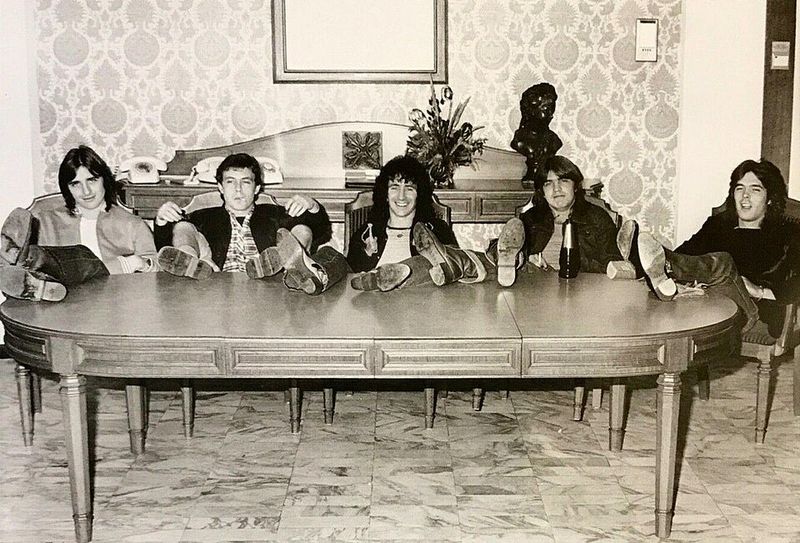
AC/DC faced an almost impossible task after Bon Scott’s passing in early 1980. Instead of retreating, the band returned with new vocalist Brian Johnson and one of the biggest rock albums ever recorded.
The title track contains one of Angus and Malcolm Young’s most effective guitar hooks.
Back in Black is constructed from relatively simple chord shapes separated by perfectly timed spaces. That space matters.
The riff breathes in a way that countless imitators have discovered is much harder to reproduce than it initially sounds.
Johnson’s lyrics announce the band’s return with enormous confidence. But the guitars make the comeback believable.
The opening riff sounds less like a band regrouping than one kicking open the door to a new decade.
20. Sweet Home Alabama by Lynyrd Skynyrd
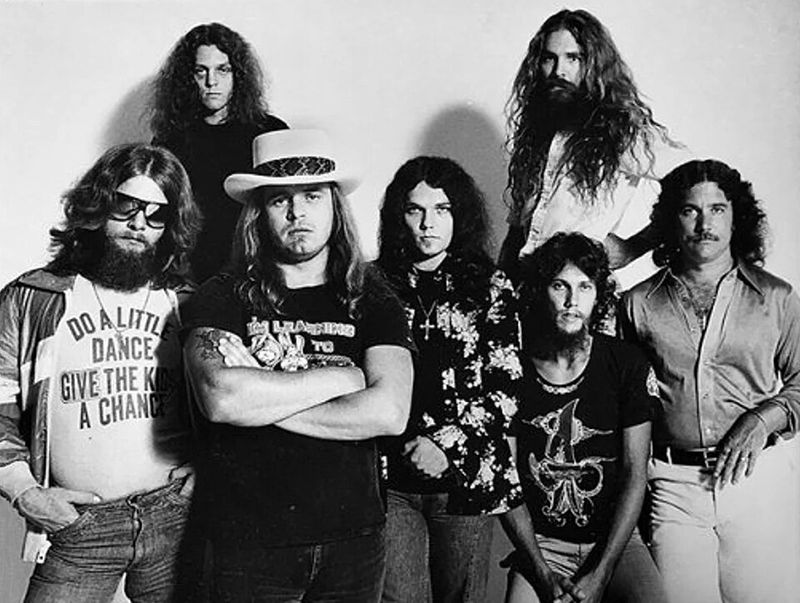
Three notes are enough. The opening guitar figure of Sweet Home Alabama has become so recognizable that listeners often identify the song before the rest of the band even enters.
Released in 1974, the track was written partly as a response to Neil Young’s Southern Man and Alabama.
Ronnie Van Zant later made clear that the relationship between the songs was more complicated than a simple musical feud, and the lyrics have generated decades of cultural debate and discussion as a result.
Ed King developed the famous opening figure, and the intertwining guitars helped establish the sound synonymous with Lynyrd Skynyrd. Whatever listeners make of the words, that guitar hook has escaped the song that created it and become part of popular culture itself.
Share this story