Norway has thousands of miles of coastline, and many of its villages were built right at the water’s edge. Fishermen, traders, and farmers settled there long ago, and their wooden houses still stand in shades of red, yellow, and white.
This list covers twenty places from Bergen to the Lofoten Islands and the inner fjords. Some are busy small cities, while others are tiny villages with only a few streets.
Each stop has its own story, from cod fishing and old trade routes to apple orchards and used bookshops. Read on to find out what sets each one apart and which might fit your next trip.
Bergen
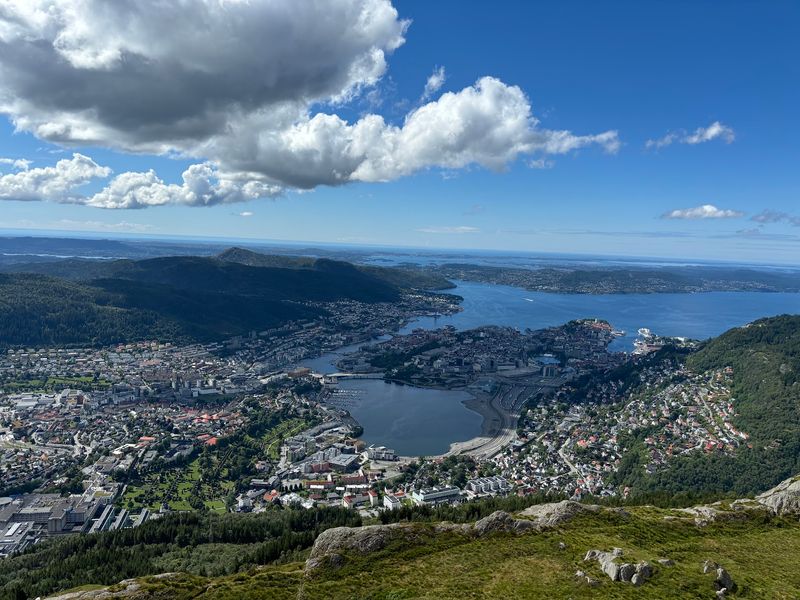
Red, yellow, and ochre fronts line the water at Bryggen, and they tell the story of a city that once ran trade across northern Europe. The narrow wooden buildings are protected as a UNESCO World Heritage site.
Bergen is a sizable city, not a sleepy village, yet mountains and water still shape daily life. Hills rise right behind the center, and the harbor stays close to everything.
The city also works as a main gateway for trips toward the Sognefjord and Hardangerfjord regions. That makes it a handy first stop if you plan to explore western Norway by train, bus, or boat.
A good approach is to walk the wharf early, then wander the lanes behind the front row of buildings. You will see how closely the old structures were packed together.
Plan a day or two here before heading out to the fjords, so you can enjoy the harbor without rushing.
Ålesund
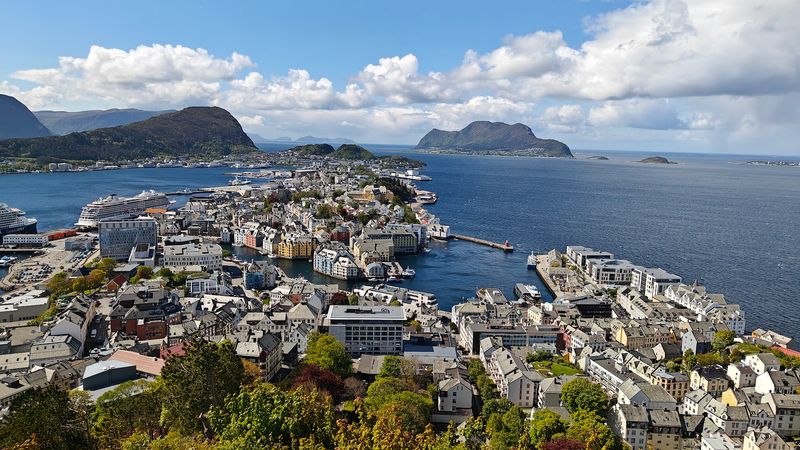
In 1904, a devastating fire swept through Ålesund, and the town was rebuilt in a fresh style. The result is an unusually elegant center full of Art Nouveau architecture.
The town spreads across several islands near the Atlantic, so water appears around nearly every corner. Mountains, islands, and fjords surround it, which gives the whole place a layered look from above.
Because of that setting, Ålesund makes a useful base for exploring western Norway. Trips toward the UNESCO-listed Geirangerfjord start from here, and the surrounding coast offers plenty of other scenery.
Take time to stroll the center with your eyes on the rooftops and decorations. Many buildings carry details that are easy to miss if you only glance up once.
Pair a walk through town with a view over the islands, and you will see how the pieces fit together.
Henningsvær
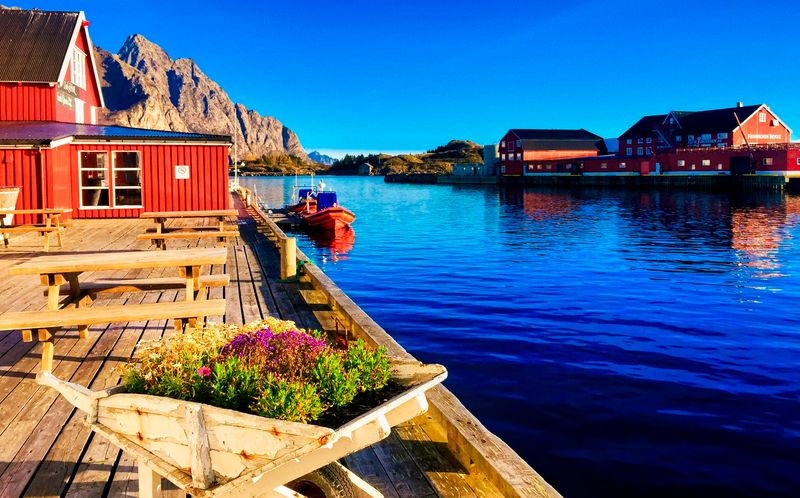
Boats, wharves, wooden houses, and mountains all fit into one tiny patch of Lofoten at Henningsvær. The village stretches across a collection of small islands, so everything feels close together.
Its traditional multicolored buildings and harbor setting are recognized as part of Norway’s cultural heritage. That status helps keep the look of the place intact.
Old industrial and fishing buildings now hold galleries, restaurants, shops, and creative spaces. The mix gives the village a lively feel, yet the fishing roots have not been erased.
When you visit, walk the harbor edges and cross the small bridges to see how the islands connect. Duck into a gallery or a shop inside one of the former fishing buildings.
It is a good example of how a working village can find new uses for old structures while still honoring its past.
Reine
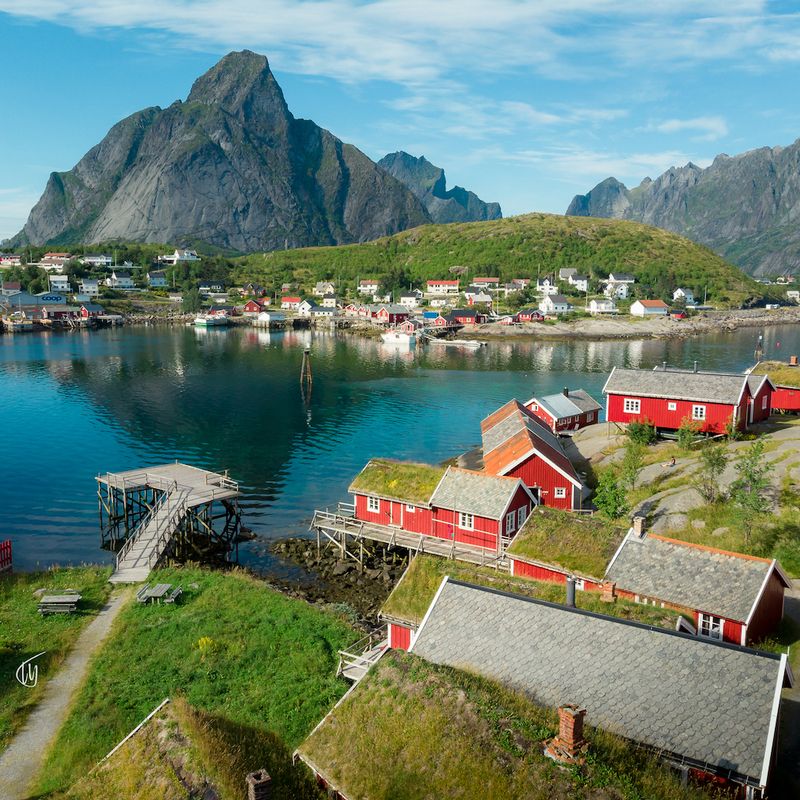
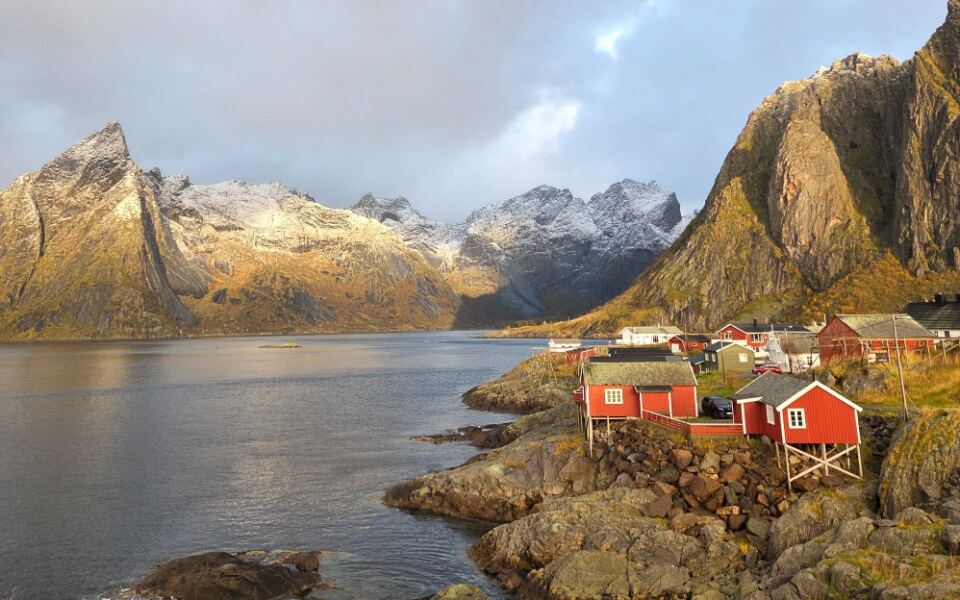
Few Norwegian villages have a backdrop quite like Reine. Red and white fishermen’s cabins sit close to the water, and steep mountains rise almost straight up behind them.
The village is one of the principal stops along the Norwegian Scenic Route through Lofoten. That means many travelers pass through, and the road itself is part of the draw.
You can stay in traditional rorbuer, the fishermen’s cabins that have been turned into lodging. There are also galleries to browse around the village.
For the classic view, head up to the well-known Reinehalsen viewpoint and look back across the rooftops, water, and peaks. It gives a sense of how small the settlement is compared with the landscape around it.
Bring a layer even in summer, since weather in Lofoten can change quickly and the viewpoint can feel breezy.
Hamnøy
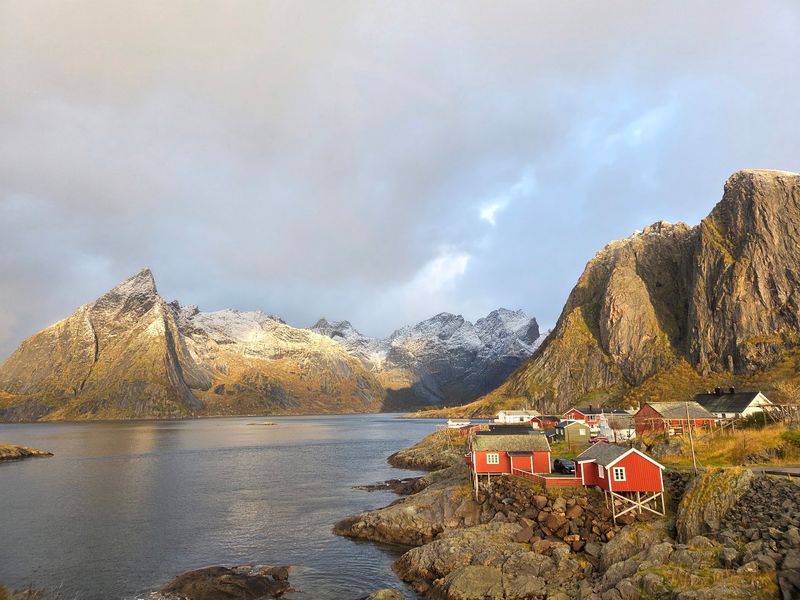
Just northeast of Reine sits Hamnøy, and it delivers another classic Lofoten scene. Traditional red fishermen’s cottages stand beside the water, with sharp mountains rising beyond them.
The settlement looks toward the Reinefjord, so the water stays in view from many angles. Historic rorbuer remain part of the visitor experience here.
Some of the cabins that now host travelers were originally used by fishermen who arrived for Lofoten’s annual winter cod fishery. Staying in one connects you with that seasonal rhythm in a simple, practical way.
Because Hamnøy is so close to Reine, the two villages pair well on a single outing along the scenic route. Give yourself time to pause rather than just snap a photo from the road.
Look at how the cabins sit on posts over the water, and consider how that setup once served working fishing crews.
Nusfjord
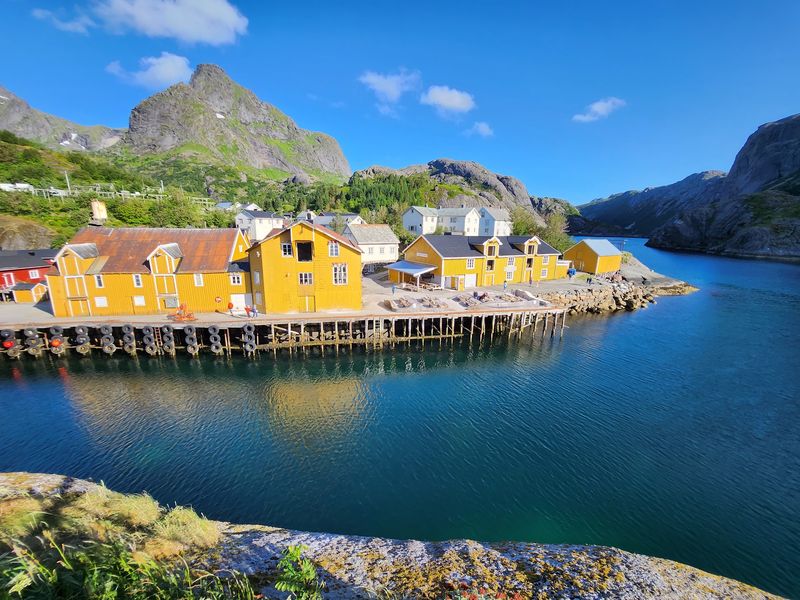
Step into Nusfjord and the layout alone tells a story about the cod trade. Red cabins crowd around a sheltered harbor, keeping the look of a community shaped by fishing.
It is one of Lofoten’s oldest and best-preserved fishing villages. Some cabins are centuries old, and the historic general store dates to 1907.
The village remains open to visitors, with accommodations, restaurants, galleries, and other tourism facilities operating inside the historic settlement. That means you can sleep, eat, and browse without leaving the old setting.
Plan to walk slowly along the harbor and look closely at the wooden details on the cabins and wharves. The compact size makes it easy to see most of the village in a relaxed visit.
If you enjoy history, this is a place where the buildings themselves do much of the explaining about how generations lived from the sea.
Svolvær
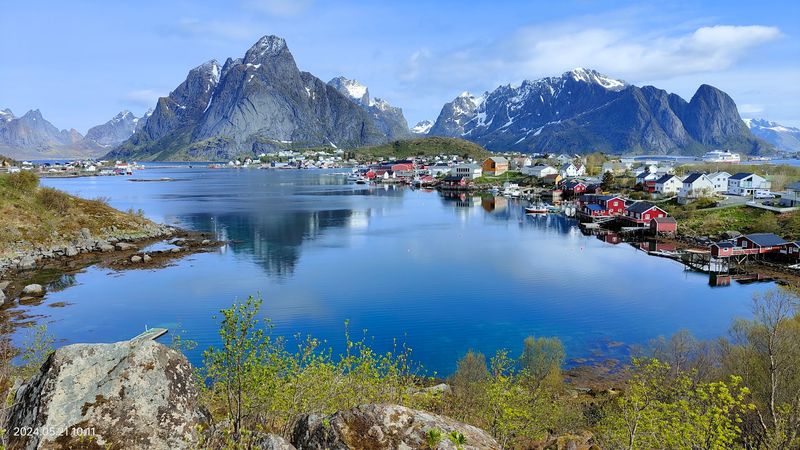
Lofoten has plenty of tiny hamlets, but Svolvær plays a different role as the region’s largest town. It offers a more urban take on the waterfront lifestyle.
Boats fill the harbor, and traditional cabins, old wooden buildings, restaurants, galleries, and modern accommodations line the shoreline. You can find both old and new within a short walk.
Svinøya, the oldest section of Svolvær, has served as a fishing community since the 19th century. It still contains rorbuer and stockfish racks, which are wooden frames used for drying fish.
Boats also leave Svolvær for nearby Trollfjord, so the town can be a launch point for time on the water. If you like having services close at hand, this is a practical base.
Walk over to Svinøya to catch the older atmosphere, then return to the main harbor for a meal.
Å
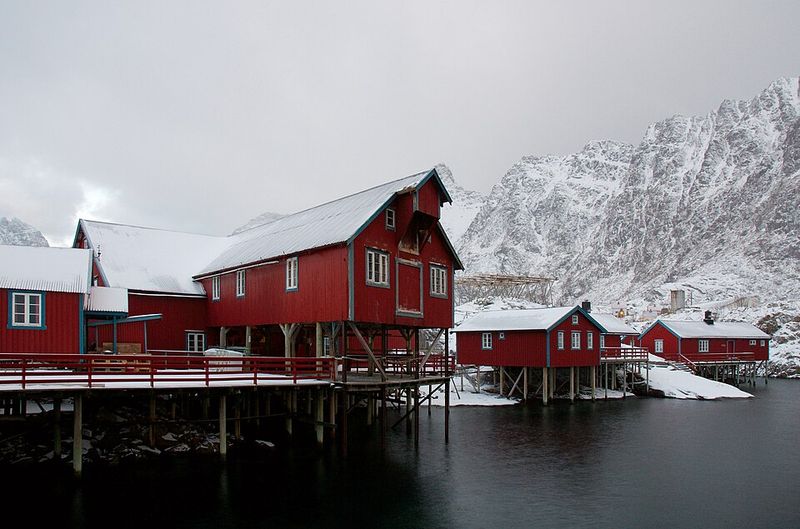
A single letter makes up the entire name of this village, and it sits near the end of the road through southern Lofoten. Å is closely tied to Norway’s fishing heritage.
Wooden buildings and fishermen’s cabins fill a narrow stretch of coast beneath steep mountains. There is not much room, so everything is packed along the shoreline.
The Norwegian Fishing Village Museum preserves original buildings and interiors. They explain how generations of fishing families lived and worked in this remote corner of Lofoten.
Visiting the museum helps turn the cabins you see outside into something more personal. You can look at how living spaces and work areas fit together.
Since the village is at the far end of the road, plan the drive with enough time to enjoy it, and allow a slow wander around the buildings before heading back.
Balestrand
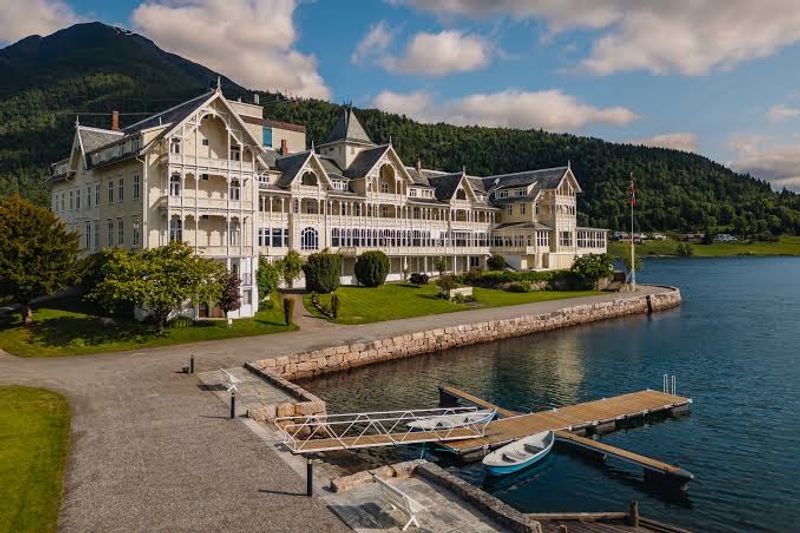
Artists and travelers have been drawn to Balestrand for generations, and the village still shows why. It sits along the Sognefjord, with a waterfront that is notable for ornate wooden villas.
Many were built around the late 19th and early 20th centuries. Several incorporate the decorative Norwegian dragon style, and a number stand along a promenade beside the fjord.
Balestrand remains known as an art village. Exhibitions and cultural sites complement the historic architecture, so a walk here can easily include a gallery stop.
Follow the promenade at an easy pace and look closely at the carved details on the villas. The rooflines and trim reward a second glance.
This is a good place if you prefer a quiet fjord stay with something cultural to see, rather than a rush from one viewpoint to another.
Flåm
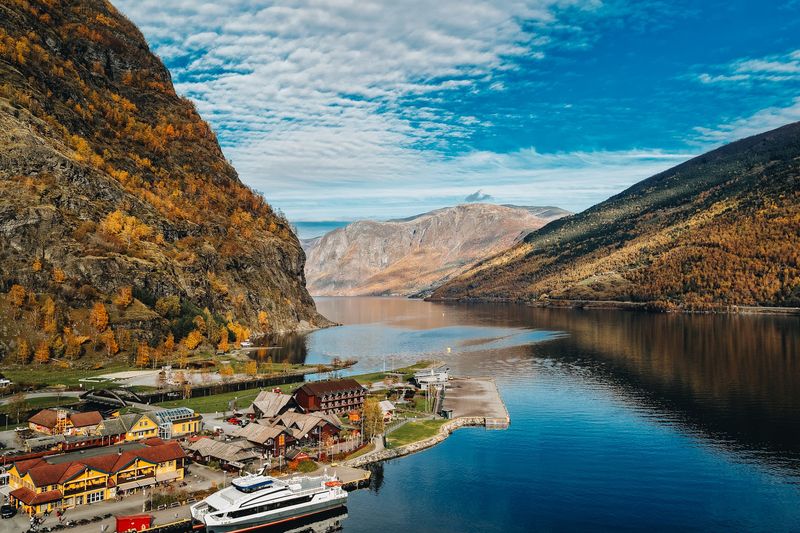
Plenty of travelers arrive in Flåm by train, yet the water matters just as much as the rails. The village occupies a dramatic spot at the inner end of the Aurlandsfjord, a branch of the vast Sognefjord system.
Flåm is best known as the terminus of the Flåm Railway. Its waterfront setting is equally important, since steep mountains close in on both sides.
From here, you can continue by boat through the Aurlandsfjord and the UNESCO-listed Nærøyfjord. Another option is to travel toward neighboring Aurland and Lærdal.
Think of Flåm as a hub where several fjord experiences meet. Check current boat and train schedules before you plan your day, since timetables can vary by season.
A short walk along the shore before or after your trip gives you a feel for the village itself.
Aurlandsvangen
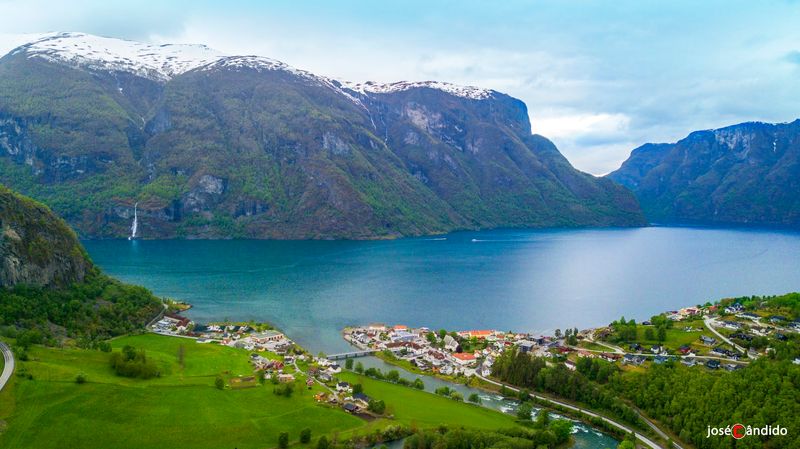
Most people shorten the name to Aurland, and the village sits quietly beside the Aurlandsfjord only a short distance from Flåm. It is a calmer alternative to its busier neighbor.
Visit Norway describes it as a slow-travel fjord village. Its waterfront location makes it a natural base for exploring the surrounding mountains.
The famous Stegastein viewpoint rises high above the fjord nearby. Local craft traditions also remain part of the village’s identity, adding a cultural layer to the scenery.
If your schedule allows, spend a night or two rather than treating it as a quick stop. That gives you time to explore at a gentler pace and see the fjord in different light.
Aurlandsvangen suits travelers who like to settle in, walk around, and let the days unfold without a tight itinerary.
Undredal
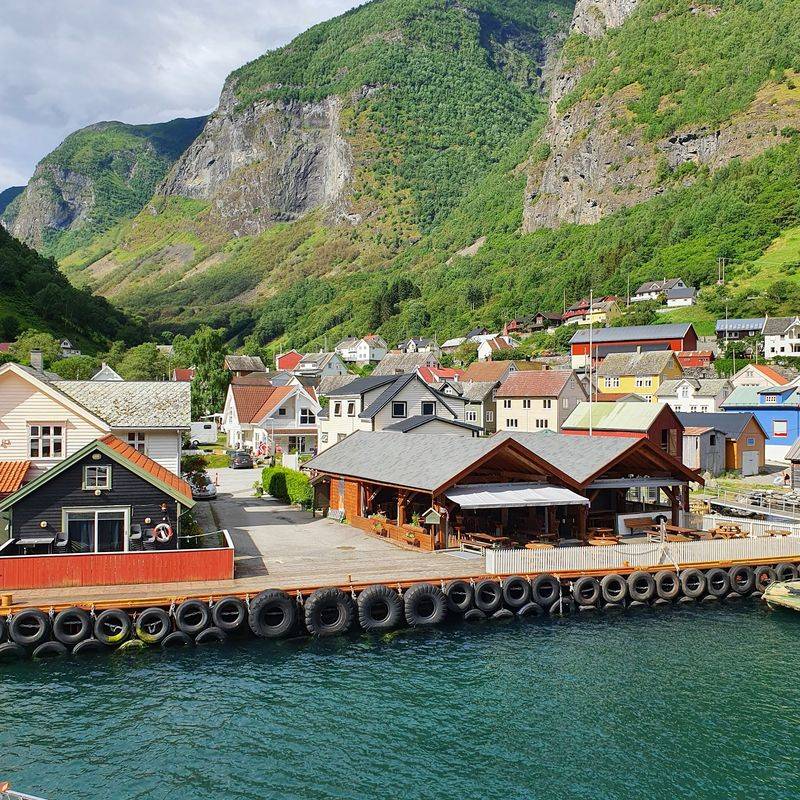
A landscape that feels much larger than the village itself surrounds tiny Undredal. It sits directly beside the Aurlandsfjord, backed by steep mountains.
The community remains closely associated with traditional goat farming and local food. That connection to farming gives the place a distinct identity compared with other fjord stops.
Kayaking and boating offer a water-level view of the fjord landscape and its waterfalls. Seeing the cliffs from a small boat gives a very different sense of scale than looking from the shore.
Because the village is so small, a visit works best at an unhurried pace. Wander the lanes, notice how the houses sit close to the water, and consider booking a paddle or boat outing if conditions allow.
Check ahead for seasonal availability of activities and local food experiences before you go.
Lærdalsøyri
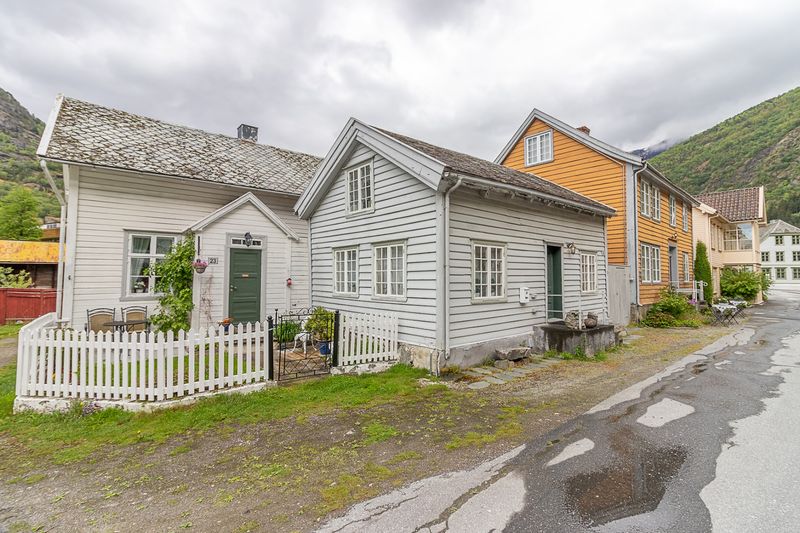
More than 150 historic houses stand in the broader old settlement of Lærdalsøyri. That makes it an unusually large collection of preserved wooden buildings.
The village lies at the inner reaches of the Sognefjord system. Once an important marketplace between eastern and western Norway, it was a meeting point for goods and people.
Today the waterfront community mixes preserved architecture with small shops, accommodations, and restaurants. You can browse and eat in a place that still carries the look of earlier centuries.
A relaxed stroll through the old streets is the best way to appreciate the setting. Notice the variety in the wooden facades and how the buildings line up along the lanes.
If you enjoy history and architecture, this stop offers plenty to see without the crowds that gather at some of the better-known fjord viewpoints.
Solvorn
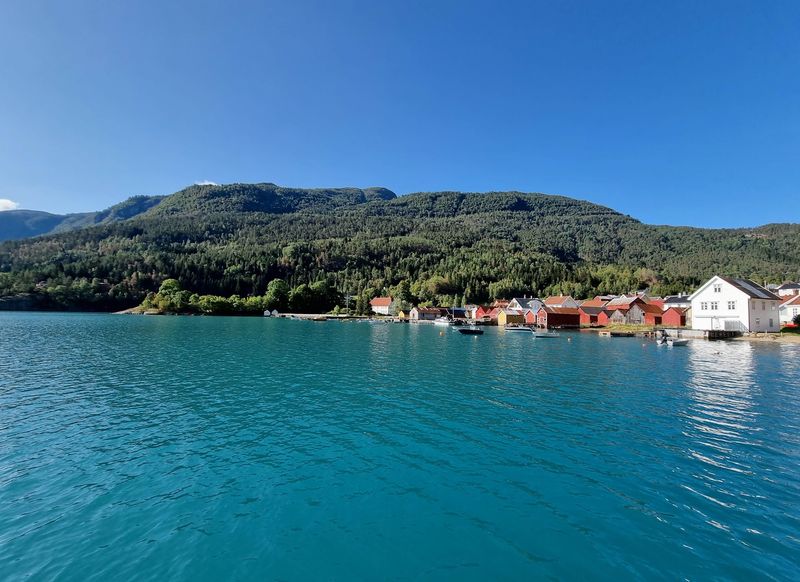
Small historic houses step down toward the water in Solvorn, giving the village an intimate feel. It sits quietly on the western side of the Lustrafjord, one of the inner branches of the Sognefjord.
A beach and a ferry quay add to the waterfront character. The scale is small, so the whole village is easy to take in on foot.
A year-round ferry connects Solvorn with Ornes across the fjord. That crossing provides access toward the UNESCO-listed Urnes Stave Church area.
Plan your visit around the ferry timetable, and check it ahead of time since schedules matter in a place like this. The short crossing itself is a nice way to see the fjord from the water.
Back in the village, a slow wander past the old houses is enough to feel the pace of life here.
Fjærland
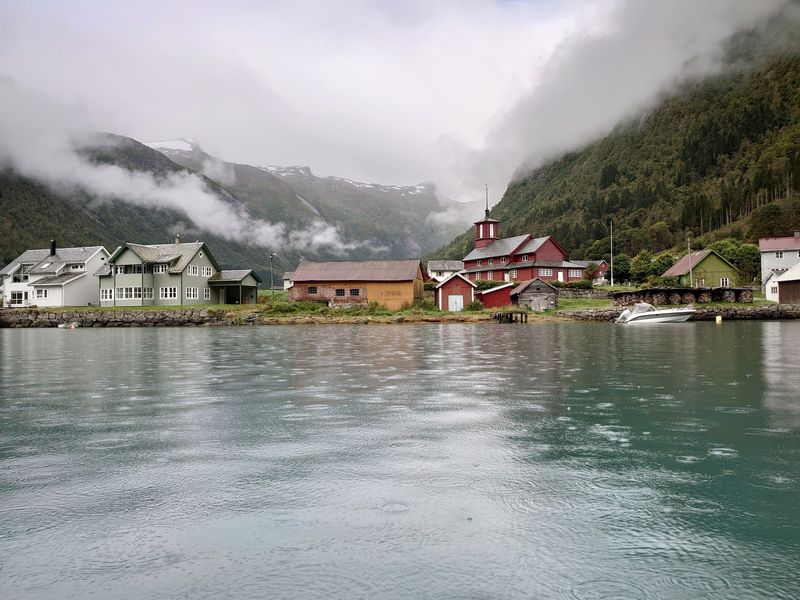
Used books are sold from former banks and ferry waiting rooms in Fjærland. The village is known as the Norwegian Book Town, which is a surprising identity for a fjord settlement.
Repurposed buildings and shops hold the collections, so browsing means exploring the village itself. The seasonal bookshops keep the center active during the main travel season.
Fjærland sits beside the Fjærlandsfjord, surrounded by steep mountains. It is also within reach of arms of the Jostedalsbreen glacier, which adds ice-covered scenery to the visit.
A guest harbor and a waterfront hotel round out the setting. Because bookshop hours are seasonal, check ahead before you go.
Pack something to read, or pick up a new find, and enjoy a mix of fjord views and quiet browsing that you will not get in most other Norwegian villages.
Geiranger
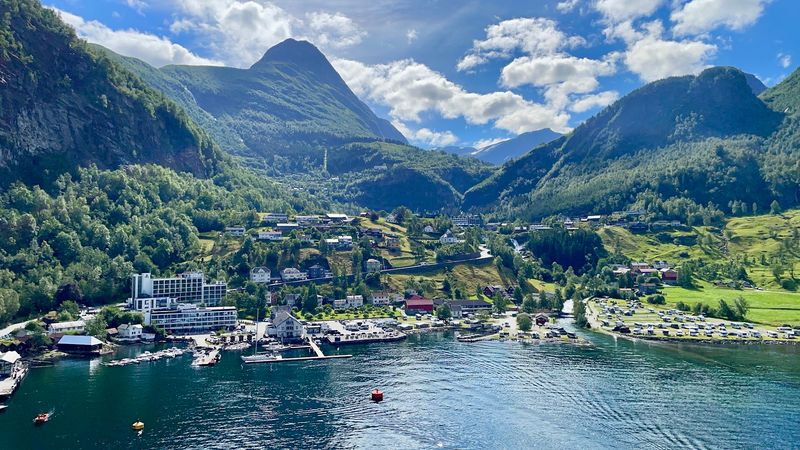
Steep mountains rise sharply above the water at Geiranger, and the setting ranks among Norway’s most dramatic. The surrounding Geirangerfjord is UNESCO-listed.
Traditional wooden houses line parts of the village, so the human scale stands in contrast to the cliffs. It is easy to feel small standing at the shore.
You can explore the village on foot before heading out to nearby waterfalls, mountain farms, hiking routes, and panoramic viewpoints. Each of these gives another angle on the fjord.
Start with a walk along the waterfront to get your bearings, then choose one or two outings rather than trying to see everything. Viewpoints are best enjoyed without a rush, and hikes depend on your energy and the weather.
Giving the area a full day or more makes the trip more relaxed and rewarding.
Ulvik
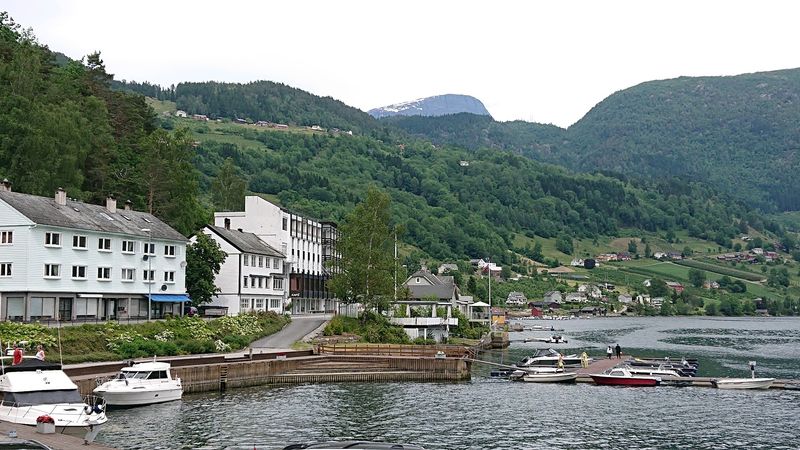
Apple trees, not fishing nets, define the scene around Ulvik. The small orchard village sits deep within the Hardangerfjord region, with farms climbing the slopes around the water.
Apples and other fruit have become closely connected with the area’s modern cider culture. That fruit-growing tradition gives the village a flavor all its own.
A guest harbor sits directly in the village center, so arriving by boat is possible. Walking and cycling routes provide views over Ulvik and nearby fjord branches.
Spring and late summer can show the orchards in different moods, so think about the season you prefer. Rent a bike or lace up your shoes and follow a route up the slopes for wider views.
The village is small, which makes it easy to combine a harbor stroll with a longer outing into the hills.
Odda
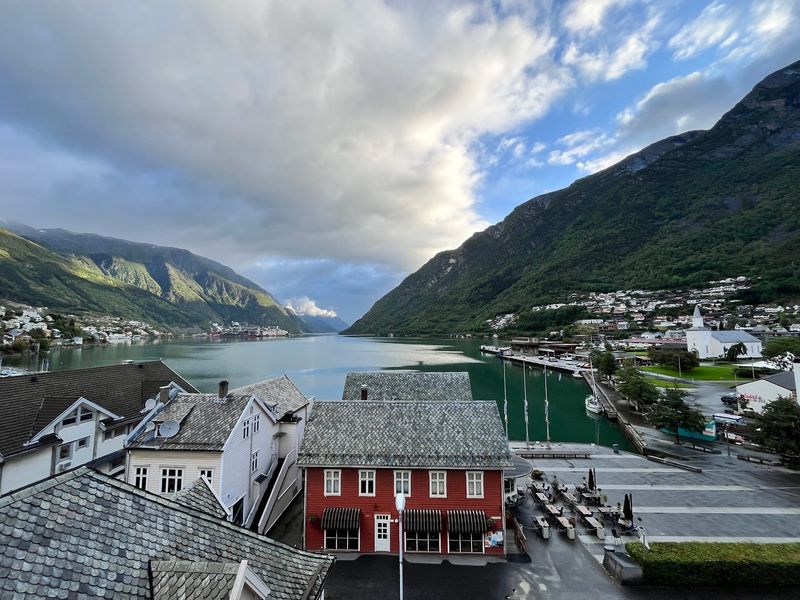
At the head of Sørfjord, one of the long arms of the Hardangerfjord, sits Odda. The compact waterfront town is squeezed between steep mountain walls.
Waterfalls, orchards, and access to some of western Norway’s best-known hiking landscapes surround it. That mix makes it a handy base for people who like to be outdoors.
Boats depart from the town center for excursions along Sørfjord. You can see the fjord from the water without leaving the main part of town.
The former industrial area in central Odda has also developed into a cultural district. It shows how a working town can reinvent old spaces for new uses.
Spend time in the center before or after a hike or boat trip. Check boat schedules in advance, and plan hikes with weather and your fitness level in mind.
Rosendal
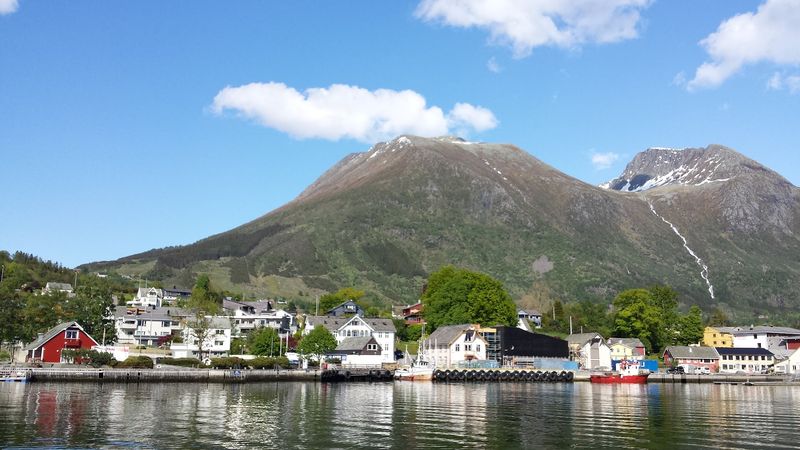
Norway’s only barony is often said to be right here. Rosendal is best known for Baroniet Rosendal, a historic estate that anchors the village’s story.
The village occupies a lush corner of the Hardangerfjord region, surrounded by mountains and water. The waterfront scenery is a major part of its appeal as well.
Visit Norway also highlights Rosendal as a picturesque stop when exploring the Hardanger scenic region. It fits neatly into a longer journey through the area.
If you like history, make the estate your first priority. Check opening times and seasonal details with the official source before you go.
Afterward, take a slow walk near the water and let the quiet setting sink in. Rosendal works well as a stop where you can enjoy both heritage and fjord views.
Åndalsnes
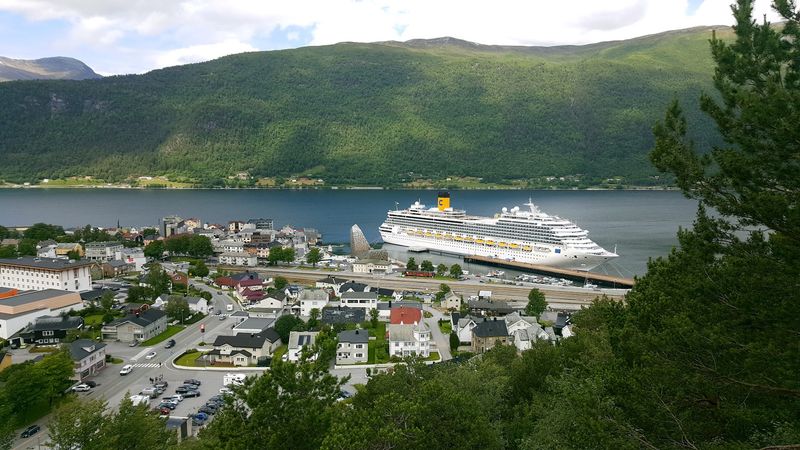
Forget rows of fishermen’s cabins. At Åndalsnes, the star is the contrast between a compact waterfront settlement and the huge peaks around it.
The town lies where high mountains meet the fjord in northwest Norway. That meeting of rock and water shapes everything about the place.
Åndalsnes is known as Norway’s mountaineering capital. It is also the endpoint of the scenic Rauma Railway and a starting point for several celebrated mountain hikes.
Come with a plan that matches your comfort level, whether that means a train ride, a gentle walk by the water, or a serious climb. Mountain weather can shift fast, so check conditions and be honest about your experience before heading up.
Even a short stroll along the fjord gives you a clear sense of how dramatic the setting is.
Share this story