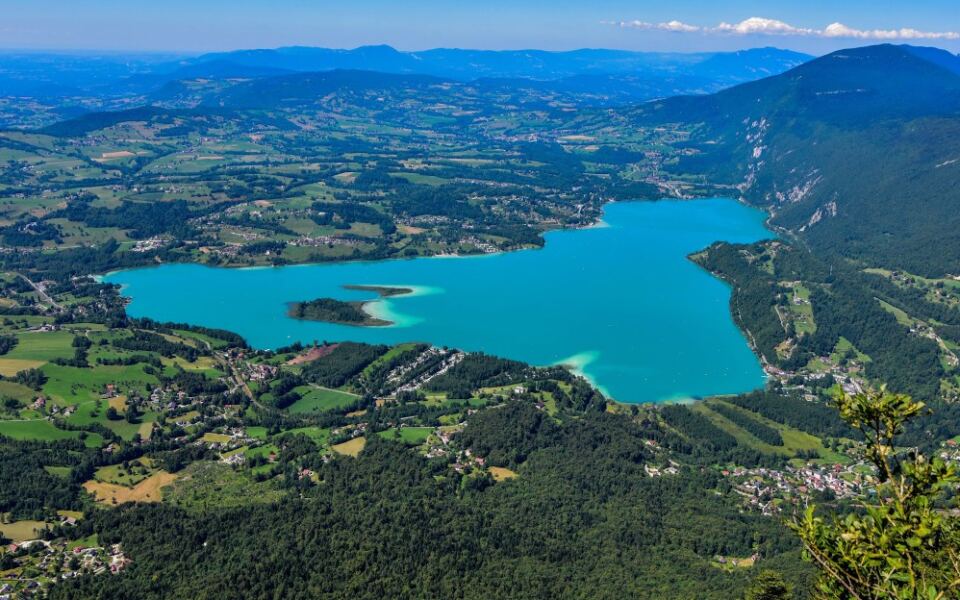
France is known for castles, wine, and cities, but its lakes are just as memorable. From Alpine waters to volcanic craters and Corsican highlands, each one offers a different kind of scenery.
Some are ideal for swimming and boating, while others reward hikers with quiet views. Here is a look at fifteen lakes that deserve a spot on your travel list.
1. Lake Annecy, Haute-Savoie
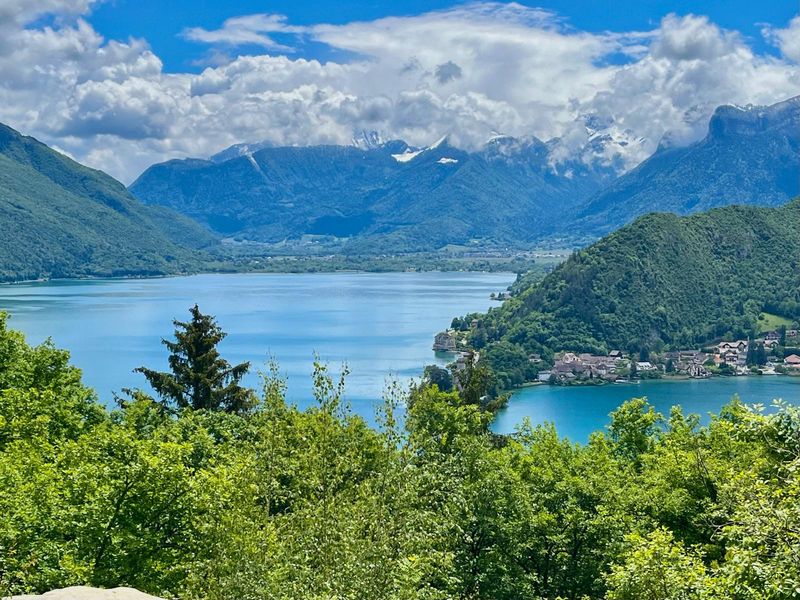
Few lakes manage to look this clean and bright. Lake Annecy is often called one of the clearest lakes in Europe, thanks to strict rules that protect its water.
On a sunny day, the surface shines a deep turquoise against the mountains.
The old town of Annecy sits at the northern end, with narrow canals, flower-lined bridges, and cafes that are perfect for a slow lunch. A paved bike path circles much of the shoreline, so you can ride at an easy pace and stop at small beaches along the way.
Visitors can rent paddleboards, join a boat tour, or take a short trip up to Talloires for a quieter village feel. Summer brings crowds, so arrive early if you want a good spot on the sand.
Spring and early autumn are calmer, and the weather is still pleasant for walking and photography.
2. Lake Bourget, Savoie
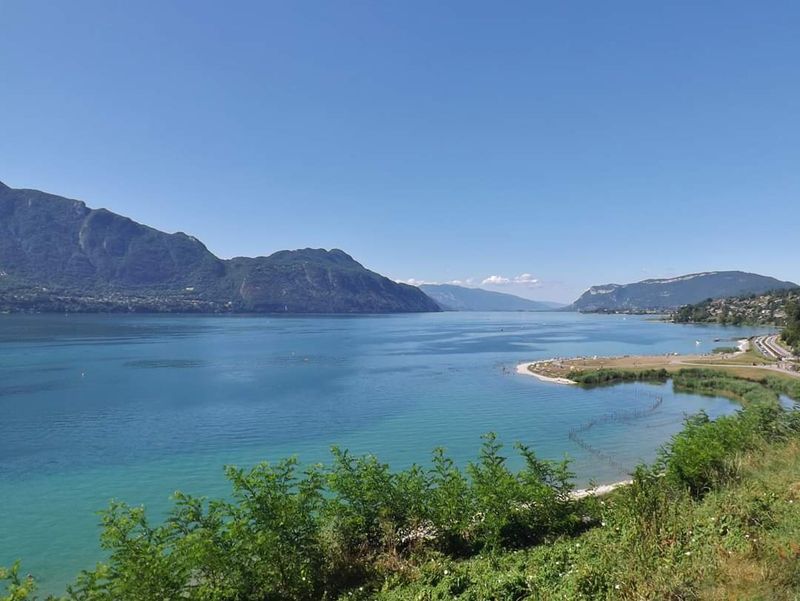
Here is a quick fact to start: Lake Bourget is the largest natural lake entirely within France. It stretches about 18 kilometers long, and its size gives it a calm, open feeling that smaller lakes cannot match.
The poet Alphonse de Lamartine made the lake famous in the 1800s, and the town of Aix-les-Bains still carries a graceful, old spa atmosphere. On the western shore, the Abbey of Hautecombe sits right at the water’s edge and can be reached by a scenic boat ride.
Sailing, swimming, and cycling are all popular here. The Mont du Chat ridge above the lake offers a wide viewpoint for sunset, though the road is steep and winding.
Bring a light jacket, because the breeze on the water can feel cool even in July.
3. Lake Serre-Ponçon, Hautes-Alpes
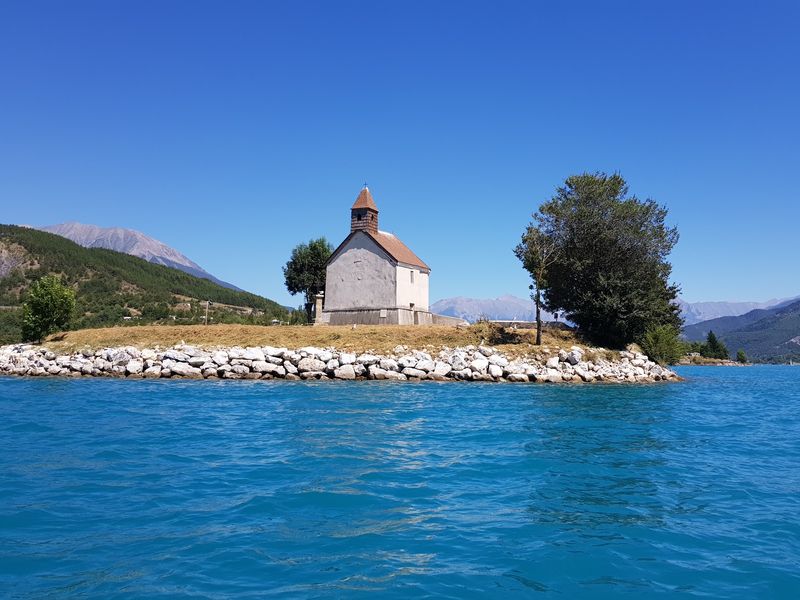
Picture a sea tucked inside the Alps. Lake Serre-Ponçon is one of the largest artificial lakes in Western Europe, created in the 1960s when a dam was built on the Durance River.
Its vivid blue color surprises many first-time visitors.
The small chapel of Saint-Michel, perched on a rocky island, has become the lake’s best-known image. You can see it from the shore at Savines-le-Lac, and at low water levels it may even be reachable on foot.
Sailing schools, windsurfing clubs, and kayak rentals line the shores, making it a good choice for active families. Several beaches have shallow areas for younger swimmers.
If you prefer a quieter day, drive the roads above the lake and stop at the viewpoints for wide, uninterrupted scenery.
4. Lake Sainte-Croix, Alpes-de-Haute-Provence
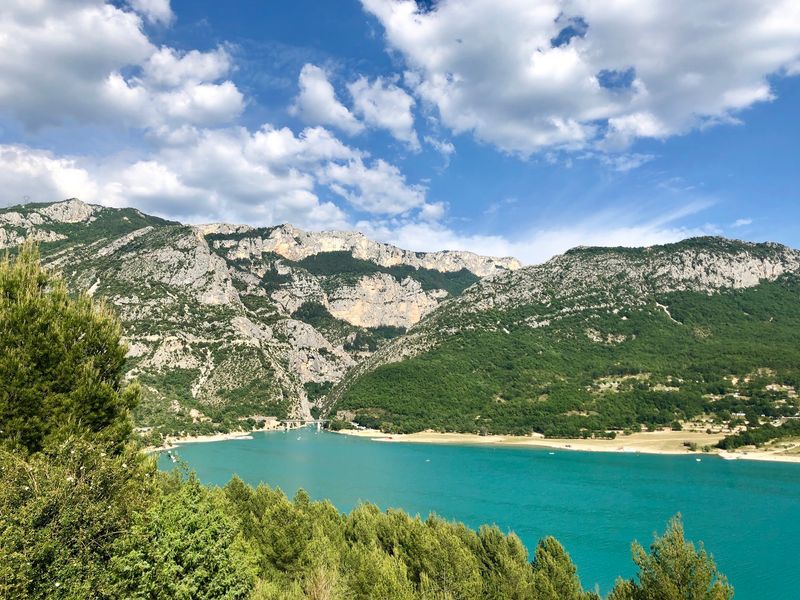
The color of this water almost looks painted. Lake Sainte-Croix glows in shades of emerald and turquoise, fed by the Verdon River as it leaves its famous canyon.
Limestone cliffs and lavender fields add to the Provence charm.
The lake is a favorite for pedal boats and electric boats, which you can rent without a license. Paddle toward the mouth of the Verdon Gorge and you will feel the cliffs rise on both sides, an easy way to see the canyon without hiking.
The village of Les Salles-sur-Verdon was rebuilt after the valley flooded, and a small museum tells that story. Summer afternoons can be hot, so plan water time for the morning or evening.
Pack sun protection and plenty of water, since shade can be limited on the beaches.
5. Lake Gérardmer, Vosges
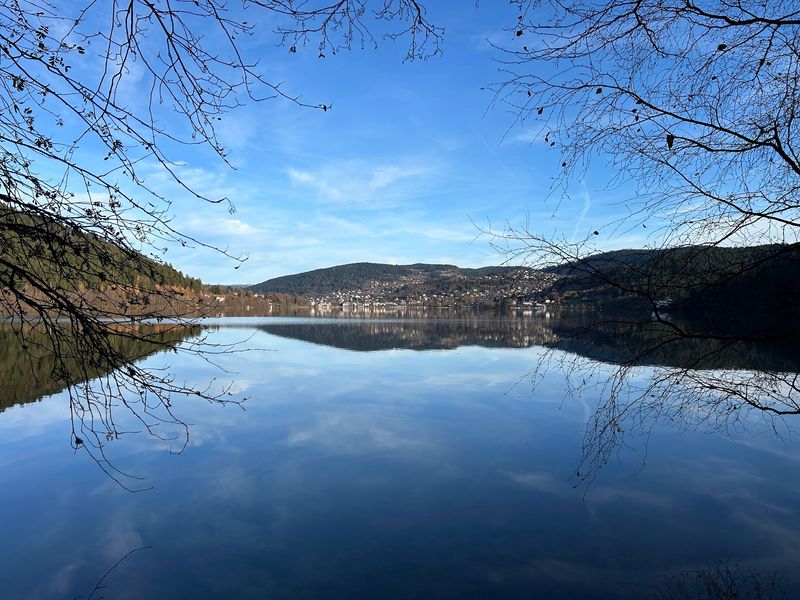
Ask locals about the Vosges, and many will point straight to Gérardmer. The lake lies in a green bowl of forested hills, and the town beside it has the cozy feel of a mountain resort that stays lively all year.
In summer, people swim, sail, and cycle the path that loops the shore. Autumn paints the hills in gold and red, which makes a gentle stroll especially rewarding.
In winter, nearby slopes open for skiing, and the town hosts a well-known fantasy film festival each year.
Do not leave without trying a slice of local Munster cheese or a sweet bilberry tart. For a view from above, follow the trail to the Roche du Rain or take a short drive to the Col de la Schlucht.
Both give a clear sense of how the lake sits within the forest.
6. Lake Aiguebelette, Savoie
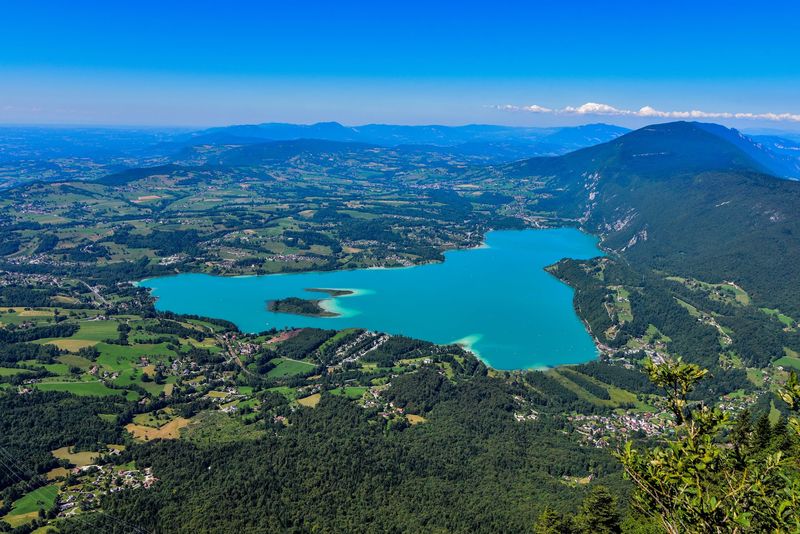
Silence is the main attraction at Lake Aiguebelette. Motorboats are banned, so the only sounds are birds, oars, and the occasional splash of a swimmer.
It feels like a lake from an earlier time.
It is one of the warmest natural lakes in the Alps, which makes swimming comfortable by early summer. The water is clean and a soft green, framed by the Épine mountain range.
A small island with a tiny chapel adds a storybook touch.
Walkers can follow a flat trail around the lake in a few hours, passing reedbeds and picnic spots. Kayaks and rowboats are available to rent at several points.
Because it is less famous than Annecy, parking is easier, and families often find a quiet stretch of shore even in August.
7. Lake Gaube, Hautes-Pyrénées
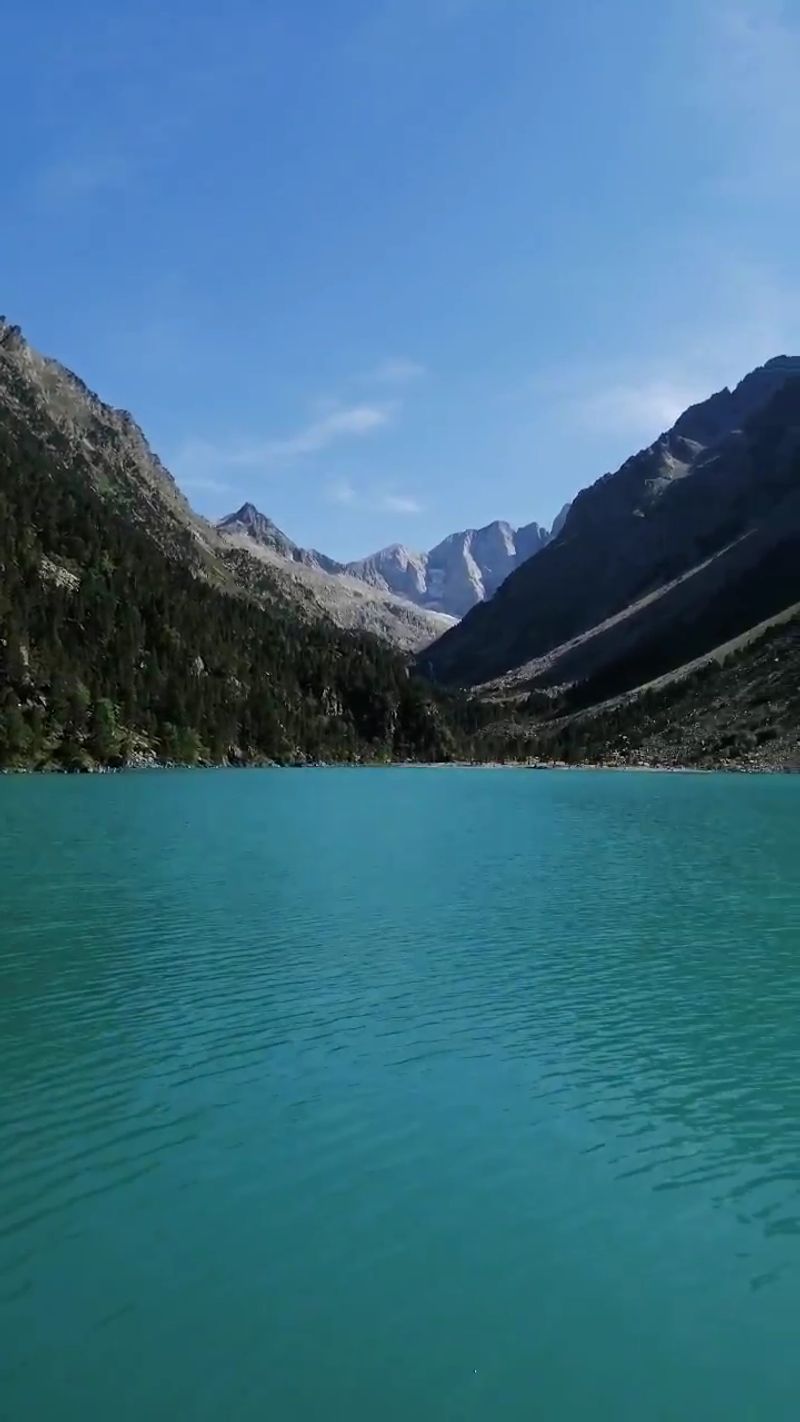
Reaching this lake takes effort, and that is part of its magic. Lake Gaube sits high in the Pyrenees above Cauterets, inside the Pyrénées National Park, at roughly 1,700 meters.
The hike starts near the Pont d’Espagne waterfalls.
Expect about two hours of walking each way on a clear but sometimes rocky path. Along the route, you may spot marmots whistling on the slopes or vultures circling overhead.
When the trees open up, the lake appears in a deep blue basin, with a small stone hut nearby.
Bring layers, since mountain weather can change fast, and sturdy shoes with good grip. Late June through September is the best window, when snow has melted from the trail.
Pack a picnic, because there is no better lunch table than the rocks by the water.
8. Lake Allos, Alpes-de-Haute-Provence
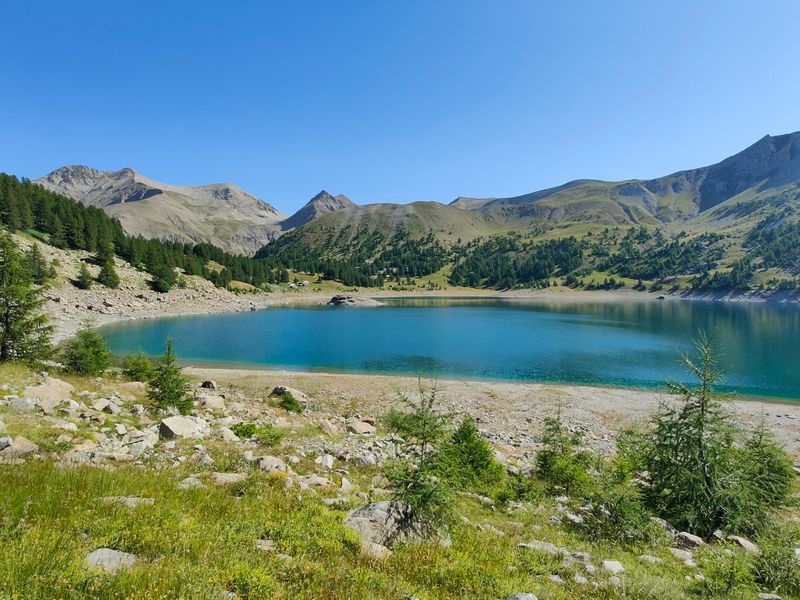
At 2,226 meters, Lake Allos is the largest natural high-altitude lake in Europe. It lies in the Mercantour National Park, in a green hollow ringed by pastures and rocky summits that glow at sunrise.
The lake is fairly easy to reach. A road climbs to a parking area, and from there a short, well-marked path leads to the shore in about twenty minutes.
A full loop around the water takes roughly an hour and offers shifting views of the peaks.
Legend says a monster once lived in its depths, and shepherds long held ceremonies here to honor the water. Today, you are more likely to meet grazing cows and hikers.
The road is typically open only from late spring to autumn, so check conditions before you go.
9. Lake Pavin, Puy-de-Dôme
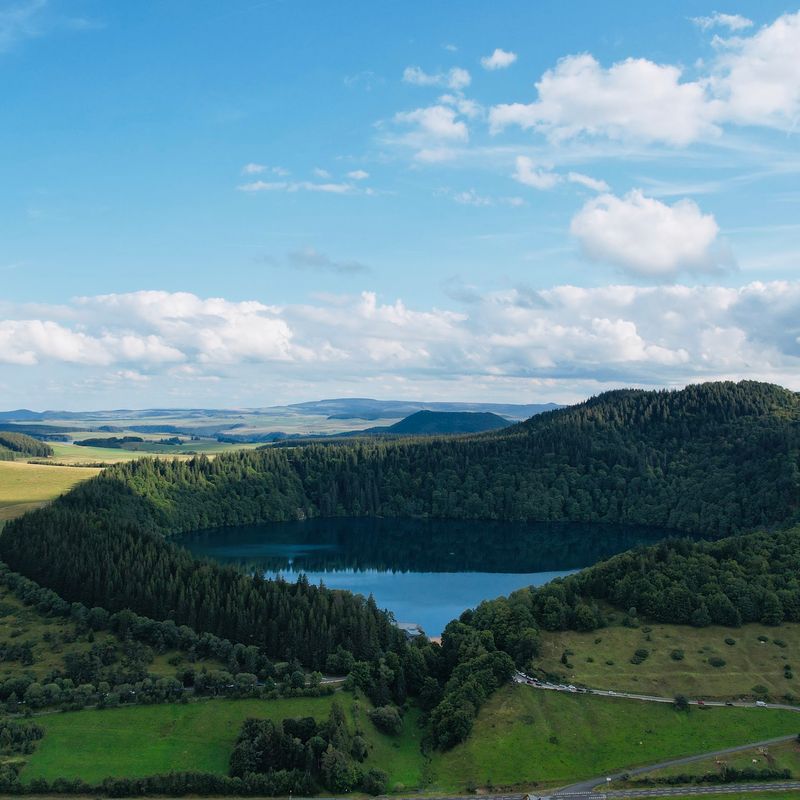
Born from a volcanic eruption around 7,000 years ago, Lake Pavin is almost perfectly round. Its dark, deep water sits inside a crater in the Auvergne region, surrounded by thick beech and fir forest.
The lake reaches about 92 meters deep, and scientists study it because its layers of water do not fully mix. That makes it an unusual natural laboratory.
Local stories also describe it as a place of mystery, with tales of storms rising if a stone is thrown in.
A circular trail of about 2.5 kilometers lets you walk the rim in under an hour. Swimming is allowed in summer at a small beach area, though the water stays cold.
Visit in early morning for mirror-like reflections, then continue to the nearby town of Besse for local cheeses.
10. Lake Vouglans, Jura
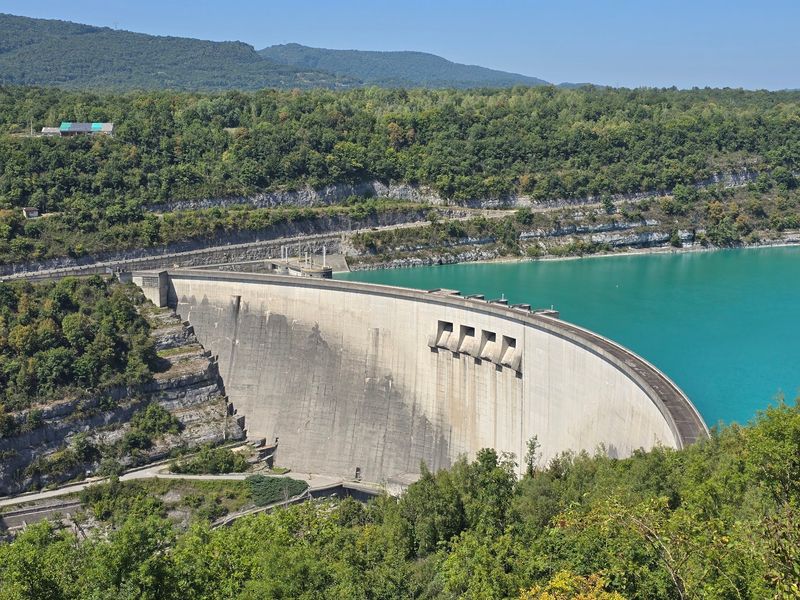
Twisting through the Jura hills like a green-blue ribbon, Lake Vouglans is the third largest artificial lake in France. It was created by a dam on the Ain River, and its long arms reach deep into the forest.
The lake is ideal for kayaking, sailing, and boat trips that glide beneath the Pont de la Pyle, a tall suspension bridge. Steep banks and quiet coves make it easy to find your own stretch of water, even on busy weekends.
On land, hiking trails lead to viewpoints, such as the Belvédère du Regardoir, where the lake spreads out below. The region is also known for Comté cheese, so a stop at a local dairy is a tasty way to end the day.
Water temperatures rise in July and August, making swimming pleasant.
11. Lake Chalain, Jura
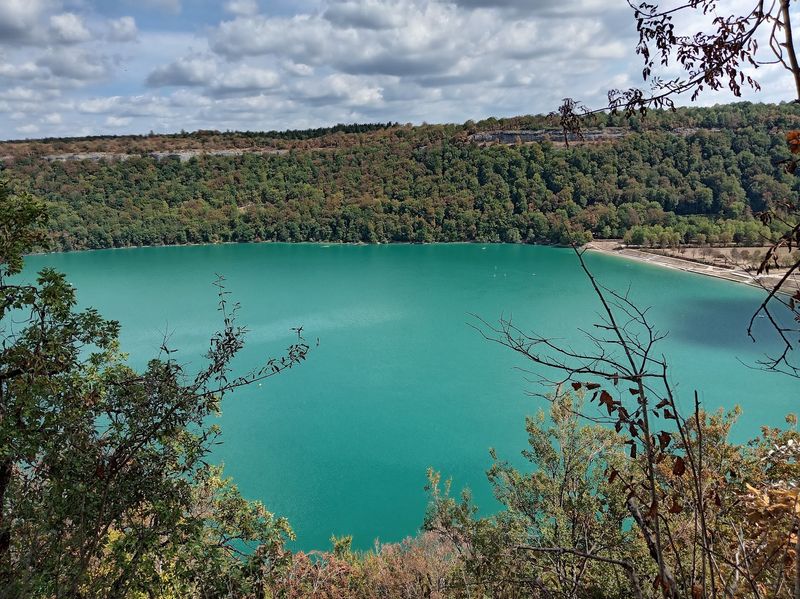
Tucked beneath limestone cliffs, Lake Chalain shines in shades of emerald and jade. Its water is calm and clean, and the cliffs of the Jura plateau rise behind it like a natural wall.
Archaeologists have found remains of prehistoric lake dwellings here, with wooden posts that date back thousands of years. The site is part of a UNESCO listing for prehistoric pile dwellings around the Alps, giving the lake real historical weight.
Today, it is a relaxed spot for swimming, paddleboarding, and picnics. A short drive away, the Cascades du Hérisson offer a series of waterfalls for a cooling hike.
The lake warms up well in summer, and mornings are quiet, so arrive early for the best light and the smoothest water.
12. Lake Lacanau, Gironde
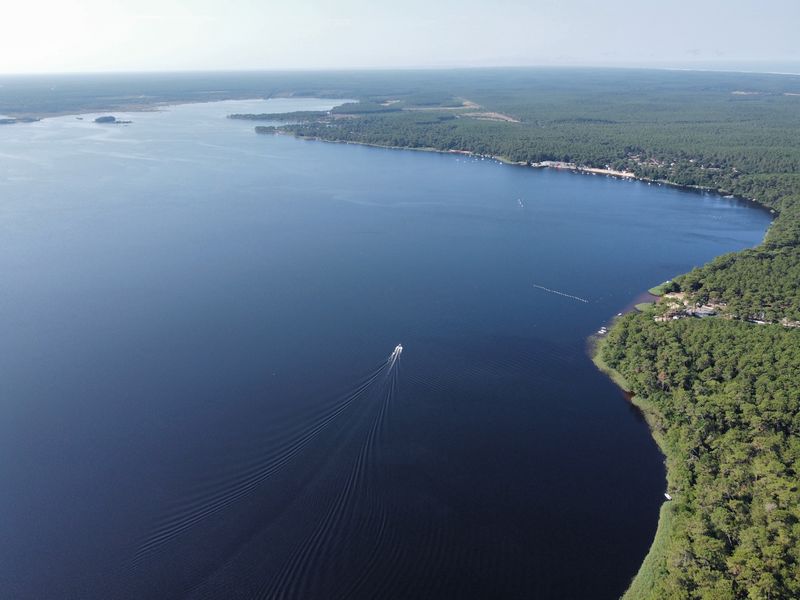
Pine forests, sand, and wide skies give Lake Lacanau a relaxed coastal charm. It lies only a short distance from the Atlantic, so you can enjoy still freshwater in the morning and ocean waves in the afternoon.
The lake is one of the largest in the Landes de Gascogne area. Its shallow beaches suit families, and sailing clubs offer lessons for beginners.
Flat cycling paths weave through the pines, making it easy to explore without much effort.
At sunset, the water often turns pink and gold, and the quiet shoreline feels special. Seafood and local oysters from nearby Arcachon make a fine dinner choice.
For the best weather, plan a trip between June and September, and bring insect repellent for evenings near the trees.
13. Lake Salagou, Hérault
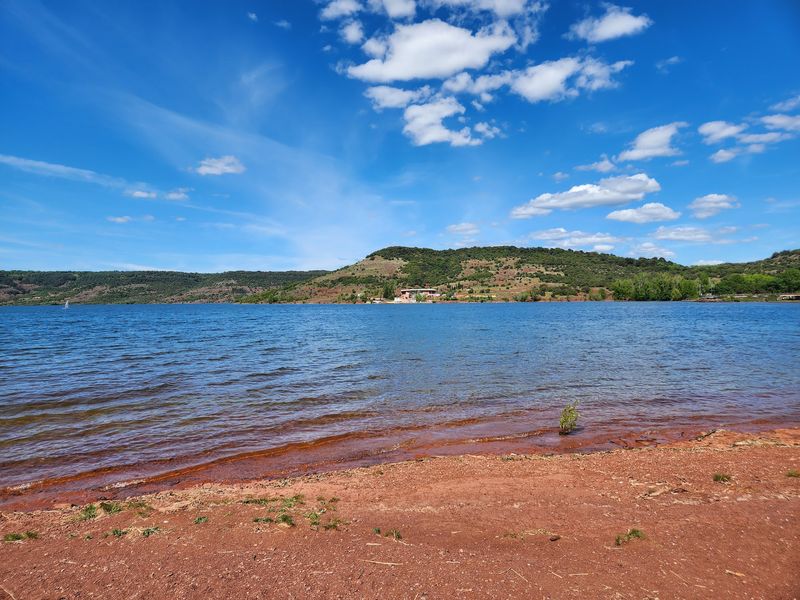
Red earth meets bright blue water, and the contrast is striking. Lake Salagou lies in southern France, where the soil is a deep rust color called ruffe.
The effect looks almost like another planet.
The lake was built in the 1960s to supply water for farmland, and it has since become a popular leisure area. Swimming, paddleboarding, and kayaking are common, while the nearby Cirque de Mourèze offers odd dolomite rock formations to explore on foot.
Camping is not allowed on the lakeshore, but small villages like Octon and Liausson offer lodging nearby. Summer days can be very hot, so bring a hat and extra water.
Early morning and late afternoon bring softer light, when the red hills glow against the lake.
14. Lake Capitello, Corsica
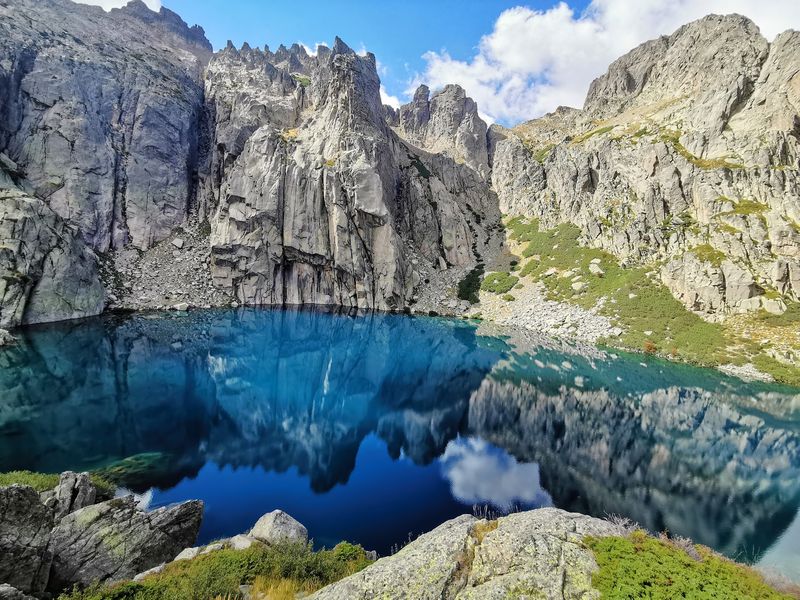
Corsica is famous for beaches, yet some of its finest scenery is high in the mountains. Lake Capitello is a glacial lake at about 1,930 meters, sitting in a rocky bowl below the granite crest near Monte Rotondo and Monte Cinto’s neighbors.
The hike starts near Lozzi or Albertacce, depending on the route, and takes several hours with a steady climb. Along the way, you cross streams and pass pine forest before the landscape turns bare and rocky.
Its sister lake, Melo, lies just below, and many walkers visit both in one day. Part of the famous GR20 trail passes close by, so you may meet trekkers from around the world.
Start early, carry plenty of water, and check the weather, since storms can build quickly in the afternoon.
15. Lake Mont-Cenis, Savoie
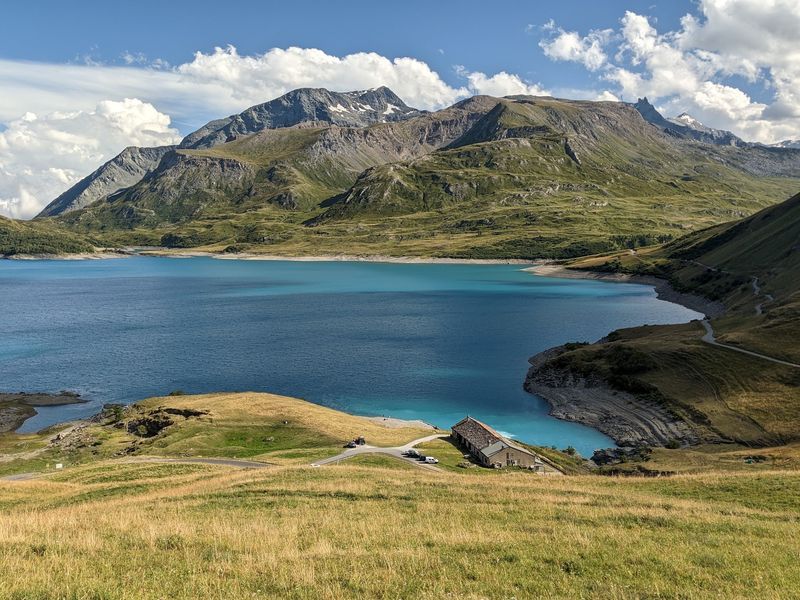
High on the border with Italy, Lake Mont-Cenis feels open and airy. At around 1,970 meters, the reservoir sits on a historic mountain pass that travelers have used for centuries, including armies and pilgrims.
Its water is a bright milky turquoise, set against grassy slopes and snow-dusted peaks. A road runs beside the shore, with pull-offs for photos and picnics.
Cyclists often tackle the climb, which has long been a challenge for riders in the Tour de France area.
Summer brings wildflowers, grazing animals, and cool breezes, while snow closes the pass in winter. Walking paths lead to nearby forts and viewpoints, and a small hospice on the plateau tells the story of the pass.
Bring a warm layer, even in July, since the altitude keeps the air crisp.
Share this story