Italy has a way of making history feel personal. The same cities where ambitious dukes commissioned grand palaces, powerful families funded monumental churches, and rival clans competed through architecture are still standing today, largely intact and open to anyone curious enough to visit. You can walk through the same ceremonial halls, stand in the same frescoed chambers, and wander the same streets where courtly processions once wound through crowds of onlookers. What makes these cities special is not just their beauty but the sheer ambition behind every stone.
The Medici, the Este, the Gonzaga, and the Sforza all used their cities as tools of self-promotion on a grand scale, and the results are still jaw-dropping centuries later. This list covers twelve Italian cities where that Renaissance energy is most alive, most accessible, and most likely to make you feel, at least for an afternoon, like you own the place.
1. Florence, Tuscany, Italy
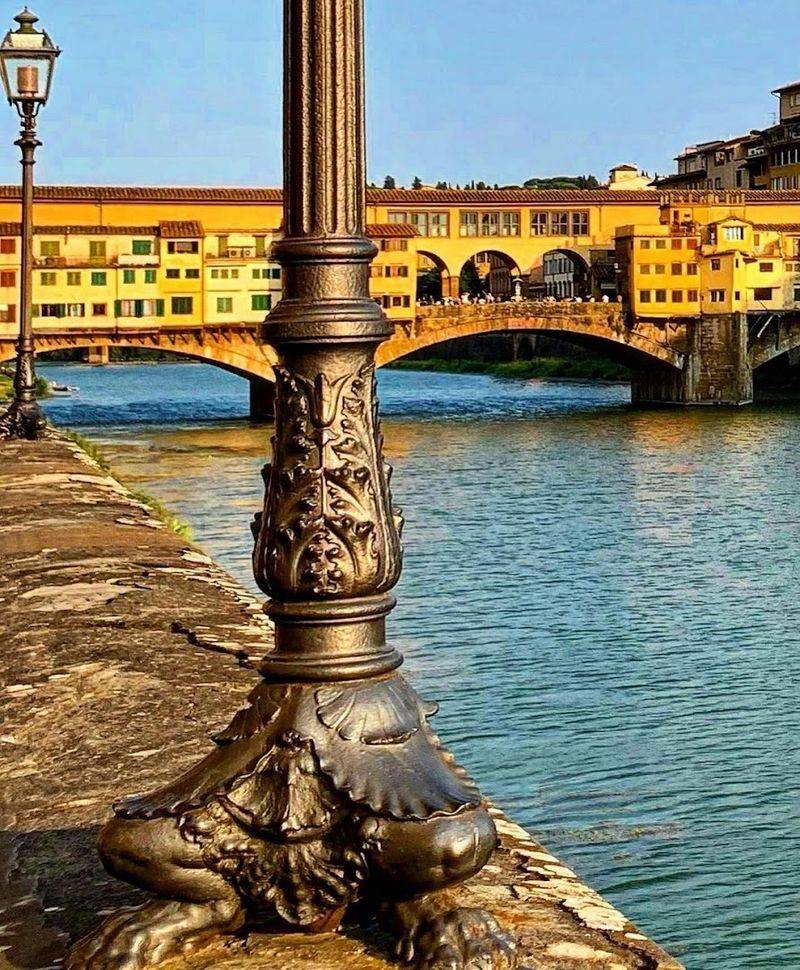
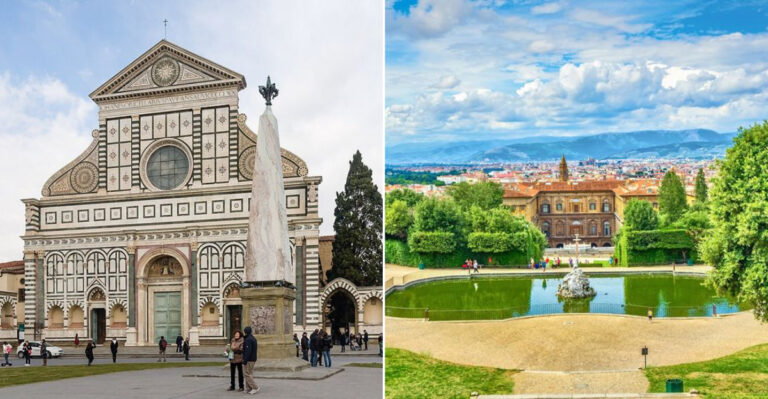
The Medici did not build Palazzo Pitti to be modest. Originally commissioned by banker Luca Pitti in 1458, the palace was later acquired by the Medici family in 1549 and expanded to three times its original size, becoming the largest of all Florentine palaces and the official residence of the Grand Duchy of Tuscany.
Inside, the Palatine Gallery holds over 500 works from the Medici private collection, including masterpieces by Raphael and Titian. The Royal Apartments retain their opulent Baroque style, a layered record of every royal family that called this place home.
Behind the palace, the Boboli Gardens stretch across terraced hillsides designed by multiple architects over two centuries. Geometric layouts, an Egyptian obelisk, and the elaborate Grotto of Buontalenti all reflect the Medici habit of turning even a garden into a political statement. An afternoon here covers more Renaissance history than most cities offer in a full day.
2. Mantua, Lombardy, Italy
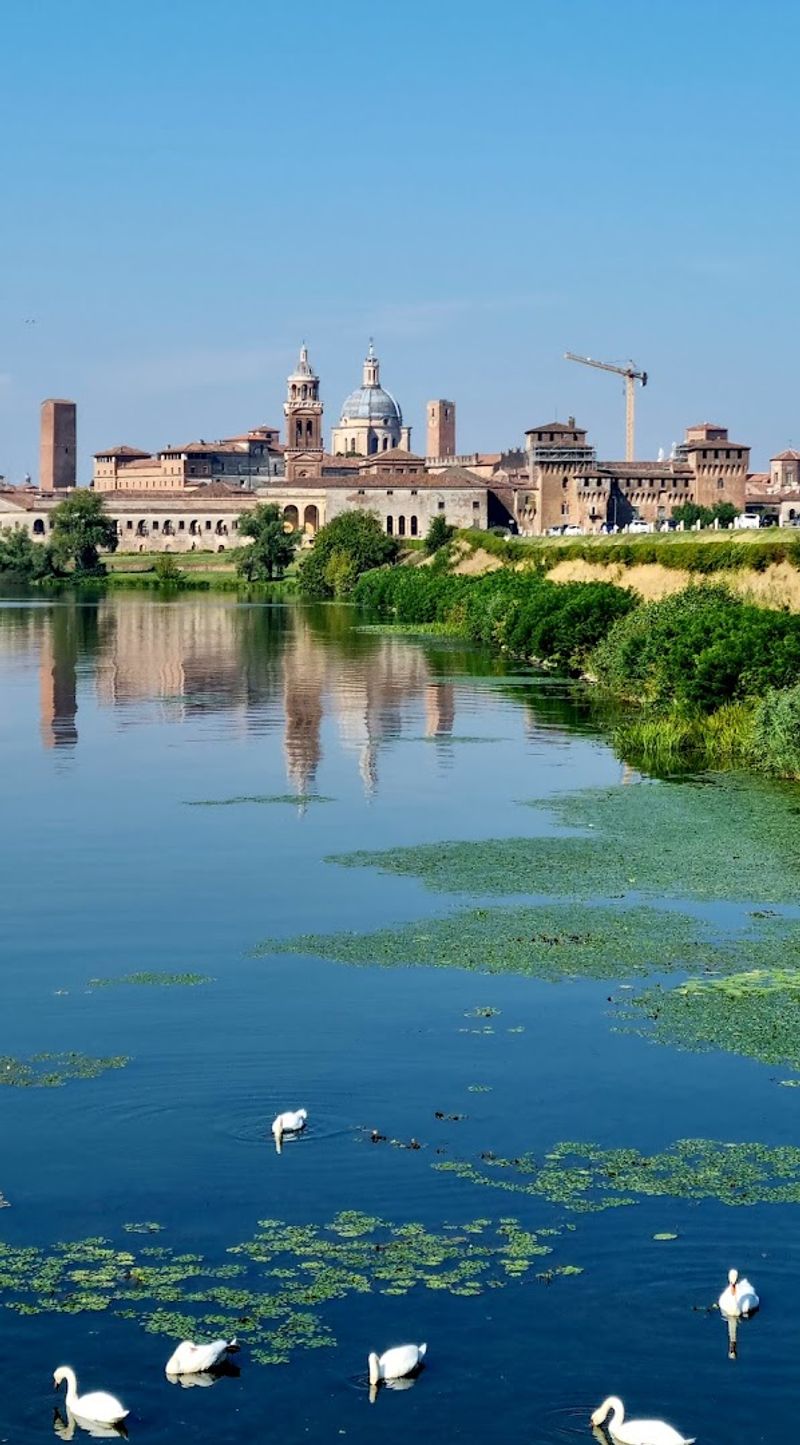
Mantua is the kind of city that makes you realize how seriously the Gonzaga family took their reputation. Their Palazzo Ducale is described as a city-palace for good reason, covering approximately 35,000 square meters with over 1,000 rooms, eight courtyards, and seven gardens built and expanded across nearly four centuries of dynastic rule.
The Camera degli Sposi, painted by Andrea Mantegna between 1465 and 1474, is the palace’s most celebrated room. Mantegna used illusionistic techniques to make the walls appear open to an outdoor pavilion, complete with a painted oculus overhead showing a sky populated with figures peering down.
Palazzo Te adds another chapter to Mantua’s story. Built from 1536 for Duke Federico II Gonzaga by architect Giulio Romano, its Chamber of the Giants is filled with painted figures that appear to crash through the walls and ceiling. It is theatrical in a way that Renaissance patrons would have absolutely loved.
3. Ferrara, Emilia-Romagna, Italy
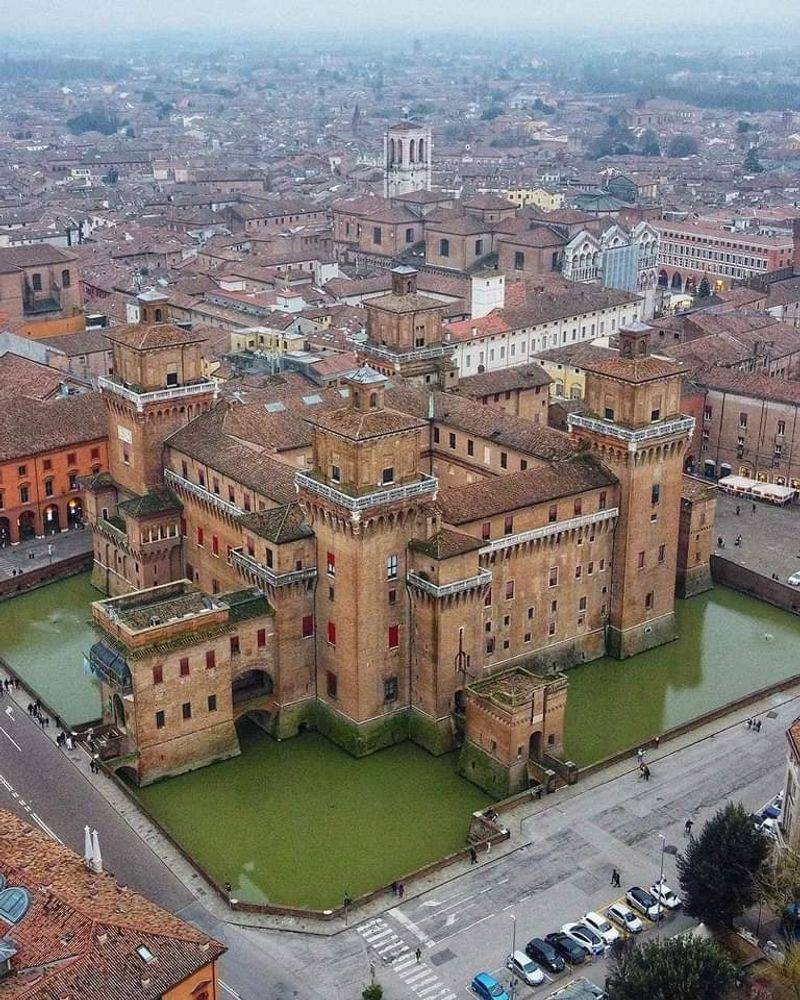
There are not many Italian cities where a fully moated castle sits directly in the center of town, but Ferrara pulls it off with remarkable confidence. The Castello Estense was built in 1385 by Marquis Niccolo II d’Este as a defensive fortress, complete with thick walls and four towers designed to discourage civil unrest.
Over the following century, the Este family gradually softened its military character, replacing battlements with balconies, adding roof terraces, and filling the interior with apartments decorated with paintings, tapestries, and commissioned artworks. The castle shifted from a stronghold into an aristocratic residence without ever losing its commanding presence.
Under Duke Ercole I, who ruled from 1471 to 1505, Ferrara nearly doubled in size through a massive urban expansion that repositioned the castle from the city’s edge to its very heart. Historians have called Ferrara the first modern city in Europe, a title it earned through deliberate planning rather than accident. The castle today allows visitors to explore its historic rooms and climb the Torre dei Leoni for panoramic views.
4. Urbino, Marche, Italy
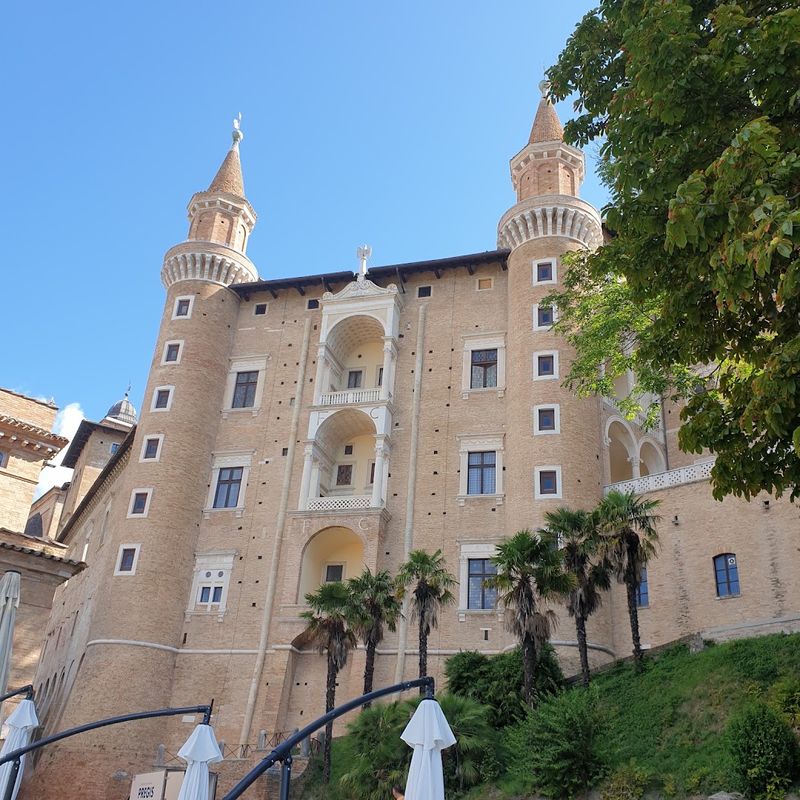
Perched on a hillside in the Marche region, Urbino holds one of the most carefully considered buildings of the entire Renaissance. The Ducal Palace was commissioned by Federico da Montefeltro, Duke of Urbino from 1444 to 1482, and transformed a provincial hilltop town into a respected cultural capital that attracted scholars, artists, and diplomats from across Italy.
Construction began in 1454 and involved a succession of master architects including Luciano Laurana and Francesco di Giorgio Martini. Laurana introduced the elegant twin towers known as the Torricini, which rise above the city and were described at the time as an open dialogue with the divine. The courtyard he designed remains one of the most harmonious architectural spaces of the 15th century.
Federico’s private Studiolo is a small room decorated with trompe l’oeil wood inlay panels that mimic books, scientific instruments, and armor with extraordinary precision. The palace later became the setting for Baldassare Castiglione’s influential text on courtly behavior, and today houses the National Gallery of the Marche.
5. Siena, Tuscany, Italy
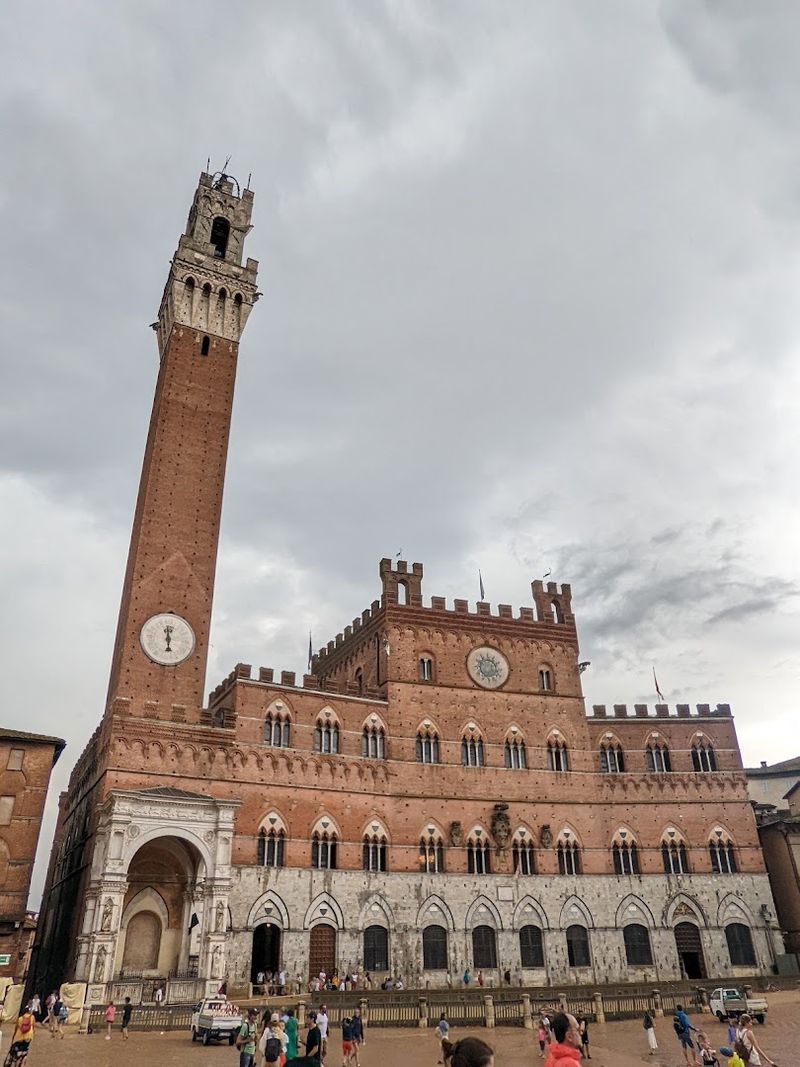
Siena is often filed under medieval, but its civic ambition belongs to the same competitive spirit that drove Renaissance courts across Italy. The Palazzo Pubblico, built between the late 13th and early 14th centuries, served as the seat of the republican government and continues to function as the city’s town hall, giving it a rare continuity of purpose that most historic buildings cannot claim.
Inside the Civic Museum, Ambrogio Lorenzetti’s Allegory of Good and Bad Government, painted between 1338 and 1339, remains one of the most politically direct artworks of the entire pre-Renaissance period. The frescoes show in concrete detail what a well-governed city looks like compared to a badly governed one, which was a pointed message for the officials working in the same building.
The Torre del Mangia rises from the Palazzo Pubblico to a height that made it one of Italy’s tallest medieval towers, a deliberate symbol of the commune’s independence. The Piazza del Campo below it, shaped like a shell and tilted toward the building, was designed to gather crowds for public spectacles and civic ceremonies.
6. Lucca, Tuscany, Italy
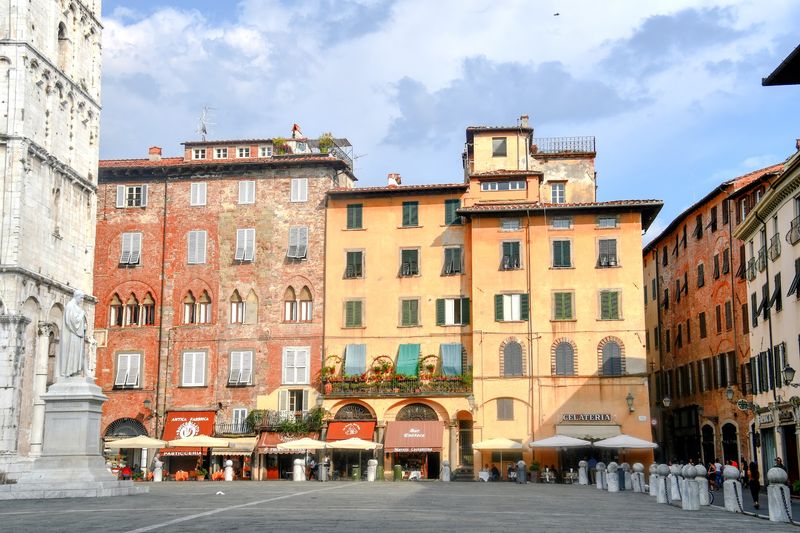
Lucca keeps its best secrets behind walls, and Palazzo Pfanner is a perfect example. Originally commissioned in 1660 by the Moriconi family, Lucca’s merchant nobility, the property passed through the Controni family before the Pfanner family acquired it in the 1800s, each generation adding to its carefully maintained character.
The garden was redesigned in the early 18th century in the Italian formal style, with seven geometric lawn sections, gravel paths, antique lemon pots, and a central octagonal fountain. Allegorical and mythological statues line the central avenue, and a limonaia, a lemon house with large windows, has sheltered potted citrus plants through Tuscan winters for centuries.
Inside the palace, frescoed rooms display historical collections and period furnishings alongside medical-surgical instruments belonging to Dr. Pietro Pfanner, a former mayor and surgeon. A monumental stone staircase attributed to architect Domenico Martinelli leads to the central hall. The garden sits close enough to Lucca’s ancient city walls that the two structures seem to be in quiet architectural conversation with each other.
7. Pienza, Tuscany, Italy
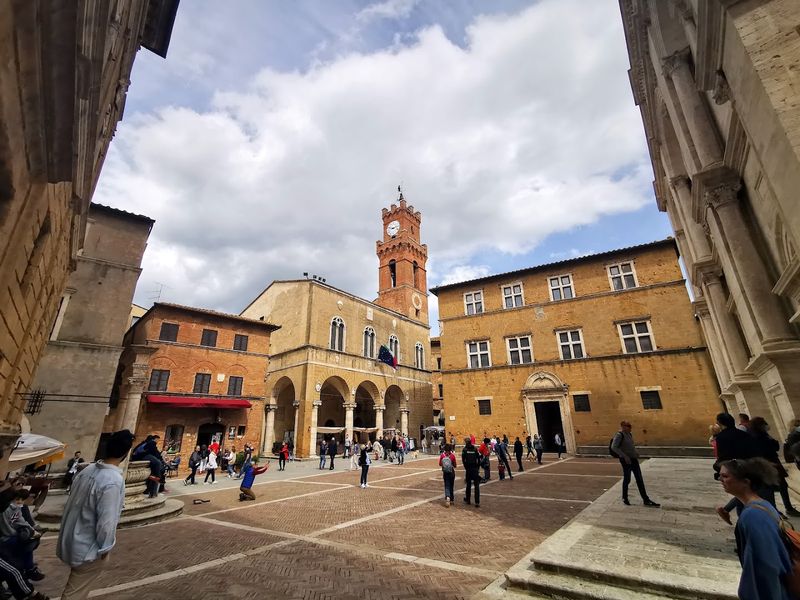
Pope Pius II had an unusual opportunity that most Renaissance patrons could only dream about. Rather than fitting a new building into an existing city, he got to redesign an entire town from scratch. Between 1458 and 1462, he commissioned architect Bernardo Rossellino, a student of Leon Battista Alberti, to transform his modest birthplace of Corsignano into an ideal Renaissance city, which he renamed Pienza after himself.
Palazzo Piccolomini was conceived as the pope’s summer residence and is recognized as one of the earliest examples of Renaissance palace design in central Italy. Its square layout, rusticated stone facade, and large windows reflect Alberti’s influence, while the rectangular inner courtyard features a portico and loggia supported by stone columns.
The terraced garden at the rear is considered the first roof garden of the Renaissance, offering panoramic views across the Val d’Orcia toward Monte Amiata. The Piccolomini family lived in the palace until 1962, and its original furniture, paintings, and furnishings are still in place, making it feel less like a museum and more like a residence that its owners simply stepped away from.
8. Vicenza, Veneto, Italy
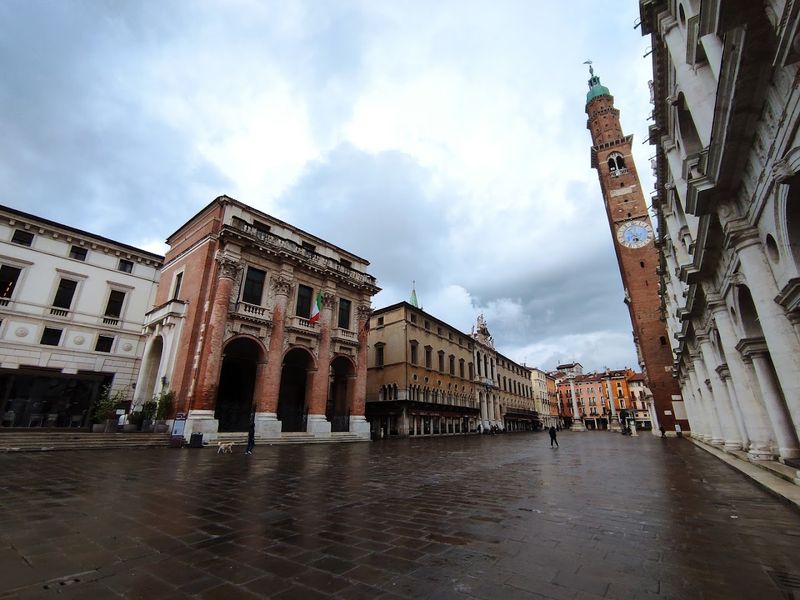
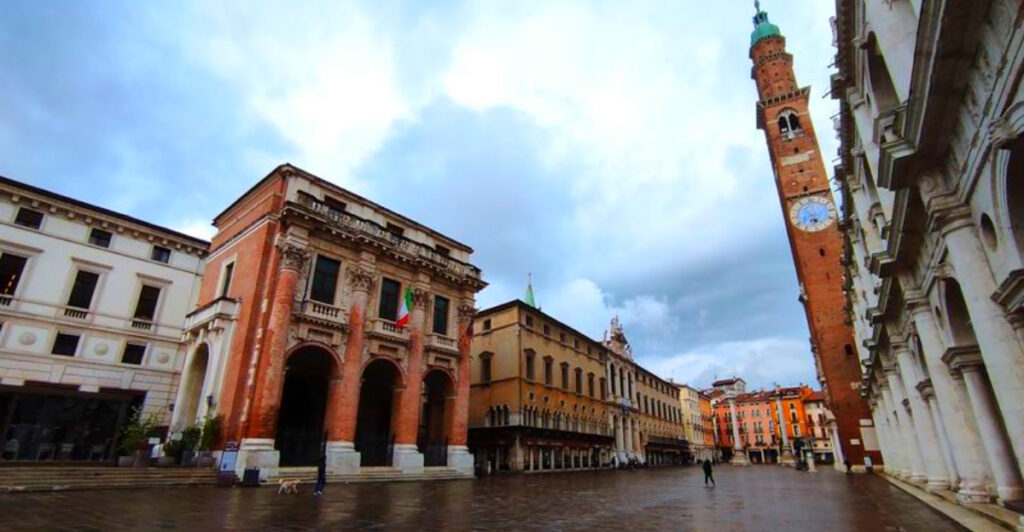
Andrea Palladio spent his career reinventing classical Roman architecture for a 16th-century Venetian audience, and the Teatro Olimpico in Vicenza was his final and most theatrical statement. Construction began in 1580 and was completed after his death by Vincenzo Scamozzi, making the theater a collaboration across the boundary between life and legacy.
The stage scenery installed by Scamozzi in 1585 is recognized as the oldest surviving stage set in existence. Using trompe l’oeil perspective, it creates the convincing illusion of streets receding toward a distant horizon behind a Roman-style scaenae frons built from wood and stucco designed to imitate marble.
Palladio modeled the semi-elliptical auditorium on ancient Roman theater designs, working within the footprint of a former municipal prison. The colonnade above the seating area is topped with statues, and the ceiling is painted to suggest an open sky. The Teatro Olimpico is now a UNESCO World Heritage Site, and sitting in its tiered seats makes it easy to feel like a guest at an exclusive performance staged for a very select court.
9. Verona, Veneto, Italy
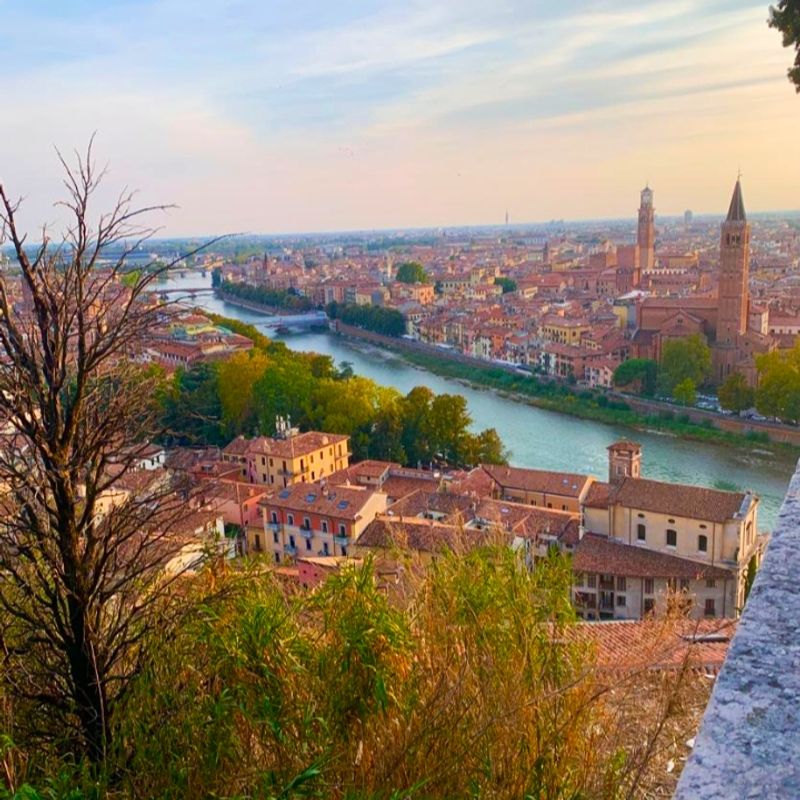
Most visitors come to Verona for the Roman arena and the balcony associated with Shakespeare’s most famous play, but the city’s most quietly impressive attraction dates to 1570. Giardino Giusti was designed by Agostino Giusti, a Knight of the Venetian Republic with connections to both the Medici and the Habsburgs, who drew inspiration from the great Medici gardens of Tuscany when planning the layout.
The garden climbs a hillside in a series of terraces, featuring symmetrical boxwood hedges, geometric flowerbeds, fountains, grottoes, ancient cypress trees, and mythological statues positioned throughout. A grotesque mask carved into the hillside could historically emit flames, a party trick designed to surprise and impress guests gathered below. The garden also contains one of Europe’s oldest mazes, restructured in 1786.
Giardino Giusti was a required stop on the Grand Tour, visited by figures including Goethe, Mozart, and Tsar Alexander I of Russia. The adjacent Giusti Palace has recently reopened as a cultural space housing art collections that trace the family’s seven-century history in Verona.
10. Venice, Veneto, Italy
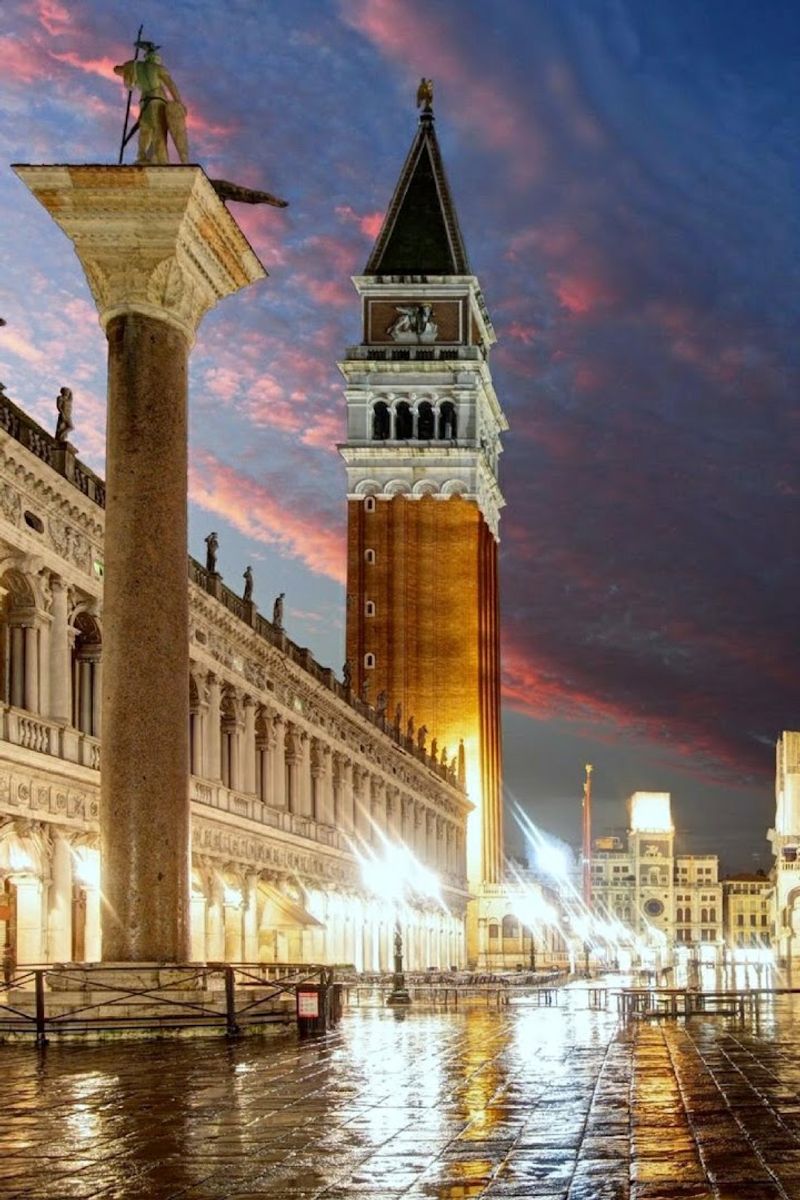
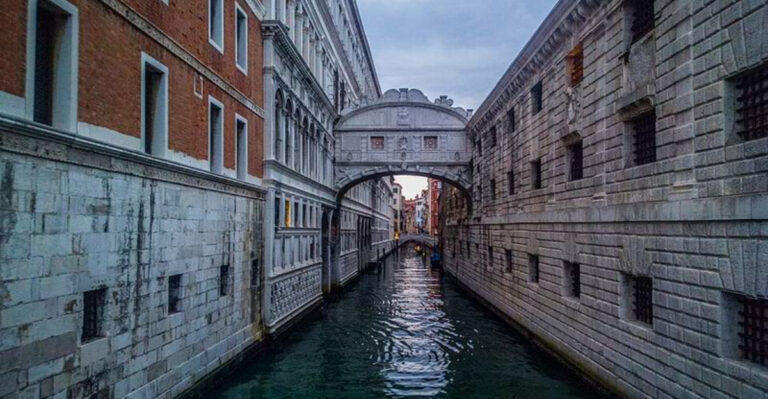
No other city in Italy turns the concept of noble power into a full landscape quite like Venice. The Doge’s Palace traces its origins to the 9th century, with the current structure largely rebuilt between the 14th and 15th centuries, blending Byzantine, Gothic, and Renaissance influences into a facade that has impressed arriving visitors by water for over 600 years.
Inside, the scale of the former Venetian government becomes clear. Council chambers, official apartments, an armory, and richly decorated halls reflect an administration that managed a maritime empire spanning the eastern Mediterranean. Renaissance elements were incorporated after a devastating fire in 1483, notably under architect Antonio Rizzo, while the ceremonial Porta della Carta was completed by Giovanni and Bartolomeo Bon between 1438 and 1442.
Although the Doge held the highest symbolic position in the Republic, his role was carefully ceremonial rather than executive, a fascinating balance of prestige and constraint. The palace became a public museum in 1923 and remains one of Italy’s most visited historic interiors, approached best by crossing the lagoon on a clear morning.
11. Bologna, Emilia-Romagna, Italy
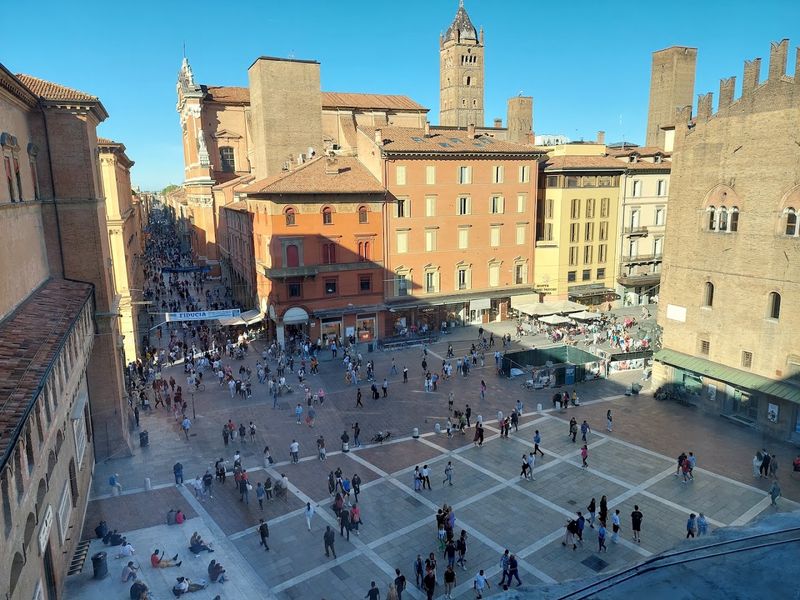
Bologna presents its history without apology. Palazzo d’Accursio, the city’s prominent civic hall on Piazza Maggiore, began as the 13th-century residence of the jurist Accursius before becoming the seat of the city’s highest magistrates in 1336. Its expansion over the following centuries absorbed neighboring buildings, ceremonial halls, and layers of architectural ambition that now blend medieval, Renaissance, and Baroque styles into one complex.
Architect Fioravante Fioravanti refurbished the palace in the 15th century and added the distinctive Clock Tower. A later 16th-century reconstruction introduced grand halls, ornate decorations, and impressive frescoes following the fall of the Bentivoglio family. The Great Horses Staircase, built in 1587, was specifically engineered wide enough for horse-drawn carriages to ascend to the noble floor.
Notable interior spaces include the Sala del Podesta, decorated with frescoes depicting historical and mythological scenes, and the Sala Farnese. Today the palace houses the Civic Art Collection, covering paintings from the Middle Ages through the 19th century. From the surrounding Piazza Maggiore, Bologna’s confidence as a civic and intellectual capital is impossible to miss.
12. Genoa, Liguria, Italy
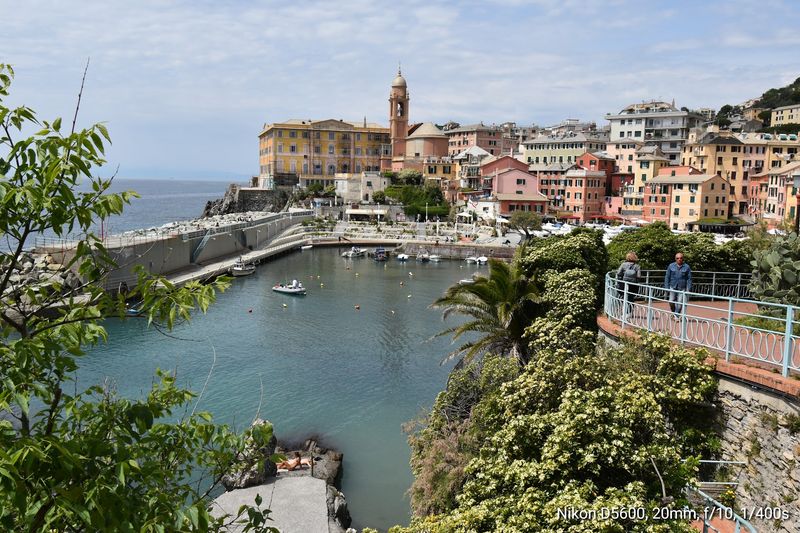
Genoa made its fortune through trade, banking, and maritime power, and its most powerful families spent that fortune constructing one of the most impressive streets in Italy. Via Garibaldi, formerly known as Strada Nuova, was conceived as a deliberate showcase of aristocratic wealth, with palaces designed to face each other across a wide avenue and collectively project an image of collective dominance.
Palazzo Rosso, built for the Brignole-Sale family, is particularly noted for its frescoed ceilings by leading Genoese artists and its significant art collection. Palazzo Bianco holds European paintings by Caravaggio, Rubens, and Van Dyck. Palazzo Doria Tursi, originally commissioned by Niccolo Grimaldi, later became the city hall and is characterized by its grand courtyards and ceremonial rooms.
All three palaces now form the Musei di Strada Nuova, allowing visitors to move through frescoed rooms, grand staircases, and art galleries in a single visit. Via Garibaldi is a UNESCO World Heritage Site, and its architectural uniformity makes the street itself feel like an argument, a very expensive, very convincing argument, about who really ran the Mediterranean world.
Share this story