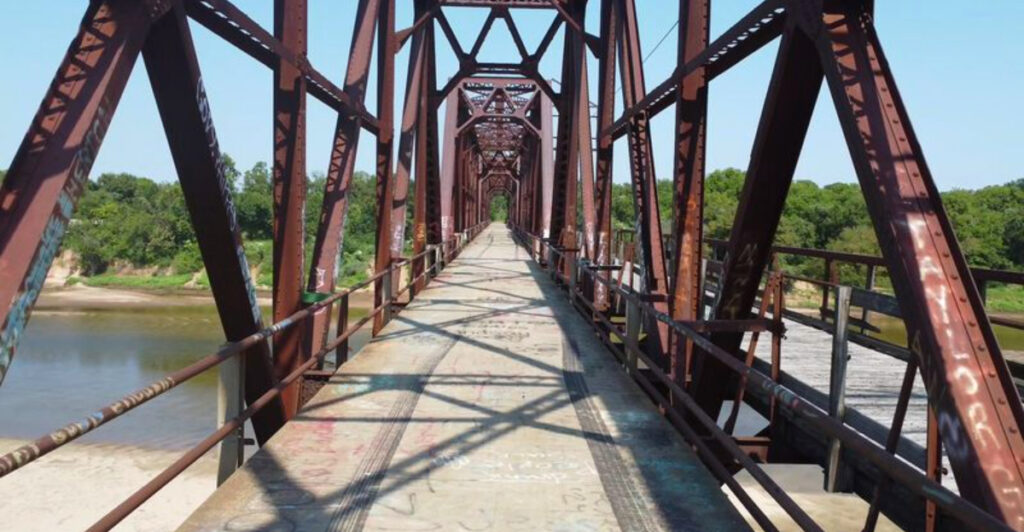
There is a century-old iron bridge straddling the Red River on the Oklahoma-Texas border, and it has been quietly waiting for curious travelers to notice it. The bridge is free to visit, open around the clock, and carries more history in its rusted iron trusses than most museums could fit in three floors.
Fishermen, history buffs, photographers, and road-trippers have all made the pilgrimage down a dusty dirt road to stand above the slow-moving Red River and feel the weight of a hundred years beneath their feet. This is one of those rare places where you do not need a ticket, a tour guide, or a reservation to feel genuinely connected to the past.
Where to Find the Historic Carpenters Bluff Bridge
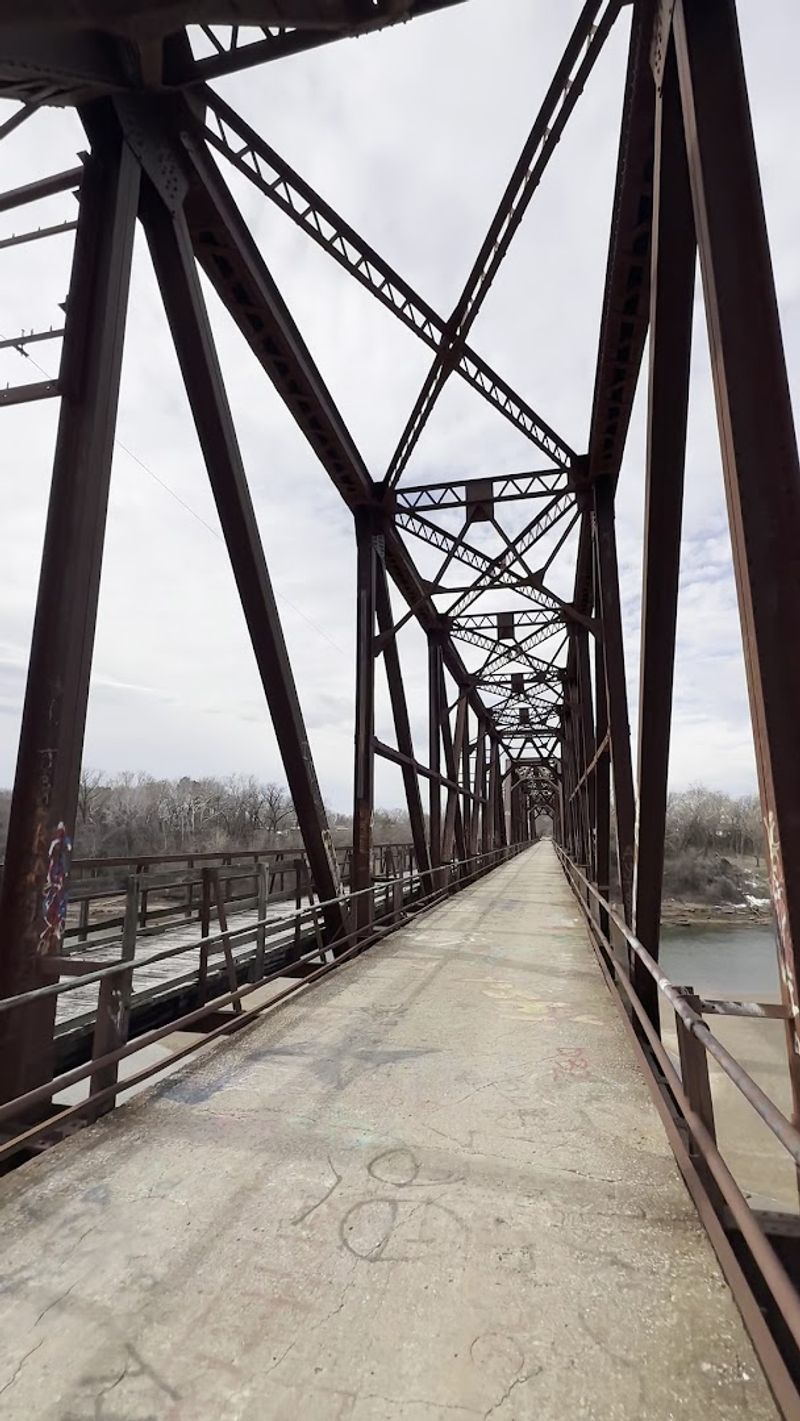
The full address on the Oklahoma side is Carpenter’s Bluff, N 3715, Hendrix, OK 74741, and getting there is part of the adventure. The bridge sits right on the state line between Oklahoma and Texas, with the Red River running wide and steady beneath its iron frame.
From the Oklahoma side, you drive roughly a quarter to half a mile down an unpaved dirt road before the bridge comes into view. The approach feels remote and a little wild, which honestly makes the arrival more satisfying.
On the Texas side, the bridge is accessible only on foot, so plan accordingly if you are crossing from that direction. There is a small parking area near the Texas entrance, though the space feels tight.
The coordinates place the bridge at 33.7561682, -96.4111816, which makes it easy to plug into a GPS. The phone number listed for inquiries is (405) 297-3882, and additional details can be found at vanishingtexas.net/carpenters-bluff-bridge.
A Century of Iron: The Bridge’s History
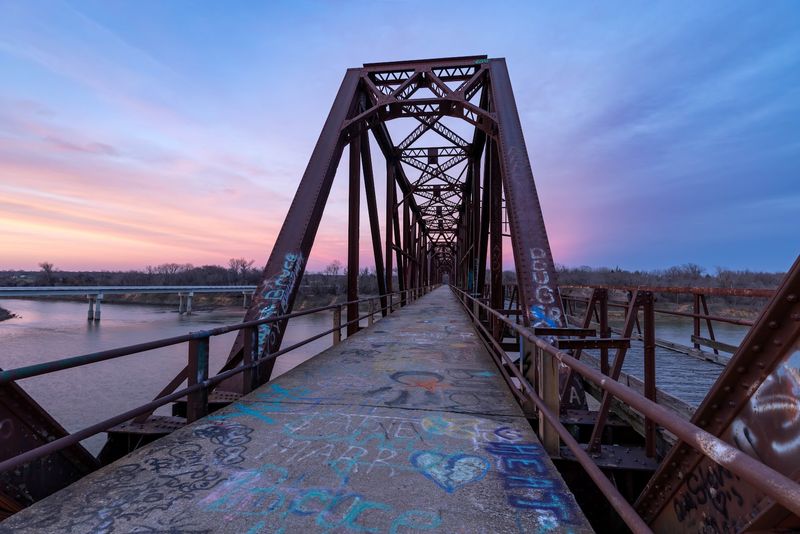
Few bridges in this part of the country have survived as long or seen as much as the one at Carpenter’s Bluff. Built over a hundred years ago, it originally served as a railroad crossing and later became a vehicle bridge before being converted to a pedestrian crossing.
The iron truss design was a standard engineering choice of its era, built to carry heavy loads across wide river crossings. The fact that it still stands today is a testament to the craftsmanship of early 20th-century construction.
Over the decades, the bridge has been repaired and updated several times, but its bones remain rooted in history. The original character of the structure has been preserved in a way that makes it feel authentic rather than restored beyond recognition.
Many visitors describe a strong sense of nostalgia when they first set eyes on it, even if they have never visited before. There is something about old iron and slow river water that connects people to a time they never personally lived through.
The Red River View from the Bridge Deck
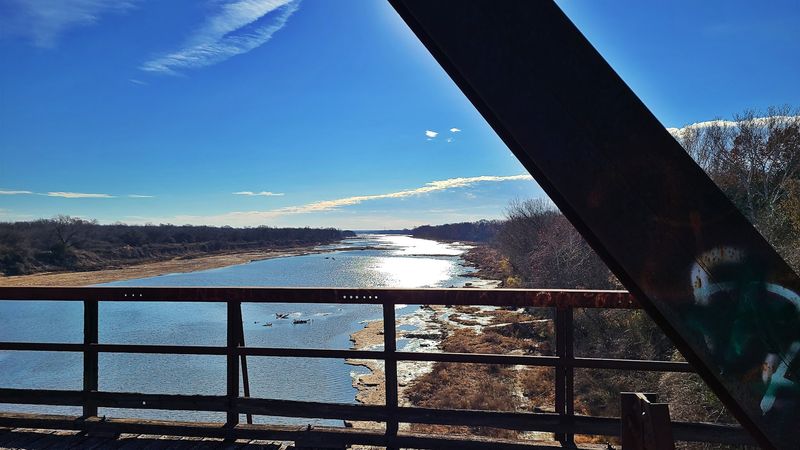
The view from the center of the bridge is the kind that makes you stop walking and just stand there for a while. The Red River stretches wide in both directions, its reddish-brown water moving at an unhurried pace between sandy, tree-lined banks.
At sunrise, the light hits the water at a low angle and turns everything a warm amber color. At sunset, the sky behind the tree line puts on a full show, and the reflection on the river doubles the effect.
The bridge sits high enough above the water that the view feels expansive rather than claustrophobic. You can see downstream for a good distance, and on clear days, the landscape opens up beautifully in both directions.
The height also means that anyone with a fear of heights will feel it here, especially near the open sections of the walkway. That said, most visitors find the elevated perspective more thrilling than unsettling, and the view alone makes the trip worth every dusty mile of that dirt road approach.
The Bridge as a Walking and Photography Destination
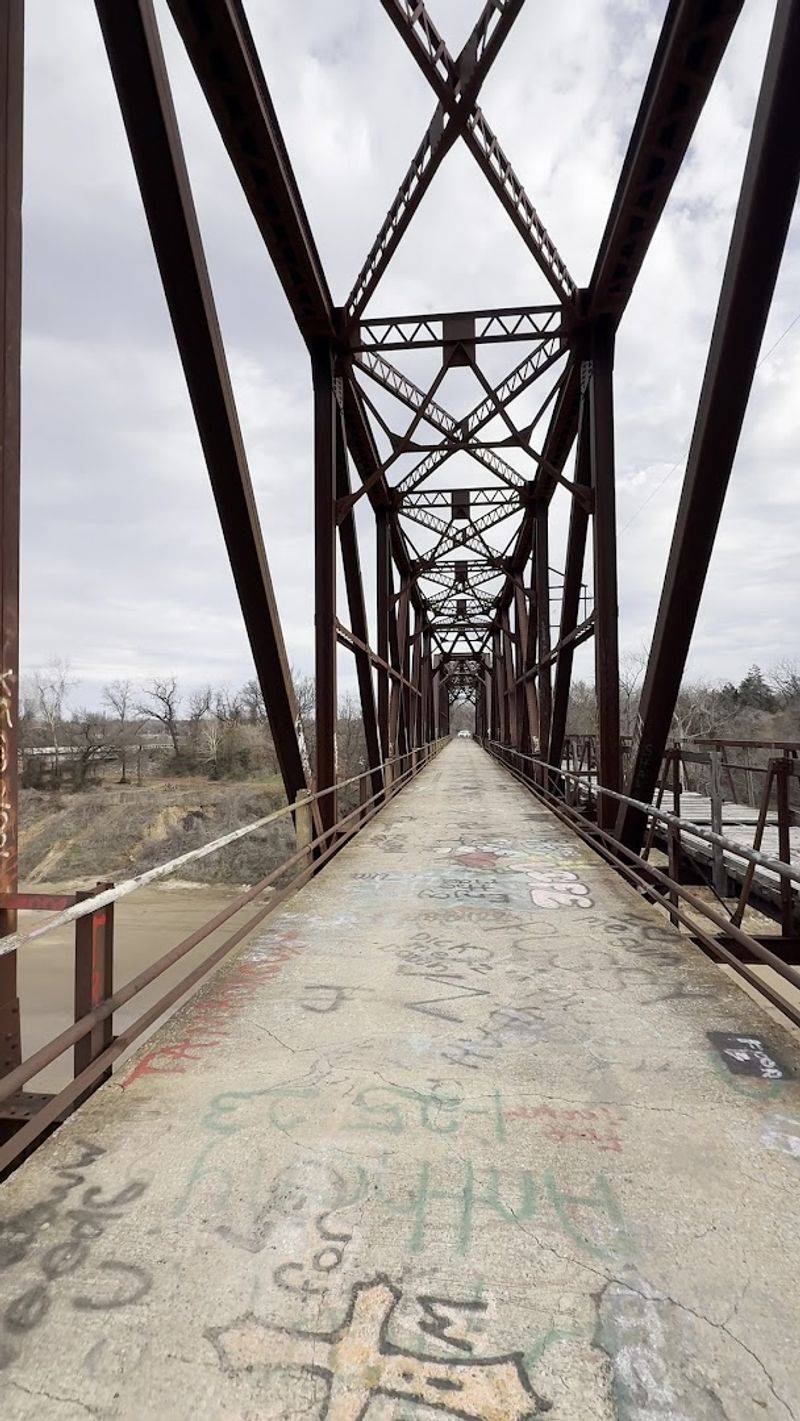
The bridge has been converted from a vehicle crossing to a pedestrian walkway, which means you get to walk its full length at your own pace without worrying about traffic. That alone changes the experience completely.
Photographers make special trips out here because the iron truss framework creates natural leading lines that frame shots beautifully. The combination of rusted metal, open sky, and river below gives every photo a dramatic, editorial quality without much effort.
Dusk is widely considered the best time to photograph the bridge. The fading light catches the iron at just the right angle, and the river below takes on a moody, cinematic tone that is hard to replicate at any other time of day.
The bridge is also long enough that you can walk to the midpoint and feel genuinely surrounded by the river, with nothing but iron and open air around you. It is the kind of walk that clears your head, fills your camera roll, and leaves you feeling like you found something most people drive right past.
Swimming, Fishing, and River Activities Below
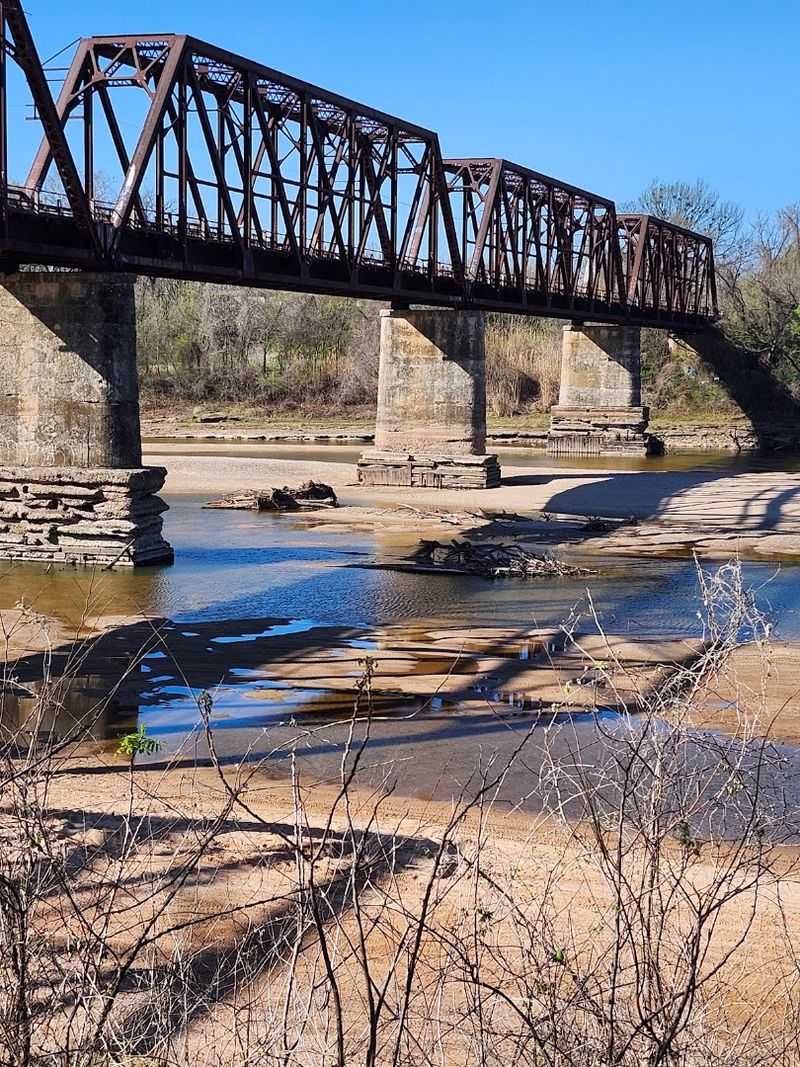
The river below the bridge is not just scenery. On the Oklahoma side, there is a rough road down to the water that works well for off-road vehicles, and the walk down on foot is manageable for most people.
The riverbank draws a steady crowd of swimmers, especially during warmer months. The water is shallow enough near the banks for wading and deep enough in spots for a proper swim, and the sandy bottom makes it feel more inviting than a lot of river access points in the area.
Fishing is popular here too, and the Red River is known for catfish, bass, and other species that keep anglers coming back. The bridge pylons create natural structure in the water that fish tend to congregate around, which gives bank fishermen a natural advantage.
Some visitors have even jumped from parts of the bridge into the river below, though that is a personal risk assessment everyone has to make for themselves. The energy around the river on a busy weekend day is lively, social, and genuinely fun in a way that feels completely unscripted.
Fossils and Natural Finds in the Riverbed
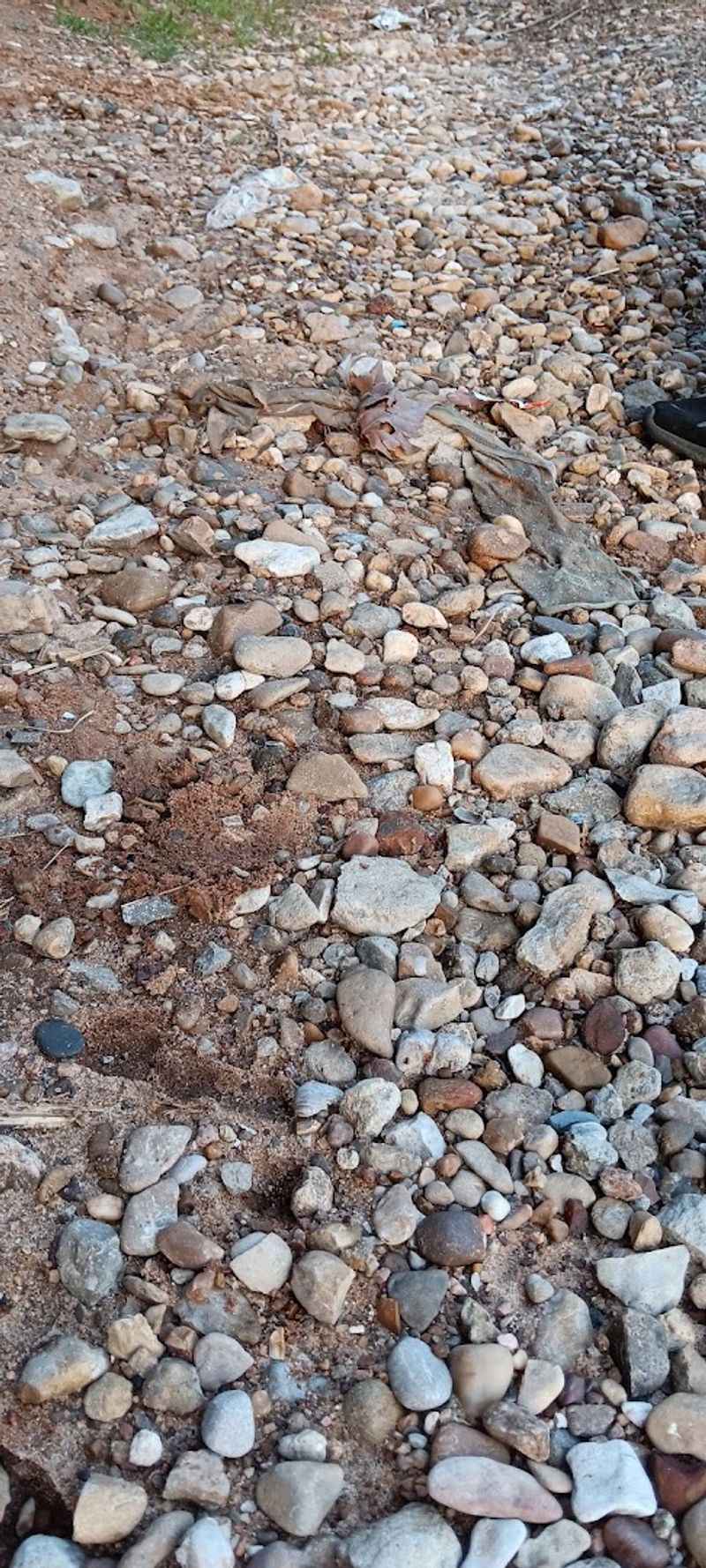
One of the most unexpected surprises at Carpenter’s Bluff has nothing to do with the bridge itself. The gravel beds beneath the structure and along the riverbank contain fossils and semi-precious stones that reward anyone willing to look closely.
Oyster fossils and bivalve impressions have been spotted in the rock layers under the bridge, left behind by an ancient sea that once covered this entire region millions of years ago. Picking through the gravel here feels like a small geology lesson that nobody assigned but everyone enjoys.
Jasper and agate pieces also turn up in the riverbed gravel with some regularity. Both are colorful, smooth-worn stones that are easy to identify once you know what to look for, and they make satisfying free souvenirs from the trip.
The fossil hunting adds a whole extra dimension to the visit that most people do not expect when they first pull up. Children especially get absorbed in the search, and even adults who came only to see the bridge end up crouched over the gravel, turning over rocks with the focus of seasoned collectors.
The Atmosphere and Unique Character of the Site
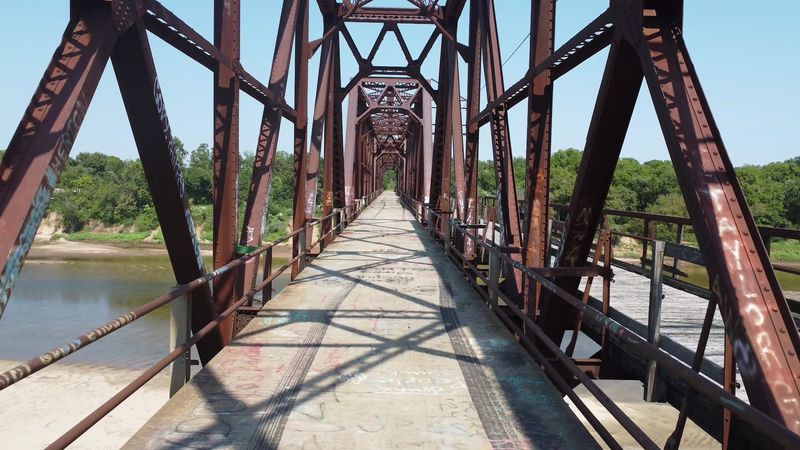
There is a particular mood to this place that is hard to put into words but easy to feel the moment you arrive. The remoteness of the approach, the old iron overhead, and the sound of the river below create an atmosphere that is equal parts peaceful and slightly eerie.
Some visitors describe the site as cool and historic while also noting that it carries a certain edge, especially when the area is quiet and the surroundings feel untamed. The graffiti on parts of the bridge adds to that raw, unpolished character rather than detracting from it.
There is no manicured park experience here. No visitor center, no gift shop, no guided tour.
What you get instead is direct, unmediated contact with a piece of history in a setting that has been allowed to age naturally.
That combination of beauty and rough edges is exactly what makes the place memorable. It does not try to be something it is not, and that honesty is refreshing in a world where most historic sites have been smoothed down and sanitized for comfortable consumption.
What to Know Before You Visit
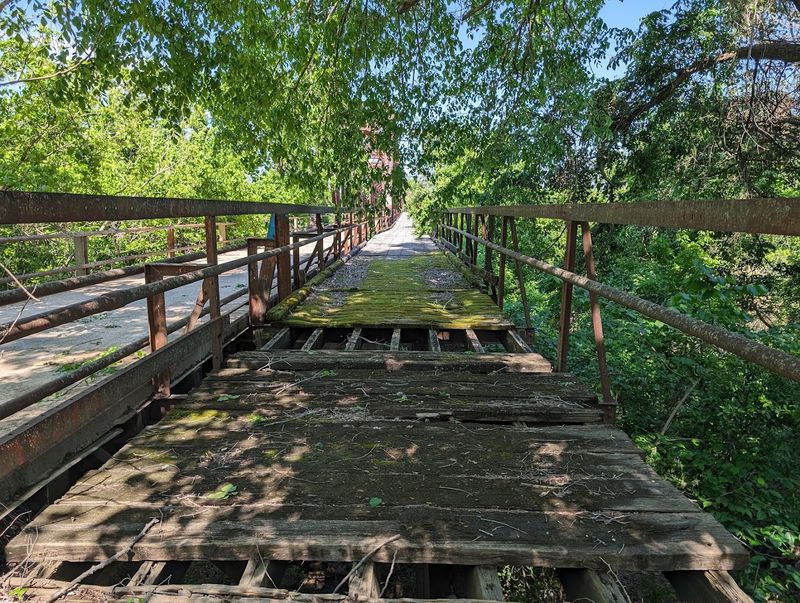
A few practical details can make the difference between a great visit and a frustrating one. The bridge is open 24 hours a day, seven days a week, and there is no admission fee, which makes it one of the most accessible historic sites in the region.
The Oklahoma side requires driving down an unpaved dirt road for about a quarter to half a mile. After rain, that road can get muddy, so a vehicle with decent ground clearance is a smart choice if the weather has been wet recently.
The Texas side is foot traffic only, so if you plan to cross from that direction, park carefully and leave room for others. The parking area near the Texas entrance is small, and the space can feel tight when multiple vehicles arrive at once.
Keep in mind that the site is remote and not actively managed, so bring what you need including water, sunscreen, and sturdy shoes. Staying aware of your surroundings is always a good habit at off-the-beaten-path spots like this one, and being courteous to other visitors keeps the experience good for everyone.
The Bridge Across State Lines: Oklahoma Meets Texas
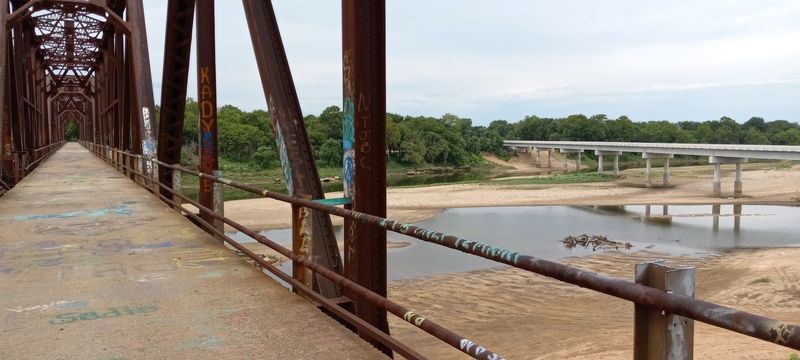
Standing at the center of the Carpenter’s Bluff Bridge means standing in two states at once, with Oklahoma behind you and Texas ahead, or vice versa depending on which side you started from. The Red River serves as the official border, and the bridge has been carrying people across that line for over a century.
That border-crossing quality adds a layer of novelty to the visit that never quite gets old. There is something satisfying about taking a few steps and technically changing states without a tollbooth, a checkpoint, or even a sign to mark the moment.
The landscape on both sides of the river shares the same character: flat to gently rolling terrain, scrubby trees, sandy soil, and wide open sky. The border is political rather than geographical, and the bridge is one of the few places where you can feel that distinction clearly.
For road-trippers who enjoy collecting unusual experiences, walking across a 100-year-old iron bridge from Oklahoma into Texas over the Red River ranks pretty high on the list of things that are completely free, genuinely historic, and surprisingly hard to forget.
Why This Bridge Deserves a Spot on Your Road Trip
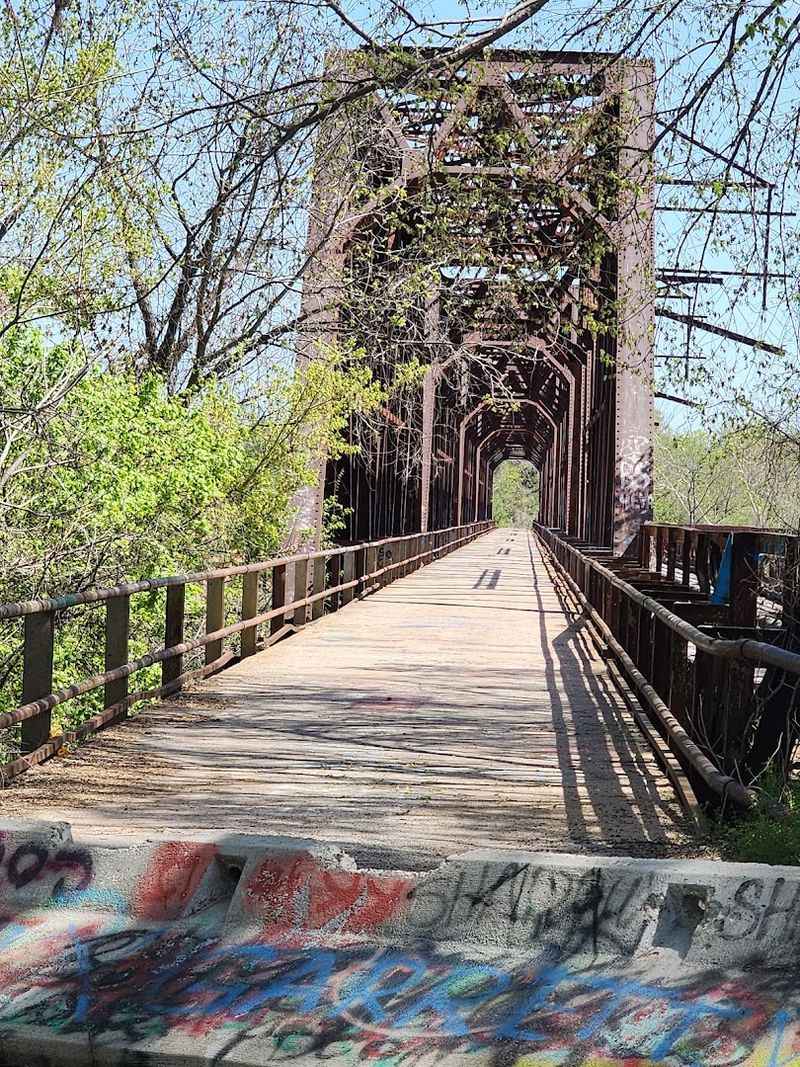
Road trips thrive on the unexpected, and the Carpenter’s Bluff Bridge is exactly the kind of stop that turns a drive into a story worth telling. It is not famous, it does not appear on most travel lists, and it requires a little effort to reach.
All of that works in its favor.
The combination of free access, genuine history, natural beauty, and river activities means there is something here for almost every kind of traveler. Whether you come for the fossils, the photography, the fishing, or simply the experience of walking a century-old iron bridge above the Red River, the visit delivers.
The bridge has earned a 4.7-star rating from nearly 100 reviews, which is a strong signal from real visitors who made the trip and found it worthwhile. That kind of consistent positive feedback from a diverse crowd says something meaningful about a place.
Some spots earn their reputation through marketing, and others earn it simply by being exactly what they are. The Carpenter’s Bluff Bridge belongs firmly in the second category, and that is precisely why it keeps drawing people back down that dusty Oklahoma dirt road year after year.
Share this story