West Virginia has never been a state that fits neatly into a postcard. Yes, the mountains are stunning, but tucked between those ridges and hollows are places that will make you do a genuine double-take. Think gravity-defying rooms, a golden palace rising out of farmland, cryptid museums, and a bathtub with a very famous former owner. The Mountain State has quietly built one of the most wonderfully bizarre collections of roadside attractions and historic landmarks anywhere in the country.
Some of these spots have been pulling in curious travelers for decades, while others remain the kind of well-kept secrets that locals share with a knowing smile. Each one on this list has something genuinely unexpected to offer, whether that is a jaw-dropping architectural surprise, a legend that refuses to die, or a spectacle so over-the-top it simply has to be seen to be believed. Pack your curiosity and keep reading.
1. Mothman Museum, Point Pleasant, West Virginia
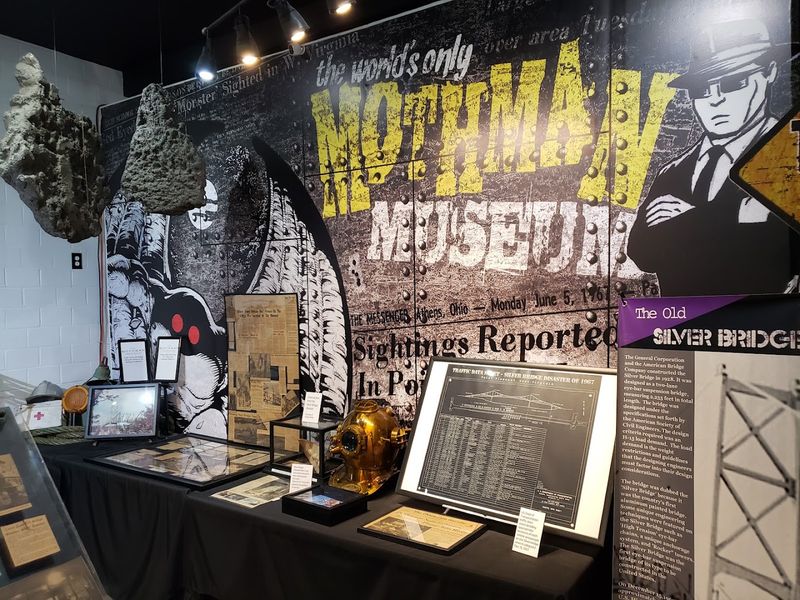
Point Pleasant takes its most famous resident very seriously, and the Mothman Museum is the clearest proof of that commitment. Opened to chronicle the wave of cryptid sightings that rattled the town between 1966 and 1967, it holds a collection that includes original newspaper clippings, handwritten eyewitness reports, and artifacts tied to the Silver Bridge collapse that followed the sightings.
Movie props from the 2002 film adaptation share space with research materials from investigators like John Keel, giving the museum a layered quality that goes well beyond simple novelty. Skeptics and true believers tend to move through the exhibits at the same slow, fascinated pace.
The annual Mothman Festival draws thousands of visitors each September, turning Point Pleasant into a genuine destination for paranormal tourism. Even without the festival, the museum alone is worth the detour into this small Ohio River town.
2. Mothman Statue, Point Pleasant, West Virginia
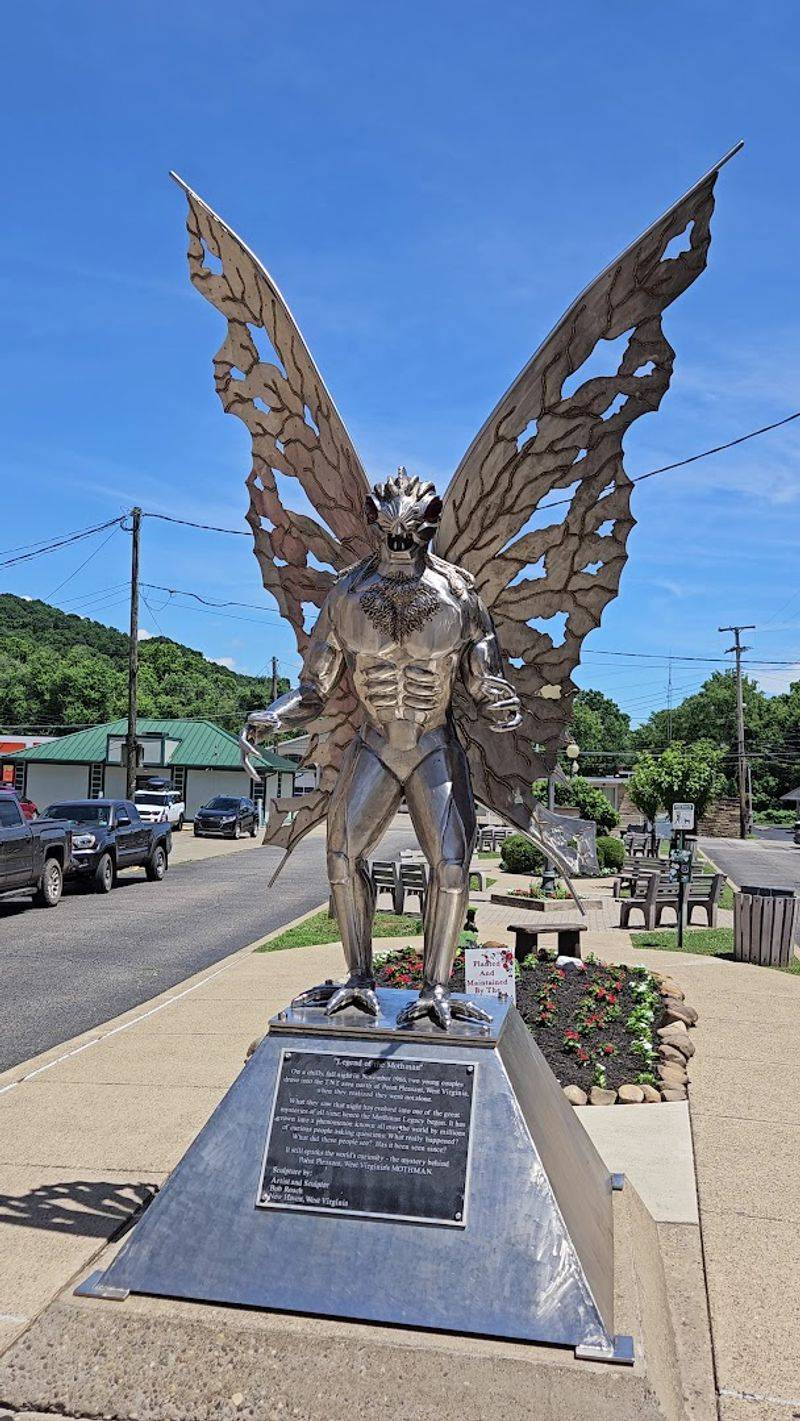
Bob Roach created this 12-foot stainless steel sculpture in 2003, and it has since become one of the most photographed landmarks in the entire state. The statue captures the creature’s legendary physical description with striking accuracy, featuring a muscular humanoid frame, enormous spread wings, and a pair of glowing red eyes that catch light in an unsettling way.
Its reflective surface gives it an almost futuristic quality that contrasts interestingly with the small-town setting around it. Visitors line up throughout the day to pose beside it, and the photo opportunities range from genuinely dramatic to hilariously goofy depending on the angle.
What started as a tribute to local folklore has quietly transformed Point Pleasant into an internationally recognized paranormal destination. The statue now appears on merchandise, documentaries, and travel guides worldwide, which is a remarkable outcome for a town of fewer than five thousand people.
3. Hillbilly Hot Dogs, Lesage, West Virginia
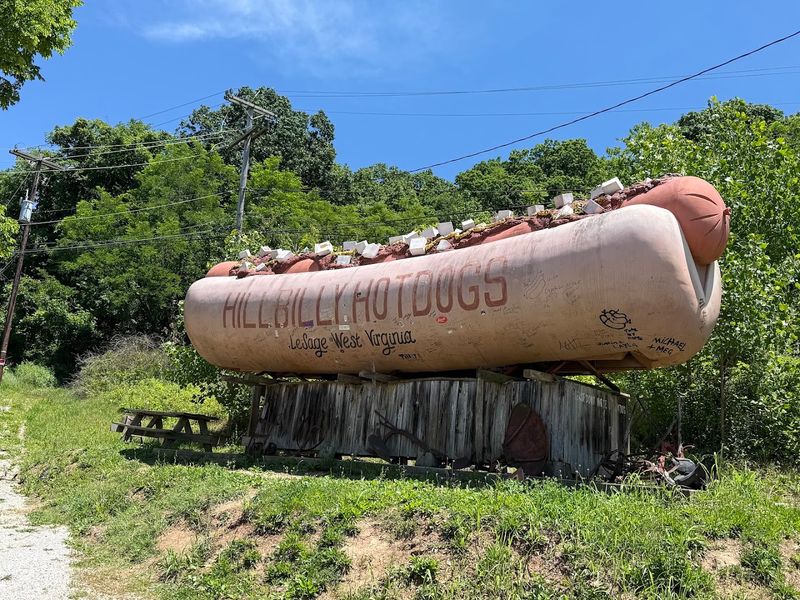
Calling Hillbilly Hot Dogs a restaurant undersells it considerably. The outdoor property is a full-scale roadside spectacle, built around repurposed school buses that serve as dining rooms, salvaged vehicles arranged as seating areas, and an almost overwhelming collection of handmade decorations that cover every available surface with cheerful, chaotic energy.
The menu matches the setting in ambition. The Homewrecker is a three-pound, 15-inch hot dog that has become the stuff of local legend, and the Mothman Dog pays tribute to the state’s most famous cryptid with its own creative toppings. Gourmet burgers and other comfort food options round out a menu that takes its craft seriously beneath the playful exterior.
The staff leans into the theme with genuine enthusiasm, and there is even a small wedding chapel on the property for couples who want to mark a special occasion in the most memorably unconventional way possible. Few lunch stops anywhere in West Virginia are this committed to being an experience.
4. Trans-Allegheny Lunatic Asylum, Weston, West Virginia
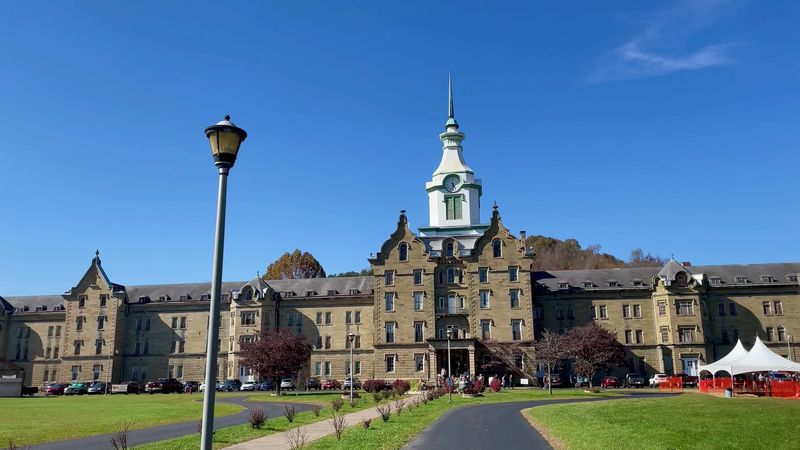
Few buildings in the country command attention the way this one does. The Trans-Allegheny Lunatic Asylum is one of the largest hand-cut stone masonry structures in North America, and its Gothic Revival silhouette looms over Weston with the kind of architectural authority that stops people mid-sentence.
Construction began in 1858 using the Kirkbride Plan, a design philosophy that believed spacious, well-lit buildings could aid in patient recovery. The building’s long, tiered wings were a direct result of that theory. Historic tours walk visitors through the facility’s evolution from progressive treatment center to severely overcrowded institution, covering its Civil War history along the way.
For those drawn to the unexplained, paranormal tours and overnight ghost hunts are also available, and the asylum has appeared on multiple television programs dedicated to investigating haunted locations. The history alone makes it worth visiting, but the atmosphere adds an entirely different layer.
5. West Virginia Penitentiary, Moundsville, West Virginia
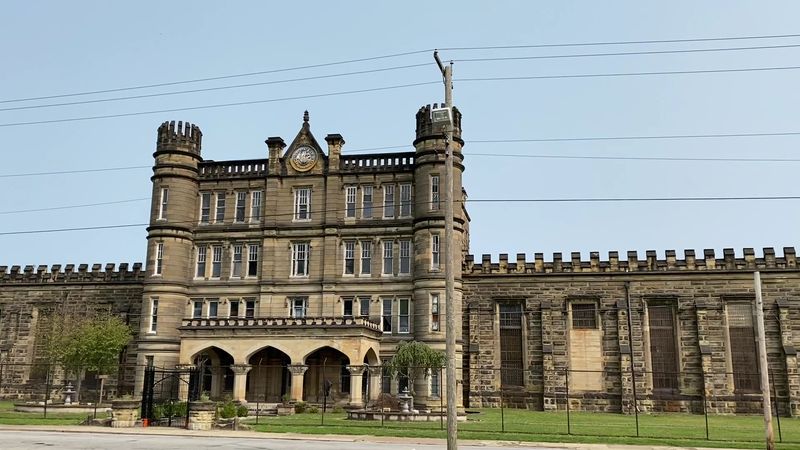
Built in 1866 and operational until 1995, the West Virginia Penitentiary looks less like a correctional facility and more like something a villain would commission in a gothic novel. Its towering stone walls, arched entryways, and fortress-like turrets create an impression that is hard to shake even after you have left the parking lot.
Guided tours move through cellblocks, the recreation yard, and former execution sites, with some guides being retired correctional officers who bring genuine personal history to the narration. That firsthand knowledge makes the experience feel more substantial than a typical historic tour.
The penitentiary is also widely regarded as one of the most actively haunted locations in the United States, drawing paranormal investigators and ghost tour groups year-round. Halloween season transforms it into one of the region’s most popular seasonal attractions, though the building’s history is compelling enough to visit on any ordinary afternoon.
6. Palace of Gold, Moundsville, West Virginia
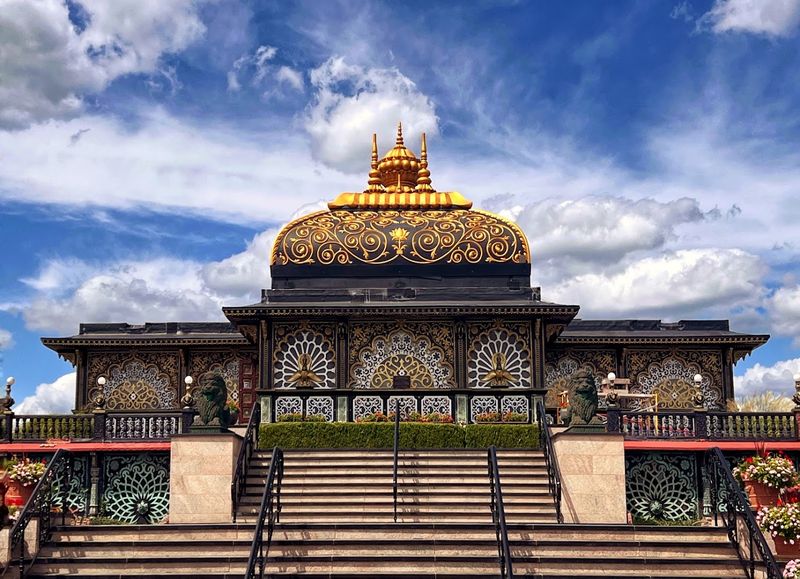
Nothing quite prepares you for the sight of a gleaming golden palace rising out of the West Virginia countryside. Built by members of the Hare Krishna movement within the New Vrindaban community, the Palace of Gold was constructed largely by hand during the 1970s by craftspeople with no professional architectural training.
The interior is decorated with 22-karat gold leaf, crystal chandeliers, carved teakwood panels, vibrant stained-glass windows, and detailed marble floors. Every surface reflects an extraordinary level of dedication and artistic ambition that makes the finished result feel genuinely miraculous given its origins.
The contrast between the palace’s lavish design and its rural Appalachian hillside setting is what makes the experience feel so surreal. Visitors can tour the grounds, explore the rose gardens, and learn about the community that built it. Most people arrive mildly curious and leave genuinely astonished by what they have just seen.
7. Mystery Hole, Ansted, West Virginia
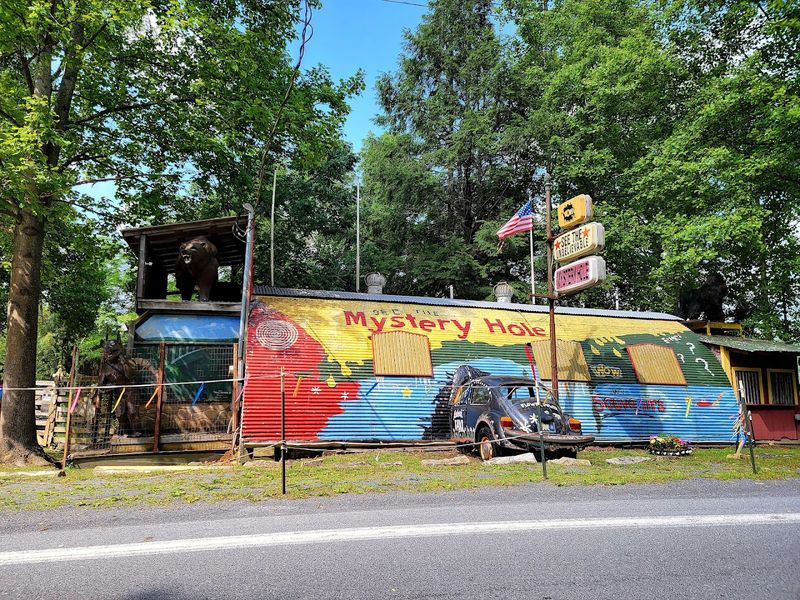
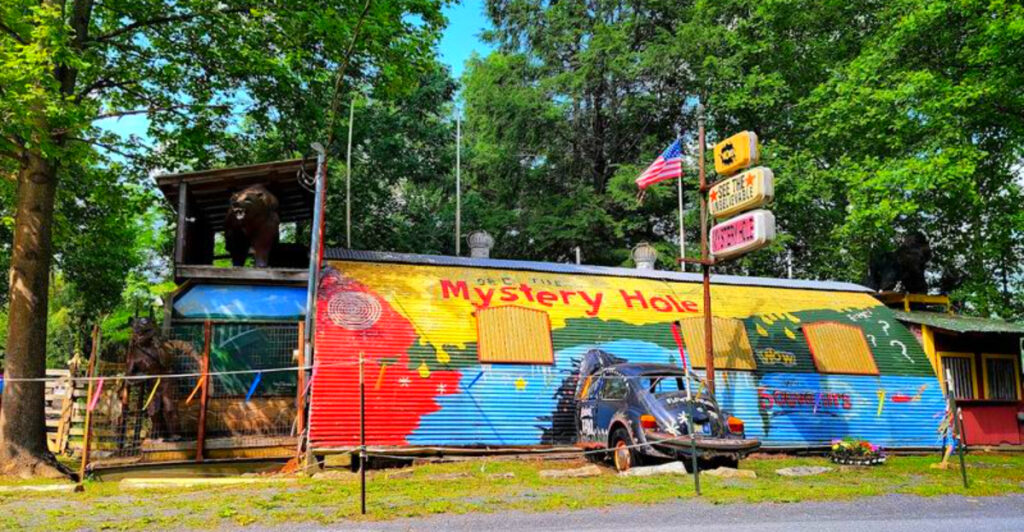
Since 1973, this roadside oddity has been quietly bending the rules of physics, or at least making visitors think it has. Mystery Hole is built around a series of tilted rooms and cleverly constructed optical illusions that make balls roll uphill and water appear to flow in the wrong direction.
The attraction never offers a tidy scientific explanation, and that deliberate vagueness is a big part of what keeps people coming back. It leans fully into its vintage roadside charm, with hand-painted signs and an old-school admission booth that feels frozen in time.
Families with kids tend to get the most out of it, since children are wonderfully willing to accept that something impossible is happening. Adults, meanwhile, spend most of the tour trying to figure out the trick. Nobody leaves entirely sure what they just experienced, which is exactly the point.
8. Lake Shawnee Abandoned Amusement Park, Rock, West Virginia
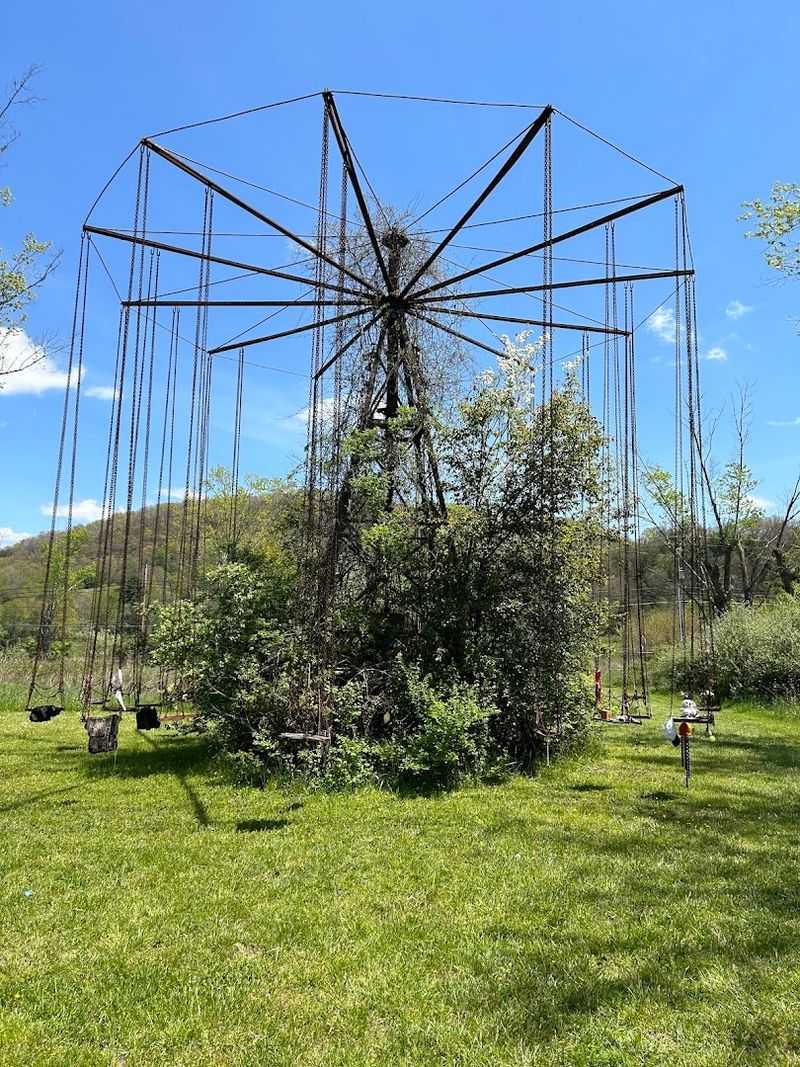
The rusting swing sets and weathered Ferris wheel at Lake Shawnee tell a story that goes back much further than the park’s 1926 opening. The land itself carries a layered history connected to frontier-era conflict and a Native American burial ground, and several accidents during the park’s operational years added to its complicated legacy before it closed in 1988.
Today, guided tours walk visitors through the overgrown grounds, pointing out the remains of rides that once carried laughing children and explaining the history behind each decaying structure. Photographers in particular find the location endlessly compelling, with every angle offering a striking composition of rust, nature, and faded nostalgia.
Paranormal investigators have made Lake Shawnee a regular destination, and the park hosts special overnight events for those who want to explore it after dark. Whether the interest is historical, photographic, or supernatural, the park reliably delivers something memorable.
9. World’s Largest Teapot, Chester, West Virginia
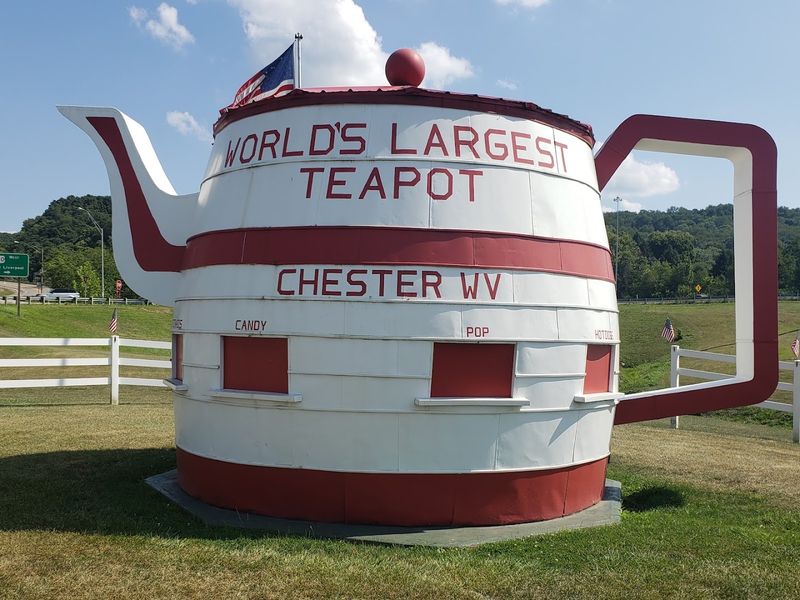
Before it was a teapot, it was a barrel advertising root beer in Pennsylvania, which tells you everything you need to know about the creative resourcefulness behind this landmark. Transported to Chester in 1938, the structure received a spout, a handle, and a lid, and was promptly declared the world’s largest teapot, a title it has held without serious competition ever since.
Standing 14 feet tall and 14 feet in diameter, the teapot served as a working concession stand for years, selling snacks to travelers passing through the northern panhandle. It fell into disrepair at one point but was rescued through local preservation efforts in the late 1980s and restored again in 2007.
The teapot now sits near the former site of Rock Springs Park, cheerfully greeting anyone who passes by. It is the kind of roadside stop that takes about five minutes to visit and stays in your memory for years.
10. George Washington’s Bathtub, Berkeley Springs, West Virginia
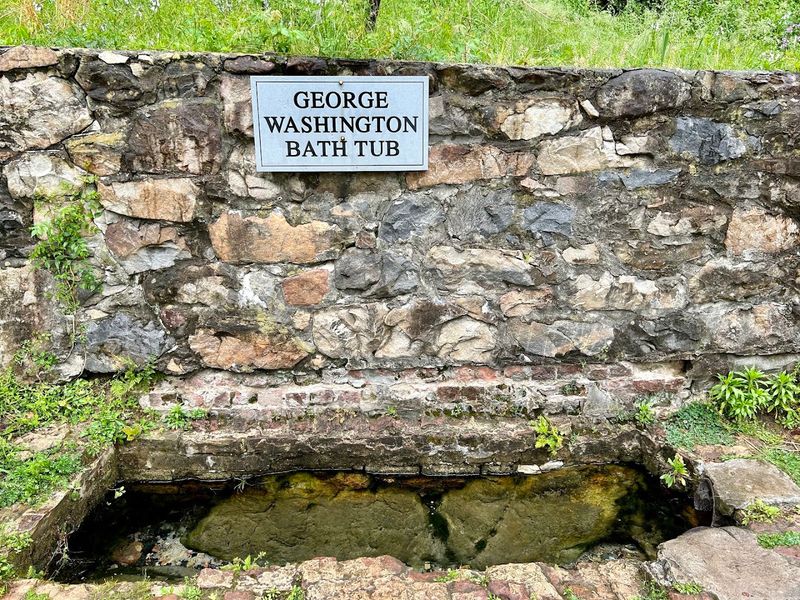
Berkeley Springs holds a distinction that no other town in America can claim: it is home to the country’s only outdoor monument dedicated to presidential bathing. The stone pool inside Berkeley Springs State Park is linked to George Washington, who visited the area’s warm mineral springs regularly and even purchased property in what was then called Bath.
The current stone tub is a modern replica built to represent the primitive conditions of 18th-century bathing, but the natural spring feeding it is the same one Washington would have used, maintaining a constant 72-degree temperature year-round. That detail gives the site a genuine historical connection that goes beyond the novelty of its premise.
Berkeley Springs State Park also offers Roman bathhouses and a public drinking fountain where visitors can collect the mineral-rich water directly from the source. The whole experience is part history lesson, part relaxation opportunity, and entirely unlike anything else on a West Virginia road trip.
11. Lost World Caverns, Lewisburg, West Virginia
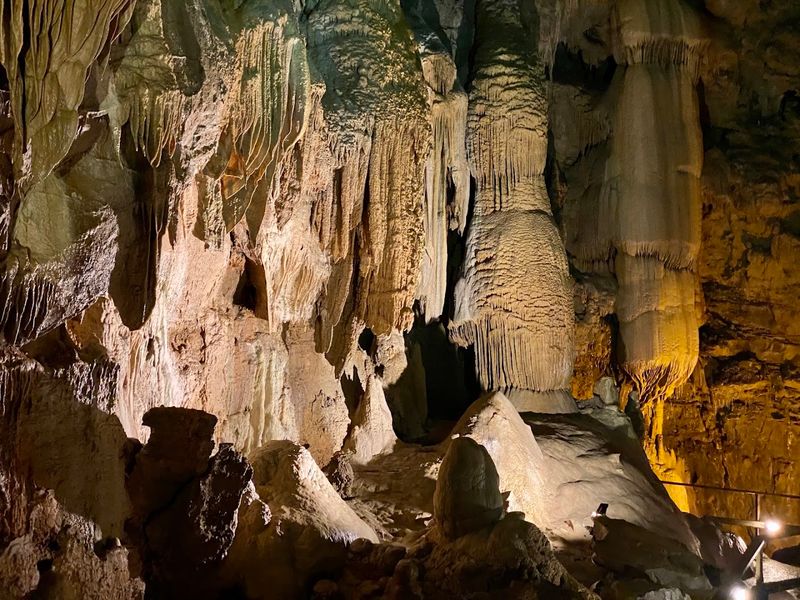
Discovered in 1942 and opened to the public shortly after, Lost World Caverns offers a half-mile self-guided tour through a limestone cave system that feels genuinely vast. The formations inside include stalactites, stalagmites, and flowstones that have been developing for thousands of years, with some reaching heights of up to 80 feet.
The Snowy Chandelier, a 30-ton compound stalactite, is considered one of the largest in the country. The War Club stalagmite earned a spot in the Guinness World Records, though for a reason that involves someone sitting on it for an extended period rather than anything geological.
The cavern maintains a constant 52-degree temperature year-round, which makes it a practical summer destination as much as a geological one. Wild cave tours are available for visitors who want to move beyond the main trail and explore the less-developed sections of the cave system on a more hands-on basis.
12. Beckley Exhibition Coal Mine, Beckley, West Virginia
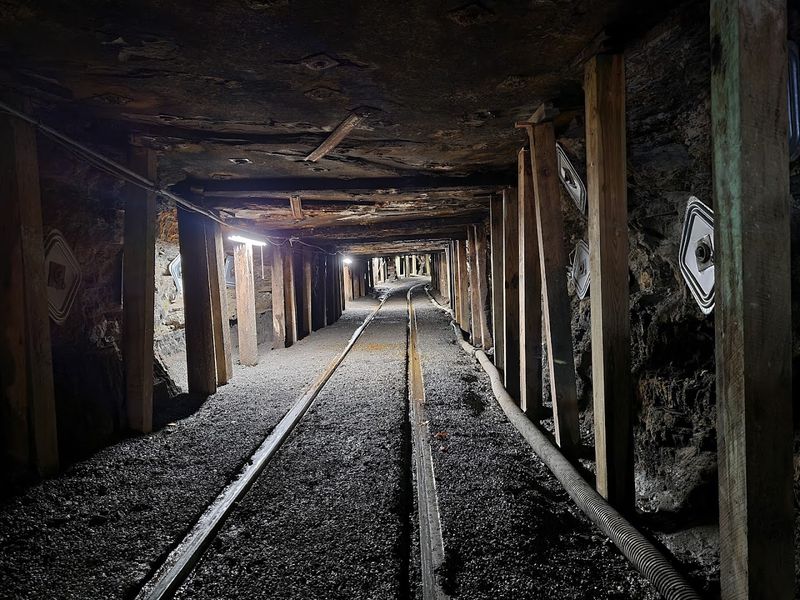
Most museums ask you to look at history through glass. The Beckley Exhibition Coal Mine puts you directly inside it. Visitors board an authentic mine rail car and travel underground into a real former working coal mine, guided by veterans of the industry who spent their careers in tunnels very much like the one you are riding through.
The guides share firsthand accounts of daily life in the mines, covering the tools, the conditions, the camaraderie, and the constant awareness of risk that defined the profession for generations of West Virginia families. That personal dimension transforms what could be a straightforward historical tour into something with genuine emotional weight.
Above ground, the exhibition includes a restored coal camp with a company store, superintendent’s house, and worker homes that illustrate how tightly the industry structured daily life for mining communities. The combination of underground experience and surface history makes this one of the most complete industrial heritage sites in the Appalachian region.
13. New River Gorge Bridge, Fayetteville, West Virginia
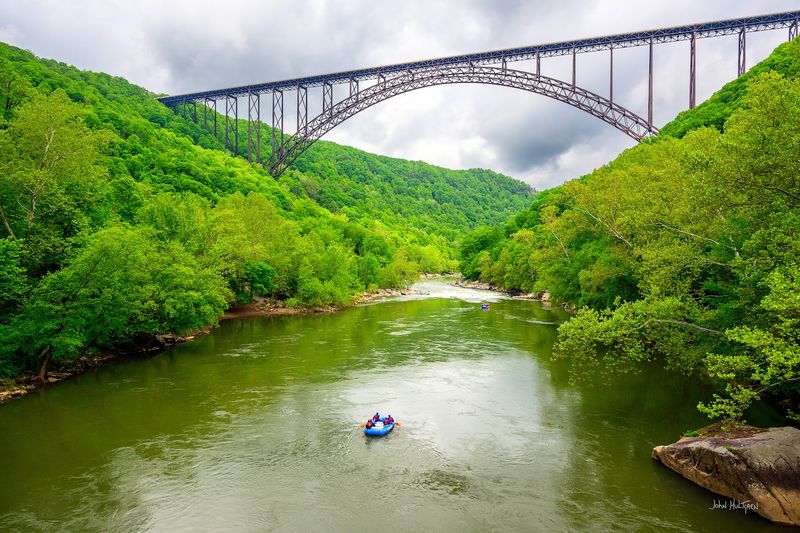
At 876 feet above the New River and 3,030 feet across, the New River Gorge Bridge is one of the highest steel arch bridges in the United States, and its scale is something that photographs simply cannot fully communicate. The main arch alone stretches 1,700 feet, making it the world’s third longest steel arch bridge by that measurement.
On the third Saturday of every October, the bridge hosts Bridge Day, West Virginia’s largest single-day festival and the world’s largest extreme sports event. The structure is opened to pedestrians, and hundreds of BASE jumpers and rappellers launch themselves from the deck into the gorge below while thousands of spectators watch from the bridge itself.
Watching someone step off the edge of a bridge this size is a genuinely startling thing to witness in person, no matter how prepared you think you are. The rest of the year, the bridge remains a spectacular viewpoint accessible via the New River Gorge National Park visitor infrastructure.
Share this story