Nebraska is filled with attractions that appeal to every age, from world-class zoos and fascinating museums to scenic landmarks and remarkable fossil sites. Whether you’re interested in wildlife, history, science, or the outdoors, the state offers plenty of memorable experiences for families.
These 13 attractions showcase the best of Nebraska, combining hands-on exhibits, beautiful natural settings, and unique historical sites. Whether you’re planning a weekend getaway or a road trip across the state, each destination offers something worth discovering together.
1. Omaha’s Henry Doorly Zoo and Aquarium, Omaha, Nebraska
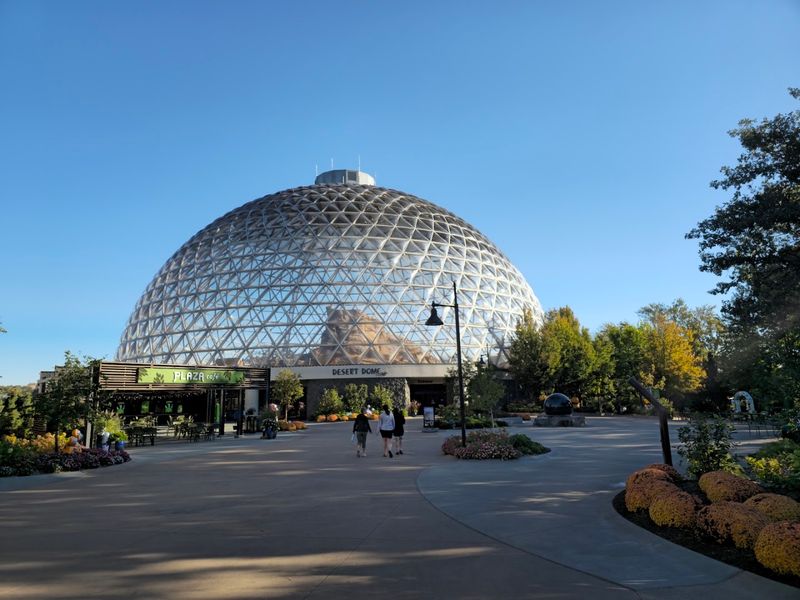
Ranked among the top zoos in the entire world, this 160-acre destination in Omaha manages to fit a desert, a rainforest, and a nocturnal underground world all under one roof.
The Desert Dome is the world’s largest indoor desert, sheltering animals from the Namib, Sonoran, and Australian Red Center regions beneath a single geodesic glass structure.
Below it, the Kingdoms of the Night exhibit recreates a fully functional nocturnal environment, complete with an indoor swamp and cave system.
The Lied Jungle brings South American, Asian, and African rainforests together in one enormous indoor habitat, while the Scott Aquarium features a 70-foot shark tunnel.
Families can easily fill an entire day here, and the zoo actively runs one of the largest amphibian conservation programs in the country, so every admission ticket supports real wildlife protection work.
2. Strategic Air Command & Aerospace Museum, Ashland, Nebraska
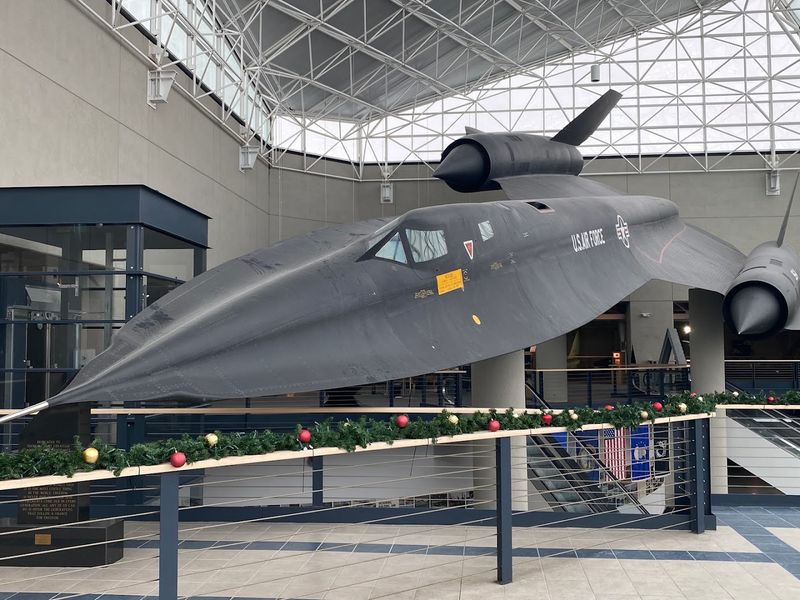
Few museums in the country can claim the title of largest Cold War aircraft collection in the United States, but this Smithsonian affiliate in Ashland holds that distinction without breaking a sweat.
The moment visitors enter the glass atrium, they are greeted by the SR-71 Blackbird spy plane, dramatically angled overhead, a machine that once flew over three times the speed of sound.
Two expansive hangars hold meticulously restored aircraft ranging from the enormous B-36J Peacemaker to the stealthy F-117 Nighthawk, alongside rockets, missiles, and actual Apollo spacecraft hardware.
Children have their own dedicated space in the permanent Learning Center, featuring ten STEM stations covering the physics of flight, including a Bernoulli Blower and a quake table for structural experiments.
Daily planetarium shows round out the visit, making this an unexpectedly complete destination for families who want both aviation history and hands-on science in a single stop.
3. Arbor Day Farm, Nebraska City, Nebraska
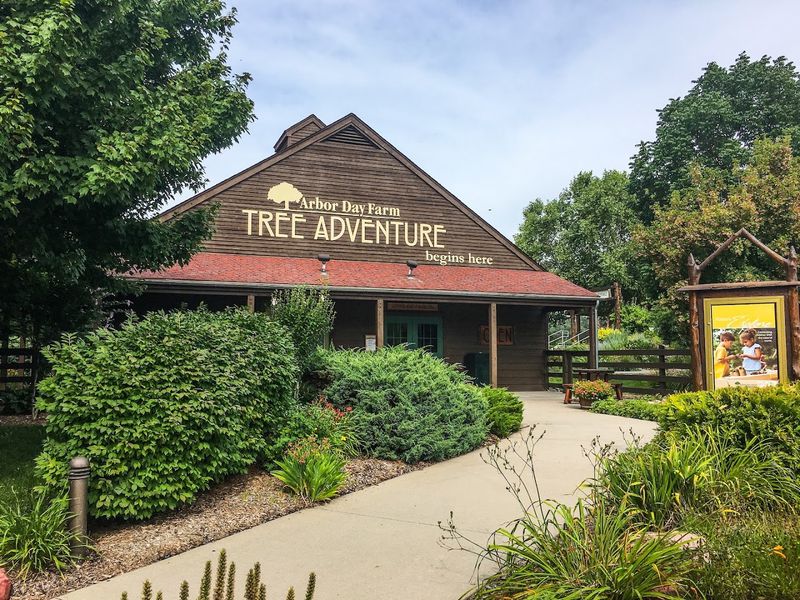
Arbor Day was invented here, and the 260-acre farm that carries its name has grown into something far beyond a simple historical site.
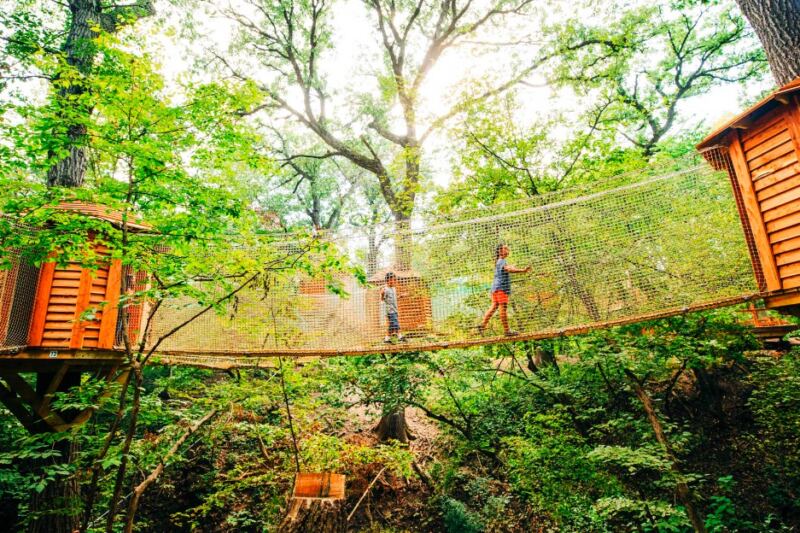
The Tree Adventure is the undisputed highlight, featuring Treetop Village, a network of 11 interconnected treehouses spread across three acres, linked by bridges and netted walkways that include a bouncing WonderNet, the first of its kind in North America.
A 50-foot slide, a woven climbing cube, and miles of trails dotted with carved animal sculptures keep the energy high for younger visitors, while adults can tour the 52-room Morton family mansion at the adjacent Arbor Lodge State Historical Park.
Seasonal events bring rotating reasons to return throughout the year, from spring flower tours to the autumn AppleJack Festival with apple picking and cider.
Every visit also supports the Arbor Day Foundation’s global tree-planting mission, and guests can take home free seedlings from the greenhouse to plant in their own yards.
4. Carhenge, Alliance, Nebraska
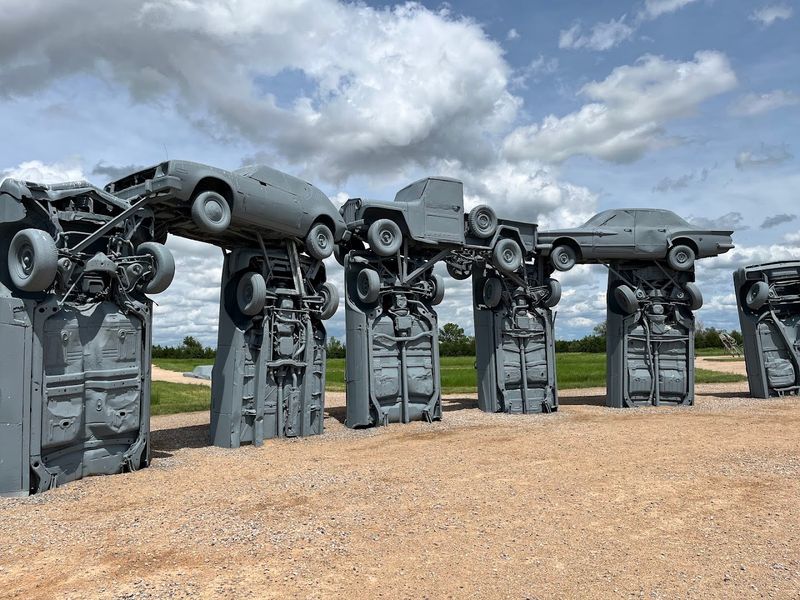
Jim Reinders built Carhenge in 1987 as a tribute to his late father, gathering about 35 family members on the Nebraska prairie to bury vintage American cars trunk-down and weld others across the tops to form arches, creating a full-scale replica of England’s Stonehenge.
The entire circle measures roughly 96 feet in diameter, and each car was spray-painted gray to mimic the appearance of ancient stone, though today some vehicles have accumulated colorful graffiti that adds its own layer of character.
A 1962 Cadillac serves as the equivalent of Stonehenge’s famous heel stone, and the surrounding 10-acre Car Art Reserve holds additional sculptures made from vehicles and car parts, including a “Car-nestoga” wagon honoring Oregon Trail pioneers.
Originally controversial among locals, Carhenge now draws between 80,000 and 100,000 visitors annually and is open year-round from dawn to dusk at no charge.
It is genuinely one of the most photogenic roadside stops in the entire country.
5. Wildlife Safari Park, Ashland, Nebraska
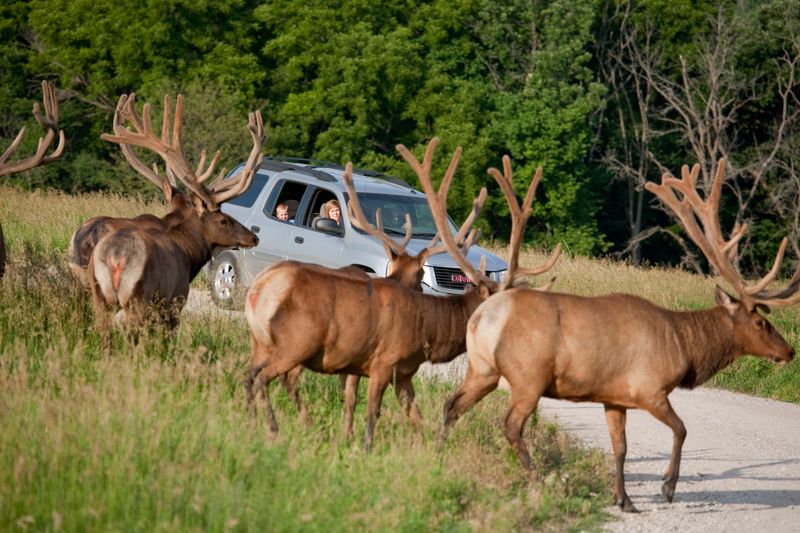
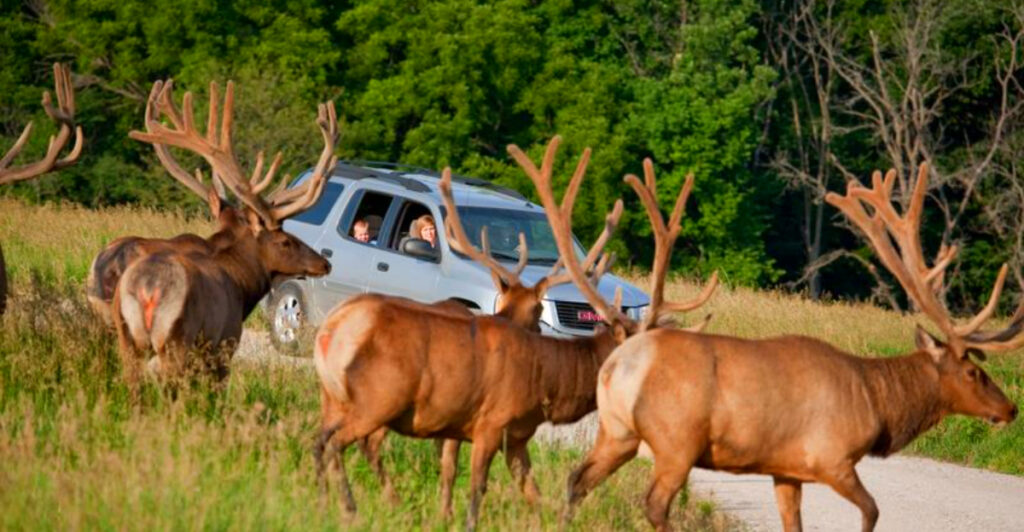
Most wildlife encounters require hiking boots and a great deal of patience, but Wildlife Safari Park flips that expectation entirely by letting visitors experience 440 acres of rolling prairie from the front seat of their own vehicle.
The four-mile drive winds through distinct habitat zones where bison, elk, pronghorn antelope, and white-tailed deer roam freely, occasionally crossing directly in front of cars without any fence between you and them.
Midway through the route, visitors can park and explore on foot along two miles of trails that lead to Wolf Canyon, the Eagle Aviary, and a 28-foot observation tower overlooking sandhill cranes and trumpeter swans.
A Hands-On Corral lets younger children interact with goats and chickens, and a seasonal robotic dinosaur exhibit adds a playful prehistoric twist to the experience.
As an affiliate of Omaha’s Henry Doorly Zoo, the park also serves as a serious breeding site for endangered species including African cheetahs and Amur tigers.
6. Stuhr Museum of the Prairie Pioneer, Grand Island, Nebraska
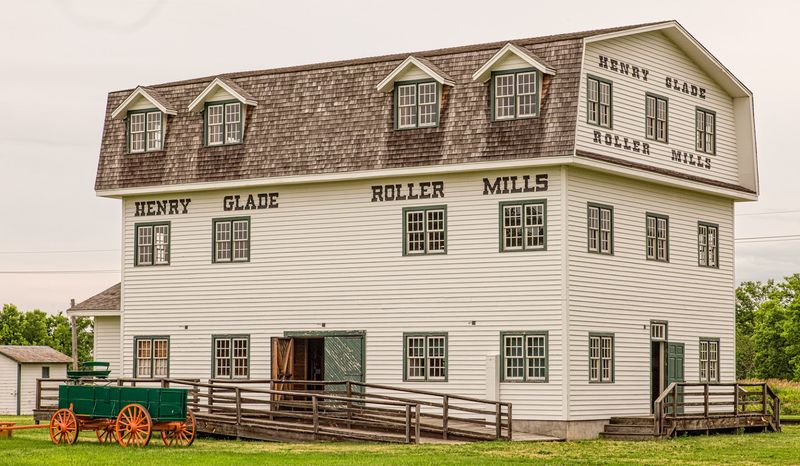
History museums often ask visitors to read panels and look at objects behind glass, but Stuhr Museum takes a different approach entirely across its 200-acre living history campus in Grand Island.
The centerpiece is Railroad Town, a fully reconstructed 1890s village built from over 100 original historic structures carefully relocated to the site, including a general store, blacksmith shop, schoolhouse, and the preserved birthplace of actor Henry Fonda.
During the operating season from May through mid-September, costumed interpreters demonstrate pioneer skills like horseshoeing, hat-making, and bread baking directly in these authentic spaces, engaging visitors in genuine conversation rather than scripted performances.
Beyond the town, an 1860s log cabin settlement, a Pawnee Earth Lodge, and an antique auto and farm machinery building extend the timeline in multiple directions.
The main Stuhr Building, designed by modernist architect Edward Durell Stone, houses indoor exhibits tracing Nebraska’s natural and cultural history from 1860 through 1920.
7. Ashfall Fossil Beds State Historical Park, Royal, Nebraska
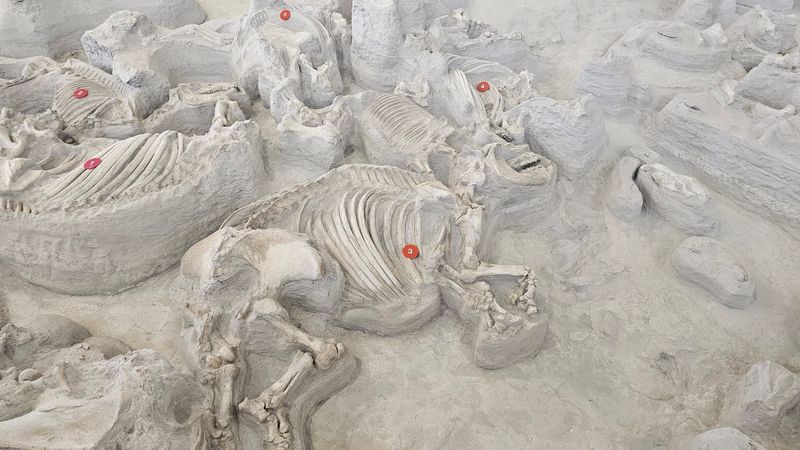
About 10 to 12 million years ago, a supervolcano in what is now Idaho erupted and sent a thick cloud of fine ash drifting eastward across the Great Plains, settling into a shallow watering hole in Nebraska and entombing hundreds of animals that had gathered there.
That site, now called Ashfall Fossil Beds, preserves those skeletons in three-dimensional, fully articulated form, meaning the bones remain exactly as the animals perished, which is extraordinarily rare in the fossil record.
The Hubbard Rhino Barn, a 17,500-square-foot pavilion built directly over the excavation, allows visitors to walk along an elevated boardwalk and look down at fossilized rhinos, three-toed horses, and llama-like camels while paleontologists sometimes work below.
A Heritage Center offers replica fossil digs for children, and nature trails wind through 360 acres of surrounding prairie.
The visitor center film explains the volcanic event clearly enough for younger children while still holding adult interest.
8. Kiewit Luminarium, Omaha, Nebraska
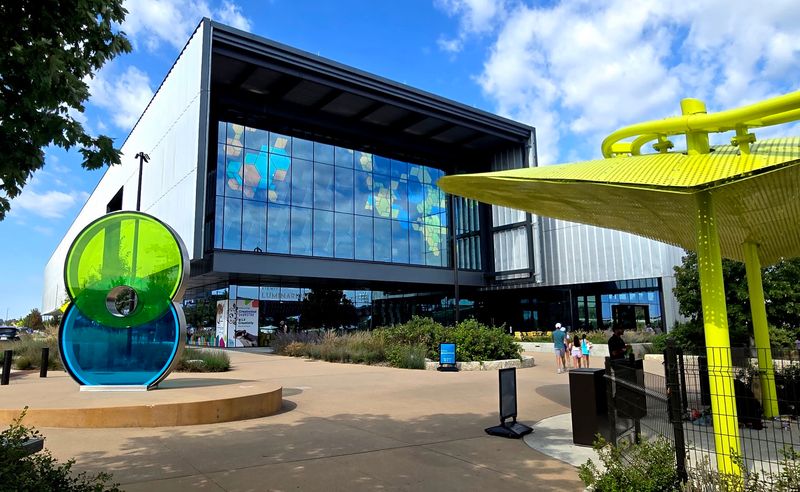
Opened in April 2023 on Omaha’s RiverFront, the Kiewit Luminarium operates on the principle that the best way to understand science is to actually do something with it rather than read about it on a wall panel.
More than 100 interactive exhibits fill 82,000 square feet across themed galleries covering physics, biology, geometry, engineering, and environmental science, and the exhibits are designed to be just as engaging for adults as for children.
The Catch Waves gallery lets visitors experiment with light and sound, the Dig Deeper gallery includes sand and water tables for manipulating stream dynamics, and the Geometry Playground features climbable structures modeled after complex mathematical shapes.
A dedicated Makers Space offers hands-on guided projects using materials like tin, leather, and wood, led by staff members called Luminators.
An outdoor play space with slides and water features overlooks the Missouri River, and Thursday evening events open the exhibits to adult visitors in a social format.
9. Scotts Bluff National Monument, Gering, Nebraska
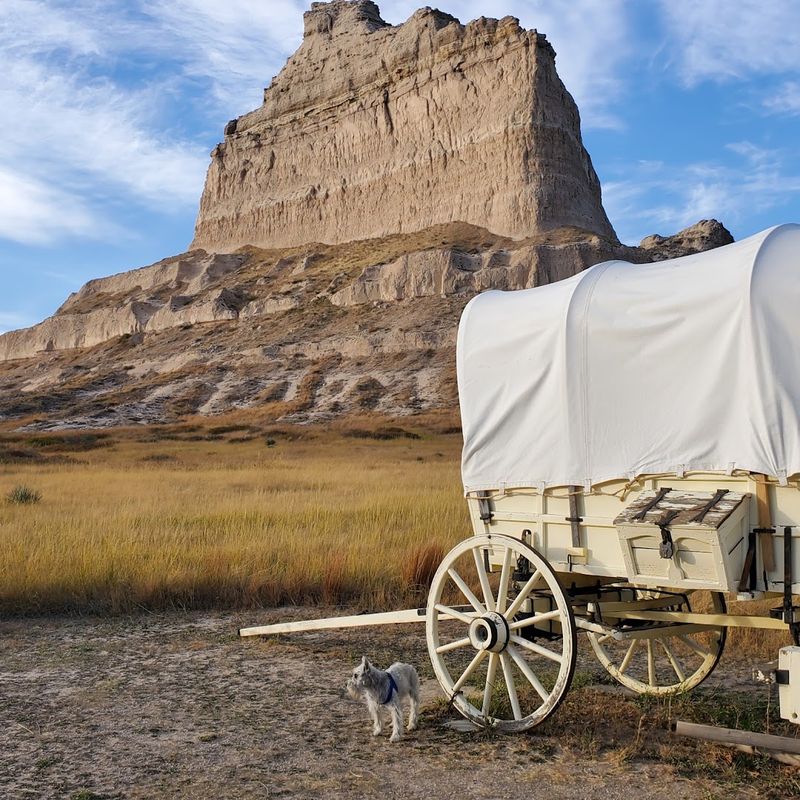
Rising 800 feet above the North Platte River, Scotts Bluff served as one of the most important navigational landmarks in American history, guiding over 250,000 westward emigrants along the Oregon, California, and Pony Express Trails between 1841 and 1869.
For those pioneers, spotting these bluffs meant they had completed roughly one-third of their overland journey and were approaching the mountains ahead, a significant psychological milestone after weeks of flat terrain.
Today, visitors can walk the Oregon Trail Pathway along original wagon swales, drive the 1.6-mile Summit Road built by the Civilian Conservation Corps in the 1930s, or hike the Saddle Rock Trail to reach panoramic overlooks of the surrounding plains.
The Visitor Center houses the world’s largest collection of works by western artist and photographer William Henry Jackson, alongside pioneer and Native American exhibits.
Children can earn a Junior Ranger badge by completing an activity booklet, and ranger-led programs cover geology, trail history, and local wildlife throughout the season.
10. Museum of American Speed, Lincoln, Nebraska
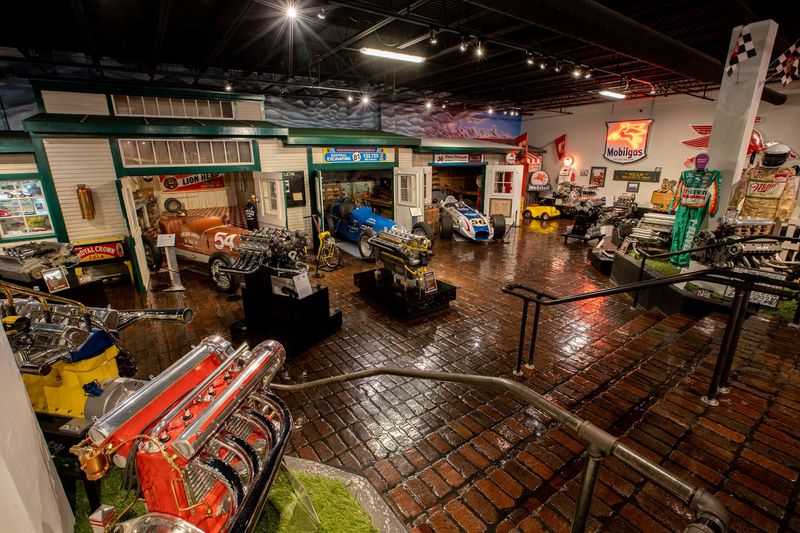
Over 200,000 square feet of racing history spread across three floors makes this Lincoln institution one of the most expansive automotive museums in the entire country, and it was built entirely from the personal passion of founder Bill Smith, who started collecting in 1992.
More than 30 gallery spaces hold classic cars, hot rods, muscle cars, Indy racers, NASCAR machines, and drag racing vehicles spanning over a century of American speed culture.
The museum also claims the world’s largest collection of historic American racing engines, and its artifacts include original doors from the Indianapolis Motor Speedway and memorabilia from the 1955 Small Block Chevy unveiling.
A 1,500-square-foot Youth STEAM Space gives younger visitors hands-on activities including designing and racing their own vehicles on an aluminum track to explore friction and aerodynamics.
Guided tours led by knowledgeable docents have been recognized as the best museum educational program in America, and a Model T Driving Experience lets visitors actually operate a vintage automobile.
11. Great Platte River Road Archway, Kearney, Nebraska
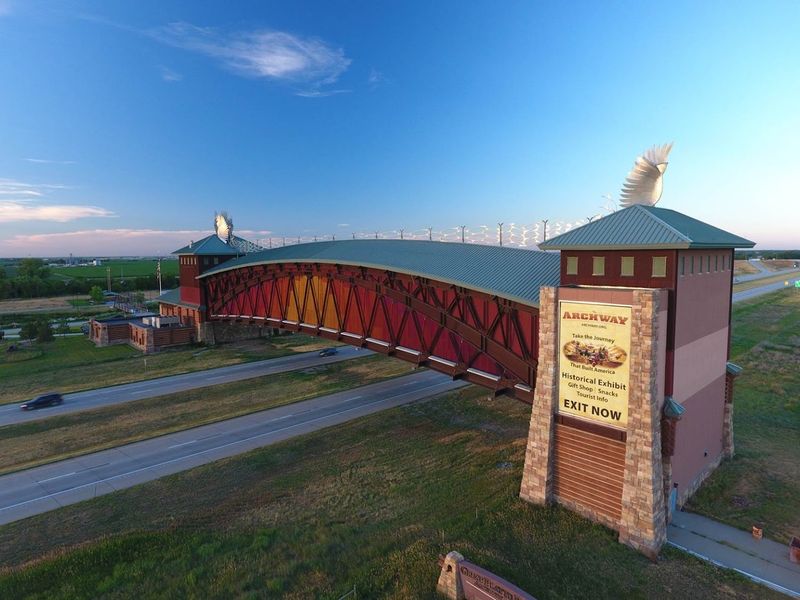
Only in Nebraska can you walk through a history museum while traffic flows beneath your feet on one of the country’s busiest interstates, and that is exactly the setup at the Great Platte River Road Archway east of Kearney.
The 300-foot structure was constructed at ground level and then lifted into place over Interstate 80, and its covered bridge appearance draws curious looks from every driver who passes underneath.
Inside, a personal audio guide leads visitors through chronological exhibits tracing nearly 200 years of westward travel, from Oregon Trail pioneers and Pony Express riders to the transcontinental railroad and the first automobile routes across the country.
Interactive elements include radar guns that track the speed of cars passing directly below, a TrailBlaze Maze outdoors, a replica sod house, and a gold panning activity at the Archway Mining Company.
A 1961 Cadillac convertible and a drive-in movie theater playing educational films are among the more unexpected highlights inside this genuinely one-of-a-kind monument.
12. Hastings Museum, Hastings, Nebraska
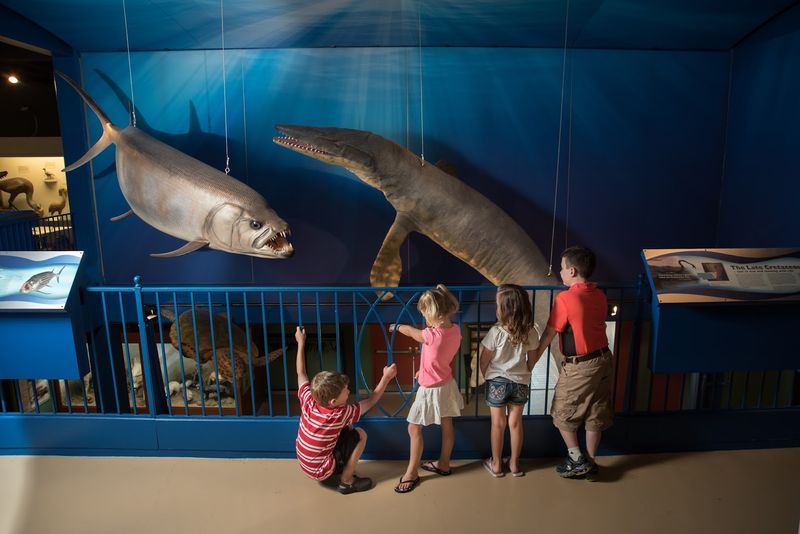
Holding the title of largest municipal museum between Chicago and Denver is a bold claim, but the Hastings Museum of Natural and Cultural History backs it up with collections spanning over 100 million years of Nebraska history.
The Prehistoric Nebraska exhibit features a 17-foot Xiphactinus fish and a 30-foot Tylosaurus suspended dramatically from the ceiling, while the Wildlife Dioramas Hall presents over 150 North American animals in realistic painted settings, many considered Works Progress Administration artistic achievements.
Regional history exhibits cover Native American life with a 12-foot tipi and artifacts, pioneer sod houses, and a dedicated display on the invention of Kool-Aid in Hastings in 1927.
The full-dome planetarium runs immersive shows including The Sky Tonight and The Cosmos and Beyond, and a telescope allows safe solar viewing during select programs.
An interactive Nature Nook with crawl tunnels and live animals keeps younger visitors thoroughly engaged while adults explore the museum’s more detailed historical and scientific galleries.
13. Lincoln Children’s Zoo, Lincoln, Nebraska

Rated by Parents Magazine as one of the nation’s best children’s zoos, the Lincoln Children’s Zoo packs over 400 animals, including more than 40 endangered species, into a well-designed 10-acre layout that is easy to navigate even with very young children.
Giraffe feeding is available year-round with both indoor and outdoor access, and the Penguin Exhibit hosts interactive feeding sessions where guests track a specific bird’s meal count in real time.
The Cheetah Chase Theater demonstrates a live cheetah run, the Wild Safari Theater brings ambassador animals up close, and a small building called The Hive lets interns introduce visitors to insects and lizards hands-on.
Indoors, the Secret Jungle play area next to the spider monkey exhibit features climbing structures, a ball pit, and a machine that rains balls from above, while the 25-foot Ellie the Elephant Playground handles outdoor energy.
The zoo partners with National Geographic’s Photo Ark project and runs conservation programs for endangered species including Matschie’s tree kangaroos, making every visit part of something larger than a single afternoon out.
Share this story