Deep in northwestern Oklahoma, there is a place that looks like it belongs on another planet. A vast, white salt flat stretches across the land, and underneath its crusty surface hides something truly remarkable: hourglass-shaped selenite crystals formed millions of years ago when an ancient ocean covered this part of North America.
Visitors get to dig these crystals out of the ground with their own hands, and they get to keep what they find. Between the crystal digging, world-class bird watching, wildlife trails, and a landscape unlike anything else in the state, this spot has earned a devoted following from families, photographers, and nature lovers across the region.
Where Exactly This Place Is and How to Get There
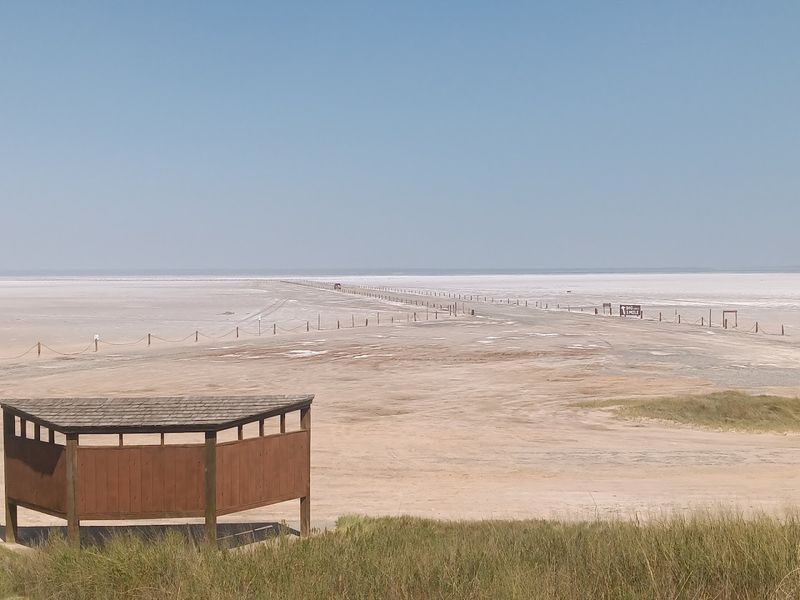
Salt Plains National Wildlife Refuge sits near the small town of Jet, Oklahoma, with a mailing address of Jet, OK 73749. The refuge is managed by the U.S.
Fish and Wildlife Service and can be reached by calling (580) 626-4794 or visiting the official website at https://www.fws.gov/refuge/salt_plains/.
The drive out to the refuge is part of the adventure. Roads leading into certain sections of the park are dirt and gravel, and the last mile or so to the crystal digging area can be bumpy.
A standard sedan can handle it, but go slow and be ready for some dust.
The nearest larger city is Enid, Oklahoma, roughly 35 to 40 miles to the southeast. The refuge covers over 32,000 acres, so plan to spend at least a few hours exploring.
There is no food or water available for purchase anywhere on-site, so packing everything you need before you arrive is absolutely essential for a comfortable visit.
The Ancient Ocean That Made This Place Possible
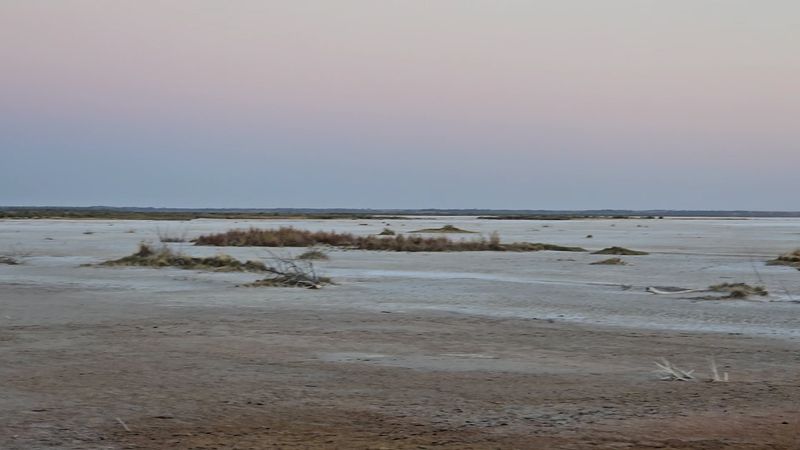
Around 250 million years ago, a shallow inland sea covered much of what is now the central United States. As that sea slowly evaporated over millions of years, it left behind enormous deposits of salt and minerals locked beneath the soil of present-day Oklahoma.
The hourglass selenite crystals found at the Salt Plains are a direct product of that long-gone ocean. Selenite is a form of gypsum, and the distinctive hourglass shape forms because reddish iron-rich clay gets trapped inside the crystal as it grows underground.
That trapped clay creates the signature pattern that makes each crystal look like a tiny, natural hourglass.
No two crystals are exactly alike, which makes finding them feel genuinely personal. Some are perfectly symmetrical, and others have irregular shapes that make them look like little works of abstract art.
The fact that you are holding something that started forming before dinosaurs walked the earth makes the experience feel a little surreal in the best possible way.
The Crystal Digging Area: What to Expect When You Arrive
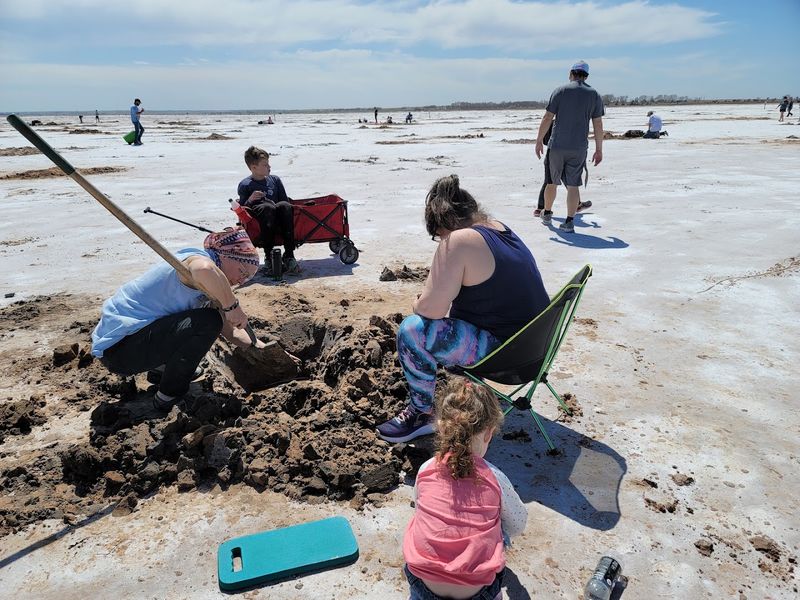
The crystal digging area at Salt Plains is open to the public from April 1 through October 15 each year. That seasonal window matters because the site closes during the winter months, partly to protect migratory birds that use the flat as a resting and feeding ground.
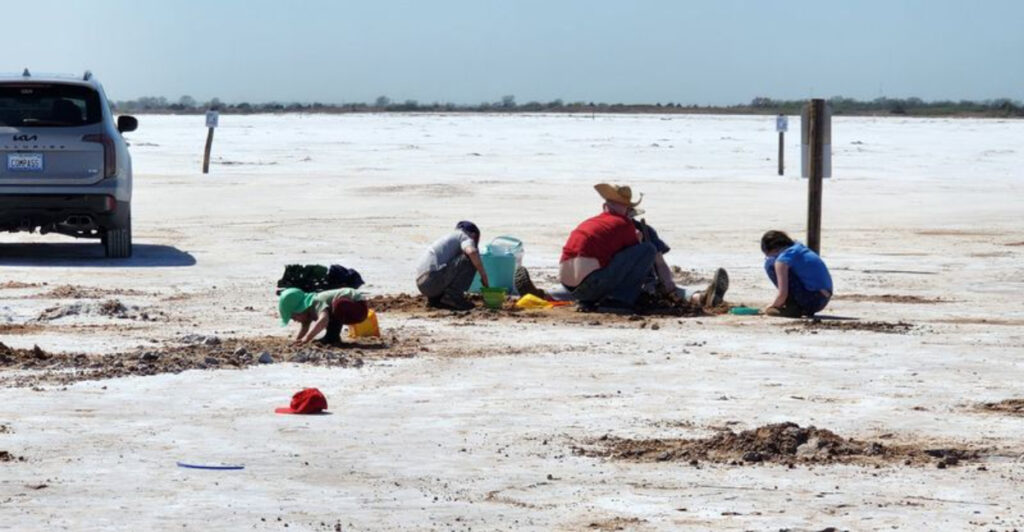
Each visitor is allowed to collect up to three pounds of selenite crystals per day, and there is no fee to dig. The digging zone is clearly marked, and park rangers are usually on hand to point visitors in the right direction and offer helpful tips on where to start.
The crystals tend to be found just below the surface, sometimes only a few inches down. Using a shovel to break through the crust and then sifting carefully through the loosened soil with your hands is the most effective method.
Feeling resistance when you push the shovel down is often a good sign that crystals are nearby, so that is the moment to slow down and dig carefully.
What to Pack for a Successful Crystal Hunt
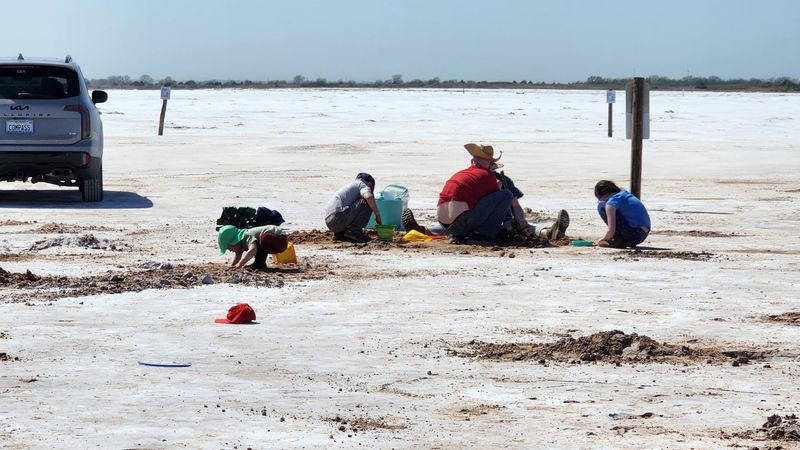
Packing smart makes the difference between a great day and a miserable one. The salt flat offers zero shade, and the Oklahoma sun can be relentless, especially in the summer months.
A wide-brimmed hat, plenty of sunscreen, and bug spray are non-negotiable items for this trip.
Gloves are strongly recommended. The selenite crystals are surprisingly sharp, and cuts on fingertips happen quickly when you are sifting through the soil without protection.
Wearing old clothes or clothes you do not mind getting stained is also a wise move, since the reddish clay soil tends to cling stubbornly to fabric and is very difficult to wash out afterward.
Beyond protection, the practical digging kit should include a full-sized shovel, a smaller hand trowel or spade, a bucket for your finds, and something soft to kneel or sit on. Bringing a folding chair with a shade canopy is an excellent idea.
Pack more water than you think you will need, both for drinking and for rinsing crystals clean so you can see them clearly.
The Surreal Landscape of the Salt Flat Itself
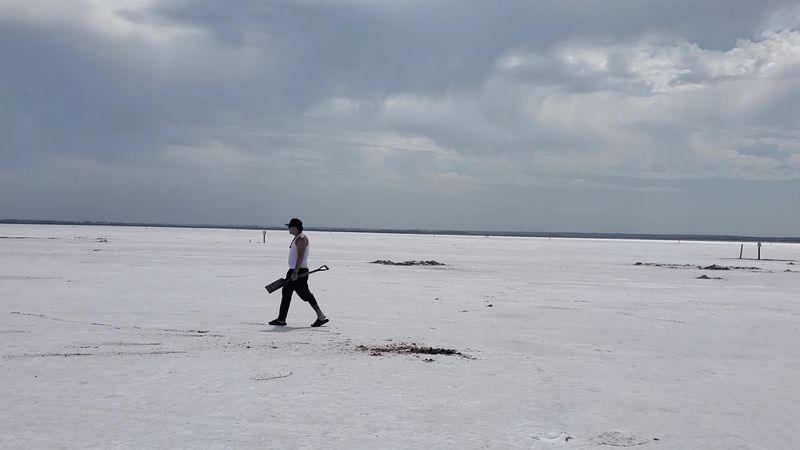
Nothing quite prepares you for the first time you see the salt flat in person. From a distance, it genuinely looks like a field of fresh snow, even in the middle of summer.
Up close, the surface has a crunchy, crystalline texture that cracks under your feet as you walk across it.
The flat covers roughly 11,000 acres of exposed salt, making it one of the largest salt flats in the interior of the United States. The contrast between the blinding white of the salt and the rust-red of the surrounding Oklahoma soil creates a color combination that feels almost painted rather than natural.
On calm days, the silence out on the flat is striking. There are no trees, no buildings, and no shade structures anywhere in the digging zone.
The openness gives the whole experience a raw, unfiltered quality that is hard to find anywhere else in the Midwest. Photographers come from across the state specifically to capture the flat at golden hour, when the low light turns the salt surface into something that glows.
Bird Watching at the Refuge: A World-Class Experience
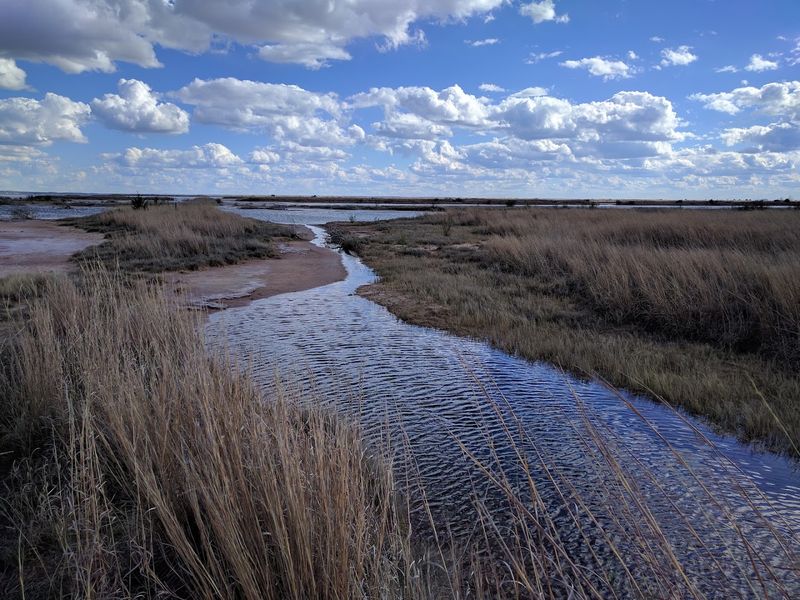
The Salt Plains National Wildlife Refuge was established in 1930 specifically to protect migratory birds and their habitat, and it takes that mission seriously. Over 300 species of birds have been recorded at the refuge, making it one of the premier bird watching destinations in the entire southern Great Plains region.
The salt flat itself serves as a critical stopover for shorebirds during spring and fall migration. Species like the American avocet, the snowy plover, and the whooping crane have all been spotted here.
The whooping crane sightings are particularly special, since this species is among the rarest birds in North America.
Early morning is the best time for bird watching, especially during migration season in April, May, September, and October. Bring binoculars and a field guide, and plan to spend at least an hour or two just watching the activity around the water’s edge.
The variety of species passing through during peak migration can be genuinely astonishing, and even casual observers tend to leave impressed by what they see.
The Harold F. Miller Auto Tour Route
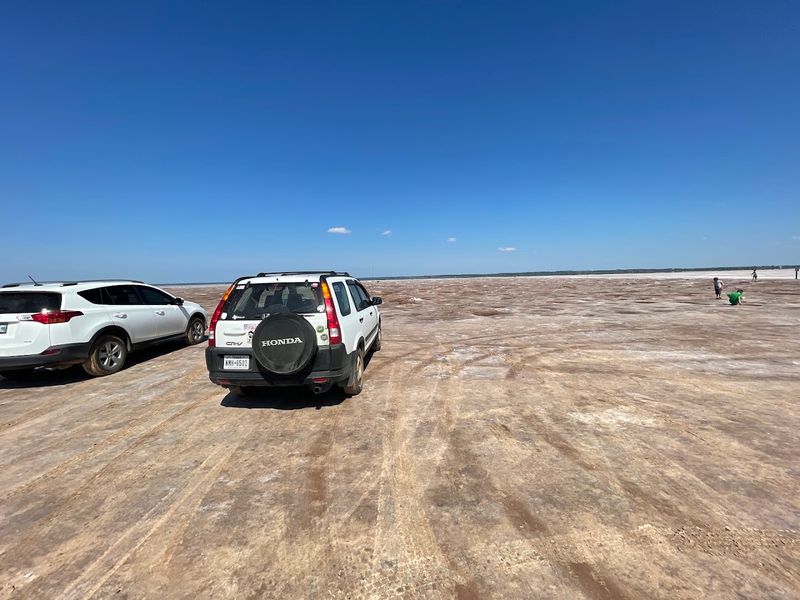
Not everyone wants to hike, and the Harold F. Miller Auto Tour Route makes the refuge fully accessible even for visitors who prefer to stay in their vehicle.
The route winds through some of the most wildlife-rich sections of the refuge, offering close-up views of wetlands, grasslands, and the edges of the salt flat from the comfort of a car window.
Deer are frequently spotted along the route, particularly in the early morning and evening hours. Turtles pile up on logs near the water on warm afternoons, and snake sightings are not uncommon for those paying close attention to the roadside vegetation.
The diversity of wildlife visible on a single drive through the tour route is genuinely impressive.
The auto tour is free to drive and takes roughly 30 to 45 minutes at a leisurely pace. Pulling over frequently to watch wildlife or take photos is encouraged.
The route is a great option for families with young children who may not be ready for longer hikes but still want to see the refuge up close from a different angle.
Hiking the Big Marsh Boardwalk and Sandpiper Nature Trail
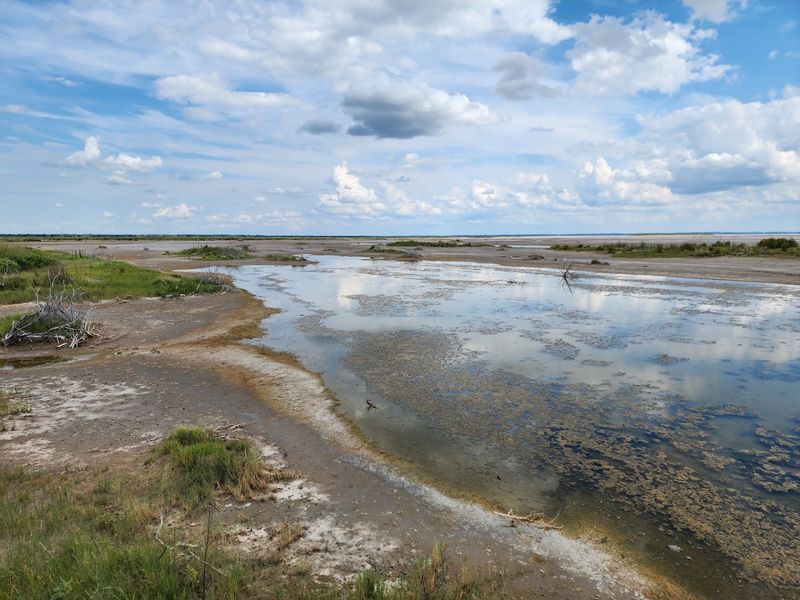
The Big Marsh Boardwalk is one of the most satisfying short walks in the entire refuge. The elevated boardwalk stretches out over the marsh, giving walkers a clear view down into the water and vegetation below without disturbing the habitat.
Great blue herons, red-winged blackbirds, and various waterfowl are commonly spotted from the boardwalk railing.
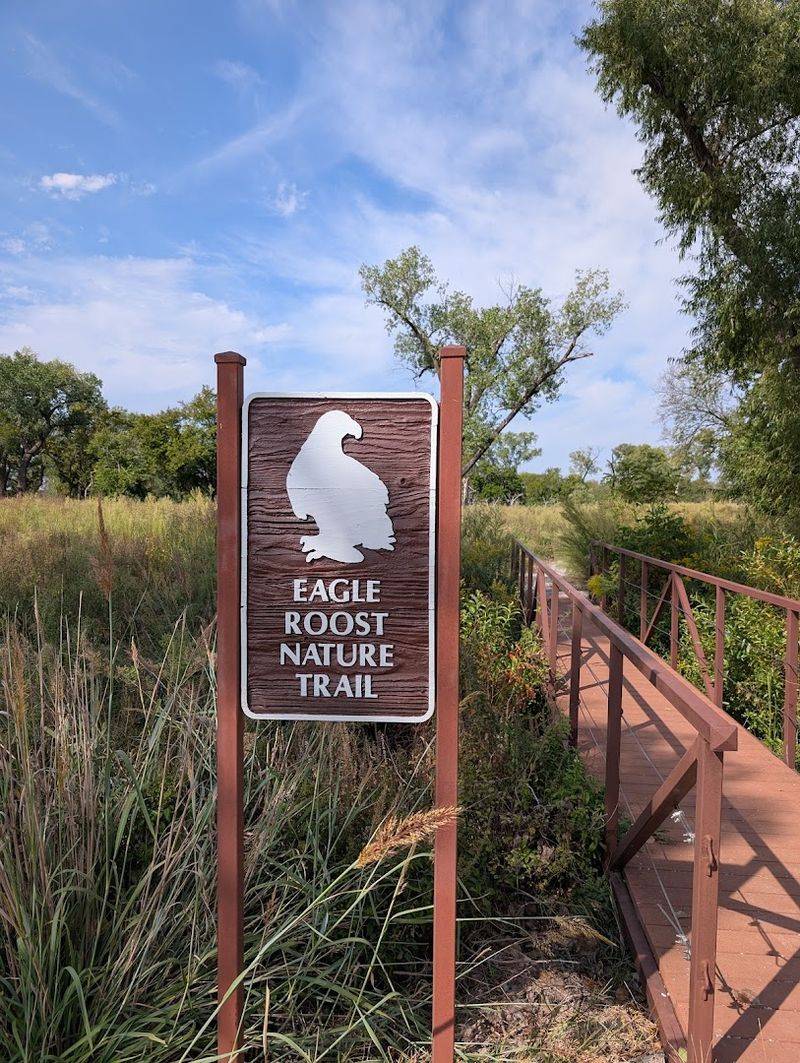
The Sandpiper Nature Trail is another popular option, offering a one-mile loop through a mix of grassland and wetland habitat. The trail is well-maintained and easy enough for most fitness levels, making it a relaxed and enjoyable walk even for visitors who are not regular hikers.
Wildlife sightings along the trail include deer, armadillos, and a wide variety of songbirds.
Both the boardwalk and the nature trail are free to access and require no advance registration. Starting with the boardwalk and then heading to the visitor center before tackling the salt flat makes for a well-rounded morning that covers multiple sides of the refuge in a logical order.
The variety of ecosystems packed into one visit is part of what makes this refuge so rewarding.
The Visitor Center and What the Park Rangers Know
The visitor center at Salt Plains National Wildlife Refuge is a worthwhile stop before heading out to the dig area or the trails. It provides an overview of the refuge’s history, the geology behind the salt flat, and the wildlife that depends on the habitat.
The displays are clear and engaging enough to hold the attention of both kids and adults.
Park rangers are knowledgeable and genuinely enthusiastic about the refuge. They can tell you which sections of the flat are producing the most crystals on any given day, which birds have been spotted recently, and what conditions to expect out on the trails.
Taking a few minutes to chat with a ranger before heading out can save time and improve the overall experience significantly.
The visitor center also has maps of the auto tour route, the nature trails, and the crystal digging area. Picking up a map is a smart move, since cell service in this part of northwestern Oklahoma can be unreliable.
The center tends to be busiest on weekend mornings during the spring and fall migration seasons, so arriving early on those days gives you the best chance of getting a ranger’s full attention.
Planning Your Visit: Practical Tips for First-Timers
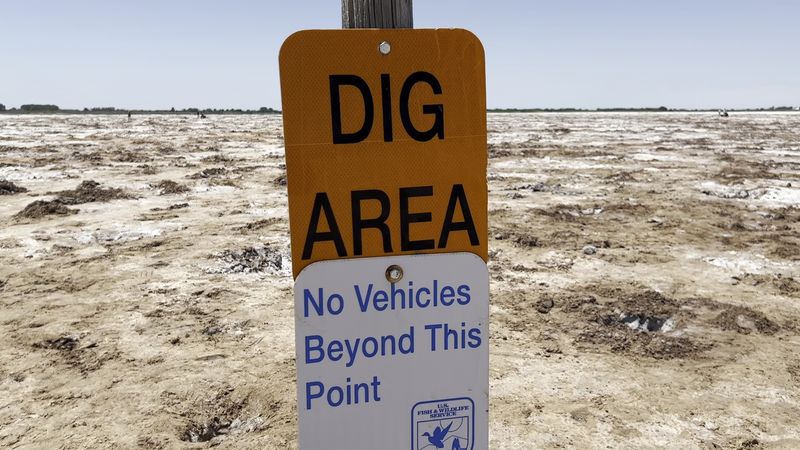
The digging area is open April 1 through October 15, and visiting early in the season tends to produce larger crystals because the ground has had all winter to form new growth. Going on a weekday rather than a weekend means fewer crowds and more space to spread out and dig at your own pace.
The roads into the refuge are manageable in most standard vehicles, but the last stretch to the digging area is unpaved and can be rough. Drive slowly and watch for potholes.
The salt and red clay will coat everything, including the inside of your car if windows are left open, so bring towels to wipe down before getting back in.
There is a pit-style restroom located about a mile before the digging area, but there is no running water and no place to buy food or drinks anywhere near the refuge. Packing a cooler with snacks, meals, and plenty of water is essential.
The refuge is free to visit, which makes it one of the best deals in Oklahoma for a full day of outdoor activity that the whole family will talk about for years.
Share this story