Hidden among the rolling grasslands of northwestern Nebraska is an outdoor destination that surprises almost everyone who visits for the first time. Travelers come to explore towering ponderosa pine forests, dramatic sandstone canyons, scenic hiking trails, peaceful campgrounds, abundant wildlife, and sweeping Great Plains views that feel unlike anywhere else in the state. It’s the kind of place where every winding trail reveals another breathtaking landscape that few people expect to find in Nebraska.
The experience extends far beyond the forest itself. Rugged ridgelines, wilderness hiking, horseback adventures, star-filled night skies, diverse wildlife, quiet backcountry camping, and one of America’s most remarkable conservation success stories have made this one of Nebraska’s most rewarding outdoor escapes. Whether you’re planning a road trip through the Great Plains or searching for a destination that’s truly off the beaten path, it’s easy to understand why visitors leave impressed.
Here’s why the Nebraska National Forest has become one of the state’s most surprising natural attractions and one of the most unforgettable places to experience the wild beauty of the Great Plains.
A Forest Forged by Resilience: The Remarkable Story Behind the Pines
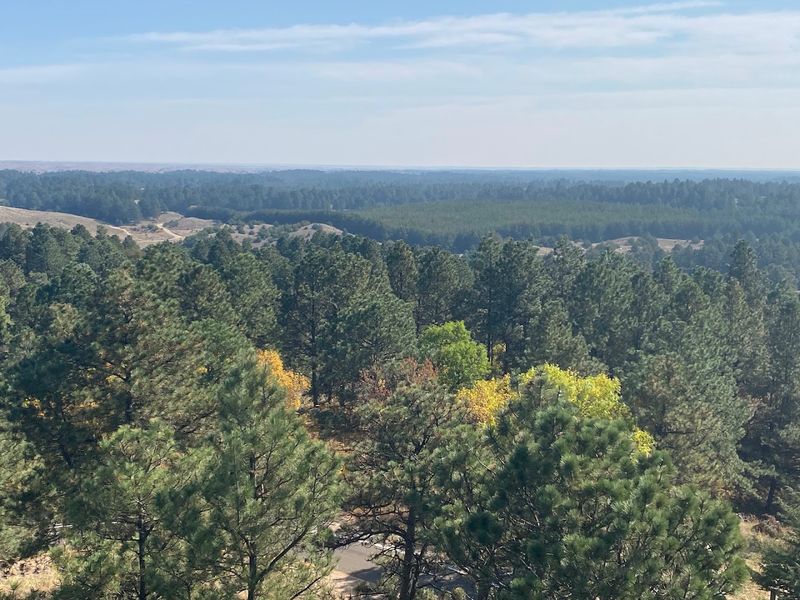
Most forests simply exist, shaped quietly by centuries of rain and seed. This one was deliberately willed into being, and that distinction makes all the difference.
The Nebraska National Forest near Chadron, Nebraska, with its Pine Ridge Ranger District office at 125 N Main St, Chadron, NE 69337, carries a story rooted in stubbornness and vision. Early conservationists believed trees could flourish on the Great Plains with enough effort, and they were right.
What followed was a generations-long commitment to planting, nurturing, and protecting native ponderosa pines across this dramatic landscape. After a significant fire in 2009 devastated forest near Chadron State College, community groups hand-planted over 12,000 trees as part of a 61,000-tree restoration effort.
Local organizations like the Upper Niobrara White Natural Resources District continue distributing hundreds of thousands of trees annually for reforestation projects. The result is a living monument to what persistence looks like when it takes root in the soil of the American Plains.
Geology That Stops You in Your Tracks: The Drama of Pine Ridge Terrain
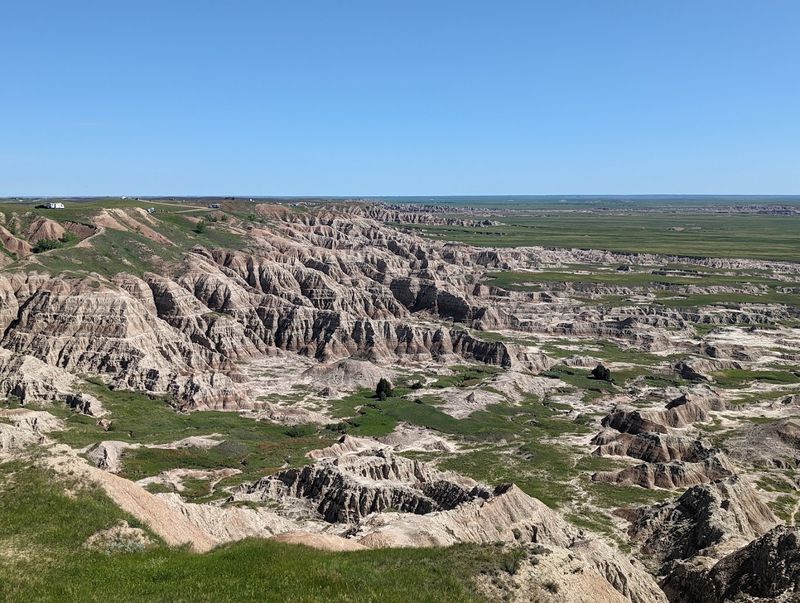
Nobody warns you about the bluffs. You drive through rolling grasslands thinking you know what Nebraska looks like, and then the land simply breaks open into something else entirely.
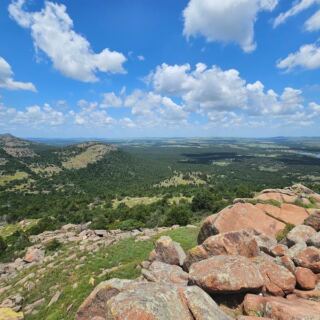
The Pine Ridge escarpment is a series of sandstone formations carved by millions of years of wind, water, and geological movement. Sharp ridgelines jut upward, canyons drop away beneath them, and exposed rock layers read like pages from Earth’s own diary.
Sandstone buttes punctuate the skyline at irregular intervals, each one a little different in shape and color, ranging from warm amber tones to pale cream. Between these formations, sweeping mixed-grass parklands stretch toward the horizon, creating a patchwork of habitats that feels almost cinematic in scale.
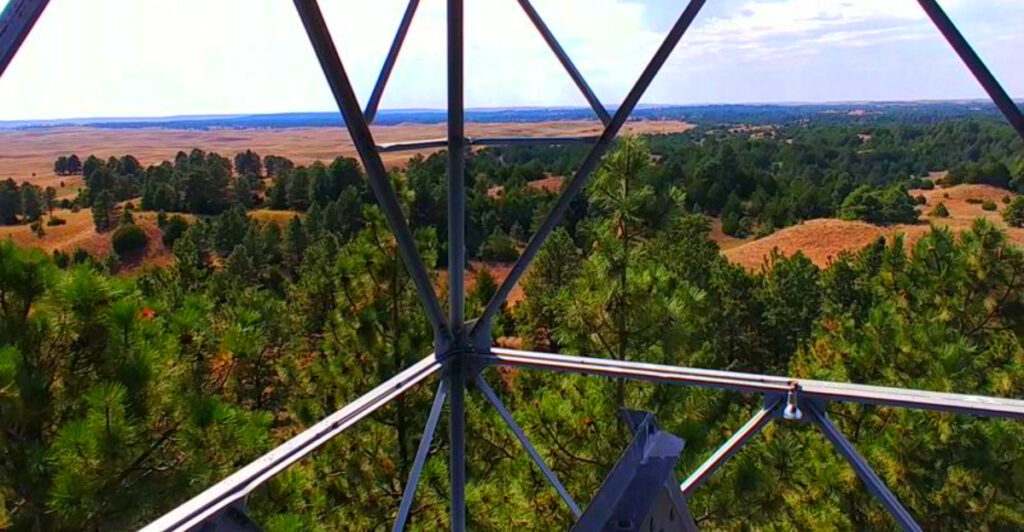
Native ponderosa pines cling to the edges of these cliffs with a grip that seems almost defiant, their dark green canopy contrasting sharply against the lighter stone beneath them. The terrain rewards curiosity at every turn, and the further you explore, the more intricate it becomes.
Trails That Go the Distance: Hiking the Pine Ridge System
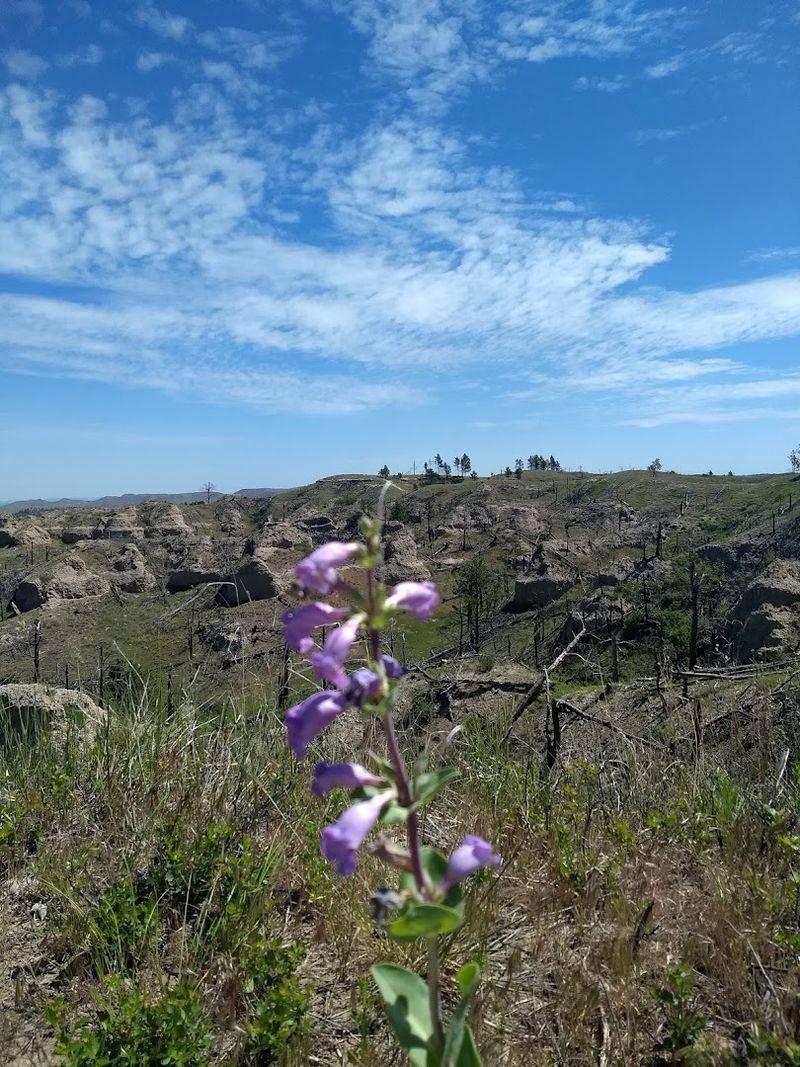
Forty miles of trail is a serious invitation. The Pine Ridge Trail stretches across the district from the Spotted Tail Trailhead south of Chadron all the way west to the West Ash Trailhead near Crawford, threading through some of the most varied and visually rewarding terrain in the state.
Short day hikes and multi-day backpacking trips are both well-supported here, with access points at several trailheads including the Outrider Trailhead. The non-motorized designation on many of these paths means the experience stays quiet and genuinely immersive throughout.
Trails alternate between dense pine canopy, open grassland stretches, and canyon rim walking, so the scenery shifts constantly and keeps every outing feeling fresh. Wildflowers add bursts of color during spring and early summer, decorating the trailsides with surprising vibrancy.
Hikers who push into the more remote sections are rewarded with elevated views of surrounding canyons and plains that feel almost private, as though the landscape was set aside just for them. Comfortable footwear and plenty of water are non-negotiable companions out here.
Riding the Ridge: Horseback Adventures Through the Wilderness
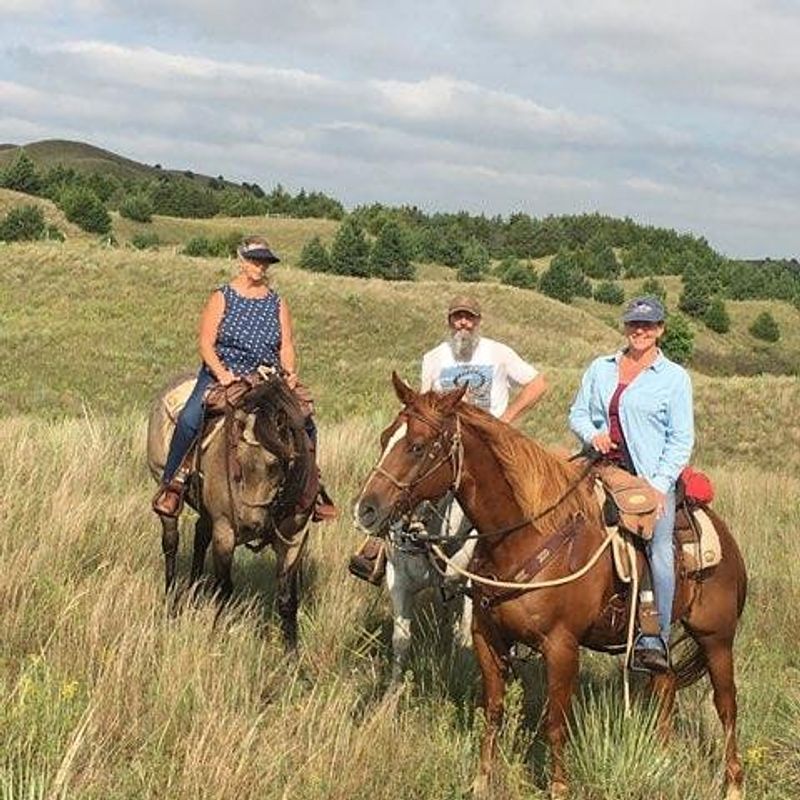
There is something about experiencing this landscape from horseback that feels historically appropriate, almost as if the land itself expects it. The Pine Ridge has deep ties to cavalry history, and the trails reflect that heritage in both their design and their spirit.
The Soldier Creek Wilderness is particularly well-suited for equestrian exploration. The Boots and Saddle Trail runs approximately seven miles through the area, while the Trooper Trail Loop extends to about 10.5 miles, both accessible from Soldier Creek Campground, which conveniently includes corrals for overnight stays.
Riders should come prepared for a genuine backcountry experience. No motorized vehicles share these trails, which means the only sounds are hoofbeats, wind through the pines, and the occasional call of a bird overhead.
One important practical note for those bringing pack animals: certified weed-free feed is required to protect the native vegetation. Following Leave No Trace principles keeps the area pristine for every rider who comes after you, ensuring this tradition continues for many seasons ahead.
Camping Beneath a Sky That Earns Its Reputation: Overnight Options at Pine Ridge
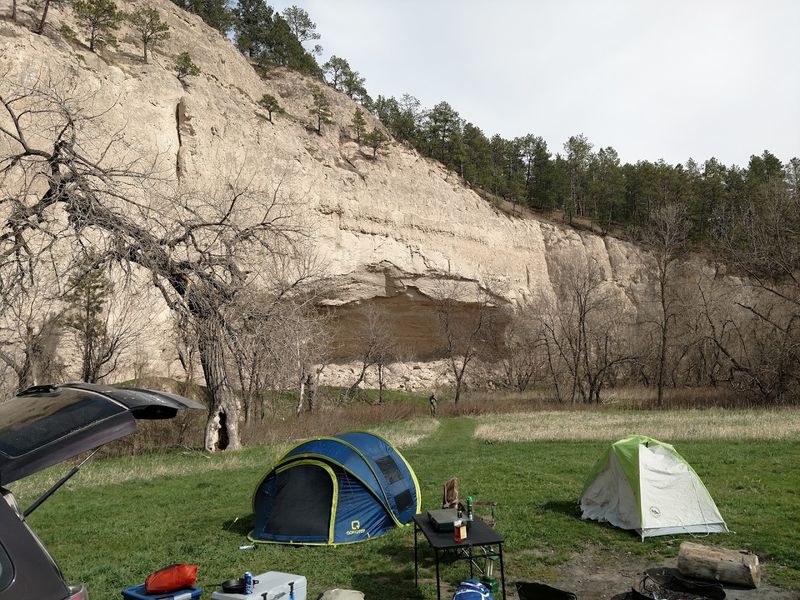
The night sky above the Pine Ridge is the kind that makes city dwellers go completely quiet. On a clear night, the Milky Way stretches overhead in full detail, and the absence of light pollution makes every star feel closer than it should be.
Developed camping options include the Red Cloud Campground with 13 sites and the Roberts Tract Camping Area west of Chadron, which offers picnic tables, restrooms, and an accessible rider ramp. Fees apply at developed trailheads from Memorial Day through mid-November, so plan accordingly.
For those who prefer solitude over amenities, dispersed camping is available throughout much of the district. You simply find a suitable spot, follow Leave No Trace practices, and the forest becomes your backyard for the night.
Primitive camping is also permitted within the Soldier Creek Wilderness, where self-sufficiency is essential and the reward is complete immersion in the landscape. One camper described the experience as being sheltered beautifully by the trees during an unexpected storm, which honestly sounds like the forest looking after its guests.
Wild Neighbors: The Animals That Call Pine Ridge Home
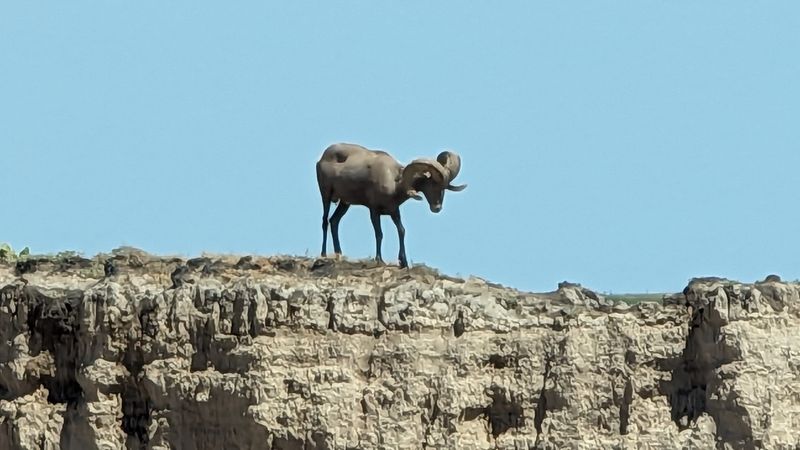
The wildlife here does not perform on schedule, but patient visitors are almost always rewarded. The Pine Ridge supports a remarkably diverse animal community across its mix of forest, canyon, and grassland habitats.
Elk inhabit the more secluded reaches of Soldier Creek Wilderness, while white-tailed deer favor the creek bottoms and mule deer prefer the open ridge tops. Wild turkeys are a common and entertaining sight, especially during spring when they seem to wander the pines with great confidence and little concern for onlookers.
Predators also move through the landscape, including coyotes, bobcats, and the occasional mountain lion, which adds a layer of genuine wildness to any outing. Overhead, eagles and hawks patrol the thermals above the ridgelines, scanning the terrain below with impressive focus.
Birdwatching has earned particular praise from visitors who explore the quieter roads and draws on foot. The variety of habitats packed into one area means that the species list here is longer and more interesting than most people expect from a Great Plains destination.
Into the Wilderness: What Makes Soldier Creek Unlike Anything Else in Nebraska
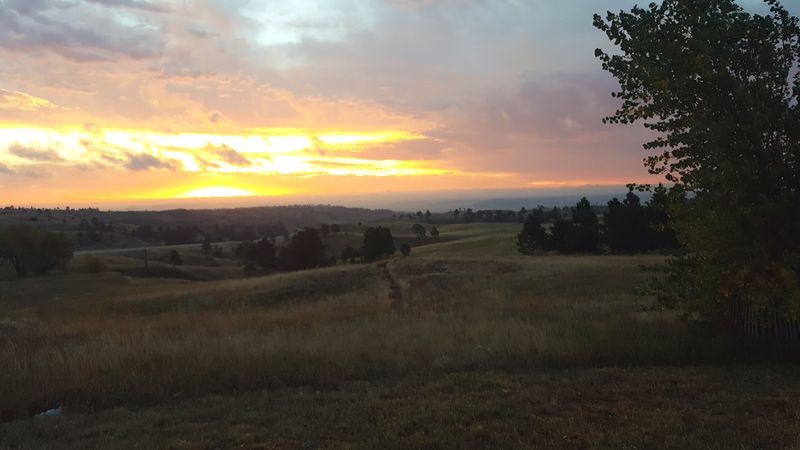
Federally designated wilderness areas carry a specific promise: nature runs the show, and humans are guests. Soldier Creek Wilderness, covering 7,794 acres within the Pine Ridge section of the Nebraska National Forest, takes that promise seriously.
Established by Congress in 1986, this area prohibits motorized vehicles, mountain bikes, and all mechanized equipment. Once you cross the boundary, the only tools available to you are your legs, your map, and your judgment.
Much of the pine forest here was consumed by the Fort Robinson wildfire in 1989, which eliminated nearly 90 percent of the ponderosa pines. Today, open prairie and recovering pine stands share the landscape, creating a compelling visual record of both destruction and renewal that unfolds across every hillside.
Trails like the Trooper Trail Loop and the Boots and Saddle Trail provide entry points, but signage inside is minimal and navigation requires genuine skill. The reward for that effort is a level of solitude and raw natural beauty that is genuinely rare in Nebraska, or anywhere else on the Great Plains.
Beyond the Hiking Boots: Other Ways to Experience the Forest
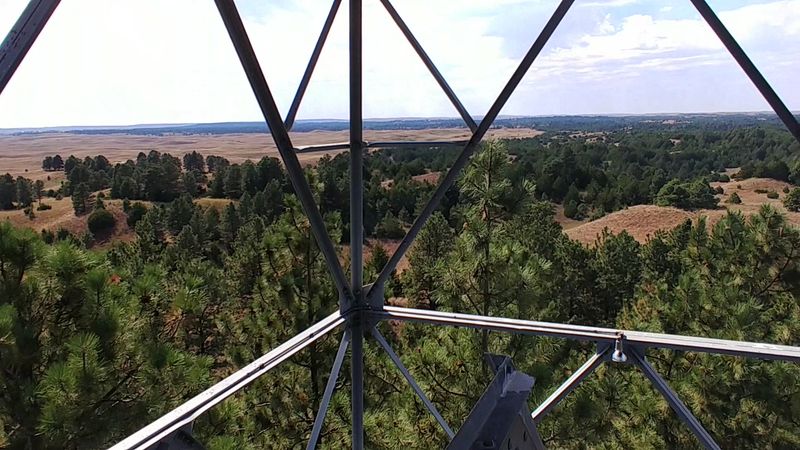
Not every great outdoor adventure happens on foot, and the Pine Ridge Ranger District is refreshingly honest about that. The area accommodates a wide range of recreational styles without forcing everyone into the same experience.
Mountain biking is popular throughout much of the trail system, though riders must avoid designated wilderness areas like Soldier Creek, where mechanized transport is not permitted. Checking current trail regulations before setting out is always a smart move.
Hunting draws visitors from across the region, with white-tailed deer, mule deer, and wild turkey all well represented. A limited elk hunting lottery offers a rare opportunity to pursue one of the more elusive residents of the public land here.
Off-highway vehicle enthusiasts have their own designated roads within the broader forest system, including trails in the 700-series road network that accommodate UTVs wider than 60 inches, which visitors have specifically highlighted as a rare and valued feature. Fishing in the area’s creeks and small ponds rounds out the options for those who prefer a slower pace and a quiet stretch of water.
Timing Your Visit: How Each Season Changes the Pine Ridge Experience

The Pine Ridge does not offer one experience repeated across twelve months. Each season here is genuinely distinct, and the best time to visit depends entirely on what you are hoping to find.
Summer runs hot, with July highs regularly reaching around 90 degrees Fahrenheit, making early morning starts essential for comfortable hiking. The forest is lush and active during these months, with long daylight hours and plenty of wildlife movement at dawn and dusk.
Shoulder seasons deliver the most comfortable conditions overall. Late May through June and the month of September bring temperatures in the mid-60s to mid-80s, lower humidity, and spectacular light for photography. Fall adds vivid color from deciduous trees nestled among the evergreens, creating a contrast that makes the canyon scenery even more dramatic.
Winter transforms the ridge into a quiet, frost-covered landscape where temperatures can drop to around 13 degrees Fahrenheit in December. The solitude during these months is extraordinary, and visitors who come prepared for cold conditions often find the snow-dusted pines and empty trails to be the most memorable version of this place.
The People Behind the Pines: Conservation Stewardship at Work
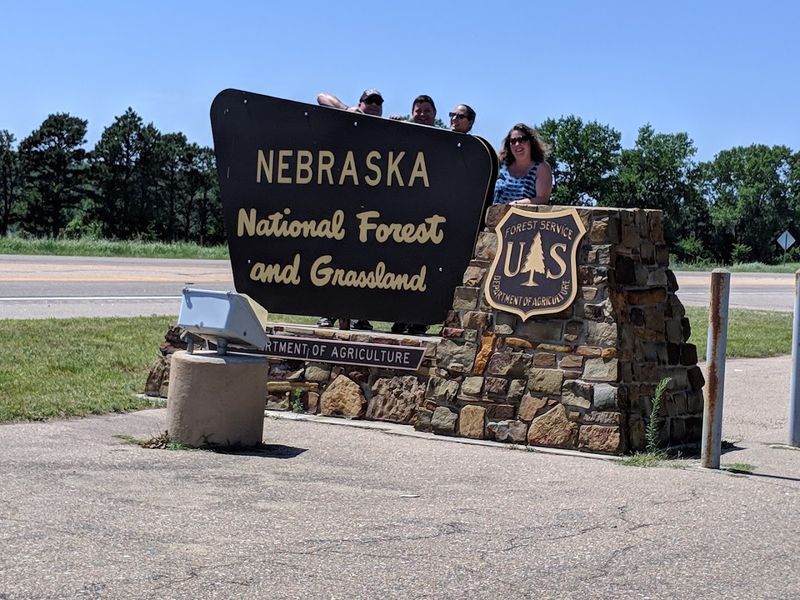
A forest this layered and this resilient does not maintain itself. Behind the scenic trails and the dramatic bluffs, a dedicated network of people works steadily to keep the Pine Ridge healthy and accessible.
The U.S. Forest Service manages the Nebraska National Forest through its Supervisor’s Office in Chadron, operating weekdays from 8 AM to 4:30 PM and reachable at 308-432-0300. Their approach balances ecological restoration with public recreation, a combination that requires constant attention and careful planning.
The Upper Niobrara White Natural Resources District, also based in Chadron, partners closely with the Forest Service on reforestation initiatives, distributing hundreds of thousands of trees annually to landowners and restoration sites across the region. These efforts become especially critical after wildfires reshape large portions of the landscape.
Prescribed burns, selective thinning, and streamside habitat restoration are all part of the ongoing management strategy. Visitors who notice the mosaic of open prairie and recovering pine stands throughout the forest are actually seeing the results of this careful stewardship in real time, which gives every outing an extra layer of meaning.
Share this story