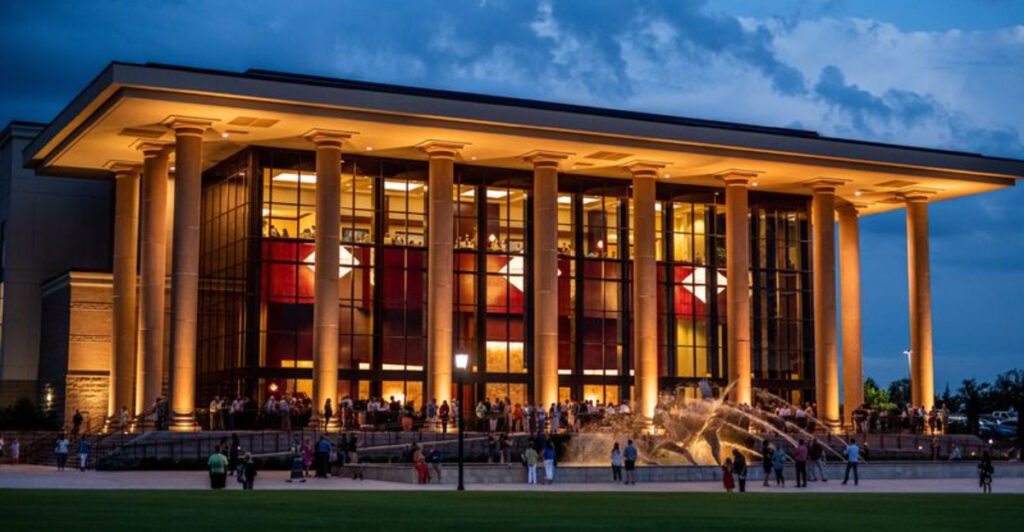
There is a concert hall in central Oklahoma that stops first-time visitors dead in their tracks before the music even starts. Massive chandeliers dripping with Swarovski crystals catch the light from every angle, walls finished in Persian onyx glow with a warmth that feels almost otherworldly, and the acoustics wrap around you like a perfectly tailored suit.
I had heard whispers about this place for months before I finally made the drive out to see it for myself, and I can tell you with full confidence that the whispers did not do it justice. Keep reading, because what I found inside this building genuinely surprised me.
Where It All Begins: Address and Setting
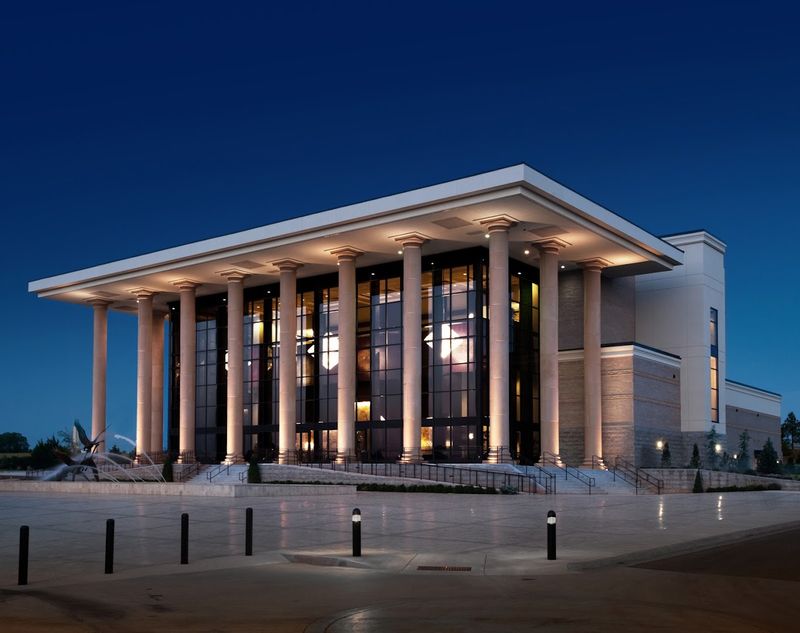
The address alone gives you a hint that this place exists slightly outside the ordinary flow of city life. Armstrong Auditorium sits at 14400 S Bryant Rd B, Edmond, OK 73034, on the campus of Herbert W.
Armstrong College, which is affiliated with the Philadelphia Church of God.
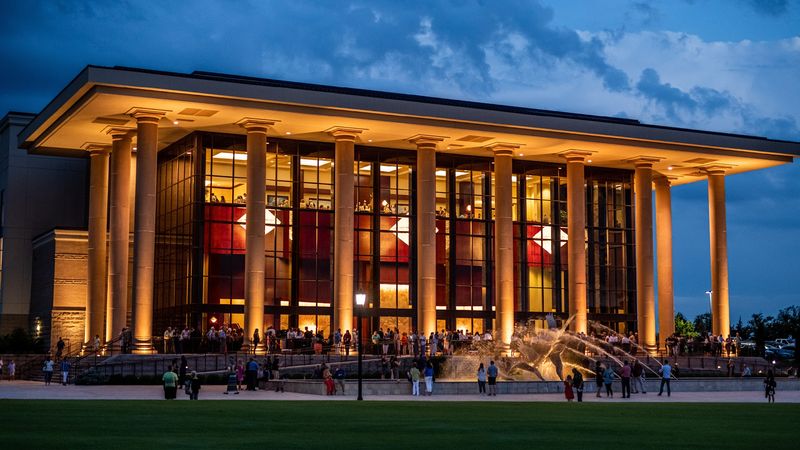
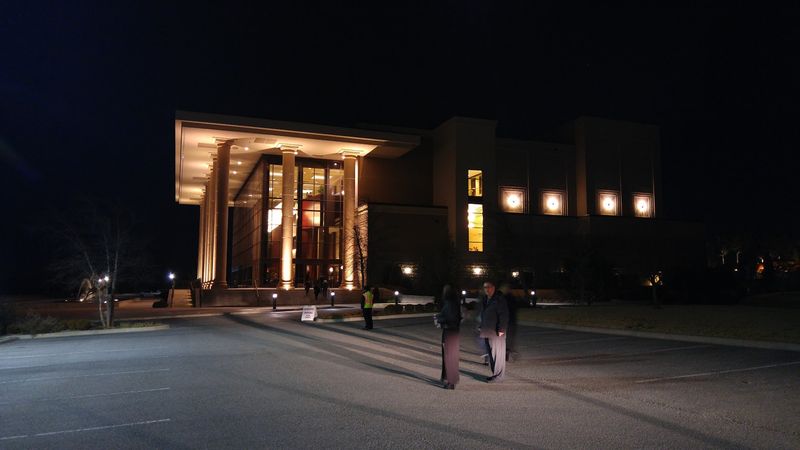
Edmond is a pleasant suburb just north of Oklahoma City, and the drive out on Bryant Road takes you through open land before the auditorium suddenly appears on the horizon like something transplanted from a European capital.
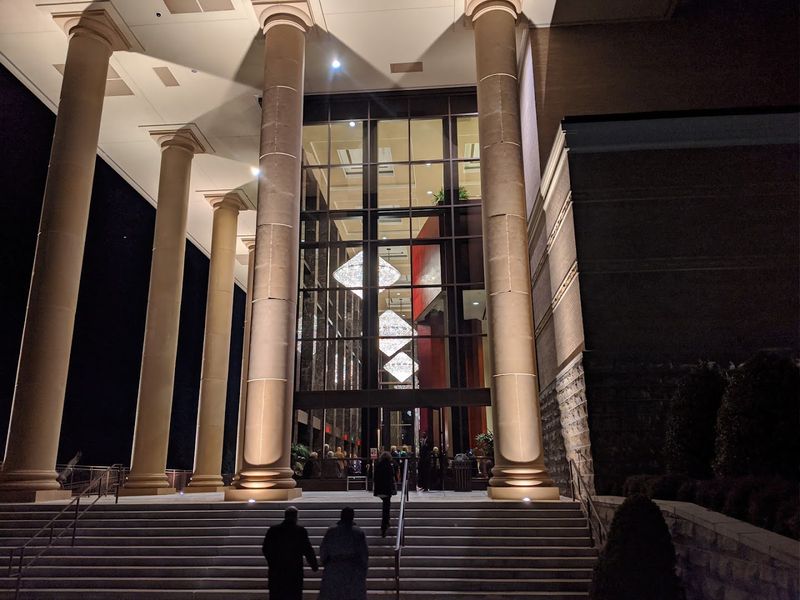
The building carries a classical architectural sensibility, with clean lines and a presence that feels both formal and welcoming at the same time. The surrounding grounds are meticulously maintained, giving the whole property a polished, curated look that signals something special is happening inside.
The first time I turned into that parking lot, I genuinely did a double take. Nothing about the surrounding landscape prepares you for the scale and elegance of what stands there.
It is one of those rare buildings that makes you want to straighten your collar before you even reach the front door.
Swarovski Crystal Chandeliers That Steal the Show
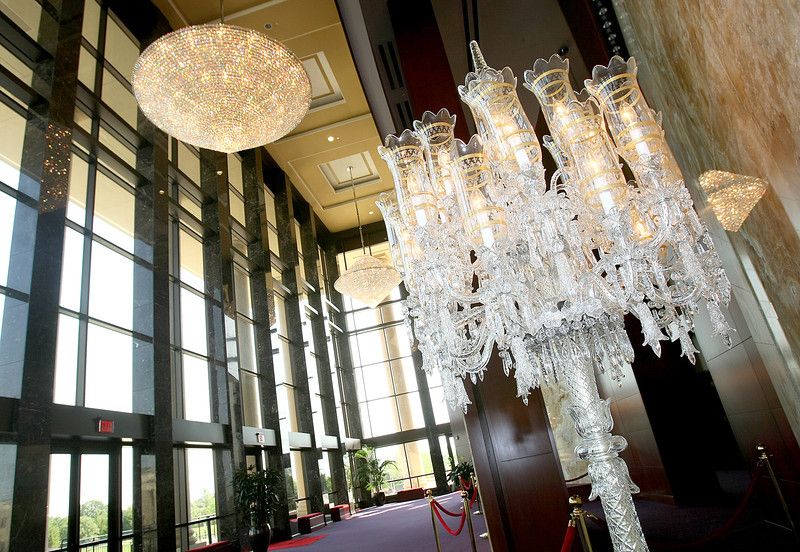
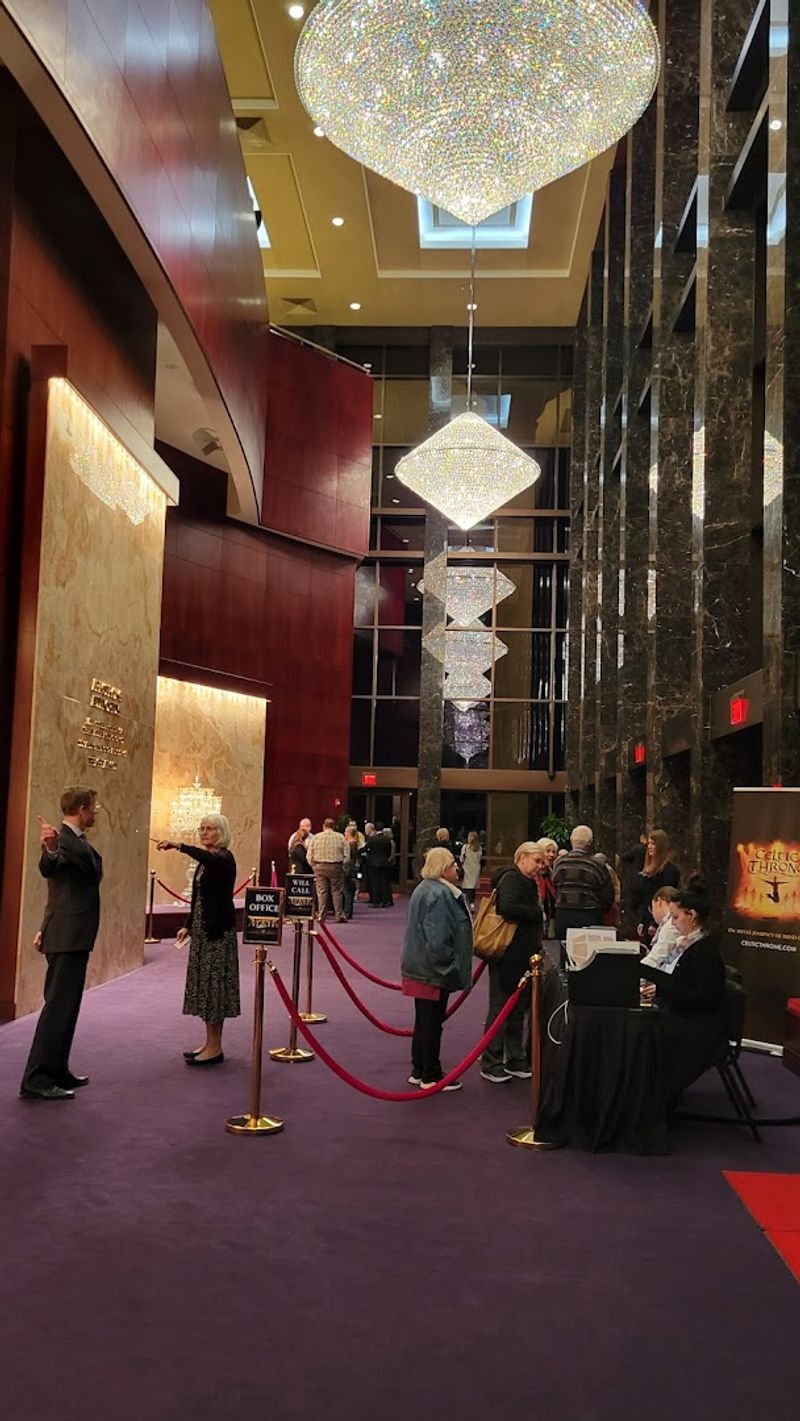
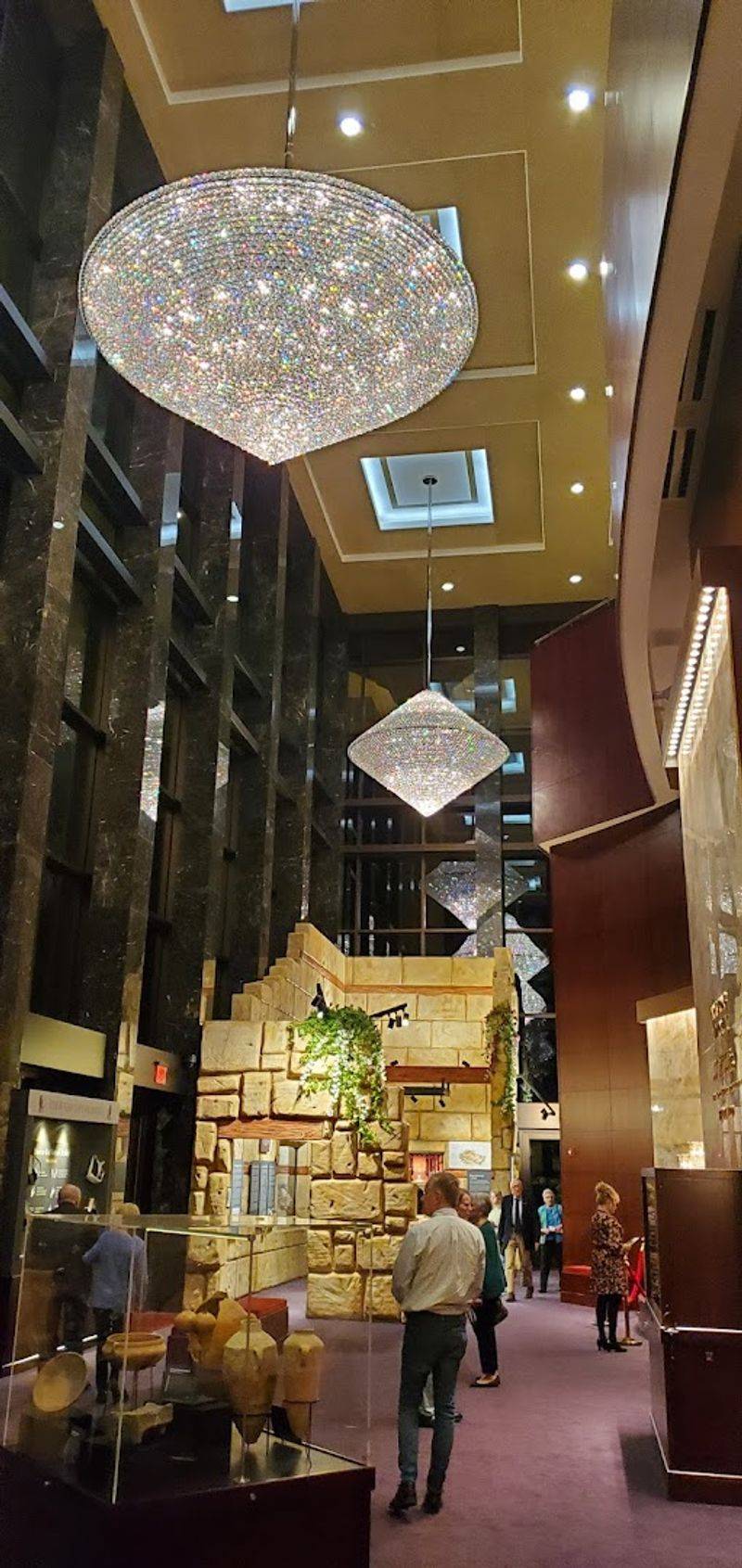
Before the first note of any performance plays, the chandeliers are already the main event. Armstrong Auditorium features massive crystal chandeliers that are made with genuine Swarovski crystals, and they scatter light across the hall in a way that makes the entire room feel like it is gently glowing from within.
Visitors frequently describe them as looking like enormous diamonds suspended in the air, and that comparison is surprisingly accurate. The crystals catch every shift in the lighting and throw tiny prisms across the ceiling, the walls, and even the faces of the audience members seated below.
What makes them especially impressive is the scale. These are not decorative accents you might overlook; they dominate the visual experience of the room and command attention the moment you walk through the main doors into the auditorium itself.
I stood in the aisle for a solid minute just looking up, which is not something I typically do in a concert venue. The chandeliers alone justify the visit, even before you factor in whatever world-class performer happens to be on stage that evening.
Persian Onyx Walls and Marble Elegance Throughout
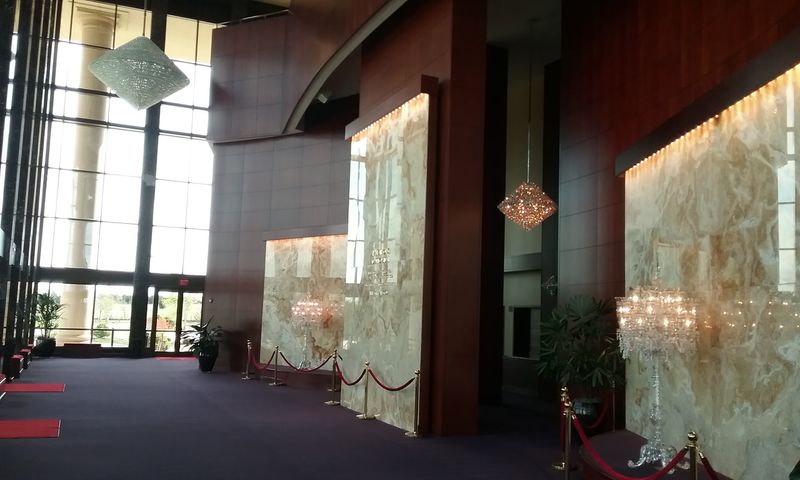
Persian onyx is not a material you encounter in most American concert halls, and that is precisely what makes Armstrong Auditorium feel so distinct from every other venue I have visited across the country. The walls incorporate panels of this rare stone, and the natural veining patterns give each surface a warm, layered depth that no paint or wallpaper could ever replicate.
Persian onyx has a translucent quality that makes it appear to glow softly under the right lighting conditions, and the designers here clearly understood how to use that property to maximum effect. The amber and green tones in the stone complement the gold and cream palette of the rest of the interior, creating a cohesive visual richness throughout the hall.
Running your eyes along those walls before a performance is genuinely enjoyable, because the natural patterns in the stone are endlessly varied. No two sections look exactly alike, which gives the room an organic warmth that balances the more formal elements of the design.
It is the kind of material choice that speaks to serious intentionality. Someone made a very deliberate decision to source and install Persian onyx here, and the result rewards every visitor who takes a moment to notice it.
The Acoustics: Sound That Wraps Around You
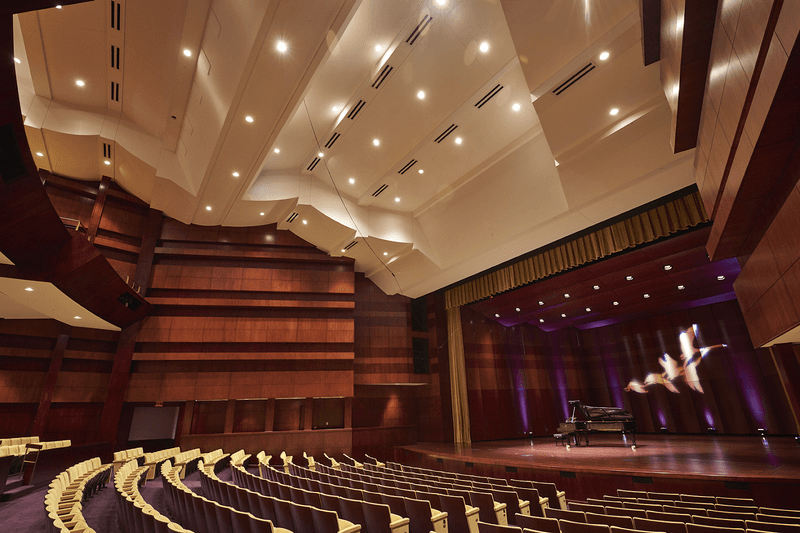
A beautiful room that sounds terrible is ultimately a disappointment, and Armstrong Auditorium sidesteps that problem completely. The acoustic design of this hall is one of its most frequently praised qualities, and after sitting through a full performance there myself, I completely understand why.
Sound in this room does not just reach you from the stage; it surrounds you. Whether a performer is projecting at full power or dropping to a near-whisper, every nuance travels clearly to every seat in the house.
The architectural choices that shape the room, including the curved surfaces and the materials used throughout, work together to create a listening environment that feels almost unfairly good.
Groups like Time for Three, the Three Italian Tenors, and the Canadian Brass have all performed here, and reviews consistently mention how the hall elevated their already impressive performances. That is the mark of a truly well-designed acoustic space.
I was seated toward the middle of the house, and the clarity of the sound made me feel like the performers were playing directly to me. That kind of intimacy in a hall of this size is genuinely rare, and it is something you have to experience in person to fully appreciate.
World-Class Performances on the Schedule
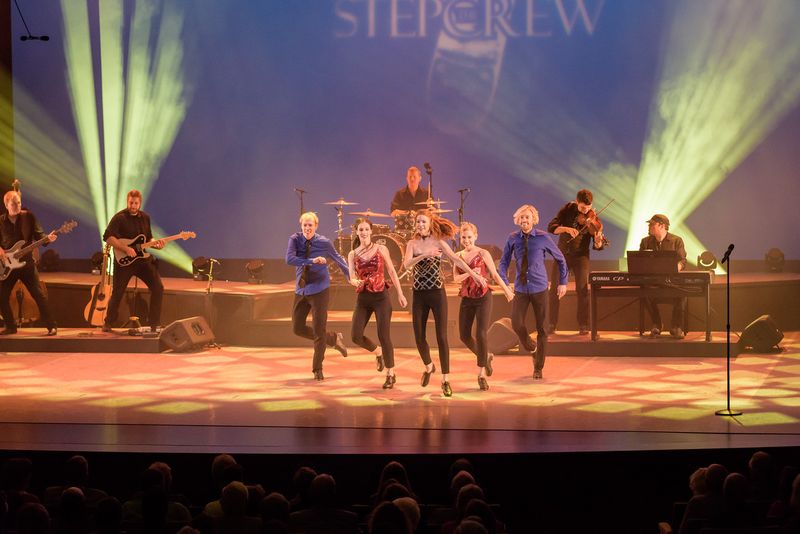
The programming at Armstrong Auditorium is genuinely ambitious for a venue of its size and location. The concert calendar has featured groups like the Queen’s Six, Canadian Brass, Three Italian Tenors, Time for Three, and the Celtic Throne dance production, which gives you a sense of the range and caliber of acts that come through regularly.
Celtic Throne in particular has become something of a signature event for the hall, drawing repeat visitors who come back specifically for that production whenever it tours. The combination of Irish dance, live music, and theatrical staging works especially well in a space this beautiful.
What strikes me about the programming philosophy is that it leans toward excellence without being exclusionary. The performances are sophisticated and polished, but they are also genuinely entertaining and accessible to audience members of all ages and musical backgrounds.
Ticket prices are described by visitors as affordable relative to the quality on offer, which is a refreshing contrast to larger urban venues where premium experiences often come with premium price tags. Checking the schedule at armstrongauditorium.org before you plan a trip to the Edmond area is a very good idea.
The Dress Code That Actually Makes Sense
Armstrong Auditorium maintains a dress code, and based on every conversation I have had with people who have attended events there, this policy is one of the most warmly received aspects of the entire experience. The expectation is that guests dress appropriately for a formal cultural event, which in practice means no shorts, flip flops, or overly casual clothing.
That might sound restrictive at first, but the effect inside the hall is remarkable. When everyone in the room has made an effort to dress well, the collective atmosphere shifts in a way that is hard to quantify but very easy to feel.
The evening takes on a sense of occasion that elevates the experience for everyone present.
Several visitors have noted with obvious relief that the dress code signals mutual respect among audience members. You are there to share something meaningful together, and dressing accordingly is a small but genuine expression of that shared intention.
Getting dressed up to attend a concert at Armstrong Auditorium feels less like following a rule and more like participating in a tradition. There is something satisfying about putting on your good shoes and walking into a room where everyone else has done the same thing.
Staff and Ushers Who Set the Standard
The staff at Armstrong Auditorium consistently earn their own paragraph in visitor reviews, which tells you something important about how this venue operates. The ushers, many of whom are students or alumni of Herbert W.
Armstrong College, are described again and again as exceptionally friendly, well-dressed, and genuinely helpful.
From the moment you arrive in the parking lot, where traffic is managed with surprising efficiency, to the moment you are shown to your seat, the staff treat every guest as though their evening matters. That level of attentiveness is not something you can fake or script; it reflects a culture of hospitality that runs through the entire organization.
The ushers are also knowledgeable about the venue and happy to share a bit of its history with curious visitors, which I appreciated during my own visit. Having someone explain the architectural details while you wait for the performance to begin adds a layer of richness to the experience.
Well-organized, warm, and professional without being stiff, the staff here represent one of the quieter reasons why Armstrong Auditorium earns such consistently high praise. A great room with indifferent staff is forgettable; a great room with genuinely caring staff is something you tell people about for years.
Seating Layout and Sightlines Worth Celebrating
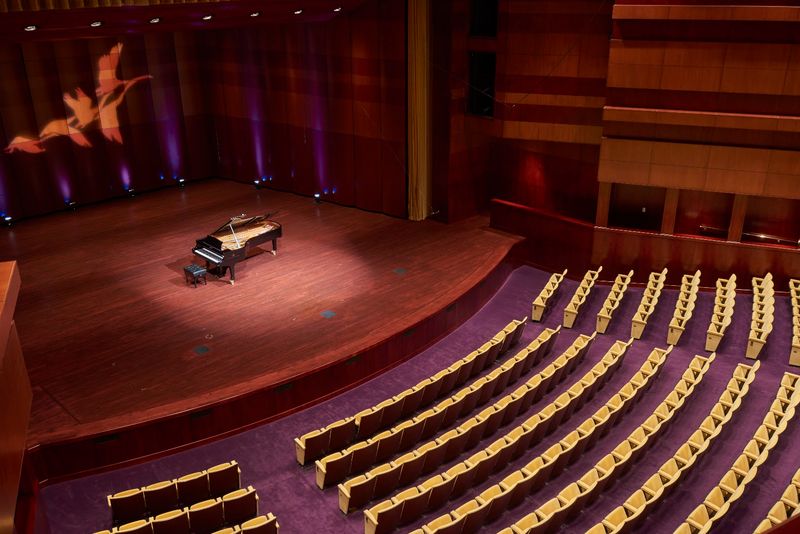
One of the most repeated observations from people who have attended events at Armstrong Auditorium is that there is genuinely not a bad seat in the house. That claim gets made about a lot of venues and is rarely true, but here it appears to hold up under scrutiny.
The hall is designed to feel large enough to accommodate a proper concert experience while remaining intimate enough that even seats toward the back of the room feel connected to the performance on stage. That balance is genuinely difficult to achieve in architectural terms, and it speaks to the quality of the original design.
The seating itself is comfortable, which matters more than people tend to admit when evaluating a venue. Spending two hours in an uncomfortable seat is its own kind of distraction, and Armstrong Auditorium removes that variable from the equation entirely.
During my visit, I shifted between a few different sections during intermission just to test the sightlines, and the difference was minimal in each case. Whether you end up in the center orchestra or off to one side, the stage remains fully visible and the sound remains clear, which is exactly how a well-designed concert hall should work.
Intermission Treats That Sweeten the Deal
Not every concert hall offers food at intermission, and fewer still do it well. At Armstrong Auditorium, the intermission refreshments have become a small but genuinely appreciated part of the overall experience.
Pie and coffee are available during the break, and visitors who have sampled them tend to mention the quality with a level of enthusiasm that suggests these are not afterthoughts.
There is something pleasantly old-fashioned about the combination of pie and coffee at a concert intermission. It feels appropriate for a venue that takes the idea of a proper evening out seriously, and it gives audience members a reason to linger in the beautifully appointed lobby rather than rushing back to their seats.
The lobby itself is worth spending time in. The same attention to architectural detail that defines the main hall extends into the foyer and common areas, making the entire building feel like a coherent, thoughtfully designed experience from entrance to exit.
I had a slice of pie during the intermission of a Celtic Throne performance, and the casual pleasure of standing in that stunning lobby with a cup of coffee and a good dessert while discussing what I had just seen on stage was one of the highlights of the entire evening.
Family-Friendly Without Sacrificing Sophistication

Bringing children to a formal concert venue can feel like a gamble, but Armstrong Auditorium has a track record of winning that bet. Productions like Celtic Throne are specifically designed to engage audiences across a wide age range, and the combination of energetic dance, live music, and theatrical staging holds the attention of younger viewers in a way that purely classical programming sometimes does not.
Families with children as young as six have attended Celtic Throne performances at the hall and reported that the kids were captivated from start to finish. That is a meaningful endorsement, because a six-year-old who is genuinely engaged by a live performance is a six-year-old who is developing a lifelong relationship with the arts.
The venue handles mixed-age audiences with grace. The dress code applies to everyone, which gives children a sense of occasion and teaches them that some evenings are worth dressing up for, a lesson that tends to stick.
Armstrong Auditorium manages to be genuinely sophisticated without being unwelcoming to families, which is a balance that many high-end venues fail to strike. Bringing your kids here is not a compromise; it is actually a very good idea for everyone involved.
The Philadelphia Church of God Connection
Understanding the background of Armstrong Auditorium adds a dimension to the visit that goes beyond the surface-level appreciation of a beautiful building. The hall sits on the campus of Herbert W.
Armstrong College, which is run by the Philadelphia Church of God, and the entire project was conceived as an expression of the church’s commitment to the arts and to creating a space worthy of world-class performance.
The name honors Herbert W. Armstrong, the founder of the Worldwide Church of God, and the college that bears his name continues to operate the auditorium as a cultural resource for the broader community.
Performances are open to the public, meaning you do not need any connection to the church or the college to attend and enjoy an event there.
That openness is an important part of the venue’s identity. The auditorium was built to be shared, and the programming reflects a genuine desire to bring exceptional music and performance to audiences in central Oklahoma who might not otherwise have easy access to this caliber of live entertainment.
Knowing that history makes the building feel even more intentional. Every crystal, every piece of onyx, and every carefully designed acoustic surface represents a very deliberate act of cultural generosity.
Planning Your Visit: What to Know Before You Go
A few practical details will help you get the most out of a visit to Armstrong Auditorium. The venue is located at 14400 S Bryant Rd B in Edmond, Oklahoma, and the phone number for inquiries is +1 405-285-1010.
The website armstrongauditorium.org is the best place to check the current performance schedule and purchase tickets in advance.
Parking is available on site and is managed by a team of staff members who handle traffic flow with notable efficiency. Arriving a little early is worthwhile, both to secure a good parking spot and to give yourself time to explore the lobby and take in the interior design before the house lights dim.
The dress code is worth taking seriously. Smart casual at minimum, and leaning toward more formal attire will make you feel perfectly at home in the room.
Children are welcome at appropriate productions, and the staff are experienced at accommodating families.
Tickets are priced accessibly relative to the quality of the performances, which makes Armstrong Auditorium one of the better value cultural experiences available anywhere in Oklahoma. A visit here rewards a little planning, and the payoff is an evening that tends to stay with you long after the drive home.
Share this story