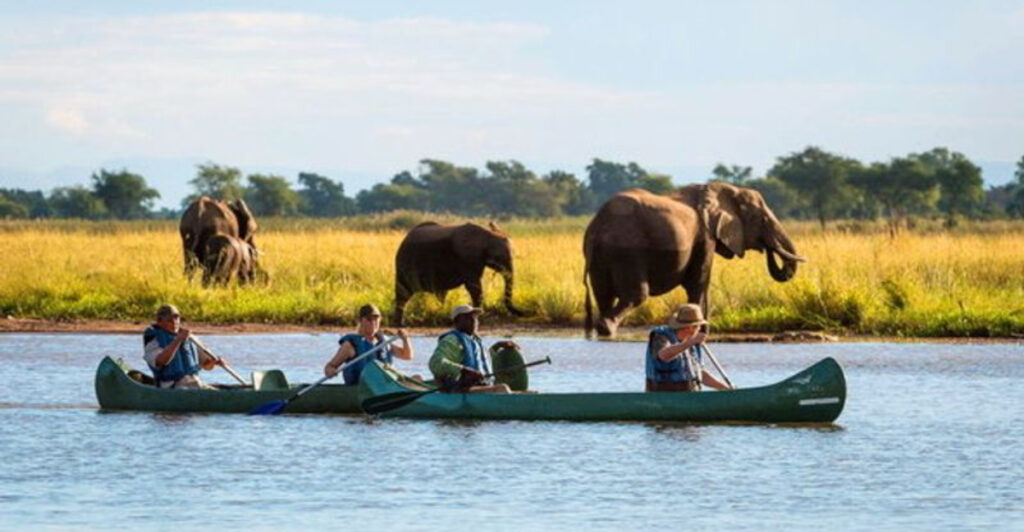
Watching a herd of elephants cross an open plain is one of those travel experiences that stays with you long after the trip ends. These are not zoo encounters or staged wildlife shows.
These are wild animals moving through vast, ancient landscapes on their own terms, doing exactly what they have done for thousands of years. From the red-soiled plains of Kenya to the floodplains of Sri Lanka, the world holds some truly remarkable places where elephants roam freely and visitors can watch from a respectful distance.
Whether you are planning a once-in-a-lifetime safari or just building a dream travel list, this guide covers fifteen destinations where the landscape opens up and elephants take center stage.
Amboseli National Park, Kenya
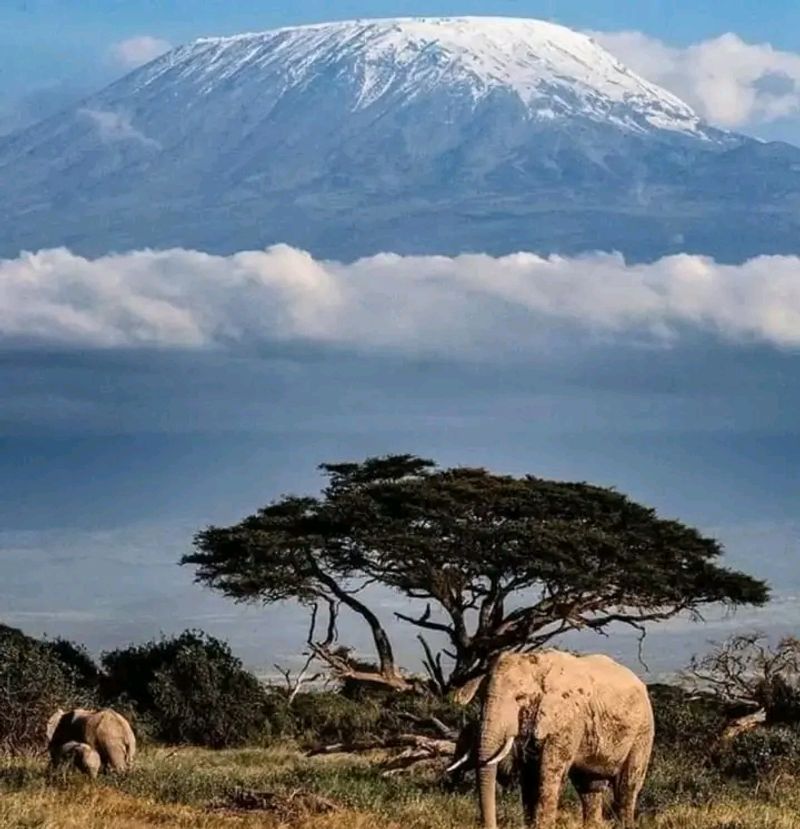
Few wildlife scenes anywhere in the world match what Amboseli delivers on a clear morning. A herd of elephants crosses pale, open grassland while Mount Kilimanjaro rises in the background, snow-capped and enormous.
It is the kind of view that makes even seasoned travelers stop and stare.
The landscape here is unusually open, which means you can watch entire family groups moving together rather than catching brief glimpses through thick bush. Calves stay close to adult females, older bulls sometimes wander the plains alone, and the dry bed of ancient Lake Amboseli stretches wide beneath the sky.
Kenya Wildlife Service recognizes Amboseli as one of Africa’s top destinations for close, large-herd elephant encounters. The terrain makes wildlife observation feel natural and unhurried.
Marshes and seasonal water sources attract elephants throughout the year, giving visitors reliable sightings across different seasons. This is a park that consistently rewards patience.
Chobe National Park, Botswana
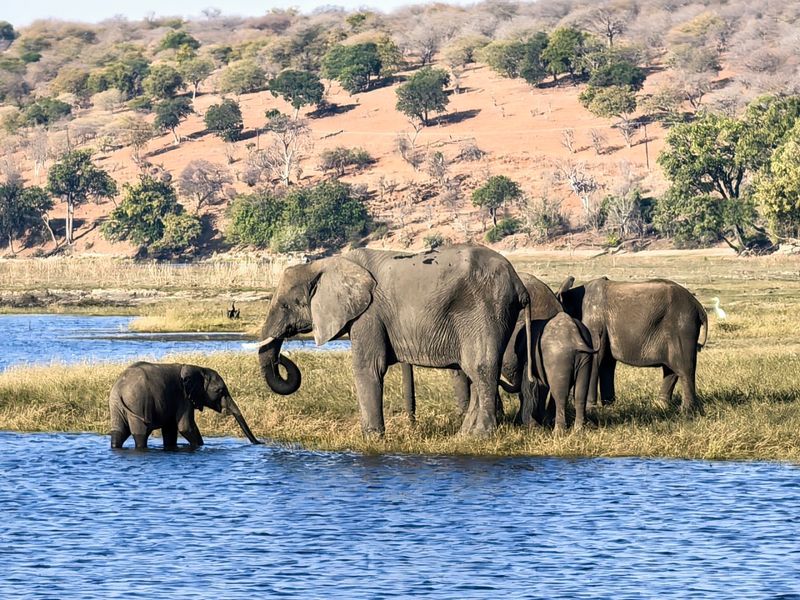
Chobe is shaped by water in a way that few other parks are. The broad Chobe River pulls elephants out of surrounding woodland and dry country, and during the drier months, the movement of herds toward the riverfront becomes one of the most dramatic wildlife events in southern Africa.
What makes Chobe particularly interesting is the variety of ways you can watch it happen. Traditional game drives work well, but river boat excursions offer a completely different perspective.
From the water, you look up at elephants descending the banks, splashing into the shallows and gathering near the shoreline in numbers that can be genuinely surprising.
Botswana’s tourism organization specifically highlights the sight of hundreds of elephants coming down to drink as one of the country’s signature wildlife experiences. The park is accessed through the town of Kasane, and current travel information remains easy to find through official channels.
Tarangire National Park, Tanzania
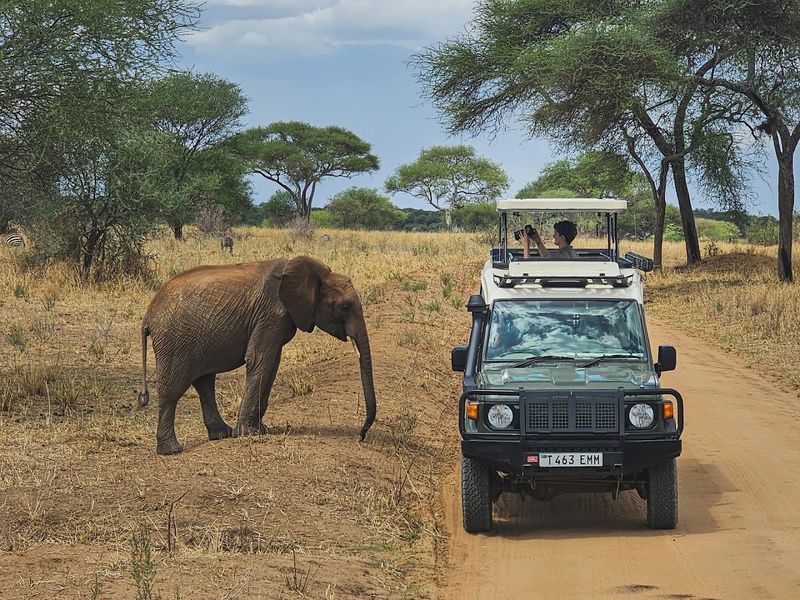
Tarangire has a look that belongs entirely to itself. Enormous baobab trees rise from dry, golden ground while elephants move in long single-file lines across the open landscape, sometimes stretching far enough that it takes a moment to count how many are actually in the group.
The park draws wildlife during the dry season because the Tarangire River remains one of the few reliable water sources in the area. Elephant families gather near the river in impressive numbers, while bulls browse separately on the surrounding plains.
The combination of open country and ancient trees creates a setting that feels genuinely timeless.
Tanzania National Parks lists elephants among Tarangire’s most notable animals and explains that herds are specifically attracted to the river corridor during drier months. The park is part of Tanzania’s active national park system, with reservation and visitor services currently available.
For elephant sightings in dramatic, uncrowded terrain, Tarangire consistently delivers.
Tsavo East National Park, Kenya
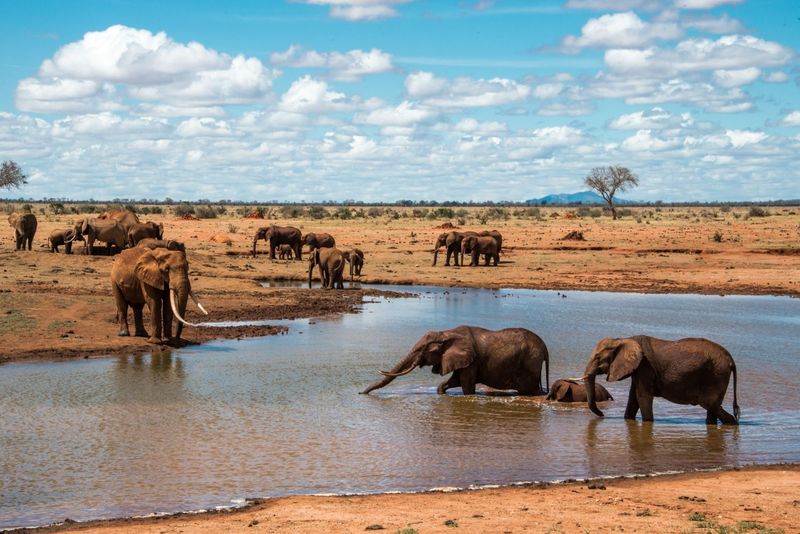
The elephants of Tsavo East have a look you will not find anywhere else. They roll in the park’s iron-rich red soil until their skin takes on a deep rust color, which makes them stand out vividly against the pale, semi-arid plains they call home.
Tsavo East is Kenya’s largest national park, and its scale gives every wildlife sighting a genuine sense of space. A herd may appear as distant shapes on the horizon before slowly resolving into a family group approaching a water source.
The open landscape means you can track movement from far away, which adds a different kind of anticipation to every game drive.
Kenya Wildlife Service specifically highlights the dust-red elephants roaming freely across open plains, scrub and volcanic country as one of the park’s defining features. Visitor information, park-entry details and safari planning resources are currently available through official channels.
The sheer size of this park makes every visit feel unique.
Maasai Mara National Reserve, Kenya
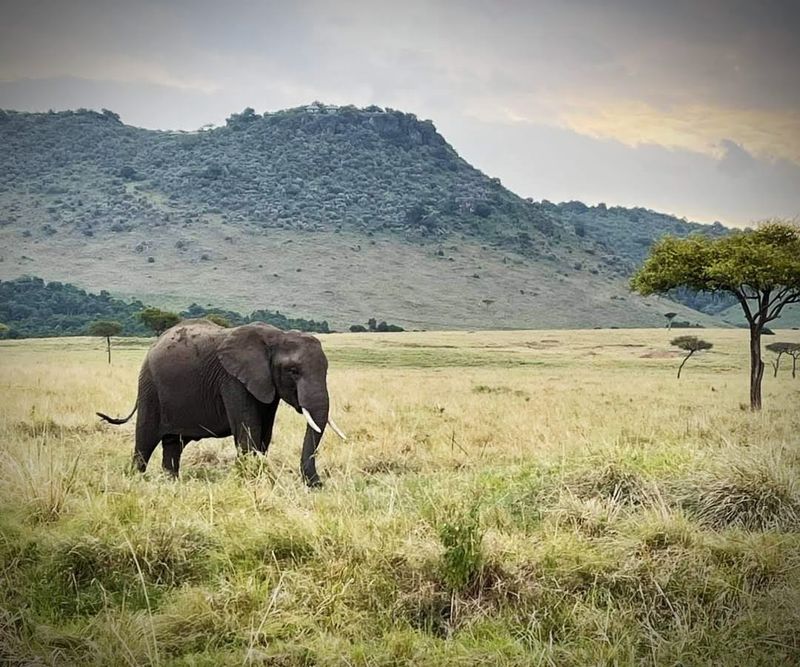
Most people come to the Maasai Mara for the wildebeest migration or the big cats, and that is completely understandable. But elephants are a year-round part of this landscape, and outside the peak migration season, they often get more attention and more space than visitors expect.
The reserve’s open grassy plains and gently rolling hills make elephant watching genuinely satisfying. Herds can be observed from a comfortable distance as they cross valleys, feed among other grazing animals or move between the Mara and Talek river corridors.
The landscape rarely feels crowded, especially when you are focused on resident wildlife rather than the annual migration spectacle.
Kenya’s National Tourism Service Portal identifies elephants among the reserve’s permanent wildlife residents and describes the landscape as preserved savanna wilderness with grassy plains, rolling hills and river corridors. The combination of reliable elephant sightings and one of Africa’s most famous natural settings makes the Mara a strong choice for any open-landscape wildlife trip.
Etosha National Park, Namibia
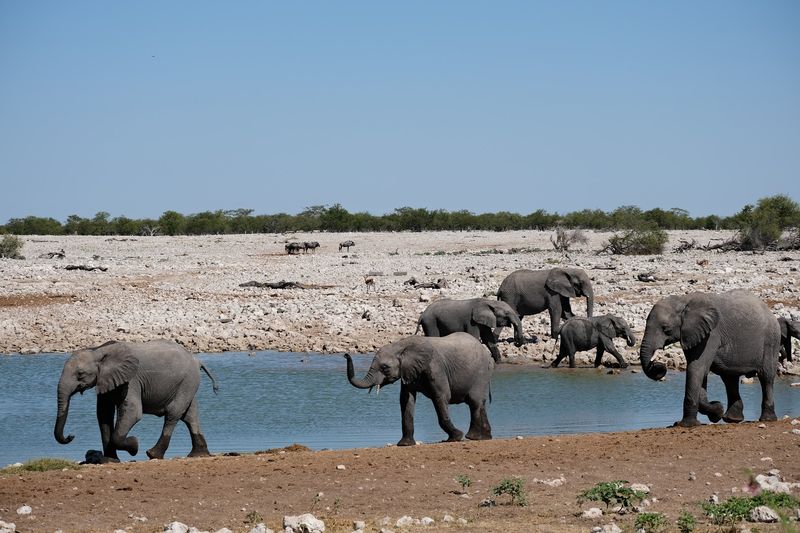
Etosha operates differently from most African parks, and that difference is what makes it so compelling. Instead of driving endlessly through bush hoping for wildlife, visitors can position themselves at one of the park’s waterholes and simply wait.
During dry conditions, elephants come to them.
The Etosha Pan itself is one of Africa’s most striking landscapes. Its pale, almost white surface creates an otherworldly backdrop as elephants move in from surrounding mopane woodland and dwarf-shrub plains.
Watching a group approach across that open ground, grow larger, drink and then disappear back into the trees is a surprisingly meditative experience.
The Namibian government describes Etosha as the country’s flagship national park and leading tourism destination. Current wildlife information lists elephants among the park’s large mammals and highlights the vast pan and its surrounding plains as defining parts of what makes a visit here feel unlike anywhere else on the continent.
Hwange National Park, Zimbabwe
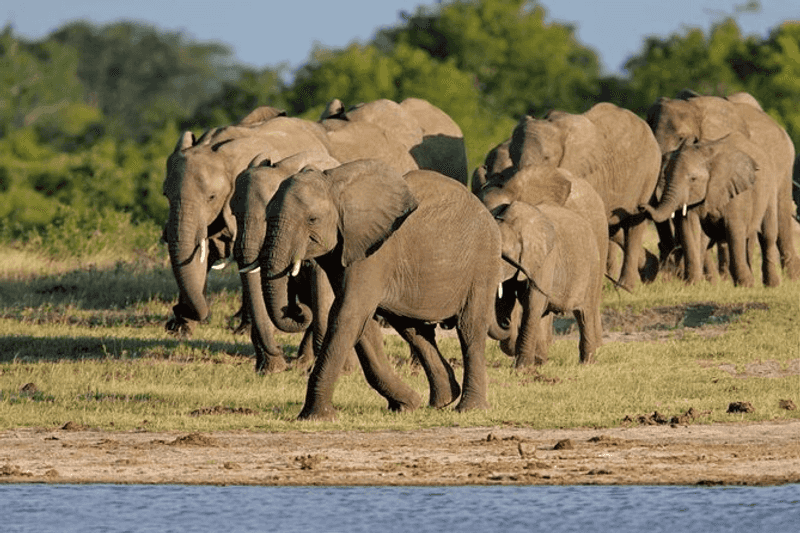
Hwange holds Zimbabwe’s largest elephant population, and during the dry season that fact becomes very visible. Herds converge on natural and pumped waterholes from different directions, sometimes arriving simultaneously, which creates layered social scenes that are fascinating to watch from nearby viewing platforms.
The park covers an enormous mixture of savanna grassland, teak woodland and mopane country. Many of the best viewing areas overlook relatively open ground, so visitors can track elephant movement before the animals even reach the waterhole.
Bulls, family groups and young males may all appear within the same hour, each behaving differently.
Zimbabwe Parks and Wildlife Management Authority identifies Hwange as the country’s largest national park and confirms it supports the country’s biggest elephant population. Road access, accommodation options and visitor facilities are documented through the authority’s official channels.
Hwange is also a reasonable road trip from Victoria Falls, which makes it a natural addition to a broader Zimbabwe itinerary.
Mana Pools National Park, Zimbabwe
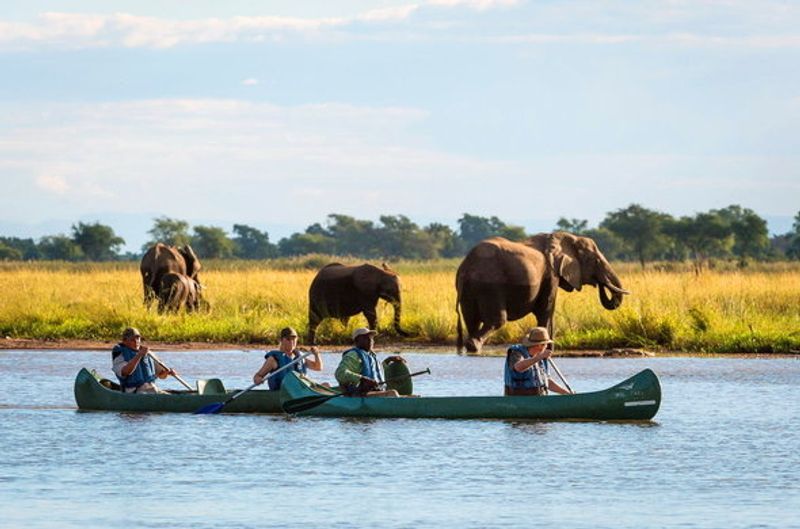
Mana Pools has a reputation among serious safari travelers that is hard to overstate. It sits along a remote stretch of the Zambezi River, where seasonal flooding shapes the landscape into open floodplains, shallow pools and groves of tall albida trees that provide both shade and food.
As the dry season progresses and inland water disappears, elephants and other wildlife move steadily toward the river. Some elephants here have developed a notable habit of standing on their hind legs to reach seed pods high in the tree canopy, a behavior that is not commonly observed elsewhere and tends to surprise first-time visitors.
Zimbabwe’s parks authority continues to list accommodation, entry fees, activities and contacts for Mana Pools through official channels. Access can be seasonal and road conditions vary, so confirming logistics before travel is genuinely important rather than optional.
The reward for the effort is one of the most atmospheric and uncrowded wildlife areas in southern Africa.
Lower Zambezi National Park, Zambia
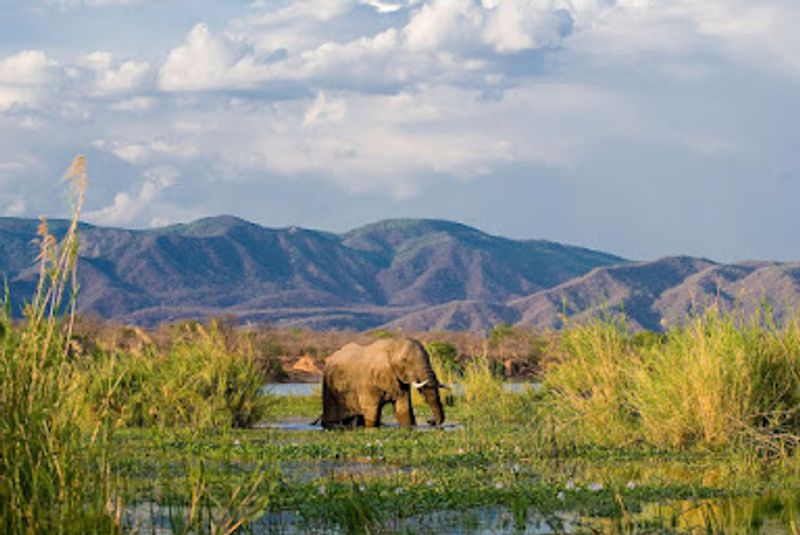
Lower Zambezi is one of those parks that rewards travelers willing to put in the extra effort to reach it. The park descends from the Zambezi Escarpment down to fertile river plains, and the change in terrain as you drop toward the water is dramatic enough to be interesting before you even spot an elephant.
Elephants here can be found along riverbanks, beneath mature trees and occasionally moving between channels and islands. The park is one of the few places where guided canoe safaris put you at water level alongside wildlife.
From a canoe, elephants appear against a backdrop of open floodplain and distant mountains in a way that no vehicle-based game drive can quite replicate.
Zambia’s tourism information lists elephants among the wildlife found along the river corridor, and the Lower Zambezi Tourism Association continues to promote active lodges and guided game drives in the region. Both boat and land-based options are available for visitors with different preferences and fitness levels.
South Luangwa National Park, Zambia
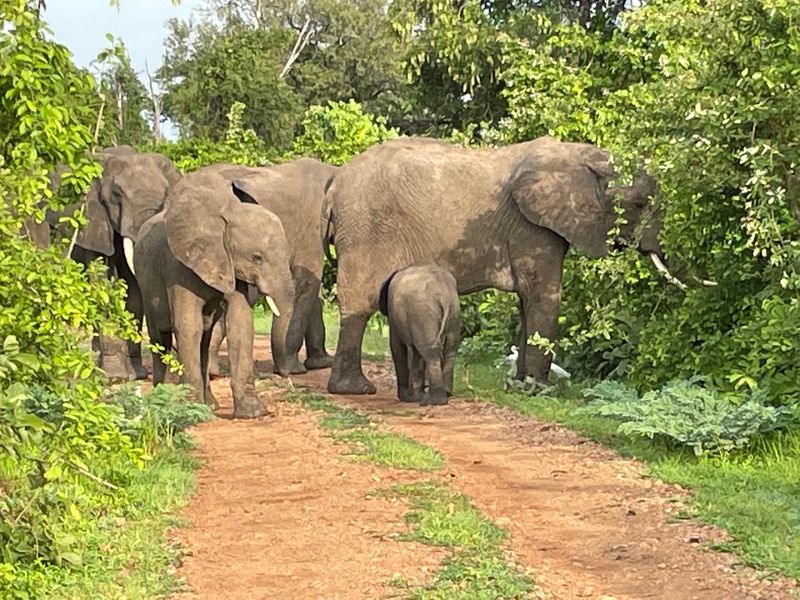
South Luangwa follows the winding Luangwa River through floodplains, oxbow lagoons and woodland, and the variety of habitats packed into one park is part of what keeps it interesting across multiple game drives. Elephants move between these environments throughout the year, but sightings become especially reliable as the dry season concentrates wildlife near permanent water.
The park is also well known for pioneering guided walking safaris in Africa. Elephant encounters on foot require experienced guides and strict attention to distance and wind direction, but for travelers who want to experience wildlife at ground level, it represents something genuinely different from a standard vehicle-based game drive.
Zambia’s Department of National Parks and Wildlife confirms that South Luangwa supports large herds of elephants and buffalo. Official tourism information also describes game viewing as centered on the Luangwa River and its productive lagoons.
Lodges in the area range from rustic bush camps to more comfortable options suited to different travel styles.
Ruaha National Park, Tanzania
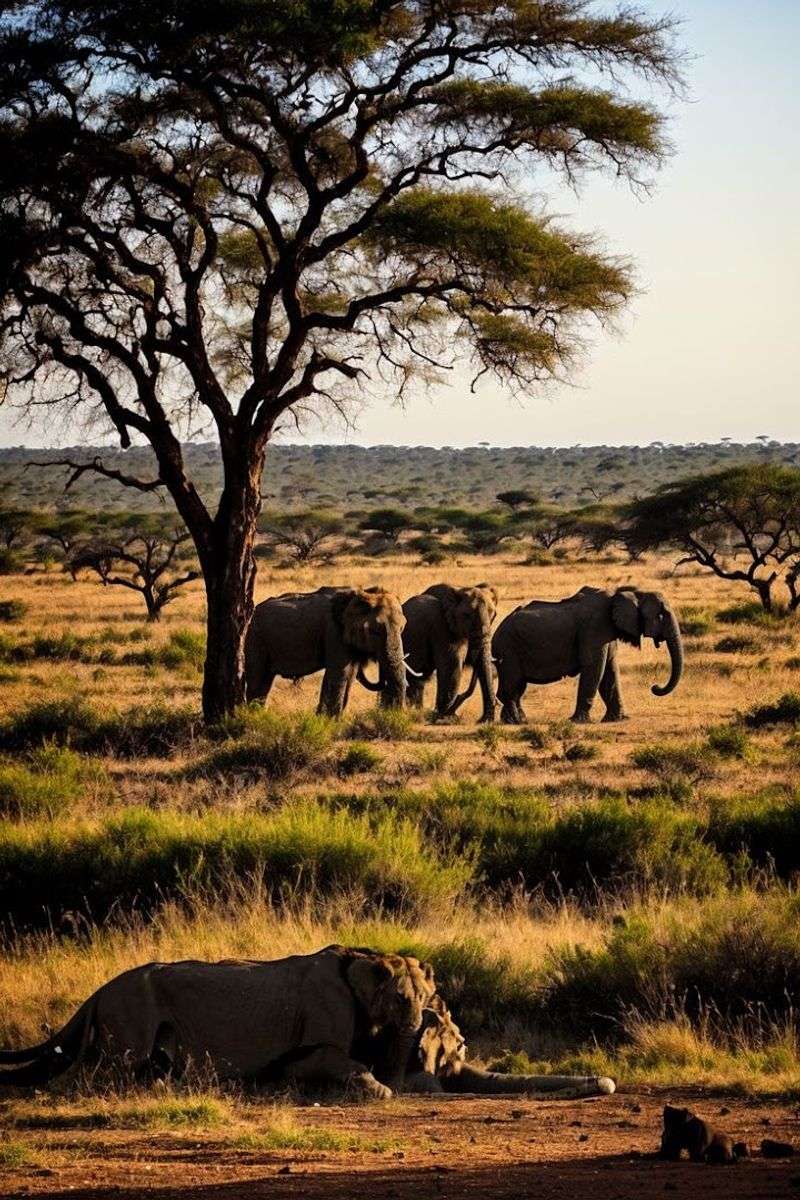
Ruaha is Tanzania’s largest national park and one of its least crowded, which gives wildlife encounters a quality of space and quiet that more popular parks sometimes struggle to offer. Elephants are among the park’s signature animals, particularly visible when dry conditions pull wildlife toward the Great Ruaha River.
The terrain here is more rugged than Tarangire or the Serengeti. Baobab-studded plains give way to deep river gorges and rocky hills, and elephants can be watched feeding beneath those ancient trees, crossing dry riverbeds or approaching greener vegetation along the riverbanks.
The landscape feels genuinely wild in a way that is hard to manufacture.
Tanzania National Parks describes Ruaha as having large elephant populations and terrain that includes baobab plains and deep river gorges. Its official park page remains active with visitor information and reservation details.
For travelers who prefer their safari experience without the crowds, Ruaha is one of the strongest options in East Africa.
Addo Elephant National Park, South Africa
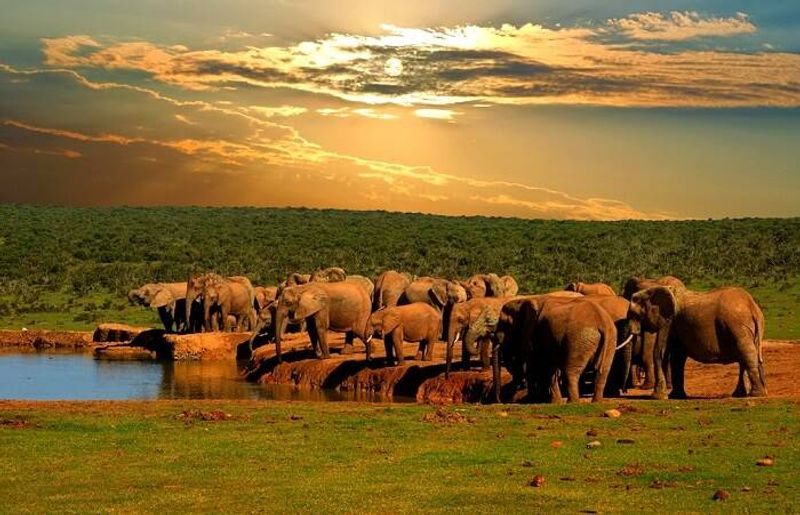
Addo offers something that many East African parks cannot: a self-drive elephant experience that is accessible, affordable and genuinely rewarding. Visitors can explore in their own vehicles, which gives the day a more flexible, personal feel than organized group tours.
The park contains dense thicket in some areas, but its roads, open grassland patches and waterholes create reliable spots to watch elephants emerge, gather and interact. Hot afternoons around the waterholes can be especially productive, with families drinking, splashing and coating themselves in mud while younger elephants play nearby.
The social behavior visible at these sites is one of the reasons Addo consistently draws repeat visitors.
South African National Parks reports that Addo supports more than 600 elephants and provides some of the world’s most spectacular elephant viewing. SANParks maintains current information about accommodation, day-visitor access, self-drive routes and reception services.
The park is located in the Eastern Cape, making it a manageable addition to a broader South Africa itinerary.
Udawalawe National Park, Sri Lanka
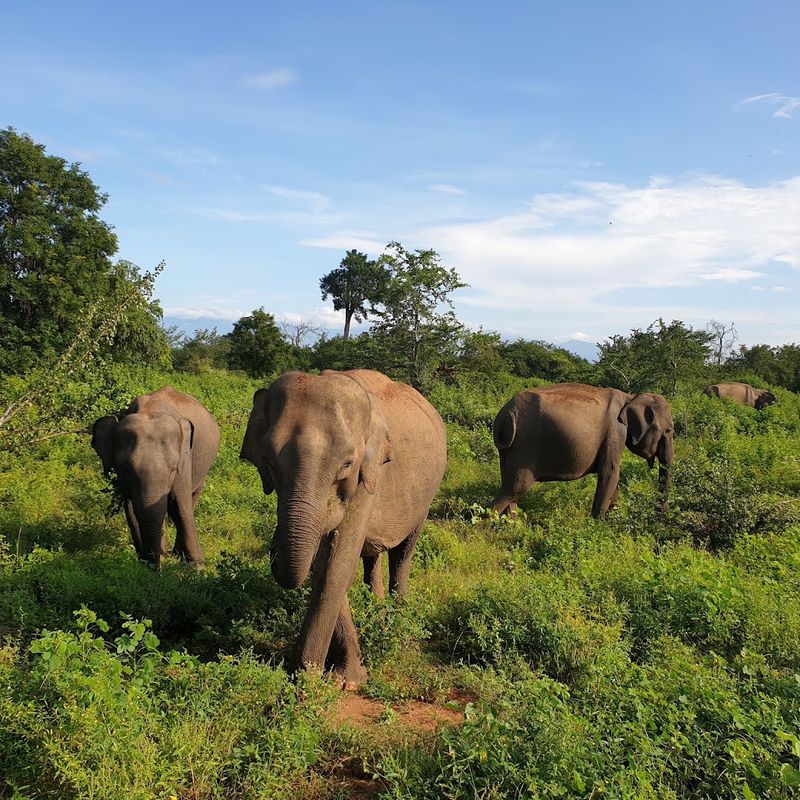
Asian elephants are generally harder to observe in the wild than their African relatives because they tend to favor dense forest. Udawalawe is one of the places that changes that equation.
Built around a major reservoir, the park protects a mix of open grassland, scrub and wetlands that keeps elephants visible for extended periods.
Visitors regularly see them feeding in the grass, walking near the reservoir or gathering beside muddy pools. The open habitat means sightings tend to last longer than brief forest encounters, giving travelers time to watch behavior rather than just confirm a species and move on.
Families with calves are a common sight throughout the year.
Sri Lanka’s official tourism website describes Udawalawe as a leading year-round destination for wild Asian elephant sightings. The Department of Wildlife Conservation lists it among the country’s most visited national parks and provides information about the visitor-permit system.
For anyone traveling to Sri Lanka with elephants on the agenda, this park belongs near the top of the list.
Minneriya National Park, Sri Lanka
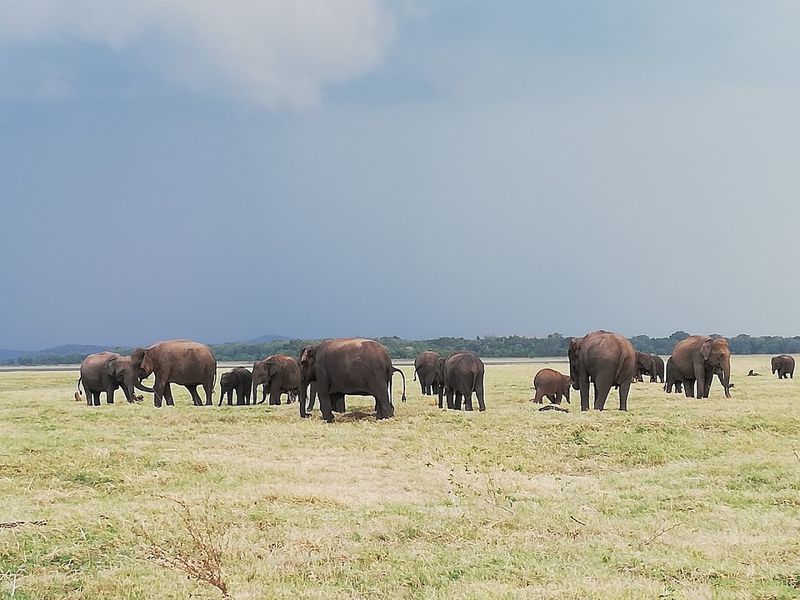
The Elephant Gathering at Minneriya is one of Asia’s most remarkable wildlife events, and it happens because of a straightforward ecological reason. As the Minneriya Tank recedes during the dry season, fresh grass appears along the exposed banks, attracting smaller elephant groups from the surrounding region.
Those groups merge as the dry period deepens, sometimes producing large concentrations of Asian elephants spread across an open lakeside landscape. The combination of water, fresh grassland and forest edge creates striking viewing conditions that feel quite different from typical forest-based elephant encounters elsewhere in Sri Lanka.
The scene has drawn wildlife photographers and naturalists from around the world.
Sri Lanka Tourism notes that May through October is a popular period for the gathering, though its exact timing and location can shift with rainfall and changing water levels. Elephants also move between Minneriya, Kaudulla and nearby protected areas during this period, so flexibility in planning can improve the chances of witnessing the event at its most impressive.
Kaziranga National Park, India
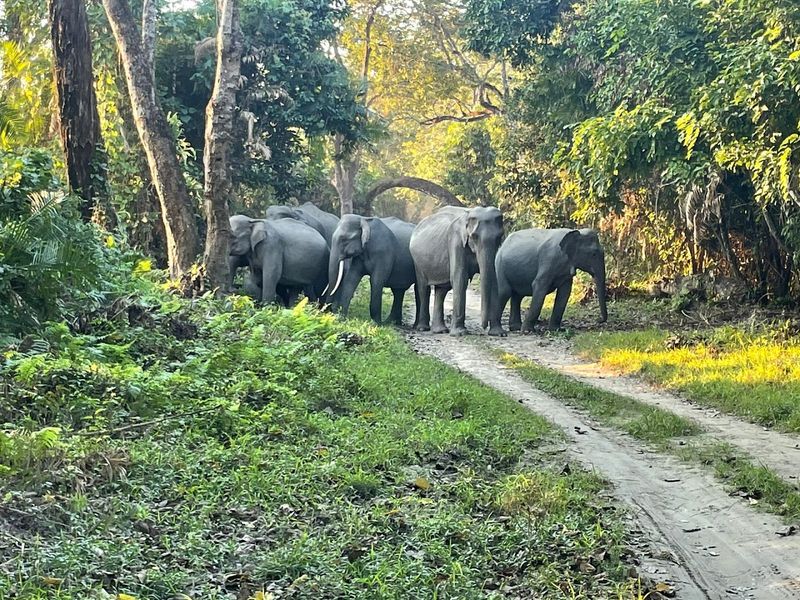
Kaziranga is internationally famous for its one-horned rhinoceroses, but the wild Asian elephants living alongside them deserve equal attention. The park protects Brahmaputra floodplain habitat filled with tall elephant grass, wetlands, marshes and open alluvial ground that supports a genuinely diverse wildlife community.
Jeep safaris travel through several ranges within the park, and elephants may be seen crossing grasslands, feeding near shallow pools or moving through the tall grass that gives the landscape its distinctive layered look. The combination of rhinos, buffalo, swamp deer and elephants in one open floodplain setting is unusual by any global standard.
Kaziranga operates seasonally because monsoon flooding affects road access and visitor safety. The Government of Assam confirms the park is generally open from November through April and documents the presence of elephants alongside rhinos and other large mammals.
Current government pages also provide safari-booking information. Planning around the operating season is essential for anyone making the trip to Assam.
Share this story