Missouri’s small towns offer a mix of history, scenic beauty, and welcoming charm that’s easy to appreciate. From historic river communities and arts destinations to outdoor retreats and towns with fascinating local stories, these places showcase some of the state’s most memorable experiences beyond the big cities.
Whether you’re planning a weekend getaway or a leisurely road trip, these 14 small towns are well worth exploring. Each has its own unique character, making it easy to find a destination that fits your interests.
1. Hermann, Missouri, USA
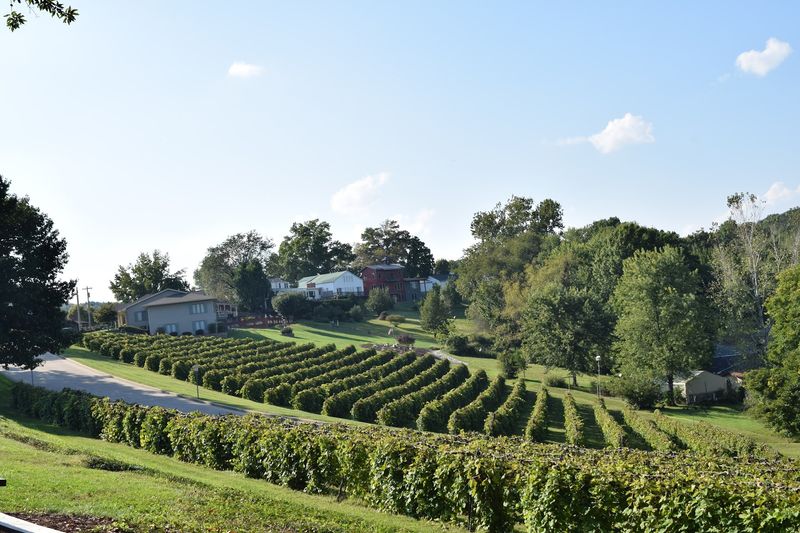
German immigrants who settled Hermann in 1837 had one goal: build a town so authentically German that the old country would feel proud. They succeeded spectacularly.
The five-block historic district, listed on the National Register of Historic Places, is packed with brick buildings that now house wineries, antique shops, and restaurants. Hermann Wurst Haus has earned national attention for its award-winning bratwurst and sausages, while the Historic Hermann Museum, housed in the 1871 German School Building, gives visitors a thorough look at the town’s founding story.
The Katy Trail passes nearby, offering scenic cycling routes along the Missouri River bluffs. Every October, Oktoberfest fills the streets with German music and dancing, drawing visitors from across the region. The Hermann Trolley connects wineries, distilleries, and restaurants, making it easy to cover the town without wearing out your shoes.
2. Ste. Genevieve, Missouri, USA
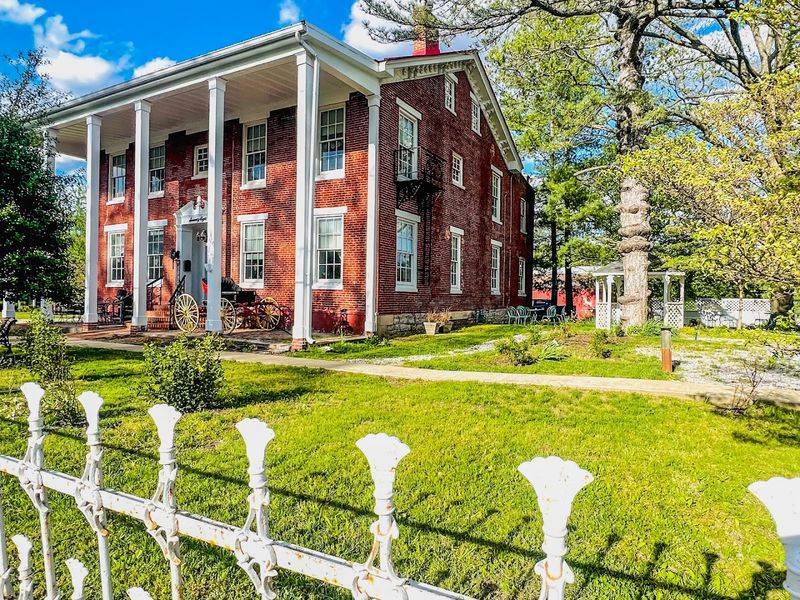
Missouri’s oldest permanent European settlement has been quietly standing since somewhere between 1735 and 1750, which means it was already a well-established community before the United States even existed.
The town’s French colonial architecture is the main draw, particularly its rare “vertical log” homes built with upright hewn timbers. The Louis Bolduc House is the finest example, authentically restored and open for tours. The Felix Valle State Historic Site and the Centre for French Colonial Life round out the historical offerings with exhibits and guided experiences.
Local galleries, boutiques, and antique shops line the historic streets, giving visitors plenty of reasons to linger. The Route du Vin Wine Trail winds through the surrounding Ozark foothills, connecting several area wineries. Annual events like Jour de Fete in August, featuring colonial reenactors and traditional crafts, bring the town’s remarkable history to vivid life.
3. Rocheport, Missouri, USA
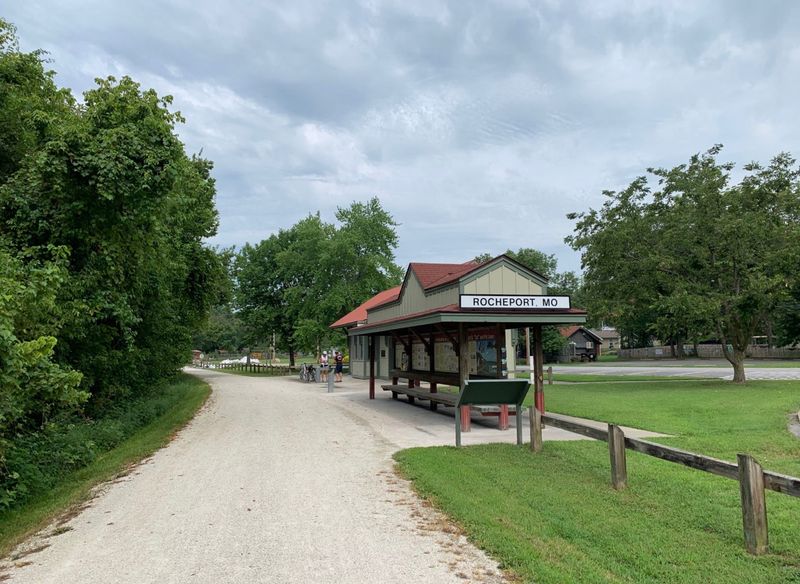
A town of roughly 250 people should not have this much going for it, yet Rocheport consistently delivers for every type of visitor who passes through.
The Katy Trail, a 287-mile recreational rail trail, runs directly through town beneath 200-foot rock bluffs and dense forest canopy. The 240-foot 1892 MKT Tunnel, the only brick and stone tunnel on the entire trail, is one of the most photographed spots in the state. Meriwether Cafe and Bike Shop serves locally sourced meals and rents bikes, making it easy to fuel up before hitting the trail.
Les Bourgeois Vineyards sits on the bluffs overlooking the Missouri River and offers tastings at The Blufftop at Rocheport. Charming bed and breakfasts like Amber House provide comfortable overnight options. Seasonal events like the Fall Colors Festival add another reason to plan a visit around the changing leaves.
4. Arrow Rock, Missouri, USA
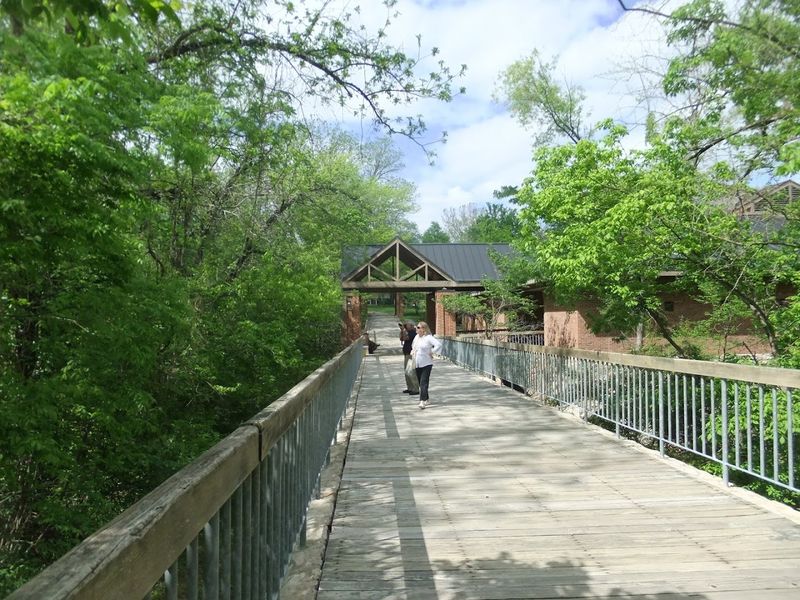
With a population of around 75 people, Arrow Rock may be the smallest National Historic Landmark in the country, but it carries an outsized amount of historical weight.
Named for the flint Native Americans used to make arrowheads, this bluff above the Missouri River was noted by Lewis and Clark and later became a key stop on the Santa Fe Trail. The Friends of Arrow Rock organization maintains several restored historic buildings and offers guided tours that walk visitors through centuries of local history.
The Lyceum Theatre, housed in a former 1872 Gothic Revival church, produces eight professional plays and musicals each season, drawing over 33,000 patrons annually. Dinner at J. Huston Tavern, dating back to 1834 and recognized as the oldest continuously operating restaurant west of the Mississippi River, is a must. The Arrow Rock Heritage Craft Festival each October showcases blacksmithing, basket weaving, and other 19th-century trades.
5. Weston, Missouri, USA
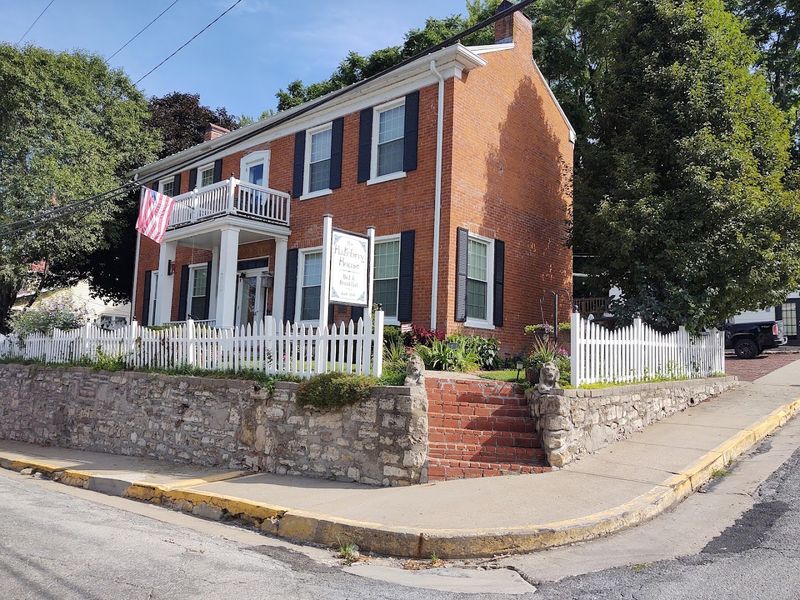
Before Kansas City became the regional powerhouse it is today, Weston was the second-busiest river port in Missouri, serving as a launching point for wagon trains heading west on the Oregon and Santa Fe Trails.
That frontier energy has softened into something more relaxed, but the town’s historic core still impresses. Pirtle Winery operates out of a converted church, while Holladay Distillery, Missouri’s oldest continuously operating distillery, offers tours connecting visitors to the town’s deep roots in American spirits history. The walkable downtown features well-preserved pre-Civil War brick buildings housing independent shops and restaurants.
Weston Bend State Park lies just outside town and offers ten miles of hiking trails, including a paved 2.75-mile loop with scenic Missouri River overlooks. A historic tobacco barn inside the park has been converted into a reservable event shelter. Annual festivals like Apple Fest and Irish Fest keep the community calendar lively year-round.
6. Parkville, Missouri, USA
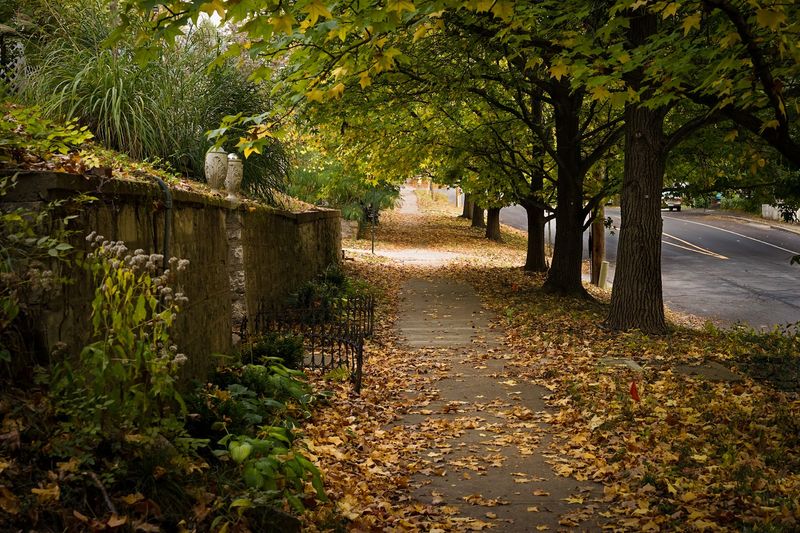
Kansas City gets most of the regional spotlight, but Parkville, just a short drive northwest, has quietly built one of the most appealing small-town downtowns in the entire metro area.
Historic Main Street is lined with art galleries, fashion boutiques, antique stores, and specialty shops like Samsara Home for vintage and modern decor. Cafe des Amis serves French specialties, Prima Facie Bistro offers farm-to-table meals, and Parkville Coffee provides locally roasted options for those who need a caffeine anchor before exploring. Park University, founded in 1875, adds an educational dimension to the town’s character.
English Landing Park, a 68-acre facility beside the Missouri River, features crushed gravel trails suitable for walking, jogging, and casual cycling. Adjacent Platte Landing Park extends the green space further. Community events like Parkville Days and the festive Christmas on the River celebration give visitors a reason to return across different seasons.
7. Kimmswick, Missouri, USA
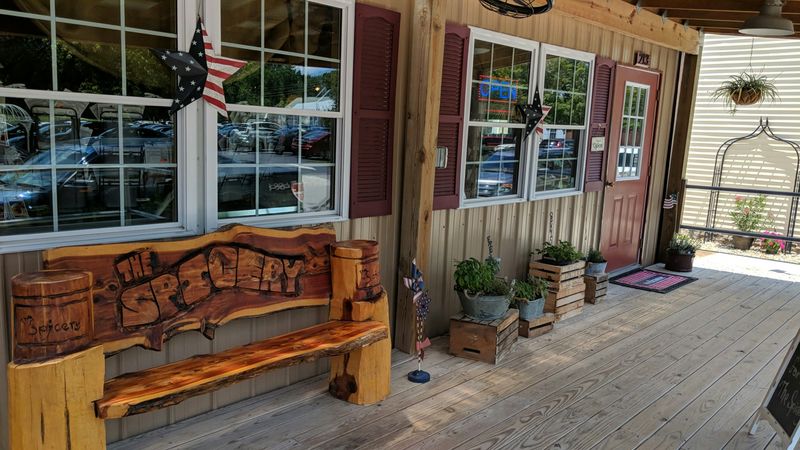
Founded in 1859 by German immigrants along the Mississippi River, Kimmswick spent about a century in relative obscurity before a preservation movement in the 1970s transformed it into one of Missouri’s most visited small towns.
More than 25 shops and restaurants now operate inside meticulously restored historic buildings. The Blue Owl Restaurant and Bakery is nationally recognized for its towering Levee High Apple Pie, a dessert that has appeared on major food programs. LaChance Winery, housed in a circa 1770 log cabin, combines wine tasting with a full restaurant menu and live music on its patio.
The Apple Butter Festival each October is the town’s largest annual event, featuring traditional apple butter made in a wood-fired kettle alongside hundreds of vendors and live entertainment. The Strawberry Festival in June and the Old Fashioned Christmas Festival in December round out a busy events calendar that keeps Kimmswick relevant across every season.
8. Boonville, Missouri, USA
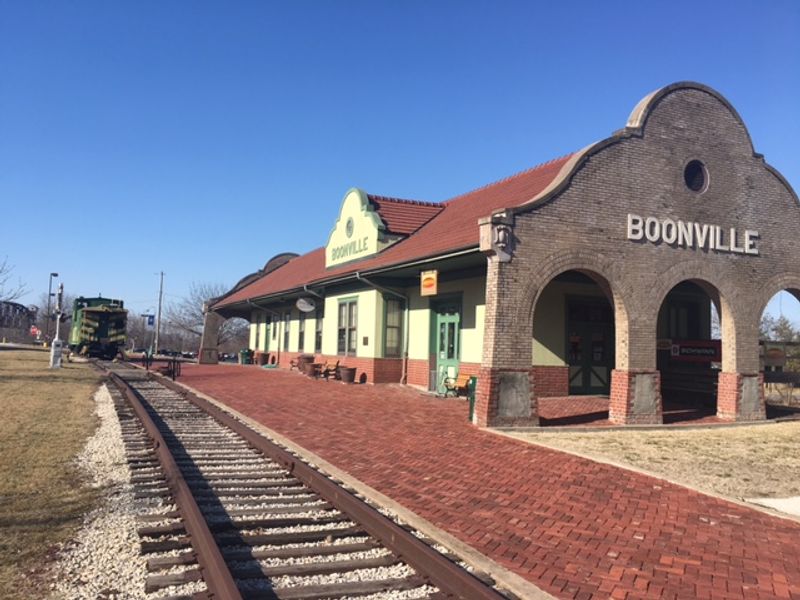
Over 400 buildings in Boonville are listed on the National Register of Historic Places, which makes a self-guided walking tour here feel less like sightseeing and more like flipping through a very well-preserved history book.
The Katy Trail passes directly through town, and the Katy Railroad Bridge, recognized as the longest lift span bridge in the world, gives cyclists and pedestrians a dramatic landmark to pass beneath. Thespian Hall, the oldest theater in continuous operation west of the Alleghenies, hosts the Big Muddy Folk Festival and a steady calendar of performances throughout the year.
Warm Springs Ranch, the headquarters for the Budweiser Clydesdales breeding operation, offers public tours that consistently rank among the most popular attractions in central Missouri. The Mitchell Antique Motorcar Museum showcases Mitchell wagons, bicycles, motorcycles, and automobiles from the 19th and early 20th centuries. For history, trails, and unexpected surprises, Boonville consistently delivers.
9. Eminence, Missouri, USA
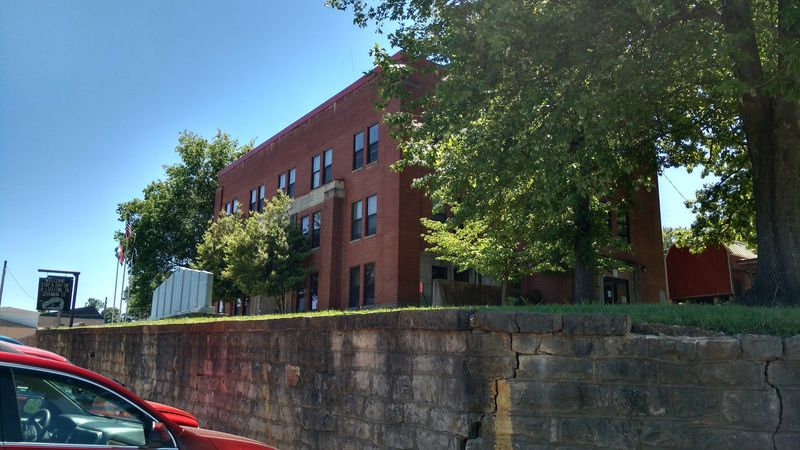
Eminence holds the unofficial title of Trail Riding Capital of Missouri, which should tell you something about the sheer volume of outdoor activity available within a short drive of this small Ozark town.
The Ozark National Scenic Riverways protects 134 miles of the Current and Jacks Fork Rivers, offering canoeing, kayaking, rafting, fishing, and swimming in spring-fed waters that stay clear and cool regardless of the season. Alley Spring, one of Missouri’s largest freshwater springs, features a photogenic historic red mill and a ranger-led cave tour at Round Spring Cave nearby.
Echo Bluff State Park provides comfortable lodging and additional hiking trails for visitors who prefer a base with amenities. Rocky Falls, a popular 40-foot waterfall, draws swimmers and photographers throughout the warmer months. Wildlife enthusiasts have spotted wild horses, elk, and an impressive variety of native birds throughout the surrounding conservation areas and forests.
10. Cuba, Missouri, USA
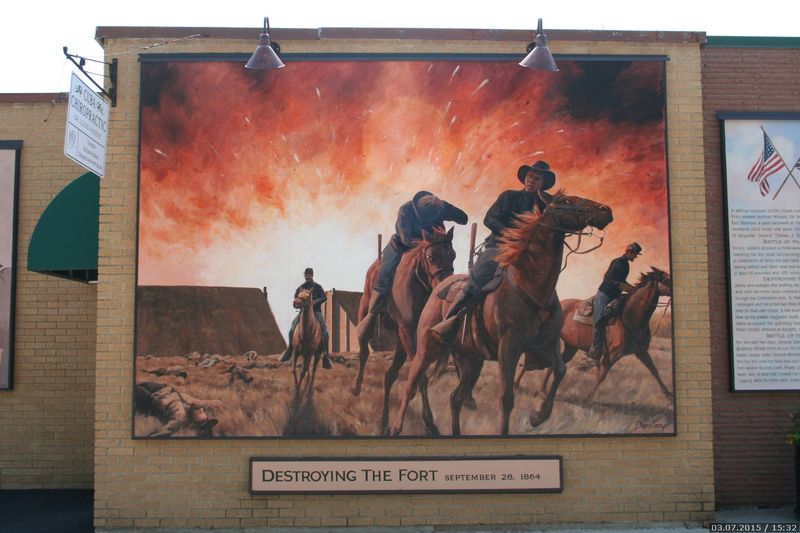
Cuba took a creative approach to attracting visitors: cover the downtown in massive murals and let curious travelers do the rest.
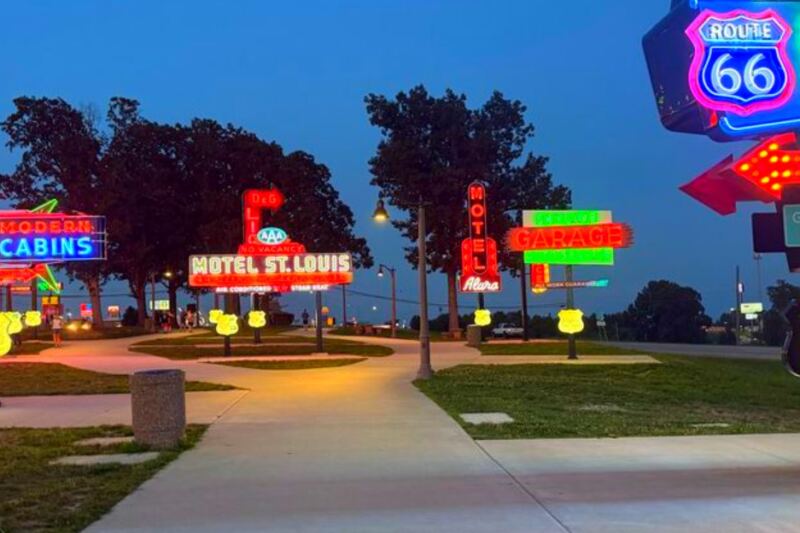
More than a dozen large-scale public artworks depict scenes from local and national history, including visits from Harry S. Truman, Amelia Earhart, and Bette Davis. Maps and guides available at the Cuba Visitor Center help visitors navigate the outdoor gallery efficiently. The Wagon Wheel Motel, the oldest continuously operated motel on Route 66, offers restored Ozark stone cottages with original neon signage, blending genuine history with functional lodging.
The Route 66 Rocker at the Fanning 66 Outpost, once recognized as the world’s largest rocking chair, remains a popular and genuinely quirky photo stop. Missouri Hick Bar-B-Que serves smoked meats that have developed a loyal regional following. Nearby stretches of original Route 66 pavement and access to the Meramec River for fishing and floating round out the experience.
11. Carthage, Missouri, USA
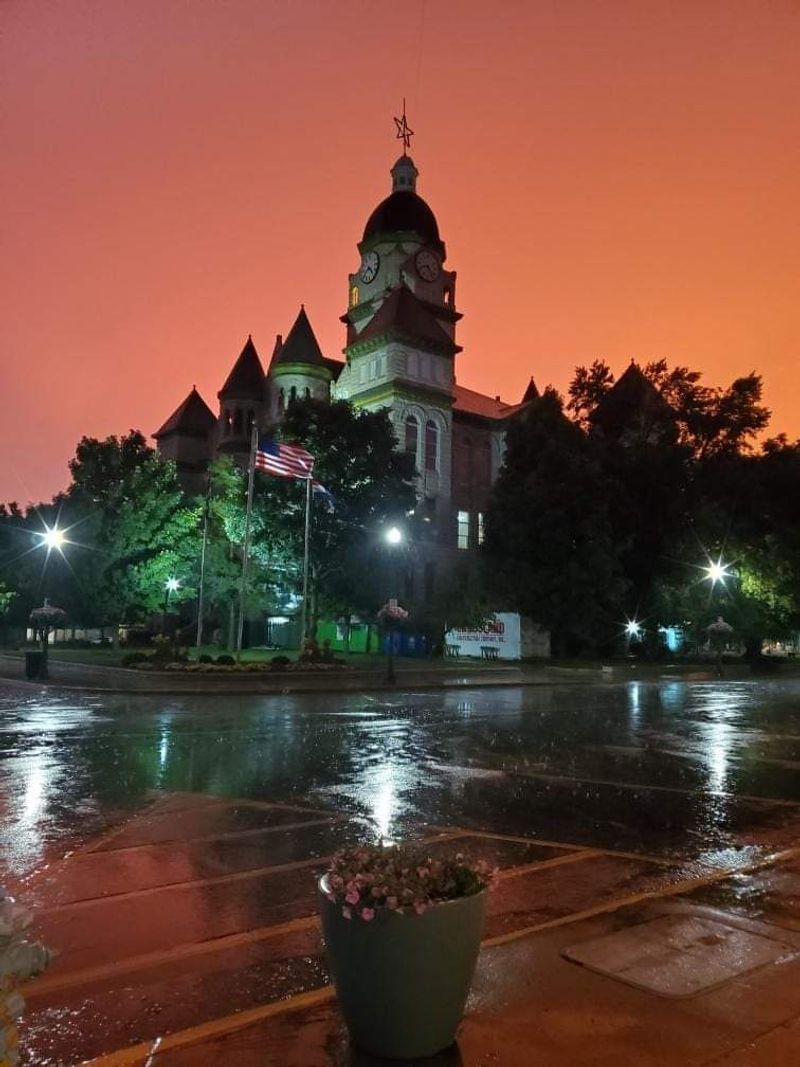
The Jasper County Courthouse in Carthage is the second most photographed building in Missouri, constructed between 1894 and 1895 from locally quarried Carthage marble in a style that genuinely resembles a medieval castle.
Inside, a working 19th-century wrought-iron cage elevator still operates alongside historical displays. The Battle of Carthage Civil War Museum covers the first full-scale land battle of the conflict, with artifacts, a detailed diorama, and large-scale murals. Boots Court Motel, a meticulously restored Route 66 property, and the still-operational Route 66 Drive-In Theatre add a nostalgic layer to the town’s already rich character.
Red Oak II, an open-air art village created by artist Lowell Davis, features relocated and artistically transformed buildings that function as a living creative installation. The Precious Moments Chapel and Gardens draws a devoted following of its own. Antique stores, local boutiques, and the classic 1950s-themed Carthage Deli fill out the historic square with everyday appeal.
12. Lexington, Missouri, USA
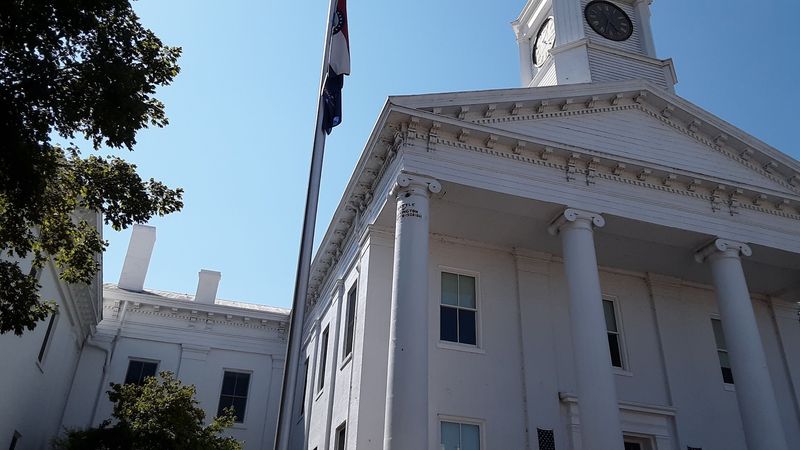
There is a cannonball still lodged in an upper pillar of the Lafayette County Courthouse in Lexington, a permanent and very literal reminder of the Civil War battle that took place here in 1861.
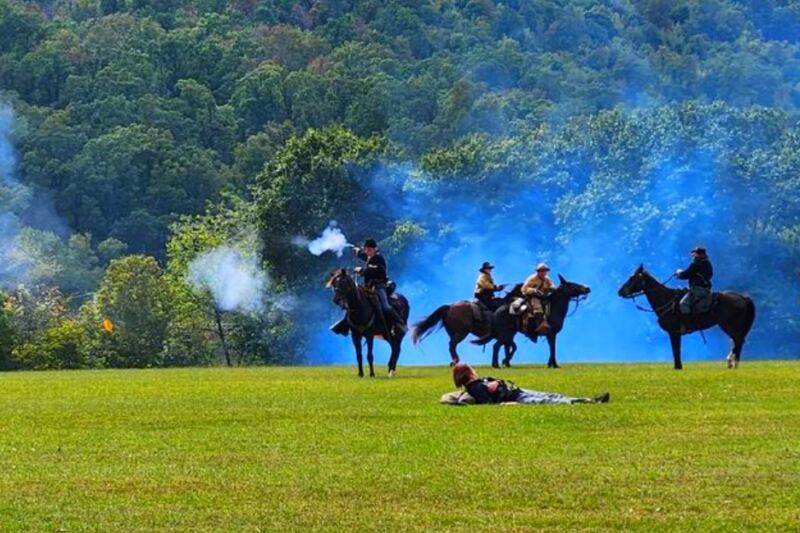
Known as the Battle of the Hemp Bales, the conflict saw bales of hemp used as rolling fortifications in a genuinely unusual military tactic. The Battle of Lexington State Historic Site preserves visible trenches and offers tours of the Anderson House, which served as a field hospital and still bears bullet holes. During the Civil War era, Lexington was actually larger than Kansas City, and its collection of antebellum and Victorian homes reflects that former prosperity.
The Lexington Historical Museum, housed in an 1846 church, covers the Pony Express, steamboat history, and coal mining. Riverfront Park provides Missouri River access for fishing. Four historic districts and a Madonna of the Trail statue add further layers to an already substantial historical record.
13. Marceline, Missouri, USA
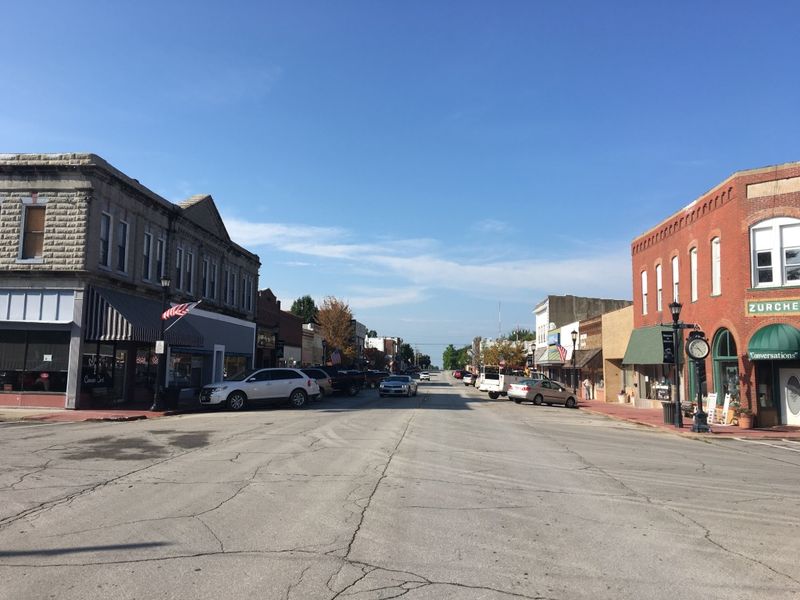
Walt Disney grew up in Marceline from 1905 to 1909, and he credited this small Missouri town so directly with inspiring Disneyland’s Main Street, U.S.A. that the connection is impossible to miss once you start walking around.
The Walt Disney Hometown Museum, housed in the restored Santa Fe Railway depot, holds Disney family artifacts, personal letters, and detailed exhibits on Walt’s early years and his lifelong love of trains. The town’s officially renamed Main Street USA preserves the classic storefronts and walkable layout that shaped his earliest memories of community life.
The Disney Farm Arboretum marks the site where the family once lived, featuring a reconstructed barn decorated with hundreds of Mickey Mouse images. Local shops like Historic Marceline Toy Company and Magnolia Antiques add genuine small-town retail character. The Marceline Carnegie Library, one of the few still operating in Missouri, houses a genealogical collection and rotating local art exhibitions.
14. Blackwater, Missouri, USA
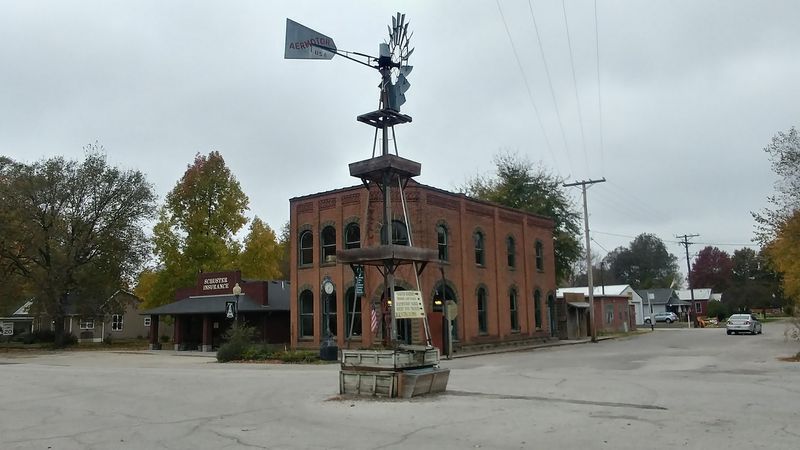
Blackwater was born in 1887 when the Missouri Pacific Railroad needed a division point, and the town that grew up around those tracks has been preserving its railroad-era character ever since.
The entire downtown block is a designated National Register Historic District, and brick-lined sidewalks connect a collection of well-maintained 19th-century buildings that feel genuinely unchanged rather than artificially restored. The Iron Horse Hotel, originally the Frady Hotel from 1889, operates as a functioning lodging option with a documented history that spans well over a century.
The Blackwater Train Depot features a wooden caboose and serves as a rentable event space. Prairie Lawn School, a one-room schoolhouse from the late 1800s, now operates as an antique store. The Mid-Missouri Museum of Independent Telephone Pioneers, housed in a 1907 former bank building, displays vintage telephones and switchboards that offer a surprisingly fascinating look at early communication history.
Share this story