Vietnamese food is one of the most flavorful and exciting cuisines in the world. From steaming bowls of noodle soup to crispy pancakes and fresh spring rolls, every dish tells a story rooted in history, culture, and regional pride.
Whether you are new to Vietnamese cooking or already a fan, there is always something new to discover. Here are 14 must-try Vietnamese dishes that will make your taste buds very happy.
1. Pho
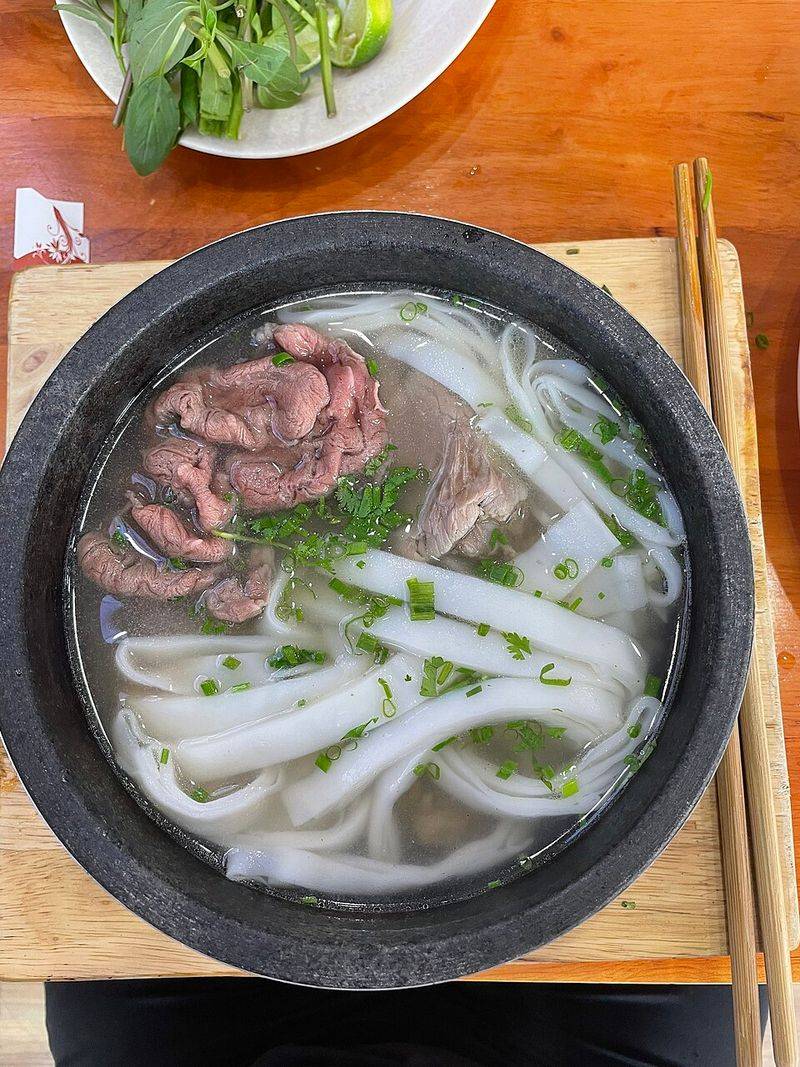
Few dishes in the world carry as much soul as a bowl of pho. The broth is slow-cooked for hours with spices like star anise, cloves, and cinnamon, creating a deep, warming flavor that feels like comfort food at its finest.
It is typically made with beef or chicken.
Pho bò uses beef, while pho gà uses chicken. You get to customize your bowl with fresh bean sprouts, lime, basil, and chili.
This hands-on eating experience makes every serving feel personal and satisfying.
Originally from northern Vietnam in the early 1900s, pho has since spread across the country and the world. Street vendors serve it at dawn, and families enjoy it on weekends.
If you only try one Vietnamese dish in your lifetime, make it this one.
2. Banh Mi
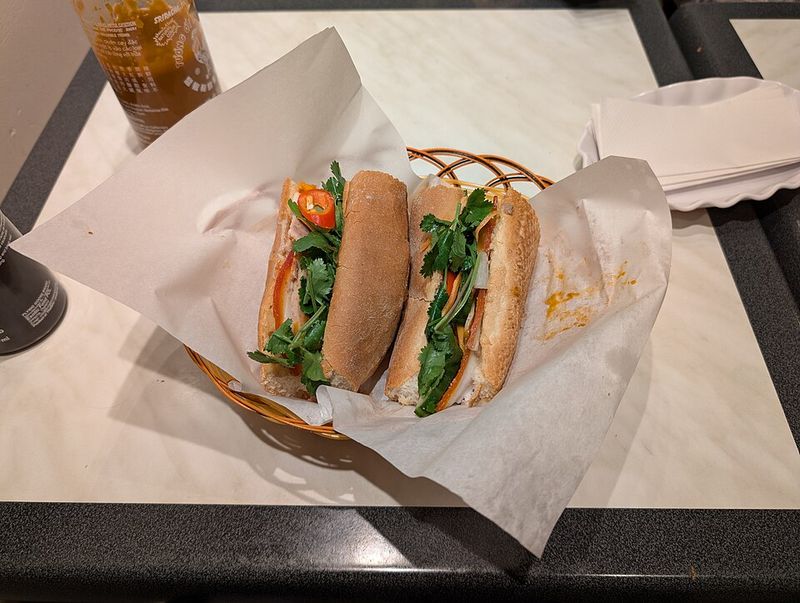
What happens when French colonialism meets Vietnamese street food culture? You get banh mi, one of the greatest sandwiches ever created.
The crispy baguette is a nod to French influence, but the fillings are entirely Vietnamese in spirit.
Inside, you will find layers of pork, pate, pickled daikon and carrot, fresh cilantro, cucumber slices, and fiery chili. Every bite is a mix of crunchy, savory, tangy, and spicy.
It is bold, satisfying, and surprisingly affordable.
Banh mi shops are found on nearly every street corner across Vietnam. The sandwich is also hugely popular in Vietnamese communities around the world.
Food historians often highlight it as a perfect example of culinary fusion done right. Whether eaten for breakfast or lunch, banh mi is the kind of food that makes you stop mid-bite just to appreciate how good it is.
3. Bun Cha
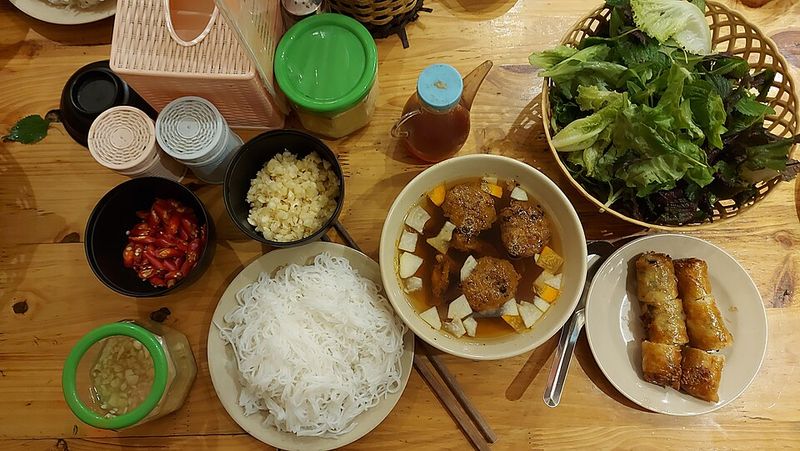
Bun cha became internationally famous after former U.S. President Barack Obama shared this dish with celebrity chef Anthony Bourdain in Hanoi back in 2016.
That moment put the world’s spotlight on a dish that locals had been enjoying for generations.
The meal consists of grilled pork patties and sliced pork belly served in a bowl of warm, tangy dipping broth made from fish sauce, vinegar, sugar, and garlic. You dip your rice vermicelli noodles and fresh herbs right into the broth before eating.
It is a Hanoi specialty, and purists will tell you the best versions are only found in the city. The smoky aroma of the pork grilling over charcoal draws people in from the street.
Bun cha is casual, communal, and deeply satisfying in the way only true street food can be.
4. Goi Cuon
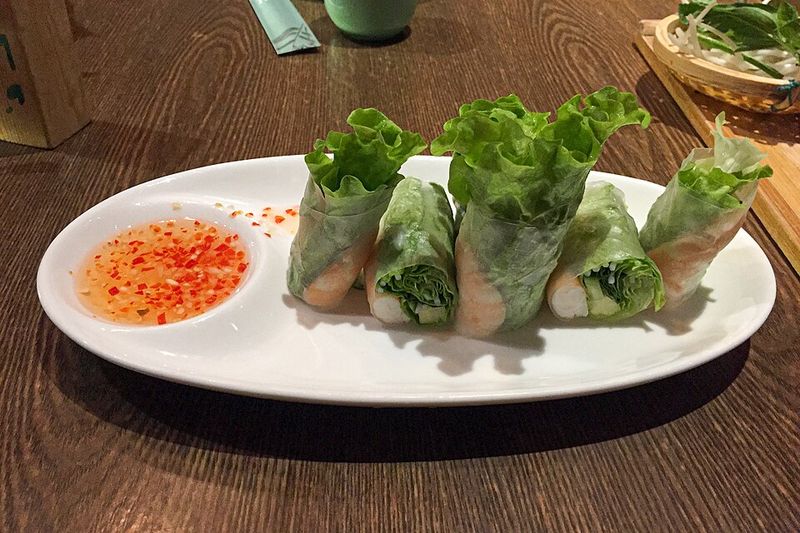
Goi cuon, or fresh spring rolls, are proof that healthy food can still be exciting. Unlike fried spring rolls, these are wrapped in soft rice paper and served at room temperature, making them light, refreshing, and perfect for warm days.
Each roll is packed with shrimp, pork, rice vermicelli, crisp lettuce, and fragrant herbs like mint. The peanut or hoisin dipping sauce adds a rich, nutty contrast that ties everything together beautifully.
Rolling them yourself at the table is part of the fun.
Goi cuon is popular across Vietnam and frequently appears at family gatherings, celebrations, and casual meals alike. Nutritionists often point to it as one of the healthiest options in Vietnamese cuisine.
The clean flavors and chewy texture of the rice paper make it appealing to kids and adults. It is simple, fresh, and genuinely delicious.
5. Bun Bo Hue
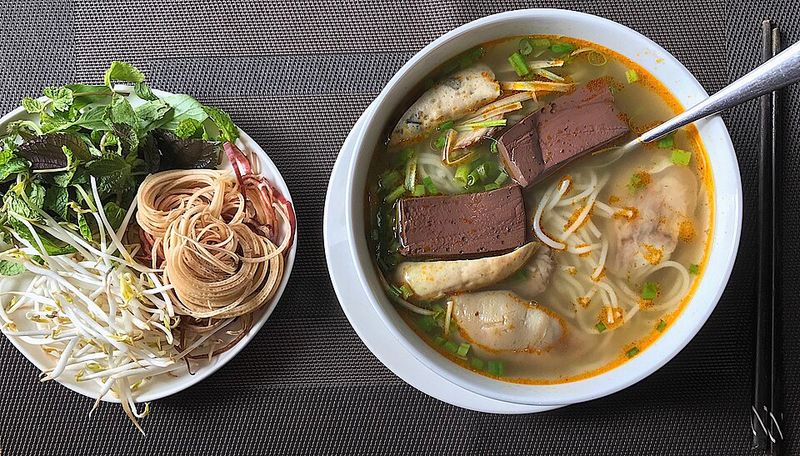
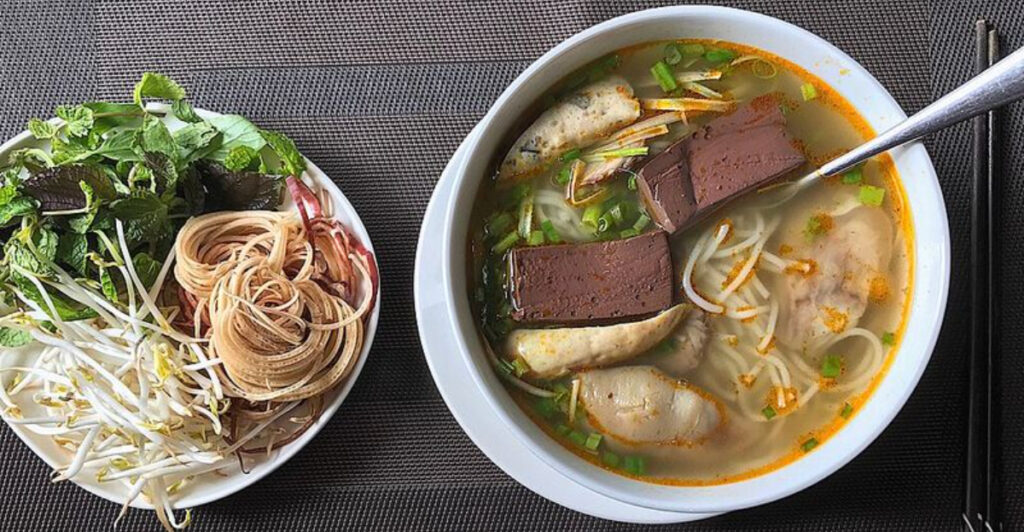
Bun bo Hue is the spicier, bolder cousin of pho, and it deserves far more recognition than it typically gets. Originating from the ancient imperial city of Hue in central Vietnam, this noodle soup carries a depth of flavor that is hard to match.
The broth is simmered with lemongrass, shrimp paste, and chili, giving it a complex, aromatic punch. Thick round noodles replace the flat rice noodles of pho, and the toppings often include beef shank, pork knuckle, and sometimes congealed pork blood.
It is a dish for the adventurous eater.
Locals in Hue are fiercely proud of this soup and insist the authentic version can only be made with water from the region. Whether or not that is true, the dish is extraordinary.
Topped with fresh herbs and a squeeze of lime, bun bo Hue is a bowl full of bold, regional character.
6. Com Tam
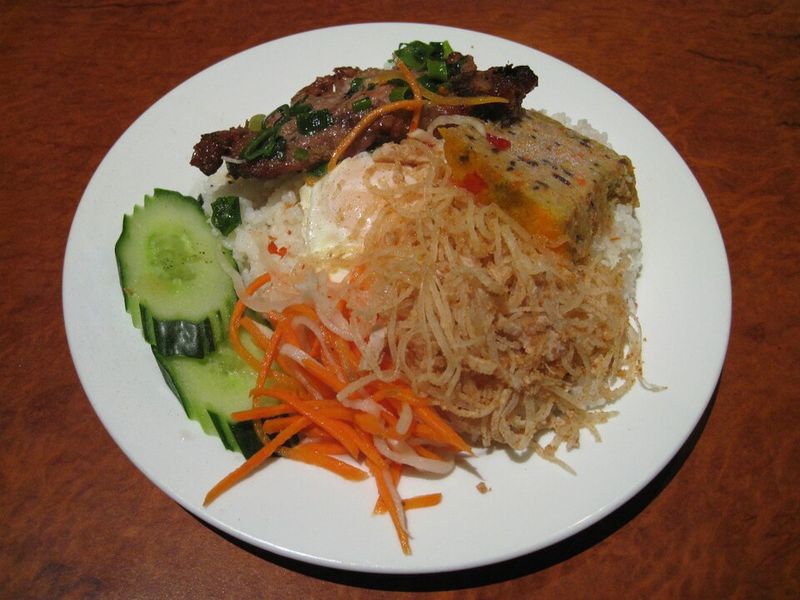
Com tam is the heartbeat of Ho Chi Minh City’s street food scene. The name means “broken rice,” referring to the fractured rice grains that were once considered lower quality but became a beloved staple among working-class families in southern Vietnam.
A typical plate comes loaded with a chargrilled pork chop, a sunny-side-up fried egg, shredded pork skin, pickled vegetables, and a drizzle of fish sauce. The combination of textures and flavors is deeply satisfying and filling without being heavy.
Today, com tam is served everywhere from humble roadside stalls to sit-down restaurants, and it is enjoyed at any hour of the day. Many locals eat it for breakfast.
The dish reflects the resourceful spirit of Vietnamese cooking, where nothing goes to waste and simple ingredients are transformed into something extraordinary. It is honest, hearty food at its very best.
7. Cao Lau
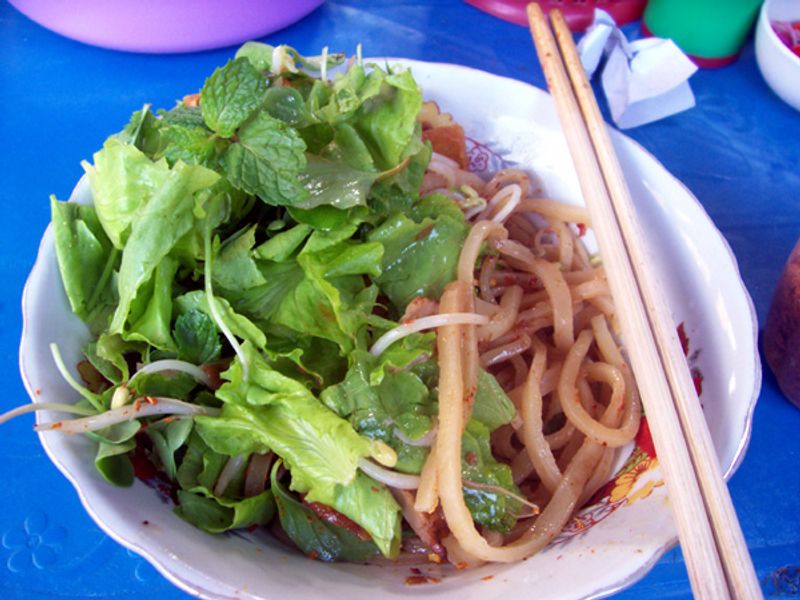
Cao lau is one of the most mysterious dishes in all of Vietnamese cuisine. Chefs in Hoi An claim the authentic version can only be made using water drawn from a specific ancient well in the city, which gives the noodles their signature texture and color.
The thick, chewy noodles are served with slices of roasted pork, crispy rice crackers, fresh greens, and just a small splash of savory broth. It is not quite a soup and not quite a dry noodle dish, sitting in its own unique category.
Cao lau is deeply tied to Hoi An’s identity and history, influenced by Japanese, Chinese, and Vietnamese culinary traditions. Travelers who visit the ancient town often name it as the most memorable thing they ate.
The dish is rustic yet refined, and every element on the plate has a purpose. Trying cao lau in Hoi An is a genuine food experience.
8. Banh Xeo
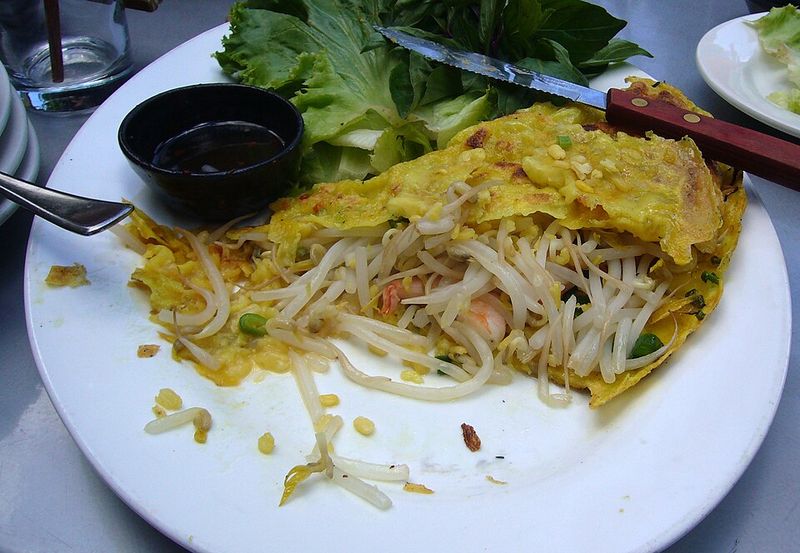
The name banh xeo literally means “sizzling cake,” named after the loud, satisfying sound the rice batter makes when it hits the hot pan. That sizzle is a promise of something delicious about to happen.
This dish is fun to eat and even more fun to watch being made.
The paper-thin, turmeric-yellow crepe is packed with shrimp, sliced pork, and crunchy bean sprouts. You tear off pieces, wrap them in lettuce or rice paper with fresh herbs, and dip the whole bundle into a tangy nuoc cham sauce.
Every bite is crunchy, fresh, and packed with flavor.
Banh xeo is popular across Vietnam, though recipes vary by region. Southern versions tend to be larger and crispier, while central versions are smaller and more delicate.
Street food vendors often cook them to order over high heat, and the experience of watching and eating is equally memorable.
9. Cha Ca La Vong
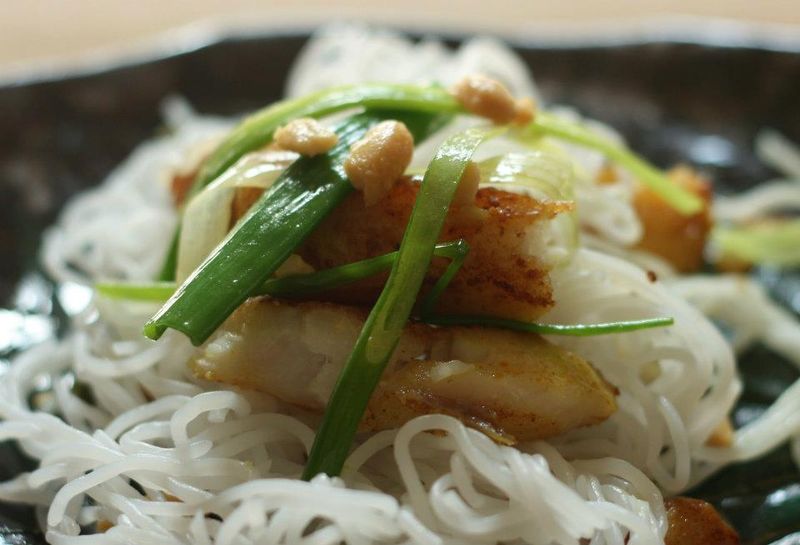
There is a restaurant in Hanoi so famous for one single dish that the entire street it sits on was renamed after it. Cha Ca La Vong has been served at the same address since the 1870s, making it one of the oldest restaurants in Vietnam still operating today.
The dish features firm white fish, usually catfish, marinated in turmeric and galangal, then cooked tableside in a sizzling pan with generous amounts of fresh dill and scallions. The fragrant, golden fish is served with rice vermicelli, roasted peanuts, and shrimp paste.
The combination of turmeric’s earthy warmth, the brightness of dill, and the richness of peanuts is unlike anything else in Vietnamese cuisine. Eating it feels like participating in history.
Food writers and chefs from around the world have made pilgrimages to Hanoi specifically for this dish. It is iconic, aromatic, and absolutely unforgettable.
10. Bun Rieu
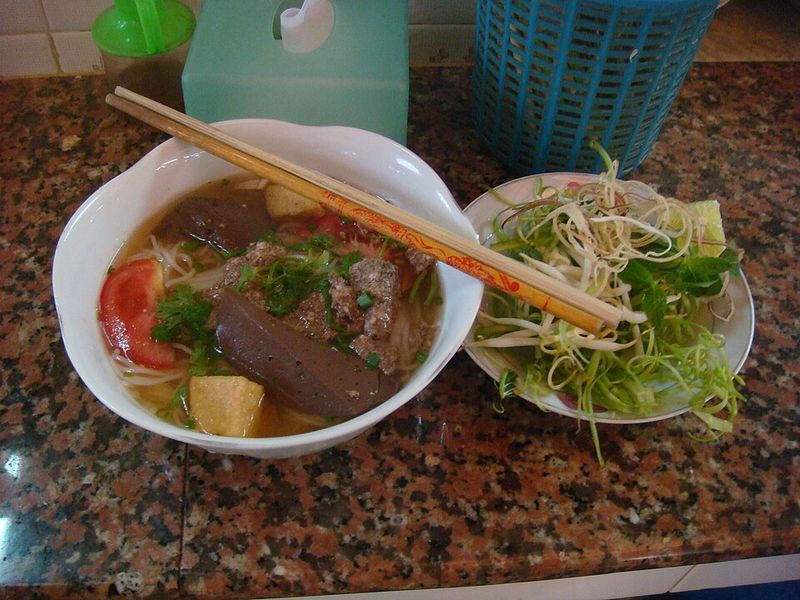
Bun rieu might look like a simple tomato noodle soup at first glance, but one sip of the broth reveals layers of flavor you did not expect. The base is made from freshwater crab paste blended with tomatoes, creating a tangy, slightly sweet broth that is both light and deeply savory.
Traditional versions include soft tofu, fried tofu puffs, and sometimes shrimp or pork ribs. A small spoonful of shrimp paste stirred in adds a funky, salty depth that elevates the whole bowl.
Fresh herbs like perilla and water spinach are added on top.
Bun rieu is a popular breakfast dish in northern Vietnam, though it is enjoyed throughout the country at any time of day. It is the kind of soup that feels nourishing and warming without being heavy.
For anyone curious about Vietnamese cooking beyond pho and banh mi, bun rieu is the perfect next step.
11. Hu Tieu
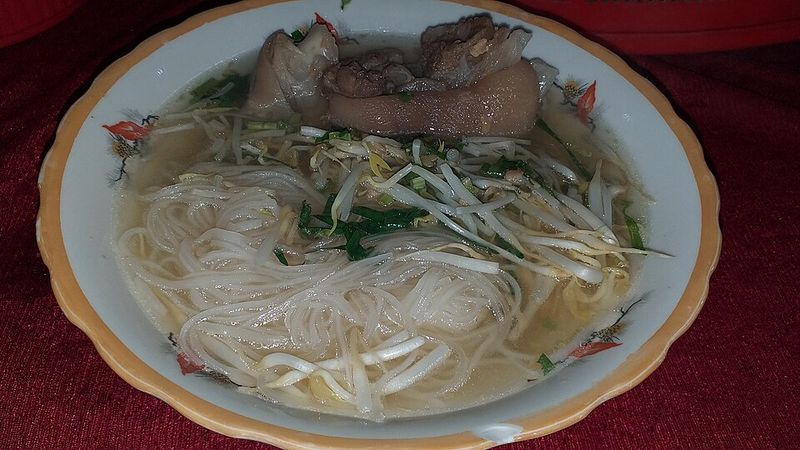
Hu tieu is the south’s answer to pho, and it has built a devoted following across Vietnam and among overseas Vietnamese communities worldwide. The dish has roots in Chinese Teochew cuisine, brought to southern Vietnam by immigrants centuries ago, and it has since evolved into something uniquely its own.
The noodle soup can be served with a clear, light pork broth or a richer, more complex version. Toppings typically include sliced pork, shrimp, quail eggs, and fried shallots.
You can even order it dry, with broth served on the side for dipping.
What makes hu tieu special is its flexibility. Vendors across the Mekong Delta and Ho Chi Minh City each have their own version, and no two bowls taste exactly the same.
The dry version, called hu tieu kho, is especially popular with younger diners. It is a dish that rewards exploration and repeat visits.
12. Mi Quang
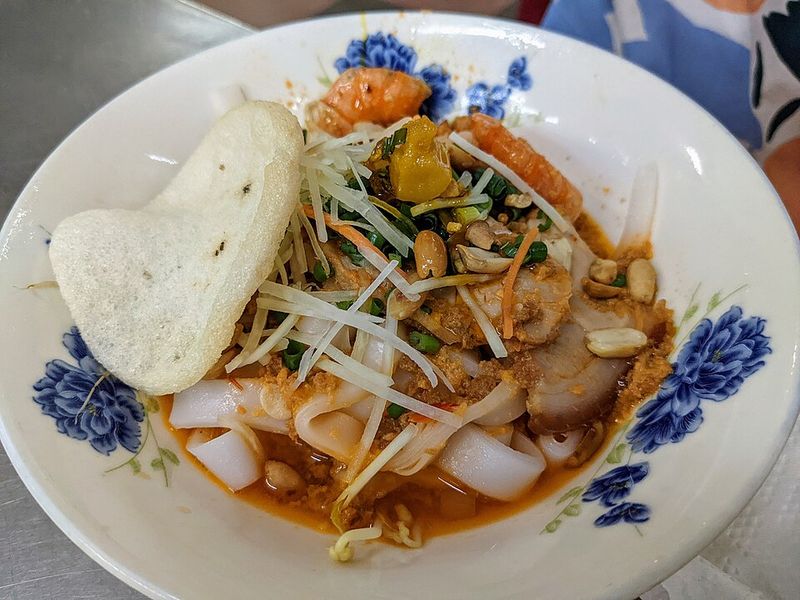
Mi quang is a celebration of color and texture on a single plate. The wide, turmeric-stained noodles glow a vivid yellow-orange, and the toppings are piled high to create something that looks almost too good to eat.
Almost.
Originating from Quang Nam province in central Vietnam, this dish is served with just enough broth to coat the noodles rather than fully submerge them. Toppings include shrimp, pork, herbs, roasted peanuts, and crispy sesame rice crackers that shatter pleasantly with each bite.
The crackers are not optional. Locals will tell you they are the soul of the dish, adding crunch and a nutty flavor that ties everything together.
Mi quang is filling, vibrant, and satisfying in a way that is hard to describe until you try it yourself. Central Vietnamese cuisine is often overshadowed by dishes from Hanoi and Saigon, but mi quang proves it deserves far more attention.
13. Bo Kho
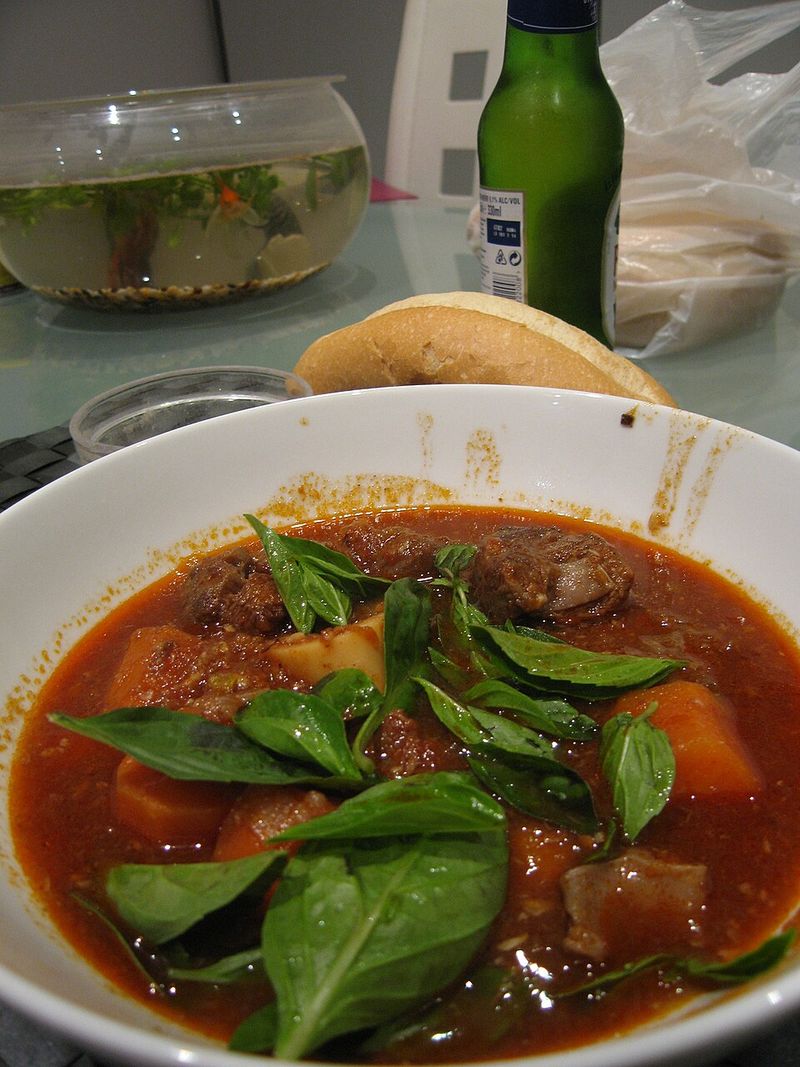
On a cool morning in Vietnam, there are few things more comforting than a bowl of bo kho. This Vietnamese beef stew is rich, fragrant, and deeply warming, with a broth that turns a deep orange-red from tomato paste, annatto seeds, and aromatic spices.
Beef chunks are slowly braised with lemongrass, star anise, cinnamon, and carrots until the meat becomes fall-apart tender. The result is a thick, velvety stew that is served with a crusty baguette for dipping, or sometimes with egg noodles or rice.
Bo kho reflects the French influence on Vietnamese cuisine, particularly in the use of bread as a companion to stew. It is a popular breakfast dish in southern Vietnam, often sold from large steaming pots at early-morning street stalls.
The aroma alone is enough to pull you in from the sidewalk. Bo kho is slow food done the Vietnamese way.
14. Banh Cuon
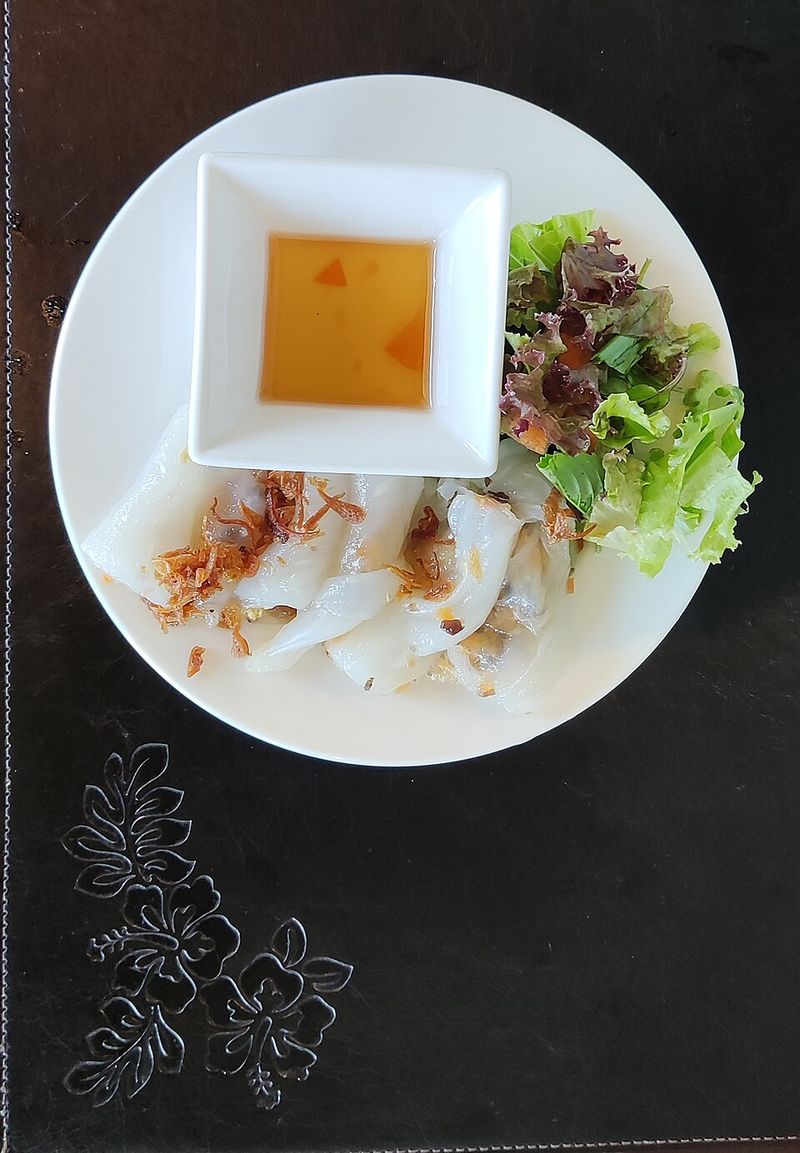
Banh cuon is one of those dishes that looks simple but requires real skill to make. The rice rolls are steamed in paper-thin sheets over boiling water, then quickly filled and folded by hand.
Watching an experienced cook make them is almost like watching a performance.
Inside each delicate roll is a savory mixture of minced pork and wood ear mushrooms, seasoned lightly so the subtle flavor of the rice wrapper still shines through. Fried shallots sprinkled on top add a golden crunch, and the dish is served with a clear, slightly sweet fish sauce for dipping.
Banh cuon is a traditional breakfast food in northern Vietnam, especially in Hanoi, where specialty shops have been perfecting the recipe for decades. The texture is silky and soft, almost melting on the tongue.
It is a gentle, understated dish that earns deep appreciation from anyone who takes the time to try it.
Share this story