Some of the best meals in Asia are not served in fancy restaurants. They are cooked over open flames, stirred in steaming pots, and handed to you on a paper plate.
Food markets and street food areas show how local people really eat, and they often cost very little. Here are fifteen places worth adding to your travel list.
1. Jalan Alor Food Street, Malaysia
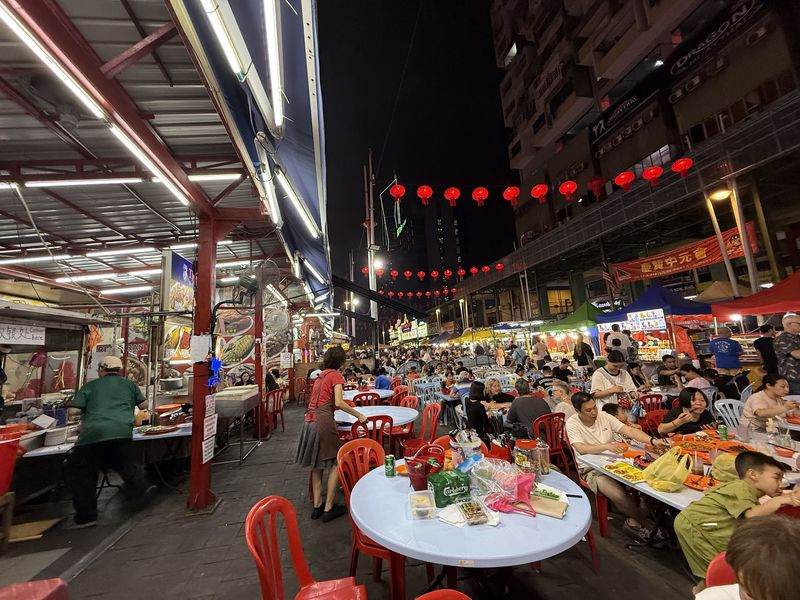
By sunset, the smoky smell of grilled chicken wings drifts down Jalan Alor and pulls hungry people in from every direction. This street in Kuala Lumpur turns into an open-air dining room each night, with plastic stools, bright lights, and vendors calling out their specials.
Many visitors come for satay, grilled stingray, and noodle dishes cooked in blazing woks. Char kway teow, a smoky stir-fried noodle plate, is a local favorite.
Sweet durian is also sold nearby for the brave.
Prices are fair, but menus are not always posted, so ask before you order. Arrive around 6 p.m. to find a table without a long wait.
Go with friends so you can share several dishes and taste more of the street. Bring cash, since some stalls do not take cards, and wear light clothing because the evening air stays warm and sticky.
2. Yaowarat Chinatown, Thailand
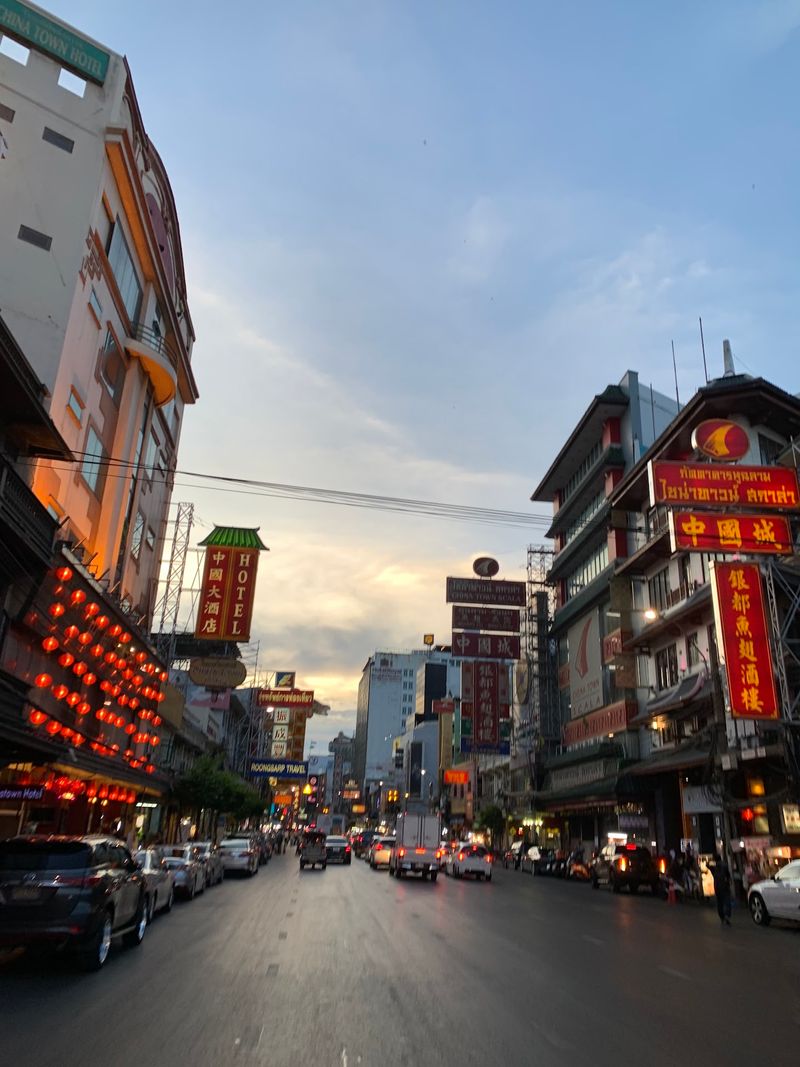
Neon signs glow in gold and red as Bangkok’s Chinatown wakes up after dark. Yaowarat Road is known as one of the city’s top places for street food, and the energy feels like a street party.
Stalls serve crispy oyster omelets, roasted chestnuts, shark fin style soups, and bowls of thick noodles. Dessert fans can look for mango with sticky rice or warm sesame dumplings in ginger syrup.
Many vendors have cooked the same dishes for decades.
Fun fact: Chinese traders settled here in the late 1700s, and their recipes shaped Thai cooking. To enjoy it fully, come hungry and walk the whole street before choosing.
Lines often signal the best stalls. Watch your step on crowded sidewalks, and carry small bills so paying is quick.
Go on a weekday evening if you prefer smaller crowds.
3. Gwangjang Market, South Korea
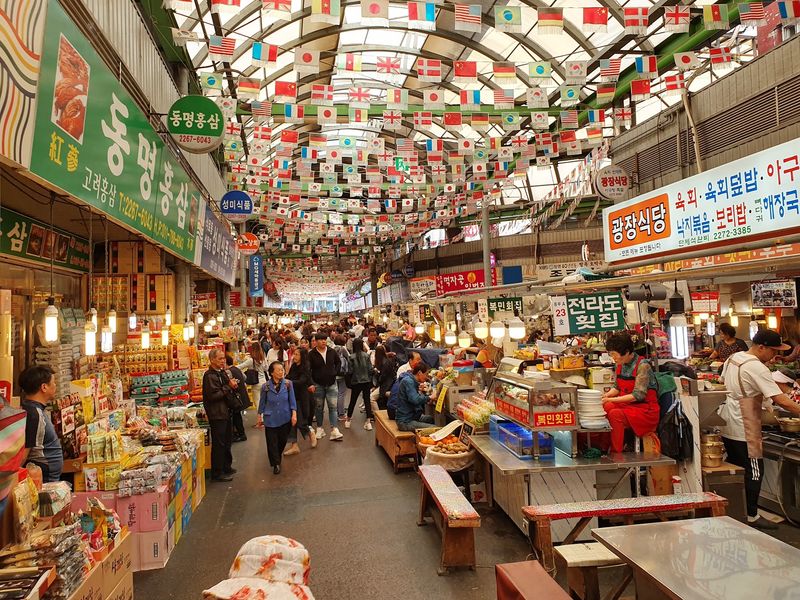
Picture a grandmother flipping golden pancakes on a hot griddle while a line of customers waits patiently. That is everyday life at Gwangjang Market in Seoul, which opened in 1905 and is one of Korea’s oldest traditional markets.
The star dish is bindaetteok, a crunchy pancake made from ground mung beans. Other favorites include mayak kimbap, tiny rice rolls dipped in mustard sauce, and spicy tteokbokki rice cakes.
Some visitors also try yukhoe, a seasoned raw beef dish.
Seating is often shared at long counters, so be ready to squeeze in beside new friends. Point at what looks good if you cannot read the menu.
Late morning and mid afternoon are usually calmer than lunch hour. The aisles are narrow, so travel light and keep your bag close.
4. Shilin Night Market, Taiwan
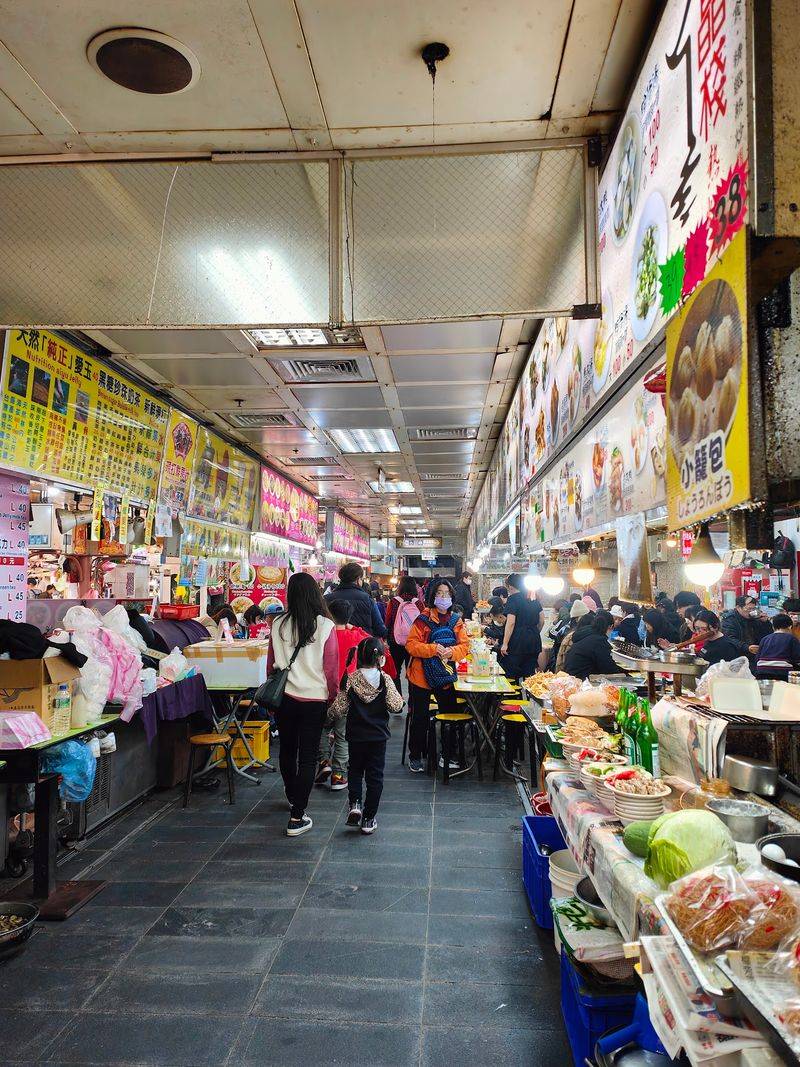
Taipei’s biggest night market feels like a maze built for snacking. Shilin Night Market has hundreds of stalls, and the best plan is to wander until something smells too good to skip.
The giant fried chicken cutlet, as big as a human face, is a crowd favorite. Oyster omelets, grilled squid, and sausages wrapped in sticky rice sausage buns are also popular.
Bubble tea, which was invented in Taiwan, makes a sweet finish.
Many of the food stalls sit in an underground hall, while games and shopping fill the streets above. Go on a weekday if you want more elbow room, since weekends get packed.
Try small portions at each stop so you can sample more. Stinky tofu has a strong smell, but many people say the taste is milder than expected.
5. Dong Xuan Market, Vietnam
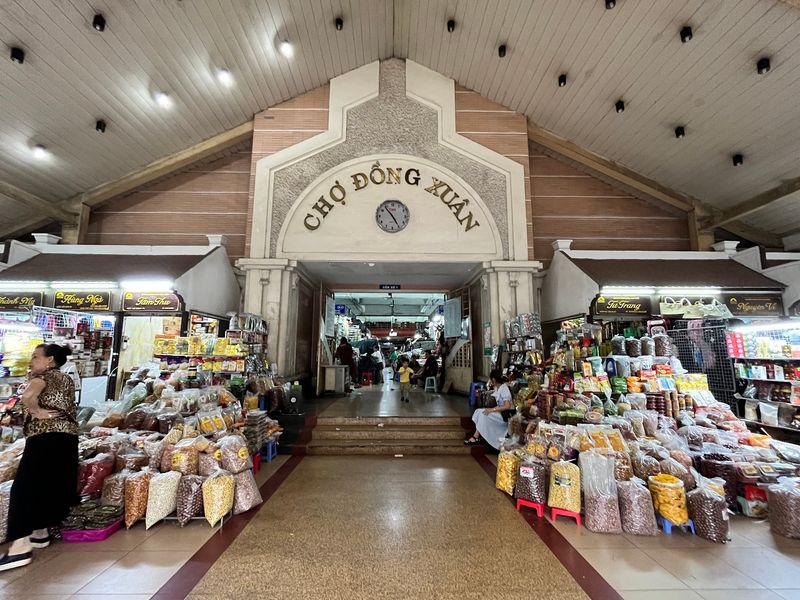
Hanoi’s largest covered market is a place where locals shop for everything from fabric to fresh herbs. Dong Xuan Market sits in the Old Quarter, and its food stalls on the upper and ground floors give visitors a real taste of northern Vietnam.
Look for bowls of bun cha, which pairs grilled pork with rice noodles and a tangy dipping sauce. Banh cuon, thin steamed rice rolls, and sticky rice with toppings are common breakfast picks.
Fresh fruit stands add a juicy break.
The market was first built by the French in 1889 and rebuilt after a fire in 1994. Bargaining is normal for goods but not for plated food.
Visit in the morning when produce is freshest and the air is cooler. Wear comfortable shoes, since the halls are large and often crowded.
6. Nishiki Market, Japan
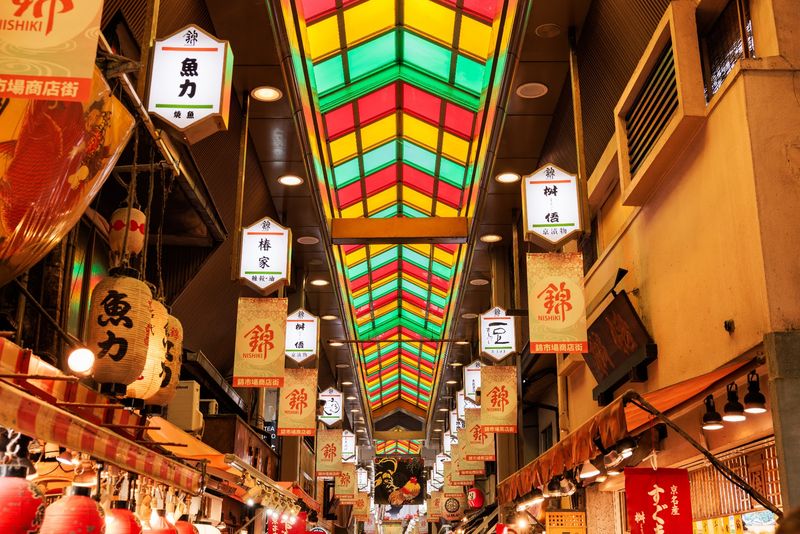
Locals call it Kyoto’s Kitchen, and one stroll through the covered lanes shows why. Nishiki Market stretches about five blocks, packed with narrow shops that have fed the city for centuries.
Fresh tofu doughnuts, rolled egg omelets called tamagoyaki, and skewers of grilled seafood are easy to eat on the go. Many shops sell colorful Kyoto pickles and sharp kitchen knives as well.
Sample sizes are often free or very cheap.
Etiquette matters here. Many vendors ask visitors not to eat while walking, so finish your snack near the stall.
Arrive before noon, because some shops close in the late afternoon. Keep a small bag for souvenirs like tea or dried fish snacks.
Spring and autumn bring pleasant weather for browsing the lanes.
7. Maxwell Food Centre, Singapore
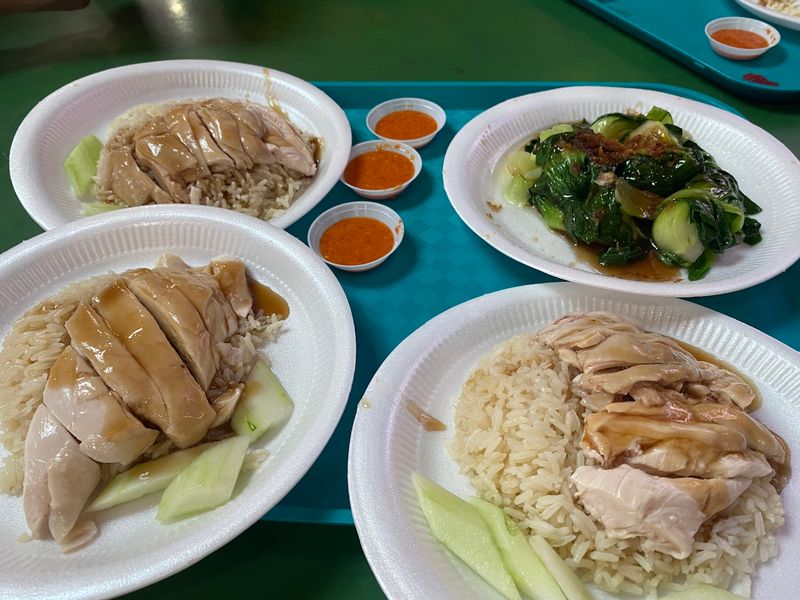
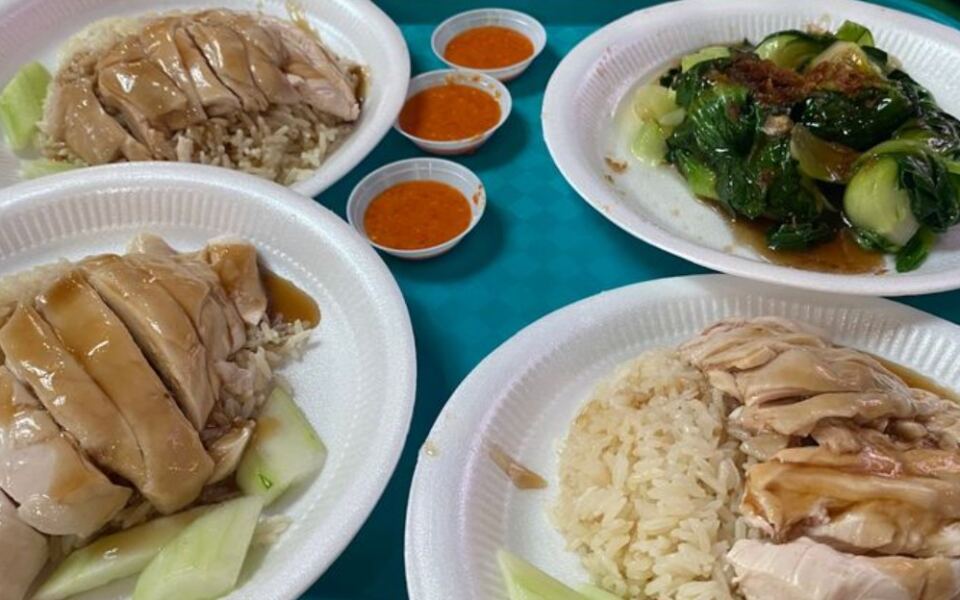
A line of people stretches in front of a small counter, and everyone is waiting for the same dish. At Maxwell Food Centre in Singapore, chicken rice is the headline act, served with fragrant rice and silky poached chicken.
The hall holds over a hundred stalls selling fish porridge, carrot cake, satay, and cold desserts. Singapore’s hawker culture was added to the UNESCO list of intangible cultural heritage in 2020, which shows how much it matters to the country.
Go for an early lunch to beat the noon rush. Seats are scarce, so locals place a packet of tissues on a table to reserve it, a habit called chope.
Pay in cash when possible, and return trays if asked. The prices are low enough to try several dishes in one visit.
8. Petaling Street Market, Malaysia
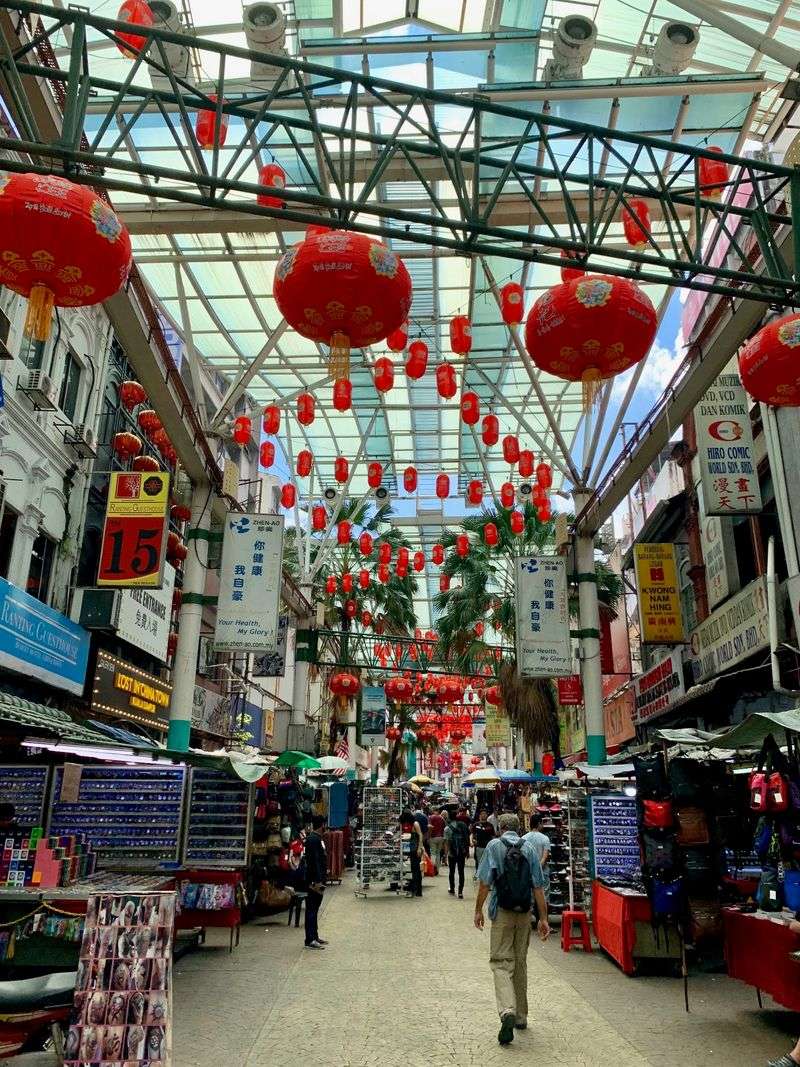
Under a long green roof in the heart of Kuala Lumpur, the clatter of woks mixes with shoppers haggling over bargains. Petaling Street is the city’s Chinatown, and it has been a trading hub since the 1800s.
Food lovers can hunt for Hokkien mee, a dark and savory noodle dish, along with claypot chicken rice and sweet cendol, a shaved ice treat with green jelly. Fresh sugarcane juice is sold in plastic bags to cool you off.
Many stalls also sell watches, clothing, and souvenirs, so set a spending limit before you go. Bargaining is expected for goods.
Visit in the late afternoon when the heat fades and food stalls begin to open. Keep your wallet in a front pocket, as crowds can be thick.
9. Temple Street Night Market, Hong Kong
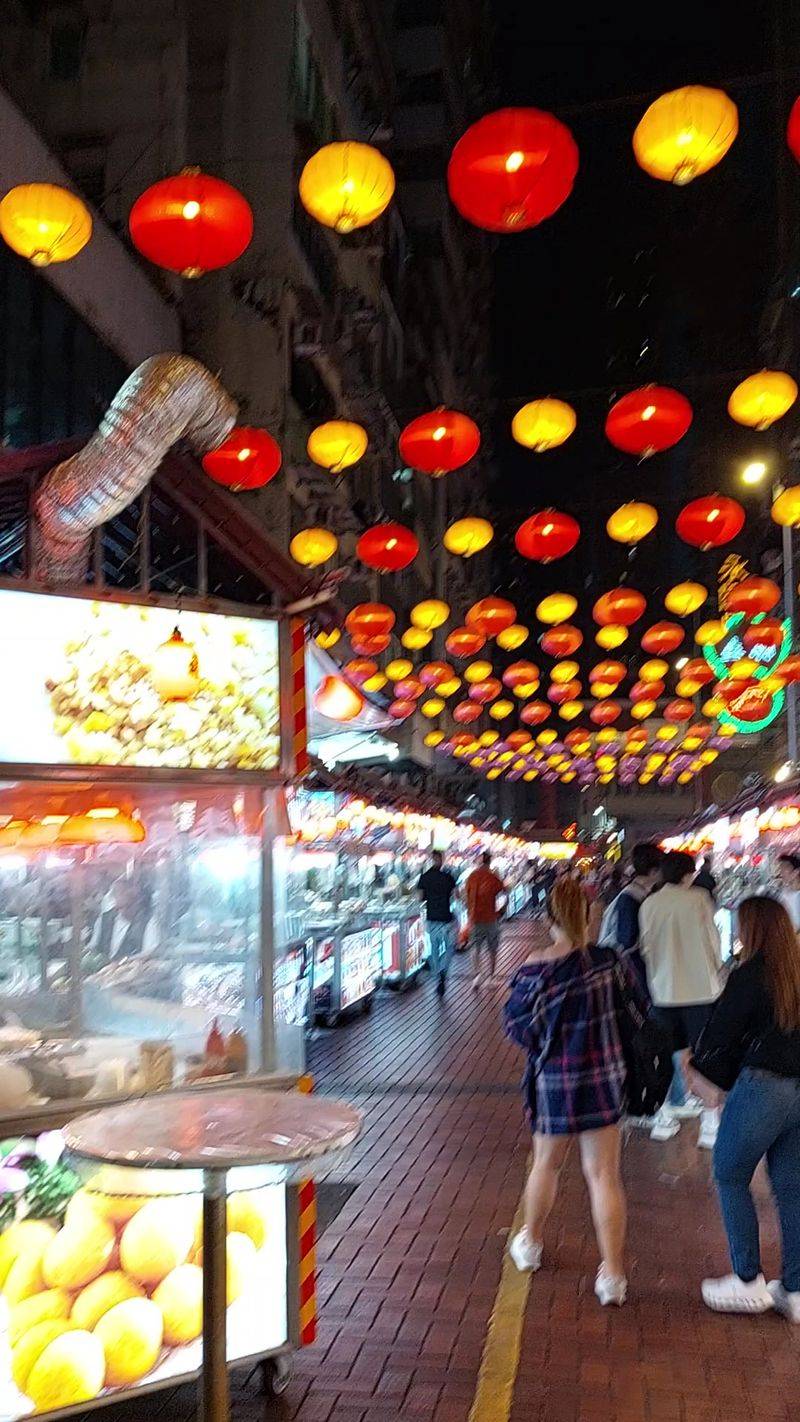
Hong Kong never seems to sleep, and Temple Street proves it. Each evening in Kowloon, rows of tents light up with bulbs, and the street fills with sellers, fortune tellers, and cooks.
Food here leans toward hearty comfort. Claypot rice, stir-fried clams in black bean sauce, and fish balls on skewers are common sights.
Open-air eateries called dai pai dong serve dishes sizzling from the wok.
Bring an appetite and some patience, because tables fill quickly after 8 p.m. Prices on souvenirs can often be negotiated with a smile.
Ask for the price of seafood before you order, since it is usually sold by weight. The market stays open late, so you can enjoy a cooler evening stroll after dinner.
10. Ben Thanh Market, Vietnam
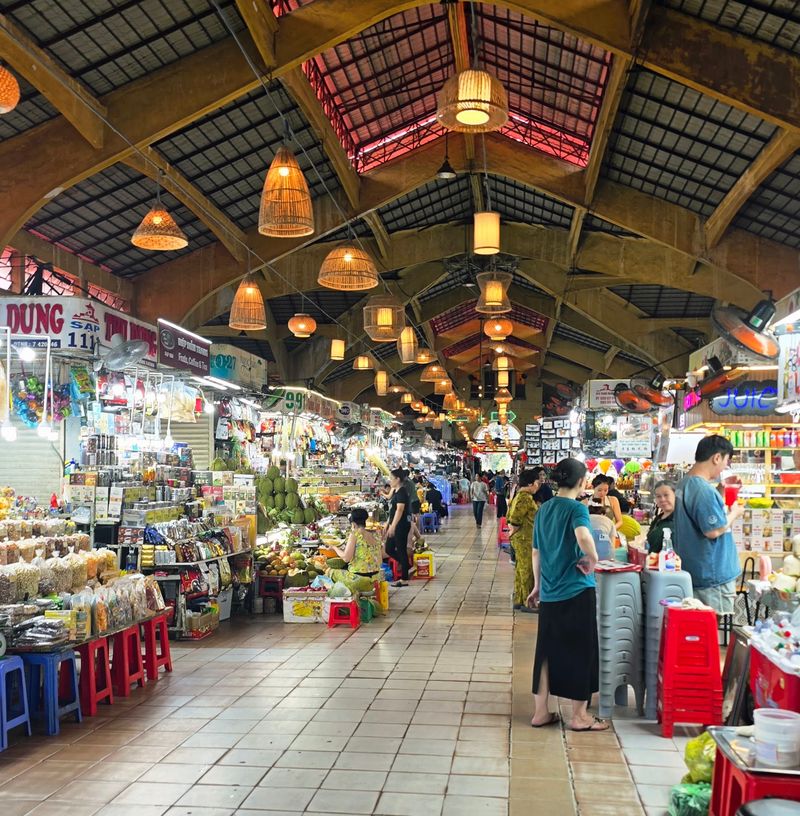
With its famous clock tower, Ben Thanh Market is one of the first sights many travelers see in Ho Chi Minh City. The building dates to 1914, and it still hums with activity from early morning.
Inside, food stalls serve bowls of pho, fresh spring rolls, and sweet che desserts made with beans and coconut milk. Fruit sellers cut mangoes and dragon fruit on the spot.
Vietnamese iced coffee is strong and sweet, and it is a good pick for a hot day.
Prices at the souvenir stalls are flexible, so bargain politely. In the evening, the night market outside adds more food carts.
Watch for pickpockets in busy aisles and keep your phone secure. Visit early for cooler air and fewer people.
11. Chatuchak Weekend Market, Thailand
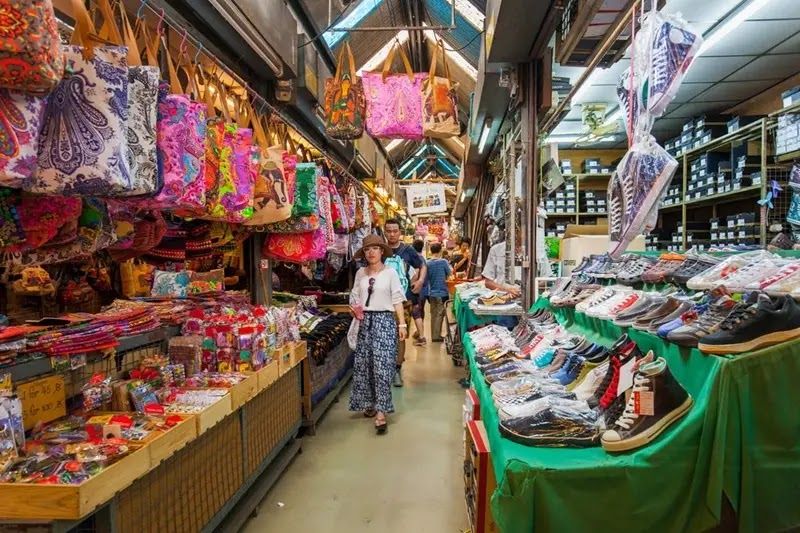
Over 15,000 stalls spread across Chatuchak Weekend Market, making it one of the largest markets in the world. Getting a little lost is almost part of the plan.
Between shopping for clothes and plants, you can stop for coconut ice cream served in a coconut shell, grilled pork skewers, and bowls of boat noodles. Fresh Thai iced tea is sold at nearly every corner and helps with the heat.
The market is open mainly on Saturdays and Sundays, and mornings are the best time to avoid the sun. Wear light clothes and comfy shoes.
Use the market map or a landmark like the clock tower to find your way. Carry a reusable bag, and bring cash since many stalls skip cards.
12. Mong Kok Street Food Area, Hong Kong
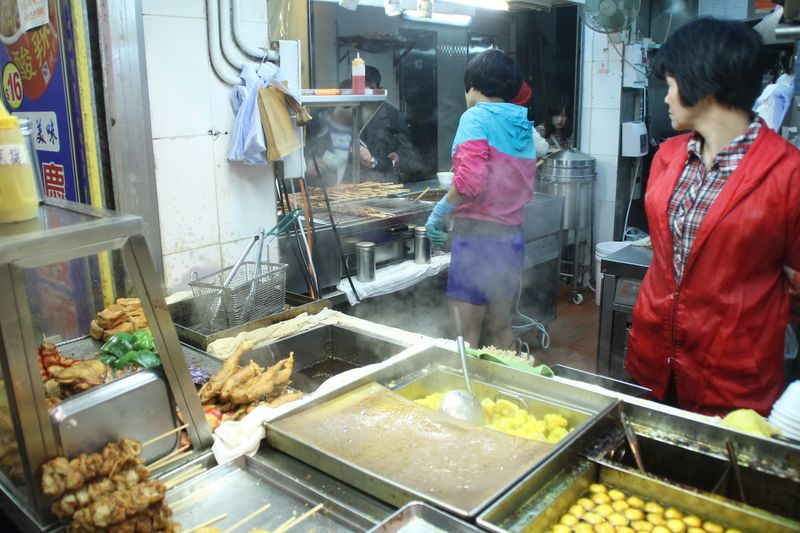
Few places in Hong Kong pack as many snacks into so little space as Mong Kok. Crowded sidewalks, glowing signs, and sizzling carts set the scene for a fast and tasty adventure.
Egg waffles, a bubbly sweet treat, are a local classic. Curry fish balls, fried squid, and stinky tofu are also popular picks.
Many snacks cost only a few dollars, so it is easy to taste a lot.
Walk down Fa Yuen Street and Tung Choi Street for the best variety. Evenings are lively, but the crowds can be heavy, so keep your belongings close.
Eat your snack near the stall to avoid blocking foot traffic. Napkins are limited, so carry your own tissues.
13. Lau Pa Sat, Singapore
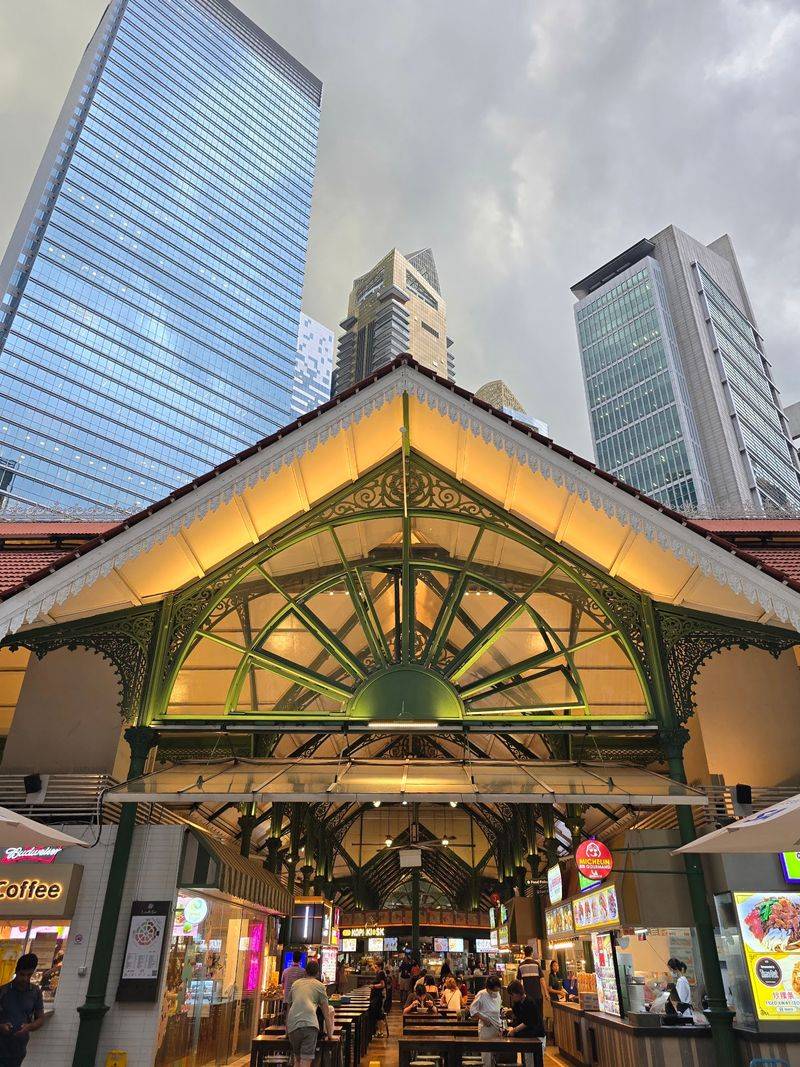
Inside a Victorian-era building made of cast iron, Lau Pa Sat serves hawker food with a skyline view. The structure was built in 1894 and sits surrounded by glass towers in the business district.
By day, stalls offer laksa, Hokkien prawn noodles, and rice dishes for office workers. At night, Boon Tat Street beside the hall closes to traffic and becomes a satay street, with smoky grills lined up under open skies.
Order a mix of chicken, beef, and prawn skewers with peanut sauce and cucumber. Prices on satay street can be higher than inside, so check before ordering.
Evenings are humid, so a cold sugarcane juice helps. Come early on weekends for a good table.
14. Gurney Drive Hawker Centre, Malaysia
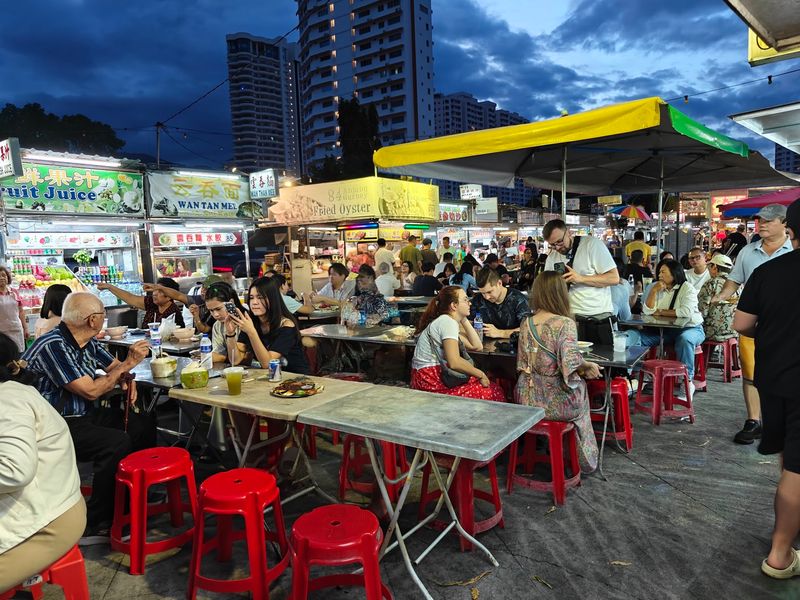
Penang has a reputation as Malaysia’s food capital, and Gurney Drive is where many visitors prove it to themselves. Stalls line a seaside promenade in George Town, and the sea breeze helps cool the evening.
Look for asam laksa, a tangy fish noodle soup, and char kway teow cooked with prawns and cockles. Oyster omelets, rojak fruit salad, and ice kacang dessert round out the menu.
Each stall focuses on one or two dishes, so most diners order from several vendors. Tell the staff your table number so they can find you.
Go after sunset when the air cools and the lights come on. Be ready for spicy flavors, and ask for less chili if you prefer milder food.
15. Dotonbori, Japan
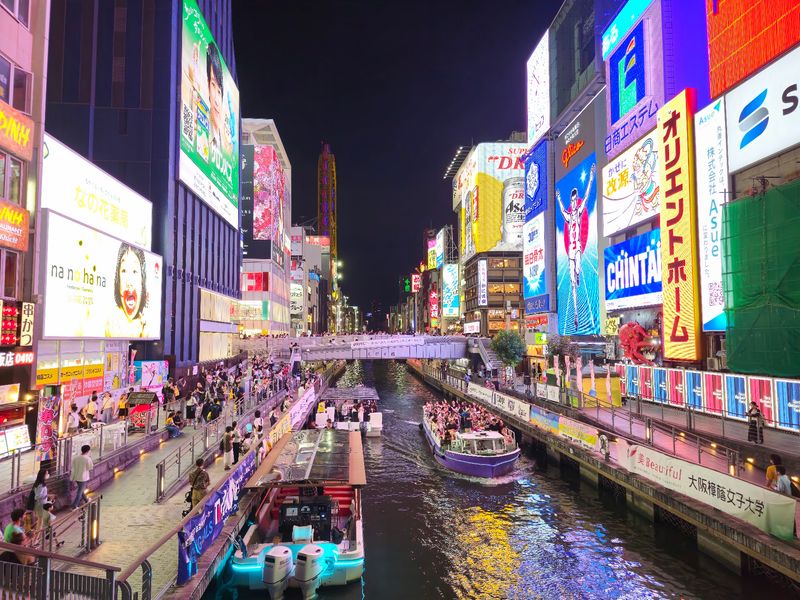
A giant mechanical crab waves above the crowd, and the canal glitters with neon reflections. Dotonbori in Osaka is famous for its bold signs and even bolder appetite for food.
The city’s motto, kuidaore, means to eat until you drop.
Takoyaki, grilled octopus balls topped with sauce and bonito flakes, are the signature snack. Okonomiyaki, a savory cabbage pancake, and crispy kushikatsu skewers are other favorites.
Many shops let you watch the cooks at work.
Takoyaki is very hot inside, so let it cool for a minute. Evenings are the busiest and most photogenic.
Weekdays are calmer if you want shorter lines. Stop by the Glico running man sign for a classic photo, and keep your trash until you find a bin, since public ones are rare.
Share this story