Windmills are more than just old wooden structures spinning in the breeze. For centuries, they powered entire communities, grinding grain, pumping water, and shaping the land around them.
Today, many of those same windmills still stand, and the landscapes surrounding them look remarkably similar to how they appeared hundreds of years ago. Whether you are planning a trip abroad or simply love discovering places where history feels alive and visible, this list covers 14 remarkable windmill landscapes worth knowing about.
Zaanse Schans, North Holland, Netherlands
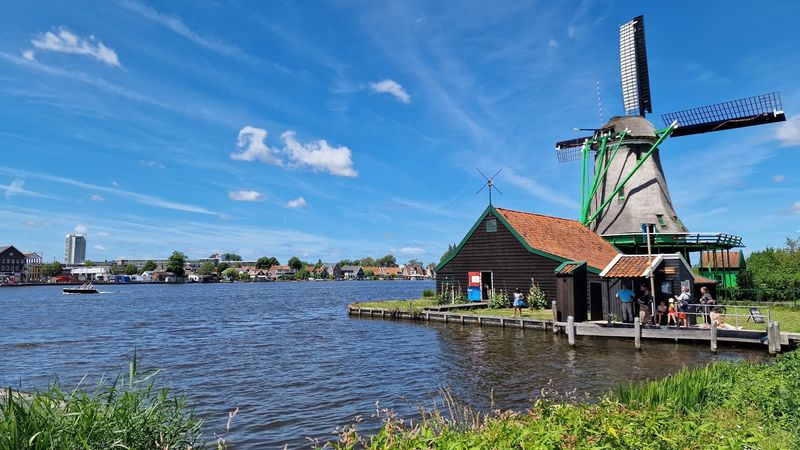
Back when hundreds of wind-powered mills lined the Zaan River, this region was essentially one of Europe’s first industrial zones. Zaanse Schans preserves a slice of that era, bringing together working windmills, green wooden houses, craft workshops, and small museums in one freely accessible village setting.
Several surviving mills remain operational and can be entered when open. Depending on the day you visit, you might see traditional machinery cutting timber, grinding pigments, or pressing oil, all powered by the same wind that drove these processes centuries ago.
The village itself costs nothing to walk through, while individual windmills and museums charge separate admission. Most attractions generally run from morning into the late afternoon, though not every mill opens on every day.
If you visit on a weekday with fewer crowds, you get a clearer sense of how this place actually worked when it was a living, producing industrial community.
Consuegra, Castilla-La Mancha, Spain
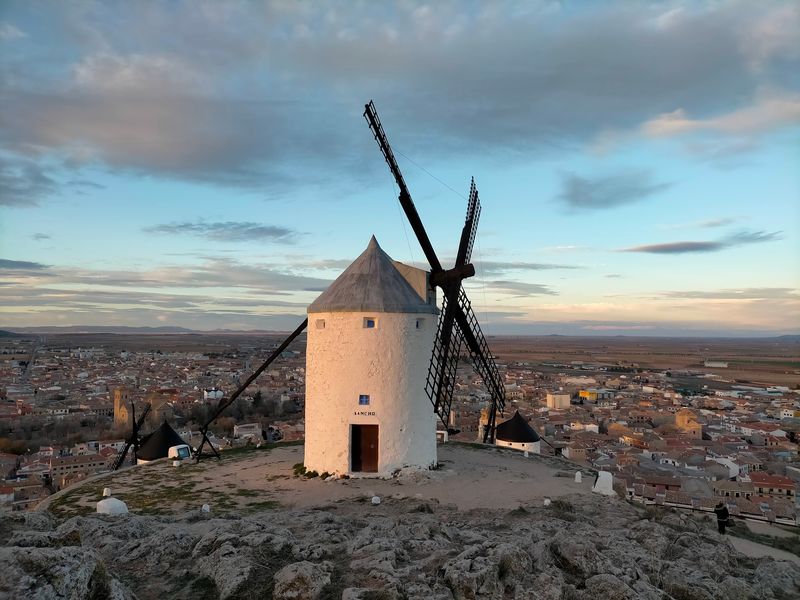
Twelve white windmills lined up along a ridge above a Spanish town might sound like a scene from a novel, and in a way, it is. The windmills of Consuegra sit atop Cerro Calderico, and their white towers and dark rotating caps have become closely tied to the landscapes described in Miguel de Cervantes’ Don Quixote.
Each windmill carries its own name, and several have been converted into visitor spaces. The Bolero windmill houses the local tourist office, while others contain exhibits on regional crafts and literature connected to La Mancha’s famous fictional history.
A medieval castle also crowns the same hill, making this ridge one of the more historically layered viewpoints in central Spain. The hill is publicly accessible, and guided visits to the windmills, castle, and surrounding heritage sites are offered through the official tourism program.
The combination of working history, literary legend, and open sky gives Consuegra a personality that is entirely its own.
Campo de Criptana, Castilla-La Mancha, Spain
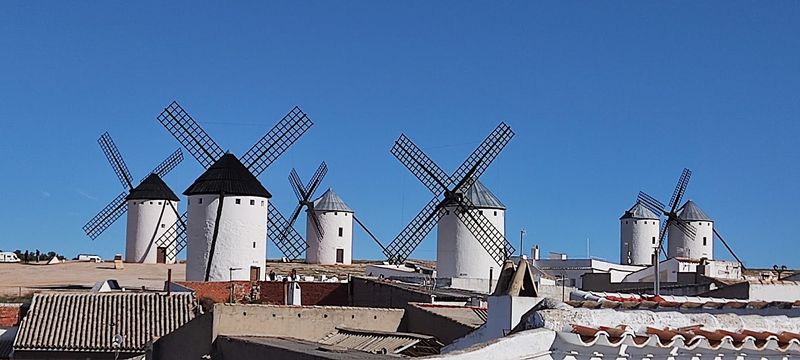
Three of the windmills here have been standing since the 16th century, which puts them among the oldest surviving mill structures in all of Spain. Campo de Criptana preserves ten windmills across the Sierra de los Molinos and Cerro de la Paz, with the oldest trio, Burleta, Infanto, and Sardinero, still containing historic grain-milling machinery.
The view from the hill is genuinely striking. Whitewashed houses decorated with blue trim spread out below the mills, creating one of the most distinctive visual combinations in the La Mancha region.
Some structures contain museums and interpretation spaces where visitors can learn about traditional milling and the area’s well-known connection to Don Quixote.
The hill and exterior viewpoints are accessible throughout the year, while individual interiors follow scheduled hours. Campo de Criptana sits roughly halfway between Madrid and Valencia, making it a reasonable stop on a longer road trip across central Spain without feeling like a detour.
Kato Mili, Mykonos, Greece
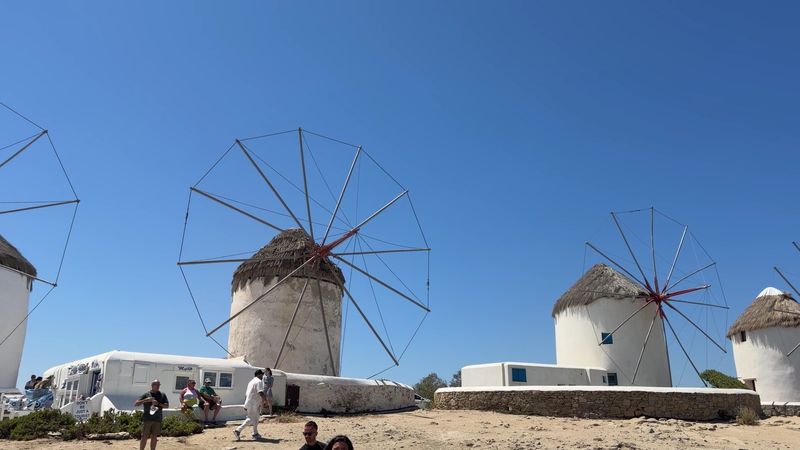
Positioned on a low hill above Little Venice, the Kato Mili windmills are one of the first things you notice when arriving in Mykonos Town by sea. Their round white towers and pointed thatched roofs have appeared in photographs of the Greek islands for decades, and they remain just as photogenic in person.
Built primarily during the Venetian period, these mills once used the island’s reliable winds to grind wheat brought in through its busy trading port. They no longer operate as a commercial milling complex, but their presence above the waterfront continues to define the town’s visual identity.
The outdoor site is freely accessible and draws visitors throughout the day, with the area becoming especially popular near sunset. For those interested in the island’s agricultural past, Boni’s Windmill offers a closer look as an agricultural museum.
Kato Mili proves that a windmill does not need to be spinning to anchor an entire landscape.
Kinderdijk, South Holland, Netherlands
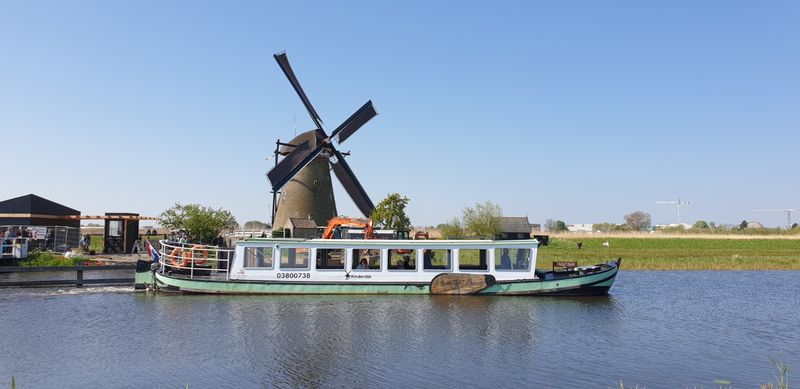
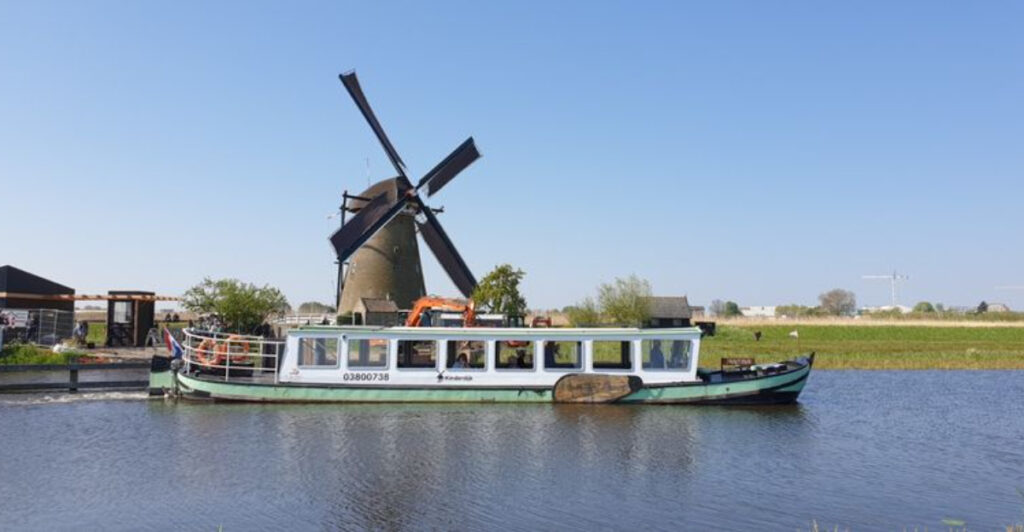
Nineteen windmills standing in a straight line beside canals and low-lying polders is not something you forget quickly. Kinderdijk, located near Rotterdam, is one of the most recognizable windmill landscapes in the entire world, and for good reason.
These mills were not built for decoration. They formed part of a water-management system designed to protect the surrounding land from flooding, and that system still functions today.
Millers continue to live and work in the area, and selected mills still operate when wind conditions allow.
Visitors can walk or cycle along the waterways, enter museum mills, explore the Wisboom Pumping Station, or take a boat ride past the rows of working structures. The site is open most of the year, though hours shift by season.
Kinderdijk has been a UNESCO World Heritage Site since 1997, which tells you everything about how seriously the Netherlands takes preserving this extraordinary place.
Angla Windmill Hill, Saaremaa, Estonia
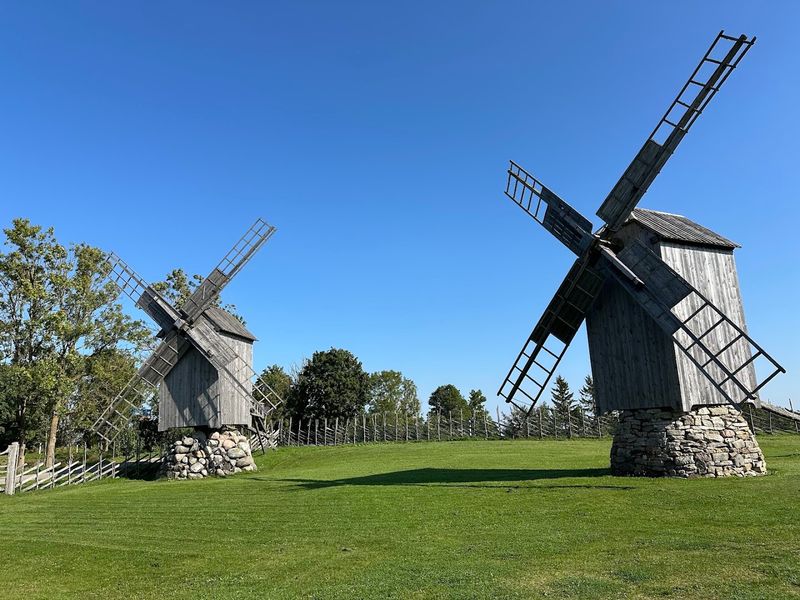
Small wooden windmills were once a familiar feature of village life across Saaremaa, an Estonian island where traditional rural crafts held on long after they faded elsewhere. Angla Windmill Hill preserves five of those historic structures, making it the largest surviving windmill group on the island.
Four of the five are traditional trestle windmills, where the entire wooden body rotates to face the wind. The fifth is a larger Dutch-style mill built in 1927, which gives the collection an interesting contrast between different milling traditions and construction approaches.
The windmills are now part of the Angla Windmill and Heritage Center, where visitors can explore rural machinery, watch heritage demonstrations, and learn about traditional crafts connected to island farming life. The attraction is open year-round, with extended daily hours running from May through August.
Saaremaa itself is a peaceful, slow-paced destination that feels genuinely removed from the busier parts of European tourism.
Lerkaka Windmill Row, Oland, Sweden
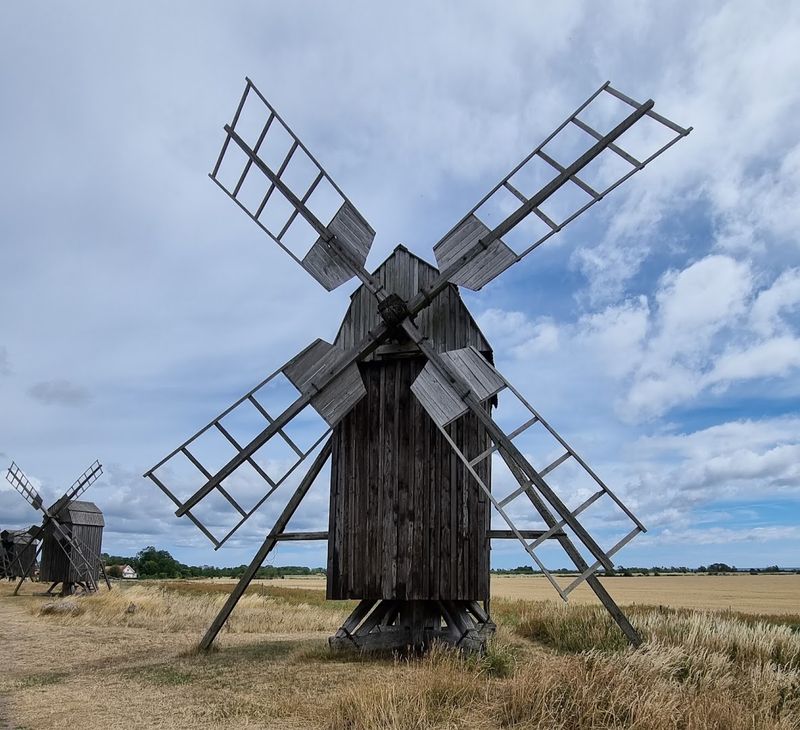
At one point, the island of Oland had thousands of small wooden windmills scattered across its farmland. Most are gone now, but the preserved row at Lerkaka remains one of the most photographed collections on the island, and it is easy to understand why once you see them lined up beside the road.
The mills stand close together, their wooden silhouettes rising above flat agricultural land with no obstructions to block the view. There is no formal museum complex here.
The outdoor site is simply accessible, which makes a stop feel relaxed and unhurried rather than organized and ticketed.
Together with Oland’s characteristic stone walls, farm fields, and wide open skies, the Lerkaka windmills help preserve the visual identity of a traditional Swedish island landscape that has changed very little over the centuries. Oland itself is a UNESCO World Heritage landscape, and the windmills at Lerkaka are one of the clearest reasons why that designation makes sense.
Sint-Janshuis Mill, Bruges, Belgium
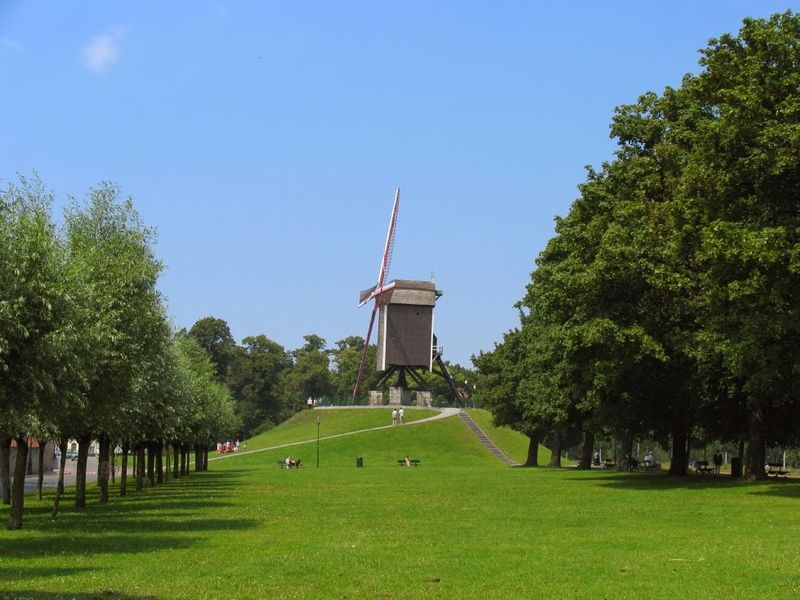
Bruges has several windmills standing along its grassy eastern ramparts, but Sint-Janshuis Mill is the one where traditional grain milling actually still happens. The wooden post mill has stood at its current location since the 18th century, and it remains one of the few working mills of its kind in Belgium.
Visitors can climb inside, examine the grinding equipment, and talk with millers about the process that has not changed much in hundreds of years. Outside, the elevated ramparts offer views over church towers, canal rooftops, and nearby windmills that round out the picture of old Bruges very nicely.
Sint-Janshuis Mill follows seasonal opening hours, so checking ahead before visiting is a practical step. The surrounding ramparts remain open as a public walking route regardless of season, making the area worth exploring even when the mill itself is closed.
For a city as well-preserved as Bruges, having a working windmill still in operation feels like a natural extension of everything the city already does well.
Ta Kola Windmill, Xaghra, Gozo, Malta
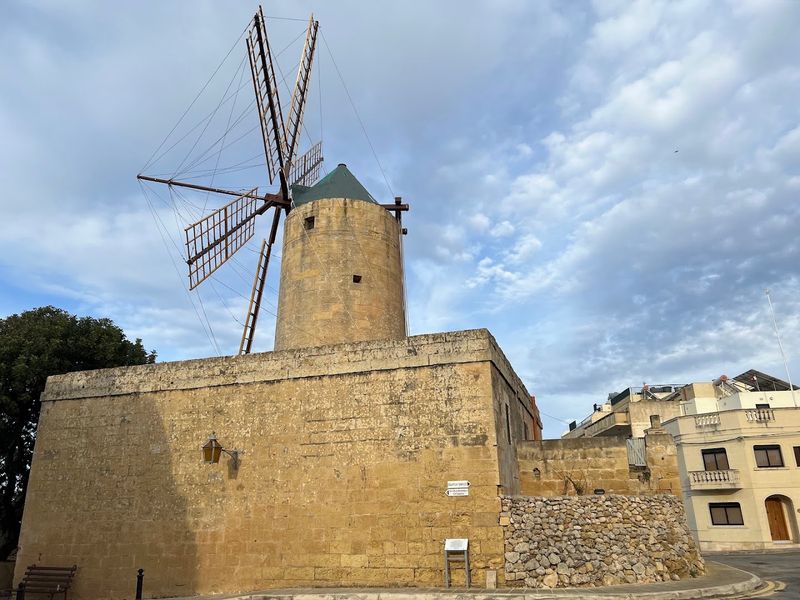
Built in 1725 during the period when Malta was governed by the Knights of St. John, Ta’ Kola Windmill is one of the oldest and best-preserved windmills in the entire Maltese archipelago. The structure was later reconstructed during the 18th century, and the work done to maintain it shows in how much of the original interior survives.
Today it operates as a Heritage Malta museum, with rooms containing traditional tools, millstones, living quarters, and parts of the original wooden grinding mechanism. The exhibits do a solid job of explaining the practical daily life of a miller, including how they repaired machinery and knew when the wind was strong enough to grind.
Ta’ Kola Windmill is currently open on a regular daily schedule, making it one of the more accessible historic mill sites in the Mediterranean. Xaghra itself is a quiet hilltop village on Gozo, and combining this stop with nearby Ggantija Temples makes for a genuinely interesting half-day in a place most visitors overlook.
Skerries Mills, County Dublin, Ireland
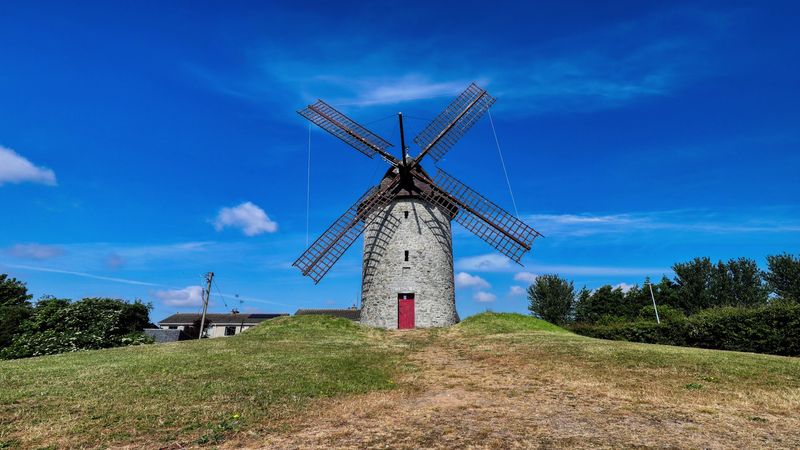
Most milling heritage sites focus on one type of mill, but Skerries pulls together two windmills and a watermill in a single coastal complex north of Dublin. The combination makes it one of the most complete milling heritage sites in Ireland, covering wind, water, and the human stories behind both.
Guided tours walk visitors through the site and explain how these different power sources were used to turn grain into flour across different seasons and conditions. The five-sail Great Windmill is particularly prominent, rising above the surrounding fields and the nearby town in a way that makes it visible long before you arrive at the entrance.
Skerries Mills is open year-round, generally from 10 a.m. to 5 p.m., and advance booking is recommended for guided heritage tours. The millpond and wetlands add a quiet natural element to the visit that feels separate from the mechanical history.
Skerries town itself is a pleasant coastal stop with its own character beyond the mills.
Pitstone Windmill, Buckinghamshire, England
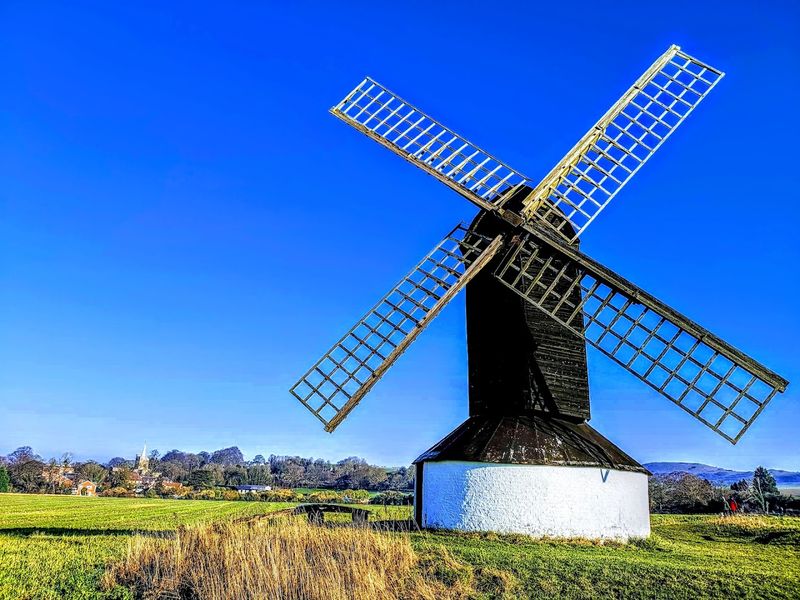
Pitstone Windmill is considered one of the oldest surviving post mills in England, with records suggesting it dates to around 1627. For almost 300 years it ground grain for nearby communities before a serious storm in the early 20th century left it too damaged to operate.
The mill was eventually restored and is now cared for by the National Trust. Visitors can examine the massive central post that the entire structure pivots around, along with the internal grinding machinery, wooden sails, and the tail pole used to rotate the mill toward the wind.
Interior access is offered on selected dates and generally requires a timed booking, while the surrounding farmland can be viewed more freely. The setting near the Chiltern Hills gives the windmill a backdrop that suits its age, with open fields and a wide sky making it feel genuinely isolated from modern development.
For anyone interested in early English milling history, this is a rare surviving example worth the trip.
Eastham Windmill, Cape Cod, Massachusetts
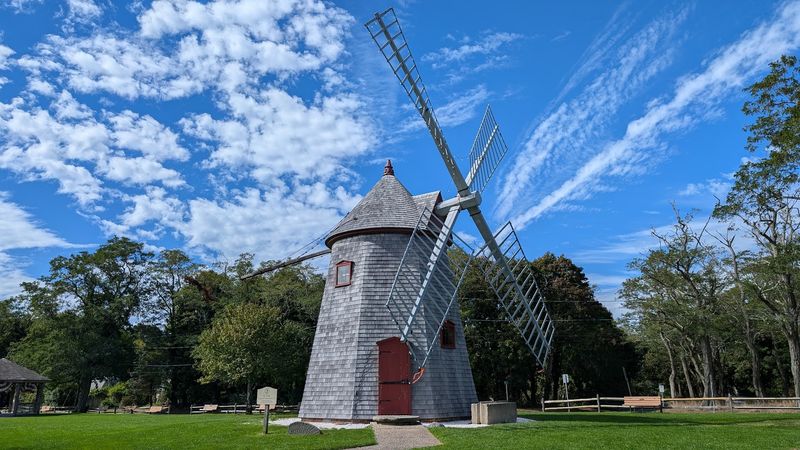
Cape Cod has a handful of historic windmills scattered across its towns, but Eastham’s is believed to be the oldest surviving one on the peninsula. Originally constructed around 1680, the mill was relocated several times before settling at its current spot on Windmill Green in the early 19th century.
The restored structure is listed on the National Register of Historic Places and serves as one of Eastham’s most recognized landmarks. During July and August, seasonal visitors can step inside, meet local interpreters, and get a close look at the grinding stones and wooden machinery that made flour production possible in a pre-industrial coastal community.
Windmill Green itself remains accessible outside tour hours, so passing visitors can still appreciate the exterior at any time. The mill sits right beside Route 6, which means it is hard to miss on a drive through the Lower Cape.
Its age alone makes it worth a short stop, but the summer interpretation program adds real context to what you are looking at.
Godfrey Windmill, Chatham, Massachusetts
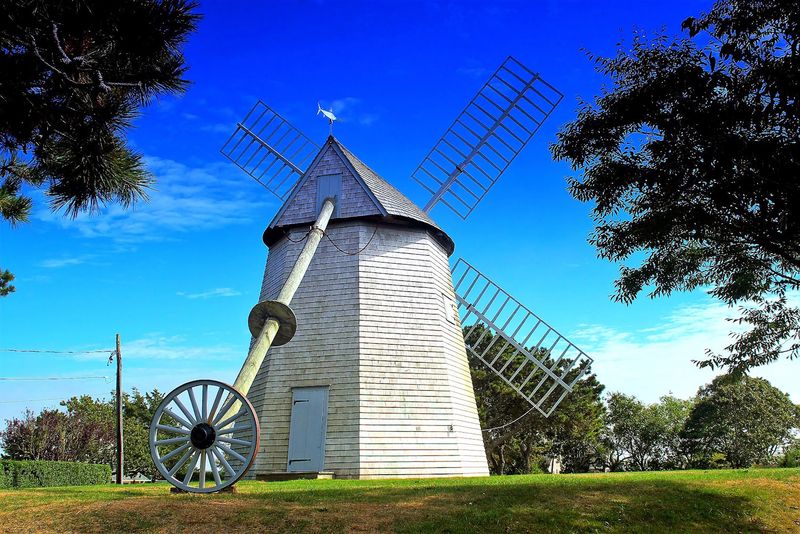
Built in 1797, Godfrey Windmill spent more than a century grinding grain commercially before eventually becoming a preserved town landmark in Chatham. Today it rises above Chase Park, surrounded by trees, walking paths, and the kind of classic Cape Cod scenery that makes the setting feel like it belongs on a postcard.
Free guided tours run during the summer, and on selected demonstration days, volunteers operate the machinery and grind corn when wind and weather cooperate. That last detail is worth noting because watching a centuries-old wooden mill actually work is a different experience from simply reading about it.
The 2026 season includes regular tours from late June through August, with additional programming scheduled during Chatham’s Festival of the Arts. Chase Park itself is a pleasant spot to spend time before or after visiting the mill.
Chatham is one of the more charming towns on the Outer Cape, and Godfrey Windmill fits naturally into a longer afternoon exploring the area.
Seli Ambelou Windmills, Lassithi Plateau, Crete
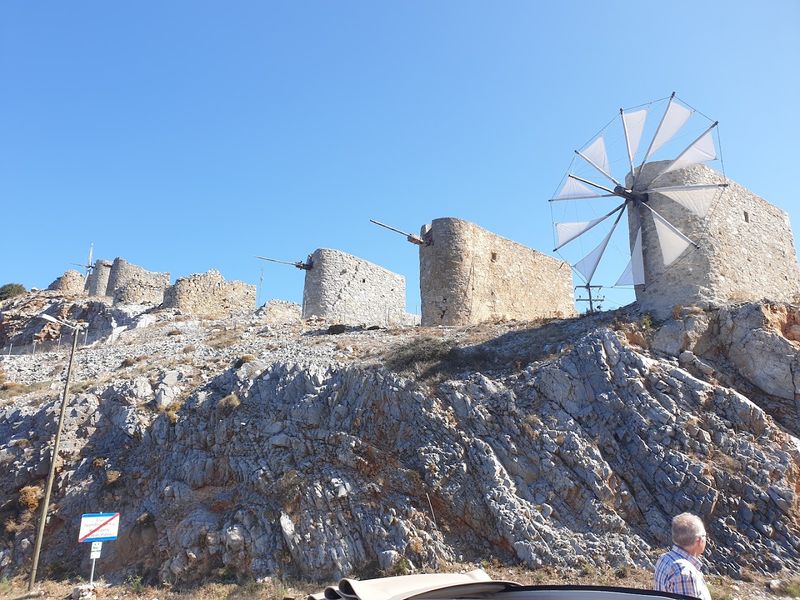
At the northern entrance to the Lassithi Plateau, a row of stone windmill towers lines a mountain pass where strong winds have moved through the gap for centuries. Millers built here specifically to take advantage of that reliable airflow, and the positioning of the structures still reflects that practical logic today.
According to the Municipality of Lassithi Plateau, 24 of the original 26 windmills remain preserved, making this the largest surviving windmill complex on Crete. The mills are primarily historic structures rather than a regularly operating attraction, but their presence along the road into the plateau gives the approach an atmosphere that is hard to replicate anywhere else on the island.
The site is publicly visible beside the route into the plateau, so no formal admission or booking is required to see them. The Lassithi Plateau below is a broad agricultural valley with its own quiet appeal, and the windmills at Seli Ambelou serve as one of the most memorable entry points into any landscape in all of Crete.
Share this story