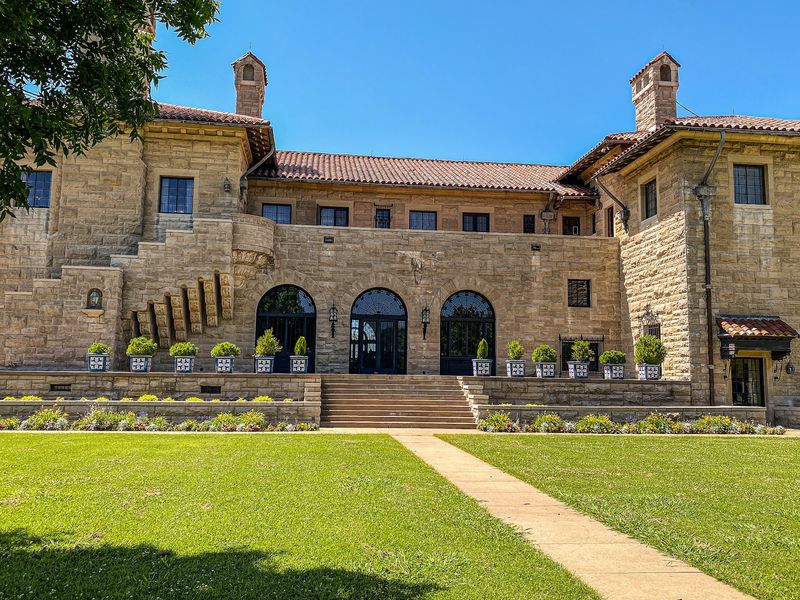
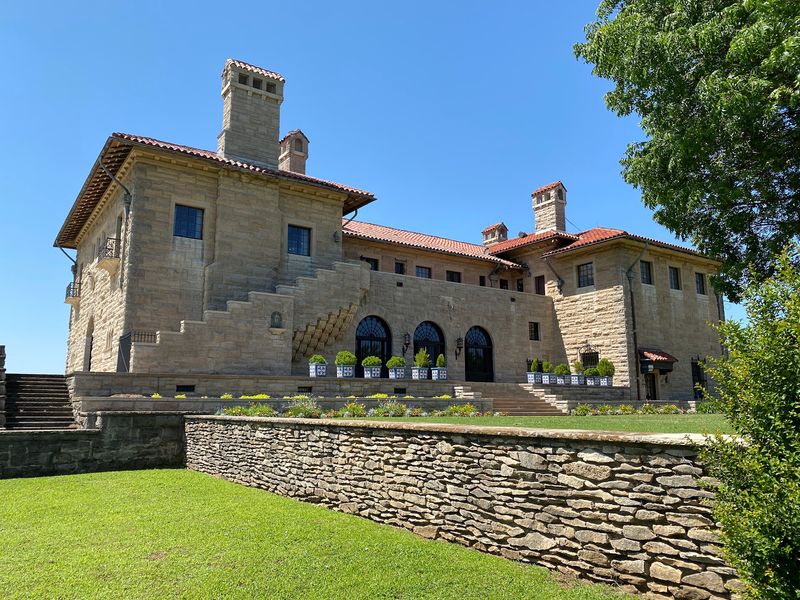
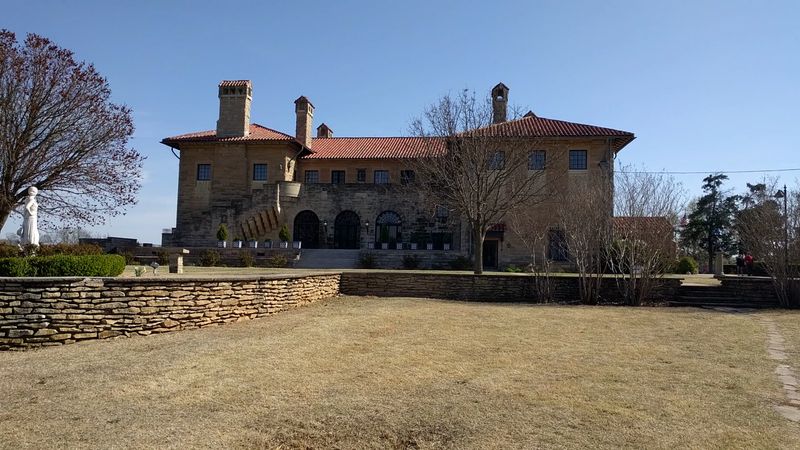
Somewhere north of Oklahoma City, past the flat stretches of highway and the wide-open sky, Ponca City holds a secret that most people outside the state have never heard of. The E. W. Marland Mansion sits on the prairie like it belongs in a European capital, not a small Oklahoma town.
Built during the roaring 1920s oil boom, it is the kind of place that makes you stop mid-sentence and just stare. Oklahoma has always had a flair for doing things big, and this mansion is proof that when oil money talks, it does not whisper.
Where the Palace on the Prairie Stands
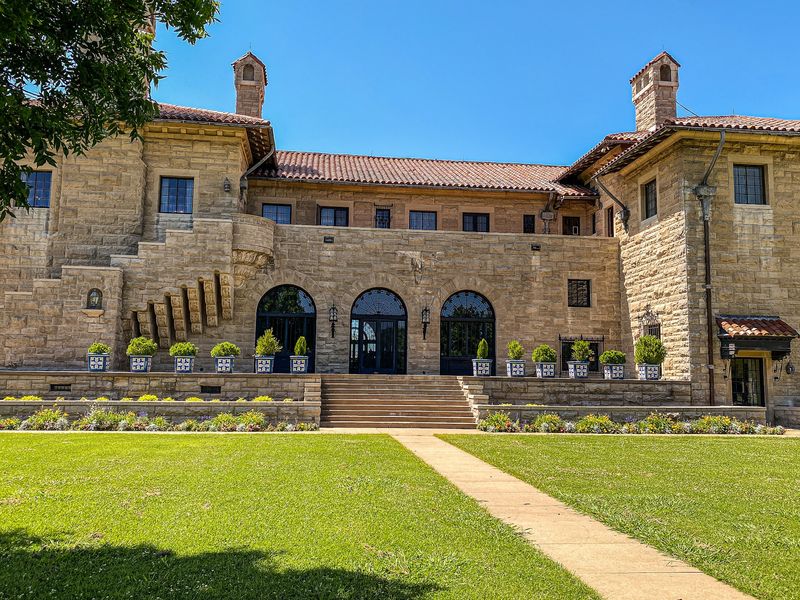
The E. W. Marland Mansion sits at 901 Monument Rd, Ponca City, Oklahoma 74604, and from the moment you pull into the drive, the scale of the thing catches you off guard. Ponca City is not a sprawling metropolis.
It is a quiet, proud north-central Oklahoma town, which makes the mansion’s presence all the more striking.
Often called the “Palace on the Prairie,” this estate covers 43,561 square feet and rises against the flat horizon like something transplanted straight from the Italian countryside. The property is now operated as a museum, open Monday through Saturday from 10 AM to 5 PM, and closed on Sundays. Admission runs around $10 per adult, with reduced rates for children and visitors over 65. Ponca City residents get in free.
Getting there is straightforward from anywhere in Oklahoma. The mansion sits about an hour and a half north of Oklahoma City, making it a very doable day trip. The website at marlandmansion.com has current details, and the phone number is 580-767-0420. For a place this remarkable, the drive is never the hard part.
The Man Behind the Mansion
Ernest Whitworth Marland was not born into Oklahoma wealth. He came to the state from Pennsylvania in the early 1900s, read the land better than almost anyone around him, and struck oil in ways that made him one of the richest men in America. At his peak, Marland controlled roughly ten percent of the world’s oil supply. That kind of success has a way of expressing itself architecturally.
Beyond business, Marland carried genuine civic ambition. He funded hospitals and community projects throughout Ponca City, and his generosity shaped the town in lasting ways. He later served as Governor of Oklahoma, a chapter of his life that added political weight to an already remarkable story.
The family story woven through the mansion’s walls is remarkable, and also complicated. Tour guides describe it as fascinating, a little surprising, and occasionally unsettling in the way that very powerful families’ histories sometimes are. Reading up on Marland before you visit adds serious depth to what you see inside. The white-washed version you get on a quick walk-through is interesting enough, but the full history is considerably richer and more layered than any single tour can cover.
A Building Born from the Oil Boom
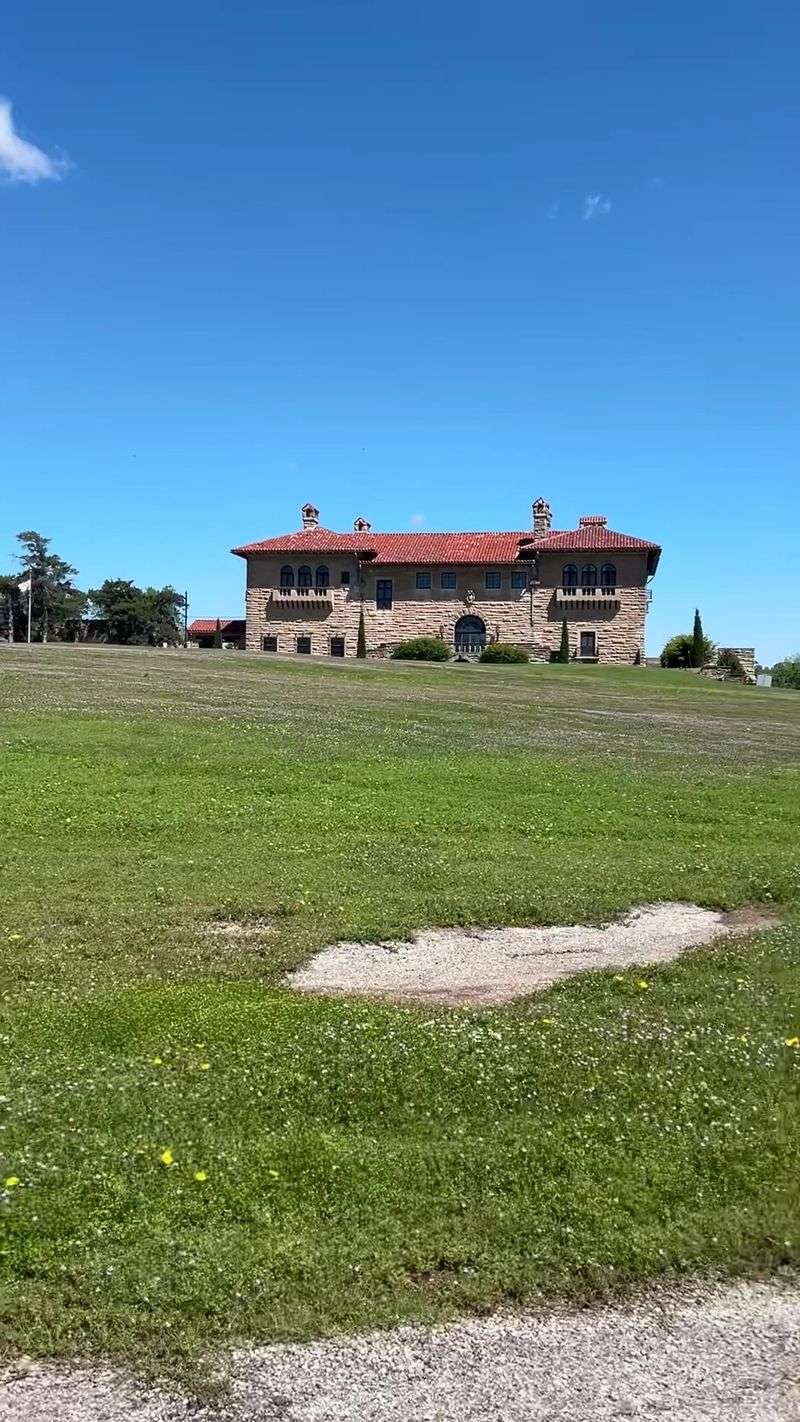
Construction on the mansion began in the 1920s, right at the height of Oklahoma’s oil boom era, when money was flowing and ambition had no obvious ceiling. Marland spared nothing in the build. Italian craftsmen were brought over specifically for certain details, and imported stonework was used throughout the structure. The result is a building that feels genuinely international in a way that still surprises first-time visitors.
The technology built into the mansion was also ahead of its time. Air conditioning, heating systems, and elevators were incorporated into the design when those features were still considered remarkable luxuries. The engineering ambition matched the aesthetic ambition at every turn.
What makes the building stand apart from simple opulence is that it does not feel cold or sterile. Visitors consistently describe a warm, lived-in quality to the space, as though the rooms still carry the energy of the people who once filled them. The mansion has been restored to something close to its original condition, and the ongoing preservation work means that what you see today reflects genuine care rather than a hasty renovation. The 1920s feel is not manufactured; it is maintained.
Forty-Three Thousand Square Feet of Craftsmanship
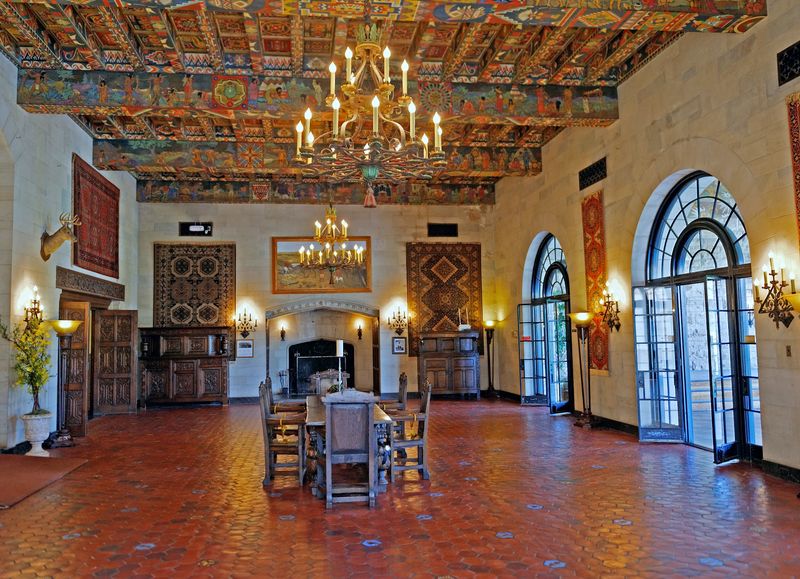
Forty-three thousand square feet sounds like a number until you are actually standing inside the place. The mansion does not look that large from the outside, which makes the interior all the more disorienting in the best possible way. Room after room unfolds with grand ballrooms, formal dining spaces, and entertaining areas that were clearly designed for a life lived at full volume.
The craftsmanship is what holds the eye longest. Hand-carved woodwork appears throughout the structure in quantities that feel almost excessive until you realize that excess was entirely the point. Ornate ceilings carry painted and sculpted detail in nearly every major room. Chandeliers hang with the kind of authority that only genuine antique fixtures can manage.
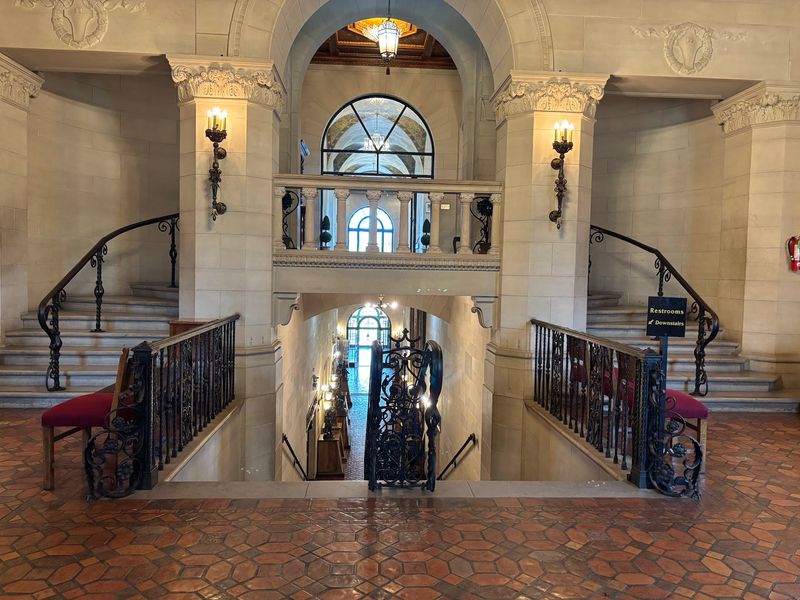
Small details reward slow looking. The mansion is packed with artful touches in corners, on doorframes, and along staircases that most visitors only catch on a second or third pass. Dramatic staircases anchor the main spaces, and the imported stonework gives certain rooms a weight and texture that photographs genuinely cannot capture. The scale and the craft work together in a way that makes two and a half hours inside feel completely reasonable.
Guided Tours Versus Going Solo
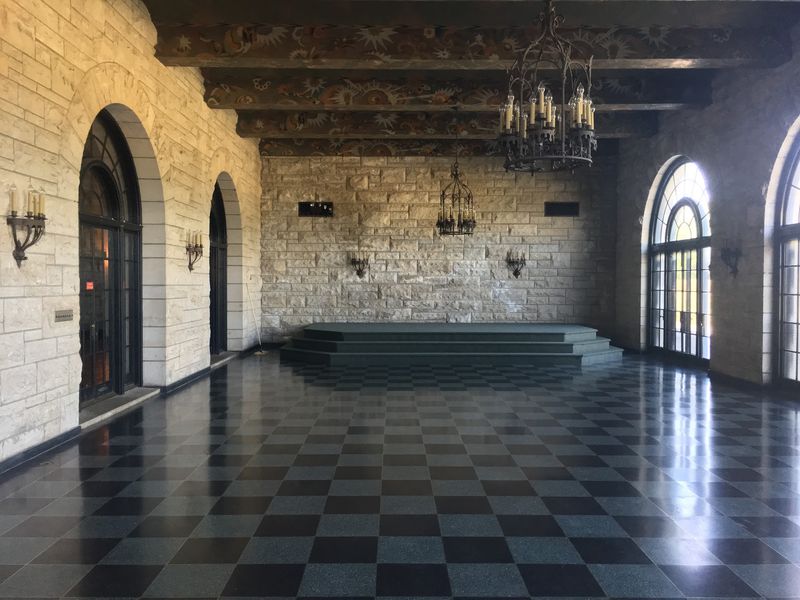
Both options are available at the mansion, and the choice genuinely shapes the experience. Self-guided tours come with a booklet that walks you through the major spaces and provides enough context to appreciate the architecture and the art. The grounds are fully accessible on a self-guided visit, and you can circle the entire exterior to see the building from every angle.
Guided tours go further. With a guide, you gain access to rooms that are roped off during self-directed visits, including the chapel and a separate house on the property. Guides carry a depth of knowledge that the booklet simply cannot replicate, and the stories they tell about the Marland family add a human dimension that transforms the tour from a pretty walk-through into something genuinely absorbing. Guided tours run approximately an hour and a half.
If the timing works out and the mansion is not crowded, there is a real chance of getting extended personal attention from staff who clearly love the place. Both tour formats carry the same price, so the guided option is an easy upgrade. For a first visit, taking the guided tour is the stronger call by a comfortable margin.
Art Woven Into Every Surface
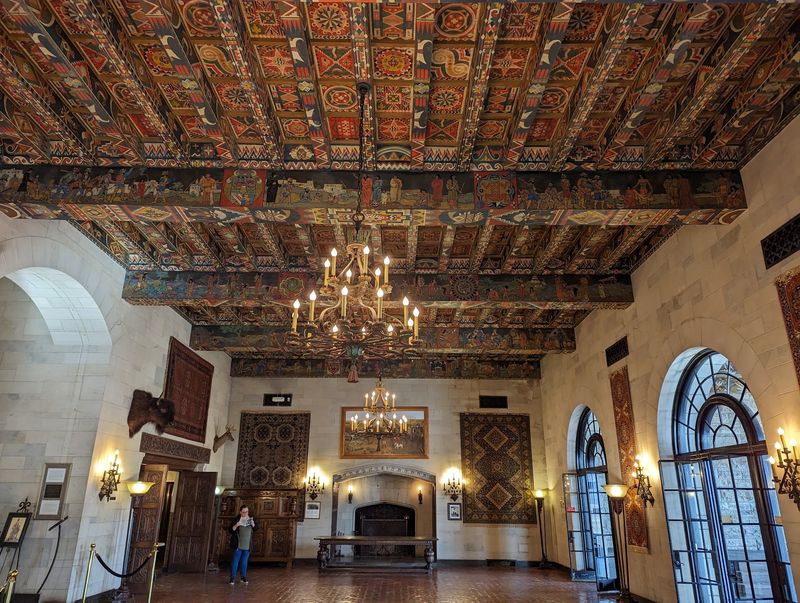
Wealth, at a certain point, tends to become art. The mansion operates as much as an art collection as it does an architectural achievement, and the two are so thoroughly intertwined that separating them feels beside the point. Paintings, sculptures, and decorative objects fill the spaces without ever quite tipping into clutter, which is a harder balance to strike than it sounds.
Ceiling artwork appears in room after room, ranging from classical figurative panels to intricate geometric designs. The Petroleum Hall of Fame occupies the bottom floor, honoring the industry figures who shaped early Oklahoma and the wider American oil economy. For anyone with Oklahoma roots, that floor carries a particular resonance, connecting family histories to a broader story of the state’s formation.
One of the more talked-about pieces is a large portrait of Lydie Marland that hangs prominently in the mansion. The painting carries its own backstory, and sharp-eyed visitors will notice a detail near the subject’s feet that hints at something less than admiration on the artist’s part. Whether you catch it on your own or hear about it from a guide, it is the kind of small discovery that makes the tour feel like a genuine treasure hunt.
The Grounds That Frame the Estate
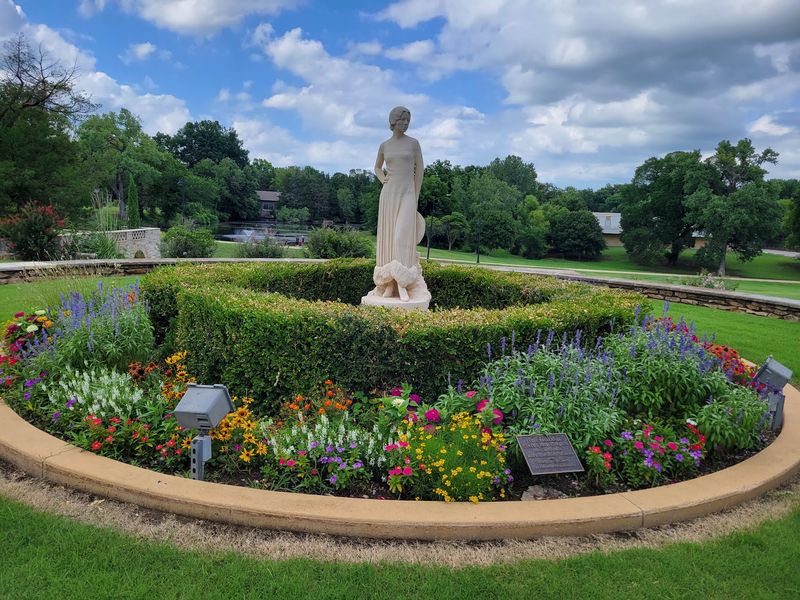
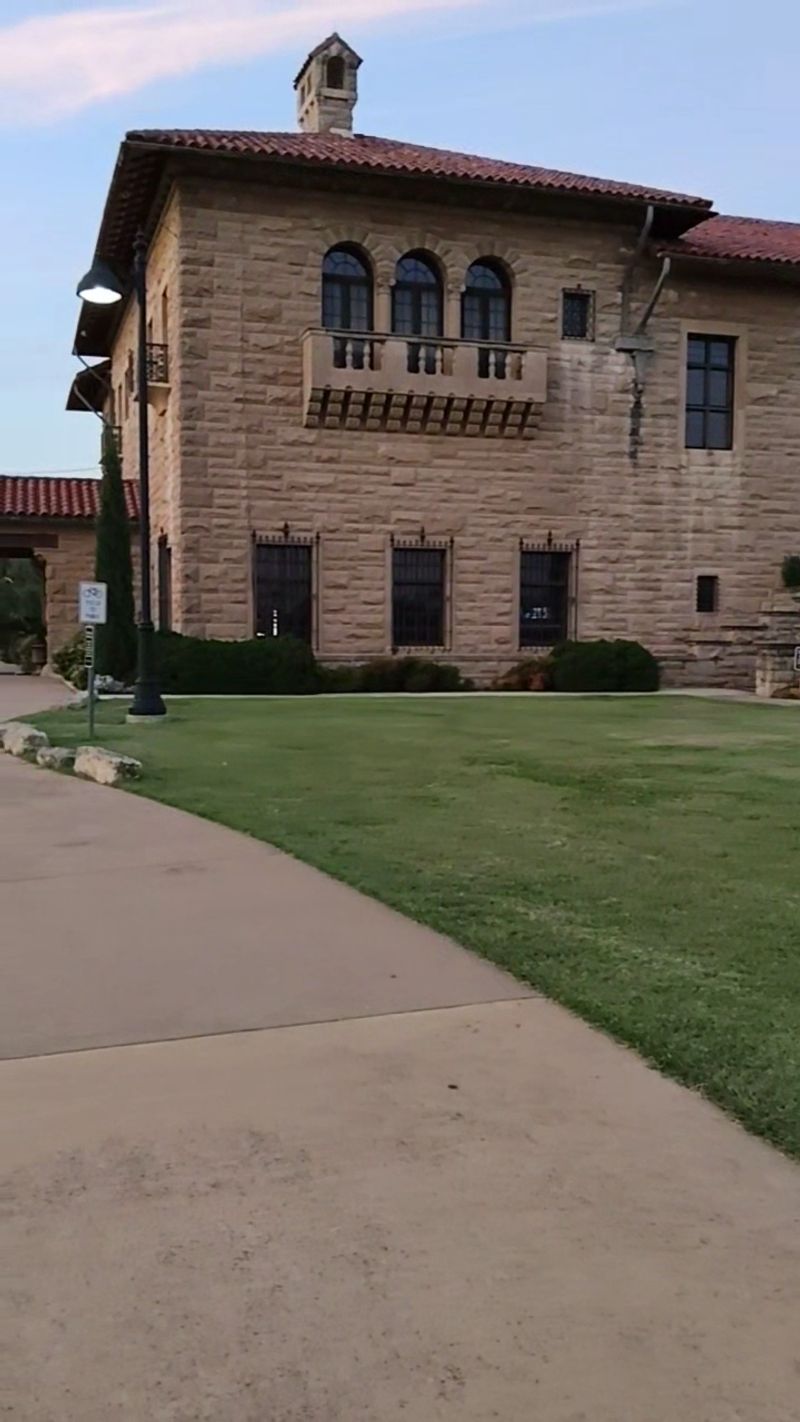
The outdoor spaces at the Marland estate deserve as much attention as the interior, and they are fully open to the public without restriction. Walking the grounds gives you a completely different read on the building. The exterior architecture reveals details that interior rooms cannot show, and seeing the mansion from multiple angles changes how you understand its scale and proportion.
Statues are placed throughout the property in a way that feels deliberate without being stiff. Flowers add color against the stone and grass, and the ducks that wander through the grounds have apparently become a beloved part of the visit for many regulars. There is something about a pair of ducks near a historic fountain that makes a grand estate feel unexpectedly approachable.
The grounds also serve as a popular backdrop for photography, particularly during graduation season when groups gather for portraits against the mansion’s dramatic exterior. Wedding parties use the outdoor spaces frequently as well, drawn by the combination of historic architecture, sculptural detail, and the kind of scenic variety that makes for genuinely striking photographs. Even a brief walk around the perimeter, without setting foot inside, leaves a strong impression.
The Chapel and the Separate House
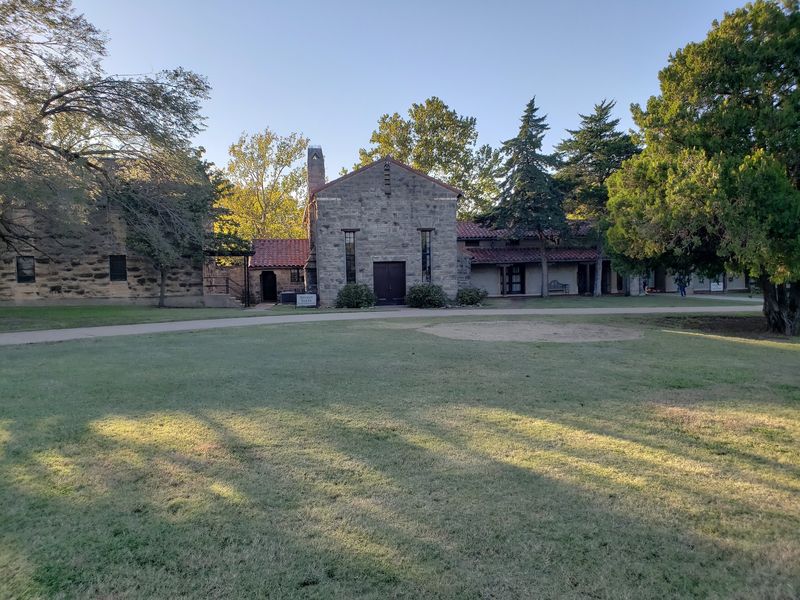
One of the features that sets the Marland estate apart from a simple mansion tour is the presence of additional structures on the property. The chapel is a separate building that guided tour visitors can access, adding a layer of architectural variety to the experience that self-guided visitors miss entirely. It is a strong argument for booking the guided option on a first visit.
A separate house associated with Marland’s wife is also part of the guided tour circuit. Having distinct structures spread across the grounds reinforces just how much of a full estate this property represents. This was never just a house. It was a complete private world built around one family’s extraordinary fortune and ambitions.
The additional structures also give the grounds a sense of discovery that keeps the visit from feeling like a single long march through one building. Moving between the main mansion, the chapel, and the secondary house creates natural pauses in the tour rhythm, letting visitors absorb details at a more comfortable pace. Staff who lead guided tours bring each structure to life with specific stories, and the connections between the buildings add texture to the overall narrative of the Marland family’s time here.
A Living Venue for Ponca City
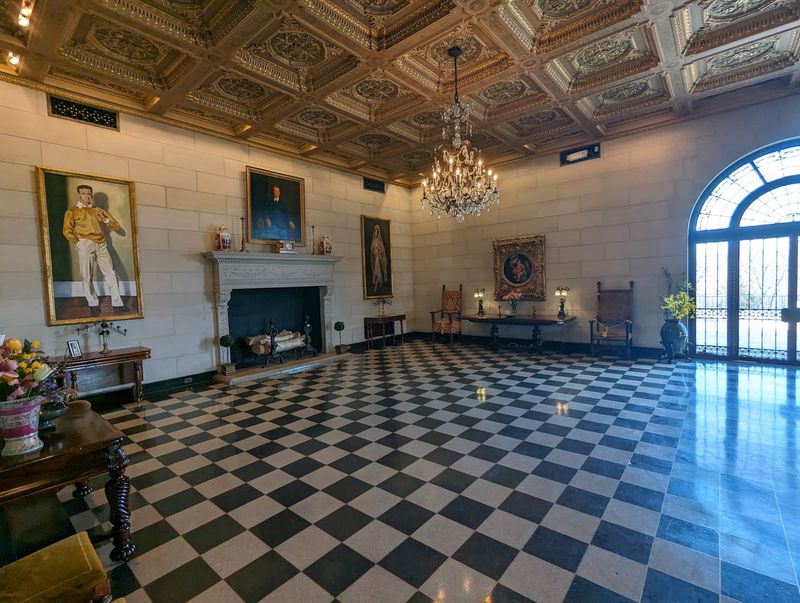
The mansion has not become a roped-off relic. Ponca City residents still use the estate for special occasions, and that ongoing community connection gives the place a vitality that purely static museums rarely achieve. Weddings held here consistently draw praise for the combination of historic grandeur and cinematic visual variety that the property provides.
For couples looking for something beyond a standard venue, the mansion delivers a genuinely different experience. The ballrooms, formal rooms, and outdoor spaces give photographers and event planners an enormous range of settings within a single property. The scale and the craftsmanship translate beautifully into event photography, which is part of why the mansion has built a strong reputation in the regional wedding market.
The staff who manage events at the mansion receive consistent praise for their attentiveness and willingness to go beyond the expected. Kelsey, who has been mentioned specifically by name by visitors in their reviews, has earned a reputation for making the event planning process smooth and genuinely pleasant. The mansion’s dual role as museum and living venue keeps the rooms feeling inhabited rather than preserved behind glass, and that energy is noticeable the moment you walk through the front door.
What the Atmosphere Actually Feels Like
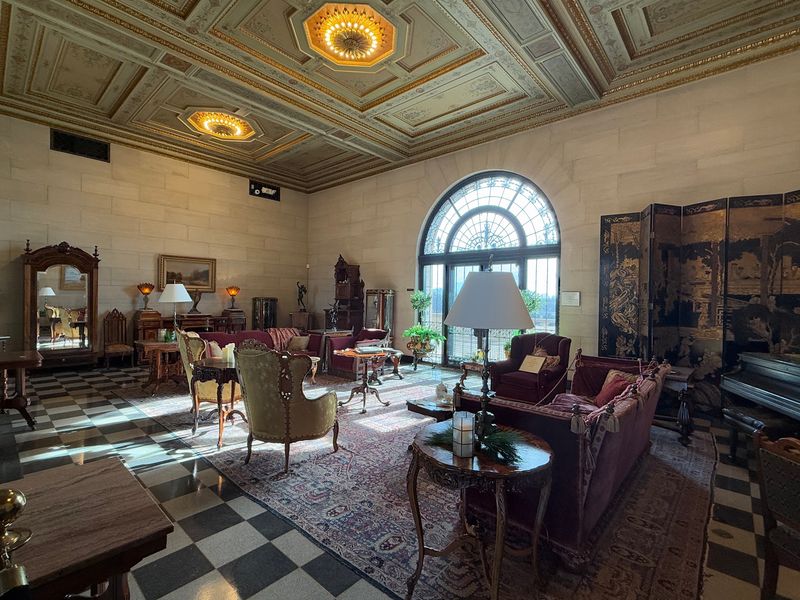
Some historic houses feel like they are frozen in amber, preserved to the point of lifelessness. The Marland Mansion does not have that problem. The rooms carry a warmth that is hard to pin down precisely but easy to feel. Part of it is the quality of the restoration.
Part of it is the ongoing use of the space for events and community gatherings. Part of it is simply that the building was designed by someone who genuinely wanted to live well inside it, not just impress people from the outside.
The mansion reads differently depending on how you approach it. Come for the architecture and you leave thinking about craftsmanship. Come for the history and you leave with a complicated, fascinating story rattling around in your head. Come with no expectations at all and the sheer scale of the thing does the work for you.
Summers inside the mansion run warm, given that the cooling system relies on fans rather than modern air conditioning. Dressing comfortably for a visit during Oklahoma’s hotter months is genuinely useful advice rather than a formality. The humidity adds to the period atmosphere in a way that is either charming or challenging, depending entirely on your tolerance for heat.
Rating, Reputation, and What People Actually Say
A 4.8-star rating across more than 800 reviews is not a number you stumble into accidentally. The Marland Mansion has earned that standing through a combination of genuine quality, ongoing preservation effort, and staff who clearly take the property seriously. First-time visitors and repeat guests both show up in the review record, which suggests the place holds up on multiple visits rather than burning bright and fading on a second look.
Visitors who take the guided tour consistently report staying longer than expected. Two and a half hours is not unusual for people who came in thinking they would spend an hour. The depth of information available from knowledgeable guides is a recurring theme, and the access to additional rooms that guided visitors receive adds enough extra content to justify the longer stay.
People who grew up in Ponca City or who have family ties to the area tend to view the mansion with a particular kind of pride that goes beyond tourist appreciation. For Oklahomans across the state, the mansion represents something worth claiming as a shared piece of state identity. The bragging rights are real, and they are fully deserved.
Practical Notes Before You Go
Planning a visit to the Marland Mansion is straightforward once you have the basics in hand. The mansion is open Monday through Saturday from 10 AM to 5 PM and is closed on Sundays. Admission is approximately $10 per adult, with lower rates available for children and visitors over 65. Ponca City residents get in free, which is a genuinely nice community benefit that reflects the estate’s ongoing role in local life.
The phone number is 580-767-0420, and the website at marlandmansion.com carries current tour schedules, event information, and any updated pricing. Calling ahead is useful if you want to confirm guided tour availability, particularly on weekdays when visitor numbers can vary.
From Oklahoma City, the drive north takes roughly an hour and a half under normal conditions. The mansion is easy to find once you are in Ponca City, and the address at 901 Monument Rd is well-signed from the main routes through town. Bringing comfortable shoes is practical advice given the amount of ground the property covers. Giving yourself at least two hours, and preferably more, means you are not rushing through spaces that genuinely reward a slower pace.
Why This Mansion Earns the Drive
Oklahoma has no shortage of places worth a road trip, but the Marland Mansion occupies a category of its own. There are bigger museums in the state, and there are more famous landmarks, but very few destinations deliver the specific combination of architectural spectacle, layered human drama, and genuine Oklahoma identity that this estate manages so effortlessly.
The mansion is the kind of place that people who grew up hearing about it finally visit and immediately wonder why they waited so long. It is also the kind of place that visitors from outside the state encounter with genuine surprise, unable to reconcile what they expected from a small north-central Oklahoma town with what they actually find at the end of Monument Road.
Whether you come for the history, the architecture, the art, or simply to see what forty-three thousand square feet of oil boom ambition actually looks like in person, the Marland Mansion delivers without qualification. The gift shop could use a few more options, and the summer heat inside is worth preparing for, but neither of those things diminishes what the estate represents. This is Oklahoma showing off, and it does so with considerable style.
Share this story