Pennsylvania is home to some of the most important Revolutionary War sites in the United States, preserving the places where independence was declared, armies marched, and pivotal decisions shaped a new nation. From iconic landmarks in Philadelphia to historic battlefields, encampments, and lesser-known sites across the state, these destinations bring the Revolution to life.
These 12 locations offer a deeper look at the people, events, and sacrifices that defined America’s founding. Whether you’re a devoted history enthusiast or simply curious about the nation’s earliest days, each is well worth a visit.
1. Independence Hall, Philadelphia, Pennsylvania
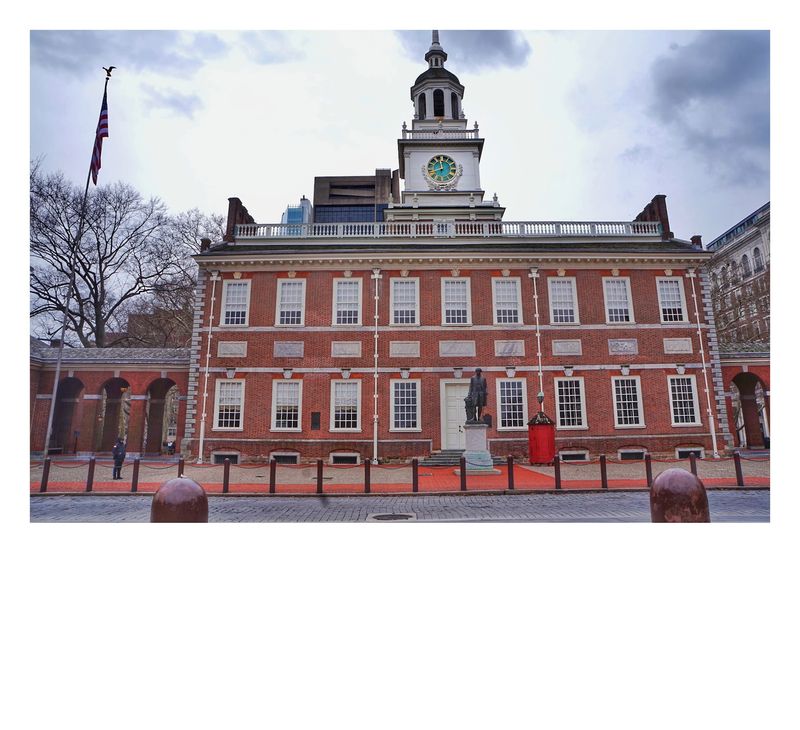
No building in America carries more constitutional weight than this one, and yet it started life as a simple colonial government office. Independence Hall, completed in 1756, originally served as the Pennsylvania State House, housing all three branches of the colonial government before history had grander plans for it.
From 1775 to 1781, the Second Continental Congress met here, establishing the Continental Army and adopting the Declaration of Independence on July 4, 1776. Eleven years later, the same building hosted the Constitutional Convention, where delegates debated and signed the United States Constitution.
Guided tours take visitors through the restored Assembly Room, where those landmark decisions were made around the same long wooden tables. The surrounding Independence National Historical Park spans 54 acres and connects Congress Hall, Old City Hall, and the Liberty Bell Center by brick walkways. Timed tickets are recommended, and arriving 30 minutes early helps ensure a smooth visit.
2. Museum of the American Revolution, Philadelphia, Pennsylvania
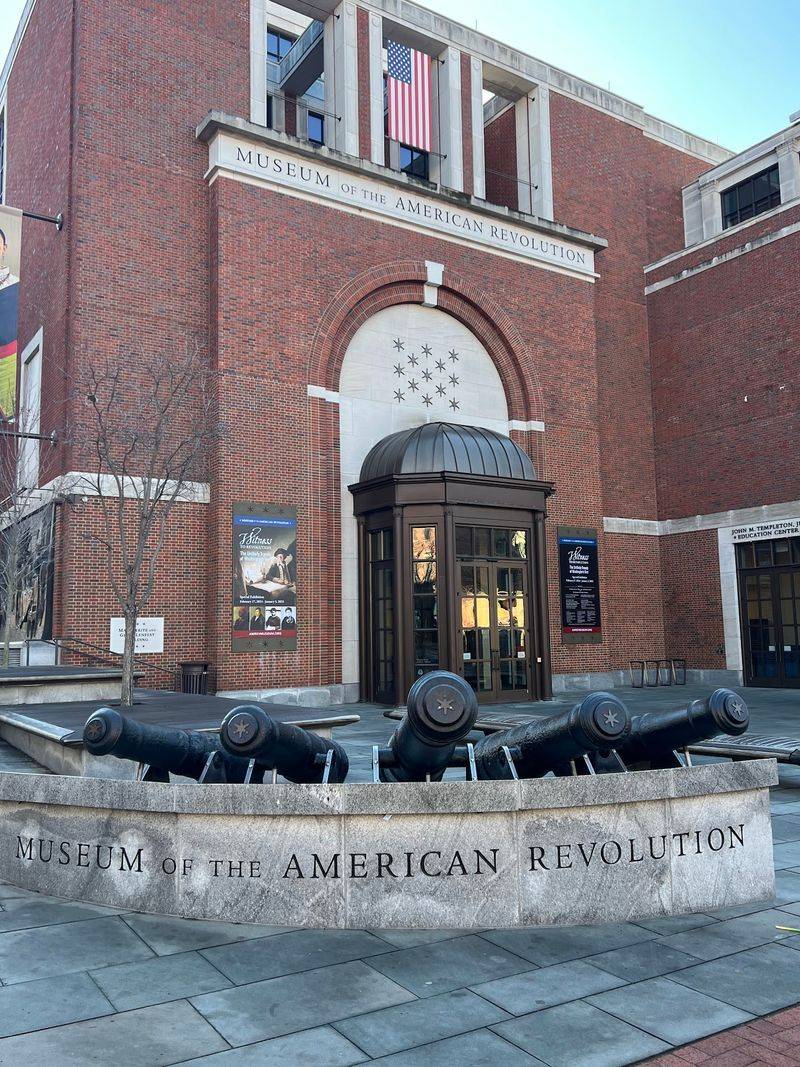
Opened in 2017, this museum does something rare: it tells the Revolutionary War story from multiple perspectives at once. Exhibits cover the experiences of Native Americans, African Americans, women, and Loyalists alongside the more familiar narratives of Patriot soldiers and Founding Fathers.
The centerpiece of the collection is General George Washington’s original field headquarters tent, the very canvas structure that served as his mobile office and sleeping quarters throughout the war. It is displayed in a custom-built gallery designed specifically to showcase the artifact’s scale and historical significance.
Beyond the tent, the museum holds an impressive range of weaponry, uniforms, personal letters, and interactive displays that let visitors engage directly with the material rather than simply view it from a distance. Recreated historical environments and short films help fill in context at key points along the journey. For families especially, this museum balances depth with accessibility in a way that keeps everyone genuinely engaged from start to finish.
3. Valley Forge National Historical Park, King of Prussia, Pennsylvania
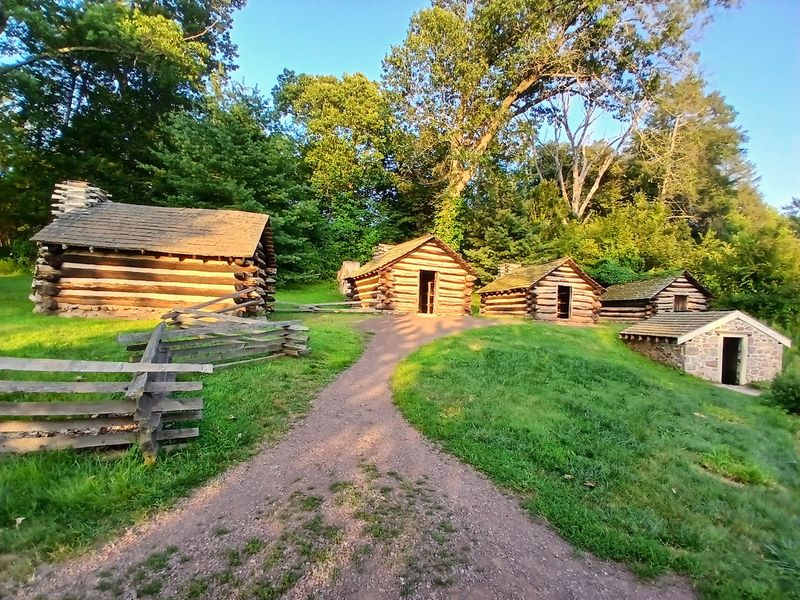
The winter of 1777 to 1778 is one of the most studied chapters in American military history, and Valley Forge is where it actually happened. Roughly 12,000 Continental Army soldiers camped here through brutal cold, food shortages, and widespread illness, yet emerged in the spring as a more disciplined fighting force after training under Prussian officer Baron von Steuben.
Visitors can explore reconstructed soldier huts that show just how cramped and basic the living conditions were. Washington’s Headquarters, a modest stone house known as the Isaac Potts House, is open for tours and gives a clear sense of how the general managed operations during this critical period.
The park covers 3,500 acres and includes over 30 miles of trails, the National Memorial Arch, the Artillery Park, and numerous regimental monuments. Ranger-led programs run regularly and add valuable context to what visitors see on the ground. The combination of open landscape and layered history makes this one of the most rewarding stops in all of Pennsylvania.
4. Brandywine Battlefield Park, Chadds Ford, Pennsylvania
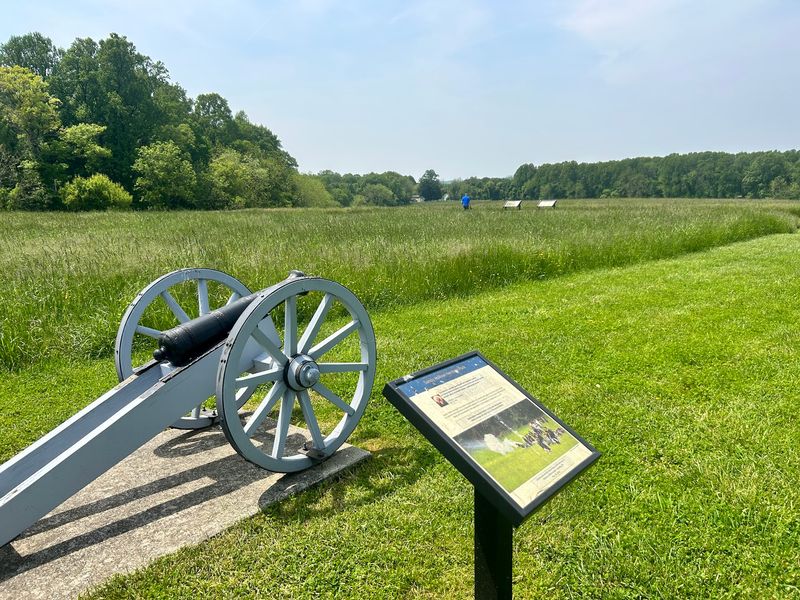
More than 30,000 soldiers clashed here on September 11, 1777, making it the largest single-day engagement of the entire Revolutionary War. British General William Howe outmaneuvered Washington’s Continental Army, forcing a retreat that ultimately led to the British occupation of Philadelphia just weeks later.
The park preserves 52 acres of the original battlefield, including two historic colonial houses. Washington used the Benjamin Ring House as his headquarters, while the Marquis de Lafayette commanded from the Gideon Gilpin House. Both structures are open for tours and offer a close look at the conditions military leaders operated under during active campaigns.
The visitor center provides maps, exhibits, and detailed explanations of troop movements that help visitors understand the scope of the engagement across the wider landscape. Marked trails allow for self-guided walks through areas where key tactical decisions were made. Periodic reenactments add a layer of drama to the already compelling story of a battle that changed the course of the Philadelphia campaign.
5. Washington Crossing Historic Park, Washington Crossing, Pennsylvania
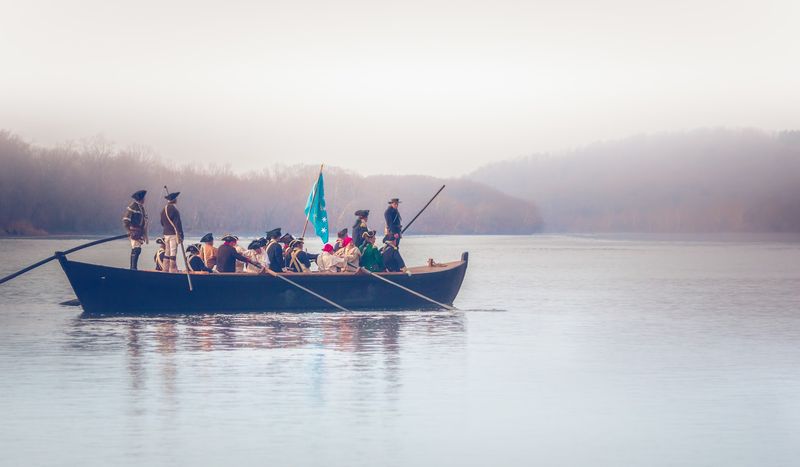
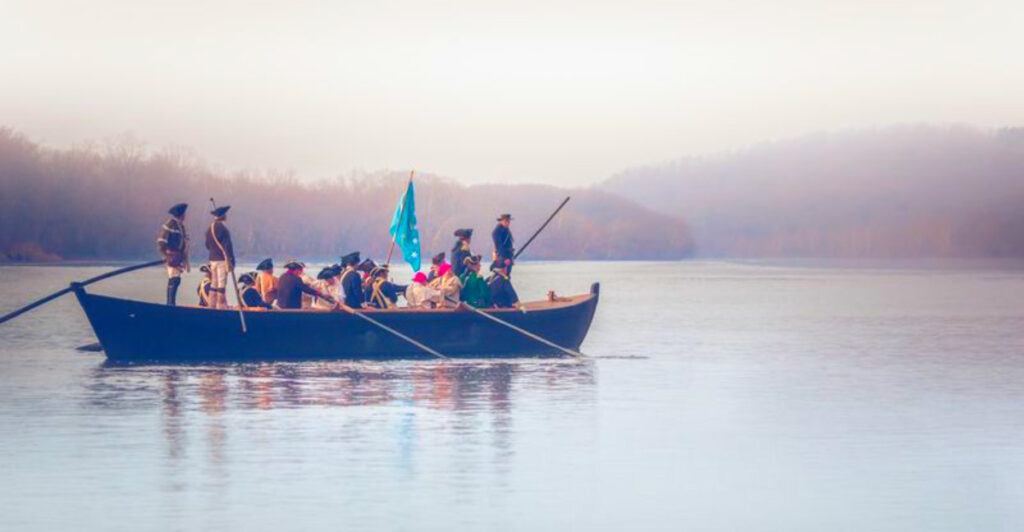
Christmas night, 1776 was not a time for celebration in the Continental Army. It was the night Washington led roughly 2,400 soldiers across an icy Delaware River in complete secrecy, setting up a surprise attack on Hessian forces in Trenton, New Jersey that reversed the momentum of the entire war.
The park commemorating this bold move preserves several key historic structures, including the McConkey’s Ferry Inn, which functioned as a guard post on the night of the crossing, and the Thompson-Neely House, where planning meetings took place. Replica Durham boats, the flat-bottomed vessels used that night, are displayed near the riverbank and help visitors grasp the physical challenge of the operation.
Walking paths, river views, and interpretive signage connect the various sites within the park. Every year, a reenactment draws thousands of visitors to witness a dramatic recreation of the crossing itself. The annual event has become a beloved tradition that keeps the memory of Washington’s most daring gamble vivid and accessible for new generations.
6. Graeme Park, Horsham, Pennsylvania
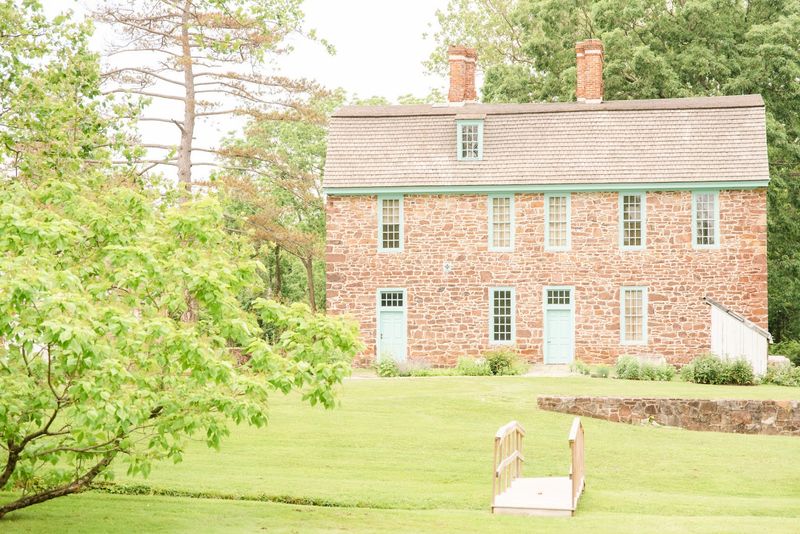
Built in 1722 by Sir William Keith, a former Pennsylvania colonial governor, this estate represents one of the oldest and best-preserved examples of early 18th-century gentry architecture in the entire state. The Keith House, a two-and-a-half-story stone mansion, still contains much of its original interior woodwork, which is remarkable given its age.
The Revolutionary connection comes through the Fergusson family. Elizabeth Graeme Fergusson, a celebrated literary figure of her era, owned the estate during the war. Her husband Henry Hugh Fergusson sided with the British, which led to the confiscation of the property by the new American government, leaving Elizabeth in a difficult legal and personal position for years.
Guided tours explore both the architectural details of the house and the complicated human stories behind it. The grounds include walking paths, open green space, and a small pond, making it a pleasant place to spend time even beyond the formal tour. Graeme Park offers a quieter, more personal angle on the Revolution that larger battlefield sites simply cannot provide.
7. Peter Wentz Farmstead, Worcester, Pennsylvania
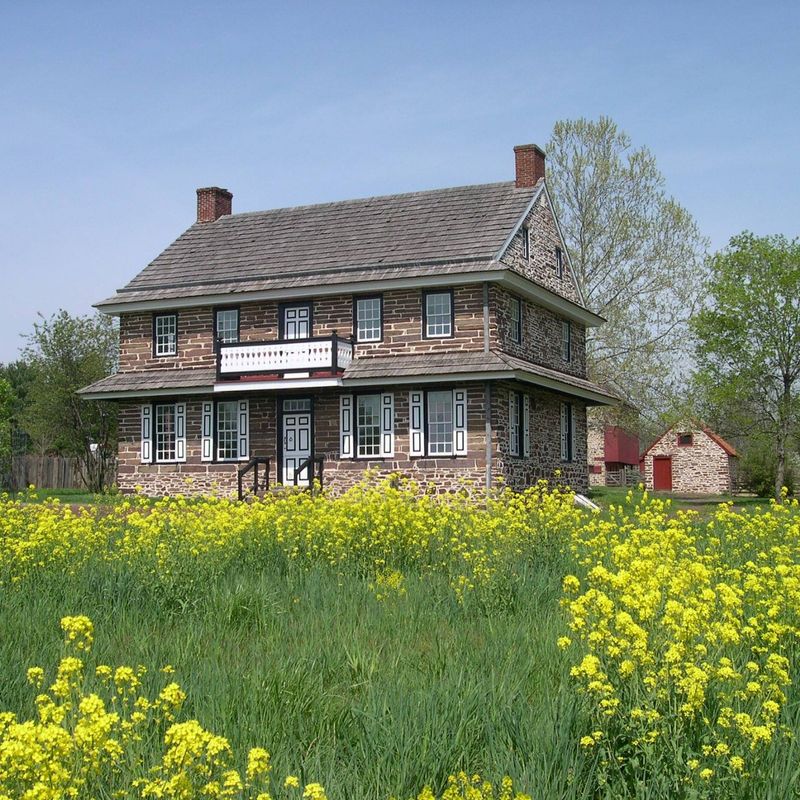
George Washington used this working Pennsylvania German farm as his military headquarters twice in October 1777, first while planning the Battle of Germantown and again while regrouping after the engagement. That dual role makes the Peter Wentz Farmstead one of the more unusual Revolutionary sites in the state.
The farmstead has been meticulously restored and operates today as a living history site. Costumed interpreters demonstrate colonial farming practices, crafts, and daily routines throughout the year, giving visitors a grounded sense of what 18th-century rural life actually looked like rather than just what it is described as in history books.
The stone farmhouse, barn, kitchen garden, and various outbuildings are all open for exploration, and each space has been furnished with period-appropriate items that reflect both the farm’s agricultural function and its temporary military use. Educational programs run regularly for school groups and general visitors alike. The site manages to balance military history and everyday colonial life in a way that feels genuinely informative without ever becoming dry or overly academic.
8. Pennypacker Mills, Schwenksville, Pennsylvania
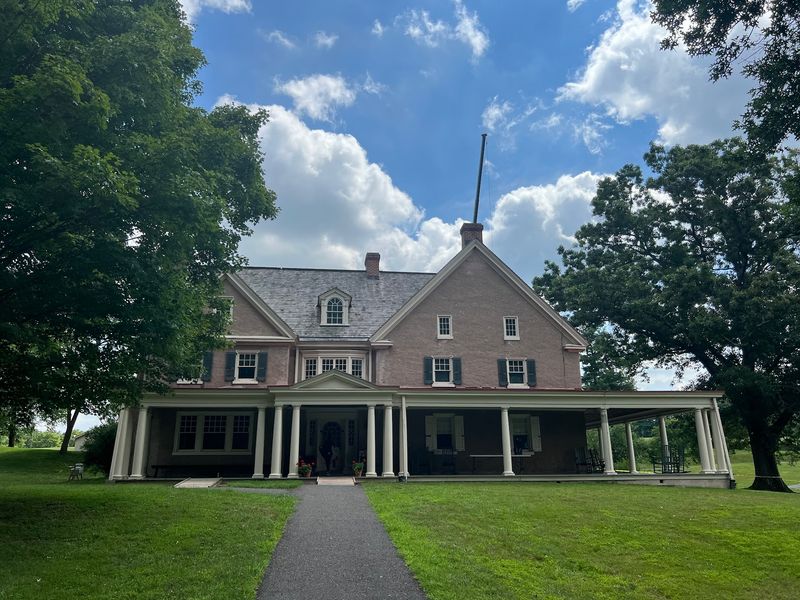
After the Battle of Germantown in October 1777, Washington needed a place to regroup his forces and assess the next phase of the Philadelphia campaign. The Pennypacker estate in Schwenksville provided exactly that, serving as a temporary headquarters where the general could plan while keeping his army in position across southeastern Pennsylvania.
The stone mansion at the center of the property has been carefully maintained and furnished with a mix of period pieces and original Pennypacker family artifacts. Guided tours walk visitors through the house and explain how its layout functioned during Washington’s stay, connecting the domestic details to the broader military context of the campaign.
The surrounding 170 acres include farmland, wooded trails, gardens, a barn, and a springhouse, all of which can be explored on foot. Seasonal events and educational programs bring colonial crafts and agricultural traditions to life throughout the year. The contrast between the estate’s peaceful rural setting and the urgent military decisions once made within its walls gives Pennypacker Mills a quiet but compelling historical gravity.
9. Hope Lodge, Fort Washington, Pennsylvania
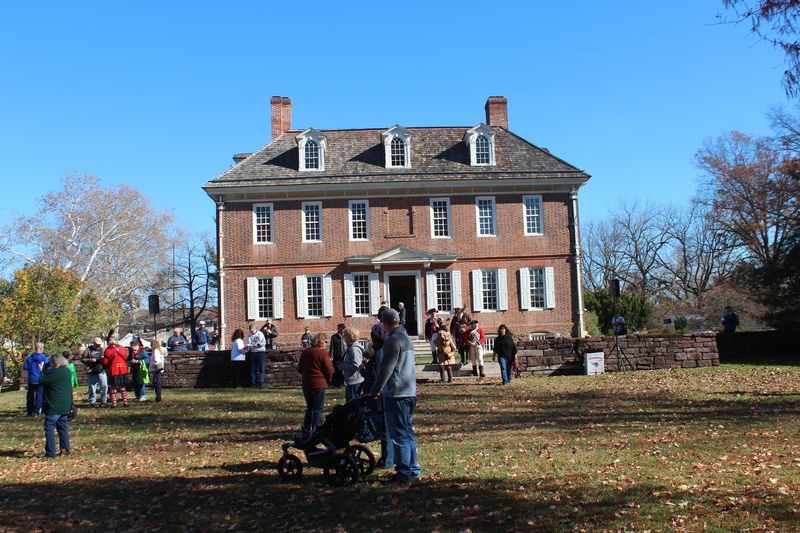
Most Revolutionary War sites focus on battles and generals, but Hope Lodge tells a different kind of story. During the Whitemarsh Encampment of November and December 1777, this stately 1740s Georgian mansion served as the headquarters of Dr. John Cochran, Surgeon General of the Continental Army and a close personal friend of George Washington.
Cochran managed the Army’s medical operations from this elegant estate while Washington’s forces held their defensive position at Whitemarsh before eventually moving to Valley Forge. The contrast between the mansion’s refined architecture and the medical challenges unfolding around it is one of the more thought-provoking aspects of a visit here.
The restored interiors showcase fine 18th-century woodwork, period furnishings, and formal room arrangements that reflect the lifestyle of a prosperous colonial landowner. Formal gardens and surrounding grounds are open for self-guided exploration. Seasonal living history programs periodically demonstrate aspects of colonial domestic life and 18th-century medical practice, offering a perspective on the Revolution that goes well beyond battlefield tactics and military strategy.
10. Paoli Battlefield Historical Park, Malvern, Pennsylvania
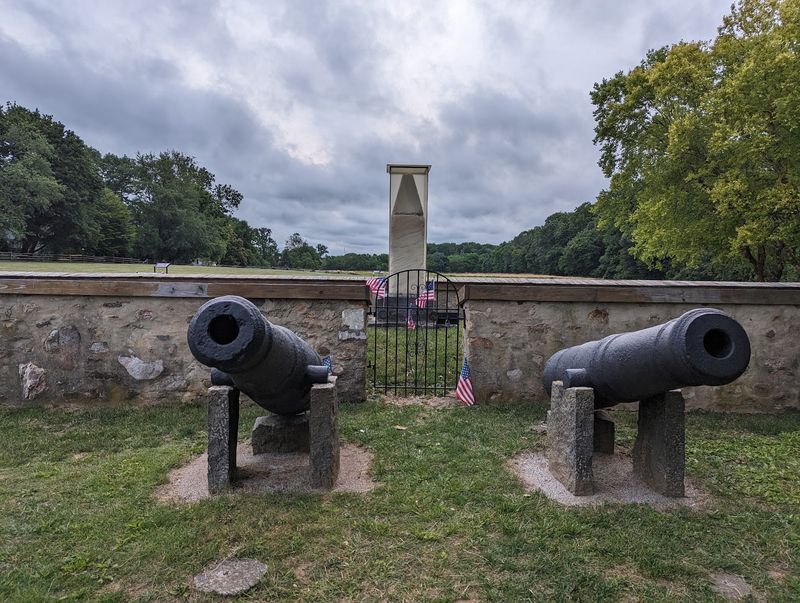
The phrase “Remember Paoli” became a rallying cry for American troops in the months that followed the events of September 20, 1777. That night, British forces launched a surprise bayonet attack on General Anthony Wayne’s encampment, inflicting heavy casualties and creating one of the most controversial episodes of the entire Revolutionary War.
The battlefield today covers 50 acres of preserved land in Malvern, with walking paths, interpretive displays, and historical markers that guide visitors through the sequence of events. A stone monument erected in 1817 stands near the site of the American encampment and is recognized as one of the oldest war memorials in the United States.
Educational signage explains both the British tactical approach and the American response, while also addressing the historical debate over whether the term “massacre” accurately describes the engagement. Annual observances and living history programs mark the anniversary of the battle each year. Paoli Battlefield is often overlooked in favor of larger sites, but it rewards visitors who seek a deeper and more complete understanding of the Philadelphia campaign.
11. Fort Mifflin, Philadelphia, Pennsylvania
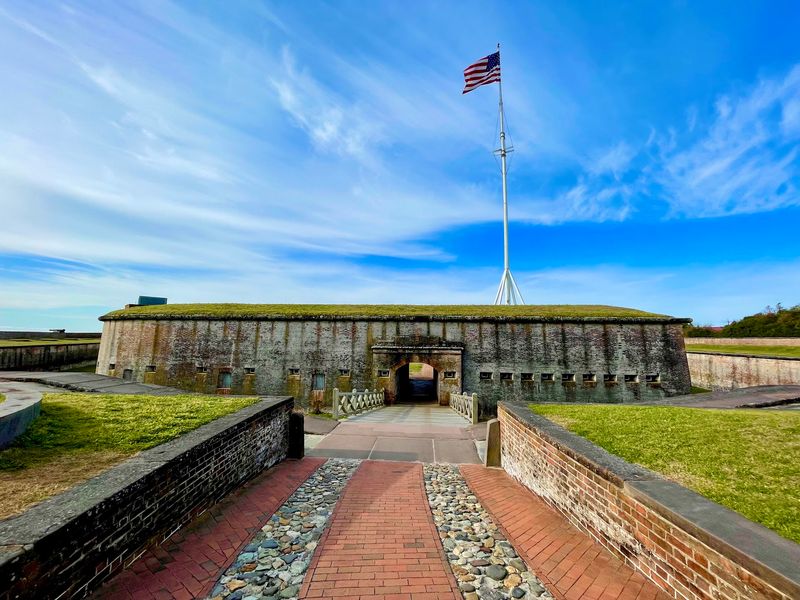
For six weeks in the fall of 1777, a small American garrison held this riverside fort against a determined British naval siege, and their resistance changed the course of the Philadelphia campaign. Fort Mifflin’s defenders were dramatically outnumbered and outgunned, yet they delayed British resupply of occupied Philadelphia long enough to matter strategically for the Continental Army.
Much of what visitors see today dates directly to the Revolutionary era, including the stone walls, barracks, casemates, officers’ quarters, and powder magazines. The fort’s layout along the Delaware River makes the strategic logic of its position immediately clear, as any British ship heading upriver toward Philadelphia had to pass within range of its guns.
Regular guided tours explain the engineering of the fortification and the specific events of the 1777 siege. Historical demonstrations, including cannon firings and musket drills, run throughout the year and give the site an energetic, hands-on atmosphere. Fort Mifflin is a National Historic Landmark, and its preserved condition makes it one of the most authentically immersive Revolutionary War sites anywhere in Pennsylvania.
12. Historic Trappe, Trappe, Pennsylvania
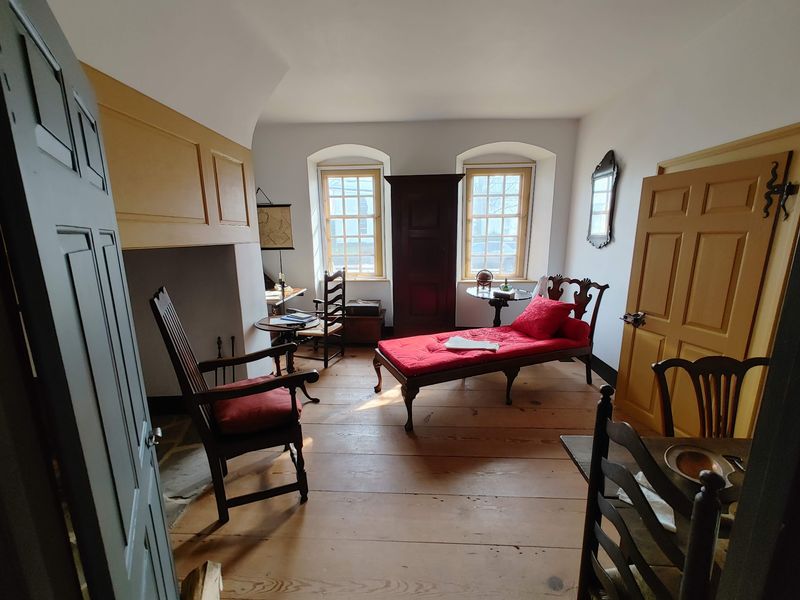
Not every Revolutionary story involves a battle. Historic Trappe, a small borough with roots in the early 1700s, preserves a collection of colonial-era buildings that reveal how ordinary Pennsylvania German families experienced the Revolution and shaped the new nation that followed it.
The most prominent landmark is the Speaker’s House, the 1763 home of Frederick Muhlenberg, who became the first Speaker of the United States House of Representatives. The house has been restored to its 18th-century appearance and is open for tours that cover both Muhlenberg’s personal history and his broader role in establishing the institutions of the new republic.
The Center for Pennsylvania German Studies adds another layer by offering exhibits and programs focused on the cultural contributions of the Pennsylvania German community during the colonial and post-Revolutionary periods. This group played a significant role in supplying the Continental Army and navigating the complex political landscape of the era. Historic Trappe may not draw the crowds of Valley Forge or Independence Hall, but it offers a genuinely authentic and unhurried glimpse into the human fabric of Revolutionary Pennsylvania.
Share this story