Paris is one of those cities where even the ground beneath your feet has a story to tell. Most visitors spend their time looking up at grand architecture and famous landmarks, but an entirely different city exists just below street level.
Beneath the cobblestones and busy boulevards lies a sprawling underground landscape shaped by centuries of quarrying, engineering, burial, war, and infrastructure. Former limestone quarries stretch for hundreds of kilometers.
Ancient Roman ruins sit directly below medieval foundations. A functioning canal disappears underground and reappears on the other side.
Some of these hidden worlds are open to the public and easy to visit. Others are restricted, sealed off, or known only to a small community of underground explorers.
Together, they tell the story of how Paris was built, rebuilt, and built again, layer by layer, right on top of itself. Get ready to go underground.
1. The Archaeological Crypt of the Ile de la Cite, 4th Arrondissement
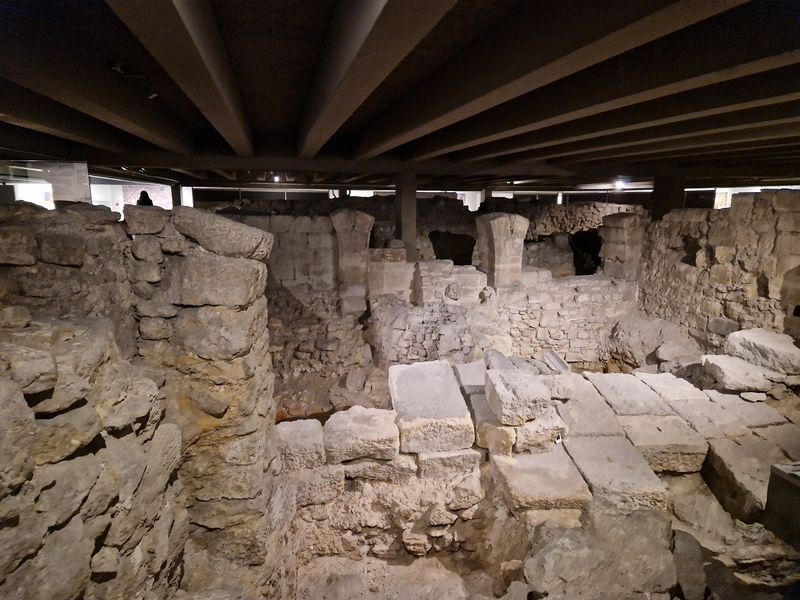
Just a short walk from Notre-Dame Cathedral, an entrance leads not into a vault of bones but into a museum built entirely from the remains of older cities. The Archaeological Crypt of the Ile de la Cite opened in 1980, preserving discoveries uncovered during excavations in the cathedral square from 1965 to 1972.
Considered the largest archaeological crypt in Europe, the site contains Roman defensive walls, remnants of 4th-century thermal baths with underfloor heating systems, ancient port structures, and medieval street foundations. Scale models and multimedia exhibits help visitors understand how the island evolved across more than two thousand years.
The crypt makes something easy to forget suddenly concrete: modern Paris was built directly on top of multiple earlier versions of itself. Above is one of the most visited squares in the world.
Below is the evidence of everything that came before it.
2. The Paris Sewer Museum, 7th Arrondissement
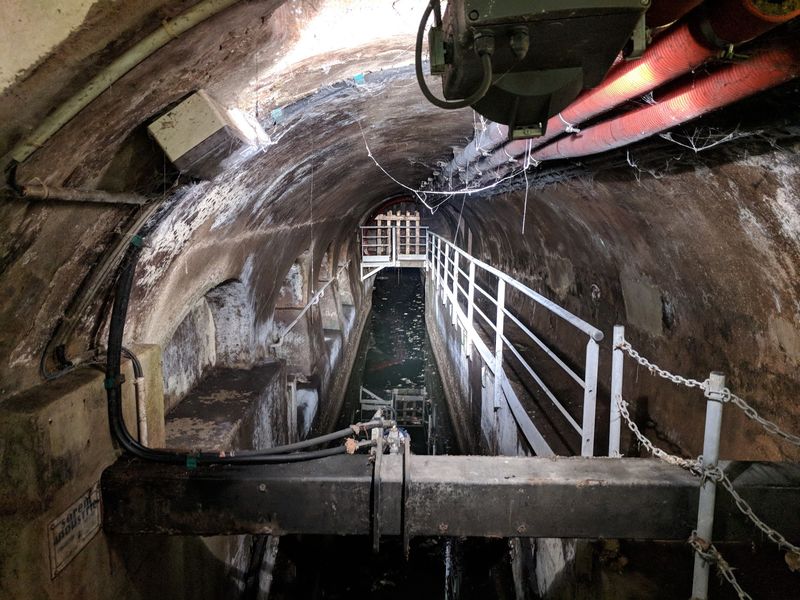
Paris has built an entire museum around something most cities prefer not to advertise. The Musee des Egouts de Paris takes visitors into the actual working sewer network beneath the 7th arrondissement, near the Pont de l’Alma, offering a surprisingly educational tour of the infrastructure that keeps the city functioning.
The history begins with early medieval drainage efforts, but the system expanded dramatically during the 19th century under Baron Haussmann and engineer Eugene Belgrand. Today, the network stretches approximately 2,600 kilometers.
Visitors can see original machinery, follow exhibits tracing the system’s development, and observe how underground tunnels are labeled to mirror the street names above.
Renovations completed in 2021 improved accessibility and updated the visitor experience. The museum stands as a practical reminder that Paris’s famous boulevards could not exist without the hidden engineering directly beneath them.
3. The Pantheon Crypt, 5th Arrondissement
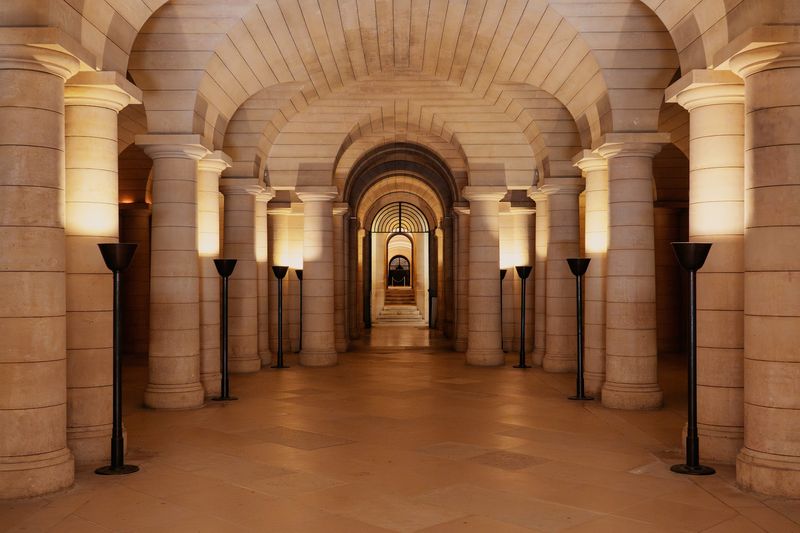
The Pantheon’s exterior is designed to impress from a distance, all columns and an enormous dome dominating the Latin Quarter skyline. What many visitors do not expect is how dramatically the mood shifts when they descend into the crypt below it.
France’s secular mausoleum holds the tombs of figures including Victor Hugo, Alexandre Dumas, Emile Zola, Voltaire, Jean-Jacques Rousseau, and Marie Curie, the first woman honored here for her own achievements. More recent additions include Josephine Baker and Simone Veil, reflecting an evolving idea of national legacy.
Originally designed as a church dedicated to Saint Genevieve and completed in 1790, the building was repurposed during the French Revolution as a national shrine. The crypt corridors feel restrained and deliberate, a place built for reflection rather than spectacle, with France’s cultural memory preserved in stone a few meters below street level.
4. The Crypte du Martyrium de Saint-Denis, Montmartre
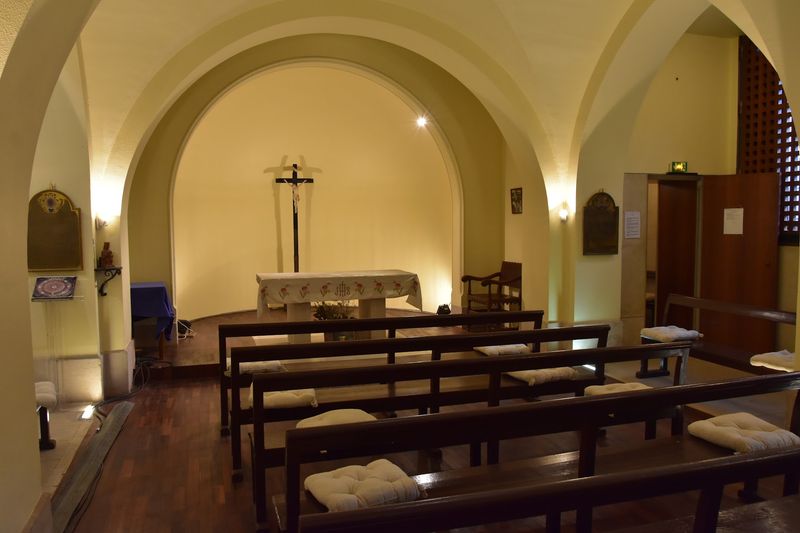
Montmartre is famous for its artists, its hilltop views, and the white dome of Sacre-Coeur. But a much older and quieter story exists just beneath the surface at 11 Rue Yvonne le Tac, where a small underground crypt marks one of the district’s most historically significant locations.
The Crypte du Martyrium de Saint-Denis is traditionally linked to the martyrdom of Saint Denis, the first bishop of Paris, who was executed in the 3rd century. The site became a pilgrimage destination as early as the 5th century.
It also carries a second layer of significance: on August 15, 1534, Ignatius of Loyola and six companions made their founding vows here, an event directly tied to the creation of the Jesuit order.
The current structure was rebuilt between 1884 and 1887. Public access is limited, generally available only on Friday afternoons, which preserves its character as a place of quiet reflection rather than a tourist attraction.
5. The Catacombs of Paris, 14th Arrondissement
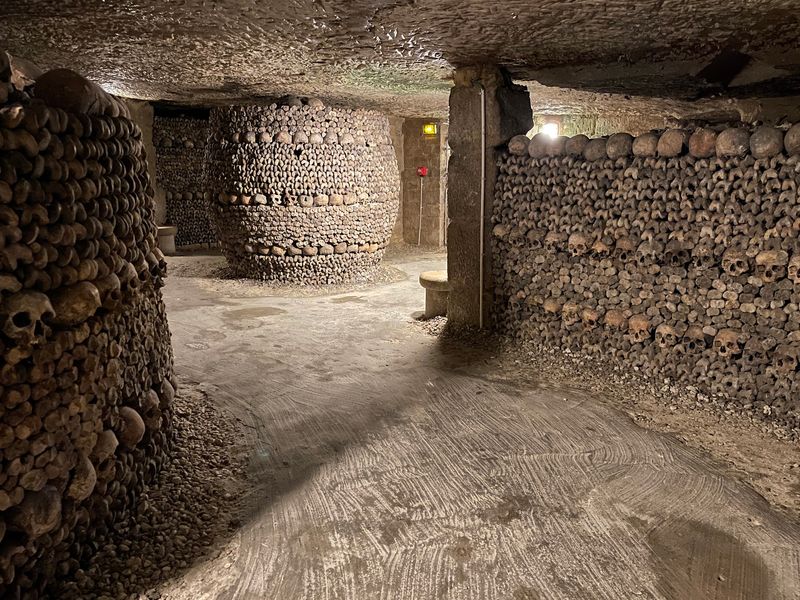
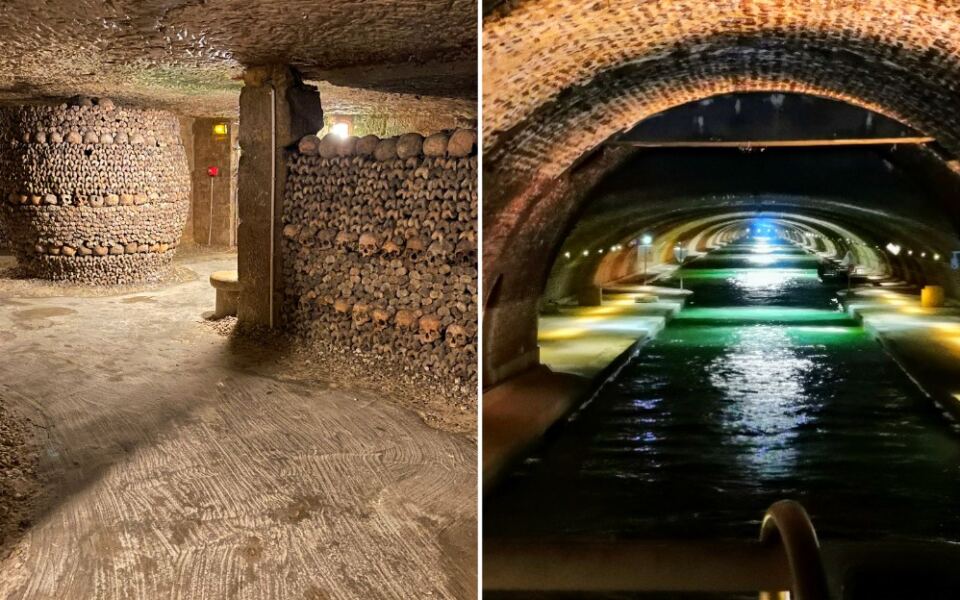
Over six million Parisians rest beneath the city in one of the world’s most unusual public attractions. The Catacombs occupy part of a vast network of former limestone quarries, repurposed in the late 18th century when overcrowded cemeteries created serious public health concerns.
Beginning in 1786, human remains were transferred underground at night, a process that continued until 1860. Today, visitors descend about 20 meters beneath the 14th arrondissement and walk a 1.5-kilometer circuit through galleries where skulls and bones are arranged with surprising precision.
The public route represents only a small fraction of the total quarry network beneath southern Paris. Around 600,000 people visit annually, and tickets must be booked in advance.
What makes the Catacombs genuinely fascinating is not just what they contain, but how little of the underground city they actually reveal.
6. The Reservoirs Beneath Montsouris, 14th Arrondissement
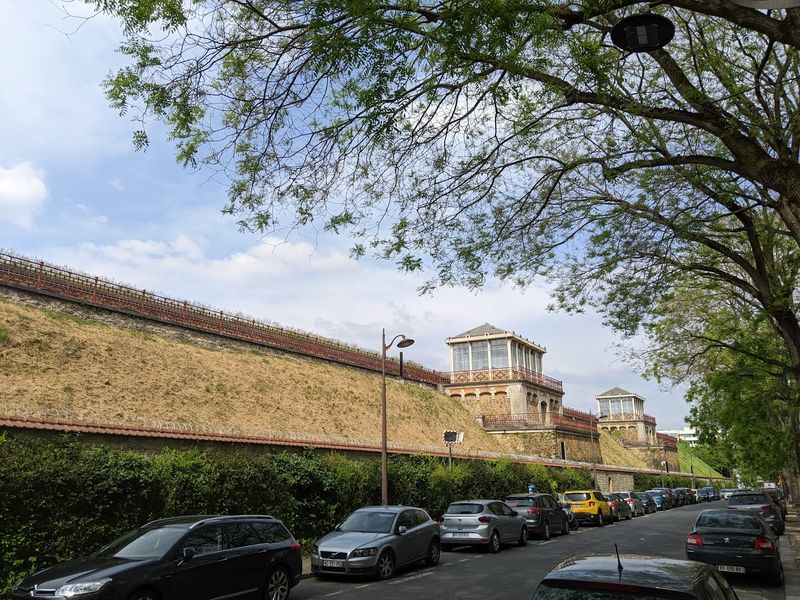
Not every hidden world beneath Paris is ancient or abandoned. Some are still working, quietly performing essential functions while the city carries on above them.
The Reservoirs de Montsouris, near Parc Montsouris in the 14th arrondissement, form a critical part of the city’s drinking water system and have done so since the 19th century.
Constructed between 1869 and 1874 under engineer Eugene Belgrand, the reservoirs were built to address Paris’s rapid population growth and the urgent need for a reliable clean water supply. The underground space holds between 200,000 and 300,000 cubic meters of water, supported by over 1,800 masonry pillars beneath vaulted ceilings.
The facility was built within former limestone quarries, turning an abandoned problem into a practical solution.
Public access is highly restricted, limited to special occasions like Heritage Days. Most Parisians walk past the area without any awareness that a major piece of the city’s water infrastructure lies directly below.
7. The Underground Spaces Beneath Palais Garnier, 9th Arrondissement
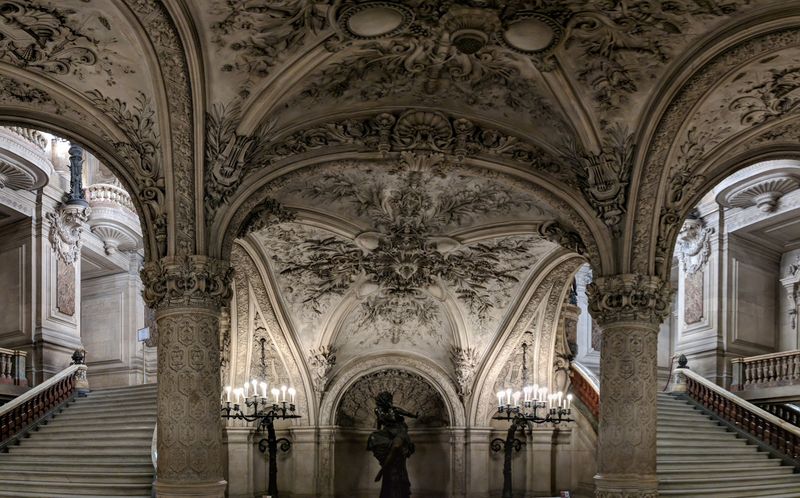
Gaston Leroux did not invent the idea of water beneath the Paris Opera. He simply recognized a genuinely strange engineering fact and turned it into fiction.
During construction of the Palais Garnier in the 1860s, architect Charles Garnier ran into a persistent problem: the marshy ground and a rising water table kept flooding the excavation site.
Rather than draining the water indefinitely, Garnier designed a sealed masonry cistern to contain it. Known as la cuve, this underground reservoir relieved external water pressure on the building’s foundations and also served as a fire reserve.
The cistern is still maintained today and is used by Paris firefighters for dive training.
The fictional lake in Leroux’s story was inspired by this real, functional space. Few buildings in Paris demonstrate the overlap between practical engineering and cultural mythology quite as effectively as the Palais Garnier does.
8. The Underground Canal Saint-Martin, 10th and 11th Arrondissements
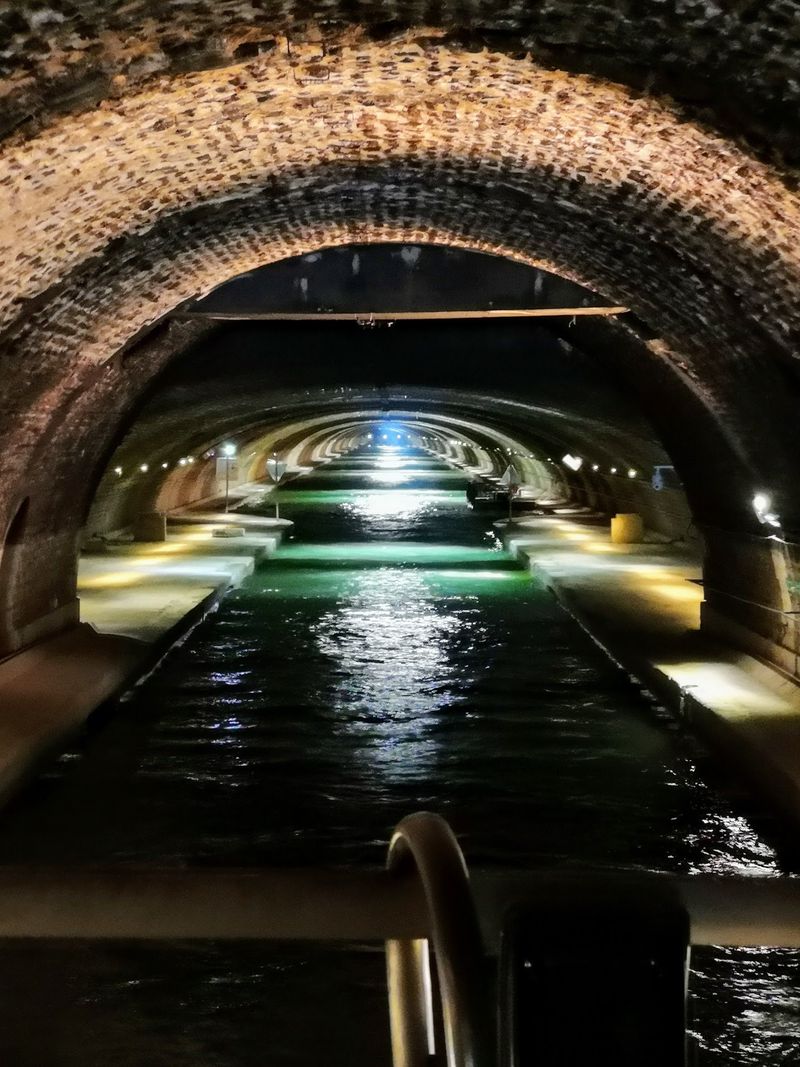
Part of the Canal Saint-Martin pulls off a trick that few waterways in the world can manage: it simply vanishes beneath the city. Originally commissioned by Napoleon I in 1802 and inaugurated in 1825, the canal was designed to supply Paris with drinking water and facilitate goods transport.
During Haussmann’s 19th-century urban redesign, nearly two kilometers of the canal were covered to create new boulevards, including Boulevard Jules Ferry and Boulevard Richard-Lenoir. The canal did not disappear.
It continued flowing, just underground, through a vaulted subterranean section with openings from above allowing light to filter in.
Tour boats still travel the full route, passing from open-air stretches into the covered section and back out again. The transition is one of Paris’s most unexpected moments.
Rather than replacing the old infrastructure, the city simply built another layer on top and kept the water moving.
9. The World Beneath the Louvre, 1st Arrondissement
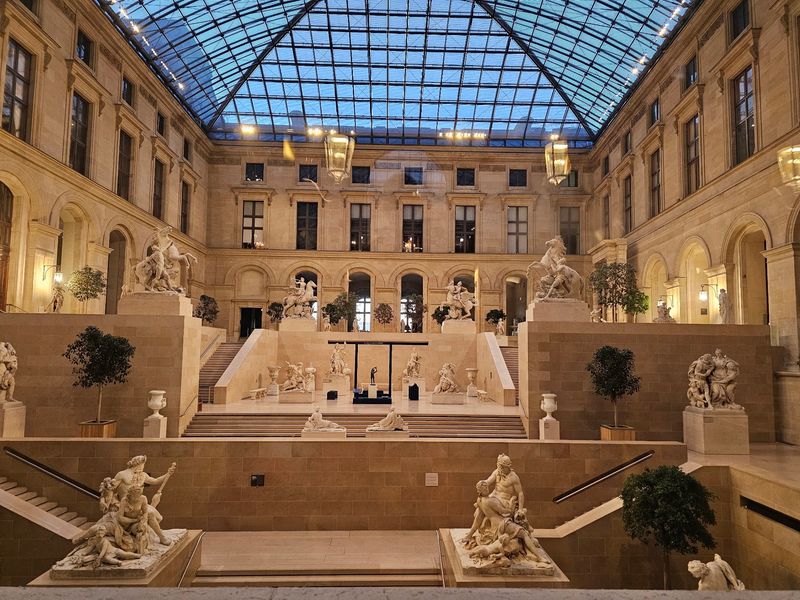
Most visitors arrive at the Louvre for paintings and sculpture. Few realize that the basement holds a different kind of masterpiece: the foundations of a medieval military fortress that predates the museum by several centuries.
King Philip II constructed the original Louvre fortress around 1190 as a defensive structure on the western edge of medieval Paris. It was a military stronghold, not a royal residence, built to guard the city from invasion and control access to the Seine.
During major renovations in the 1980s as part of the Grand Louvre Project, archaeological excavations in the Cour Carree uncovered the original foundations, sections of the medieval moat, and the base of the massive central keep known as the Grosse Tour.
Visitors can walk directly alongside this stonework today. The experience reframes the entire museum, turning what seems like a palace into the latest chapter of a much longer story built on medieval foundations.
10. The World War II Shelters Beneath Paris
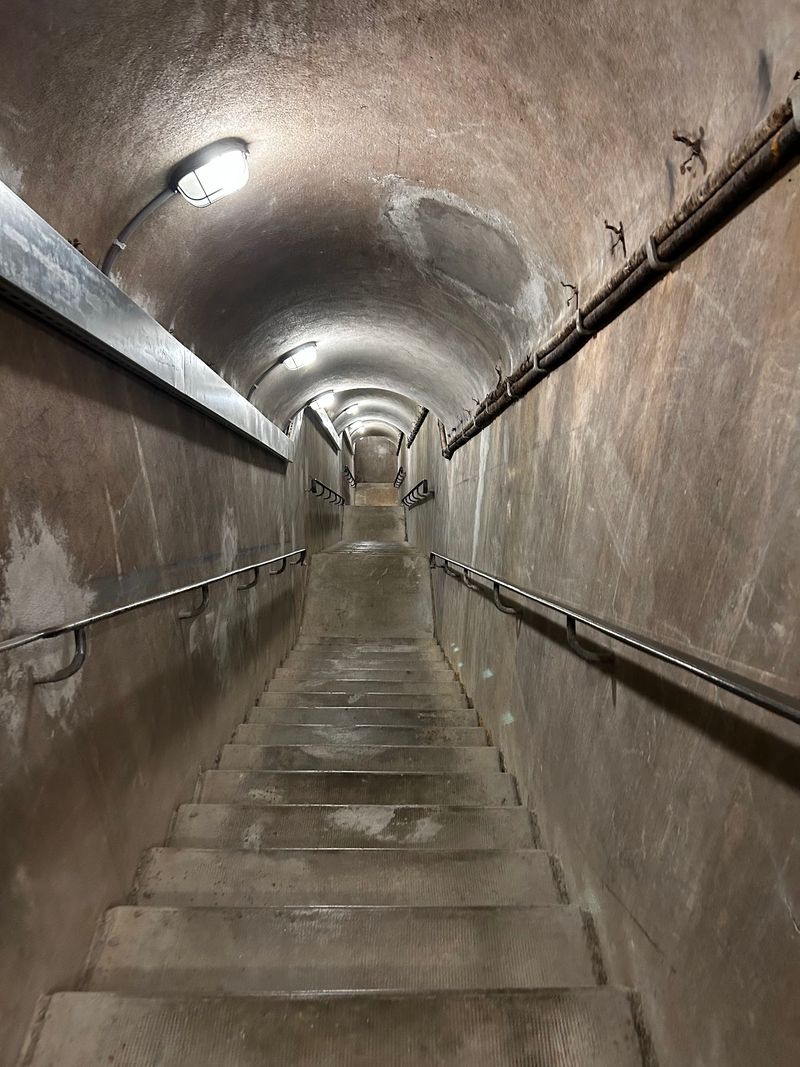
When German forces occupied Paris during World War II, the underground city took on a new and urgent role. Basements, Metro stations, quarry galleries, and purpose-built bunkers became vital spaces for shelter, communication, and coordinated resistance activity.
The most historically significant of these sites is the underground command post used by Colonel Henri Rol-Tanguy during the Liberation of Paris in August 1944. Located 20 meters beneath Place Denfert-Rochereau, the shelter was originally built as an air-raid refuge for public services.
During the uprising, it became the nerve center for the French Forces of the Interior coordinating the fight to retake the city.
Visitors to the Musee de la Liberation de Paris can descend into this preserved space, seeing original telephone switchboards, thick concrete walls, and pedal-powered ventilation systems. Other wartime bunkers exist beneath the Gare de l’Est and even the Eiffel Tower, each a reminder of how the underground city shaped above-ground history.
11. The Unauthorized Catacomb Network, Beneath Southern Paris
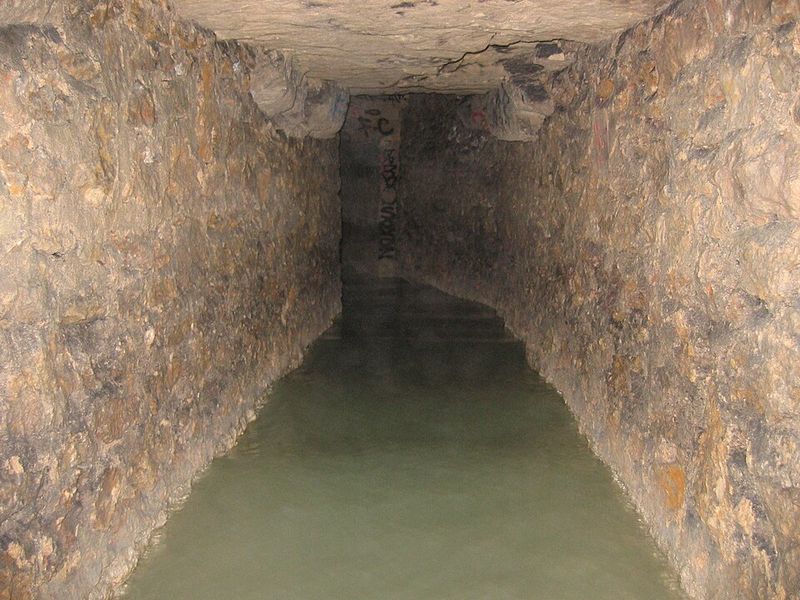
Beyond the official ossuary that draws 600,000 visitors a year, a far larger and largely forbidden underground world extends beneath southern Paris. This sprawling network of former limestone quarries has attracted unauthorized explorers, known as cataphiles, for decades, particularly since the 1970s and 1980s.
Over time, some sections of the network have acquired murals, sculptures, and improvised gathering areas, created by people who spent considerable effort reaching places most Parisians will never see. Accessing these areas has been illegal since 1955.
A specialized police unit, informally called the cataflics, patrols the tunnels and issues fines to those caught underground without authorization.
The hazards are real: the network is complex and largely unmapped, cell signals do not reach underground, passages flood, ground can be unstable, and navigation errors can lead to serious disorientation. The mystery persists precisely because so few people ever see it firsthand.
12. The Petite Ceinture Tunnels, Around Paris
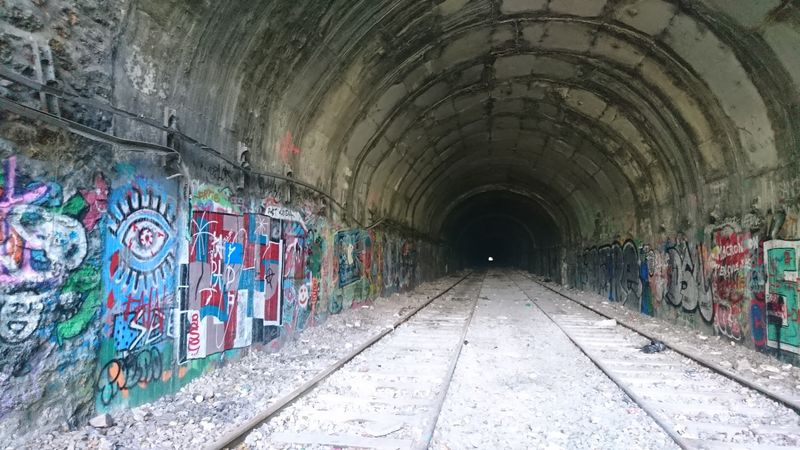
Long before the Metro became the city’s primary transit system, a different railway circled Paris. The Petite Ceinture, a 32-kilometer loop built between 1852 and 1869, carried passengers and freight around the city, connecting major train stations and serving the city’s fortifications.
Passenger service declined sharply after the Metro expanded and was fully discontinued in 1934, though freight operations continued into the 1980s and 1990s. Today, the line exists in several different states.
Some elevated sections have been converted into public walking paths with notable urban biodiversity. Other stretches, including numerous tunnels, remain largely untouched, retaining original tracks, platforms, and station structures.
The tunnels are officially closed and unauthorized entry is not advisable, given uneven terrain, darkness, and other hazards. But the publicly accessible sections already reveal something remarkable: Paris contains the physical remains of an older transportation system woven into the fabric of the modern one.
13. The Carriere des Capucins, 14th Arrondissement
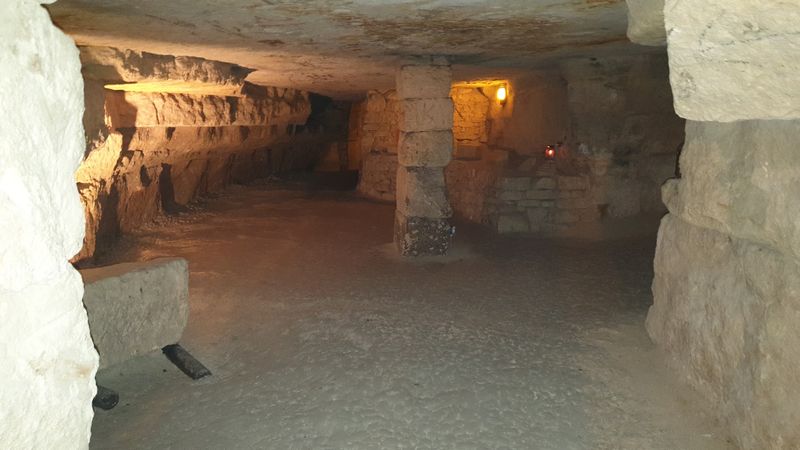
Beneath the area around Cochin Hospital, one section of Paris’s underground quarry network has been preserved as something closer to an outdoor museum than a tourist attraction. The Carriere des Capucins is a medieval limestone quarry active from the 12th to the 17th centuries, running about 1.2 kilometers of galleries roughly 18 meters below ground.
What sets it apart from other sections of the underground network is the evidence left directly on its walls. Quarry workers, inspectors, and engineers marked the tunnels with dates, inscriptions, construction details, and street names corresponding to the surface above.
One underground monument, the Capuchins Fountain from 1810, became the first subterranean structure in France to receive Historic Monument status, in 1990.
Access is strictly limited to small guided groups by reservation through the non-profit SEADACC. That restriction has helped the site retain its character as a historical record rather than a spectacle.
14. The Former Montrouge Quarry Network, 14th Arrondissement
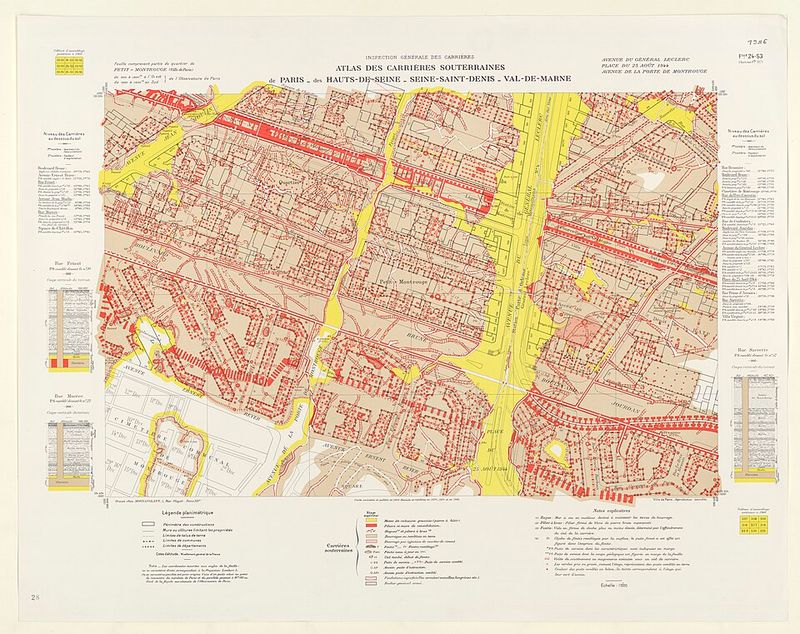
The 14th arrondissement looks perfectly ordinary from street level. Below it, however, lies an astonishing amount of empty space, the legacy of centuries of limestone extraction that left the subsoil honeycombed with abandoned galleries and shafts.
The danger became impossible to ignore in 1774, when a section of Rue d’Enfer collapsed along with parts of nearby buildings. King Louis XVI responded by establishing the Inspection Generale des Carrieres in 1777, charging engineers with mapping and reinforcing the entire underground network.
Under the direction of Charles-Axel Guillaumot, masonry pillars and vaults were installed throughout the tunnels.
Engineers also introduced a practical system: underground passages were labeled with the names of the streets directly above them. This created what historians sometimes describe as a shadow geography, a mirror of the surface city carved into the stone below, allowing workers to navigate the underground network with precision.
Share this story