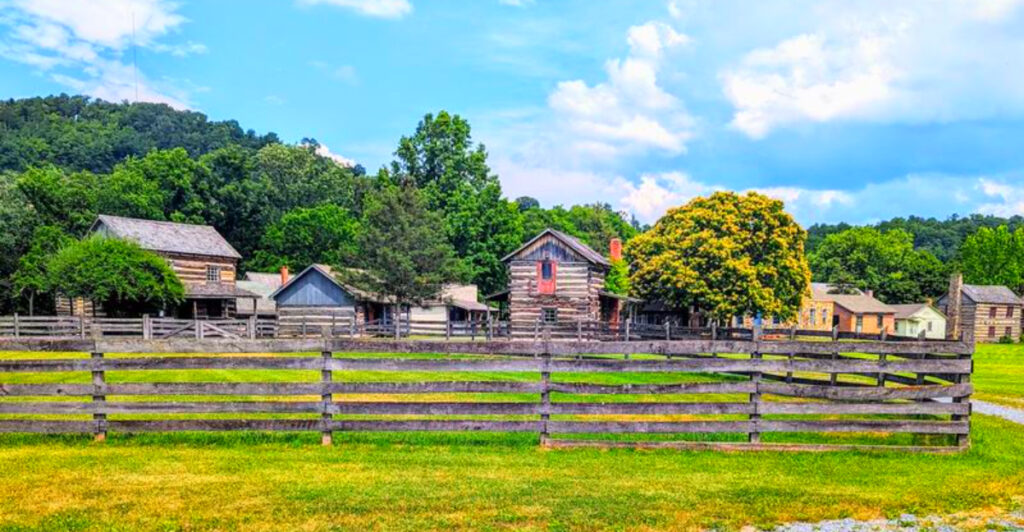
Historic log cabins, live blacksmith demonstrations, a 19th-century covered bridge, costumed interpreters, and more than 40 authentic frontier buildings have made this Bedford destination one of Pennsylvania’s most captivating living history museums. Visitors come for hands-on craft demonstrations, beautifully preserved architecture, immersive historical exhibits, scenic Allegheny Mountain surroundings, and the chance to experience everyday life as it was centuries ago. It’s the kind of place where every building tells a story and every path leads to another fascinating glimpse into America’s past.
The experience extends far beyond the exhibits. Authentic relocated historic structures, interactive QR-code tours, seasonal festivals, passionate volunteer interpreters, and educational programs for all ages have helped this remarkable village become one of Pennsylvania’s most rewarding historical attractions. Every visit offers another opportunity to slow down, explore, and discover how ordinary people shaped life on the American frontier.
Here’s why Old Bedford Village has become one of Pennsylvania’s premier living history destinations and a must-visit attraction for anyone fascinated by early American life.
Where the Past Begins: Address, Location, and First Impressions
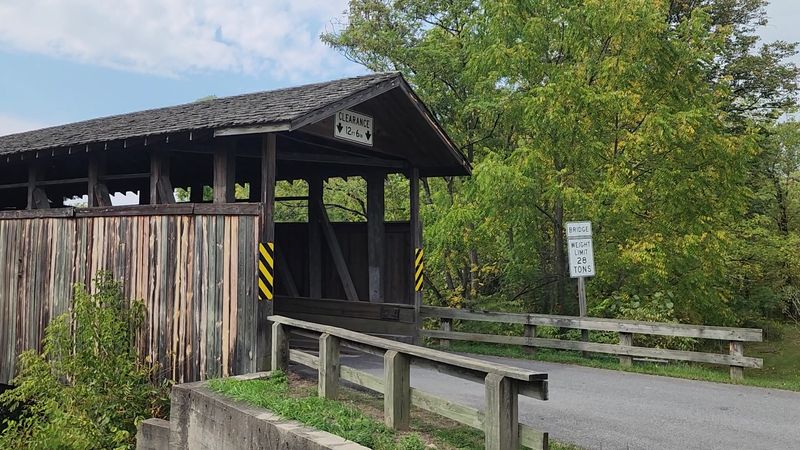
The moment you roll up to Old Bedford Village at 220 Sawblade Road, Bedford, PA 15522, you realize this is not your average history museum. The entrance itself is a 19th-century covered wooden bridge, the Claycomb Covered Bridge, originally built in 1844 and relocated here to serve as the gateway into the village.
Crossing that bridge on foot feels oddly ceremonial, like you are being asked to leave the modern world behind before you even reach the ticket booth. Bedford sits in south-central Pennsylvania, tucked into the Allegheny Mountains, and the surrounding landscape of rolling green hills only adds to the atmosphere.
The village holds a 4.7-star rating from nearly 700 reviews on Google, which tells you a lot before you even park your car. Families, solo travelers, and road-trippers have all found their way here, many by happy accident while passing through the region. First impressions here are hard to shake.
How a Bicentennial Dream Became a Living History Museum
Old Bedford Village opened its doors in 1976, timed deliberately to coincide with America’s Bicentennial celebrations. The founders wanted to create something that honored not the grand political history of the nation, but the quieter, harder story of everyday rural life on the Pennsylvania frontier.
What makes the site’s origin even more layered is that the land itself carries ancient history. Archaeological evidence shows that a Monongahela Native American village occupied this ground between 1250 and 1600 A.D., long before European settlers arrived in the region.
The museum was established specifically to represent Bedford County’s heritage and the broader American frontier experience, focusing on the period from 1700 to 1899. Rather than constructing replicas, the founders made the remarkable decision to relocate authentic historic buildings from across Bedford County and reassemble them here.
That commitment to using real structures rather than reproductions is what separates this place from most living history attractions you will find anywhere in the country.
Forty-Plus Buildings and the Stories They Hold
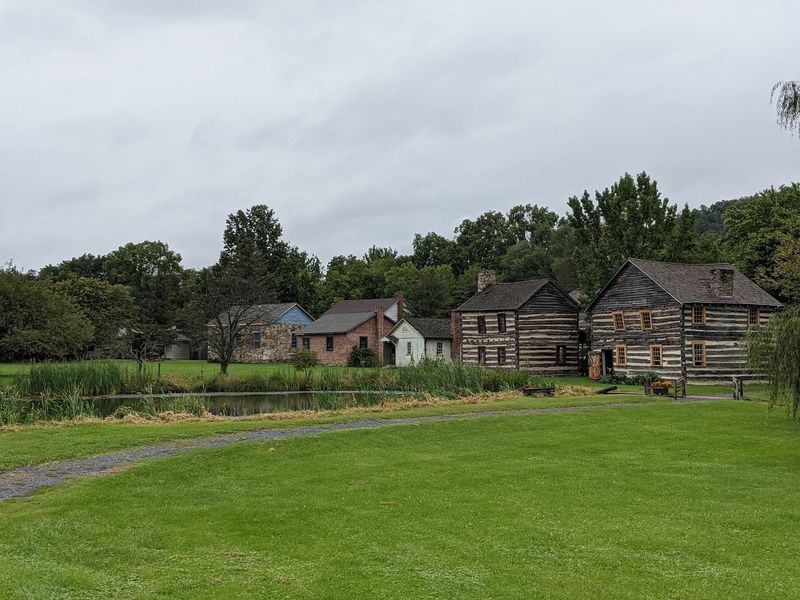
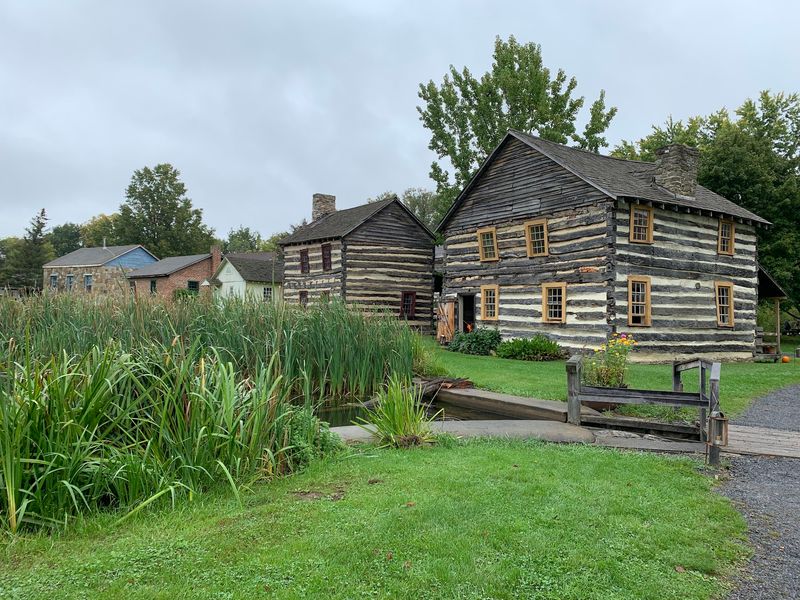
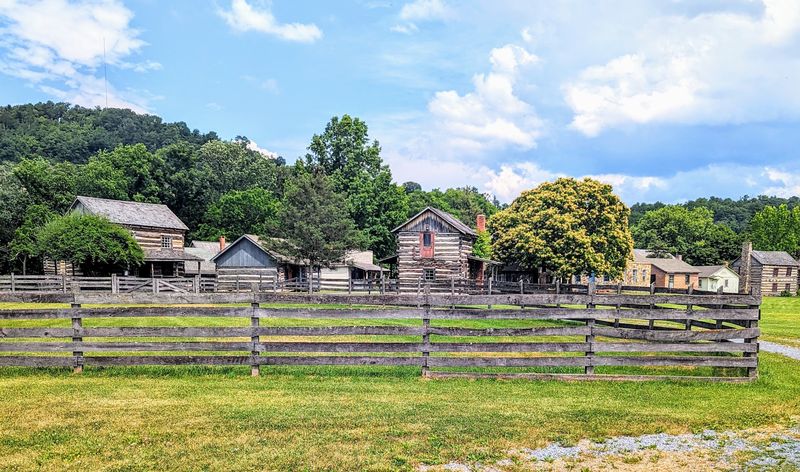
Walking the gravel paths of Old Bedford Village, you quickly understand why some visitors spend three or four hours here and still feel like they missed something. The village contains approximately 40 structures, ranging from modest log cabins to community buildings, all dating from roughly 1750 to 1900.
Each building was carefully disassembled from its original location somewhere in Bedford County, transported to the site, and painstakingly rebuilt to preserve its authenticity. The result is a collection that feels organic rather than manufactured, as though this small town simply grew up on its own over a century and a half.
Notable structures include the 1806 Old Log Church, which holds the distinction of being the oldest standing church in Bedford County. There is also the Kniseley one-room schoolhouse, a colonial-era tavern, and a general store stocked with period-appropriate goods.
The Shoop House, built in 1790, houses artifacts connected to the Native American history of the land, adding another dimension to what you discover here.
The Covered Bridge That Sets the Tone for Everything
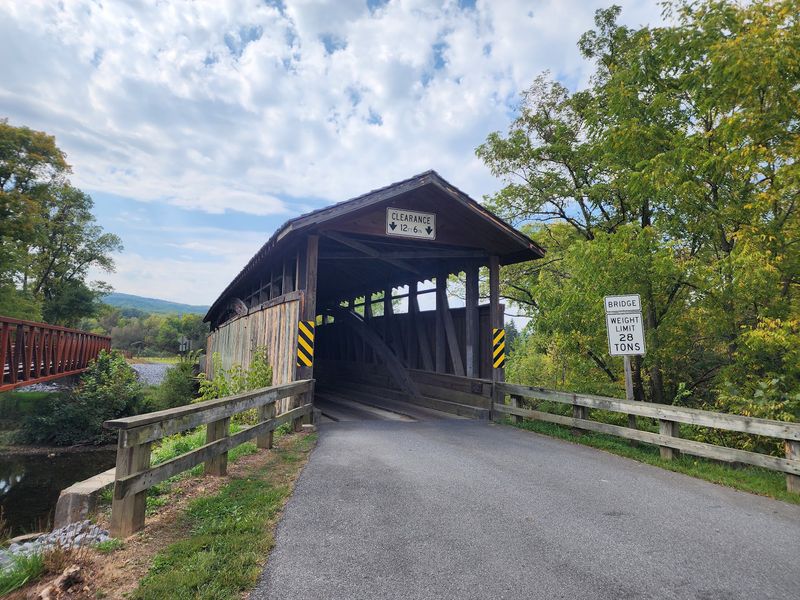
The Claycomb Covered Bridge deserves its own conversation, because it is not just a charming photo opportunity. Originally constructed in 1844, the bridge was relocated to the village and now spans the Raystown Branch of the Juniata River, serving as the literal and symbolic entrance to the grounds.
Covered bridges were built with roofs and siding to protect the structural wooden trusses from rain and snow, dramatically extending their lifespan. Without that cover, wooden bridges of this era typically lasted only a decade or two. This one has survived nearly two centuries.
Driving or walking through it before entering the village is a small but memorable ritual. The interior smells faintly of old timber, and the narrow passage forces you to slow down, which feels intentional given what waits on the other side.
Pennsylvania once had more covered bridges than any other state, and standing inside this one, it is easy to understand why people fought to preserve them. The bridge alone is worth the detour to Bedford.
Blacksmiths, Broom Makers, and the Crafts That Built a Nation
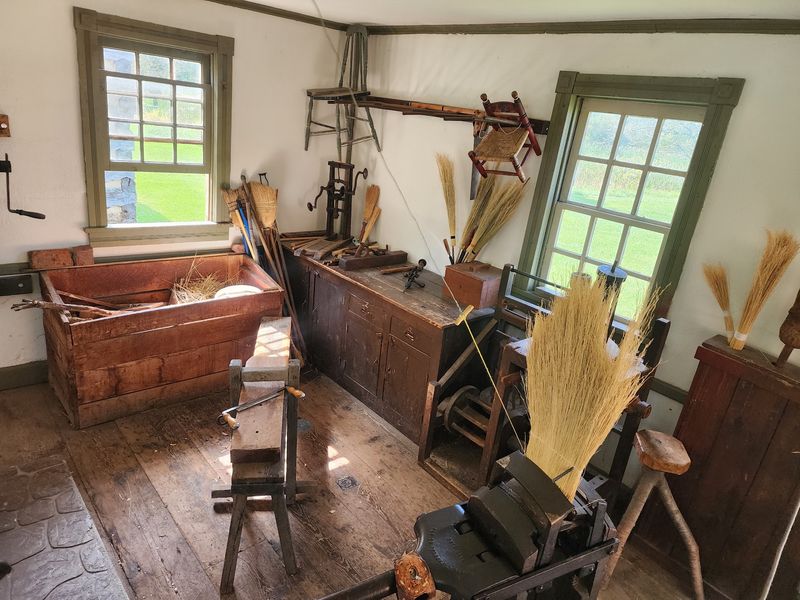
There is something almost hypnotic about watching a blacksmith shape hot iron at an open forge, and at Old Bedford Village, that experience is completely real. The craft demonstrations here are among the most talked-about features of the site, and for good reason.
Costumed interpreters demonstrate trades including blacksmithing, gunsmithing, tinsmithing, candlemaking, pottery, spinning, and broom making. These are not theatrical performances. The people doing this work have genuine knowledge of the crafts they practice, and they are enthusiastic about sharing that knowledge with anyone who asks.
The broom maker in particular has earned a devoted following among younger visitors. Watching natural fibers get shaped and bound into a functional tool by hand is the kind of thing that quietly rewires how you think about everyday objects.
On select days and during events, visitors can try their hand at tinsmithing and other activities, making the experience participatory rather than passive. Plan to linger longer than you expect, because these demonstrations have a way of pulling you in completely.
The QR Code Tour That Changes Everything
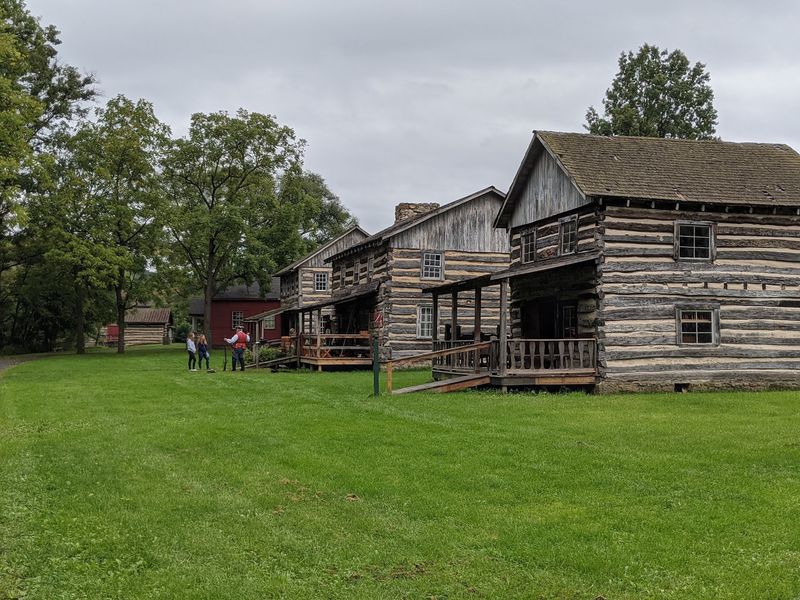
Here is the feature I promised to circle back to, and it genuinely changes the experience. Every building at Old Bedford Village has a QR code posted near its entrance. Scan it with your phone, and you get a short two-to-three minute video explaining the history of that specific structure.
This matters more than it might sound. The village relies heavily on volunteers to staff its buildings and run demonstrations, which means that on quieter weekday visits, not every shop will have an interpreter inside. Without the QR codes, you might walk through an empty cabin and feel like you missed the story. With them, the story comes to you.
The videos are also available on YouTube if you want to preview them before your visit or revisit them afterward. For homeschooling families and independent learners, this self-guided format is a genuine asset.
It also means you can visit at your own pace without feeling rushed or dependent on a tour group schedule, which most people find refreshing. This small technological touch makes the whole village more accessible.
What Daily Life Really Looked Like on the Frontier
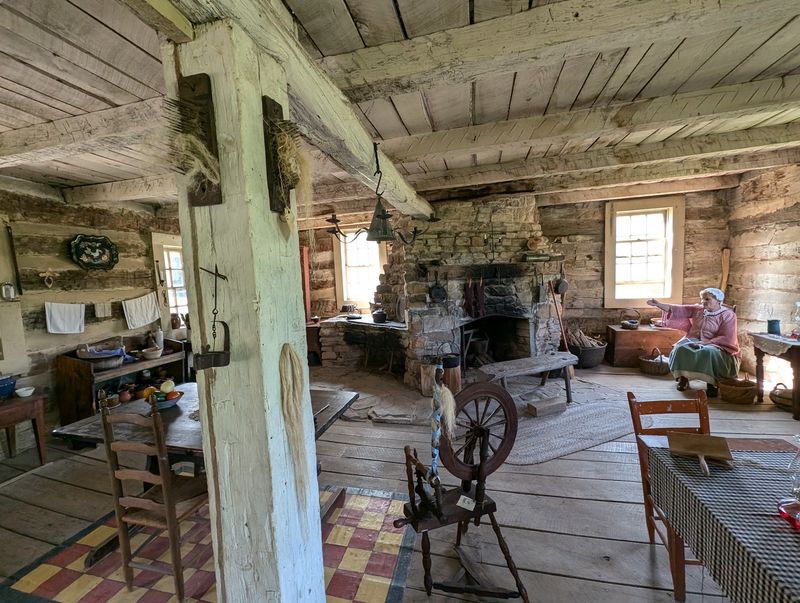
One of the quieter revelations of a visit here is how the village portrays ordinary life rather than celebrated history. There are no famous generals or political figures commemorated. Instead, the focus is on middle-to-lower-class families who farmed, traded crafts, and built communities in the Allegheny Mountain region between 1700 and 1899.
The interiors of the cabins and buildings are authentically furnished with period artifacts, and the costumed interpreters speak in ways that reflect the mindset and daily concerns of the era. Walking into a furnished 18th-century kitchen and seeing the tools used to cook, preserve food, and heat a home gives you an immediate, concrete sense of how much physical labor shaped every single day.
The village does not romanticize frontier life. The simplicity on display here carries a quiet weight when you realize that surviving a Pennsylvania winter in a one-room log cabin required constant, exhausting effort.
That honesty is what makes the cultural immersion here feel respectful rather than theatrical, and it leaves a stronger impression than any dramatized reenactment could.
Special Events That Transform the Village Throughout the Year
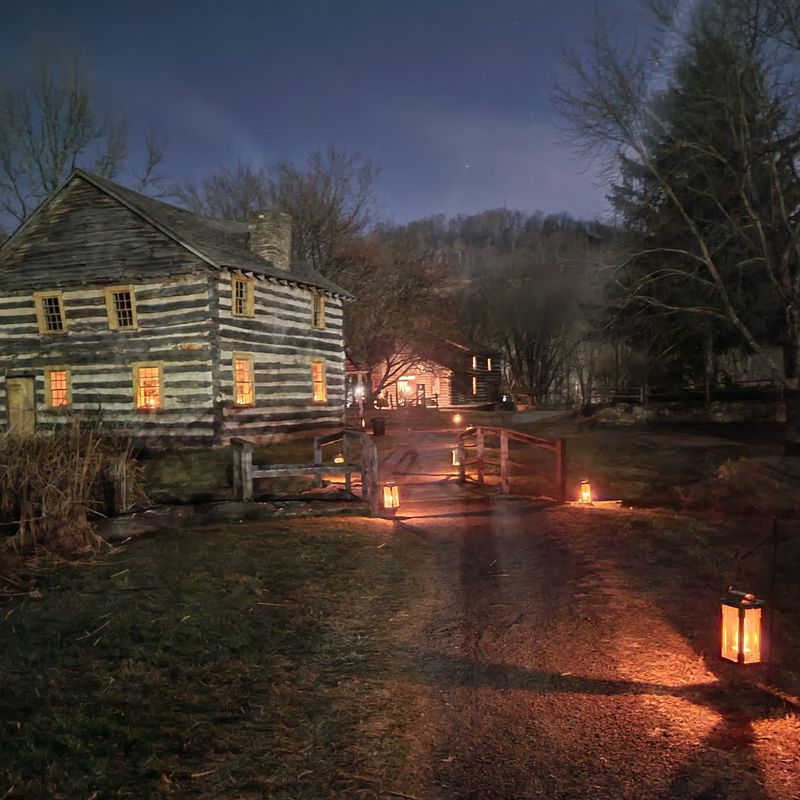
If you want to experience Old Bedford Village at its most vibrant, timing your visit around one of its special events is the way to go. The annual calendar includes a range of themed weekends that add layers of activity, atmosphere, and energy to the already rich setting.
The Civil War Weekend brings military and civilian reenactments to the grounds, creating a completely different kind of immersion. Pumpkinfest arrives as autumn colors peak in the Allegheny Mountains, making the visit visually spectacular on top of being historically engaging.
The Old-Fashioned Christmas weekend is particularly beloved. Fires burn in the hearths of the historic cabins, candles glow in the windows, and traditional decorations fill the buildings with warmth that feels entirely appropriate to the era being portrayed.
For something more unexpected, the Murder Mystery Evenings transform the village into a historical whodunit after dark, which is a genuinely clever use of the setting. Checking the event calendar at oldbedfordvillage.com before booking your trip is strongly recommended for the fullest possible experience.
A Classroom Without Walls: Education at the Village
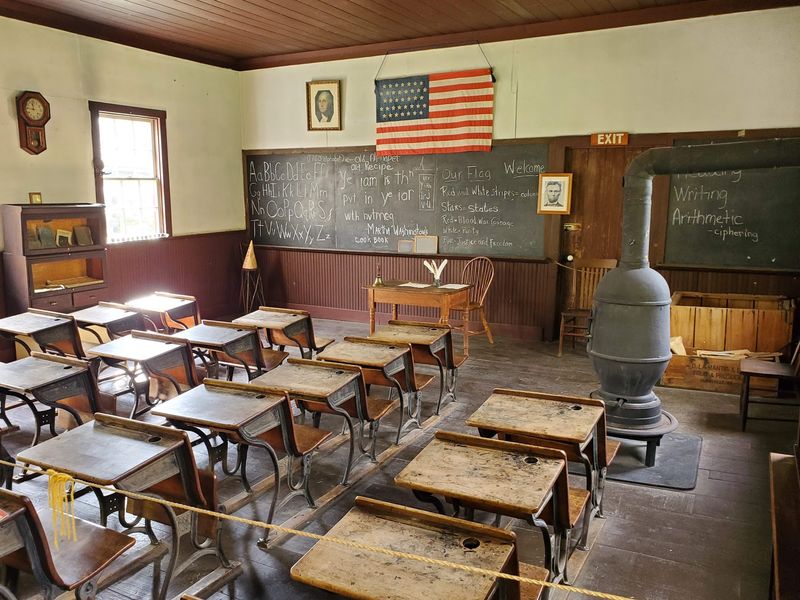
Education is woven into the fabric of everything at Old Bedford Village, not as an afterthought but as the core purpose of the place. School groups and homeschooling families are particularly well served here, with customizable field trip programs designed to align with historical learning goals.
The Pioneer Day Camp gives children a more extended, immersive experience with hands-on activities that cover frontier skills, traditional crafts, and period games spanning Colonial to Victorian eras. Tin piercing and Native American-inspired art projects are among the activities that tend to captivate kids who might not normally gravitate toward history.
What works especially well for younger visitors is that learning here never feels like sitting in a classroom. Every building is an interactive space, every interpreter is a potential conversation partner, and every craft demonstration is an invitation to ask questions and try something new.
Parents consistently note that their children leave with specific memories, like the broom maker or the candlemaker, rather than vague impressions. That kind of concrete recall is the hallmark of genuinely effective educational programming.
The Eight-Square Schoolhouse and Other Architectural Surprises
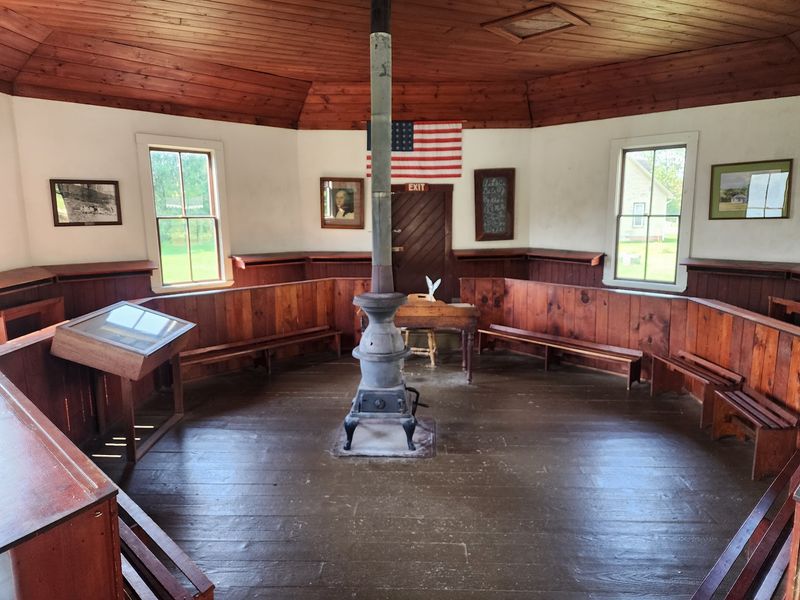
Most people expect log cabins and simple rectangular structures at a site like this, which makes the Eight-Square School one of the more delightful surprises on the grounds. Built in 1851, this schoolhouse has an unusual octagonal shape that was not a stylistic whim but a functional design choice.
The eight-sided structure was engineered to distribute natural light and heat more evenly throughout the interior, making it more comfortable for students and easier to maintain a consistent temperature during harsh Pennsylvania winters. It is a small architectural detail that reveals how much practical ingenuity went into even modest frontier buildings.
The village is full of moments like this, where a closer look at a structure reveals a specific problem it was designed to solve. That kind of discovery is what keeps curious visitors engaged long after they expected to be finished.
Between the covered bridge entrance, the oldest county church, and the octagonal schoolhouse, the architectural variety here is far greater than the rustic exterior of the site might suggest. Each building has its own distinct character and story waiting to be uncovered.
Practical Tips for Getting the Most Out of Your Visit
A few practical details can make the difference between a good visit and a great one. Old Bedford Village operates seasonally, typically from Memorial Day weekend through October 31st, and is open Thursday through Sunday from 9 AM to 5 PM. The phone number is 814-623-1156 if you want to call ahead.
Admission runs approximately $12 for adults, $11 for seniors, and $7 for students aged 6 to 18, with children under 5 admitted free. Plan to spend at least two to three hours on a regular day, and longer if you visit during an event weekend.
Wear comfortable shoes, because the grounds cover a significant area and the paths are gravel. Bring cash for optional paid activities like candlemaking or tin crafts, and consider packing a picnic since several tables are available on the grounds.
Well-behaved dogs on leashes are welcome, which is a detail many pet owners appreciate. Photography is generally permitted throughout the village, so bring your camera and do not rush through the interiors, because the details inside each building reward a slow, careful look.
Share this story