Georgia has a lot of history packed into its cities, small towns, and countryside, and some of the best ways to experience that history is by walking through the front doors of the homes where it actually happened. From grand antebellum mansions in Macon to a quirky Victorian retreat in Thomasville, the state has preserved an impressive range of historic houses that are open and welcoming visitors right now.
Whether you are a history enthusiast, a road trip planner, or just someone looking for a genuinely interesting afternoon, these properties offer far more than a quiet walk through old rooms. Presidential connections, literary legacies, stunning architecture, and stories that changed entire cities are all waiting inside these walls.
Here are 12 Georgia historic homes and estates worth putting on your travel list.
Swan House – Atlanta
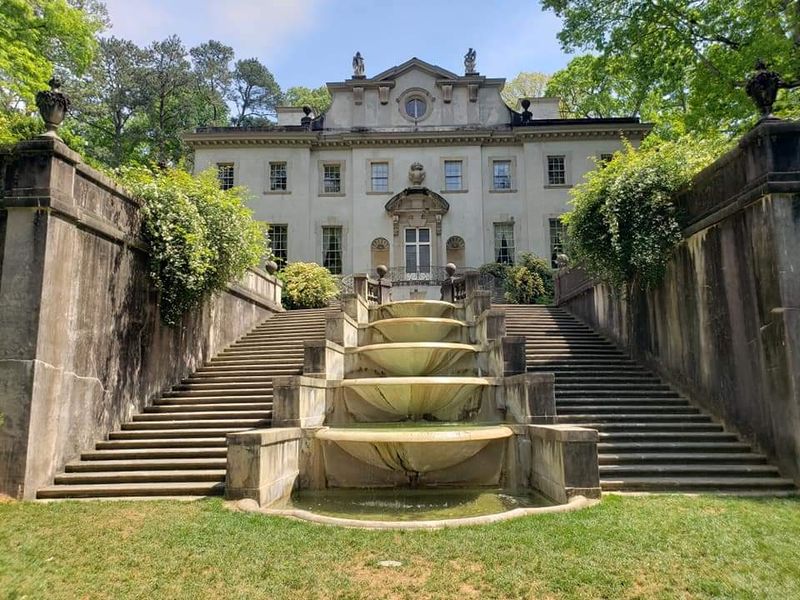
Few historic homes in Georgia make an entrance quite like Atlanta’s Swan House. Built in 1928 for Edward and Emily Inman, this elegant mansion was designed by prominent Atlanta architect Philip Trammell Shutze.
Its combination of classical architecture, sweeping staircases, formal rooms, terraces, and fountains makes it one of the most recognizable historic properties in the state.
Visitors who enjoy film history may recognize Swan House from its appearance in The Hunger Games: Catching Fire. The real story behind the property, however, is arguably more interesting than any Hollywood cameo.
The interpretation at Swan House explores not just the Inman family but also the architects, designers, and staff who helped create and maintain the household over the years.
Swan House sits on the Atlanta History Center’s 33-acre campus and is currently open Tuesday through Sunday. The historic houses open later in the morning than the main museum building, so plan your arrival accordingly.
The Wren’s Nest – Atlanta
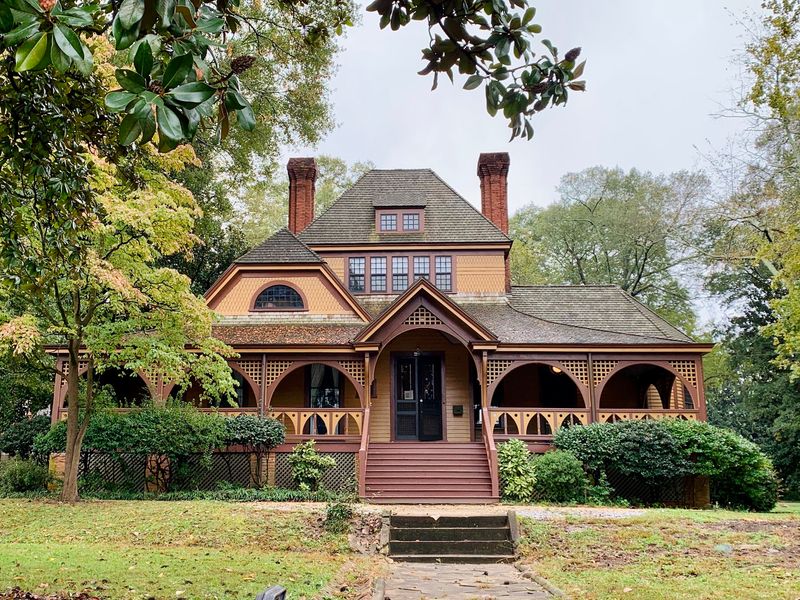
Atlanta’s West End holds a literary landmark that most people outside the city have never heard of, and that is genuinely a shame. The Wren’s Nest was the home of author and journalist Joel Chandler Harris from 1881 until 1908.
Originally built around 1870 as a modest farmhouse, the building was expanded by the Harris family during the 1880s into the Victorian-era home visitors see today.
The museum opened in 1913, making it Atlanta’s oldest house museum. Much of the original furniture still belongs to the Harris family collection, which gives the property the feel of a preserved time capsule rather than a staged exhibit.
The Wren’s Nest also thoughtfully addresses Harris’s complicated literary legacy by exploring the Brer Rabbit stories and their roots in African and African American oral traditions. Tours currently run on Saturdays, when live storytelling performances are also offered.
Private visits and group tours can be arranged separately throughout the week.
Hay House – Macon
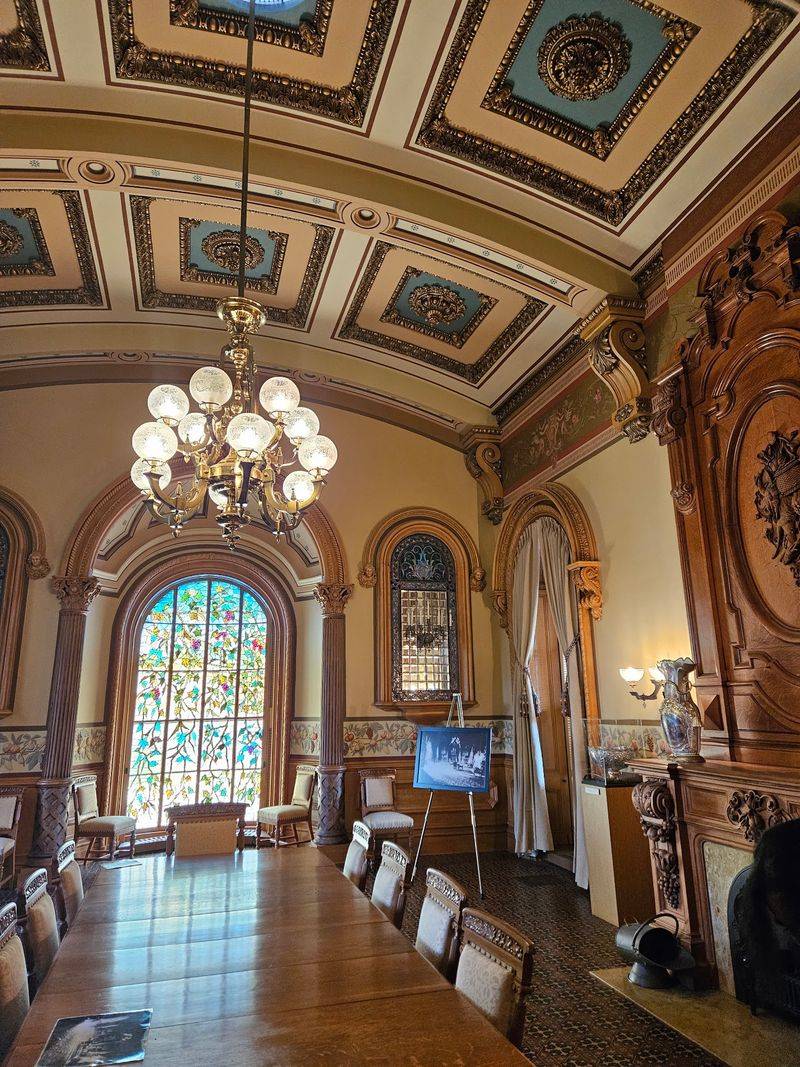
Construction on the Johnston-Felton-Hay House began in 1855 and wrapped up in 1859, and the result was so impressive that people started calling it the Palace of the South. That nickname was not an exaggeration.
Built for William Butler Johnston and his wife, Anne Tracy Johnston, this Italian Renaissance Revival mansion stands out dramatically from the Greek Revival architecture more commonly associated with antebellum Georgia.
The house passed through the Felton and Hay families over the generations, giving today’s museum several layers of history to interpret. Its expansive rooms, decorative finishes, original artwork, and technological features made it genuinely extraordinary for the era in which it was built.
Hay House is a National Historic Landmark and remains open for public tours Wednesday through Sunday, with guided tours beginning throughout the day. If you have only seen plantation-style houses on previous Georgia history trips, Hay House will offer something dramatically different and well worth the drive to Macon.
Hills and Dales Estate – LaGrange
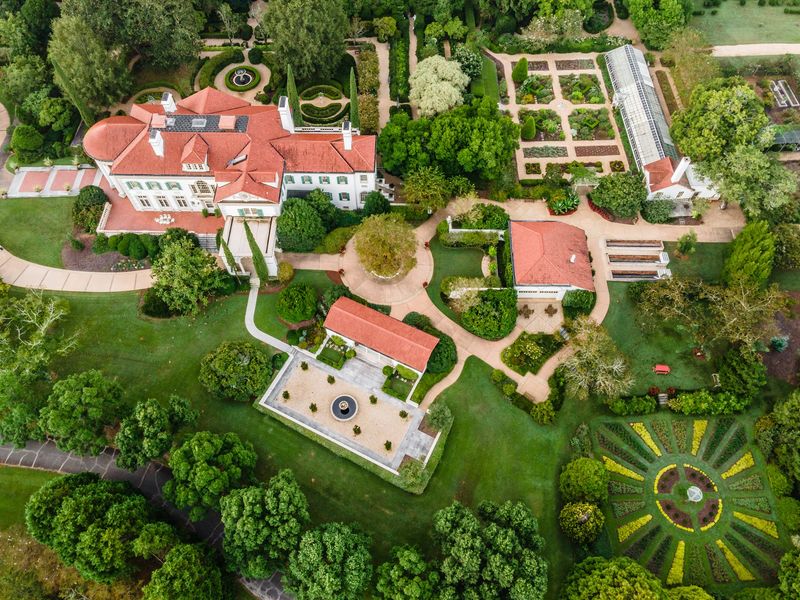
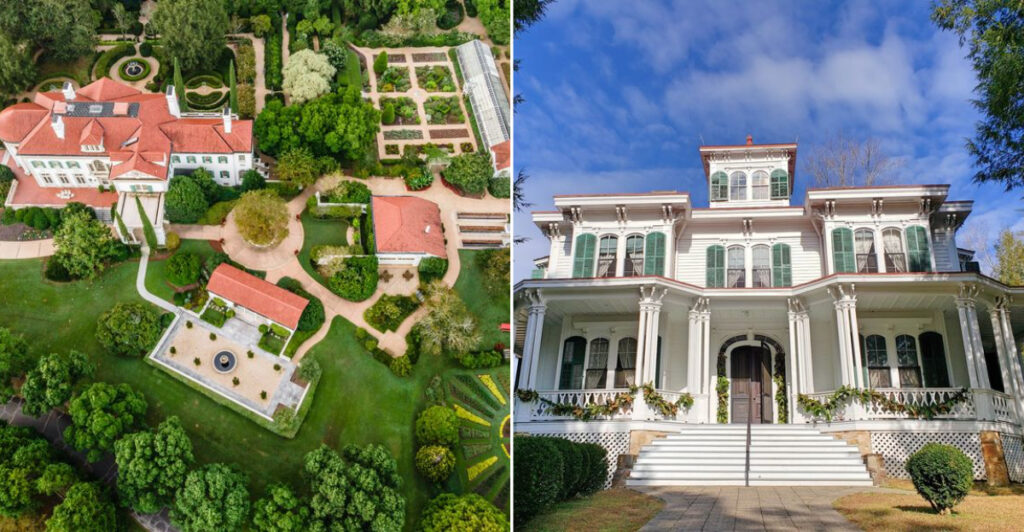
At Hills and Dales Estate in LaGrange, the garden might actually steal the show from the house itself. The roughly 13,000-square-foot home was completed in 1916 for Fuller E. and Ida Cason Callaway, designed by architects Neel Reid and Hal Hentz to complement the elaborate grounds surrounding it.
The architecture is impressive, but the landscape surrounding it has a story stretching back more than 180 years.
Terraced pathways, dwarf boxwood parterres, and formal garden elements were developed and refined over generations before the property opened to the public. Successive members of the Callaway family carefully maintained and preserved what their predecessors had created, which is why the gardens feel so layered and mature today.
Admission includes a guided tour of the home and access to the historic gardens. The estate recommends setting aside roughly two hours to experience both the house and the grounds at a comfortable pace.
This is one of those rare properties where neither the building nor the landscape overshadows the other.
Georgia’s Old Governor’s Mansion – Milledgeville
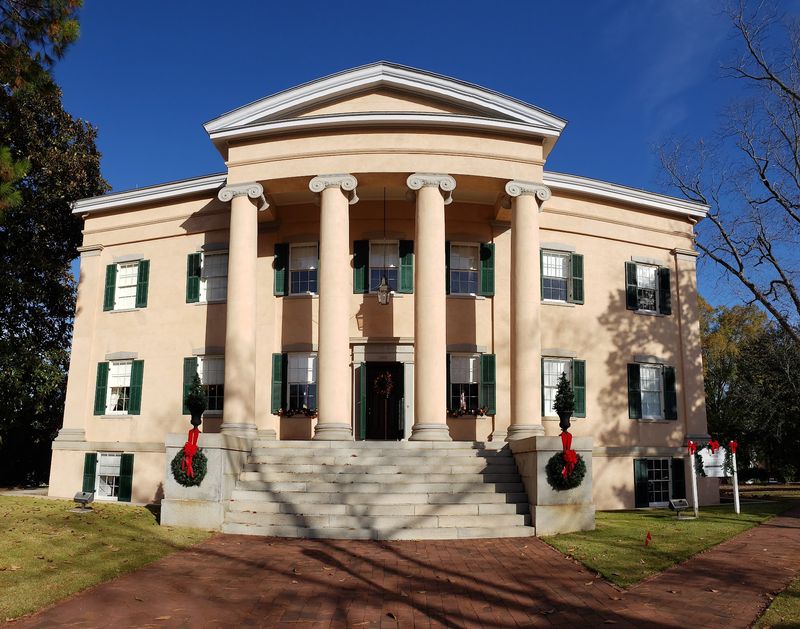
Before Atlanta took over as Georgia’s capital city, Milledgeville held that distinction for decades, and the Old Governor’s Mansion is one of the most striking reminders of that era still standing today. Completed in 1839, the mansion is considered a standout example of High Greek Revival architecture and served as the official residence of Georgia’s governors during a particularly consequential stretch of state and national history.
Touring the mansion gives visitors access to both public and private spaces while covering topics including political life, domestic life, slavery, and the Civil War period. The property does not shy away from the harder parts of its story, which makes the experience more complete and honest than many traditional house museums.
Georgia College and State University now operates the mansion and offers guided public tours Tuesday through Saturday from 10 a.m. to 4 p.m. and Sunday from 2 p.m. to 4 p.m. Tours generally start on the hour, making it easy to plan your visit around a comfortable arrival time.
Andalusia: The Home Of Flannery O’Connor – Milledgeville
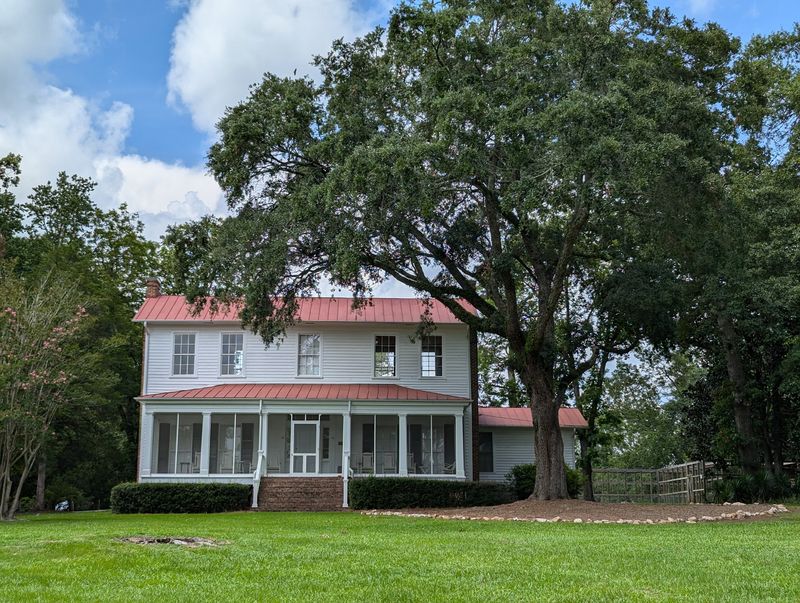
Milledgeville’s second entry on this list trades political history for something more literary and personal. Andalusia was the home of acclaimed Southern writer Flannery O’Connor from 1951 until 1964.
The property itself dates much further back, first settled in 1814 and operated for generations as a plantation and later a working farm.
O’Connor moved to Andalusia after being diagnosed with lupus and lived there with her mother, Regina. During those years on the farm, she completed two novels and 32 short stories, with the surrounding landscape and the people of Milledgeville shaping elements of her fiction in ways scholars still study today.
Georgia College and State University now operates the site as a museum open Tuesday through Saturday from 10 a.m. to 4 p.m. and Sunday afternoons. House tours begin on the hour, and visitors can explore the grounds independently.
For anyone serious about Southern literature, Andalusia is essentially required reading in physical form.
Boyhood Home Of President Woodrow Wilson – Augusta
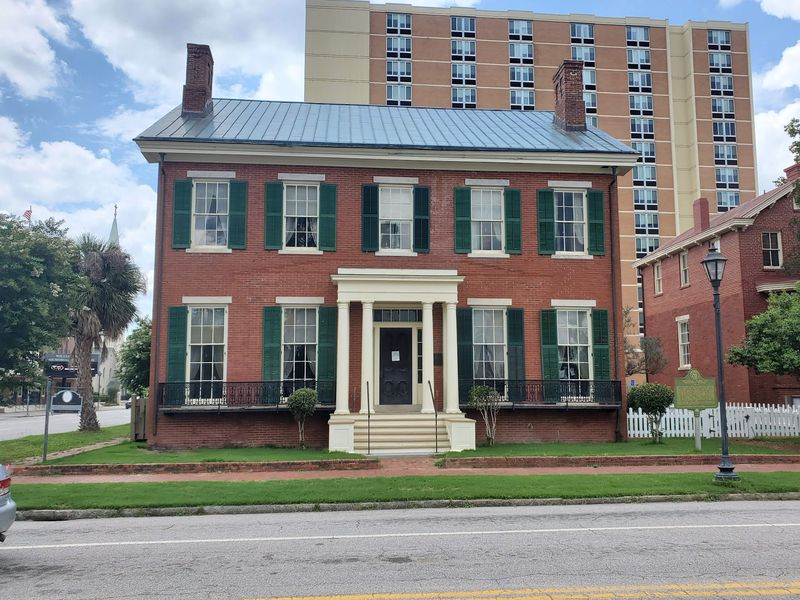
Long before Woodrow Wilson became the 28th president of the United States, he was a minister’s son navigating childhood in Augusta during one of the most turbulent periods in American history. The house associated with those formative years was built in 1859, and Wilson lived there during the Civil War and Reconstruction, giving the property a historical weight that extends well beyond its presidential connection.
The restored house is now a National Historic Landmark operated by Historic Augusta. Guided tours explore Wilson’s childhood, his family’s life, and what growing up in Augusta during and after the Civil War actually looked like for a family in their position.
Tours are currently offered Wednesday through Saturday, generally at 10 a.m. and 11 a.m. and then hourly again from 1 p.m. through 4 p.m. Reservations are encouraged.
Augusta often gets overlooked on Georgia history itineraries compared to Savannah or Atlanta, but this property gives the city a genuinely compelling reason to visit.
Davenport House Museum – Savannah
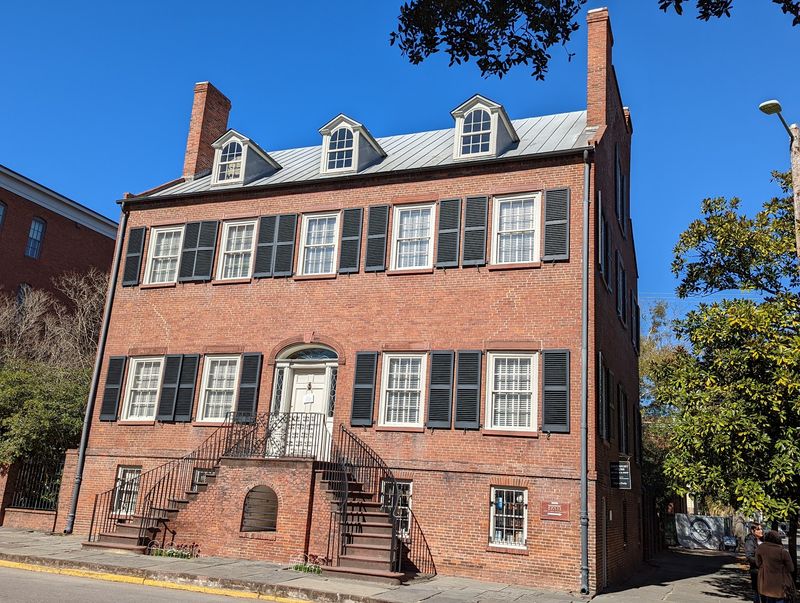
Savannah could anchor an entire separate list of historic homes, but the Davenport House deserves a particularly prominent place on any Georgia-wide version. What makes this property especially interesting is not just the architecture but the role the building played in Savannah’s modern preservation movement.
When demolition threatened the house in the 1950s, a group of local women organized to save it, an effort that directly contributed to the creation of the Historic Savannah Foundation.
Today, regular tours interpret the house, the Davenport family, and the history of the enslaved people whose labor shaped life on the property. The museum takes that full history seriously, which gives the tour more substance than a simple architectural walkthrough.
As of 2026, guided tours run Monday through Friday, while Saturdays offer self-guided visitation. The visitor entrance is through the Historic Kennedy Pharmacy on East Broughton Street.
Beyond tours, the museum hosts exhibitions, workshops, and preservation-focused events throughout the year.
Juliette Gordon Low Birthplace – Savannah
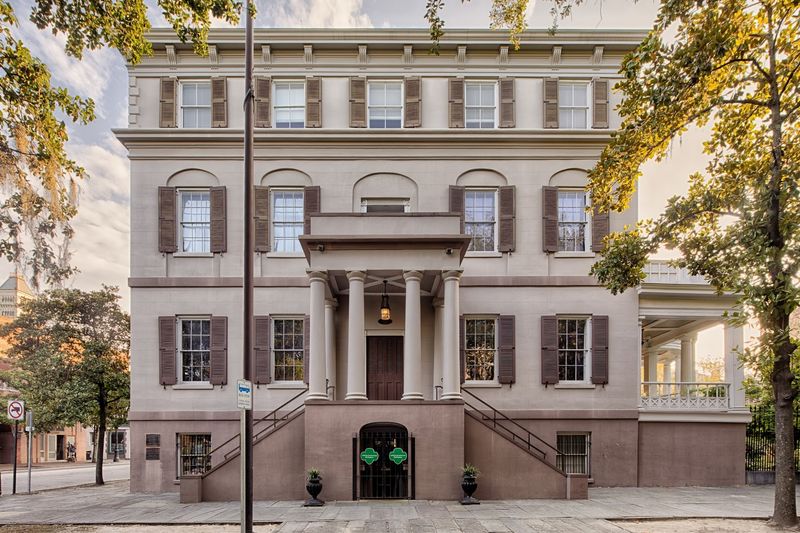
The Juliette Gordon Low Birthplace in Savannah is connected to one of the most enduring youth organizations in American history. The house was completed by 1821 and served as the childhood home of Juliette “Daisy” Gordon Low, who went on to found the Girl Scouts of the USA in Savannah in 1912.
That founding story alone draws visitors from across the country every year.
Inside, the museum presents period rooms, family collections, and exhibits that trace how Low’s upbringing and the Gordon family’s values influenced the organization she eventually built. The focus on women’s history gives the property a broader significance beyond its architectural appeal.
One practical detail worth noting for travelers: the museum describes itself as Savannah’s only historic house museum with full elevator accessibility, making it one of the more inclusive options on this list. Guided and self-guided experiences are available, and advance reservations can be made through the museum’s official website for those who prefer a planned visit.
Hardman Farm State Historic Site – Sautee Nacoochee
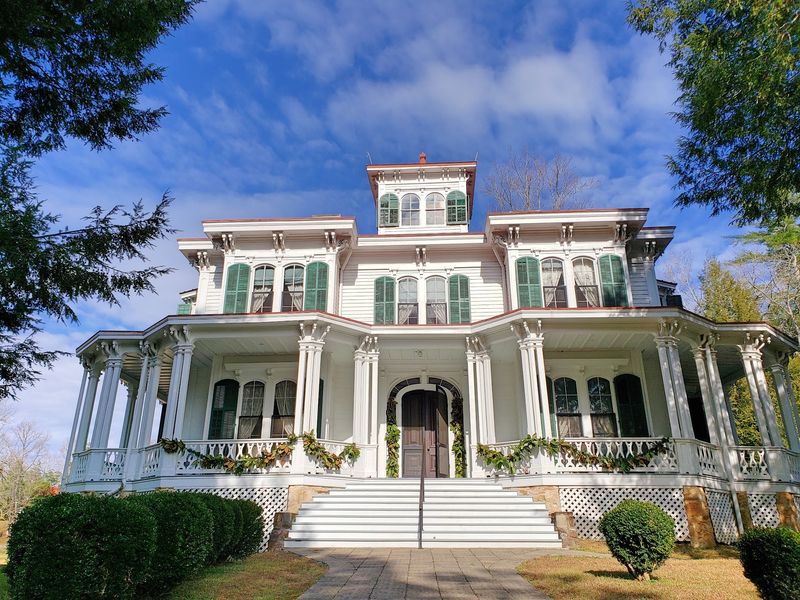
Most of the properties on this list sit in cities, but Hardman Farm makes a strong case for exploring Georgia’s historic homes in a mountain setting. Located in the Sautee Nacoochee Valley near Helen, the Italianate mansion was constructed in 1870 by Captain James Nichols and originally called West End because of its position at the western edge of the valley.
The property later came into the hands of Dr. Lamartine Hardman, who served as governor of Georgia from 1927 to 1931.
Beyond the mansion itself, the site includes one of North Georgia’s most recognizable features: the gazebo-topped Nacoochee Mound, a significant archaeological and cultural landmark sitting in the open field beyond the house.
Guided house tours run Thursday through Saturday, introducing visitors to period rooms, original furnishings, and the Nichols and Hardman family histories. Self-guided access to parts of the site is available daily.
The combination of mountain scenery and agricultural history makes this one of the most distinctive stops on the list.
Bulloch Hall – Roswell
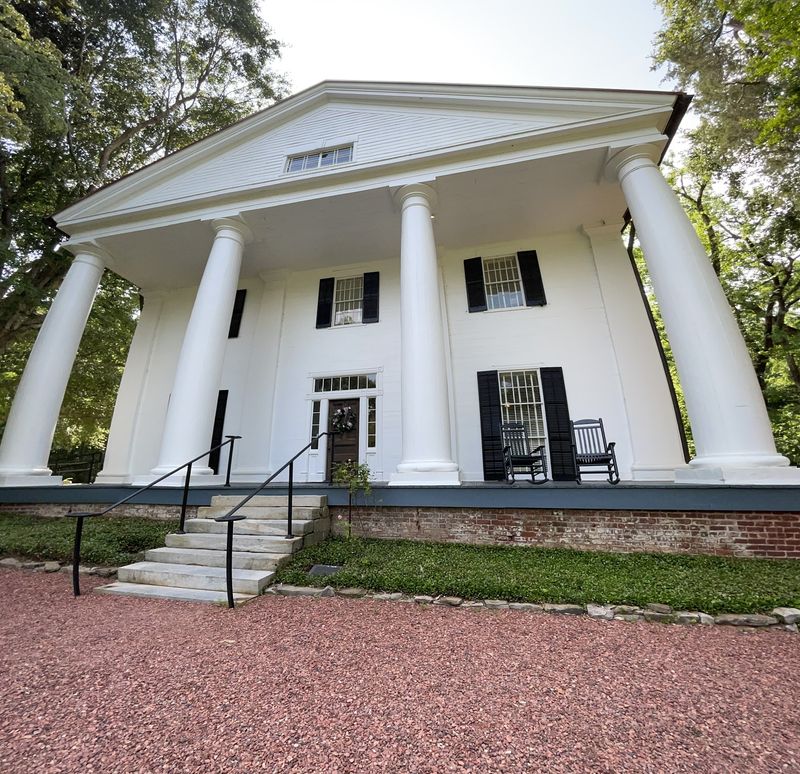
Bulloch Hall carries a presidential family connection that surprises a lot of first-time visitors. The Greek Revival mansion was completed in 1839 for James Stephens Bulloch and his wife, Martha Stewart Elliott Bulloch.
Their daughter, Martha “Mittie” Bulloch, grew up in this house and married Theodore Roosevelt Sr. in the dining room in 1853. Their son became President Theodore Roosevelt, who later visited Roswell and his mother’s childhood home in 1905.
The family connections extend further. Mittie’s other son, Elliott, became the father of Eleanor Roosevelt, linking Bulloch Hall to two of the most prominent Roosevelts in American history through a single household.
Today the property interprets the Bulloch and Roosevelt families alongside the broader history of 19th-century Roswell, including an honest accounting of slavery on the estate. Guided tours run Monday through Saturday and on Sunday afternoons, with tours starting on the hour.
Visitors can also explore the grounds and outbuildings without purchasing a house-tour ticket.
Lapham-Patterson House – Thomasville
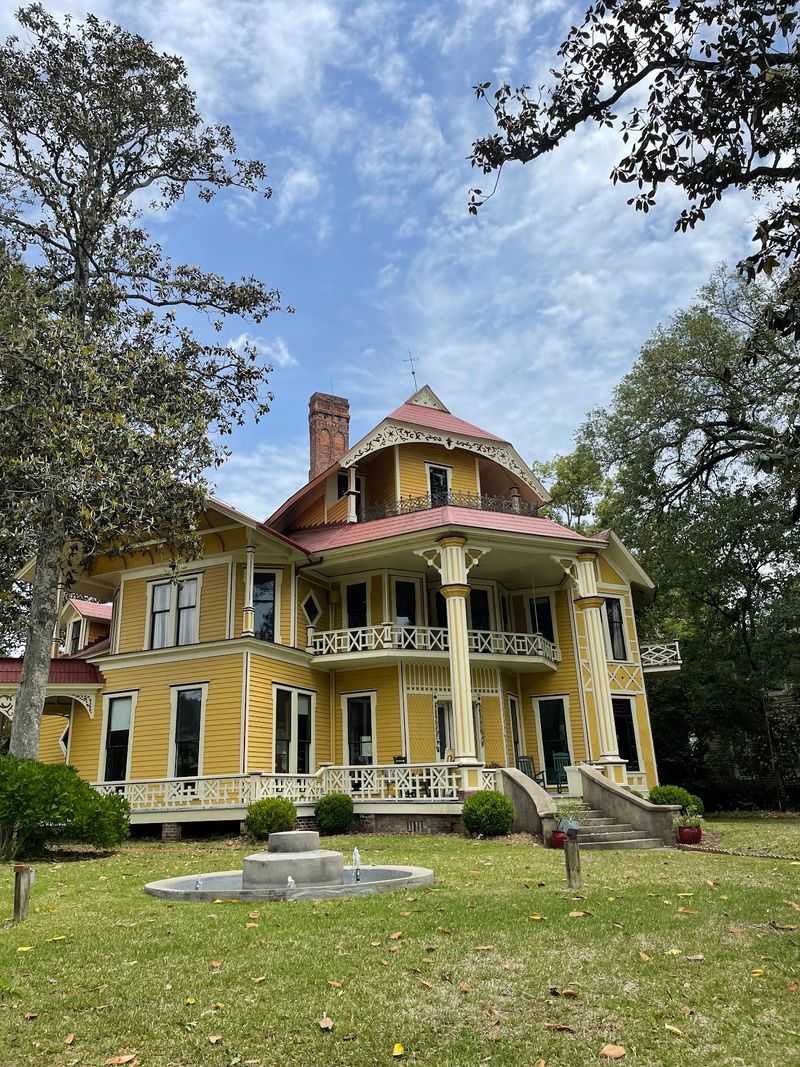
If every other house on this list has felt a bit predictable in its grandeur, the Lapham-Patterson House in Thomasville is here to shake things up. Built in 1885 during Thomasville’s late-19th-century resort era, this roughly 6,000-square-foot property was designed for the Lapham family and filled with architectural ideas that ignored almost every convention of the period.
Irregular rooms, Victorian-era technology, unexpected details, and an asymmetrical layout make this one of the most genuinely unusual historic houses in the state. The Thomasville History Center describes it as a showcase of both the family’s eccentricities and the broader architectural experimentation of the era.
Guided tours cover all three floors when mobility permits, with interpreters walking visitors through the design choices and the people who lived inside.
Tours are currently offered Thursdays, Fridays, and Saturdays at scheduled times. For travelers who want to extend the experience, part of the property is now available as an overnight accommodation, which might be the most interesting lodging option on any Georgia history road trip.
Share this story