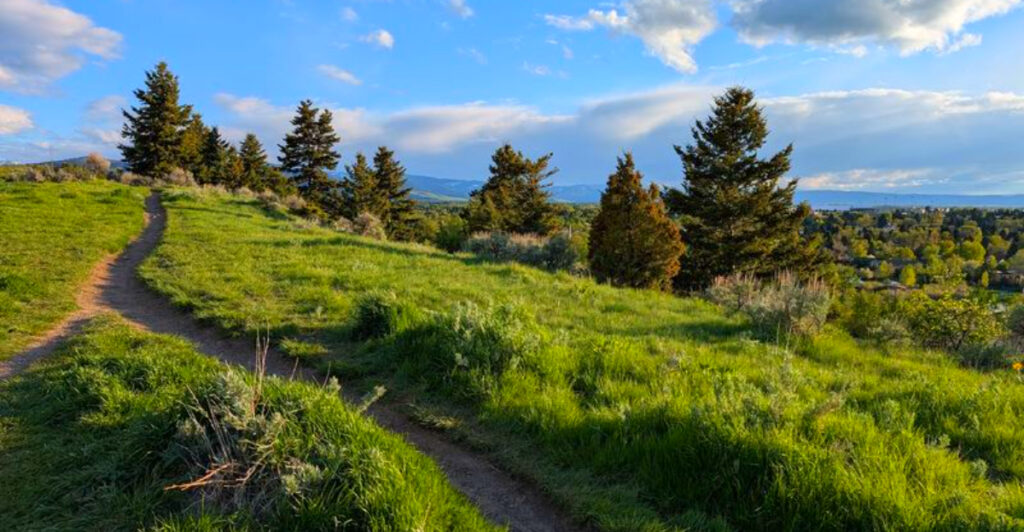
Just minutes from downtown Bozeman, a short uphill walk leads to sweeping views of the Bridger Range, Spanish Peaks, Madison Range, and Gallatin Valley – and sunsets so good that locals regularly plan their evenings around them.
But this hill almost looked completely different. More than a century ago, plans called for 612 homes here, and preserving the open space eventually became a decades-long community effort. There’s even an unexpected feature hidden along the lower trail that many visitors heading straight for the summit never notice.
The view may bring you here first, but the story behind this little slice of wild Montana is what makes it memorable.
A Storied Hill in the Heart of Bozeman
Few parks carry as much local lore as this one. Peets Hill, officially part of Burke Park, sits at 429 E Story St, Bozeman, MT 59715, with a secondary parking area near Josephine Drive and Kenyon Drive, placing it just minutes from downtown.
The land was originally platted in 1892 as Highland Ridge, a proposed 612-home development designed to inflate Bozeman’s population numbers and attract a state institution. That plan quietly collapsed, and the land eventually passed to the Peets family, who ran a dairy farm here until a typhoid outbreak in the 1940s forced its closure.
Earl Peets offered the 40 acres to the city for free in 1946, but the city declined. The Burke family later purchased it and used it as a horse pasture. Locals informally adopted it as a recreation area for years before the Gallatin Valley Land Trust secured it as an official city park in 1993, making it the organization’s very first trail project.
Panoramic Views That Earn Their Reputation
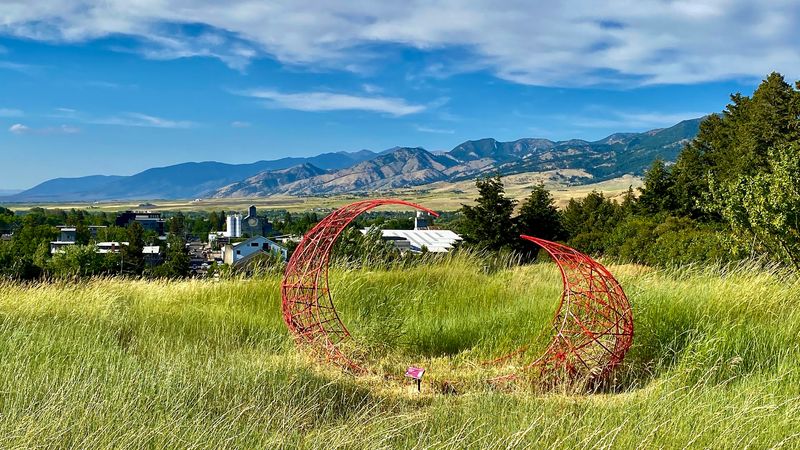
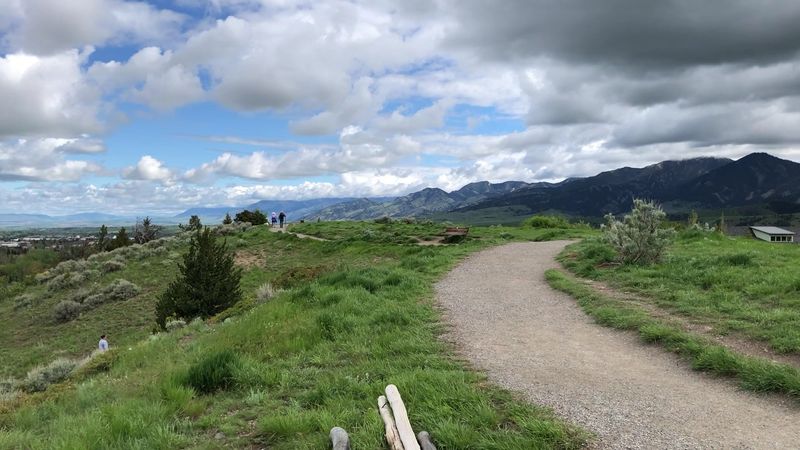
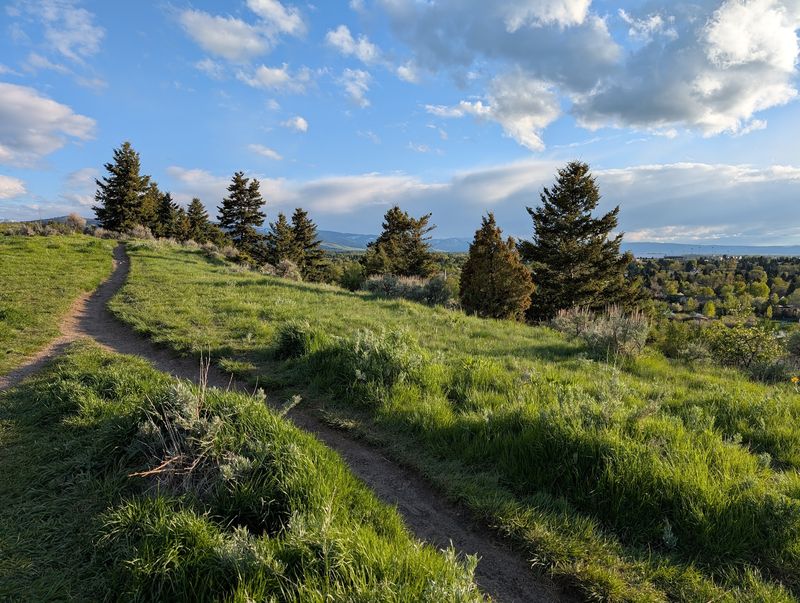
Reaching the top of this hill rewards you with one of the most complete mountain panoramas in the entire Gallatin Valley. The Bridger Range rises sharply to the northeast, its rocky ridgeline often dusted with snow well into spring.
To the south and west, the Spanish Peaks and the Madison Range fill the horizon with dramatic silhouettes that seem almost too cinematic to be real. Below, Bozeman’s rooftops and tree-lined streets spread across the valley floor, giving the whole scene a satisfying sense of scale.
What sets this viewpoint apart from many others in the region is how accessible it is. You do not need a full day of hiking or special gear to earn this reward. A moderate uphill walk of roughly 20 to 30 minutes delivers a visual payoff that experienced hikers and casual walkers both agree is well worth every step, and the view genuinely changes character with every season and every hour of the day.
Trails Built for Everyone, Including the Four-Legged Crowd
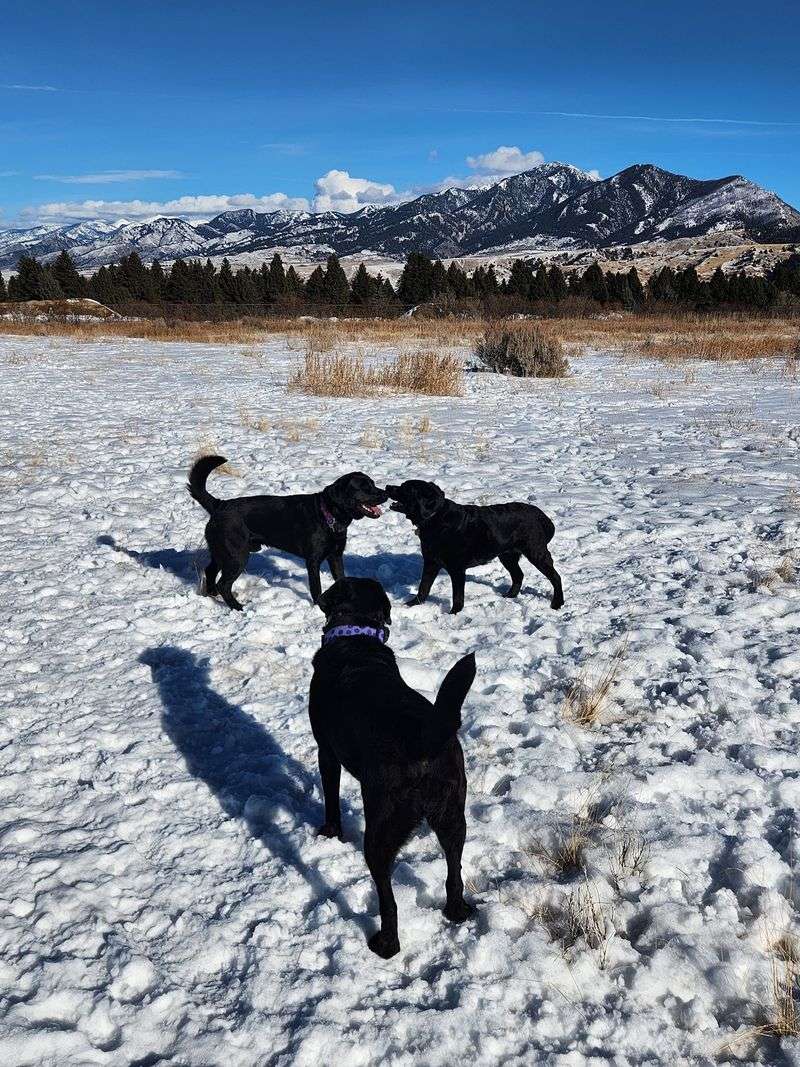
The trail network here covers 3.2 miles of interconnected paths, mixing smooth gravel sections with natural singletrack that keeps the experience interesting without becoming intimidating. The layout suits a wide range of visitors, from families pushing strollers on the lower flat paths to trail runners grinding up the steeper singletrack sections toward the ridge.
Dogs are a major part of the culture at this park. Designated off-leash areas allow pups to run freely, and the general atmosphere among dog owners is remarkably considerate. Owners tend to keep their pets well-managed, making the experience comfortable even for visitors who are not traveling with animals.
Mountain bikers also use portions of the trail system, though foot traffic takes priority on the busier sections. The paths are open 24 hours a day, seven days a week, which means early risers can catch a sunrise without waiting for a gate to open. Just pack sturdy footwear in winter and spring, when ice and mud can make the natural surface trails a bit unpredictable underfoot.
Sunset at the Summit: Why Locals Swear by It
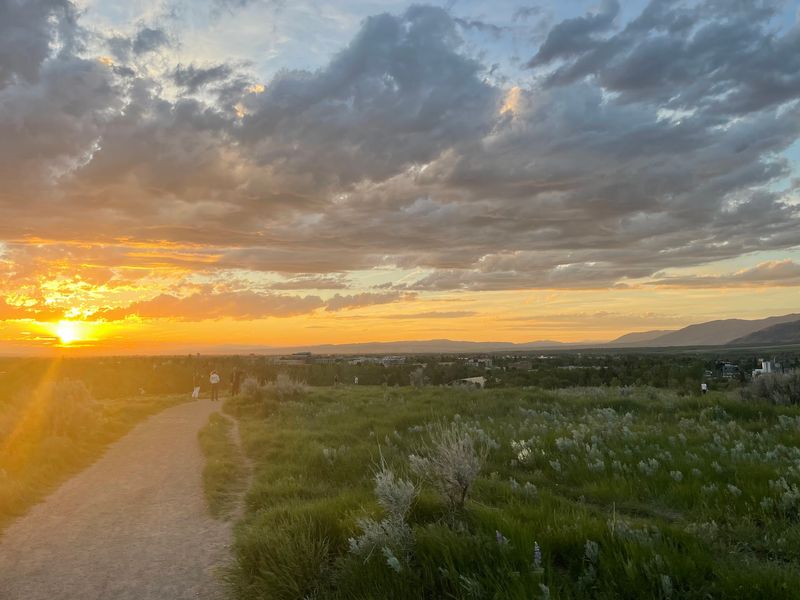
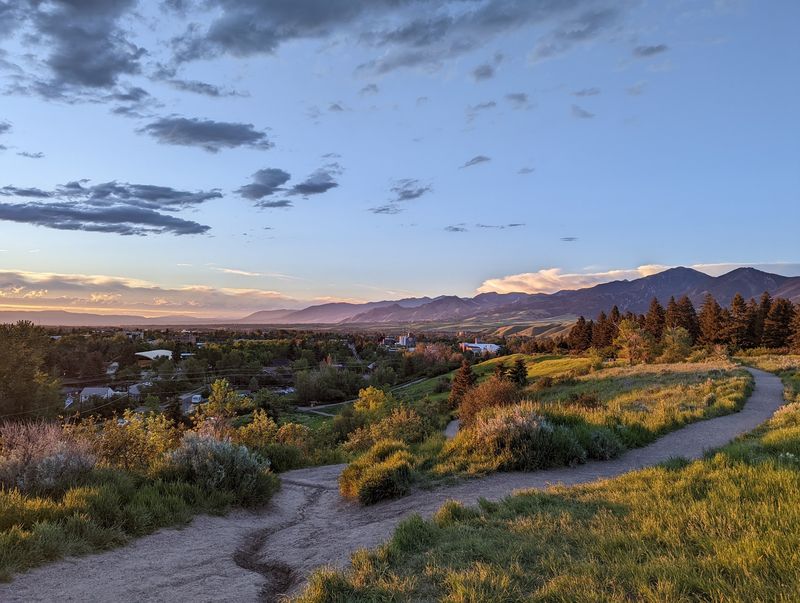
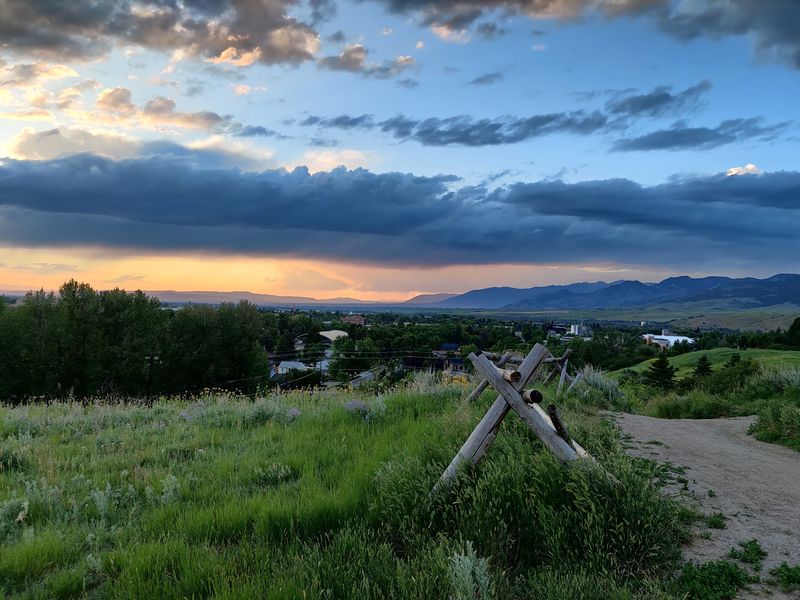
The golden hour at this park operates on its own schedule, and in the height of summer, the sun does not set until around 9:30 PM, meaning the show runs late and lingers beautifully. As the light drops, the entire hillside shifts from bright green to deep amber, and the distant peaks catch colors that shift every few minutes.
Photographers absolutely love this location because the elevated position removes most foreground clutter, leaving a clean composition of sky, mountains, and valley. The Bridger Range, Spanish Peaks, and Gallatin Valley all glow with warmer tones during this window, and the clarity of Montana’s air means the detail in those distant ridges stays sharp long after the sun has dipped below the horizon.
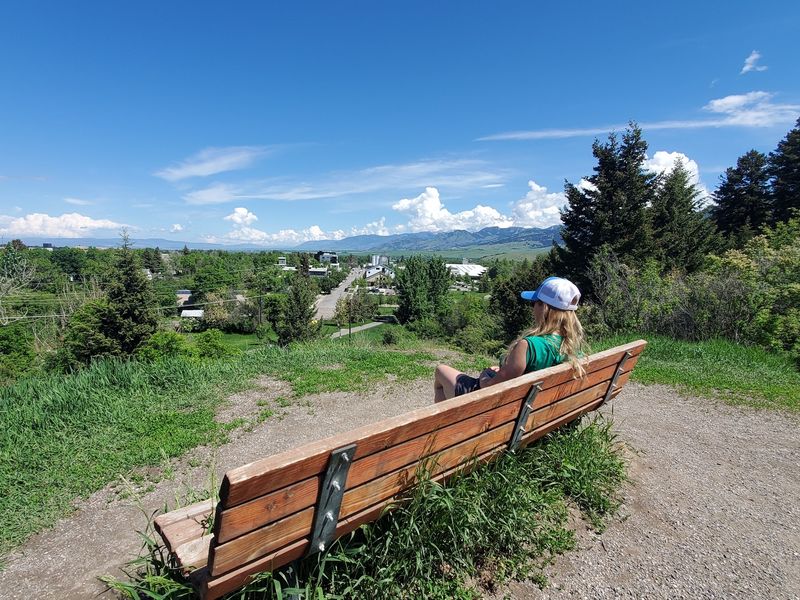
Arriving 30 to 45 minutes before sunset gives you time to claim one of the many well-placed benches along the upper trail. The crowd that gathers most evenings adds a relaxed, communal energy to the experience, making it feel less like a solo hike and more like a shared event worth attending again and again.
Winter on the Hill: Sledding, Snow, and a Different Kind of Magic
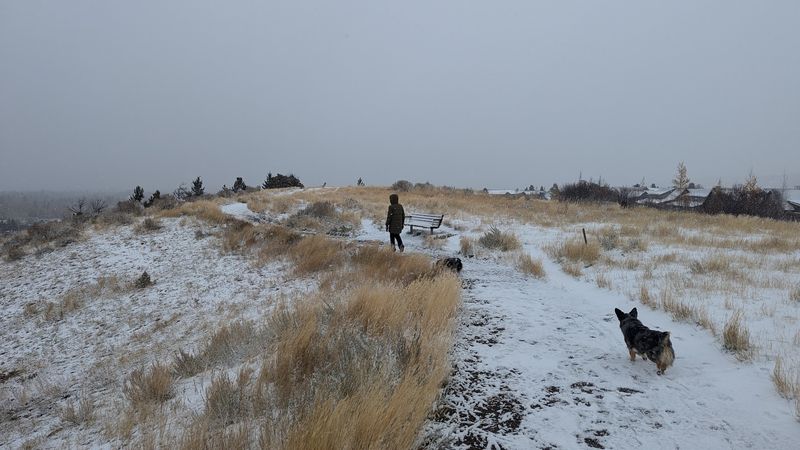
When snow blankets the park, the mood shifts completely, and the hill earns a reputation that has nothing to do with hiking. Sledding here is a full-on Bozeman tradition, drawing families, groups of friends, and enthusiastic adults who have clearly not outgrown the thrill of a fast downhill run.
The main slope is wide enough to accommodate multiple sleds at once, and the natural pitch of the hill provides just enough speed to be genuinely fun without becoming dangerous. Older locals still recall when this same hill hosted a lighted ski jump, which gives the sledding tradition a satisfying sense of historical depth.
Fat biking is another winter option for those who prefer to keep moving on two wheels across snowy terrain. The trails stay open year-round regardless of conditions, though icy patches can appear quickly after a freeze, so traction devices for footwear are a smart addition to your pack. The snow-covered panorama from the top is quieter and more serene than any other season, and worth the extra effort to reach it.
The Mountain Range Finder and Medicine Wheel at the Summit
At the highest point of the park stands an installation that turns a great view into an educational experience. The Mountain Range Finder is a circular overlook surrounded by large rock benches, each fitted with metal silhouettes that align with the actual peaks visible in the distance.
Stand in the center, line up the silhouette with the real mountain on the horizon, and suddenly you know exactly which peak is which across the Bridger, Gallatin, and Madison ranges. It is a genuinely clever design that transforms passive sightseeing into active orientation.
Integrated within this overlook is a concrete Native American Medicine Wheel, created with input from tribal members and the Montana State University community. The wheel honors the Indigenous peoples who have long used the Gallatin Valley, with its four segments aligned to the cardinal directions. An outer ring features eight segments, each representing a treaty land in Montana, labeled with the names of the associated tribes. This thoughtful installation encourages visitors to reflect on the cultural history of the land they are standing on.
Wildflowers, Wildlife, and a Surprisingly Rich Ecosystem
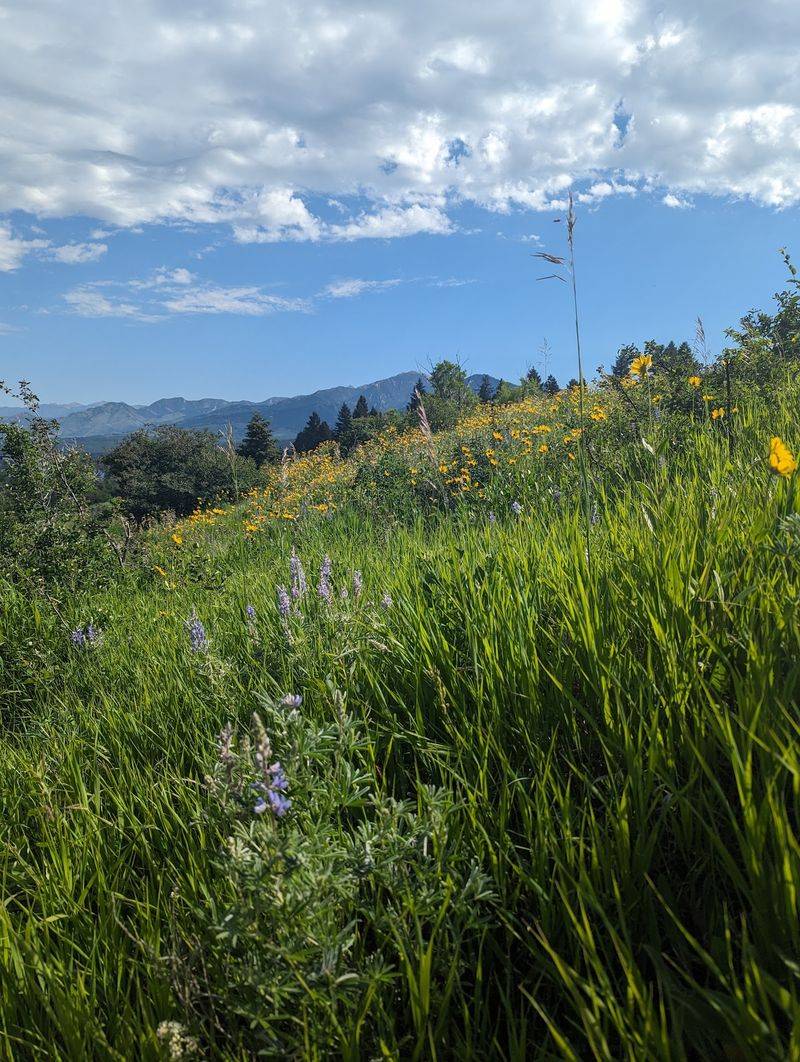
Most visitors come for the views, but the ecological richness of this 60-acre park deserves equal attention. Over 220 species of plants have been documented here, and during spring and early summer, the hillsides erupt with color from native wildflowers including lupine, arrowleaf balsamroot, and aromatic sage.
The diversity of plant life supports a surprising range of wildlife for a park this close to a city center. Deer regularly graze the meadows, particularly in the early morning and evening hours. Foxes have been spotted navigating the trails with impressive confidence, and various birds of prey circle above the ridge, using the park’s elevation to scan the valley below.
This ecological richness is not accidental. The Gallatin Valley Land Trust has prioritized habitat preservation alongside recreational access since the park’s establishment, maintaining a careful balance between the two. Visiting in spring gives you the best chance to see the full bloom of wildflowers alongside active wildlife, turning a simple walk into something closer to a nature tour through a surprisingly vibrant urban oasis.
The Hidden Labyrinth Along the Bottom Path
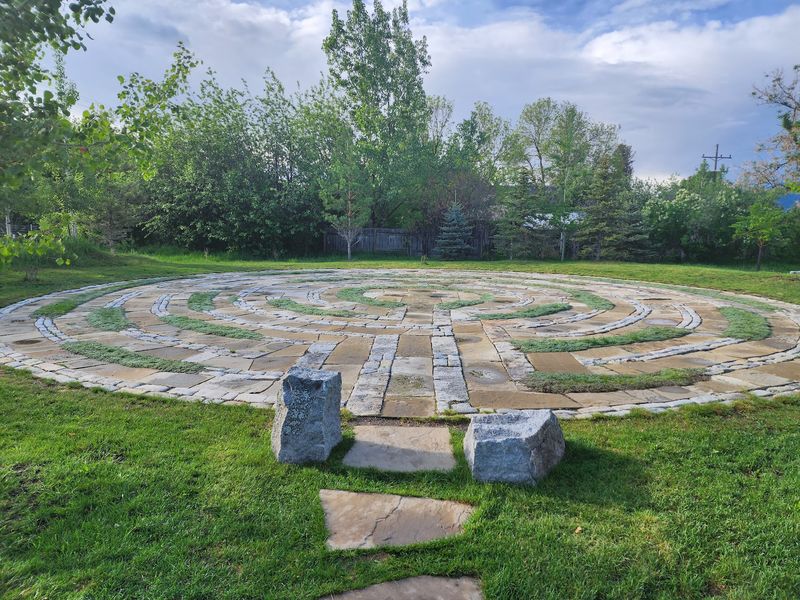
Most people head straight up the hill and miss what sits quietly along the lower flat trail. A walking labyrinth is tucked into the landscape near the bottom of the park, and it is one of those features that stops you mid-stride once you notice it.
Unlike a maze, a labyrinth has no dead ends or wrong turns. There is a single winding path that leads inward to the center and back out again, designed specifically for slow, reflective walking rather than problem-solving. A picnic table nearby makes it easy to settle in before or after tracing the path.
The labyrinth draws a quieter crowd than the main trail, and the pace around it feels noticeably slower and more contemplative. It is an unexpected contrast to the energetic activity on the hill above. For anyone who finds value in mindful movement or simply wants a few minutes of genuine stillness within a busy park, this feature delivers something that the panoramic views at the top, as spectacular as they are, simply cannot replicate.
Community Roots and the Spirit That Saved This Land
The fact that this park exists at all is a story about community persistence. After Earl Peets offered the land to the city in 1946 and was turned down, it took decades of informal public use before the Gallatin Valley Land Trust formally stepped in to secure it. The 1993 acquisition required significant community donations and volunteer effort, and it marked the GVLT’s very first completed trail project.
Since then, the park has grown in both acreage and significance. Expansions in 2008 and 2022 added more land, and the installation of the Medicine Wheel and Mountain Range Finder in 2022 brought the community together for a meaningful dedication ceremony that included Indigenous Peoples’ Day programming with speakers, performances, and a Round Dance.
The park continues to function as a gathering point in ways that go beyond recreation. Families meet here regularly, neighbors connect on the trails, and visitors from out of town are routinely sent here as the first recommended stop by locals who consider it an essential part of understanding what Bozeman actually values as a city.
Practical Tips to Make the Most of Your Visit
Getting here is straightforward. The main parking area sits at the corner of Church Avenue and East Story Street, with a second lot near the top of the hill at Josephine Drive and Kenyon Drive. The upper lot is particularly convenient for anyone heading directly to the overlook area at sunset.
The park connects to the Gallagator Trail via a paved path, making it walkable from Main Street and the Bozeman Public Library without needing a car at all. Public restrooms are available at the Josephine Drive parking lot, and benches are placed at regular intervals along the trails for rest stops with a view.
The park is open 24 hours a day, every day of the week, which makes early morning sunrises and late-evening stargazing entirely possible. Plan for one to two hours if you want a relaxed loop with time to take in the views. Wear sturdy shoes in winter and spring, bring water in summer since there is limited shade on the upper trails, and expect company on weekend evenings when the sunset crowd is at its most enthusiastic.
What Makes This Place Worth Every Return Visit
Some parks are worth a single visit. This one earns repeat trips with almost unfair consistency. The combination of accessible trails, genuine panoramic views, rich history, and a welcoming community atmosphere creates something that is hard to find in one place, especially this close to a city center.
The park’s 4.8-star rating across hundreds of reviews is not the result of novelty. Locals who have lived near this hill for decades describe visiting multiple times a week, across every season, without the experience growing stale. That kind of loyalty says something real about what the park delivers.
Whether you are chasing a perfect sunset photograph, walking a dog, teaching a child to sled, tracing the quiet curves of the labyrinth, or simply standing at the Mountain Range Finder and matching silhouettes to real peaks, the park meets you where you are. Bozeman has a lot going for it, but this elevated stretch of preserved open space, saved by community effort and now cherished by thousands, might just be the clearest expression of what makes the city genuinely worth visiting.
Share this story