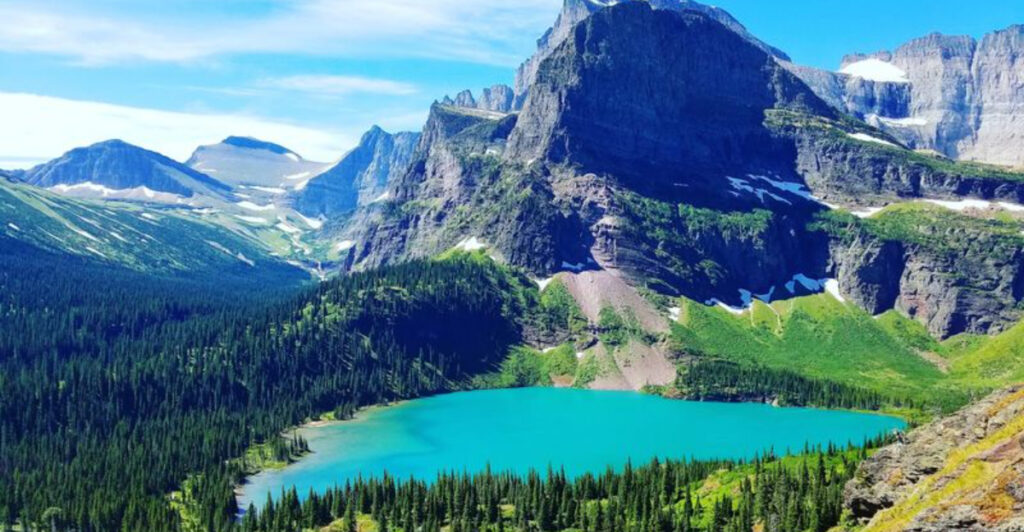
Summer has a way of turning already stunning national parks into something almost otherworldly. Snow melts from mountain roads, wildflowers carpet alpine meadows, and glacier-fed lakes glow with colors that seem too vivid to be real.
Long daylight hours mean more time to explore, and trails that spend most of the year buried under snow finally open up. Whether you are a first-time visitor or a seasoned hiker, these parks offer summer experiences that are genuinely hard to match.
Glacier National Park, Montana
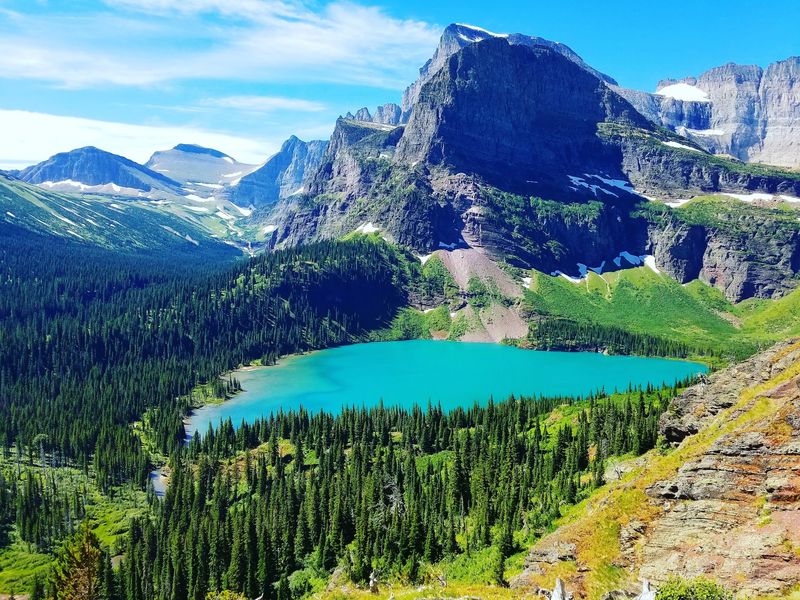
Going-to-the-Sun Road alone is worth the trip. This legendary mountain highway cuts through Glacier’s interior, revealing turquoise lakes, cascading waterfalls, and valleys so green they almost glow.
The road typically opens in summer when snow finally retreats from the high country, and driving it feels like flipping through the world’s best nature calendar.
Logan Pass is the crown jewel. Wildflowers blanket the surrounding meadows from mid-June through mid-August, creating what the National Park Service calls colorful carpets of blooms framed by dramatic peaks.
It is genuinely hard not to stop every few feet for a photo.
Water adds another layer of wow. Glacier’s waterfalls are strongest in early summer, while lakes like Avalanche Lake keep their striking blue-green color throughout the season.
Lake McDonald’s multicolored pebble shoreline offers a completely different kind of scenery worth seeking out. Summer is the brief window when Glacier feels fully alive, fully open, and fully spectacular.
Arrive early at popular trailheads to beat the crowds, and always check current road conditions before heading up.
Mount Rainier National Park, Washington
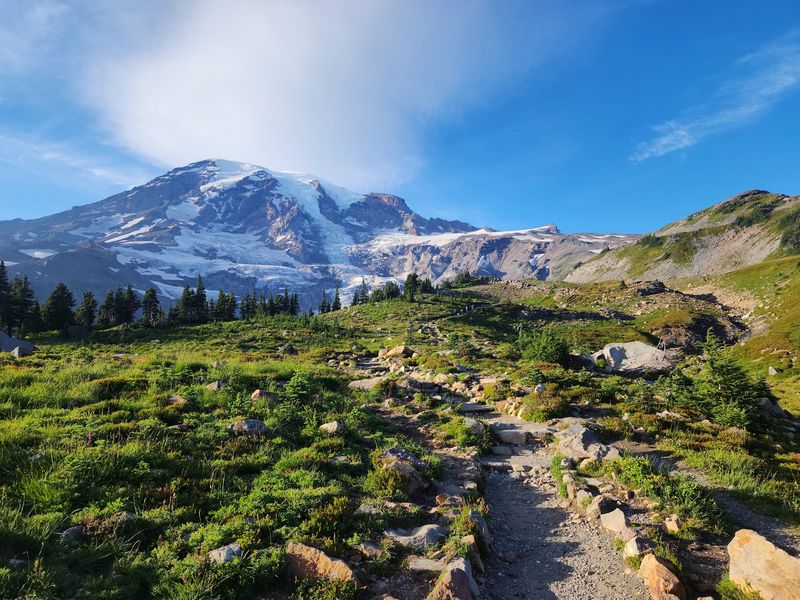
Few volcanic peaks on Earth wear their summer outfit quite like Mount Rainier. The transformation happens fast: snow retreats from subalpine meadows around Paradise and Sunrise, and suddenly the slopes erupt with lupine, paintbrush, asters, and mountain heather.
For a few weeks each summer, the scenery borders on theatrical.
The National Park Service notes that wildflowers usually begin blooming by mid-July, with meadows often reaching peak impressiveness by early August. Beneath all those flowers rises Rainier itself, a glacier-covered giant topping out at 14,410 feet.
The classic combo of blooms in the foreground and snow and ice above is the kind of view that stops people mid-sentence.
Trails through Paradise and Sunrise deliver the full experience, but staying on established paths matters. NPS warns that the fragile subalpine vegetation can be permanently damaged by people stepping off trail for a better camera angle.
Sunrise is also worth noting as the highest point reachable by car in the park, offering sweeping views across a very different side of the mountain. Plan for an early start, especially on weekends in peak season.
Grand Teton National Park, Wyoming
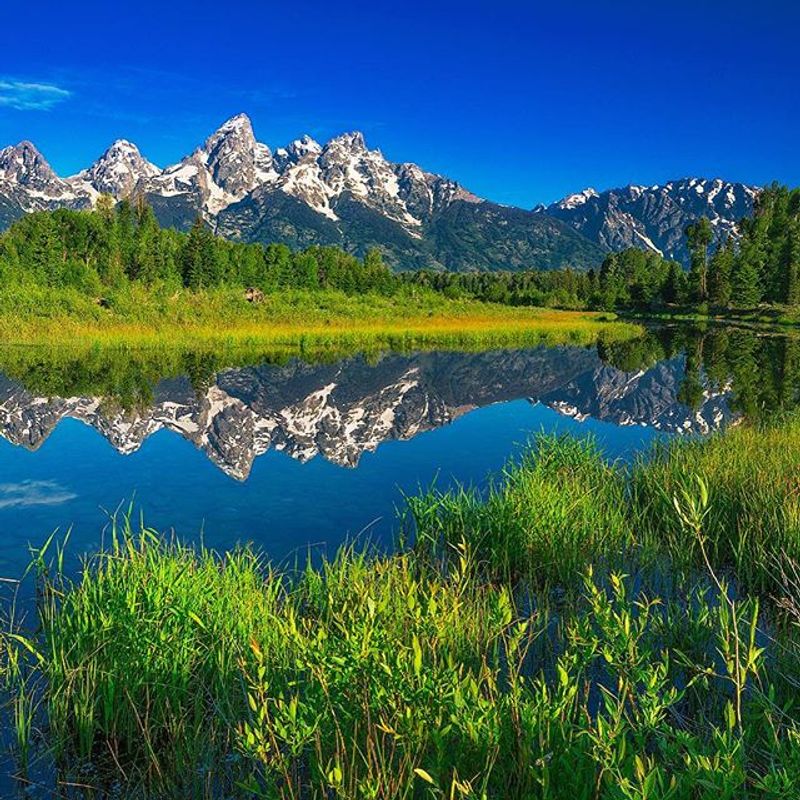
The Tetons skip the gradual buildup and go straight to dramatic. Rising more than 7,000 feet above the Jackson Hole valley floor, these peaks create one of the most recognizable mountain skylines in North America.
Summer softens that raw geology just enough to make exploring it genuinely inviting.
Wildflowers spread across open meadows, alpine lakes mirror the peaks on calm mornings, and wildlife moves through the landscape with surprising regularity. Moose browse the wetlands, elk wander through open clearings, and bison occasionally cross roads without much concern for anyone’s schedule.
NPS specifically highlights how summer paints Grand Teton’s meadows with vivid color.
Jenny Lake is the obvious starting point, but some of the best moments come from simply being in the park at the right time of day. Sunrise and sunset light transforms the granite towers from gray to shades of orange and pink that photographers chase for years.
The Snake River winding through the valley floor adds another dimension entirely. Grand Teton looks beautiful in any season, but summer hands visitors the freedom to hike deep into that scenery rather than admire it through a frosted windshield.
North Cascades National Park, Washington
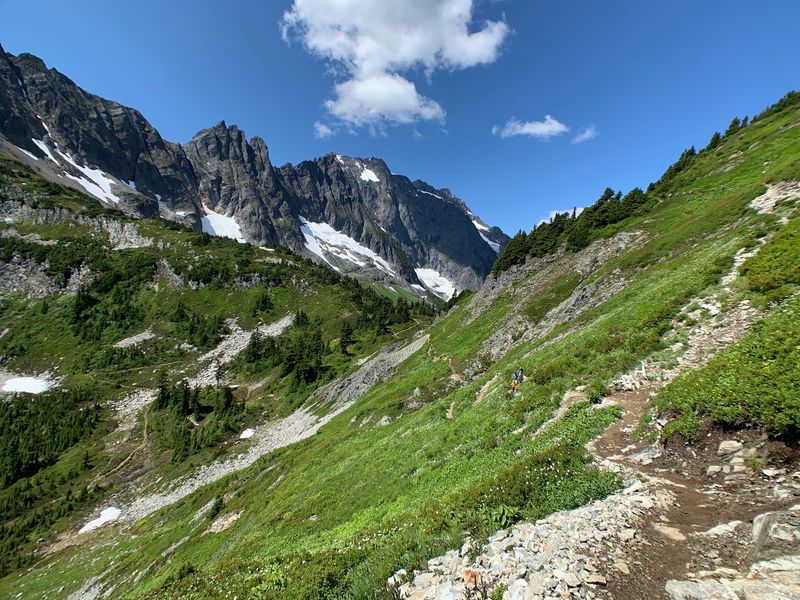
Calling North Cascades underrated feels like an understatement. This Washington park packs in jagged peaks, active glaciers, dense forests, alpine ridges, and startlingly colored lakes, yet it draws far fewer visitors than parks with similar scenery.
Some people have unofficially compared the landscape to the European Alps, which gives you a sense of what is hiding here.
Summer finally unlocks the high country. NPS notes that wildflowers appear across a remarkable range of habitats, from shaded forest floors to exposed alpine ridges.
Because elevations vary so dramatically across the park, flowering can stretch from July well into September at the highest elevations. That extended bloom makes late summer visits surprisingly rewarding.
The park also offers two very different personalities depending on which side of the Cascades you explore. The western slopes are wetter and lush with greenery, while the eastern side turns noticeably drier and more open.
Visitors can experience both ecosystems within a relatively short drive, which adds genuine variety to a single trip. For hikers who want serious mountain scenery without shoulder-to-shoulder crowds, North Cascades delivers something that feels almost like a well-kept secret.
The solitude alone can feel like a gift.
Rocky Mountain National Park, Colorado
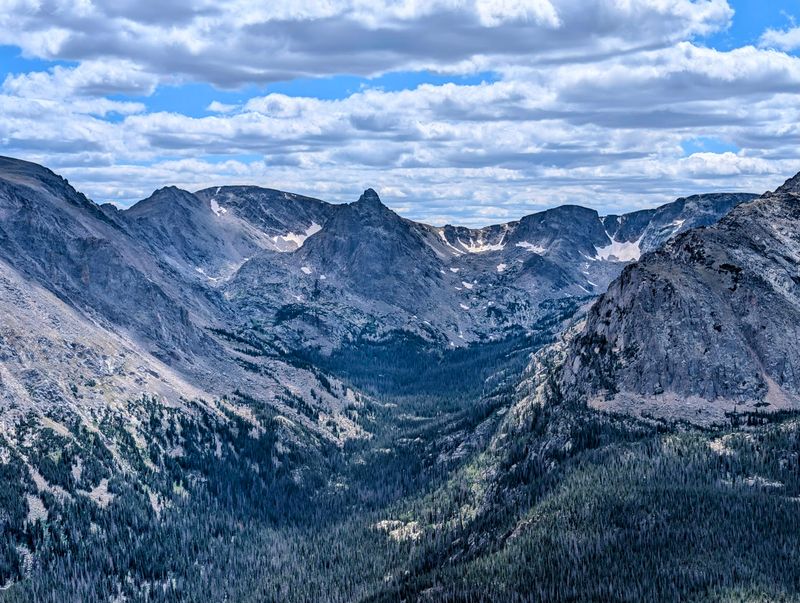
Trail Ridge Road is the main event, and summer is the only time most people get to experience it. Stretching 48 miles between Estes Park and Grand Lake, this scenic highway climbs to 12,183 feet and spends 11 miles entirely above treeline.
The landscape up there looks less like Colorado and more like something you might find in the Arctic.
The drive itself is a story told in stages. Forests of pine, fir, and spruce gradually thin as you climb.
Trees become shorter and more twisted by wind. Then they disappear entirely, leaving open tundra, sweeping views across the Continental Divide, and wildflowers clinging to rocky soil at elevations where most plants would simply give up.
Wildlife sightings add unexpected highlights throughout the trip. Elk appear regularly in lower meadows, moose favor the upper Colorado River region, and marmots and pikas scurry around rocky tundra near the road.
Lower valleys stay green and lush through the summer, providing a lively contrast to the spare beauty above treeline. Trail Ridge Road typically closes in winter, making summer the essential season for experiencing Rocky Mountain National Park at its full, dramatic range.
Check opening dates before planning.
Yellowstone National Park, Wyoming, Montana, and Idaho
Yellowstone contains roughly half of the world’s active geysers. That single fact sets it apart from every other park on this list.
Summer opens most of the park’s 2.2 million acres to personal vehicles, allowing visitors to move freely between Old Faithful, Grand Prismatic Spring, Mammoth Hot Springs, Yellowstone Lake, and the Grand Canyon of the Yellowstone.
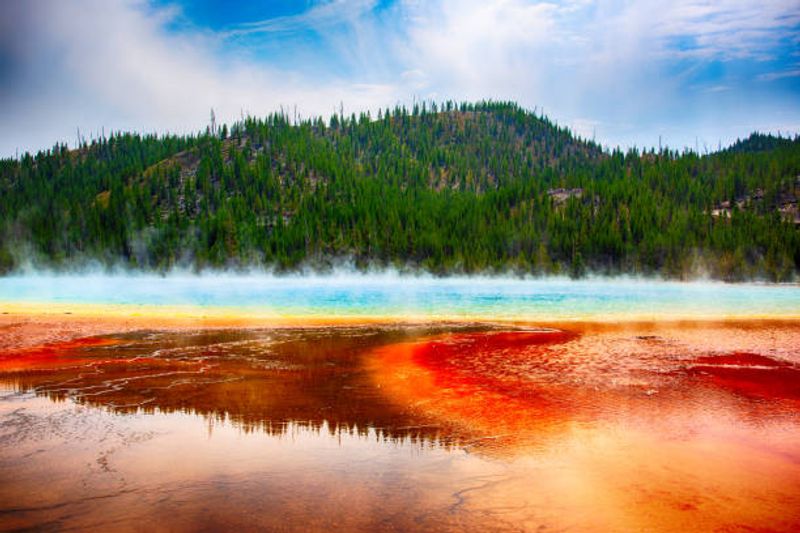
The thermal features are the undisputed headliners. Steaming basins, brightly colored hot springs fed by heat-loving microbes, mud pots that bubble and plop, and geysers that erupt on schedule or not at all create landscapes unlike anything else in the continental United States.
Grand Prismatic Spring’s vivid rings of orange, yellow, and green are best appreciated from a nearby overlook rather than the boardwalk below.
Wildlife rounds out the experience in a big way. Bison roam broad valleys with complete authority, while wolves, bears, elk, and pronghorn inhabit one of the largest intact ecosystems in the lower 48 states.
Lamar Valley earns its nickname as America’s Serengeti during summer mornings. Be ready for traffic delays near popular attractions and roadside wildlife jams, and book campgrounds and lodging well ahead of time.
The crowds are real, but so is the spectacle.
Yosemite National Park, California
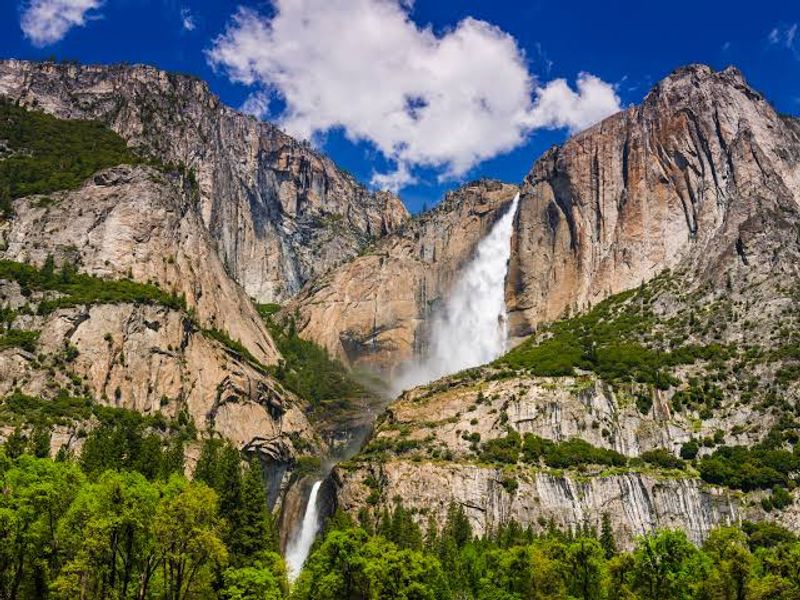
Catch Yosemite in late May or early June and you get something genuinely special: waterfalls at full roar. Yosemite Falls and many of the park’s other cascades reach peak flow as Sierra Nevada snowpack melts, turning the famous granite walls into something that almost hums with moving water.
The valley echoes with it on calm mornings.
Summer also unlocks the rest of the park gradually. NPS says most areas are accessible by car by late May or early June, though Tioga Road’s services can open a bit later depending on snowpack.
Once the high country opens, Tuolumne Meadows becomes reachable, offering broad subalpine landscapes, granite domes, cooler temperatures, and a quieter version of Yosemite that many visitors never discover.
Wildflower timing follows elevation closely. Yosemite Valley and Wawona see most of their bloom in June, while Tuolumne’s subalpine flowers begin appearing around July.
One timing note worth remembering: by August, Yosemite Falls can slow to a trickle or stop entirely, and wildfire smoke can reduce visibility later in the season. For the combination of thundering waterfalls and open high-country roads, June and early July tend to hit the sweet spot.
Timed entry reservations may be required, so check ahead.
Olympic National Park, Washington
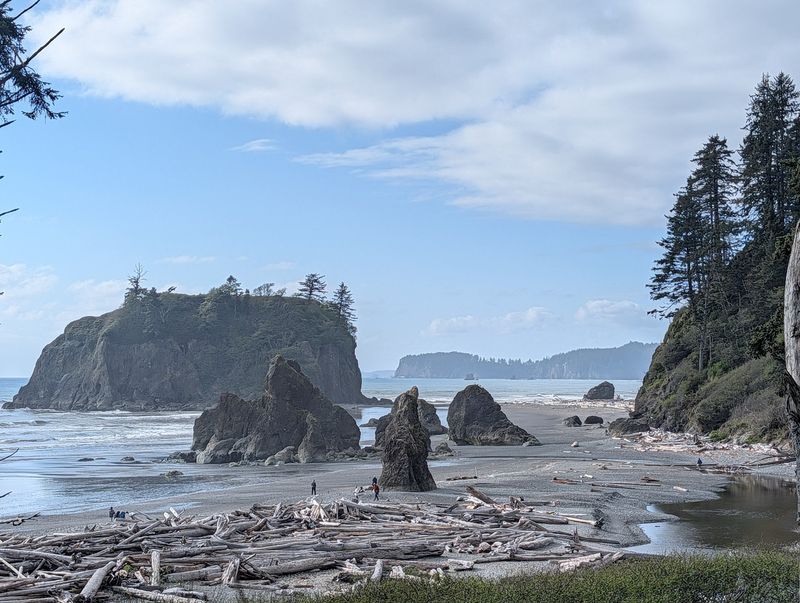
Olympic National Park is essentially three completely different landscapes sharing one boundary, and summer is the best time to experience all of them in a single trip. Glacier-covered mountains, ancient temperate rainforest, and more than 70 miles of wild Pacific coastline coexist here in a combination that feels almost improbable.
Hurricane Ridge delivers the mountain experience. July brings wildflowers across subalpine meadows, with glacier-covered Mount Olympus rising dramatically in the distance.
Drive west and the scenery shifts entirely. The Hoh, Queets, and Quinault valleys receive extraordinary amounts of rainfall and support some of the finest temperate rainforest remaining anywhere in the world.
Mosses and ferns cover nearly every surface beneath enormous old-growth trees in a way that feels almost prehistoric.
Then comes the coastline, where low tides reveal tide pools teeming with life among rocky shores, sea stacks, cliffs, and long stretches of beach. Olympic’s real strength lies in contrast.
A single summer day can begin among alpine wildflowers at Hurricane Ridge, continue beneath dripping rainforest canopies in the Hoh, and finish beside the Pacific at sunset. Few national parks offer that kind of variety within a single visit.
Plan for driving time between the three zones, as distances add up quickly.
Crater Lake National Park, Oregon
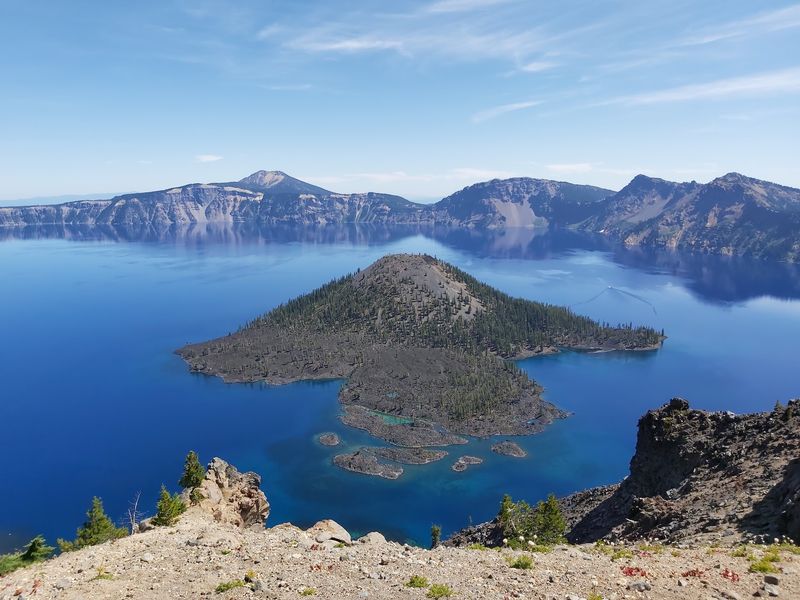
Crater Lake has a color problem, and that problem is that the blue looks fake. Formed inside the collapsed caldera of ancient Mount Mazama, this is the deepest lake in the United States, reaching 1,943 feet at its maximum depth.
The water’s clarity and depth produce a shade of blue so intense that first-time visitors frequently assume the photos are edited.
Getting there in summer matters because Crater Lake receives so much snow that spring still feels like winter for much of the park. NPS confirms that July, August, and September are the most popular months because roads, trails, and facilities are normally fully open.
In May and June, deep snow can still close the rim road and block hiking trails, limiting what visitors can actually see and do.
Once the snow retreats, Rim Drive becomes one of summer’s great scenic road experiences. Stopping at multiple overlooks around the caldera reveals constantly changing perspectives on Wizard Island, the surrounding Cascade landscape, and the almost impossibly blue water below.
Boat tours to Wizard Island operate during summer and offer a perspective that rim overlooks simply cannot match. The lake is striking year-round, but summer is when Crater Lake transforms from a glimpse into a full, immersive experience worth planning around.
Acadia National Park, Maine
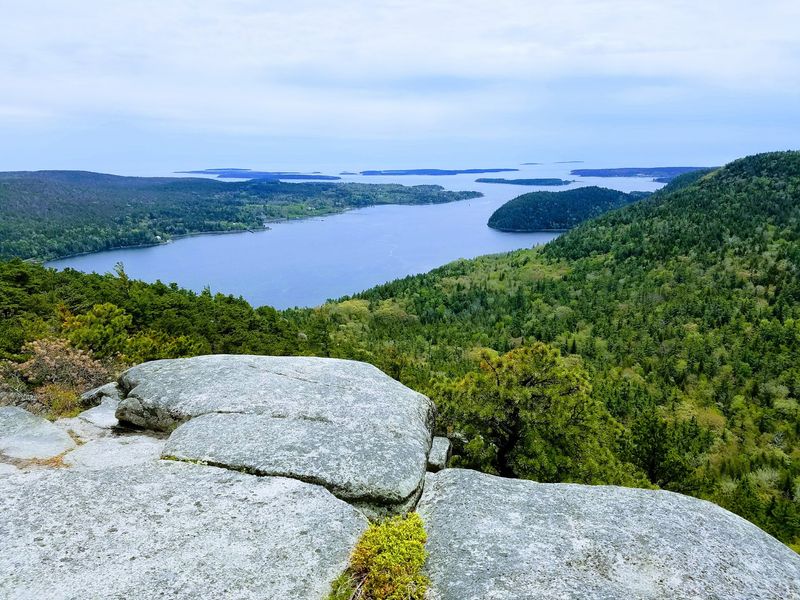
Acadia plays by entirely different rules than the western mountain parks. Here, rounded granite peaks meet the Atlantic Ocean, pine forests tumble toward rocky shorelines, and historic carriage roads wind through woodland past stone bridges built in the early 20th century.
The whole park feels like a love letter to the New England coast.
Cadillac Mountain is the signature experience. At 1,530 feet, it stands as the highest peak on the eastern seaboard and offers views across surrounding islands, mountains, and open ocean.
During summer, the summit can catch sunrise as early as around 4:45 a.m. in mid-June. Vehicle reservations are required to drive Cadillac Summit Road between May 20 and October 25, reflecting just how popular that early morning ritual has become.
Acadia rewards visitors who look beyond the summit, though. Summer days are ideal for cycling or walking the 45-mile carriage road network, hiking other granite peaks like Beehive and Pemetic, exploring Jordan Pond, and tracing the rugged shoreline at Thunder Hole.
Compared with Yellowstone or Glacier, Acadia is compact, which means a long summer day can realistically include mountains, forests, freshwater, and ocean without spending hours behind the wheel between stops. Pack layers regardless of the forecast.
Share this story