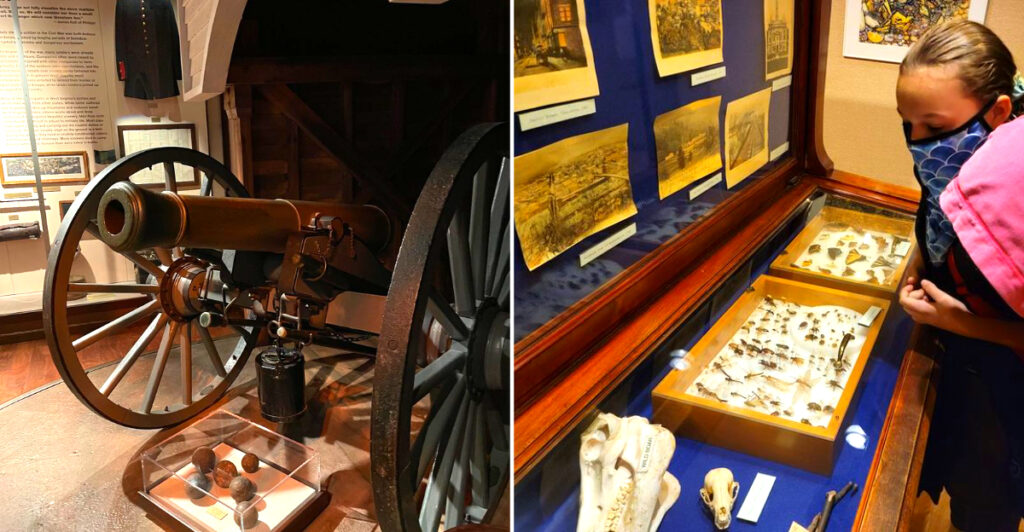
Inside an imposing building in Charleston, visitors can walk from prehistoric coal forests into a recreated mine, explore the conflicts that shaped an entire state, and encounter artifacts connected to some of America’s most turbulent history. And the entire experience is free.
But among thousands of historical objects, the artifacts that generate the most questions aren’t weapons, flags, or mining equipment. They’re two incredibly tiny 19th-century celebrities with one of the strangest stories in the building.
You’ll have to venture deeper inside to discover exactly what they are.
Unearthing History at the Heart of the State
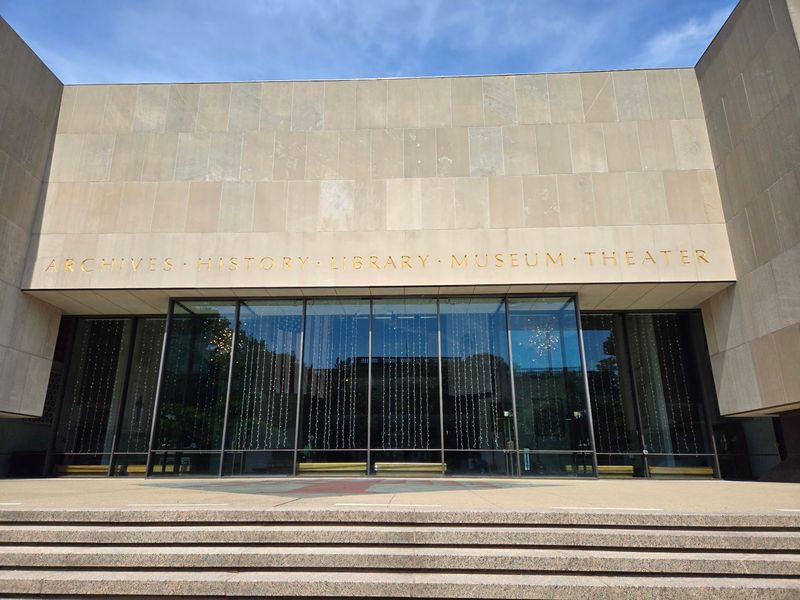
Few buildings carry their purpose as visibly as this one. The West Virginia State Museum sits inside the West Virginia Culture Center at 1900 Kanawha Boulevard East, Charleston, West Virginia 25305, right within the Capitol Complex, and the setting alone feels like a statement about how seriously this state takes its own story.
The museum’s roots stretch back to January 30, 1890, when the West Virginia Historical and Antiquarian Society first organized a collection inside the Senate Chamber of the State House. Governor William A. MacCorkle officially opened the State Museum on April 3, 1894, in the 1885 Capitol building, with artifacts that had already captivated audiences at the 1893 World’s Columbian Exposition in Chicago.
After a major $17.9 million renovation, the museum reopened in June 2009 with fully updated, immersive exhibits and advanced conservation practices. The building itself, impressive yet welcoming, sets the tone for everything waiting inside.
A Chronological Walk Through Time
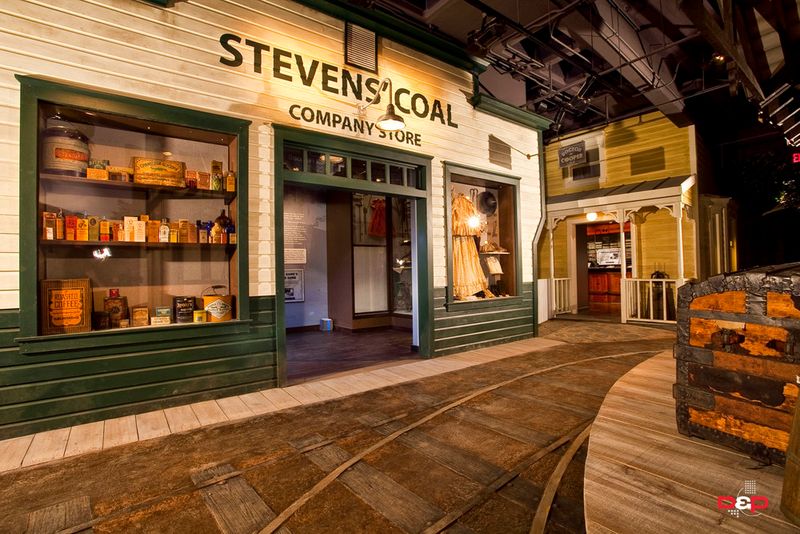
The museum’s most celebrated design feature is its clear, chronological show path, a guided walkway that carries you from ancient geological history all the way to the present day. Years are literally marked on the floor, so you always know exactly where you are standing in time, which turns a complex narrative into something remarkably easy to follow.
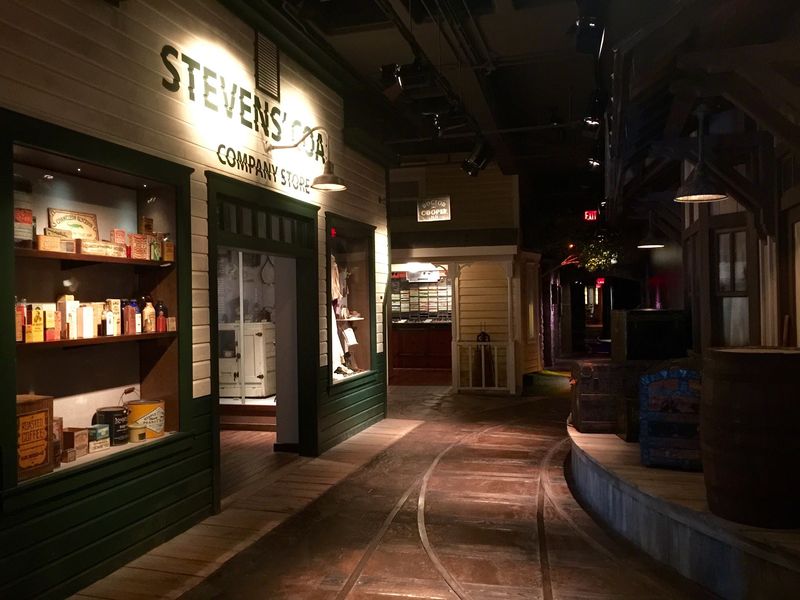
The journey begins with the coal forests of millions of years ago and moves steadily forward through prehistoric wildlife, early human settlement, colonial conflict, statehood, industrialization, and modern culture. Special exhibits along the main path use evocative sound design and dramatic lighting to signal shifts between eras, making each transition feel intentional rather than abrupt.
Visitors consistently spend well over two hours on this path alone, often noting that the balance between artifacts, life-size displays, and written information never tips into overwhelming territory. The curators clearly understood that showing history is always more powerful than simply listing it.
Twenty-Six Discovery Rooms Worth Exploring
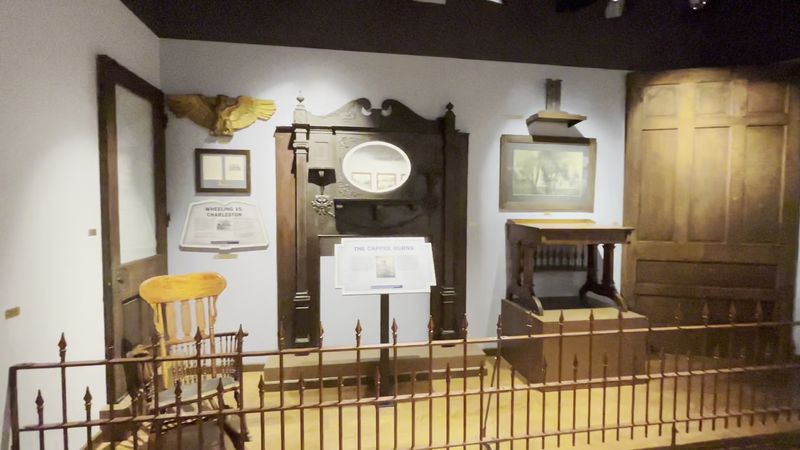
Beyond the main walkway, the museum opens up into 26 separate Discovery Rooms, each one a focused deep-dive into a specific slice of West Virginia’s heritage. Think of them as individual chapters in a very long and fascinating book, each with its own personality and its own set of surprises.
One room explores prehistoric peoples and the cultures that thrived here long before written records existed. Another brings John Brown’s 1859 raid on the federal arsenal at Harpers Ferry to stark, artifact-rich reality, complete with items directly connected to that pivotal and controversial event. The “Family Farm” room pays tribute to agricultural life and even highlights Helvetia, a Swiss immigrant farming community established in Randolph County in 1869.
The “Mine Wars” room uses vintage news films and physical artifacts to illuminate a volatile chapter in West Virginia’s industrial history. Each room rewards slow, curious visitors, and the two additional “Connections Rooms” tie broader themes together with satisfying clarity.
The Famous Dressed Fleas of Discovery Room 16
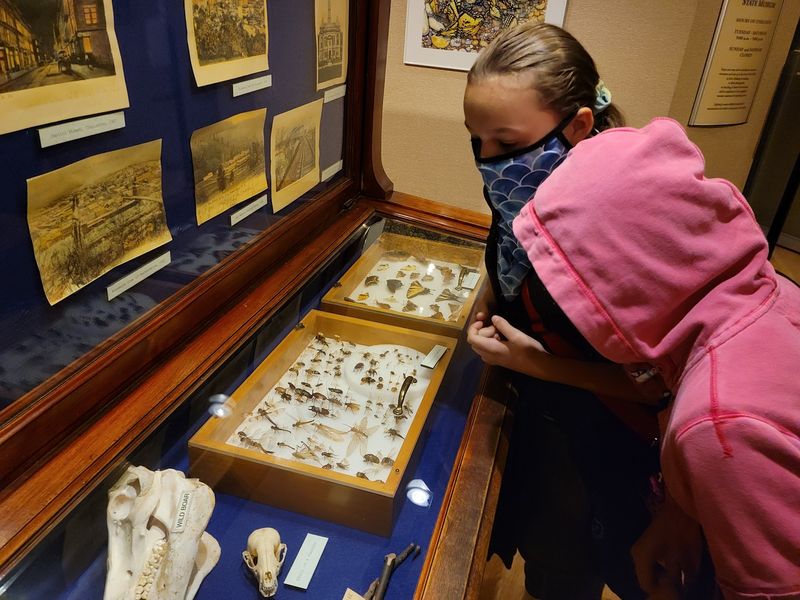
Of all the thousands of objects in the museum’s collection, none generate more visitor inquiries than Emmiline and Alexander, two dressed fleas housed in Discovery Room 16. These miniature celebrities were once stars of a flea circus at Hubert’s Museum in New York City during the late 1800s, known for extraordinary feats like leaping ten inches through the air.
They arrived in West Virginia through a donation in 1906 and have been charming visitors ever since, earning national radio commentary and appearing in countless must-see lists over the decades. The museum receives more questions about this duo than any other item in its entire collection, which says something remarkable about the power of an unexpected, perfectly odd artifact.
Their historic cabinet is modest in size but enormous in personality, a quaint reminder of a bygone era of entertainment that somehow feels completely at home among the grander narratives surrounding it. Some wonders really do come in the smallest packages.
Coal, Conflict, and the Stories That Shaped a State
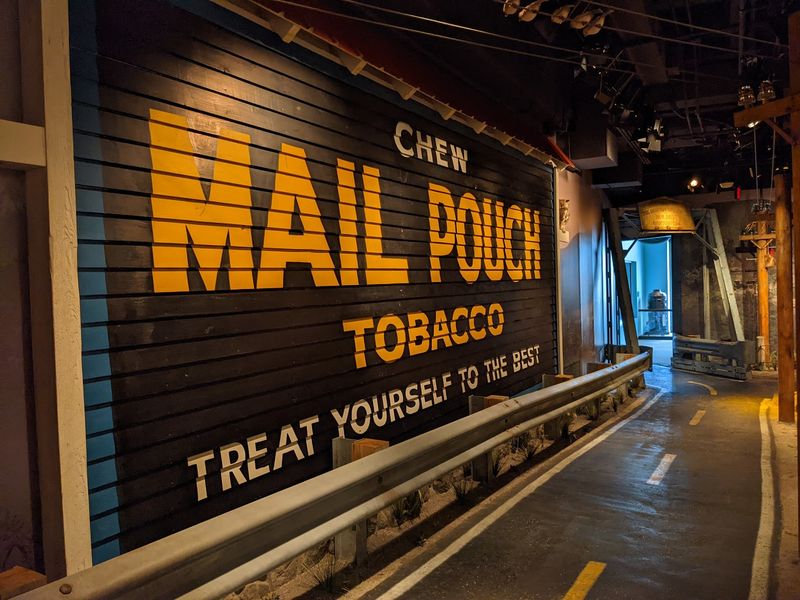
West Virginia’s relationship with coal is complicated, proud, painful, and absolutely central to understanding the state. The museum handles this subject with both honesty and depth, presenting the coal mining industry not just as an economic force but as a social world complete with company towns, tight-knit communities, and fierce labor battles.
The simulated coal mine is one of the most talked-about features in the entire building, and for good reason. Visitors step into a recreated mine environment that captures the physical reality of underground work in a way that reading about it simply cannot replicate. The atmosphere shifts noticeably, and the experience lingers long after you exit.
Alongside the mine, exhibits on the Mine Wars use vintage news footage and tangible artifacts to trace the volatile confrontations between mine workers and company forces that defined a generation. These displays do not soften the edges of history, which is exactly why they resonate so powerfully with visitors of all backgrounds.
West Virginia’s Civil War Story, Told Without Shortcuts
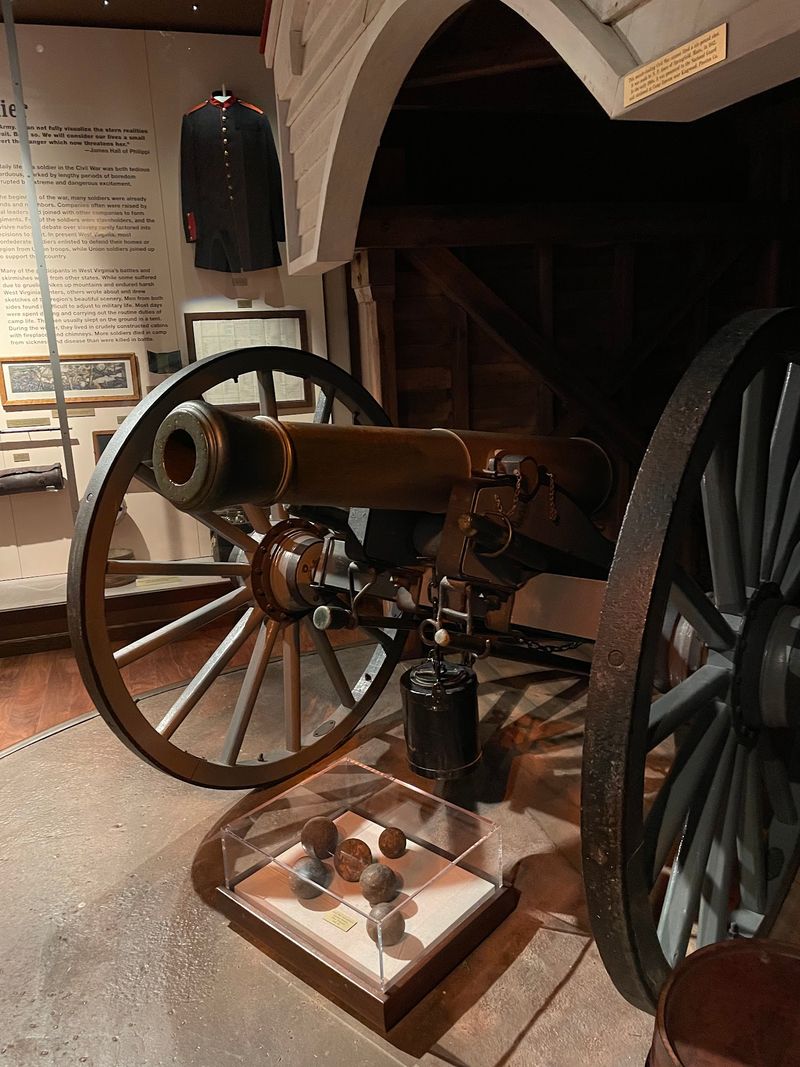
The exhibit dedicated to West Virginia’s formation during the Civil War is one of the most carefully constructed sections in the museum. It presents a clear, well-organized timeline that explores the deep tensions between the eastern and western regions of Virginia, tensions that ultimately produced an entirely new state in 1863.
Displays describe Civil War battles involving West Virginia soldiers and highlight the experiences of both Union and Confederate fighters who called this land home. The exhibit does not flatten the complexity of that era into a simple heroic narrative; instead it presents multiple perspectives with enough context to make the history genuinely understandable.
The museum’s Civil War Regimental Flag Collection is particularly significant, featuring flags dating as far back as 1890, preserved through a prestigious grant from the “Save America’s Treasures” program awarded in 2001. Seeing those weathered flags up close, understanding what they represent and how carefully they have been maintained, carries a quiet weight that stays with you.
Recognition That Reflects Real Quality
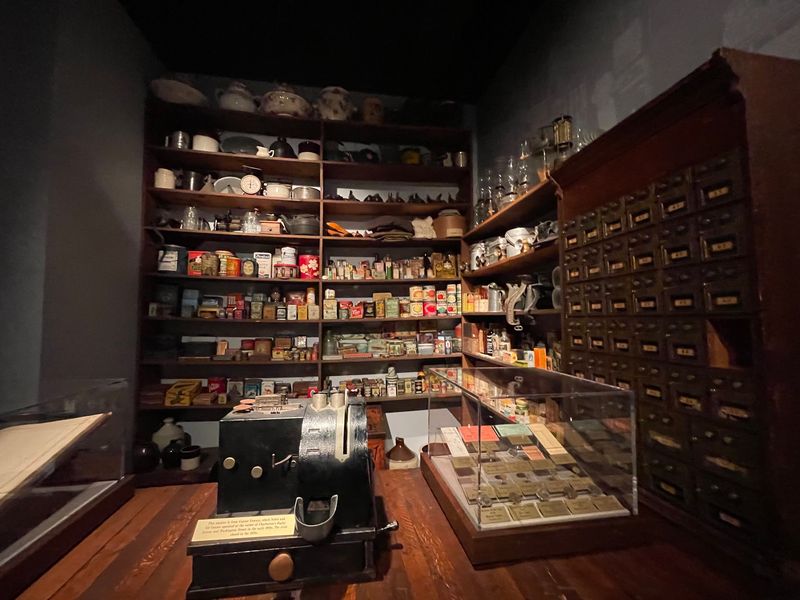
The phrase “award-winning” gets attached to a lot of institutions, but the West Virginia State Museum has earned the label through specific, verifiable recognition. In 2020, readers of WV Living magazine voted it “Best Museum” in the state, a popular vote that reflects genuine affection from the people who actually live nearby and return repeatedly.
The 2001 “Save America’s Treasures” grant for the Civil War Regimental Flag Collection placed the museum in nationally recognized company, acknowledging both the significance of its holdings and the quality of its preservation work. That kind of institutional validation matters, particularly for a collection that includes items dating back over a century.
The West Virginia Juried Exhibition, a biennial contemporary art competition, adds another layer of distinction. Award-winning artworks from that exhibition become permanent parts of the museum’s collection through Governor’s Purchase Awards, ensuring the institution grows as a living repository of current creative talent alongside its historical artifacts. Quality here is not an accident.
The Culture Center: More Than Just a Museum
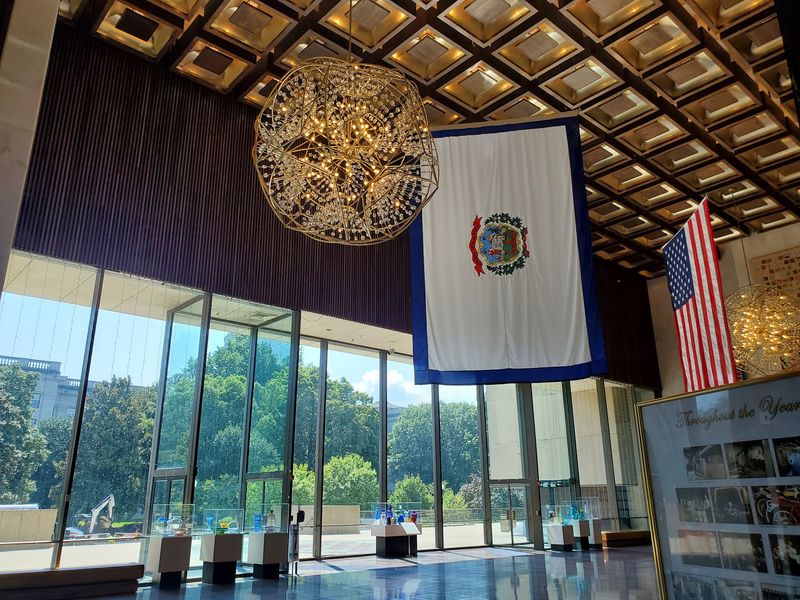
The building that houses the State Museum is officially the West Virginia Culture Center, and understanding that distinction helps explain why a single visit here can expand well beyond the museum galleries. Under one roof, you will find the State Archives and History Library, which holds centuries of documents, records, and genealogical resources that researchers travel from across the country to access.
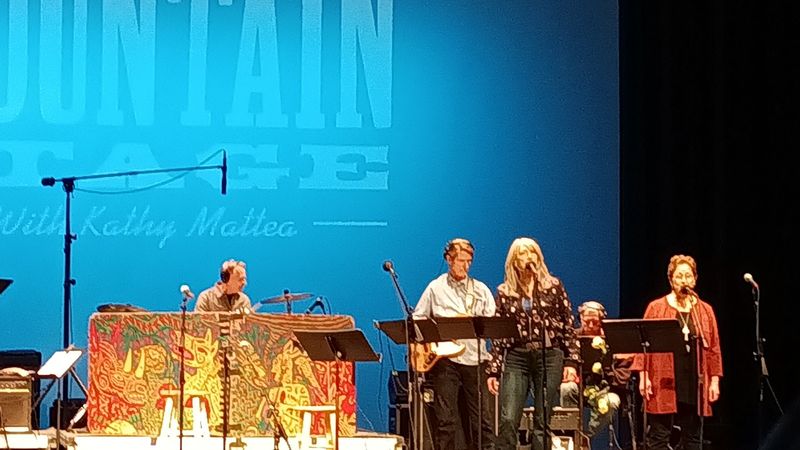
The Culture Center also contains a theater that has hosted some genuinely remarkable musical performances over the years. National Public Radio’s “Mountain Stage” is recorded here, a live performance radio show that has featured artists ranging from Dr. Ralph Stanley and Kathy Mattea to R.E.M. and Sheryl Crow. Catching a live taping would add a completely different dimension to any visit.
The building also houses the West Virginia Commission on the Arts and the State Historic Preservation Office, making it a true nerve center for the state’s cultural infrastructure. Plan accordingly, because what looks like a museum visit on the schedule can quietly turn into a full day of discovery.
Free to Enter, Rich in Everything Else
Free admission at a museum of this caliber is not something to gloss over. The West Virginia State Museum charges absolutely nothing to enter, which means families, solo travelers, students, and curious passersby can all walk in without any financial hesitation. That open-door policy has clearly shaped the museum’s reputation as a must-visit rather than a maybe-someday.
The museum is open Tuesday through Saturday from 9:00 a.m. to 5:00 p.m., and also on Mondays during the same hours, with closures on Sundays and major holidays. For groups and school visits, scheduling in advance is recommended so the Museum Education staff can prepare appropriate programming and ensure the best possible experience.
Parking is handled through metered spaces at the corner of Washington Street E and Greenbrier Street, charged at $0.25 per half-hour on weekdays. After 5:00 p.m. on weekdays, and all day on weekends and state holidays, those spaces are free. Additional free parking is available at the University of Charleston Stadium at Laidley Field, roughly two blocks away.
Fueling a Nation: The Upcoming Exhibit to Watch
History museums that stand still eventually become irrelevant, and the West Virginia State Museum has no intention of standing still. A major new exhibit titled “West Virginia: Nature Designs a State that Fuels a Nation” is slated to open in early 2025, and the scope of it is genuinely impressive.
The exhibit will spotlight 11 key industries and natural resources that shaped American industrial development, including coal, oil and gas, iron and steel, and railroads. Large-scale replicas of locomotives, a coal shuttle car, and a substantial block of coal are planned as centerpieces, designed to make the industrial scale of West Virginia’s contributions physically tangible in a way that statistics alone never could.
This exhibit is part of America250, the national celebration marking the 250th anniversary of the signing of the Declaration of Independence, which places the museum squarely within a broader national conversation about American identity and growth. The Mountain State’s role in building that identity is a story well worth telling at this scale.
Art, Quilts, and the Creative Pulse of the Mountain State
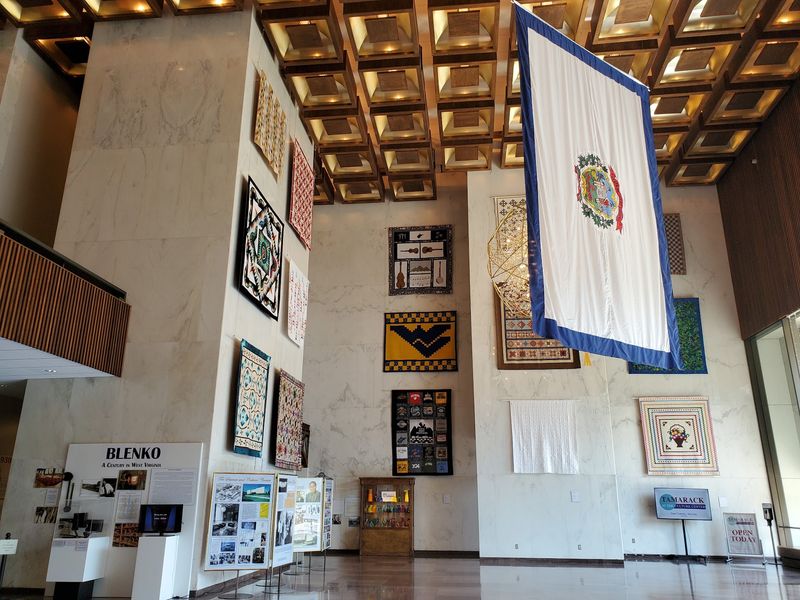
History and art are not separate conversations at this museum; they run alongside each other in ways that feel organic rather than forced. The second floor features artwork created by state employees and artists connected to West Virginia, offering a quieter, more contemplative counterpart to the immersive historical exhibits below.
Quilt displays have become a particular point of affection among visitors, showcasing fiber craft traditions that carry deep cultural significance in Appalachian communities. These are not decorative afterthoughts; they are documents of skill, identity, and community memory, presented with the same care as any artifact in the collection below.
The West Virginia Juried Exhibition, held biennially, feeds fresh contemporary work into the permanent collection through Governor’s Purchase Awards, ensuring the museum’s artistic holdings grow alongside its historical ones. The result is a space where the past and the present genuinely inform each other, and where a visitor interested primarily in art will find as much to engage with as one drawn purely by history. That balance is harder to achieve than it looks.
What to Expect Before You Arrive
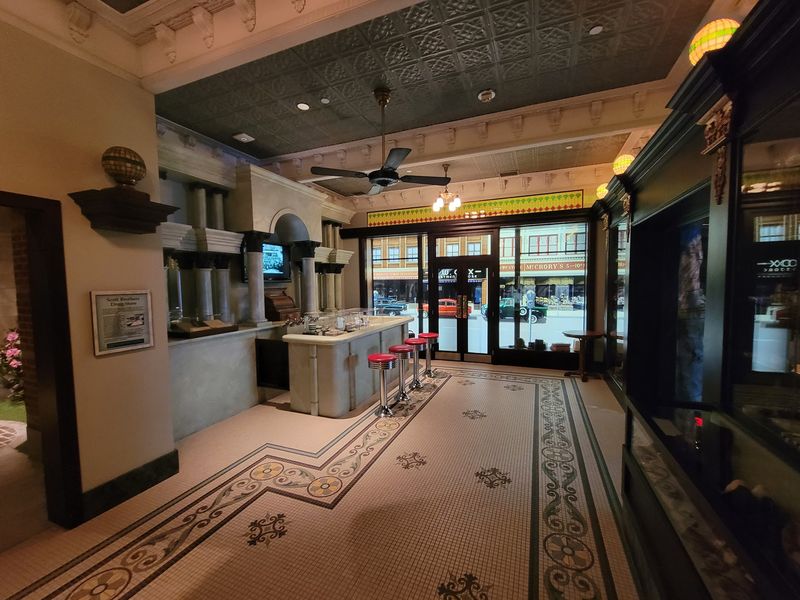
A few practical details can make the difference between a smooth visit and an unnecessary scramble. The museum entrance faces the Capitol building rather than the street or parking area, which catches first-time visitors off guard more often than you might expect. Head toward the side of the Culture Center that overlooks the Capitol grounds and you will find it easily.
Accessible parking is available at the Greenbrier Street entrance and in a small bus loop directly in front of the building. The entrance itself accommodates all visitors, with both stairs and ramps leading to the door, plus an automatic accessible entrance on the right side operated by an ADA Push to Open Button. A smartphone app is also available, offering an interactive way to navigate the exhibits and engage more deeply with specific displays.
Plan for at least two hours at a comfortable pace, though many visitors find themselves extending that to three or four hours without regret. A gift shop on-site rounds out the experience with educational items, toys for younger visitors, and West Virginia souvenirs worth bringing home.
Share this story