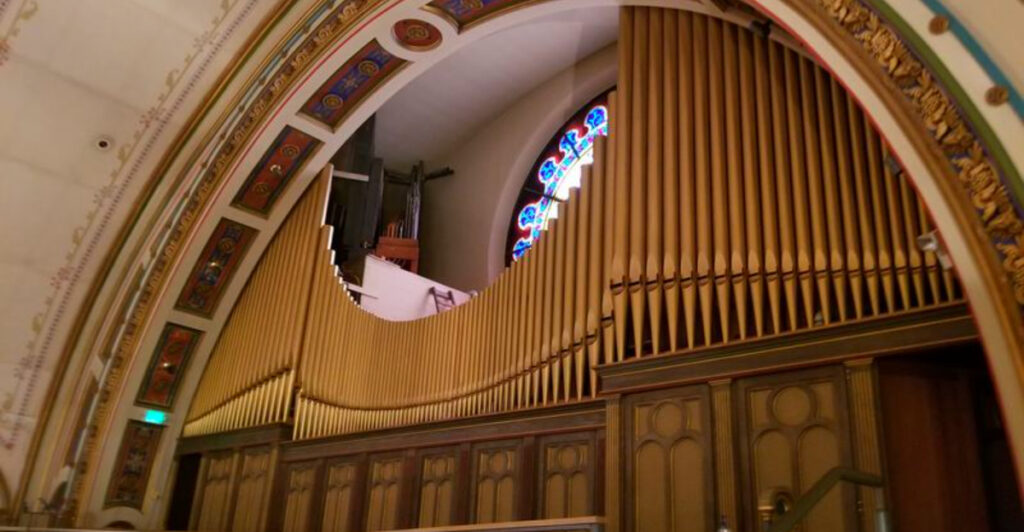
One downtown Boise landmark packs more than a century of history into a building that occupies an entire city block. Inside are stained-glass windows installed largely in 1920, a massive pipe organ, medieval-inspired interior colors, and walls that reach three feet thick in places.
The organ alone contains approximately 2,900 pipes and dates to 1921, while the stained glass around the nave follows the life of Jesus in a carefully arranged sequence. Even the rose window has a specific connection to the music performed below it.
But some of the building’s most interesting details come from plans that never happened. The twin towers were supposed to look dramatically different, and the bishop who launched the project never lived to see the cathedral completed. There is even a crypt-style chapel below the main floor with a story dating back to the cathedral’s difficult construction years.
A Historic Address in the Heart of Boise
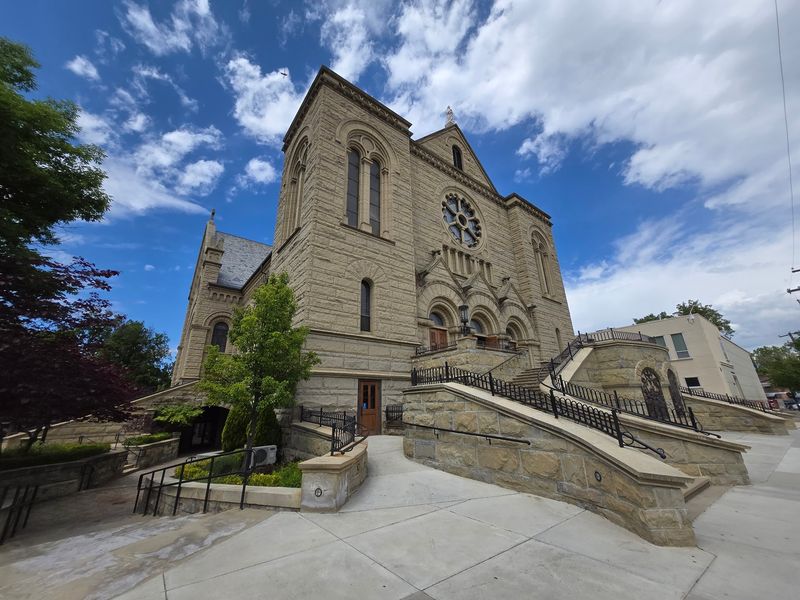
The Cathedral of Saint John the Evangelist stands at 807 N 8th Street, Boise, Idaho 83702, occupying an entire city block bordered by Fort, Hays, Eighth, and Ninth Streets. That location puts it just a few blocks north of the Idaho State Capitol building, making it one of the most prominent landmarks in the downtown area.
The parish itself has roots going back to 1870, when the first Catholic church in Boise opened in December of that year. Eighteen days later, it burned to the ground. A wooden replacement was quickly built, and by 1883 that structure had been elevated to cathedral status for the Idaho territory.
The current building reflects more than a century of community dedication. The cornerstone was laid in 1906, and the cathedral was officially dedicated on Easter Sunday, March 27, 1921. In 1978, it earned a well-deserved place on the National Register of Historic Places, cementing its role as a treasured piece of Idaho heritage.
The Architects Who Shaped the Vision
Behind every great building is a great designer, and this cathedral owes its appearance to the Boise firm Tourtellotte and Hummel, one of the city’s pioneering architectural practices of the early 1900s. Charles F. Hummel drew the actual plans, pulling inspiration from two celebrated European landmarks.
The Cathedral of Mainz in Germany and the Basilica of Saint-Sernin in Toulouse, France both influenced the final design. Those are not small references. Both are among the most respected examples of Romanesque architecture on the continent, and Hummel clearly studied them carefully before putting pen to paper.
The result is a building that feels genuinely connected to a centuries-old tradition of sacred architecture, even though it was constructed in the American West during the early twentieth century. The firm’s decision to use locally quarried Boise Sandstone from Table Rock gave the design a regional identity that makes it feel rooted in Idaho rather than simply imported from Europe. That balance of global inspiration and local materials is part of what makes the building so compelling.
What Romanesque Revival Really Looks Like Up Close
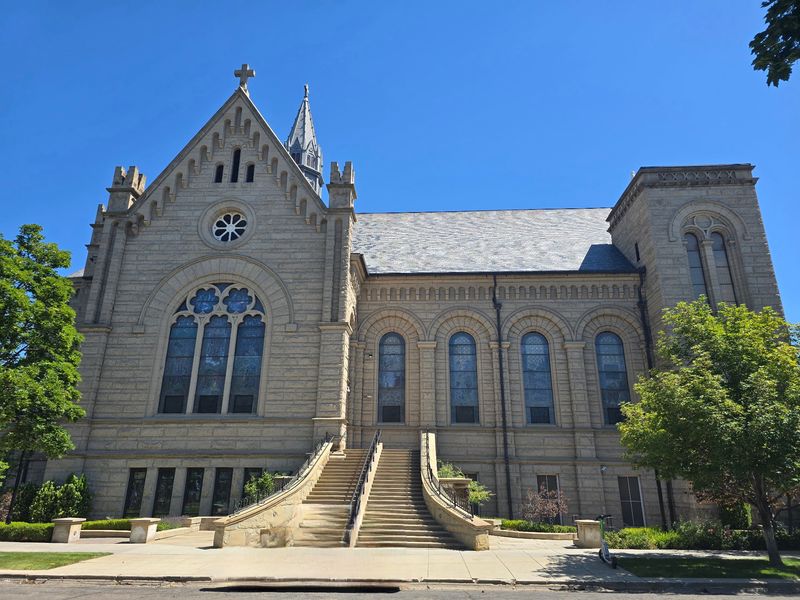
Romanesque Revival architecture is not always easy to define when you read about it, but you recognize it the moment you stand in front of this building. The walls are thick, the arches are rounded rather than pointed, and every surface seems to have been given deliberate attention.
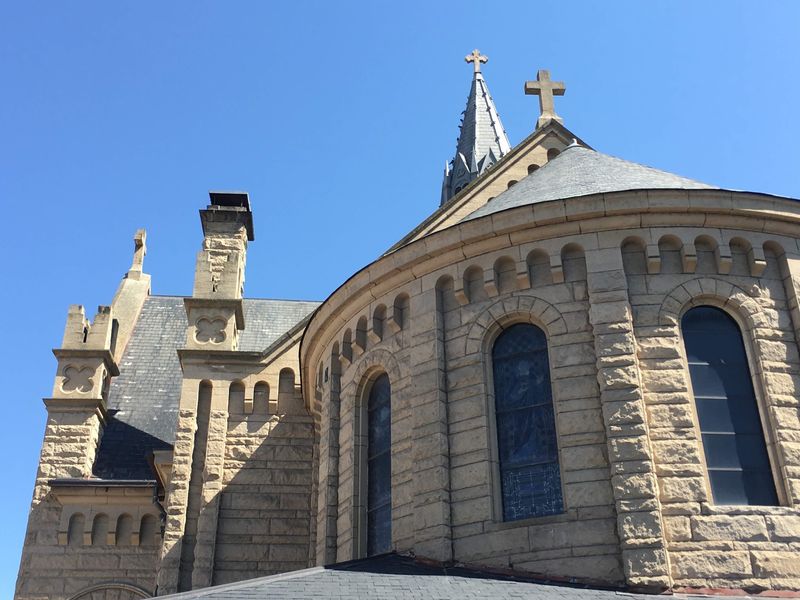
A continuous band of small projecting arches called corbeling runs around the entire building at the roofline. That single decorative element gives the exterior a rhythm that draws the eye all the way around the structure. Above the main entrance, a statue of Saint John the Evangelist stands on the center gable, and a prominent rose window fills the facade above him.
A slender spire called a fleche rises above the crossing where the nave and transepts meet, adding vertical drama to a building that is already impressive in scale. The walls reach three feet thick in places, a detail that speaks to both the engineering ambition and the sheer physical weight of this remarkable structure. Those walls also create a natural quiet inside that feels almost immediate.
The Twin Towers and Why They Look the Way They Do
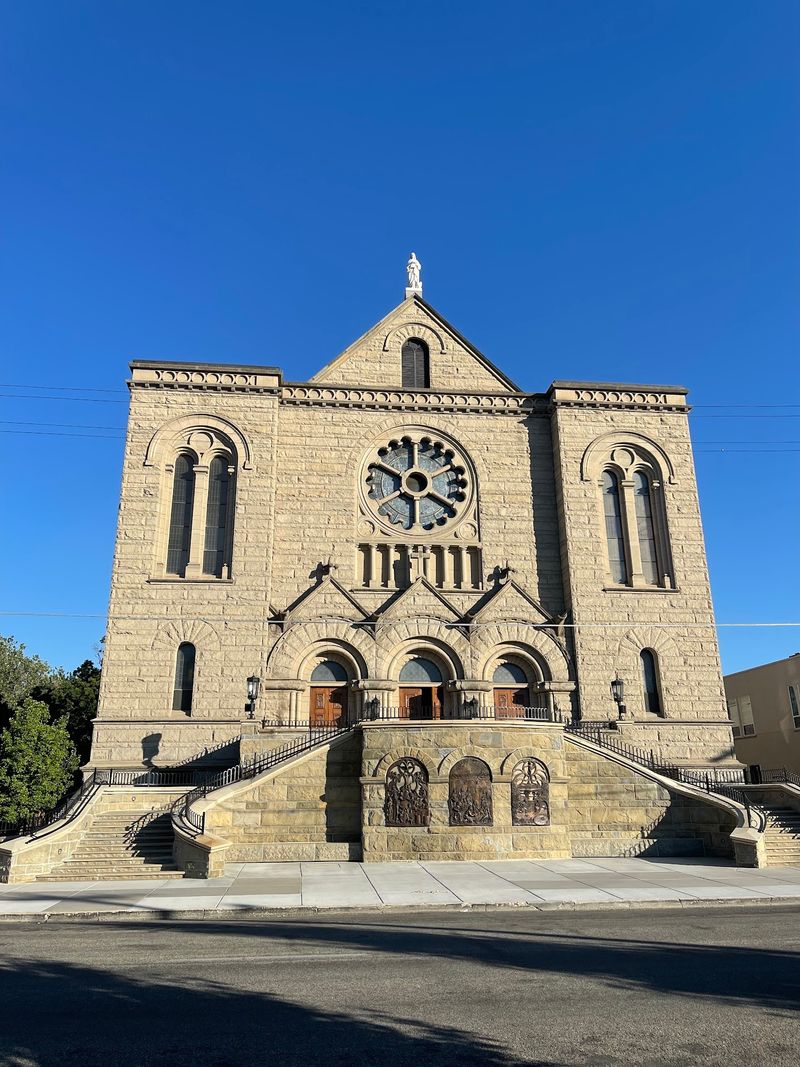
One of the first things visitors notice about this cathedral is the pair of towers flanking the main facade. They are substantial, visually commanding, and unmistakably the defining feature of the building’s silhouette against the Boise skyline.
What many people do not realize is that those towers were never finished as originally planned. Bishop Alphonse Glorieux, who initiated the project and acquired the property, envisioned two full spires soaring above the entrance. Financial pressures during construction forced a compromise, and the towers were capped with flat tops rather than the dramatic pointed spires that appeared in the original drawings.
World War I also caused significant delays that stretched the project far beyond its intended timeline. Bishop Glorieux passed away before the cathedral was completed, and his successor, Bishop Daniel Gorman, oversaw the final stages and the eventual dedication in 1921. The truncated towers are a quiet reminder that great buildings often carry the marks of the obstacles their builders faced, and those marks become part of the story.
Boise Sandstone: A Building Material With a Story
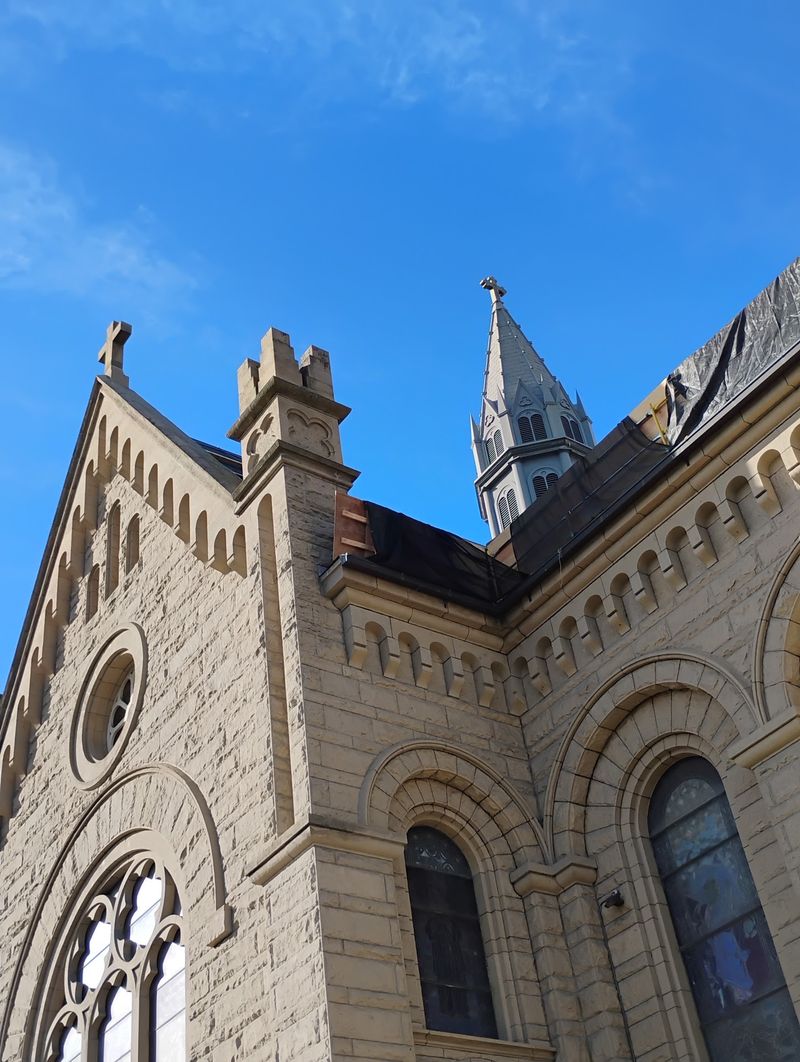
Not every cathedral is built from stone quarried within sight of the city it serves, but this one is. The exterior walls of the Cathedral of Saint John the Evangelist are composed of Boise Sandstone, a material pulled directly from Table Rock, the basalt and sandstone bluff that rises visibly above the city to the southeast.
That choice was both practical and meaningful. Using locally sourced stone reduced transportation costs during a project already stretched thin by financial constraints. At the same time, it gave the building a color and texture that feels native to the high desert landscape of southern Idaho.
The sandstone has a warm, golden-tan tone that shifts subtly depending on the light and time of day. Early morning sun brings out its amber tones, while overcast skies reveal a softer, cooler palette. Running a hand along the exterior wall, you can feel the natural grain of the stone, a tactile reminder that this building grew from the same earth it stands on. That connection to place is something no imported material could replicate.
Inside the Nave: Scale, Color, and Silence
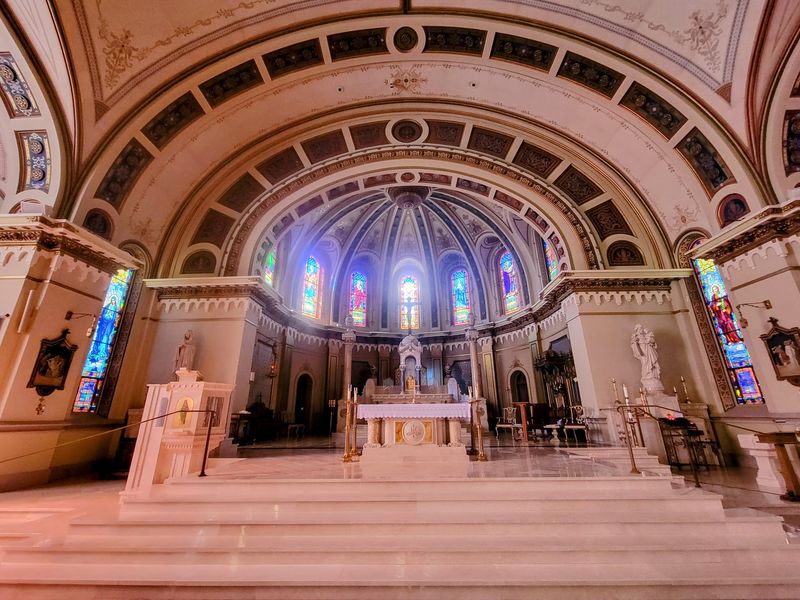
The interior of this cathedral does not ease you in gently. The moment you pass through the narthex and enter the nave, the scale registers immediately. The nave is 65 feet wide, and the building measures 170 feet from front to back, with transepts extending 95 feet across.
The walls are painted in bright, intentionally medieval colors designed to evoke what the builders described as the joy and splendor of heavenly mysteries. That choice might sound abstract, but standing inside, it makes complete sense. The colors feel warm and purposeful rather than overwhelming, and they interact with the light coming through the stained glass in ways that shift throughout the day.
The cruciform layout of the building means the space opens up dramatically at the crossing, where the nave meets the transepts beneath the fleche above. The thick walls create a natural acoustic environment that softens outside noise almost entirely. Even on a busy weekday, the interior carries a quality of stillness that is genuinely hard to find anywhere else in downtown Boise. The silence here has texture.
The Stained Glass Windows: A Guided Tour in Color
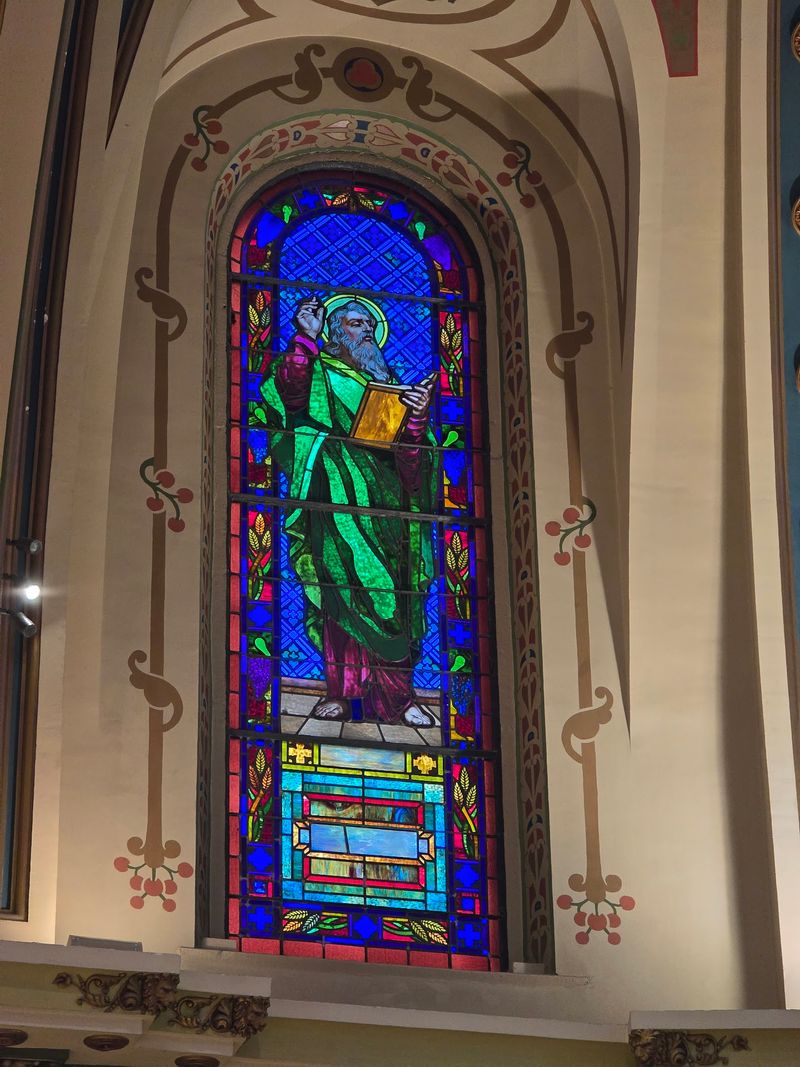
The stained glass windows in this cathedral are not decorative afterthoughts. They are a carefully sequenced visual narrative, and once you understand the logic of their arrangement, the entire interior starts to feel like an illustrated book you can walk through.
The John J. Kinsella Company of Chicago installed most of the windows in 1920. Moving clockwise around the nave, the scenes follow the life of Jesus from the Annunciation through to the Resurrection. The north transept features the Adoration of the Magi, flanked by Saint Alphonsus Ligouri and Saint Theresa of Avila.
The south transept depicts the Ascension, with Saint Patrick and Saint Rita on either side.
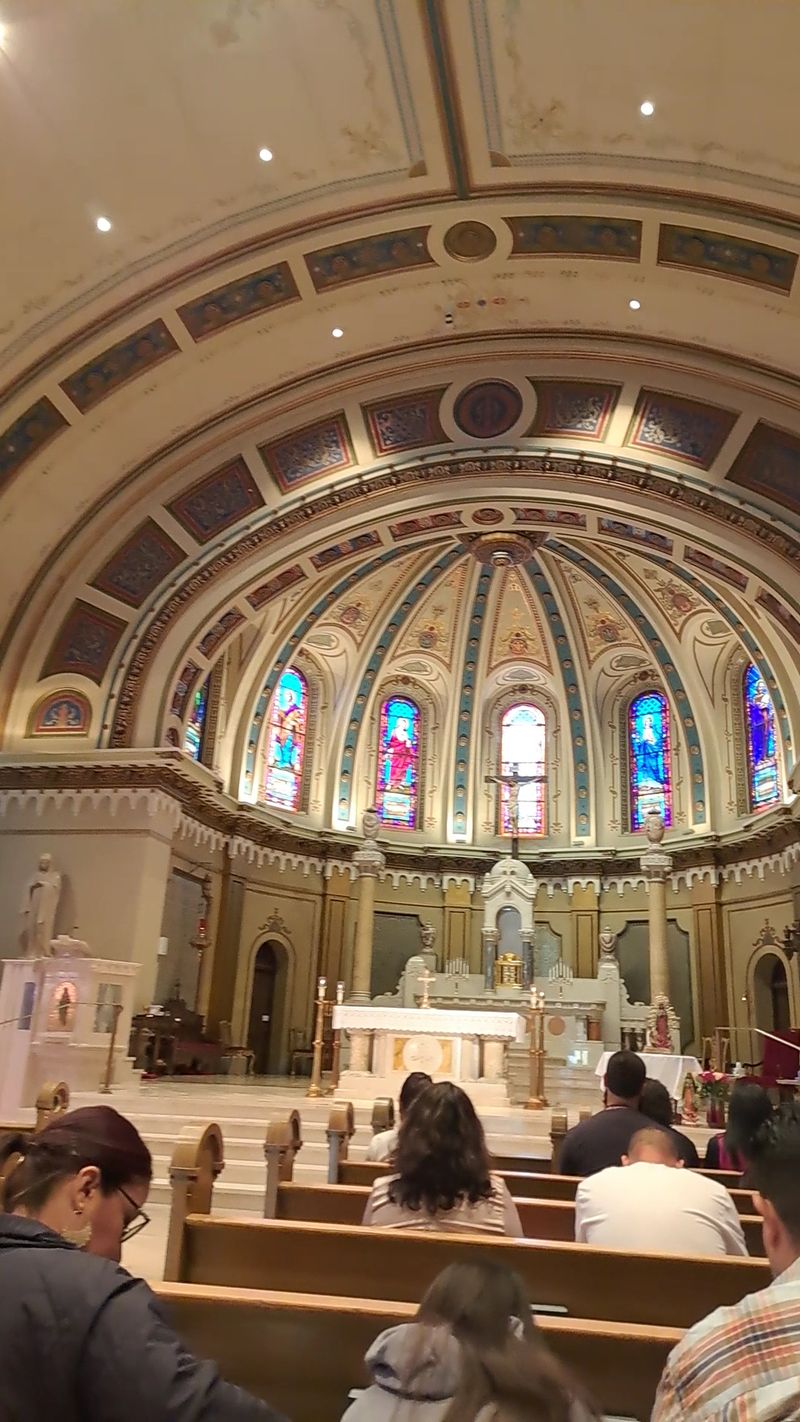
In the apse, windows show the Sacred Heart of Jesus and the Immaculate Heart of Mary, alongside the Four Evangelists. A newer addition, the Holy Spirit window designed by Wisconsin-based Conrad Schmitt Studios and blessed in November 2022, replaced an earlier 1979 renovation piece and was specifically crafted to harmonize with the surrounding evangelist windows. The result is a collection that feels unified despite spanning multiple decades of craftsmanship.
The Rose Window Above the Choir Loft
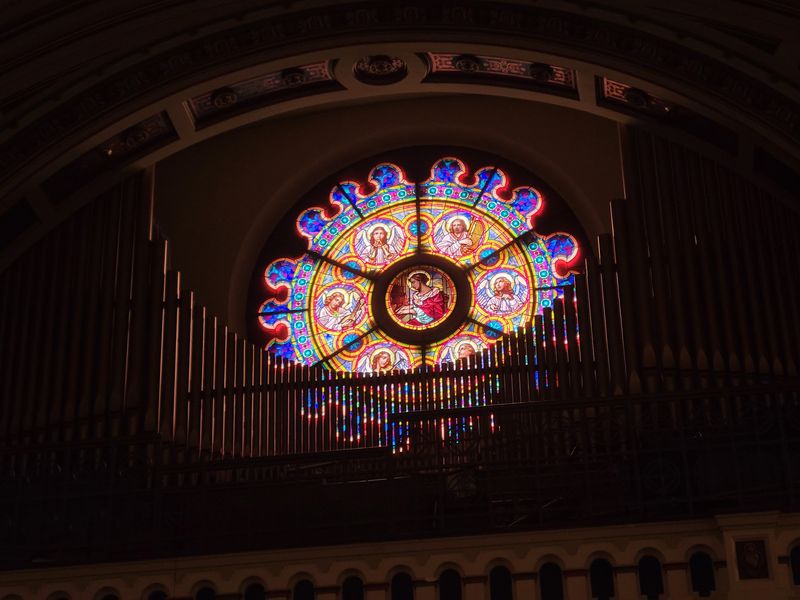
Rose windows have been a defining feature of sacred architecture for centuries, and the one above the choir loft in this cathedral is one of the most captivating details in the entire building. Circular in form, it symbolizes perfection and eternity, concepts that have been associated with the rose window motif since medieval times.
At the center of this particular window stands Saint Cecilia, the patroness of musicians. That placement above the choir loft is not accidental. It connects the visual art of the window directly to the musical tradition of the space below, creating a layered meaning that rewards attention.
The window radiates outward from Saint Cecilia in panels of color that shift as the light changes through the day. Morning light reads differently than afternoon light through the same glass, which means the window offers a slightly different experience depending on when you visit. That quality of change over time is one of the things that makes stained glass so endlessly interesting, and this example demonstrates it beautifully. The choir loft below it has its own story worth knowing.
The 2,900-Pipe Organ and the Cathedral’s Remarkable Acoustics
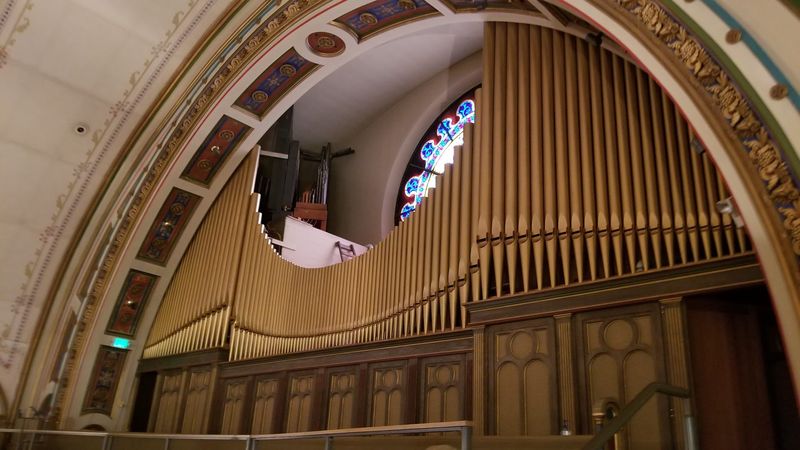
A building with walls three feet thick and a ceiling that rises dramatically above the crossing is going to have interesting acoustics, and this cathedral does not disappoint. The natural reverberation of the space gives music a fullness that is immediately noticeable, even when the organ is not playing.
The organ itself is a significant instrument. Installed by Tellers-Kent in 1921, it features three manuals and approximately 2,900 pipes. The cost at the time was $17,000, a considerable sum for a parish already managing the financial pressures of a long construction project. Some of the piping was recycled from an earlier instrument, a practical decision that also connected the new organ to the cathedral’s earlier musical history.
Organ recitals and choral performances are regular features of the cathedral’s programming, and attending one is a genuinely different experience from simply visiting during a quiet weekday. The combination of the instrument’s range and the building’s natural acoustics creates a sound environment that is hard to describe accurately in words. You have to hear it to understand why musicians and music lovers make a point of seeking this place out.
Sanctuary Details That Deserve a Slower Look
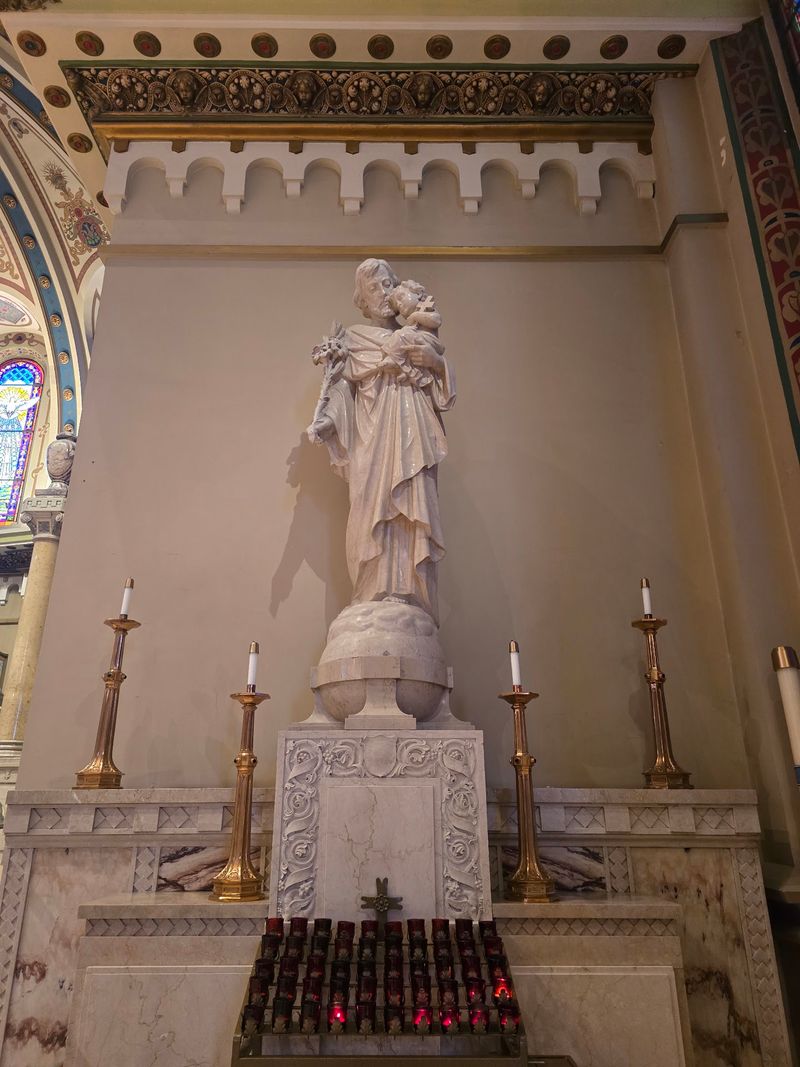
The sanctuary rewards the kind of slow, deliberate looking that busy visitors sometimes skip. Two marble statues stand in the space: one of Saint Joseph holding the Christ child and a lily symbolizing purity, and another of a pregnant Mary in prayer, surrounded by devotional candles. Both are quietly moving in their detail.
In front of the Saint Joseph statue stands the cathedral’s original baptismal font, a gift from 1921. The eight-sided font features a relief carving depicting Saint John the Baptist baptizing Jesus in the Jordan River. The number eight carries its own symbolism here, representing resurrection in early Christian tradition.
Recent renovations returned the tabernacle to its original central position within the sanctuary, a change that reorients the visual focus of the space in a meaningful way. The Bishop’s Baldacchino and the cathedra, his official chair, were relocated to the north wall during the same modernization effort. Each of these details reflects ongoing conversations about how sacred spaces should function, conversations this community has been having for over a century. The lower level holds even more surprises.
Visiting, Tours, and Making the Most of Your Trip
Planning a visit to this cathedral is straightforward, but a few practical details make the difference between a rushed look and a genuinely rewarding experience. The cathedral is open Monday through Thursday from 9:30 AM to 4 PM and Friday from 9:30 AM to noon. You can reach the office at 208-342-3511 or visit boisecathedral.org for current Mass times and event listings.
Docent-led tours run on Sundays from 3:00 PM to 4:30 PM, and those are the best option if you want context for what you are seeing. A knowledgeable guide makes the stained glass narrative, the architectural choices, and the building’s layered history far more accessible than a solo walkthrough. Self-guided tours are available on select weekdays for those with more flexible schedules.
The parish office carries a book by local historian John O’Hagan titled “Stone Wondrously Hewn,” which covers the cathedral’s history in depth, with proceeds supporting the cathedral. Street parking and a church lot are both available nearby, and a handicap-accessible entrance ensures the building is welcoming to everyone. A visit here is one of those Boise experiences that genuinely stays with you.
Share this story