A meteorite, an Egyptian mummy, dinosaur fossils, and a mastodon skeleton are not the usual cast of characters for a quick New Jersey outing, especially when the door costs nothing to enter. In New Brunswick, a university building holds one of the state’s most surprising small museums, the kind of place that proves New Jersey can still pull a rabbit, or in this case a rock from space, out of its academic hat.
The collection is compact, but it covers huge stretches of Earth history without turning the visit into an all-day marathon. Keep reading and the address, the best highlights, the kid-friendly details, and the practical notes all fall into place.
A Free Museum On Somerset Street
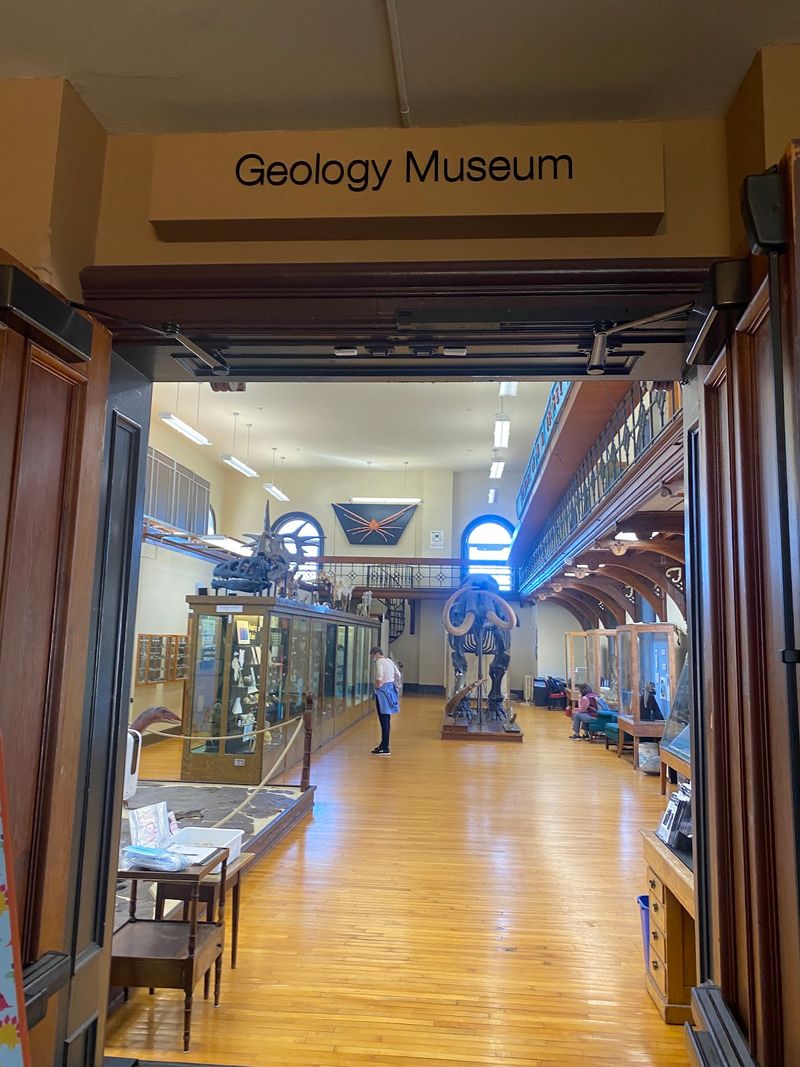
Right in the middle of New Brunswick’s Rutgers campus, Rutgers Geology Museum sits at 85 Somerset St, New Brunswick, NJ 08901, in the United States, and it manages to feel both scholarly and refreshingly low-pressure.
The museum is a compact university museum focused on minerals, fossils, geologic specimens, and a small but memorable group of historical objects. Its official description points to fossils, a mummy, minerals, fossil collections, and geologic specimens inside a historic museum built in 1872.
That year matters because the museum is often identified as America’s oldest geology museum. For New Jersey residents who like a local claim with some backbone, that is a sturdy one.
The spot is not a sprawling institution that requires a mapped strategy or a full afternoon. People often describe it as small, easy to manage, and packed with more objects than expected for its size.
Admission is free, with donations recommended, which makes it an easy add-on to a Rutgers area day. Some guests mention signing in at entry, so the visit can feel more like entering a campus collection than a commercial attraction.
A Landmark Building From 1872
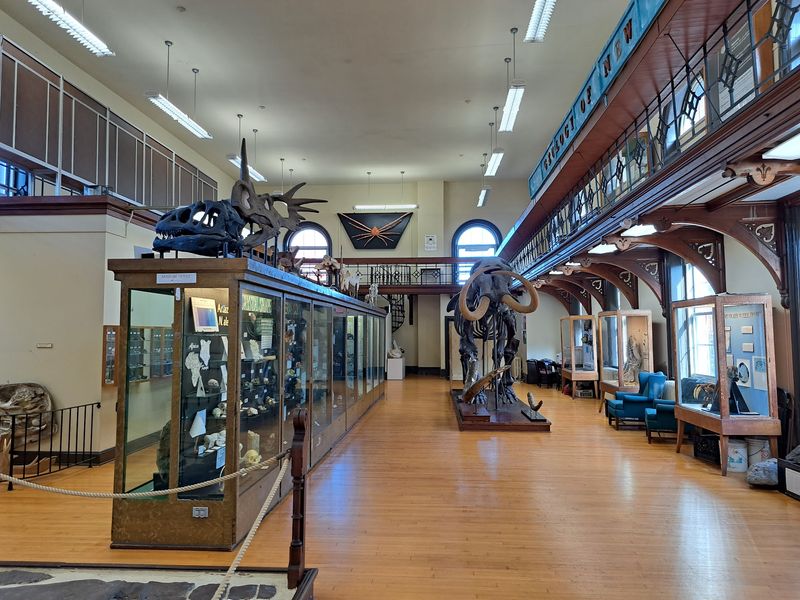
Old college buildings have a way of making science feel less like homework and more like a long-running family story. Rutgers Geology Museum leans into that feeling because the building itself dates to 1872, giving the displays a setting that belongs to the museum’s identity.
The museum is described as being in a landmark building, and that matters for the experience. A geology collection inside a modern room can be interesting, but a geology collection inside a historic academic space adds another layer of New Jersey and Rutgers history.
People familiar with the museum often note that it has not changed dramatically over the years. Some see that as part of its charm, while others point out that the place could use more support and care.
Both ideas can be true at once. The museum has the personality of a long-standing educational collection, not a polished attraction designed mainly for speed and spectacle.
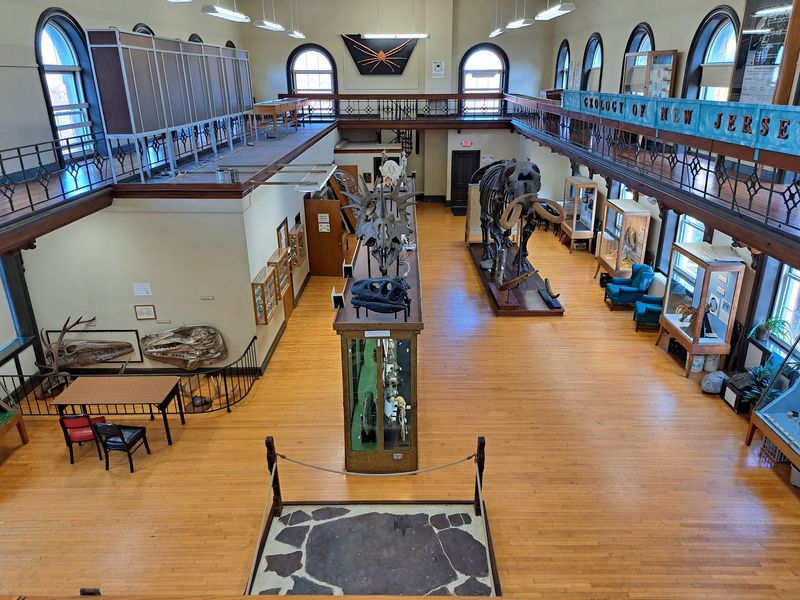
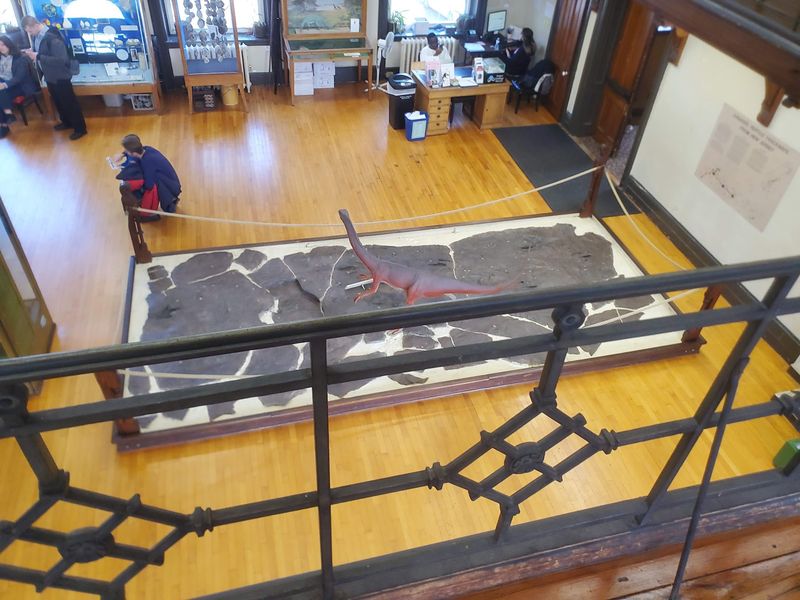
The layout is part of that character. Accounts describe one large open room, a second-floor mezzanine, and a smaller back area tied to fluorescent minerals.
That setup keeps the visit simple. The building does not overwhelm the collection, and the collection does not hide the building’s old-school Rutgers presence.
Fossils That Do The Heavy Lifting
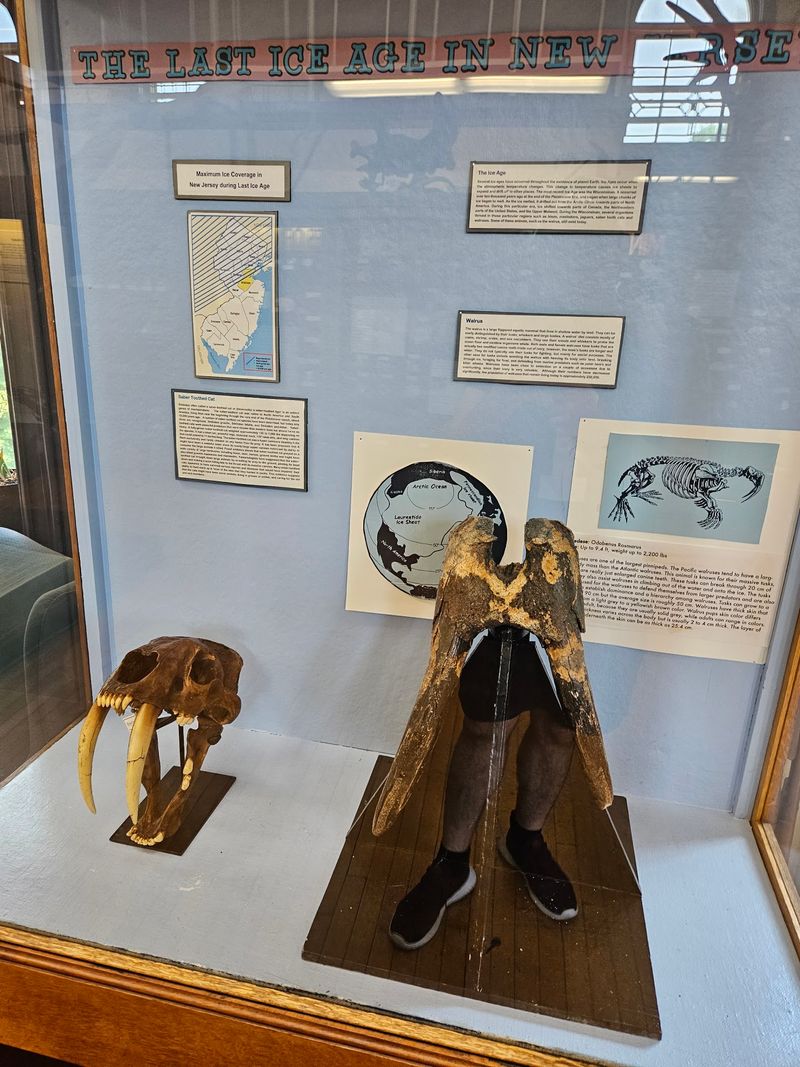
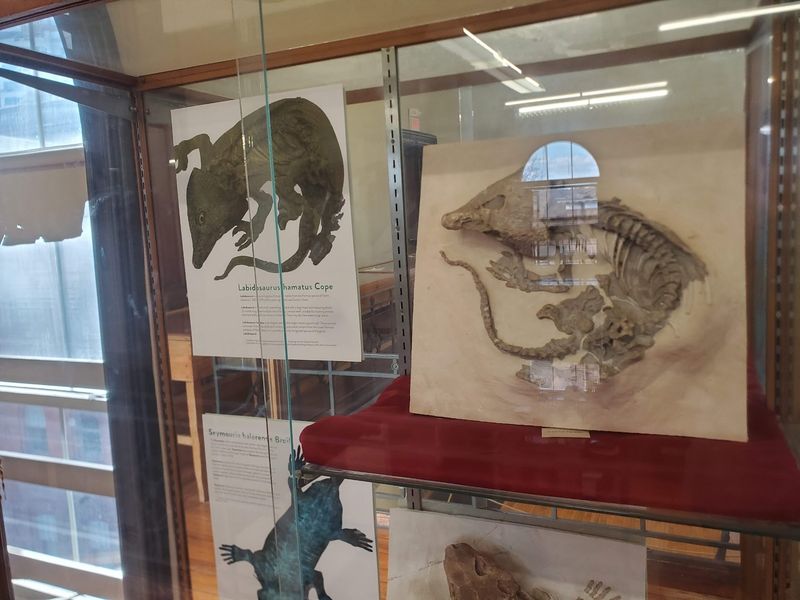
Fossils are the museum’s dependable crowd-pleasers, mostly because they make deep time feel surprisingly close to home. Rutgers Geology Museum includes fossil exhibits that cover ancient plants, marine creatures, prehistoric mammals, and dinosaur-related material.
The collection is often mentioned by people who come in expecting a small campus museum and leave surprised by how much is tucked inside. Fossils appear again and again as one of the main reasons the museum feels worth a short trip.
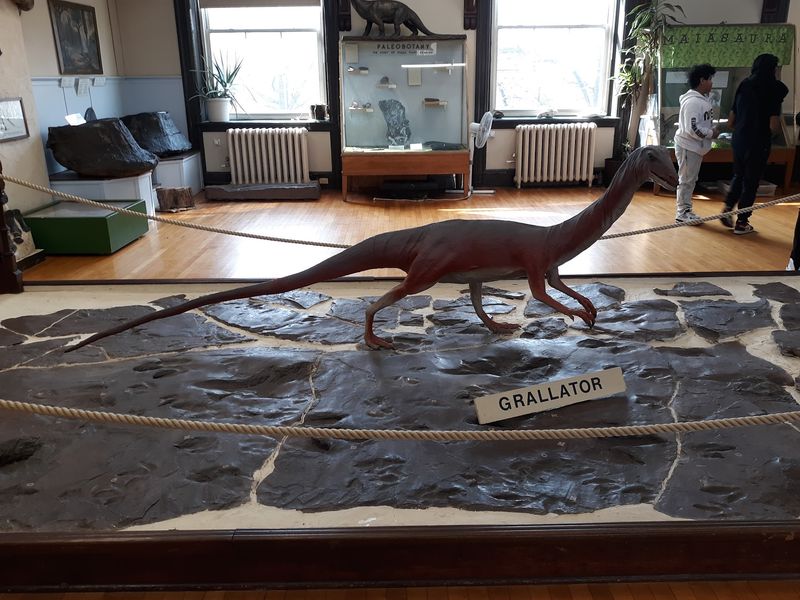
Dinosaur fossils are part of the story, including skeletal reconstructions and casts. The museum’s displays give curious kids and adults a path into prehistoric life without needing a huge hall or a long lecture.
The appeal comes from variety as much as size. Fossils, skulls, minerals, and artifacts all share the building, so a guest can move from one type of object to another without the visit becoming repetitive.
New Jersey-specific fossils and minerals are also part of what people point out. That local angle helps the place land differently for Garden State readers who want proof that the state’s history goes much deeper than highways and campus brickwork.
For anyone moving slowly through the labels, the fossils reward patience. A rushed stop may feel brief, but a careful one can stretch into a fuller lesson.
The Mastodon In The Room
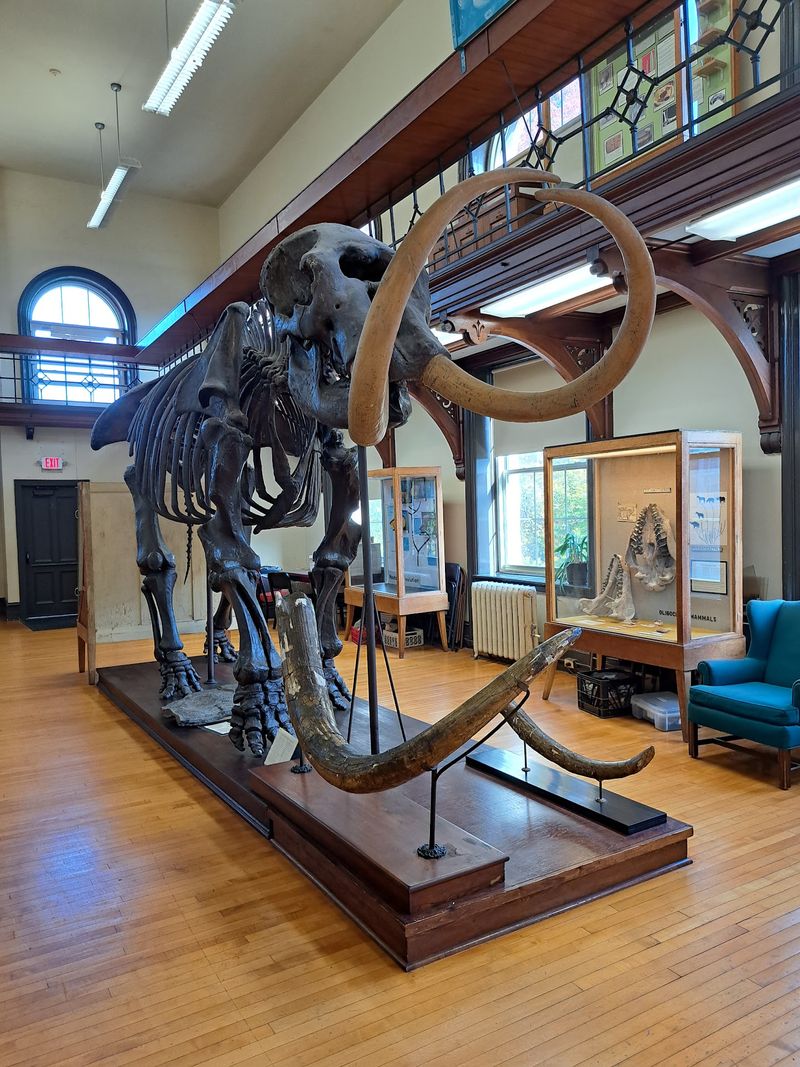
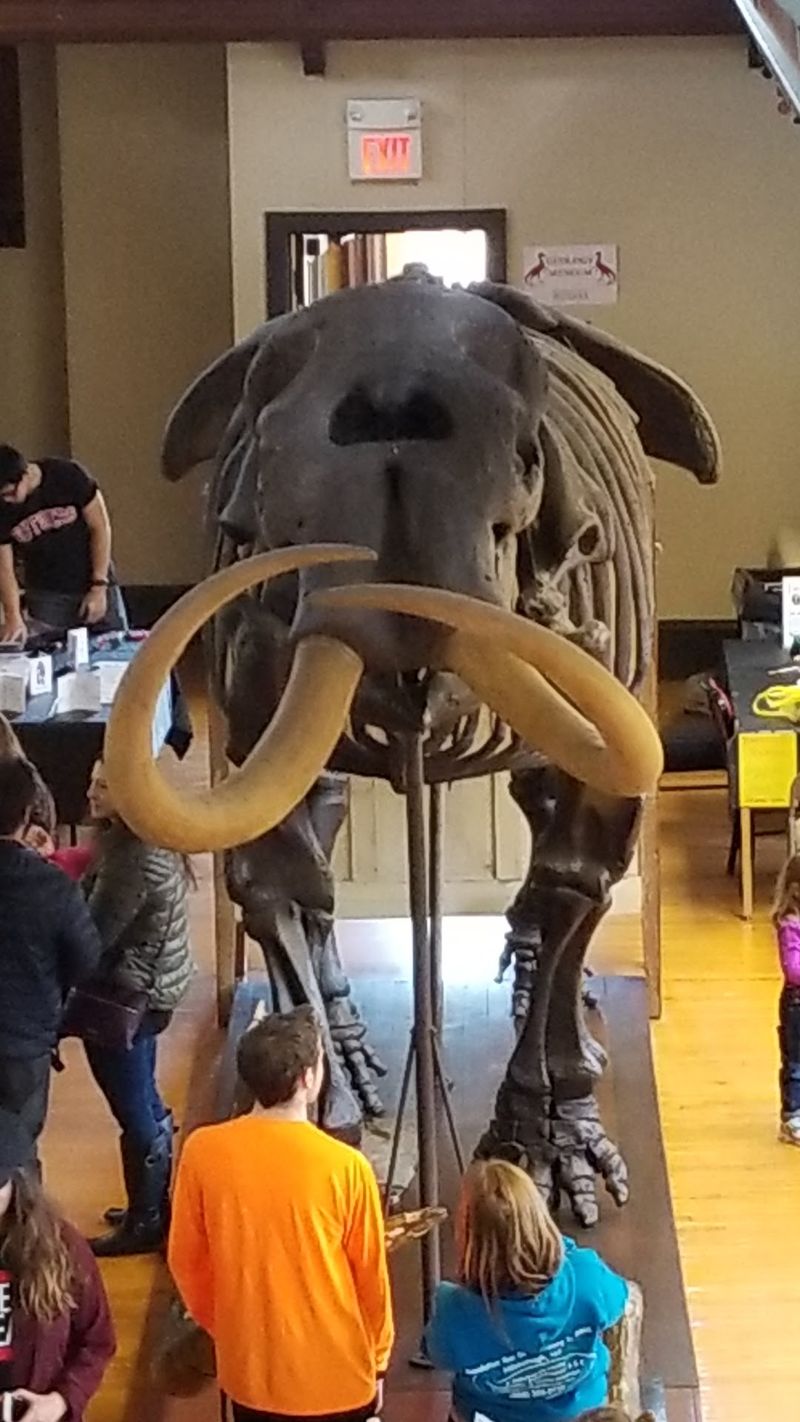
A mastodon skeleton has a way of stealing attention without saying a word. At Rutgers Geology Museum, the mastodon display is one of the most repeated highlights, especially for families and anyone who likes prehistoric mammals with a little New Jersey bragging power.
The museum’s small footprint makes the mastodon feel especially central. In a larger museum, a skeleton can become one stop among dozens, but here it anchors the room and gives the visit an immediate headline object.
People often mention the mastodon alongside the mummy and mineral displays, which says a lot about the museum’s unusual mix. It is not only a geology stop, and it is not only a fossil stop, but the mastodon helps tie the Earth history theme together.
The display also works well for younger kids because it is easy to understand at a glance. No advanced science vocabulary is needed to grasp that this animal belonged to a very different chapter of the planet’s story.
Adults get something from it too. The mastodon reminds readers that natural history is not abstract, especially when a major prehistoric specimen is sitting inside a free museum in central New Jersey.
That is the museum’s best trick. It turns a quick campus errand into a brush with a much older world.
An Egyptian Mummy Among The Rocks
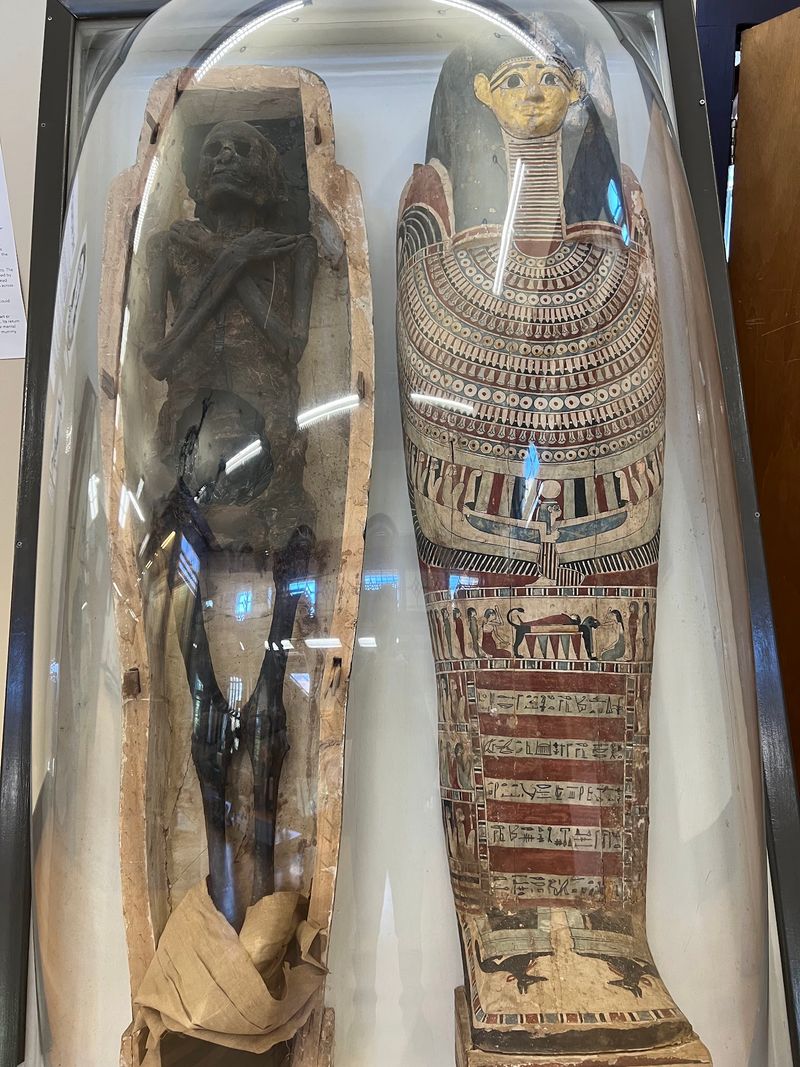
The mummy is the museum’s curveball, the object that makes newcomers pause and mentally recheck the name on the door. Yes, Rutgers Geology Museum is about geology, but its collections also include Ancient Egyptian artifacts, including a mummy.
That unexpected pairing is part of the fun. Minerals and fossils may be the main framework, yet the mummy adds a different historical thread inside the same compact space.
People frequently single it out as one of the museum’s standout features. It appears alongside mentions of dinosaurs, the mastodon skeleton, skulls, and minerals, which gives the museum a wonderfully unusual menu for a no-cost stop.
The key is to treat the object with respect, not as a gimmick. In a museum context, it helps connect the natural world, human history, and collecting traditions that shaped older academic museums.
Ancient Egyptian artifacts also help widen the audience. A child who came for fossils may get pulled toward history, while an adult who came for minerals may find another reason to slow down.
The mummy does not turn the museum into an archaeology center, and it should not be expected to. Instead, it gives the Rutgers collection one more reason to be remembered after the visit ends.
Minerals With New Jersey Pride
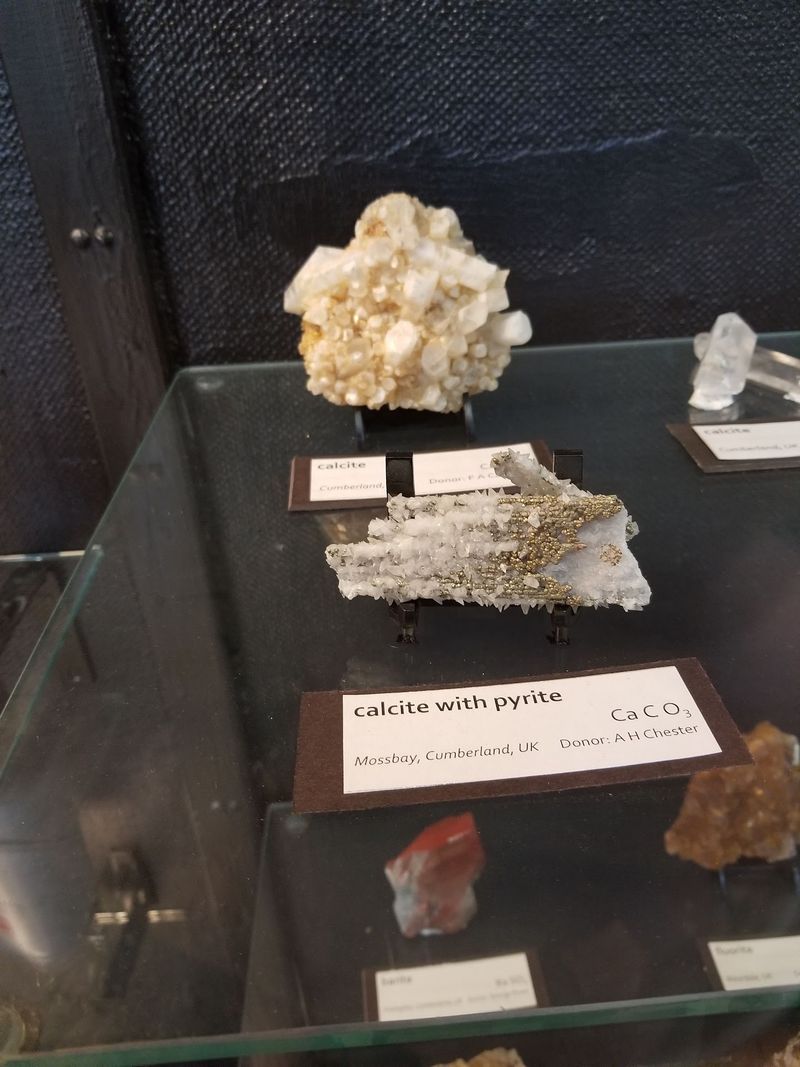
Rocks get unfair treatment in everyday conversation, mostly because people forget how much variety can fit inside one display case. Rutgers Geology Museum makes a strong case for slowing down near the mineral collection, especially on the second floor mezzanine.
The museum houses minerals and gemstones from around the world, with many small specimens arranged in quantity rather than built around a single oversized showpiece. That approach suits the museum’s academic roots and rewards people who like details.
New Jersey-specific minerals and fossils are part of the appeal. For locals, that matters because the visit becomes less about distant places and more about what the state itself has contributed to geologic study.
Franklinite and other fluorescent minerals also appear in the museum’s popular mentions. The state’s mineral history has real personality, and the Rutgers collection gives that story a campus home.
People often describe the mineral selection as surprisingly broad for such a small museum. Raw and polished mineral pieces in the gift shop add another small point of interest for anyone who wants a keepsake tied to the theme.
The best strategy is not to hurry past the cases. The mineral displays are where the museum quietly shifts from quick stop to careful browse.
The Fluorescent Mineral Surprise
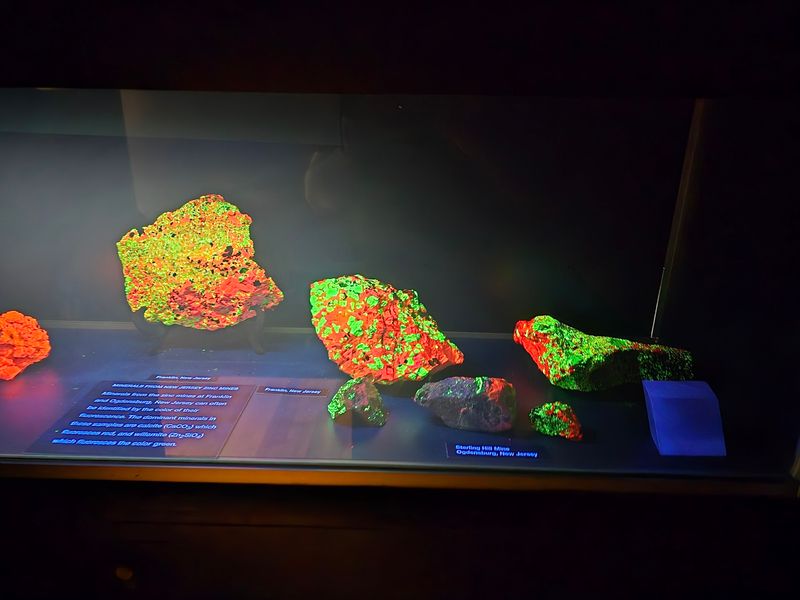
A small room in the back can become the detail people talk about later, and the fluorescent mineral exhibit has exactly that kind of pull. Rutgers Geology Museum includes fluorescent minerals, with franklinite and related specimens mentioned as part of the display.
New Jersey has a notable connection to fluorescent minerals, and the museum’s collection gives that topic a place inside a broader geology visit. The exhibit stands apart from the standard rows of rocks because it shows minerals in a different way.
People who enjoy the museum often mention this feature with a little extra enthusiasm. It adds a playful scientific twist without needing complicated instructions or a long program.
The display also helps balance the museum’s heavier historical objects. After the mastodon, mummy, skulls, fossils, and ancient artifacts, the fluorescent minerals feel like a reminder that geology can be hands-on in spirit even when objects stay safely behind cases.
For kids, the exhibit can be a useful attention reset. For adults, it is a compact lesson in chemistry, light, and mineral structure tucked inside a room that does not overstay its welcome.
Small museums are at their best when one modest feature becomes a calling card. Here, that back-room mineral display earns its keep.
Kid-Friendly Clues And Campus Learning
Young learners do not always need a giant building to stay engaged. Rutgers Geology Museum has built-in kid appeal through fossils, dinosaurs, the mastodon skeleton, minerals, and activity options that make the visit feel active rather than passive.
A scavenger hunt is one of the details people often bring up. Children can search for items around the museum, and mentions note that completing the hunt can lead to a shark tooth.
Quizzes and activities have also been noted as useful for keeping kids focused. That matters in a small museum, where the goal is not to tire a family out but to create a visit with just enough structure.
The museum is often described as strong for young children because it is manageable. A large museum can turn into a long march, while this one works more like a focused educational stop.
Some people recommend planning around 30 to 60 minutes with young kids. Others suggest an hour or two if the group reads labels and takes time with the displays.
The size is part of the family advantage. Kids can meet a mastodon, look for fossils, spot minerals, and still leave before curiosity turns into campus-level wiggles.
A Small Museum That Rewards Slow Looking
Speed is the sneaky enemy at Rutgers Geology Museum. A person who races through the room may finish quickly, but the better visit happens when the cases, labels, and odd little details get real attention.
The museum is often described as one large open room with a second-floor mezzanine. That footprint can trick people into thinking there is not much to see, even though the collection includes fossils, rocks, minerals, skulls, a mastodon skeleton, a mummy, Native American tools, and other human artifacts.
A good plan is simple: pause often. The museum is not designed like a blockbuster attraction, so the reward comes from reading, comparing specimens, and noticing how different parts of natural history sit near one another.
People who take their time tend to find more value in the visit. The museum’s variety becomes clearer when it is treated less like a checklist and more like a compact classroom with some wonderfully strange classmates.
The small gift shop adds a final browse point. Minerals in raw and polished forms are mentioned as part of that area, which keeps the theme intact without turning the stop into a shopping trip.
For a free museum, the better question is not how fast it can be finished. The better question is how much a careful guest can notice before leaving.
Campus Setting And A Practical Parking Note
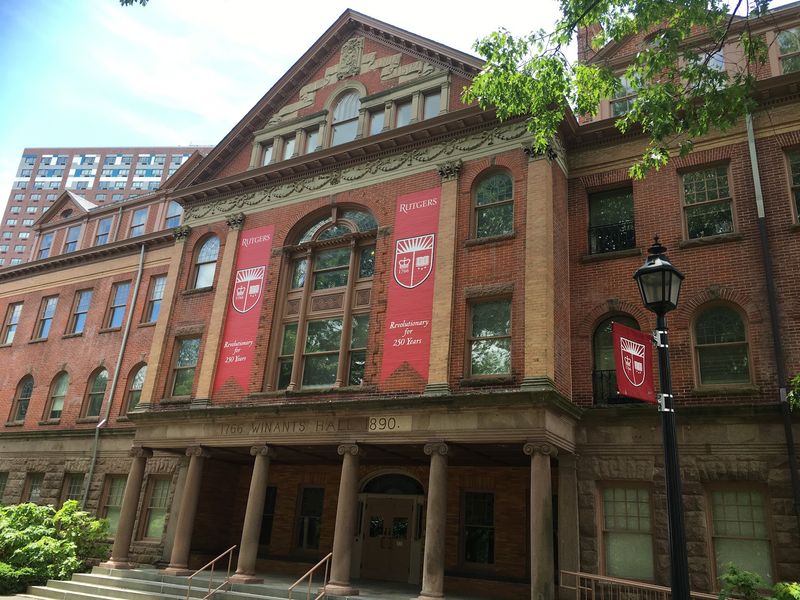
New Brunswick adds a college-town layer to the museum visit, and that can be useful if the stop is part of a wider Rutgers-area outing. The museum sits on campus, close enough to other university spaces that it feels connected to student life rather than separated from it.
People have paired a museum visit with time around the nearby quad and the College Avenue area. That gives the stop flexibility, especially for families who want a short indoor activity instead of a full-day plan.
Getting there deserves a little preparation. Some people have found the museum tricky to locate and parking inconvenient, so checking what the outside of the building looks like and looking up nearby parking options before leaving home is a smart move.
That note is not meant to scare anyone off. It is simply the kind of campus-detail planning that can make the outing smoother, especially for New Jersey day-trippers who are not already familiar with Rutgers streets.
The museum’s address should be entered carefully because it sits among university buildings. Once the logistics are handled, the visit itself stays low-pressure.
In true campus fashion, the hardest part may be the approach, not the museum. After that, the rocks do most of the talking, politely and through labels.
Free Admission And Time Well Spent
Free admission changes the math of a day trip. Rutgers Geology Museum costs nothing to enter, with donations recommended, which makes it especially appealing for families, students, Rutgers alumni, and curious locals looking for a short, useful stop.
The museum’s public profile lists it as a museum with a 4.5-star average across 127 Google responses. That number is not the main reason to go, but it does reflect a steady base of people finding value in the collection.
Time planning should stay realistic. Many people suggest about 30 to 60 minutes for young kids, while a slower adult or an older child reading the exhibit cards could stretch the visit longer.
The museum is small, and that is not a flaw if expectations are set correctly. It works best as a focused stop, not as a full museum marathon.
There have been mentions of monthly events when school is in session, plus special events, lectures, workshops, and an annual all-day rock sale and educational event. Because schedules can change, the museum website is the best source to check before making plans.
A free visit still deserves a quick homework moment. Confirm current hours before heading to New Brunswick, then enjoy a museum that asks mostly for curiosity.
A Soft Verdict For Curious New Jerseyans
New Jersey’s best small stops often work because they do not try to be everything. Rutgers Geology Museum succeeds as a compact, free, historic campus museum with a meteorite, mummy, mastodon skeleton, fossils, minerals, and enough oddball variety to justify the trip.
The place is not huge, and some people note that it could use more care and investment. That honesty belongs in the verdict because the museum’s appeal comes from its real character, not from pretending it is a giant modern attraction.
Its strongest fit is clear. Families with young kids, Rutgers-area explorers, geology fans, fossil lovers, and New Jersey residents who enjoy under-the-radar educational stops all have a reason to put it on a short list.
The museum also works well for people who prefer a manageable outing. A visit can fit into an hour, pair with time around campus, and leave room for the rest of a New Brunswick day.
What makes it memorable is the combination. America’s oldest geology museum, free admission, a historic 1872 setting, and a collection that jumps from Earth science to ancient artifacts is not something every state can claim.
For locals, that is the satisfying part. New Jersey does not need to shout here, because the meteorite, the mummy, and the mastodon already make the case.
Share this story