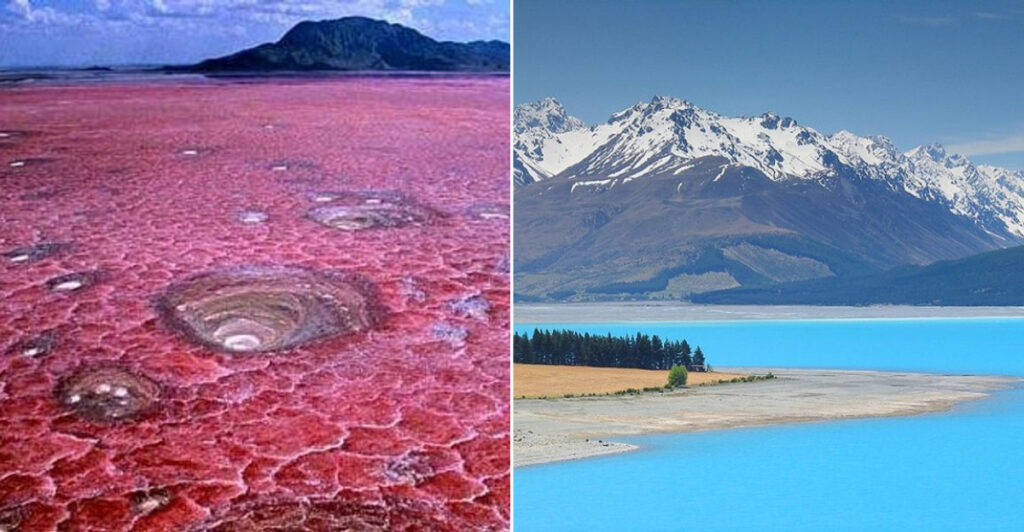
Some lakes look like they belong on another planet. Across the world, there are lakes that glow pink, shift between shades of blue and green, or turn deep red depending on the season.
These colors are not filters or tricks of photography. They come from glacial minerals, microscopic organisms, extreme salinity, and volcanic activity working together in ways that science can explain but photos still struggle to fully capture.
Whether you are planning a bucket-list trip or just love discovering places that make the world feel a little more extraordinary, this list covers 13 lakes with colors so unusual they stop people mid-scroll. Each one has a different story, a different shade, and a different reason to make the journey.
Lake Hillier, Middle Island, Australia
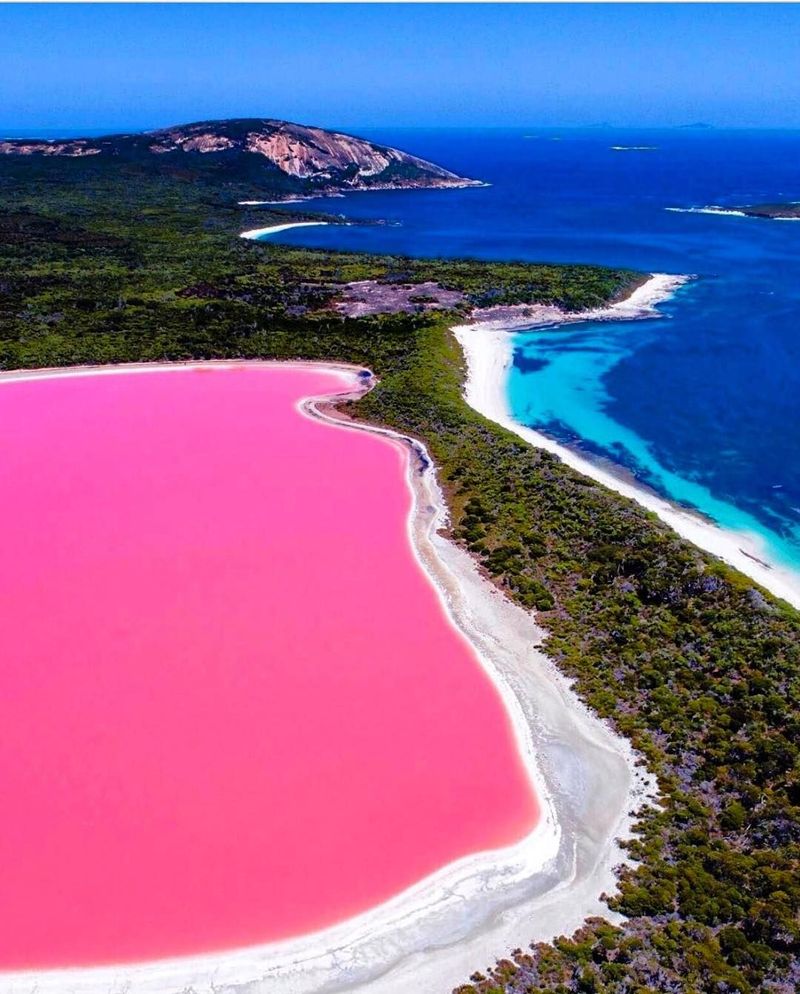
From the air, Lake Hillier looks almost too pink to be real. Sitting on Middle Island in Western Australia’s Recherche Archipelago, this bubble-gum colored lake is separated from the deep blue Southern Ocean by just a narrow strip of land covered in eucalyptus trees.
The pink color comes from a combination of high salinity, halophilic bacteria, and specific algae that thrive in salty environments. Scientists have studied the lake extensively, and while the exact mix of contributing organisms is still being researched, the color remains consistent year-round.
Because the island is remote and protected, most visitors experience the lake from a scenic flight out of Esperance. Several operators currently offer aerial tours.
You cannot simply drive to the shore, which makes the view from above feel genuinely earned. The contrast between the pink water and the dark ocean surrounding it is something aerial photography barely does justice.
Hutt Lagoon, Port Gregory, Australia
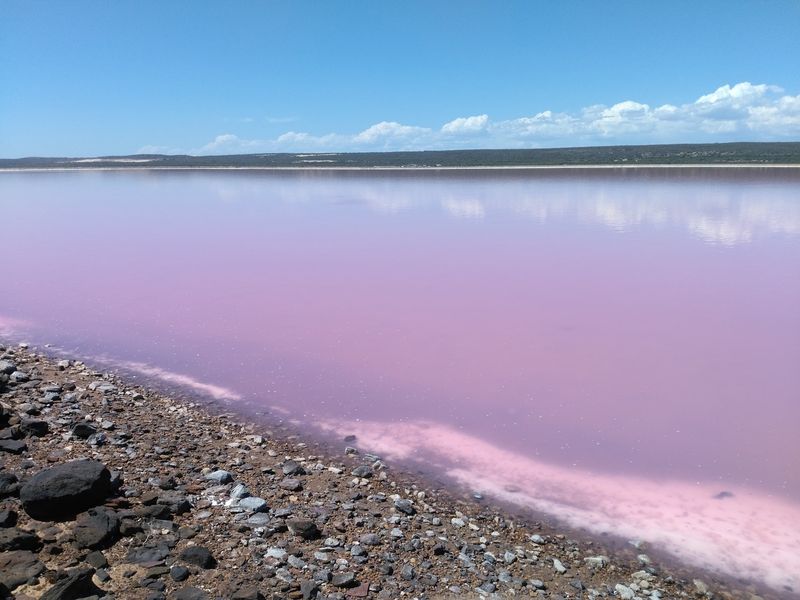
Not every extraordinary lake requires a flight or a boat to appreciate. Hutt Lagoon, located near Port Gregory along Western Australia’s Coral Coast, is one of the more accessible pink lakes on the continent, with viewing areas reachable by car along Port Gregory Road.
The lagoon can appear bubblegum pink, soft lilac, or even reddish depending on the time of year, the angle of the sun, and how salty the water is at that moment. Carotenoid-producing algae called Dunaliella salina are responsible for the color shifts.
The lagoon is also one of the world’s largest producers of beta-carotene, which means the pink you see is partly the same pigment found in carrots.
Tourism Western Australia currently lists the site as freely accessible with no entry fee. Morning light tends to intensify the pink tones, making an early visit worthwhile for anyone with a camera.
The surrounding flat landscape keeps the lagoon fully visible from the road.
Lake Retba, Dakar Region, Senegal
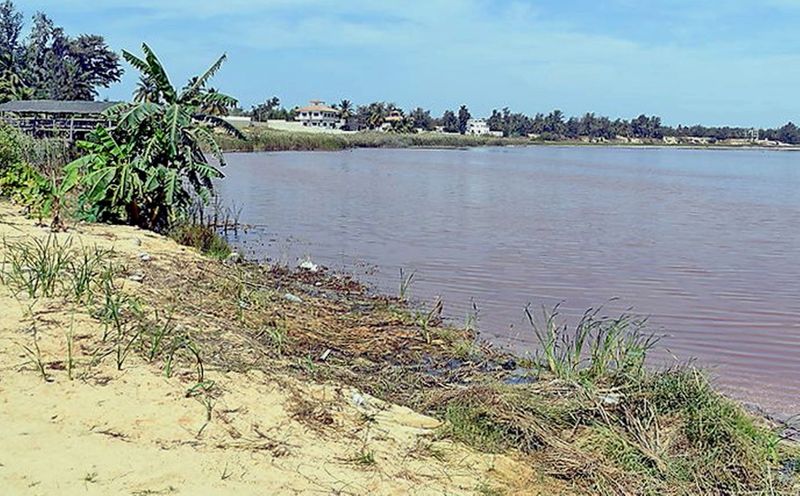
Lac Rose, as Lake Retba is locally known, earned its international reputation through water that can turn strawberry pink under the right conditions. Located northeast of Dakar near the Atlantic coast, the lake’s extreme salinity rivals that of the Dead Sea, and pigment-producing microorganisms give the water its distinctive color.
The lake experienced significant flooding in 2022 that temporarily diluted its salinity and faded the famous pink. Since then, the color has gradually returned, though its intensity varies by season and conditions.
Visitors arriving during the dry season, roughly November through June, typically see stronger color.
Salt harvesting is one of the lake’s most photographed scenes. Workers wade into the water for hours at a time, coating their skin in shea butter for protection.
Boat tours, dune excursions, and cultural visits to nearby villages remain part of the experience. The combination of vivid water, working salt flats, and surrounding dunes makes Lac Rose unlike any other lake setting on this list.
Kelimutu Crater Lakes, Flores, Indonesia
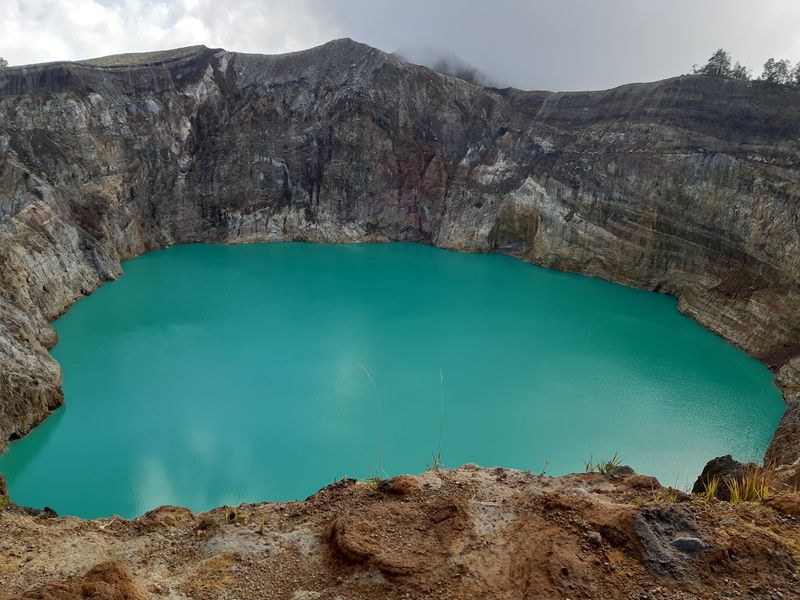
Mount Kelimutu on the island of Flores holds three separate crater lakes that change color independently of one another, making it one of the most unpredictable natural spectacles anywhere in the world. The lakes have appeared blue, green, black, white, red, and brown at different recorded times.
The color changes result from volcanic gases interacting with minerals dissolved in the water. When the chemical balance shifts, the lake can change within days.
No two visits are guaranteed to look the same, which gives Kelimutu a kind of suspense that most natural attractions cannot offer.
The lakes sit within Kelimutu National Park, which remains a signature destination within Indonesia’s official tourism network. The hike to the crater rim is manageable for most visitors and typically done before sunrise to catch the lakes in early morning light.
Local Lio people have long held the lakes as sacred, believing the waters receive the souls of the departed, which adds a layer of cultural significance to the already striking scenery.
Lake Natron, Arusha Region, Tanzania
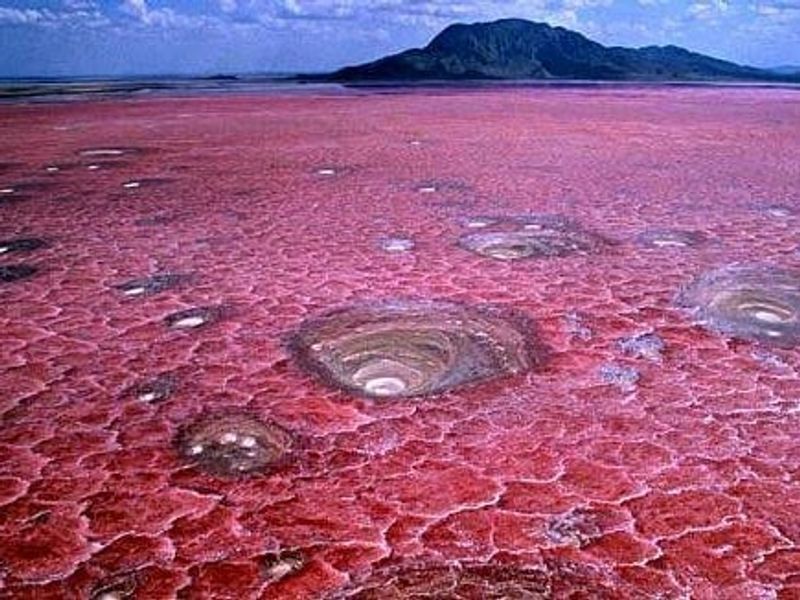
Lake Natron is one of the most extreme environments on this entire list. Located in northern Tanzania near the Kenyan border, this shallow alkaline soda lake develops surreal red, orange, and pink tones across its surface, produced by salt-loving microorganisms called haloarchaea that thrive in the hostile water.
The lake’s high pH and scorching temperatures make it inhospitable to most creatures. Lesser flamingos, however, have adapted to breed here in enormous numbers, using the caustic environment as protection from predators.
Tanzania’s wildlife authorities include birdwatching, photography, walking, and game viewing among the area’s visitor activities.
Getting to Lake Natron requires travel through remote terrain, typically from Arusha, and conditions vary by season. The dry season generally offers the most dramatic color and the best flamingo viewing.
The surrounding landscape, with the Ol Doinyo Lengai volcano nearby, adds to the otherworldly character of the setting. Very few places on Earth look quite like this from above.
Peyto Lake, Banff National Park, Canada
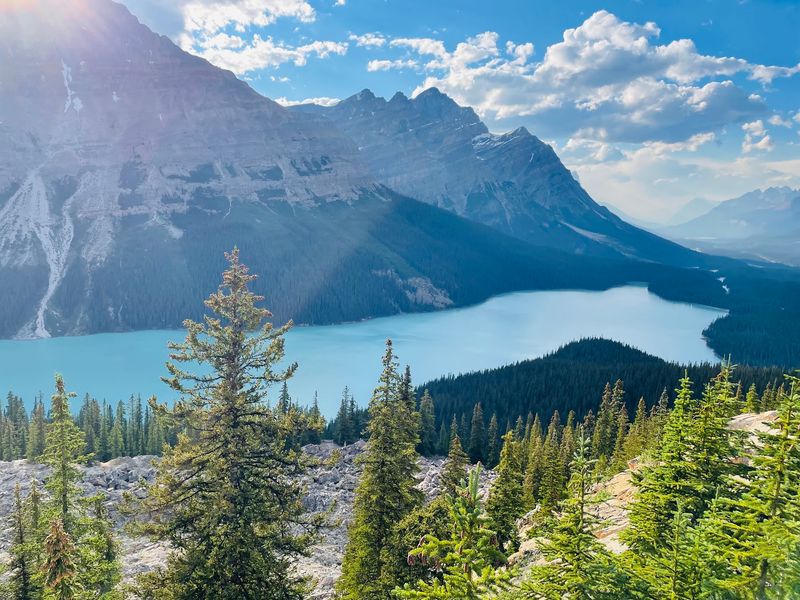
Peyto Lake has a shade of turquoise so intense that first-time visitors often assume the photos they have seen online were edited. They were not.
The lake’s vivid color comes from glacial rock flour, extremely fine sediment ground down by the Peyto Glacier and carried into the water, where it suspends and scatters light in a way that produces that electric blue-green.
The lake is accessible via the Icefields Parkway, one of Canada’s most scenic drives, connecting Banff and Jasper. Parks Canada currently lists the Peyto Lake Lookout Trail, and visitor access to the viewpoint has been confirmed for the summer 2026 season.
The lookout sits above the lake and offers a wide, unobstructed view of both the water and the surrounding valley.
The best color typically appears from late spring through summer when glacial meltwater is most active. Fall visits are still rewarding, with surrounding larch trees turning gold.
Arriving early in the morning helps avoid the crowds that gather at the lookout during peak season.
Emerald Lake, Yoho National Park, Canada
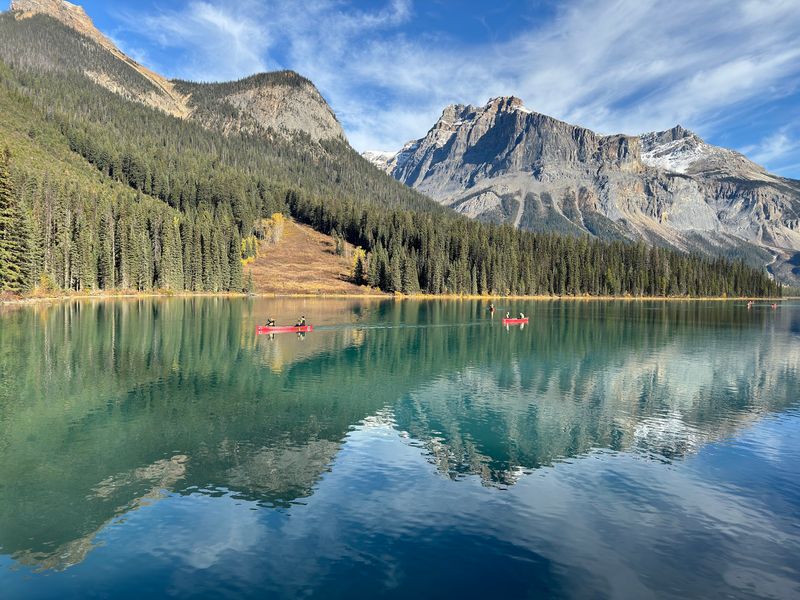
Emerald Lake lives up to its name in a way that few places actually do. Nestled in British Columbia’s Yoho National Park, the lake produces a rich green-to-turquoise color that shifts depending on cloud cover, time of day, and season.
It is the largest lake in the park and one of the most photographed spots in the Canadian Rockies.
Like other glacially fed lakes in the region, the color comes from suspended rock flour that scatters light differently than clear water does. Parks Canada’s current 2026 to 2027 visitor information highlights the 5.2-kilometer Emerald Lakeshore Trail as a recommended route around the lake’s perimeter.
Canoe rentals are available at the lake, though personal watercraft and fishing are restricted to protect the environment.
The Emerald Lake Lodge, a historic property on the shore, has been operating in the area for decades and provides accommodation within the park. The surrounding peaks and forested ridgelines frame the lake in a way that changes with every season, making it worth visiting more than once if the opportunity comes up.
Lake Tekapo, Canterbury, New Zealand
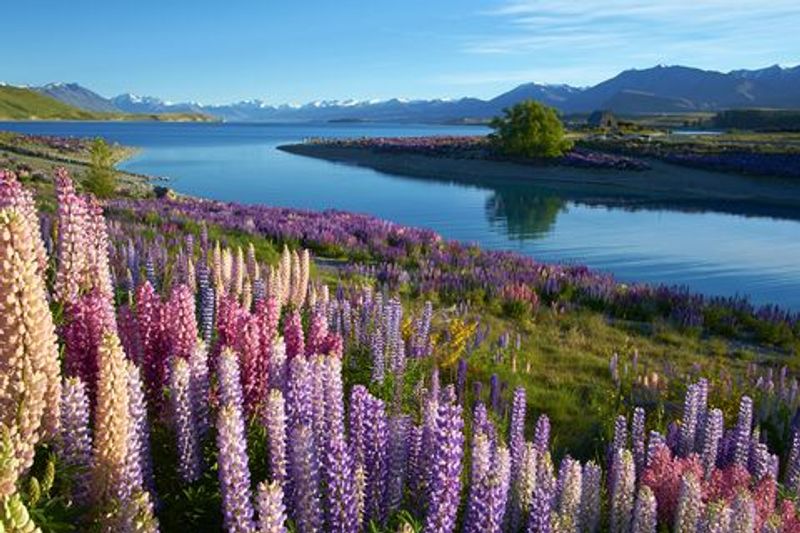
Lake Tekapo sits in New Zealand’s Mackenzie Basin and carries one of the most recognizable shades of glacial blue in the Southern Hemisphere. The milky turquoise appearance comes from rock particles so fine they are called glacial flour, carried into the lake by meltwater and kept suspended, where they interact with sunlight to create the lake’s signature look.
New Zealand’s Department of Conservation specifically identifies this light-particle interaction as the source of the lake’s color. The surrounding landscape adds to the experience, with the Church of the Good Shepherd sitting on the lakeshore and the Mackenzie Basin’s wide skies making the area a recognized dark sky reserve for stargazing.
Spring visits, roughly October through November, bring colorful lupin blooms along the shoreline that contrast sharply with the turquoise water. The lakeside town of Tekapo offers accommodation, cafes, and easy access to walking tracks.
It is a practical base for exploring the wider Mackenzie Basin, which also includes several other glacial lakes nearby.
Lake Pukaki, Canterbury, New Zealand
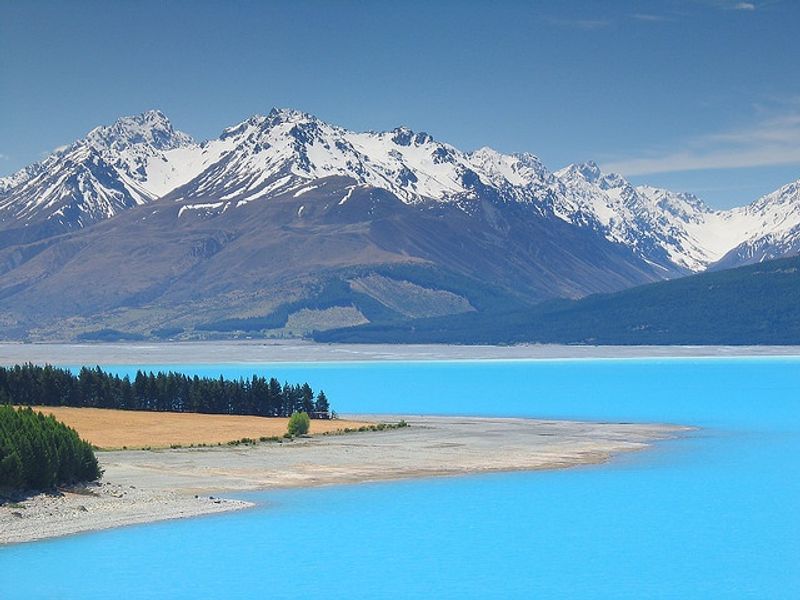
Just a short drive from Lake Tekapo, Lake Pukaki offers a similarly intense shade of glacial blue, but with one detail that sets it apart from most lakes on this list: a clear-day view of Aoraki/Mount Cook, New Zealand’s highest peak, reflected in the water at the far end of the lake.
The color comes from the same glacial flour process as Tekapo, with meltwater from the surrounding Southern Alps carrying fine sediment into the lake year-round. The Department of Conservation maintains visitor information for the area, which includes viewpoints, alpine valley access, and recreational opportunities near Aoraki/Mount Cook National Park.
State Highway 8 runs along the lake’s eastern shore, making it easy to pull over at multiple points for different angles and views. The Mount Cook Road continues north from the highway toward the national park, passing alongside the lake for much of the route.
On a calm morning, the reflection of the mountains in that milky turquoise water is genuinely hard to look away from.
Kaindy Lake, Almaty Region, Kazakhstan
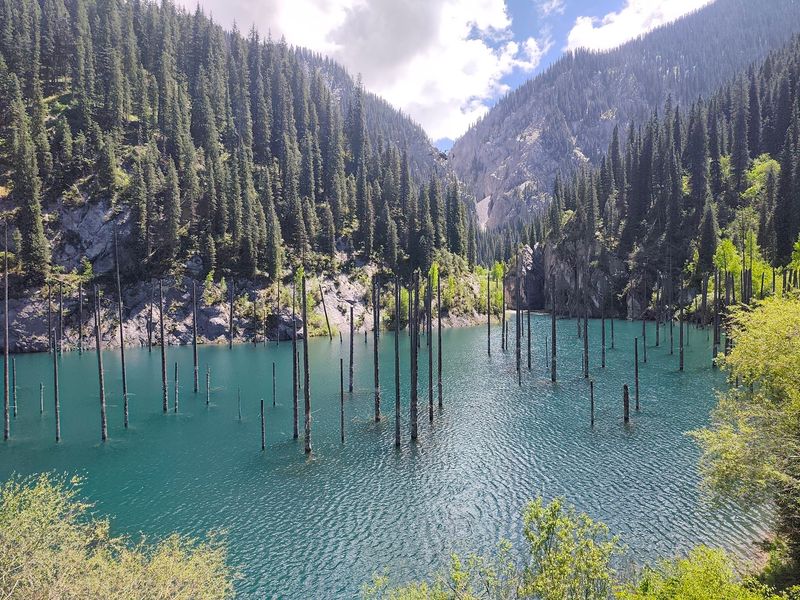
Kaindy Lake looks like something a filmmaker would design for a fantasy movie. Bare spruce trunks rise straight up from pale turquoise water, the remnants of a forest that was submerged after a major earthquake triggered a landslide in 1911, blocking a gorge and creating the lake.
The cold water has preserved the trunks remarkably well, and they remain standing decades later.
The lake sits in the Tian Shan mountains of Kazakhstan’s Almaty Region, at an elevation that keeps the water cold enough to slow decomposition. Current 2026 visitor guides confirm the lake remains accessible, with summer offering the most reliable road and trail conditions for reaching it.
Winter visits are also possible and present an entirely different scene, with the lake sometimes partially frozen.
The drive to Kaindy passes through the Kolsai Lakes area, which means combining both destinations into a single trip is a reasonable plan. The submerged forest visible through the clear water from above is one of the most genuinely strange sights Central Asia has to offer.
Bacalar Lagoon, Quintana Roo, Mexico
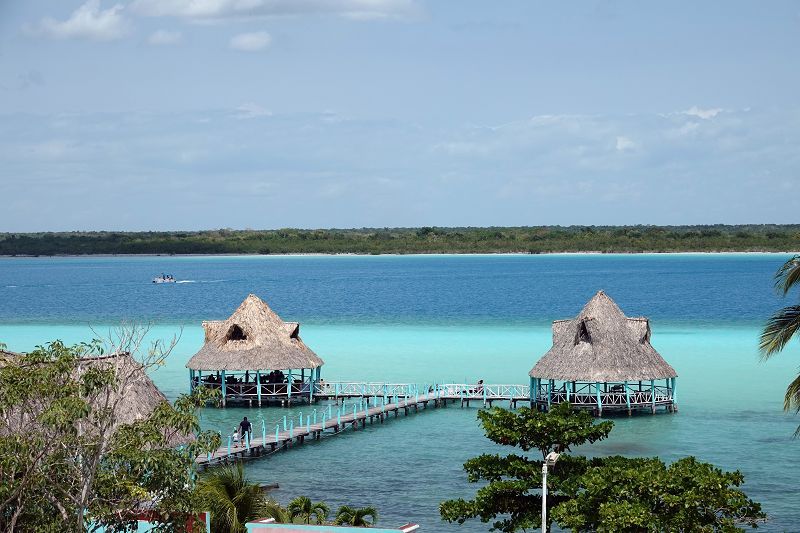
Bacalar earns its nickname, the Lagoon of Seven Colors, through a genuinely visible phenomenon. The lagoon’s exceptionally clear water shifts between pale aquamarine, bright turquoise, cobalt, and deep navy in bands you can see from the shore or from above.
Differences in depth, the white limestone bottom, underwater cenotes, and the angle of sunlight all contribute to the color variation across the lagoon’s surface.
Located in Quintana Roo near the border with Belize, Bacalar sits far enough from Cancun and Tulum to feel like a different world. Sailing, kayaking, and swimming remain active visitor options in 2026, and local operators offer tours of the lagoon and its surrounding waterways.
The town of Bacalar itself is small and walkable, with a restored colonial fort overlooking the water.
The lagoon is a biosphere reserve, and certain activities are regulated to protect the ecosystem. Sunscreen restrictions apply in some areas.
Visiting on a weekday and arriving early in the morning gives you the clearest water and the most dramatic color contrast before afternoon boat traffic picks up.
Crater Lake, Oregon, United States
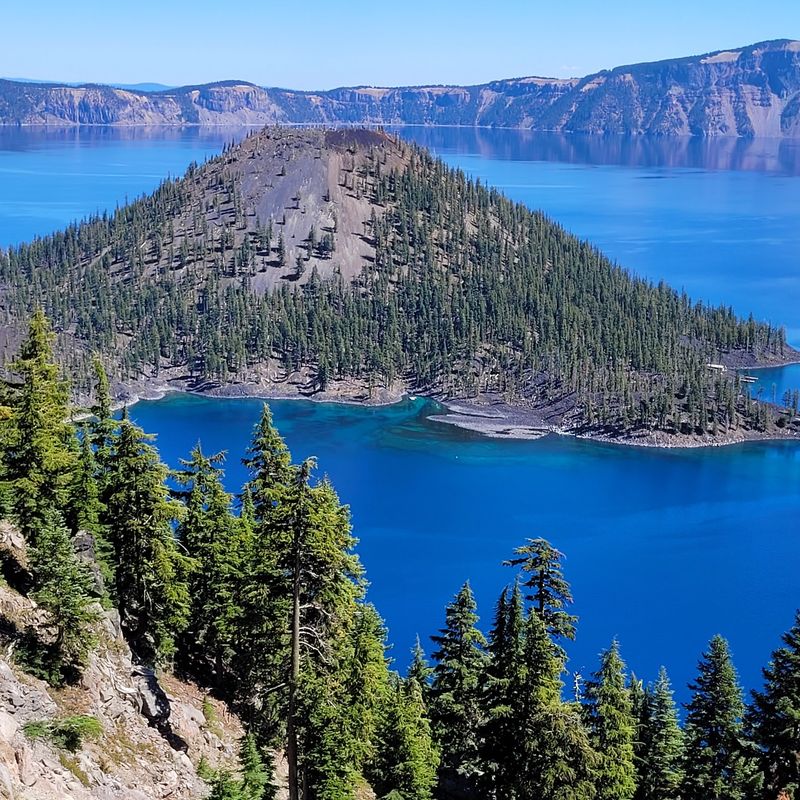
Crater Lake holds the record as the deepest lake in the United States, reaching about 1,943 feet at its deepest point. That extraordinary depth, combined with the lake’s remarkable water clarity, is directly responsible for the intense cobalt blue color that makes it one of the most visually striking bodies of water in North America.
The lake formed roughly 7,700 years ago following the collapse of Mount Mazama, a volcanic peak in the Cascade Range. No rivers flow in or out, meaning the lake is fed entirely by rain and snowmelt.
That isolation helps maintain the water’s exceptional clarity and purity.
As of summer 2026, the National Park Service reports visitor centers, major viewpoints, lodging, guided tours, and substantial sections of Rim Drive open for the season. The 33-mile Rim Drive offers multiple overlooks at different angles and elevations.
Wizard Island, a cinder cone rising from the lake, can be reached by boat tour during the summer months when conditions allow.
Lake Louise, Banff National Park, Canada
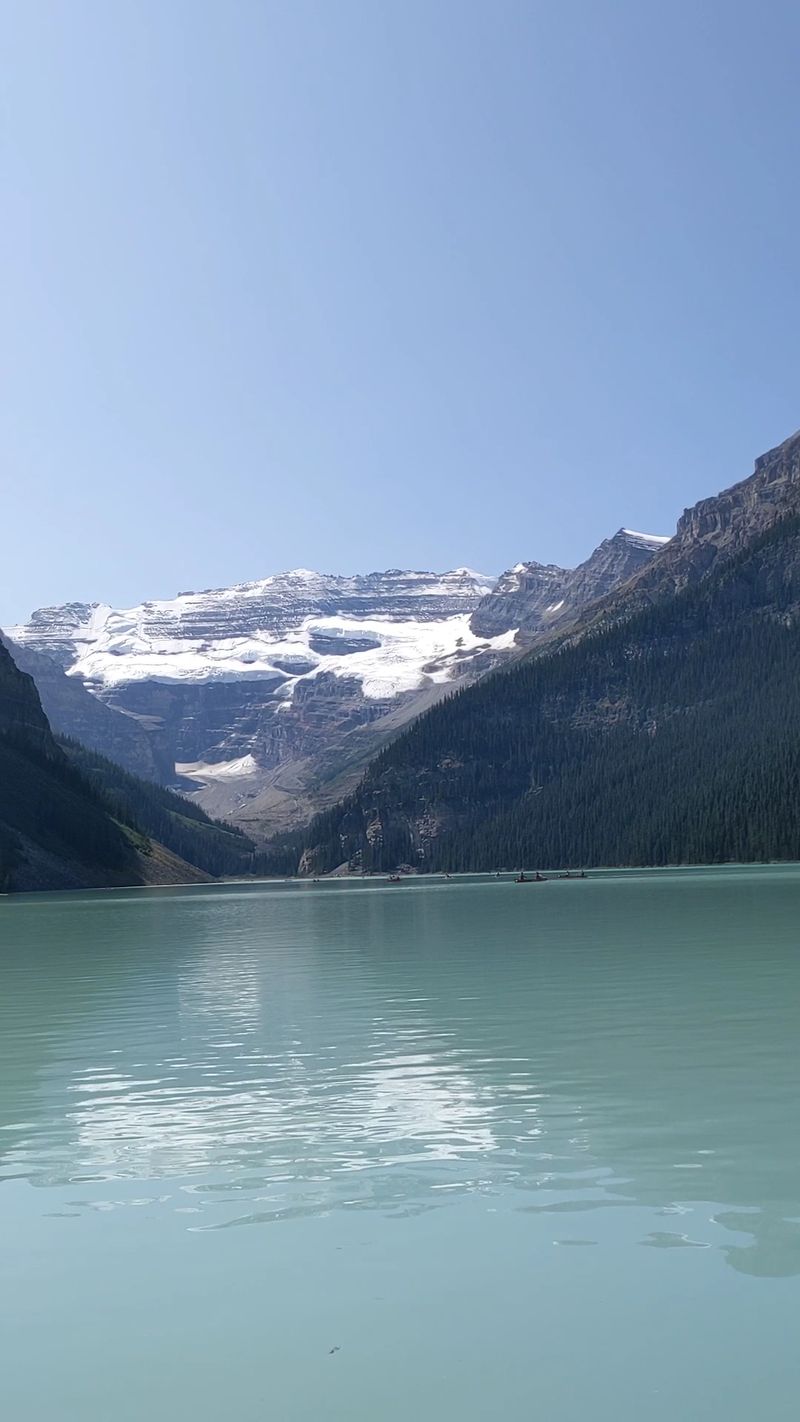
Lake Louise is the kind of place that appears on so many postcards and travel guides that you might expect it to disappoint in person. Most visitors report the opposite.
The turquoise water fed by meltwater from the Victoria Glacier carries suspended glacial sediment that gives the lake a blue-green intensity that holds up even on overcast days.
Banff National Park remains open year-round, and Lake Louise is one of its busiest destinations. Parks Canada currently recommends using the park shuttle system as the most practical way to reach the lake during peak summer season, as parking at the lakeshore fills quickly on clear days.
Seasonal road and trail restrictions apply, so checking current conditions before visiting is a good habit.
Beyond the lakeshore view, the Plain of Six Glaciers Trail leads from the lake toward the surrounding peaks and offers a longer hike with elevated views back down toward the water. Winter brings a different experience entirely, with the frozen lake used for skating and the surrounding slopes attracting skiers to the nearby resort.
Share this story