Some places stop you cold the moment you arrive, and the Oklahoma City National Memorial is exactly that kind of place. Built to honor the 168 people who lost their lives in the April 19, 1995 bombing of the Alfred P.
Murrah Federal Building, it stands as one of the most thoughtfully designed memorials in the entire country. The outdoor grounds are free to visit, while the adjoining museum takes you deeper into the story of that day and the remarkable recovery that followed.
Whether you know the full history or are just beginning to learn it, this memorial has a way of staying with you long after you leave.
A Memorial Rooted in One of America’s Darkest Days
Right in the heart of downtown Oklahoma City, at 620 N Harvey Ave, Oklahoma City, OK 73102, the Oklahoma City National Memorial and Museum occupies the very ground where the Alfred P. Murrah Federal Building once stood.
On April 19, 1995, a truck bomb detonated outside that building, killing 168 people and injuring hundreds more. It remains one of the deadliest domestic attacks in United States history.
The site was transformed into a permanent memorial in 2000, and the museum opened alongside it to ensure the full story would never be forgotten. The surrounding blocks of downtown OKC now carry a quiet gravity that visitors feel the moment they approach from any direction.
With a near-perfect rating of 4.9 stars across more than 13,000 reviews on Google, the memorial consistently earns recognition as one of the most meaningful destinations in the state. People travel from across the country, and even internationally, to stand on this ground and pay their respects.
The combination of outdoor grounds and an indoor museum gives visitors two distinct but deeply connected ways to engage with the history and the healing that followed.
The Field of Empty Chairs
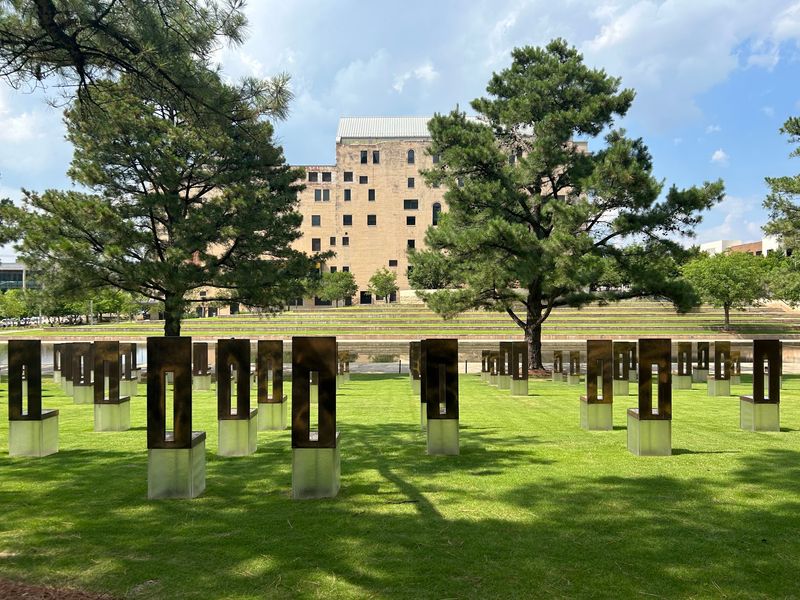
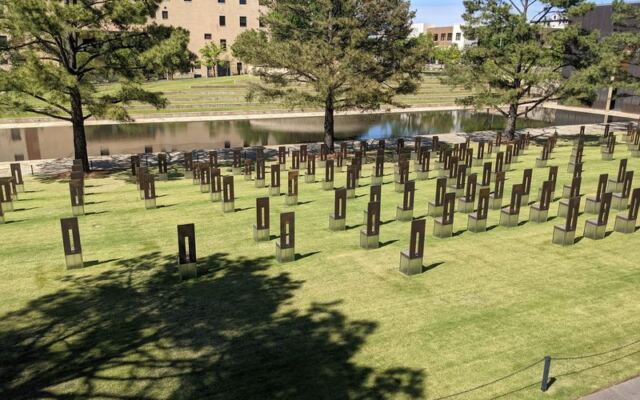
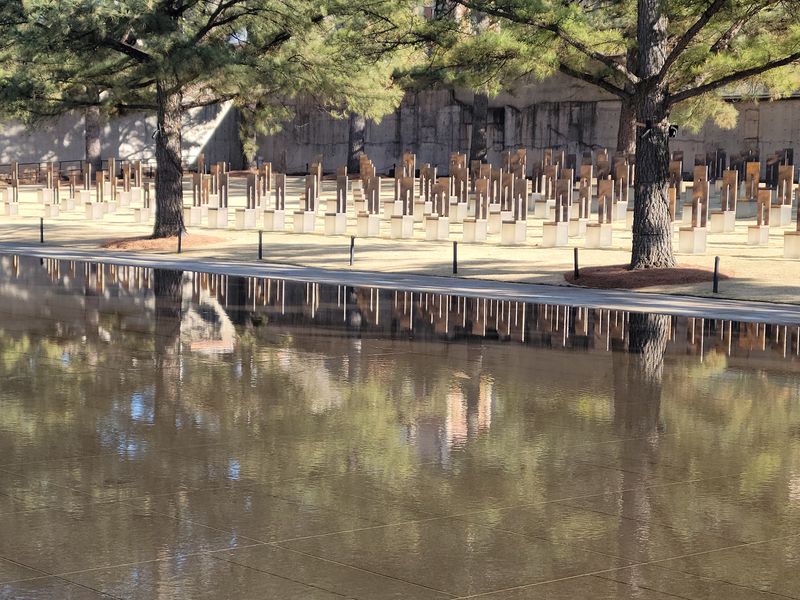
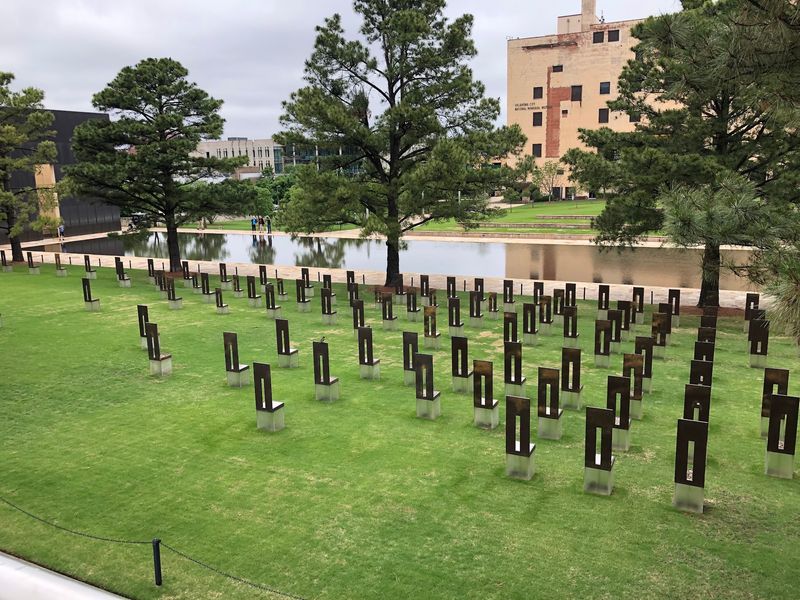
Of all the elements that make this memorial unforgettable, the Field of Empty Chairs is the one that hits hardest. One hundred sixty-eight bronze and glass chairs are arranged in nine rows across a gentle slope, each one representing a person who perished on April 19, 1995.
The rows correspond to the floors of the Murrah Building where each victim was located at the time of the blast.
Smaller chairs mark the spots of the nineteen children who were among those killed, many of them in the building’s second-floor daycare center. Seeing those smaller chairs lined up quietly among the others is the moment that tends to break even the most composed visitor.
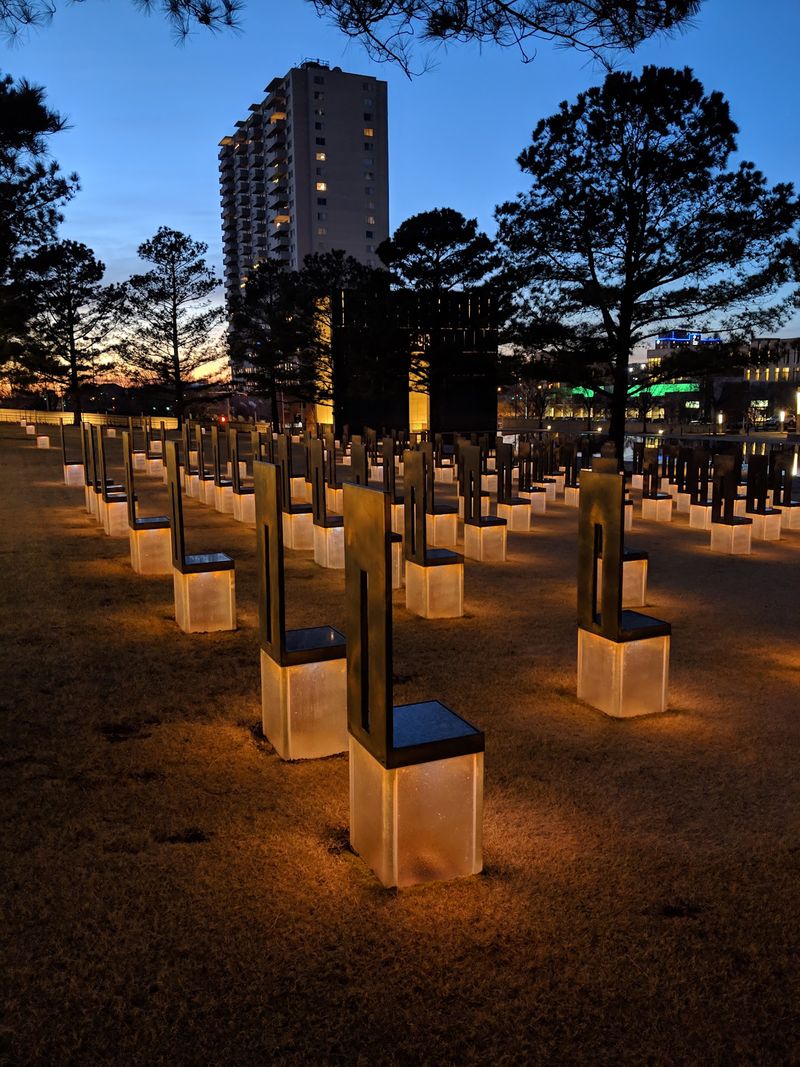
Each chair is etched with a name, and the glass bases are illuminated after dark, turning the field into something that feels both solemn and luminous. Visiting at night is widely recommended for this reason, as the soft glow transforms the space into something almost otherworldly.
The chairs are clean, well-maintained, and surrounded by carefully tended grass, giving the whole area a sense of dignified permanence that honors every single name carved into the bronze.
The Gates of Time and the Reflecting Pool
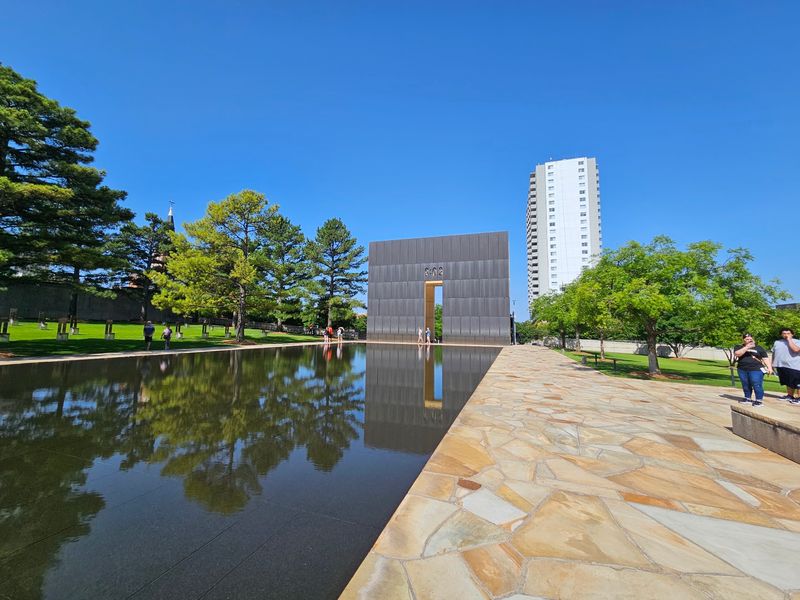
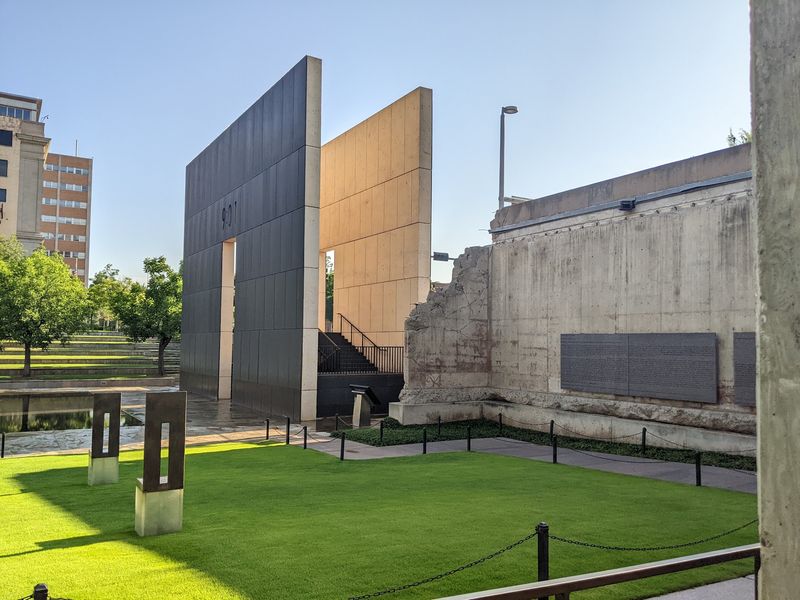
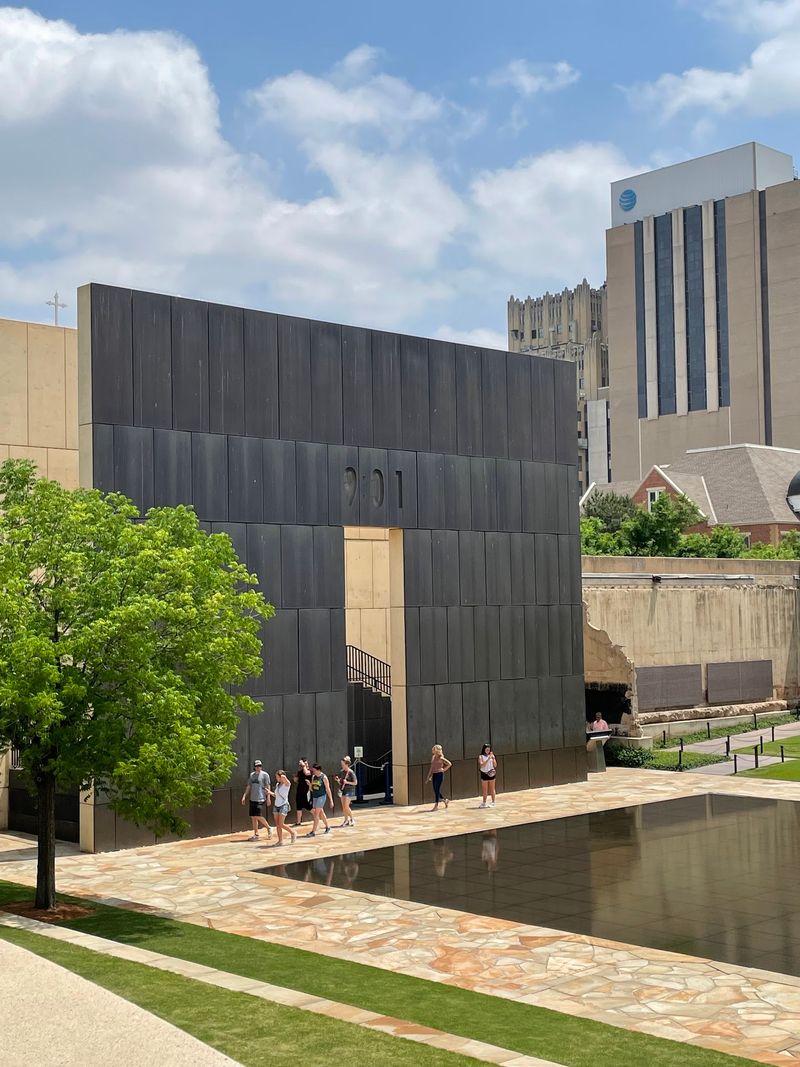
Anchoring each end of the memorial are two massive bronze gates, known as the Gates of Time. One gate is inscribed with 9:01, representing the last moment of ordinary life before the explosion.
The other reads 9:03, marking the moment when rescue and healing began. Between them lies the terrible silence of 9:02, the second the bomb detonated.
The concept is simple and absolutely devastating in its clarity. You walk between those gates and feel the weight of that single minute in a way that no textbook description could replicate.
The design strips everything down to its most essential truth.
Running between the two gates is a long, still reflecting pool that mirrors the sky and the surrounding architecture. The pool is a central visual anchor for the entire memorial, and it draws visitors into a quiet, meditative state almost immediately.
Its calm surface contrasts with the enormity of what happened on this ground, and that tension is entirely intentional. The reflection of each visitor in the water is said to symbolize those whose lives were permanently changed by the events of that day, a detail that makes even a brief pause at the water’s edge feel deeply personal.
The Survivor Tree and Its Enduring Story
Standing at the edge of the memorial grounds is an American elm tree that has become one of the most powerful symbols of resilience at the entire site. Known as the Survivor Tree, this elm is estimated to be around 100 years old and was standing on the Murrah Building parking lot on the day of the bombing.
The blast and its aftermath left the tree severely damaged, stripped of bark, and filled with debris.
Against all expectations, the tree survived. It was nursed back to health in the years following the attack and now stands full and green, shading the southern end of the memorial grounds with a canopy that feels almost defiant in the best possible way.
Seedlings from the Survivor Tree have been cultivated and shared across the country as symbols of hope and recovery. Visiting the tree in person carries a different kind of weight than reading about it.
There is something about standing beneath branches that endured that specific morning and kept growing anyway that makes the abstract concept of resilience feel genuinely tangible. Many visitors spend quiet time near the tree, and it consistently ranks among the most emotionally resonant spots on the grounds.
Inside the Museum: A Story Told With Honesty and Care
Museum admission is priced at around $15 to $18 per ticket, which puts it in line with or below many comparable attractions in the city. The self-guided format lets visitors move at their own pace through a series of exhibits that cover the full arc of April 19, 1995, from the planning stages of the attack through the rescue operation, the investigation, and the long road to community recovery.
Audio recordings and original news footage pull you directly into the chaos and confusion of that morning. Artifacts, photographs, and personal items belonging to victims and survivors fill the display cases with the kind of specific, human detail that makes history feel immediate rather than distant.
The museum also covers the arrest and trial of those responsible, presenting the legal process with the same clear-eyed honesty it brings to every other chapter of the story.
Plan for at least two hours inside, and possibly more if you tend to read every panel and watch every clip. The exhibits are designed to be fully accessible and easy to follow, but the emotional weight accumulates steadily as you move through the space.
An expansion is currently underway, with a new section expected to open in early 2027, and visitors during construction have received complimentary tickets for the return visit.
The Atmosphere That Settles Over Every Visitor
There is a particular kind of quiet at this memorial that is hard to describe until you have felt it yourself. People speak in lower voices without being asked.
Children who might otherwise run ahead tend to slow down and stay close. The grounds are spacious but the atmosphere contracts around you in a way that feels respectful rather than oppressive.
The word that comes up most consistently among those who have visited is “somber,” and that is accurate, but it does not capture the full picture. There is also a sense of peace here, and even of pride in how Oklahoma City responded to the worst day in its history.
The memorial does not wallow in grief. It holds grief and hope at the same time, and that balance is exactly what makes the experience so layered.
Mornings on weekdays tend to offer more room to reflect without crowds, and a Thursday or Friday visit before noon can feel especially unhurried. The grounds are well maintained year-round, and the landscaping adds a softness to the space that keeps it from feeling stark.
Dogs are welcome on the outdoor grounds, making it accessible for a wider range of visitors looking to pay their respects.
The Memorial After Dark
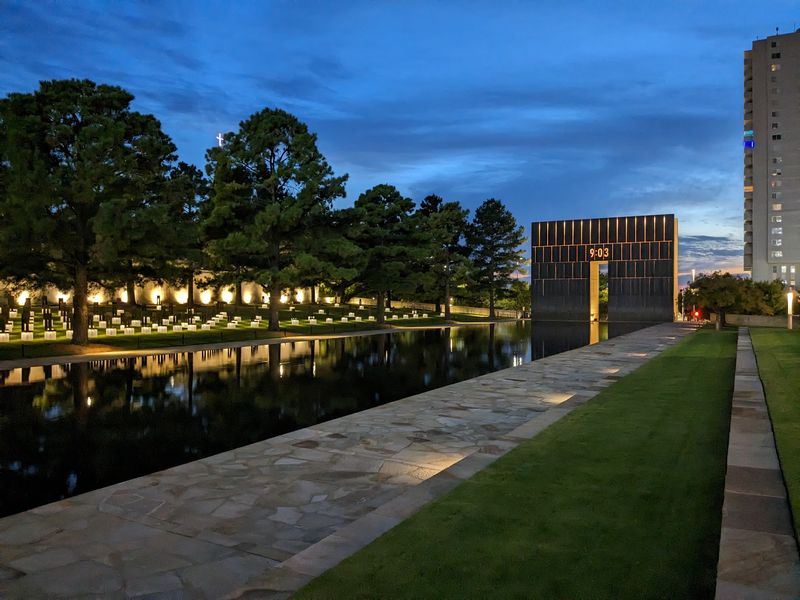
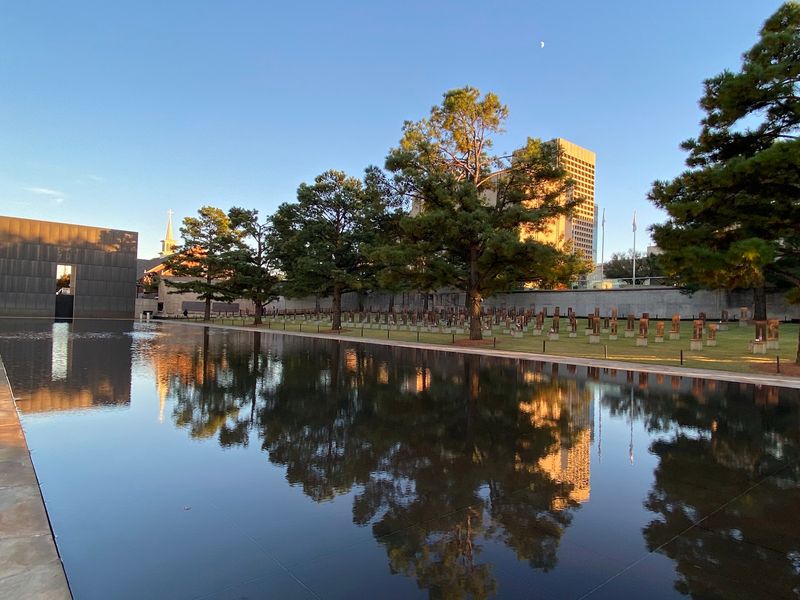
Returning after sunset is one of the most frequently mentioned recommendations from people who have already visited the memorial. When daylight fades, the glass bases of the 168 chairs begin to glow from within, casting a warm amber light across the field.
The effect is striking in a way that photographs can only partially convey.
The outdoor memorial is accessible to the public free of charge at any hour, which means an evening visit costs nothing and requires no planning beyond simply showing up. The reflecting pool takes on a different character at night too, mirroring the illuminated chairs and the surrounding city lights in a way that feels almost cinematic.
There is something about the quiet of the evening, combined with that soft field of glowing chairs, that strips away distraction and brings the significance of the place into sharp focus. The city carries on around the memorial at night, with downtown Oklahoma City active just a few blocks away, but the memorial itself holds its own atmosphere regardless of the hour.
For anyone who visits during the day and feels like they want to experience the space differently, coming back after dark is an easy and deeply worthwhile decision.
Who Will Get the Most From a Visit Here
History travelers will find this one of the most well-executed memorials anywhere in the country, with a museum that matches the outdoor space in quality and depth. The self-guided format suits independent visitors who prefer to set their own pace, and the combination of audio, video, and physical artifacts keeps the experience from ever feeling like a dry lecture.
Route 66 road-trippers passing through Oklahoma City regularly include this stop on their itineraries, and it fits naturally into a broader day of exploring downtown OKC. The memorial is free to visit outdoors, and the museum admission is modest enough that cost is rarely a barrier for most travelers.
Families with older children who can engage meaningfully with the subject matter will find the museum thoughtfully designed for that age group. Younger children may find the emotional content difficult to process, so some parental judgment is worth applying before bringing very young kids through the indoor exhibits.
Solo travelers, couples, and group tours all find something different here, but the experience tends to leave everyone with the same quiet sense of having witnessed something genuinely important. The memorial earns its reputation as an absolute must-see in Oklahoma City.
Getting There, Hours, and What to Know Before You Go
The Oklahoma City National Memorial and Museum is located at 620 N Harvey Ave, Oklahoma City, OK 73102, right in the downtown core and easy to reach from most parts of the city. The museum is open Monday through Saturday from 9 AM to 5 PM, and on Sundays from noon to 5 PM.
The outdoor memorial grounds are accessible to the public at no cost and at any hour of the day or night.
Parking is available in the Memorial Parking Garage at the corner of NW 6th and Harvey Ave, with the garage entrance on Harvey Ave just north of 6th Street. Street parking in the surrounding blocks is also available and has been free for some visitors, though availability varies by time of day.
Signage approaching the area can be limited, so using a navigation app is the most reliable way to arrive without confusion.
The museum phone number is 405-235-3313, and the official website at memorialmuseum.com carries current information on hours, events, and the upcoming expansion. An expansion project is currently underway, with the new section expected to open in early 2027.
Visitors during this construction period have been offered complimentary return tickets, which is a generous touch from an institution that clearly takes its relationship with guests seriously.
Share this story