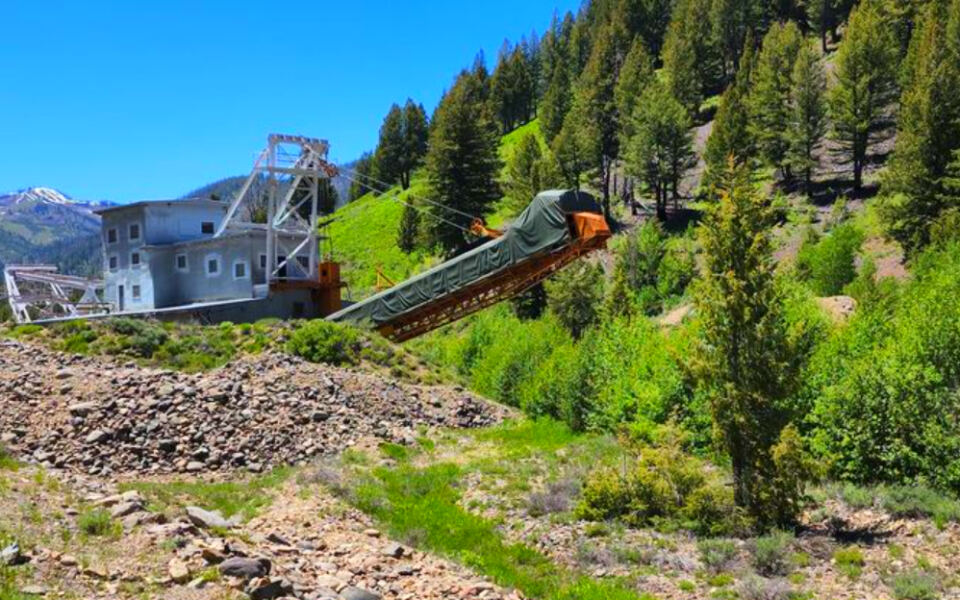
There is a place in the mountains of central Idaho where serpentine ridges of river rock stretch along the road like the spine of some ancient creature, and a five-story metal giant sits quietly in a valley it once completely transformed. Most people driving through Stanley have no idea that just 22 miles east, one of the most remarkable pieces of American industrial history waits to be explored.
The Yankee Fork Gold Dredge is a 988-ton floating factory that once devoured six miles of riverbed in pursuit of gold, running 24 hours a day for over a decade. The crew communicated through a bell system because the machinery was simply too loud for words, and the machine itself was assembled in just a few months in one of the most remote corners of Idaho.
This article covers everything you need to know before you visit, from the jaw-dropping scale of the machine to the ghost towns sitting just down the road.
A Steel Giant in the Salmon River Mountains
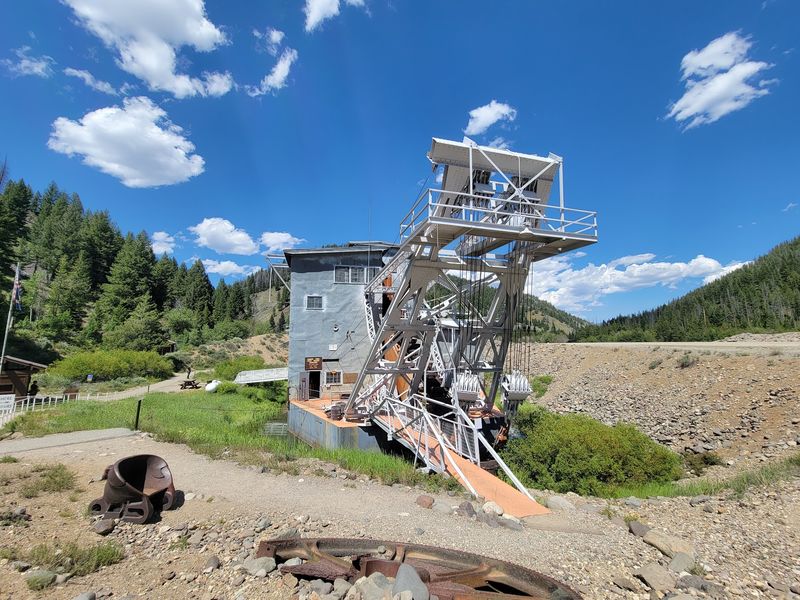
The first time you lay eyes on the Yankee Fork Gold Dredge at 300 Yankee Fork Road, Stanley, Idaho, the sheer scale of it stops you cold. This is not a small museum piece or a tidy little exhibit behind velvet ropes.
It is a 988-ton, five-story floating factory that once crawled along the Yankee Fork tributary of the Salmon River, rearranging the landscape as it went.
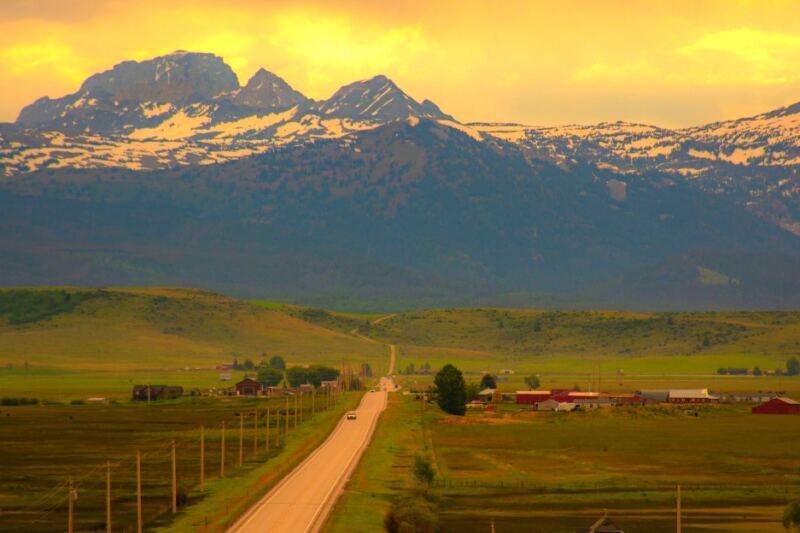
The drive itself is part of the experience. Long before you arrive, the road is flanked by sinuous ridges of river rock, the tailings left behind by the dredge’s relentless work.
These mounds stretch for miles, giving you a preview of the industrial ambition you are about to encounter up close.
The dredge sits within the scenic Salmon-Challis National Forest in Custer County, about 22 miles east of Stanley. It holds a 4.8-star rating from hundreds of visitors, and once you see it in person, that enthusiasm makes perfect sense.
Gold in the Gravel: How It All Began
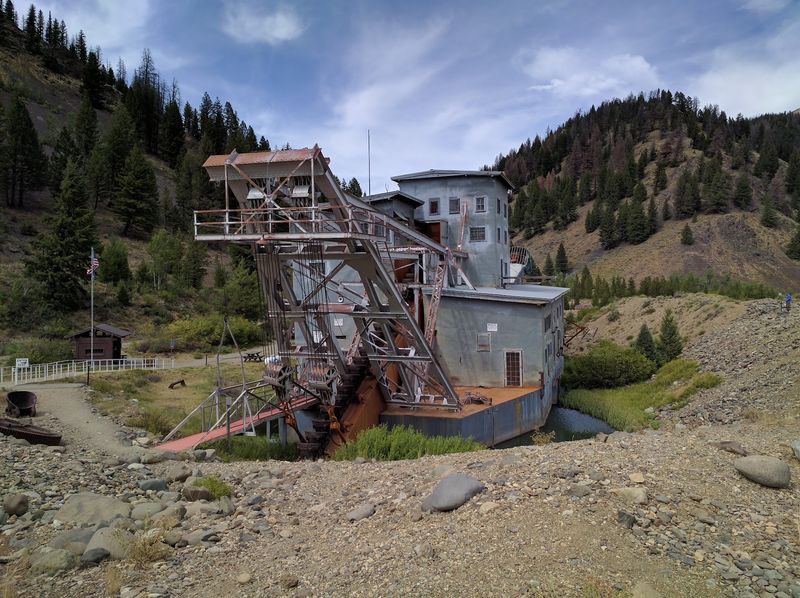
Placer gold was first discovered in the Yankee Fork valley in 1872, and the rush of prospectors that followed transformed this quiet mountain corridor almost overnight. Early miners worked the river by hand, crouching in the cold current with pans and sluice boxes, chasing the telltale glint of gold through gravel and silt.
The results were promising enough to spark bigger ambitions. Thoughts of mechanized dredging surfaced as early as 1899, but the terrain and technology of the era made those early attempts frustratingly difficult.
The valley kept its riches mostly intact while the world waited for the right machine to come along.
That machine arrived in 1940, but the story of how it got there is almost as compelling as the gold itself. Early surveys estimated the Yankee Fork claim held around $11 million worth of gold embedded in approximately 5.5 miles of river gravel, a figure that made the enormous investment in a custom-built dredge feel entirely reasonable.
Building a Monster in the Middle of Nowhere
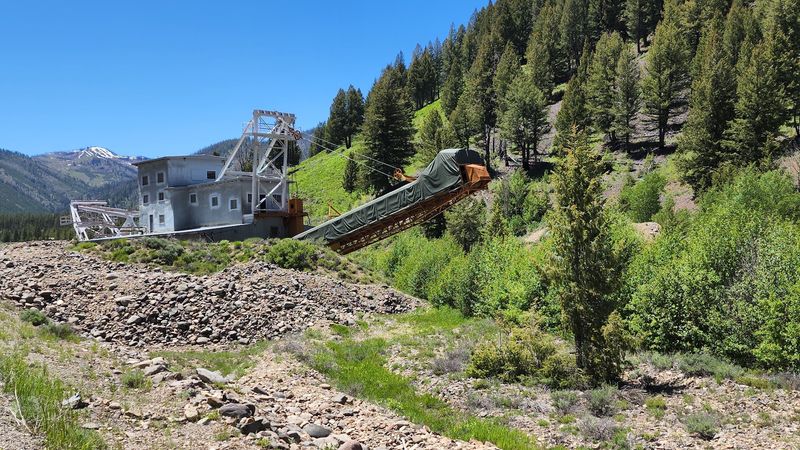
Getting a five-story floating factory into a remote Idaho mountain valley in 1940 required the kind of logistical creativity that borders on stubbornness. The Silas Mason Company contracted Bucyrus-Erie to build the custom dredge, and the components arrived by railway in Mackay, Idaho, a considerable distance from the final site.
From Mackay, massive steel parts were loaded onto trucks and hauled over challenging mountain roads, including the formidable Galena Summit. The pontoons and superstructure were manufactured in Boise and trucked over equally punishing routes.
Every piece of this puzzle had to survive the journey before a single bolt could be turned on-site.
Construction began on April 1, 1940, and the entire assembly was completed by August 24 of the same year. Just under five months to erect a floating industrial giant in the heart of the Idaho wilderness.
That timeline speaks volumes about the determination of the crews involved, and it makes standing inside the finished structure feel like a small act of respect for their effort.
The Bell Language of a Deafening Workplace
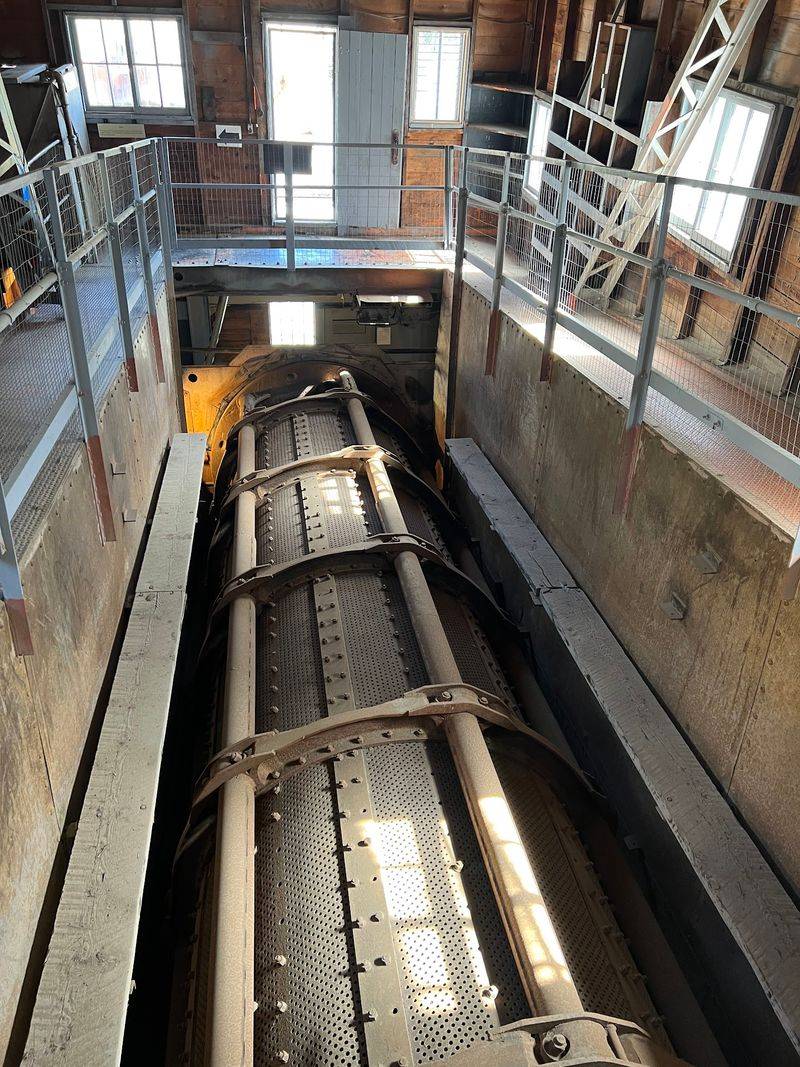
Once the dredge started running, it never really stopped. From 1940 to 1952, it operated 24 hours a day, seven days a week, with only a wartime pause from October 1942 until 1946.
A crew of just three people kept this mechanical leviathan moving at any given time, which sounds impossible until you realize how precisely each person had to know their role.
The noise level inside a running dredge is hard to overstate. The grinding of 71 steel buckets, the churning of the trommel, and the roar of two 350-horsepower diesel engines combined into a wall of sound that made spoken communication completely useless.
The crew solved this problem with a bell system, a coded language of rings that carried instructions across the deafening decks.
Workers at the nearby mining camp reportedly knew something was wrong the moment the dredge went quiet. That silence, more than any alarm, was the signal that something needed attention.
The ingenuity behind that bell system is one of the most quietly fascinating details in the entire story of this machine.
What the Dredge Actually Pulled from the Ground
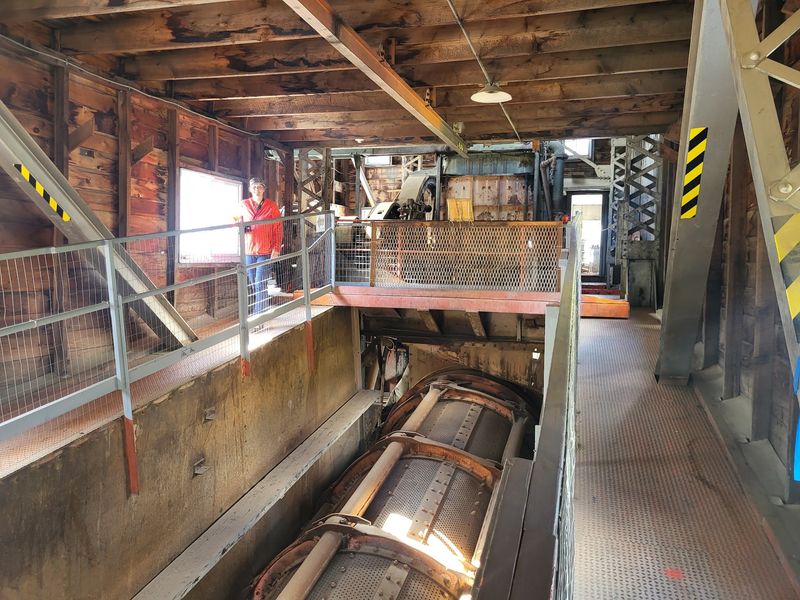
Numbers tell the story of the dredge’s productivity better than almost anything else. Over its operational years, this machine processed approximately 6 million cubic yards of gravel from the Yankee Fork riverbed.
From that staggering volume of material, it recovered over $1 million in fine placer gold, with some records placing the figure as high as $1.2 million.
The dredge also extracted an estimated $14,000 worth of silver as a secondary yield. One account suggests the total gold recovered could have been formed into a solid brick two feet square, which is a vivid way to picture an otherwise abstract number.
The financial impact on local and regional economies during the Depression and post-war years was genuinely significant.
Gold separation happened in stages inside the machine. Material fell through a cylindrical trommel screen, then passed over mercury-coated copper plates and through sluice boxes, with gravity doing most of the sorting work.
The efficiency of that process, running continuously for over a decade, is what made the whole operation financially viable despite the enormous upfront cost.
Six Miles of Riverbed, Completely Rearranged
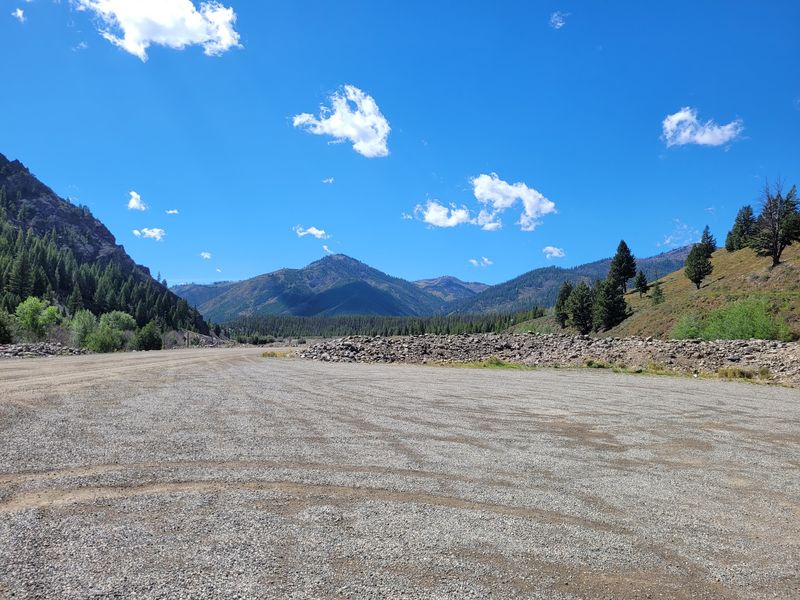
The most dramatic evidence of the dredge’s work is not inside the machine. It is spread across approximately six miles of the lower Yankee Fork valley in the form of tailings, those distinctive ridges of processed river rock that line the road and reshape the horizon in every direction.
The dredge operated by digging material from the riverbed at the front and expelling processed rock out the back, creating continuous mounds as it inched forward. Over time, this process widened and straightened the river channel, scattered boulders across the former streambed, and fundamentally altered the ecosystem of the valley floor.
The tailings are striking enough to stop most visitors in their tracks long before they reach the dredge itself. They look almost deliberate, like enormous rows of gravel placed by some impossibly large gardener.
The landscape is a permanent record of industrial ambition, and standing among those mounds makes it very easy to understand why visitors consistently describe the site as an eye-opener. The terrain ahead holds even more surprises.
Inside the Machine: A Floor-by-Floor Breakdown
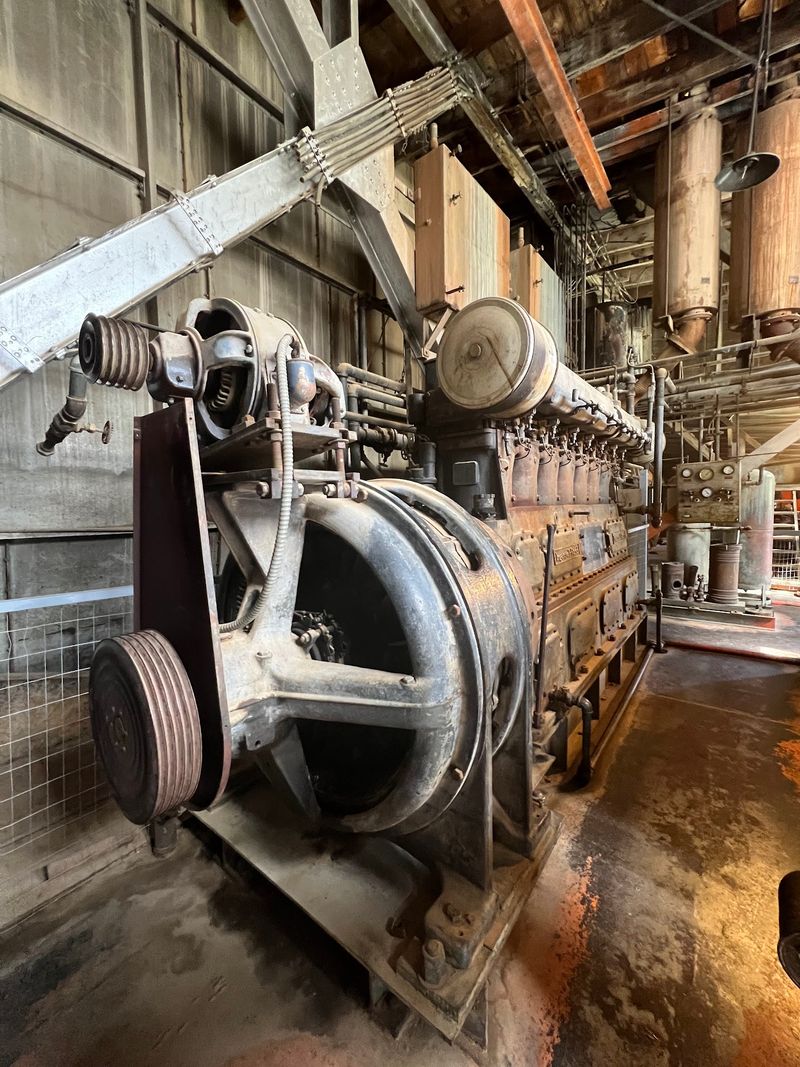
The self-guided tour of the dredge takes you through a genuinely complex piece of engineering, and each level reveals something new about how the whole system worked. The route begins at the front deck and moves through the winch room, the resistor room, and then climbs 34 stairs across four stories to reach the control room at the top.
From the control room, you get a clear sense of how a crew of three could manage such a massive operation. The tour then descends through sections covering the rock ejector, the bull gear, the trommel, and the spud, before reaching the stern oiler position, the sluice boxes, and the gold collection station.
The two Ingersoll-Rand diesel engines, each producing 350 horsepower, are a highlight for anyone with even a passing interest in mechanical history. The 71 steel buckets, each weighing over a ton and capable of digging 35 feet below the waterline, are displayed with enough context to make their scale feel real.
Most visitors spend between 45 minutes and an hour and a half working through the full route.
The Volunteers Who Keep the Story Alive
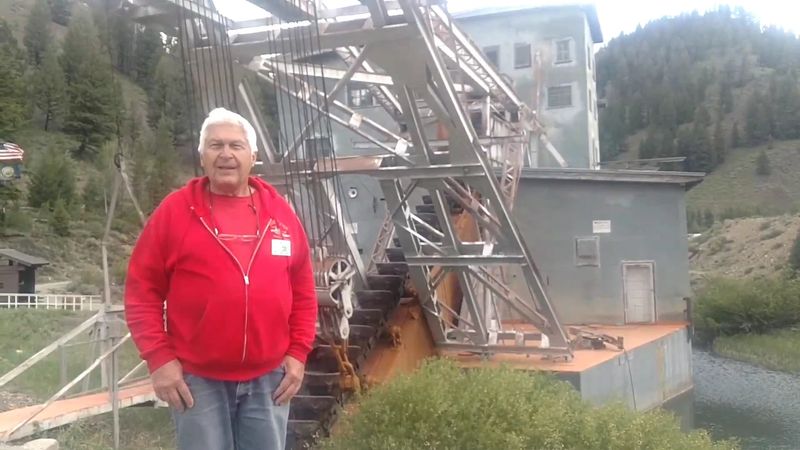
The Yankee Fork Gold Dredge Association was formed in 1979 by former employees and their families, and that personal connection to the machine is still very much present in the way the site operates today. Volunteers stationed throughout the dredge during tour hours bring a warmth and depth to the experience that no printed sign could replicate.
These guides share stories about the men who ran the dredge, the families who lived in the nearby mining camp, and the daily rhythms of a community built around a floating factory. Some volunteers have direct family ties to the original crew, which gives their accounts a texture that feels genuinely different from a rehearsed museum script.
Visitors consistently highlight the volunteers as one of the best parts of the experience, noting that the stories shared on-site stick with them long after the tour ends. The association also handles ongoing maintenance, safety upgrades, and the creation of interpretive materials, ensuring that the dredge remains both accessible and accurately presented for every group that walks through its doors.
From Industrial Site to National Historic Landmark
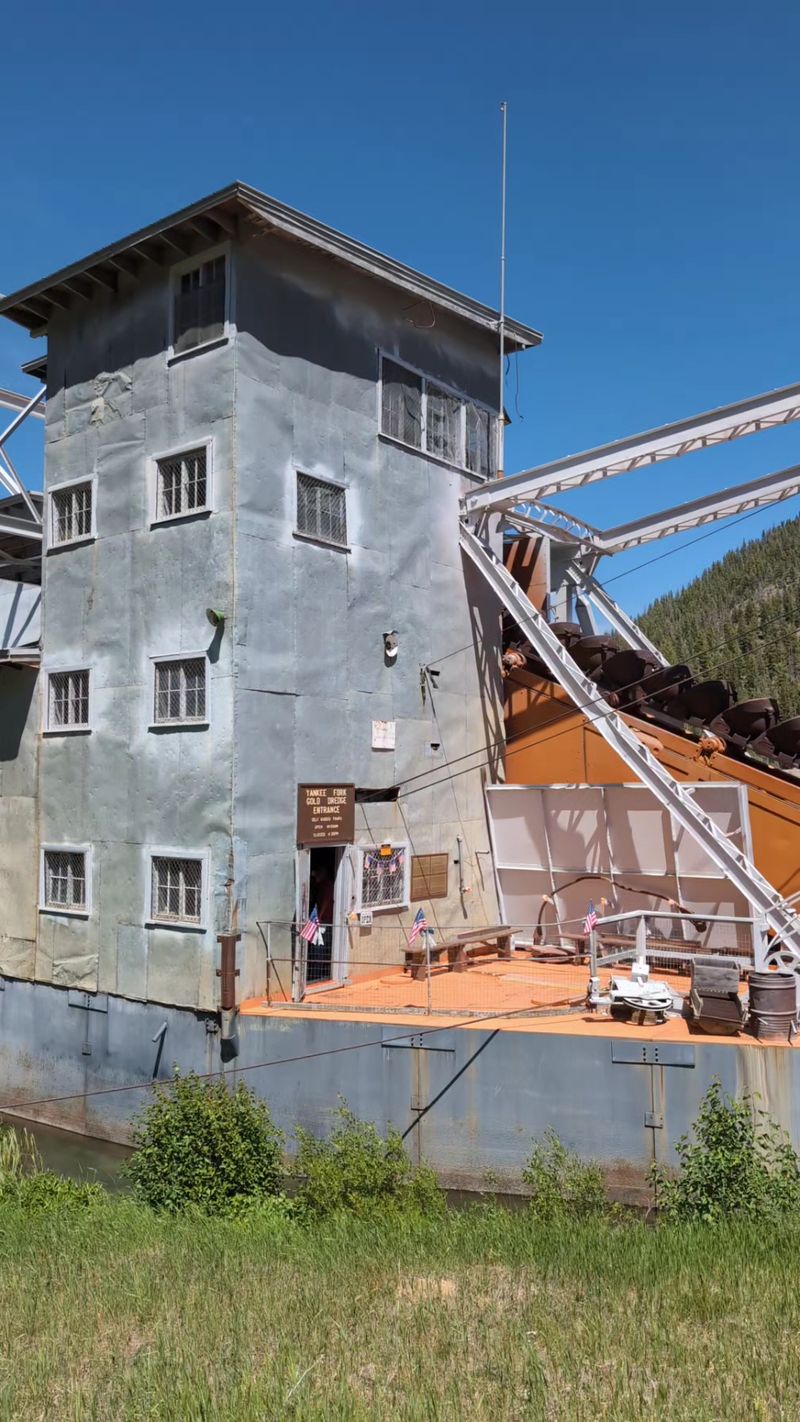
When the dredge finally stopped working in 1952, its claims played out and its commercial purpose exhausted, the question became what to do with nearly 1,000 tons of metal sitting in a remote Idaho valley. In 1966, J.R.
Simplot, the dredge’s final owner, donated it to the U.S. Forest Service, a decision that set preservation in motion rather than demolition.
That donation, combined with the later formation of the Yankee Fork Gold Dredge Association, created the foundation for what the site is today. The dredge is now listed on the National Register of Historic Places and has been designated a National Historic Landmark, recognizing its significance as one of the best-preserved examples of this type of mining equipment in the lower 48 states.
Only two California-type dredges of this kind remain in the lower 48, and the Yankee Fork is the only one where visitors can walk every deck. That distinction alone makes it worth the drive, and the fact that it is maintained entirely by volunteers adds another layer of meaning to every visit.
Planning Your Visit: Hours, Costs, and Practical Tips
The dredge opens seasonally, from the Saturday before Memorial Day through Labor Day, with tours available daily from 10:00 AM to 4:30 PM. Arriving after 4:30 PM means missing the interior entirely, so building in extra time is worth it.
The site can be reached at 300 Yankee Fork Road, Stanley, Idaho, and the phone number for inquiries is 208-838-2529.
Admission works on a donation basis, with a suggested contribution of $5 for adults and $1 for children aged 6 to 12. The road leading to the dredge is gravel and dirt but well-maintained, and most standard vehicles handle it without any trouble.
Plan for the tour itself to take between 45 minutes and an hour and a half, depending on how much time you spend with the volunteers and displays.
The elevation at the site is around 6,000 feet, so mornings can feel noticeably cool even in July. Wearing layers is a practical choice.
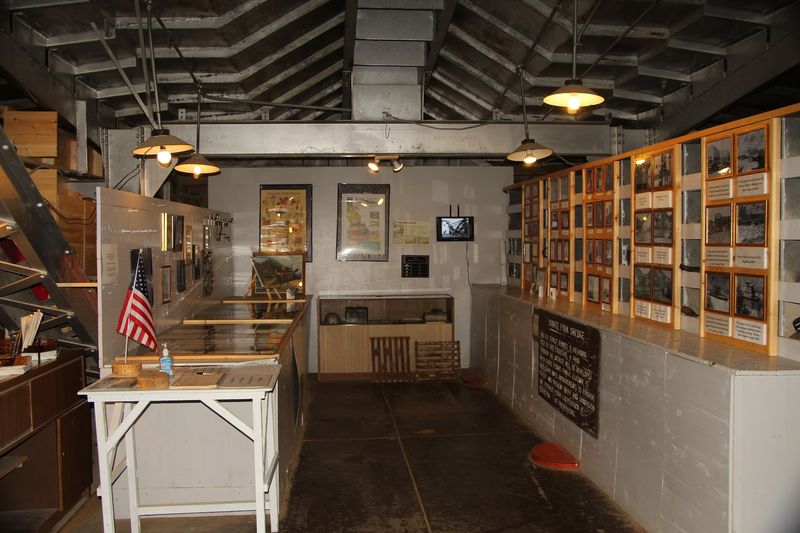
The gift shop, built in 2007, offers historical and educational items as a takeaway, and the picture gallery near the end of the tour rounds out the experience with archival photographs and original documents.
Why This Rusted Giant Deserves a Spot on Your Idaho Itinerary
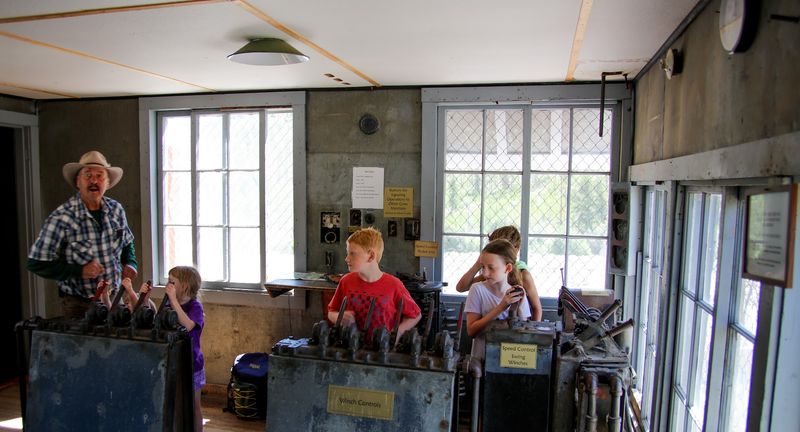
Some historical sites ask you to look through glass at something you cannot touch. The Yankee Fork Gold Dredge asks you to climb inside, walk the decks, stand next to the engines, and feel the scale of something that genuinely changed a landscape.
That physical access is rare, and it makes the experience land differently than a typical museum visit.
The combination of industrial history, natural scenery, volunteer-led storytelling, and nearby ghost towns creates a layered outing that works for solo travelers, history enthusiasts, and families alike. The low admission cost and the generosity of the volunteers make it feel like a place that genuinely wants to be visited, not just preserved behind a fence.
Central Idaho has no shortage of beautiful places to spend a day, but few of them offer the specific satisfaction of understanding exactly how a remote valley was transformed by human ambition and mechanical ingenuity. The dredge makes that story tangible in a way that stays with you long after you drive back down the gravel road toward Stanley.
Share this story