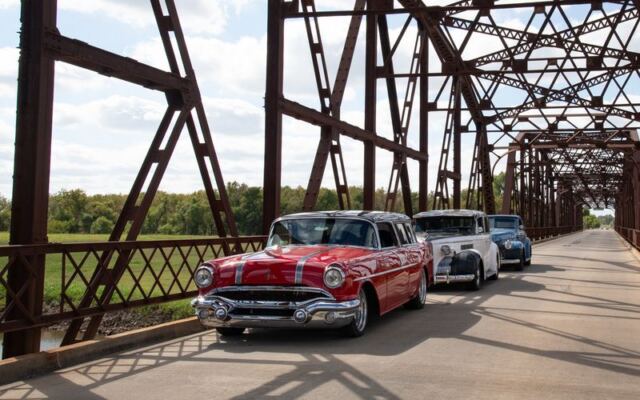
Somewhere along the old highways of Oklahoma, tucked between a modern world racing past on the interstate, a steel bridge from 1924 still carries cars across the water like it always has. Finding it feels less like a planned detour and more like stumbling onto a secret the road kept for a hundred years.
The Lake Overholser Iron Bridge is one of those rare places where history is not behind glass or behind a velvet rope – it is right under your tires. Pull over, step out, and suddenly a whole era of American road life comes rushing back.
Where the Bridge Sits and What It Is
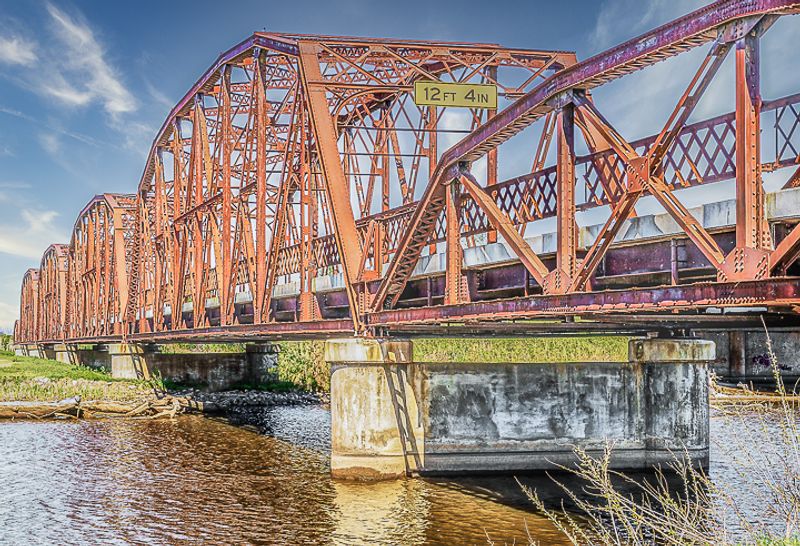
Standing at the edge of Overholser Drive in Bethany, Oklahoma, just west of Oklahoma City, the Lake Overholser Iron Bridge announces itself with a silhouette that feels borrowed from another century. Rust-colored steel trusses rise above the North Canadian River at the north inlet to Lake Overholser, forming a corridor of iron that has greeted travelers since 1924.
It is a two-lane steel truss bridge, narrow enough that drivers instinctively slow down and acknowledge the other lane.
The bridge sits at the coordinates 35.5146, -97.6638, placing it squarely on what was once the original alignment of Route 66. Before the interstates swallowed the traffic, this structure was a working artery of American movement.
Millions of travelers crossed here heading west or east, carrying furniture, dreams, and whatever the road demanded of them.
Today, the bridge is classified as a historical landmark, but calling it just a landmark undersells the experience. Visitors can still drive across it, walk its length, and look down at the water below.
Few surviving Route 66 bridges offer that kind of hands-on connection to the past.
A Century of History Carried on Iron
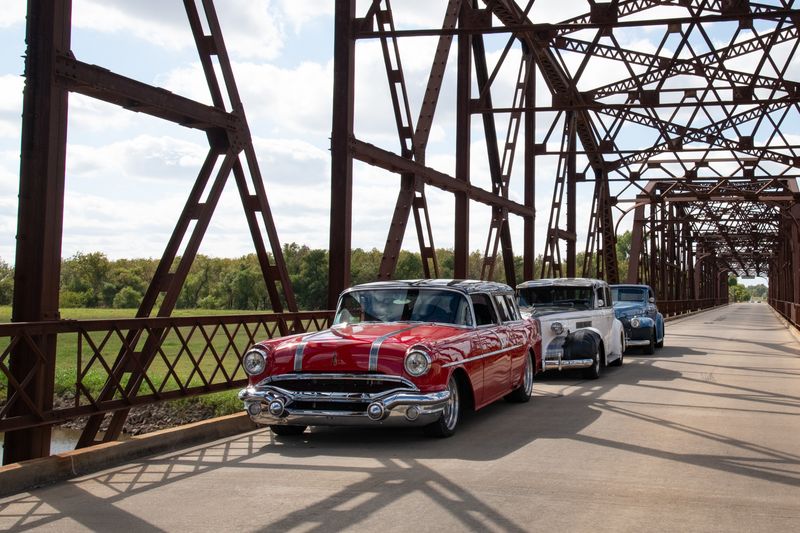
Built in 1924, the Lake Overholser Iron Bridge predates Route 66 itself by two years. When the Mother Road was officially designated in 1926, the bridge was already in place and ready to serve, becoming part of the original Route 66 corridor almost immediately.
For more than three decades it carried a steady stream of travelers, families, and freight across the North Canadian River.
The timing of its construction places it squarely in a fascinating chapter of American infrastructure. The 1920s were a period of rapid road-building enthusiasm across the country, and steel truss bridges like this one represented the cutting edge of practical engineering.
Builders wanted structures that were affordable, durable, and capable of handling the growing weight of automobiles.
What makes the centennial of this bridge especially meaningful is that 2026 marks the 100th anniversary of Route 66 itself. Visitors who stopped here recently noted the significance of experiencing the bridge during this commemorative period, describing it as a rare chance to connect with early American road infrastructure in a way that feels completely real.
The steel has aged, but the story it carries has only grown richer.
The Engineering Behind the Iron
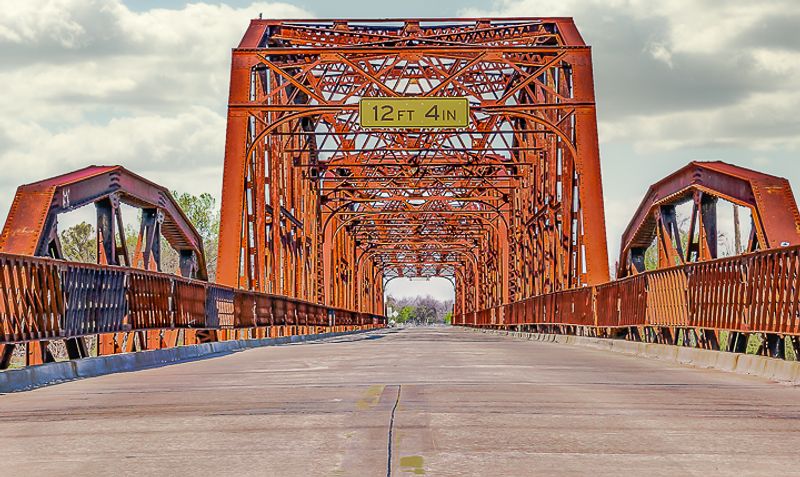
Not everyone stops at the Lake Overholser Iron Bridge for nostalgia. For a certain kind of visitor, the real draw is the engineering itself.
The bridge is a steel pony truss design, a style that was widely used in the early twentieth century for river crossings of moderate span. The truss framework sits above the roadway on both sides, creating that iconic tunnel-of-steel effect that photographers love and engineers admire.
Pony trusses differ from through-truss bridges in that the top chord of the structure does not rise above the roadway deck, keeping the overall height lower while still distributing load efficiently across the span. Achieving that balance with the materials and construction methods available in 1924 required genuine skill.
Visitors who pay attention to the riveted connections and the geometric bracing patterns often find themselves lingering longer than expected.
One visitor described getting up early specifically to photograph the sun rising through the superstructure, noting that the bridge’s framework creates a dramatic visual grid against the morning sky. The structure has been refurbished rather than demolished, a decision that preserved not just the iron but the engineering vocabulary of an earlier era.
That choice now feels like a small act of cultural wisdom.
The Mother Road Connection That Makes It Special
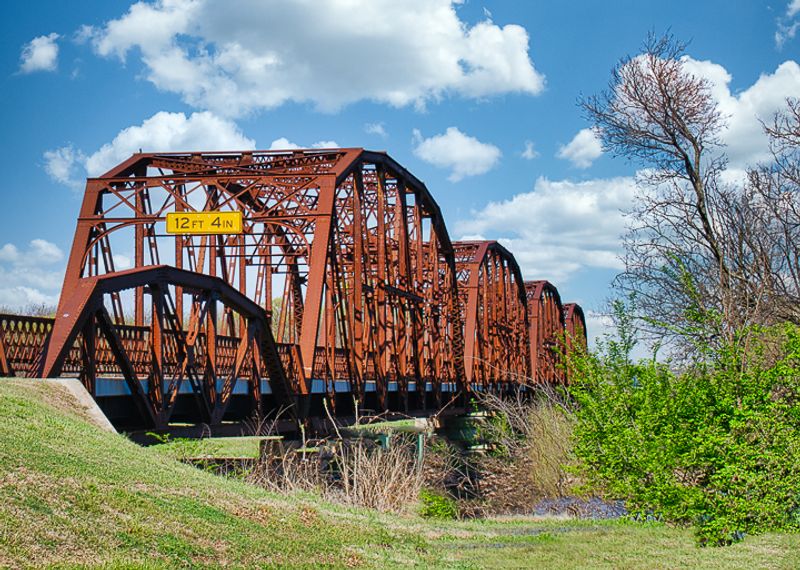
Route 66 runs through American mythology as much as it runs through American geography. Stretching from Chicago to Santa Monica, the Mother Road became a symbol of freedom, migration, and the open promise of the West.
Most people associate it with neon signs and roadside diners, but its original infrastructure, the bridges, culverts, and early pavements, tells a quieter and equally compelling story.
The Lake Overholser Iron Bridge is one of a small number of original Route 66 bridges in Oklahoma that remain both intact and drivable. That distinction matters because so many of the road’s historic structures have been replaced, bypassed, or simply left to collapse.
Keeping this one open to traffic preserves a physical experience that no museum exhibit can replicate.
Driving across it in both directions, as some visitors deliberately do, gives a sense of what the Mother Road felt like when it was the primary route connecting the country. The narrowness of the lanes, the sound of tires on the old deck, and the view of the lake through the trusses all combine into something that feels genuinely different from any modern crossing.
For Route 66 enthusiasts, this bridge belongs on the itinerary without question.
Lake Overholser as the Backdrop
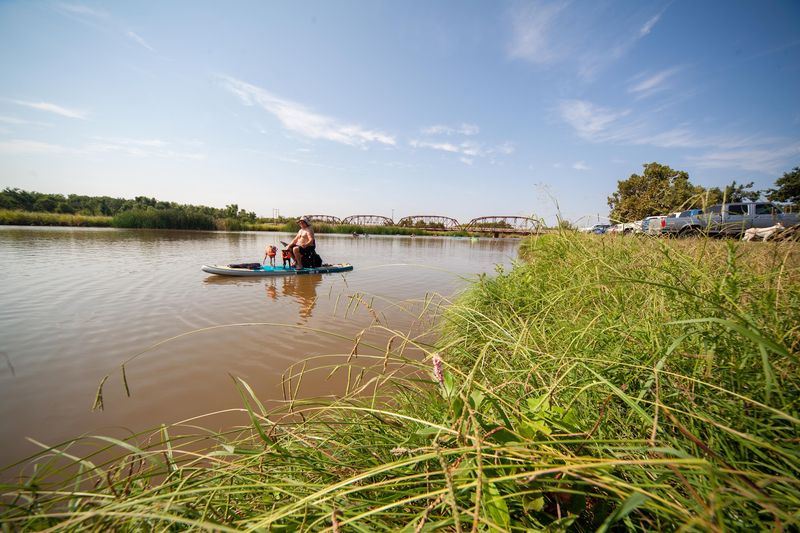
Water changes everything about a place, and the Lake Overholser setting transforms this bridge from a simple historic structure into something genuinely scenic. The North Canadian River feeds into Lake Overholser just at the bridge’s location, meaning the view from the deck shifts between river channel and open lake depending on where you look.
On calm days, the steel trusses reflect in the surface below, doubling the visual impact.
Lake Overholser itself is a reservoir created in the early twentieth century to serve Oklahoma City’s water supply. Over time it became a beloved outdoor recreation area, surrounded by wildlife refuge land on parts of its shoreline.
Visitors to the bridge frequently mention the birds, including white storks skimming low over the water and ducks weaving through the reeds along the bank.
The combination of open water, native grasses reaching up to ten feet in height along certain channels, and the iron bridge framing it all makes the location feel surprisingly remote. People who live in Oklahoma City often describe the area as feeling like the countryside despite being only minutes from the metro.
That sense of unexpected escape is a big part of why the bridge keeps drawing people back season after season.
Photography at Golden Hour and Beyond
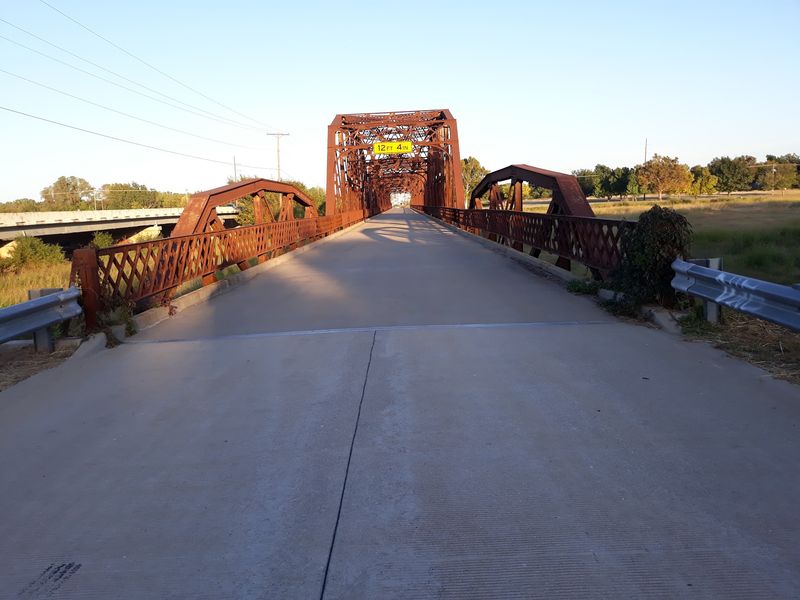
Golden hour at the Lake Overholser Iron Bridge is the kind of experience that makes photographers set alarms. When the sun drops low over Oklahoma’s flat horizon, the light pours through the truss framework at an angle that turns ordinary iron into something almost artistic.
The geometric shadows stretch across the road deck, and the water below catches the color of the sky in long, shimmering bands.
Visitors have specifically called out several vantage points as particularly rewarding. Shooting from alongside the bridge, rather than from it, captures the full silhouette of the structure against the sky and water.
Getting down near the water level, if accessible, reveals the underside of the trusses framing the lake beyond. And one visitor made a point of arriving before sunrise to catch the sun rising directly through the superstructure, describing the resulting shot as unlike anything else in the Oklahoma City area.
Night visits offer a completely different mood. The bridge has no artificial lighting of its own, so after dark it sits in genuine darkness, a quality that some visitors describe as giving the most authentic sense of what nighttime travel on Route 66 once felt like.
Bring a tripod and some patience, and the results can be remarkable.
Kayaking and Paddling Below the Trusses
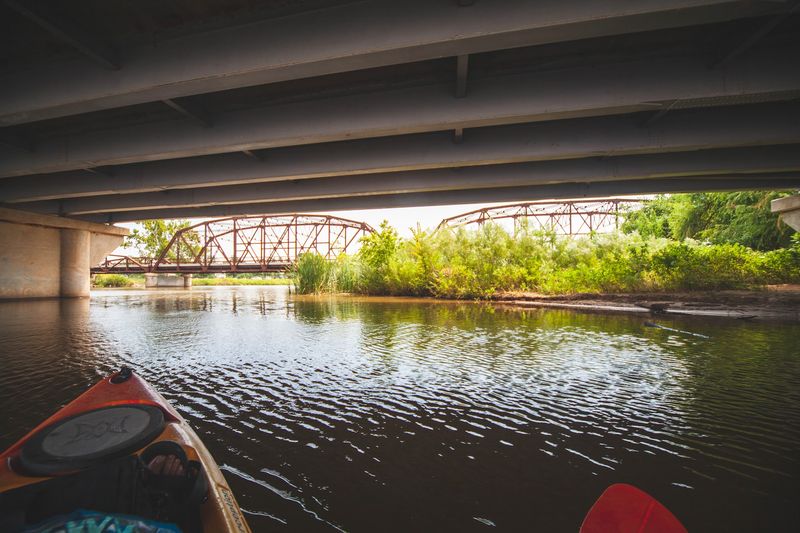
Paddling under a hundred-year-old iron bridge is an experience with a very specific kind of thrill. From the water, the Lake Overholser Iron Bridge looks completely different, larger and more imposing, with the trusses arching overhead and the sound of the river echoing off the steel.
Kayakers and stand-up paddleboarders have made this spot a regular destination for exactly that reason.
The launch area near the bridge is straightforward, with a boat ramp located close to shore. Visitors who have explored the waterway describe a kayaking trail that weaves through channels bordered by native grasses standing ten feet tall on either side, creating a narrow, almost tunnel-like paddling experience.
Wildlife is a consistent highlight, with ducks, storks, and other waterbirds frequently visible along the route.
Boating on Lake Overholser requires a permit. Day permits run six dollars and are available at multiple vendors in the area, including a nearby sporting goods retailer at 63rd and NW Expressway, approximately ten minutes from the bridge.
An annual permit is available for thirty dollars. Visitors note the lake rarely feels crowded, making it a reliably peaceful option for anyone who wants to combine a historic bridge visit with a few hours on the water.
Fishing the River Bend
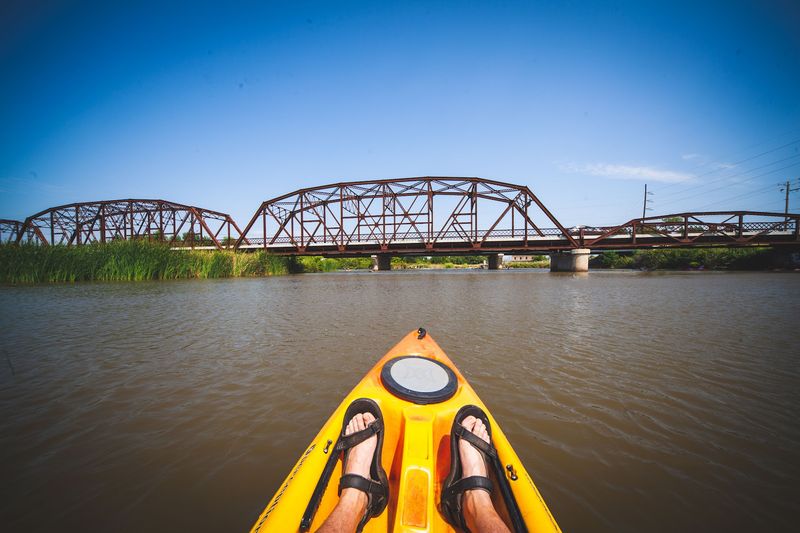
Fishing near the Lake Overholser Iron Bridge has a loyal following among locals who know the spot well. The river bends near the bridge create natural holding areas where fish tend to gather, and the combination of river current and lake water provides varied habitat.
Early mornings here are especially productive, with the added bonus of watching the light shift across the iron structure as the day begins.
One practical tip that experienced visitors pass along: fish the lake side of the bridge rather than the river side. The river channel reportedly contains a significant amount of submerged tree debris, which has a habit of snagging fishing lines.
The lake side tends to offer cleaner water and a more enjoyable experience overall. Weekends attract more anglers, so weekday visits tend to feel quieter and more relaxed.
The wildlife refuge land on the far side of the bridge adds to the natural character of the fishing experience. Birds are a near-constant presence, and the native grasses along the banks provide cover and habitat that supports a healthy ecosystem.
For anyone who enjoys combining a little history with a morning on the water, the area around the Lake Overholser Iron Bridge offers a genuinely satisfying combination of both.
The Wildlife Refuge Next Door
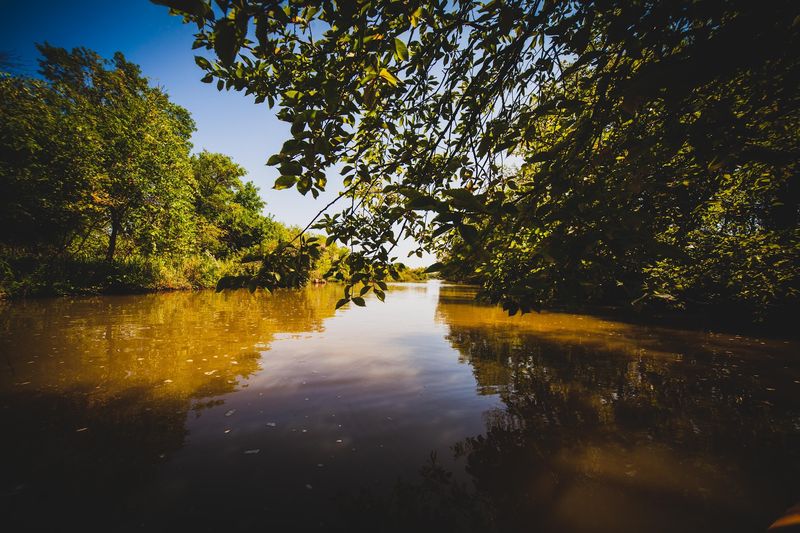
Cross the Lake Overholser Iron Bridge heading south and you enter the edge of a wildlife refuge, a fact that surprises many first-time visitors who come primarily for the Route 66 history. The refuge land borders the far side of the bridge, and the effect on the atmosphere is immediate.
Bird calls fill the air, native vegetation crowds the banks, and the noise of the city fades into the background.
White storks have been spotted flying just inches above the water surface near the bridge, a sight that visitors describe as genuinely striking. Ducks are a near-constant presence, often seen diving through the reeds or drifting along the quieter channels between the native grasses.
The wildlife observation possibilities here require no special equipment or planning – simply showing up and paying attention tends to be enough.
The combination of the historic bridge and the adjacent refuge creates a layered experience that goes beyond what most roadside stops offer. Visitors who come expecting a quick photo opportunity often find themselves staying much longer, drawn in by the birds, the water, and the overall sense of quiet that the refuge land provides.
Bringing binoculars on a visit here is a genuinely good idea, not just an optional extra.
The Atmosphere After Dark
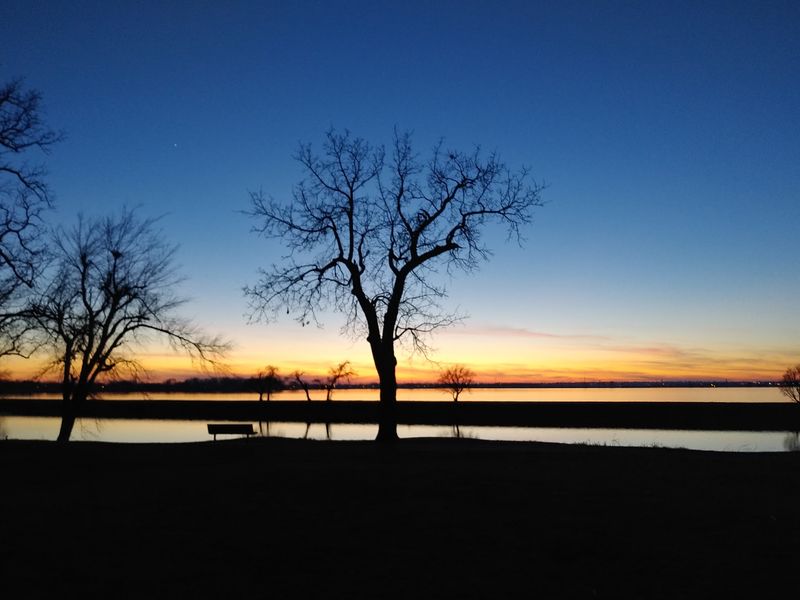
After the sun sets over Lake Overholser, the bridge becomes something else entirely. Without any artificial lighting attached to the structure, the iron trusses dissolve into the darkness, leaving only their outline against whatever the sky provides.
Visitors who have crossed it at night describe the experience as unexpectedly atmospheric, a genuine glimpse of what nighttime travel on the original Route 66 must have felt like before the modern world lit everything up.
One visitor put it plainly: the bridge at night is dark. Not inconveniently dark, but authentically dark in a way that feels rare near a major city.
The absence of overhead lights means the surrounding water and sky become the dominant visual elements, with the iron structure framing them rather than competing with them. On nights with a clear sky, the reflection of stars on the lake surface is visible from the bridge deck.
The bridge is open 24 hours a day, seven days a week, so there is no logistical barrier to an evening visit. Foot traffic tends to thin out after dark, giving the place a solitary quality that feels appropriate for a structure this old.
Arriving at night with no particular agenda and simply standing on a hundred-year-old bridge in the Oklahoma darkness is a surprisingly affecting experience.
Practical Details for Planning Your Visit
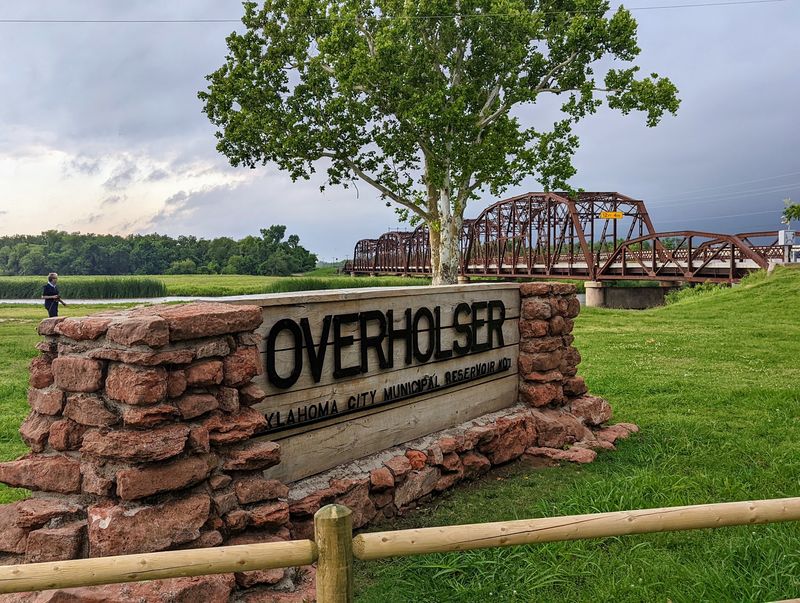
Getting to the Lake Overholser Iron Bridge is straightforward. The address is 8703-8709 Overholser Drive in Bethany, Oklahoma, just west of Oklahoma City.
Visitors coming from Interstate 40 will find the detour worth every minute, with the drive itself passing through neighborhoods that still carry traces of the old Route 66 alignment. The bridge is clearly visible once you reach Overholser Drive.
Parking is available in a small lot near the bridge, large enough for a handful of vehicles. The area includes a short stretch where visitors can pull over, step out, and explore on foot without any time pressure.
There is no admission fee to visit, walk, or drive across the bridge. The structure is open every day of the week, around the clock, with no seasonal closures or operating hour restrictions.
A small picnic area sits adjacent to the bridge, making it a reasonable spot for a relaxed midday break. The nearby boat launch provides access for kayaks and paddleboards, and the sporting goods retailer at 63rd and NW Expressway, about ten minutes away, sells the required day and annual boat permits.
Cell service is generally reliable in the area, so navigation apps work without issue right up to the bridge.
Who Will Love This Place Most
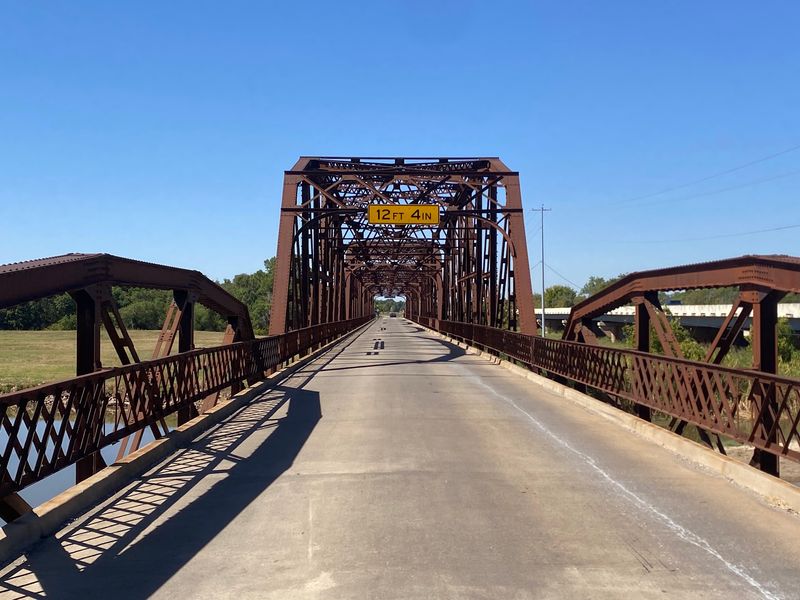
Road trip enthusiasts chasing Route 66 history will find the Lake Overholser Iron Bridge to be one of the more satisfying stops on the Oklahoma stretch of the Mother Road. The fact that it is still drivable rather than just viewable sets it apart from many preserved historic bridges that exist behind fences or in museum contexts.
Actually crossing it, feeling the deck underfoot and the trusses passing overhead, makes the history tangible in a way that photographs simply cannot replicate.
Photographers, both casual and serious, consistently rank it among the better spots near Oklahoma City for compelling images. The combination of iron geometry, open water, and the quality of light at different times of day gives the location genuine versatility.
Drone pilots and kayakers have both found it equally rewarding from their respective vantage points.
Families with curious kids, nature lovers, anglers, and anyone who simply wants a peaceful place to breathe outside the city will find something worthwhile here. The experience does not demand hours of time – a focused visit can be satisfying in thirty to forty-five minutes – but the location rewards those who linger.
For anyone already exploring central Oklahoma, skipping this bridge would be a quiet but real missed opportunity.
Share this story