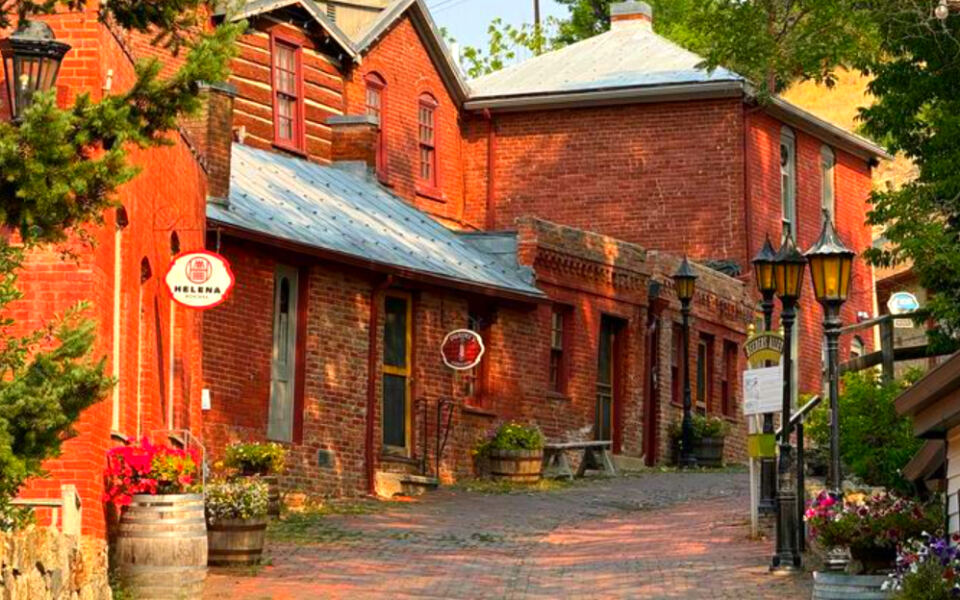
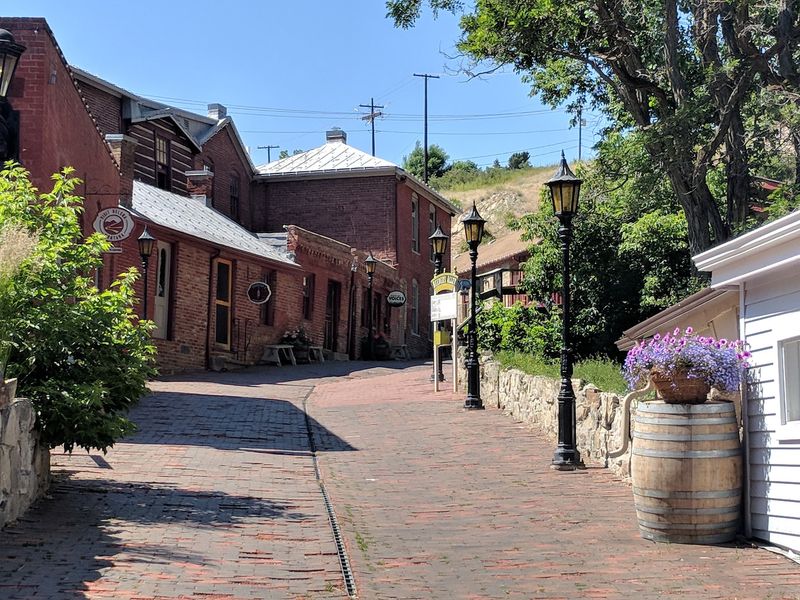
In Helena, Montana, a narrow historic alley preserves more than 150 years of stories within its cobblestones and hand-laid brick buildings. Once home to miners, merchants, and gold rush hopefuls, this remarkably intact block has survived fires, earthquakes, development, and generations of change.
Saved from demolition by three determined women, the neighborhood remains an authentic piece of Helena’s past rather than a modern recreation. Wandering through it feels like discovering a hidden corner of the city that time somehow left behind.
Stepping Back to the Golden Era’s Heartbeat
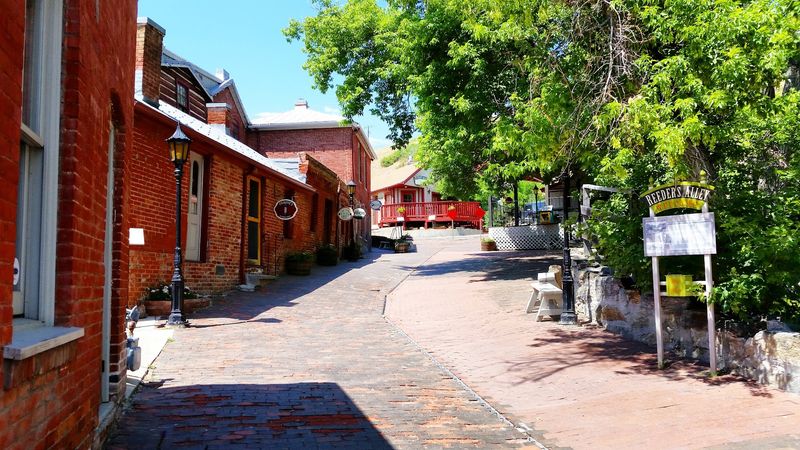
My first real look at Reeder’s Alley, located at 101 Reeders Alley, Helena, MT 59601, stopped me cold in the best possible way. Nestled in the southwest corner of downtown Helena, at the base of Mount Helena, this compact historic district carries a weight that no modern street could replicate.
Helena itself was born as “Last Chance Gulch” after four prospectors, famously called the “Four Georgians,” struck gold on July 14, 1864. The settlement was officially renamed Helena just a few months later, on October 30th of that same year.
Amid the chaos of a booming gold rush town, one skilled craftsman saw an opportunity to build something permanent. That vision produced what stands today as the oldest intact piece of early Helena.
Every brick you see here was laid during a time when the city was still figuring out what it wanted to be, and somehow, this little alley figured it out first.
The Mason Who Built His Name into the City
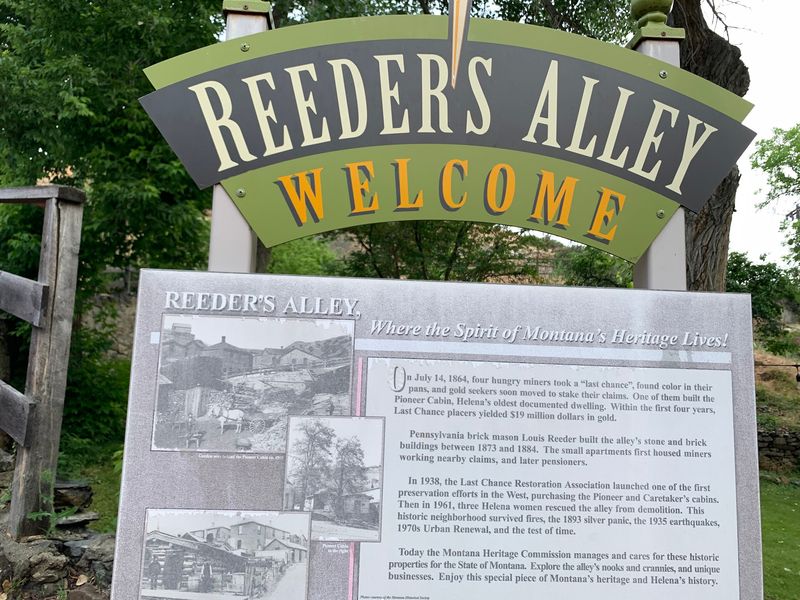
Louis Reeder arrived in Helena in 1867, fresh from Bucks County, Pennsylvania, with a mason’s hands and an eye for what this rough-edged mining town actually needed. One of his first major projects was the original Lewis and Clark County Courthouse, which immediately established his reputation in the community.
By 1872, he had saved enough to start buying up lots along what was then called Cutler Street. Over the next twelve years, he constructed more than thirty individual brick and stone, one-room dwellings with no indoor plumbing, renting them out to miners who were thrilled to have a solid roof overhead instead of a leaky tent.
Reeder passed away in 1884 after a fall from scaffolding at a job site, but Cutler Street was renamed in his honor almost immediately. That quiet tribute stuck, and today his name greets every visitor who turns the corner into this historic alley.
Few builders anywhere have left such a lasting mark on a city’s identity.
Why Brick Mattered More Than You Might Think
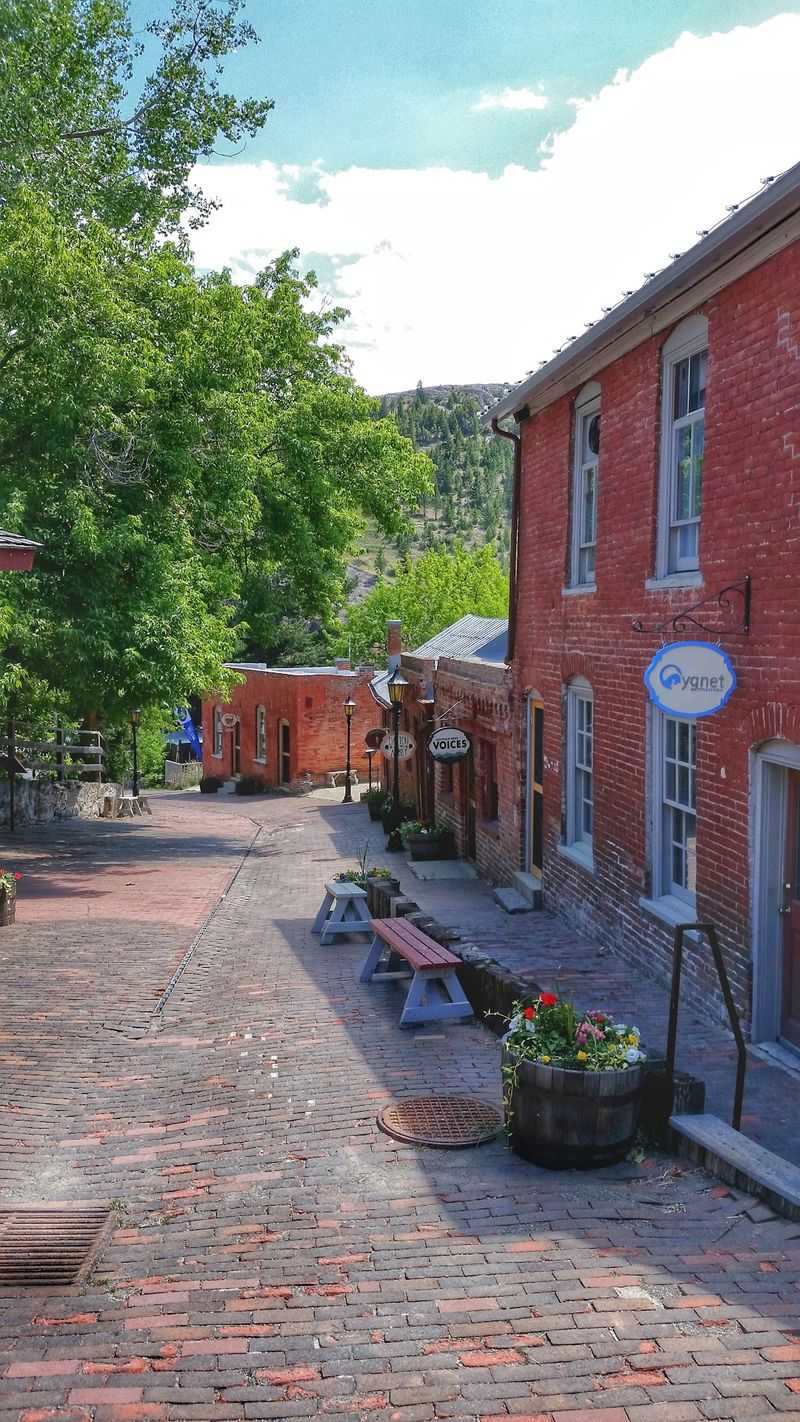
Fire was the great equalizer in early Western settlements, and Helena was no exception. Canvas tents and timber-frame shacks could vanish in minutes, taking everything a miner owned along with them.
Louis Reeder understood this risk better than most, which is why he insisted on brick and stone for every structure he built along Cutler Street.
The choice was practical, but the results were almost miraculous. When fires swept through other parts of Helena, Reeder’s buildings held.
When the significant 1935 earthquake rattled the city and damaged numerous structures across town, the masonry along the alley largely survived intact.
That kind of durability is not accidental. It reflects a builder who thought in decades rather than seasons, who priced permanence above convenience.
Today, running your hand along those same rough-hewn walls, you feel the payoff of that philosophy in the most literal way possible. The bricks themselves are a kind of argument, and after 150 years, they are still winning it.
The Pioneer Cabin: Helena’s Oldest Surviving Dwelling
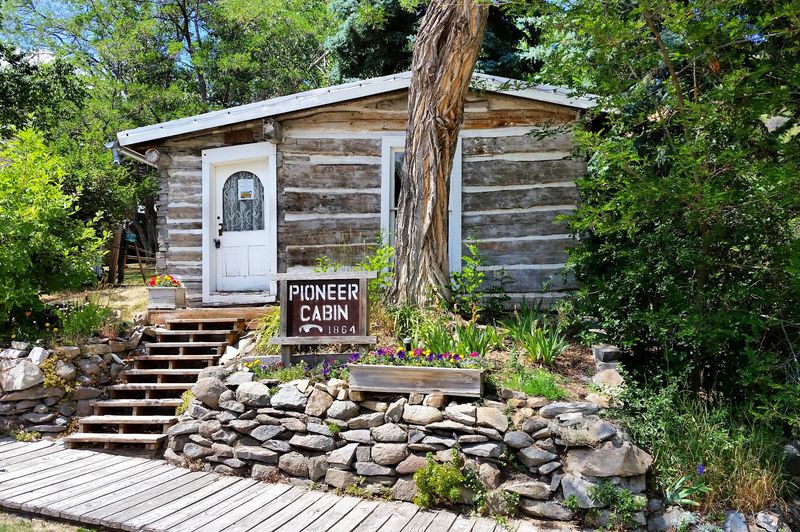
Hidden within the alley’s collection of brick structures sits a humble log cabin that predates all of them by nearly a decade. The Pioneer Cabin was built in 1864 by Wilson Butts, a seasoned gold miner, making it the oldest documented dwelling in Helena.
That single fact is enough to make you stop and stare for a while.
The cabin has been carefully preserved and now functions as a small museum during the summer months, open for both guided and self-guided tours throughout the day. Inside, the space is tight and spare, which tells you everything you need to know about the conditions early settlers actually lived in.
There is something quietly powerful about standing in a room where someone slept and dreamed about gold more than 160 years ago. The cabin does not need elaborate displays or dramatic lighting to make its point.
Its age and simplicity do all the talking, and the story it tells is one of raw ambition meeting raw Montana weather, head-on.
The Caretaker’s Cabin and the Alley’s Hidden Social History
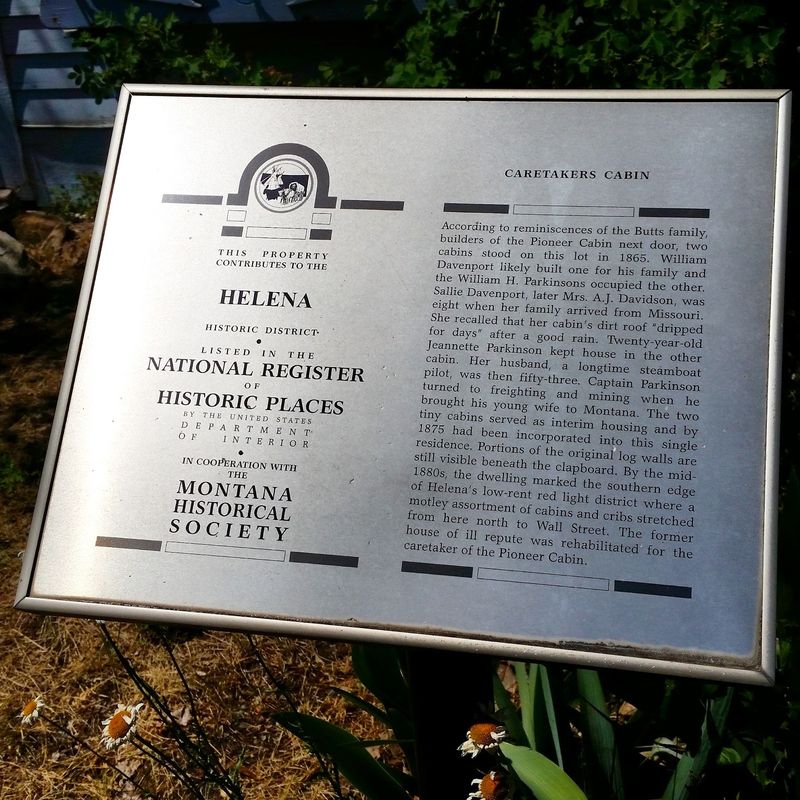
Not every story tucked inside Reeder’s Alley is the straightforward tale of a prospector chasing gold. The Caretaker’s Cabin, with its small rear extensions known historically as “cribs,” opens a window onto a side of Helena’s past that rarely makes it into the glossy brochures.
During the 1890s, this part of the alley sat near a lively red-light district. The original stone wall running along the east side of the alley was actually installed to restrict activity and prevent solicitation from spilling into the main street.
That wall is still there today, quietly marking a boundary that once carried real social weight.
Understanding this layer of history does not diminish the alley’s charm. If anything, it deepens it, reminding visitors that the people who lived and worked here were complex, resourceful, and often operating on the margins of a society that was itself still taking shape.
The Caretaker’s Cabin asks you to hold more than one truth at a time, which is exactly what good history does.
The Stone House: A Mystery Wrapped in Mortar
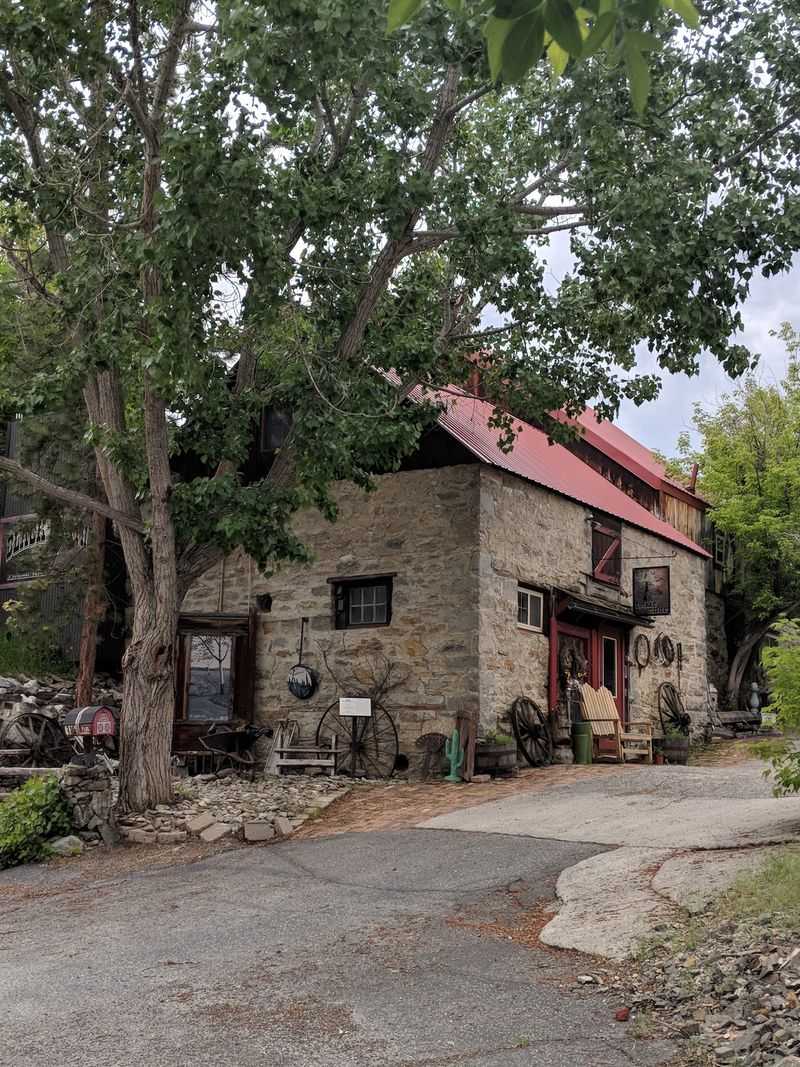
Every historic district has its enigma, and in Reeder’s Alley, that role belongs to the Stone House. Nobody knows for certain who built it, but records confirm it was already standing when Louis Reeder began his brickwork in 1872, placing its origins in the very earliest days of Helena’s settlement.
Its construction style, featuring robust stone rather than brick, connects it to a handful of other early residences scattered across the Helena area, suggesting a small community of stone masons may have been active in the region before Reeder ever arrived. The identity of the original builder, however, remains unconfirmed.
There is something oddly satisfying about a building that has outlasted the memory of the person who made it. The Stone House stands as proof that early settlers were building for permanence even when they had no guarantee the town around them would survive.
It is the alley’s quiet riddle, and it has been waiting patiently for someone to solve it ever since.
Chinese Merchants and the Yee Wau Cabin
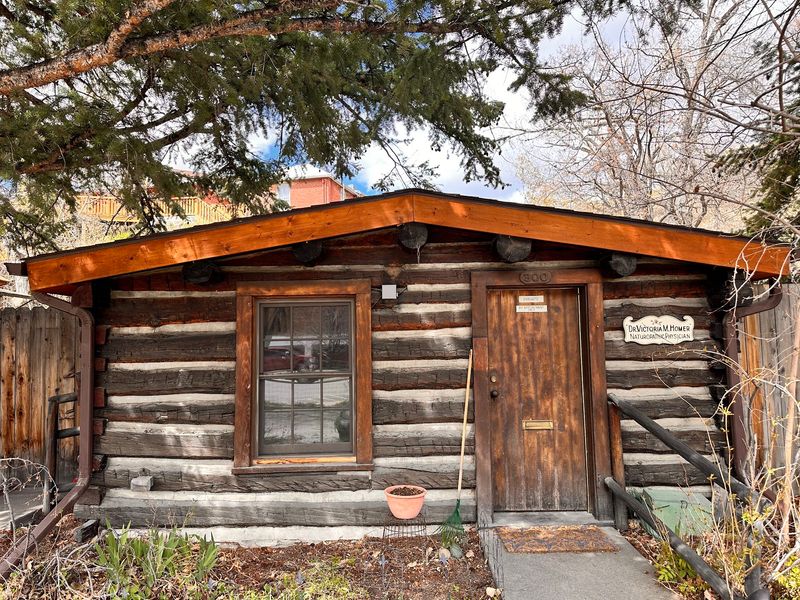
The Yee Wau Cabin stands as one of the most important reminders that Helena’s founding community was far more diverse than many people realize. From 1876 to 1886, the Yee Wau brothers operated this cabin as a base for their business, selling Chinese merchandise and groceries to the growing population.
During Montana’s territorial period, Chinese immigrants made up roughly ten percent of the population. Their contributions were enormous, particularly in laying the tracks for the Northern Pacific Railroad across Montana in the 1880s.
In Helena specifically, Chinese residents owned property, ran businesses, paid taxes, and maintained extensive gardens that spread across five blocks below Reeder’s Alley.
The Yee Wau Cabin does not let that history fade quietly into the background. It plants it right in the middle of the alley, where every visitor has to reckon with it.
That kind of representation matters, especially in a space that is supposed to tell the full story of how Helena actually came to be. This cabin earns its place on the cobblestones.
Three Women Who Refused to Let It Disappear

By the mid-20th century, Reeder’s Alley was in real trouble. The buildings had aged, the 1935 earthquake had done its damage, and the momentum of modern development was pushing in directions that did not favor crumbling brick tenements from the 1870s.
The alley’s survival was genuinely uncertain.
Then three Helena women stepped in. Pat Boedecker, Eileen Harper, and Jane Tobin formed Reeder’s Alley Inc. in 1961, launching a preservation campaign that saved the entire complex from likely demolition.
By 1963, many of the units were occupied again, this time by artists and small shop owners who brought fresh energy to the historic space.
Their effort represents exactly the kind of unglamorous, determined local action that keeps history alive when institutions and budgets fail to prioritize it. Today, the Montana Heritage Commission manages the property after Darrell and Kathy Gustin donated the entire Reeder’s Alley holdings to the State of Montana in 2000 and 2001.
Those three women planted a seed in 1961 that is still growing.
Architecture That Tells Its Own Story
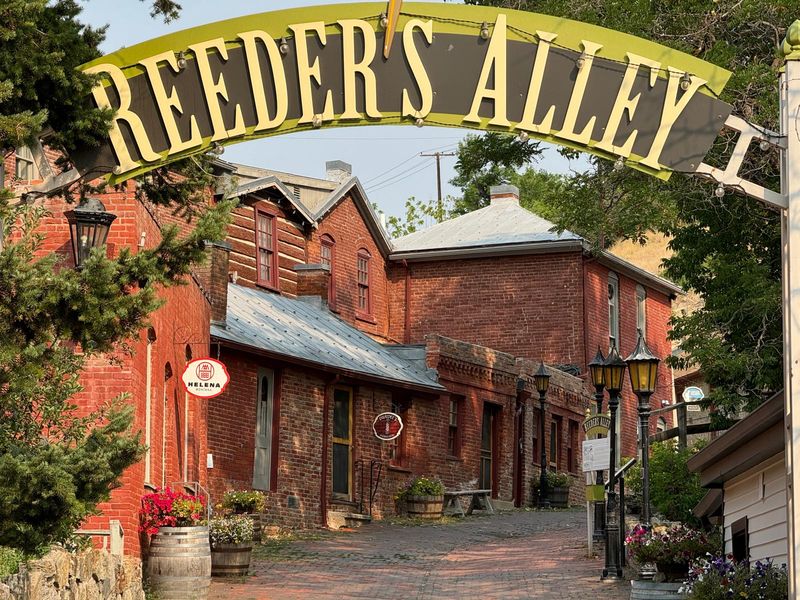
Grand Victorian mansions dot other parts of Helena, but Reeder’s Alley was never built for grandeur. The structures here reflect a different set of priorities: durability, economy, and speed.
False fronts on some of the buildings add a theatrical Old West flourish, making modest one-room dwellings appear more substantial from the street than they actually were.
One particularly clever detail involves a log cabin that was incorporated directly into a larger brick structure during construction, rather than being torn down to make way for it. That kind of adaptive building tells you a lot about how early Helenans thought about resources and time.
The way the buildings press close together along the slope of Mount Helena gives the whole alley an organic, almost European quality that feels completely at odds with the wide open Montana landscape just beyond it. That contrast is part of what makes the place so visually arresting.
You come around a corner, and suddenly the scale shifts, and you are somewhere entirely different from where you just were.
A Living Neighborhood: Shops, Food, and Local Energy
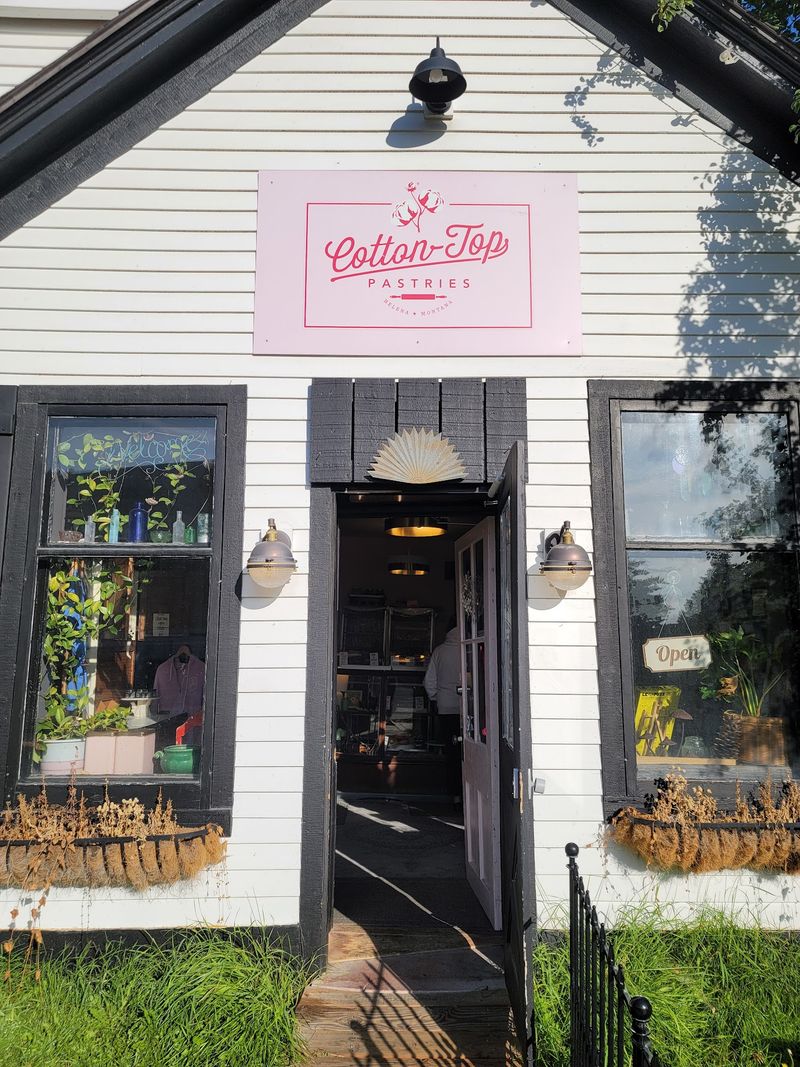
History is the headliner at Reeder’s Alley, but the supporting cast is worth your attention too. Rockstarr BBQ operates out of the alley with a deck that overlooks the historic cobblestones, which is a genuinely excellent place to eat something smoky while staring at 150-year-old brick.
Cotton-Top Pastries, open Friday and Saturday mornings from around 7:30 AM to noon, draws a loyal crowd for good reason.
The Visit Helena Montana Visitor Center anchors one end of the alley and serves as a natural first stop, loaded with maps, local recommendations, and staff who actually know the area. Eric Castleman Art adds a creative dimension, and Dundee’s Barber Shop keeps things refreshingly practical amid all the history.
Public restrooms are available on-site, which sounds like a small detail until you are mid-exploration and genuinely grateful for it. Free parking nearby makes the logistics easy, and handicapped parking with a ramp to the visitor center ensures the alley is accessible to everyone who wants to experience it.
Events That Bring the Past Roaring Back to Life
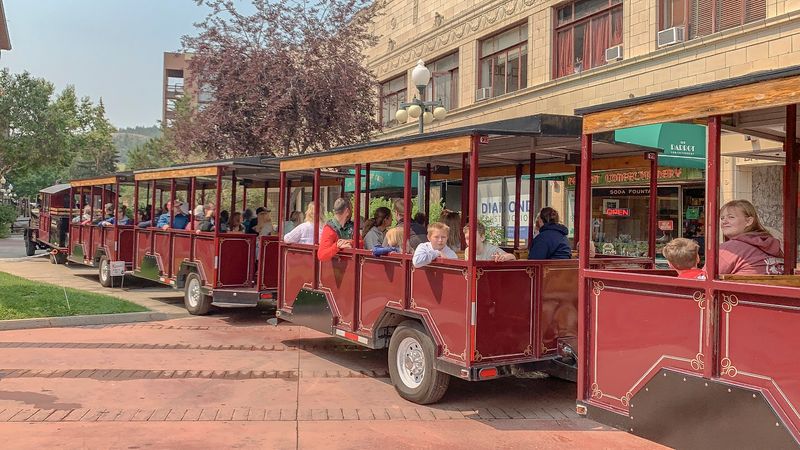
Visiting Reeder’s Alley during one of its seasonal events is a completely different experience from a quiet weekday stroll, and both versions are worth your time. The Summer Series brings live local music, food trucks, walking tours, and living history demonstrations to the alley, turning the cobblestones into a proper gathering place.
The holiday season brings its own version of the magic. The Lighting of the Alley and Christmas on Reeder’s draw crowds who come specifically to see the historic buildings dressed up in seasonal decorations, creating a warmth that feels genuinely earned against the backdrop of all that old brick.
The Reeder’s Alley Interpretive and Convention Center, which features historical panels and streaming video about the alley’s past, also functions as a venue for small to medium-sized group events throughout the year. The Montana Heritage Commission has been actively working to fill previously vacant spaces with new retail and programming, which means the alley’s calendar keeps getting more interesting with each passing season.
Planning a Visit: What You Actually Need to Know
Reeder’s Alley is open 24 hours a day, every day of the week, which means you can show up at sunrise for golden light on the brickwork or after dinner for a quieter, more atmospheric experience. That said, the small businesses inside keep their own hours, and most wrap up by 5 PM, so plan accordingly if a specific shop is on your list.
Comfortable, flat-soled shoes are a genuine necessity. The cobblestones are charming but uneven, and the slope toward Mount Helena adds a mild incline that catches people off guard.
A self-guided tour using maps available at the visitor center or on the alley’s website takes roughly one to two hours at a relaxed pace.
There is no admission fee to walk the alley, though a small donation box near the Pioneer Cabin supports ongoing preservation efforts. Pioneer Park sits directly across the street, and the Lewis and Clark Library is nearby, making it easy to build a half-day itinerary around this corner of Helena without ever needing to drive anywhere.
Come curious, leave informed.
Share this story