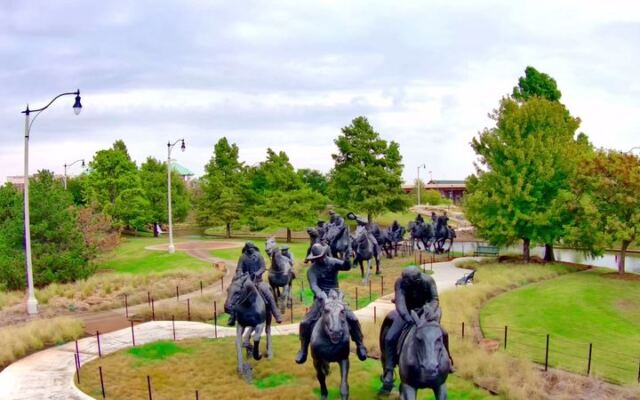
Oklahoma has a way of surprising visitors who think they already know what to expect. Tucked along a canal path in one of Oklahoma City’s most walkable neighborhoods, a massive outdoor sculpture installation freezes an electrifying moment from 1889 in gleaming bronze.
Dozens of larger-than-life horses, riders, wagons, and settlers stretch across the landscape in a scene so vivid it feels like history is charging straight at you. Best of all, admission is completely free, and the path is open around the clock.
Location Along the Bricktown Canal
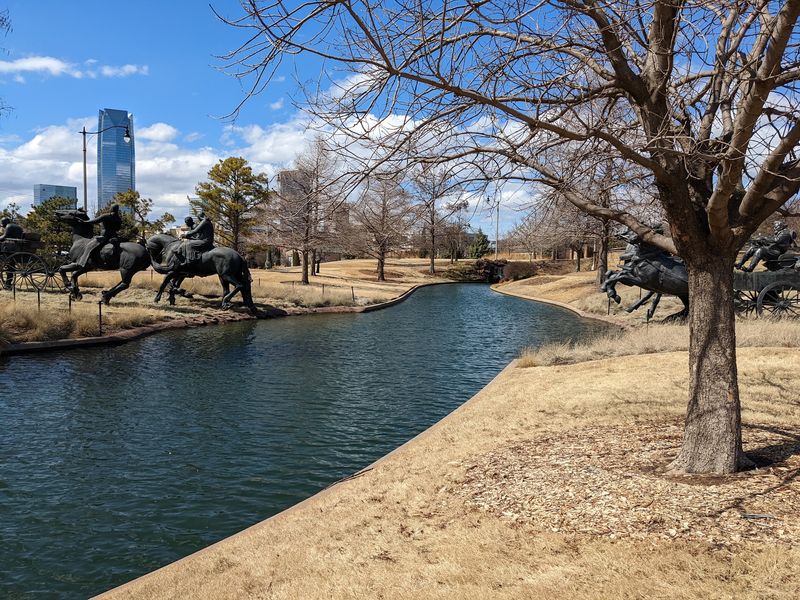
Sitting at the edge of Oklahoma City’s lively Bricktown district, the Centennial Land Run Monument occupies a park-like stretch along the canal that connects the neighborhood’s entertainment corridor to a quieter, more reflective riverside walk. The address is 200 Centennial Ave, placing it within easy reach of the area’s restaurants, shops, and attractions.
Visitors approaching from Bricktown will notice the sculptures gradually revealing themselves as they follow the canal path south. The setting feels intentional, with the waterway acting almost like a mirror for the energy frozen in the bronze above its banks.
Nearby landmarks include Bass Pro Shops, and several visitors suggest cutting through that parking lot heading south as one of the easiest ways to find the monument on foot. Signage in the area points the way, and the installation is hard to miss once you round the right bend.
The surrounding green space gives the whole site a pleasant, park-like quality that encourages a slow, unhurried visit rather than a quick glance from the sidewalk.
The Historical Event Behind the Bronze
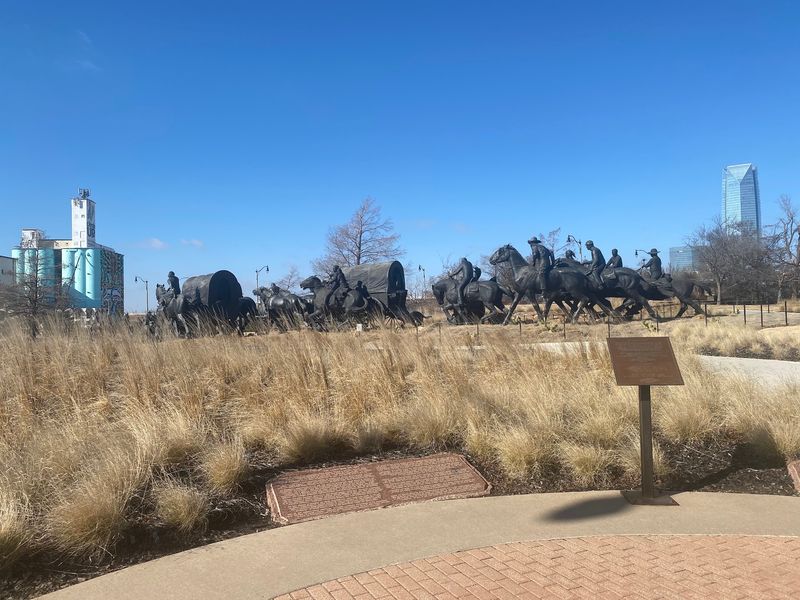
April 22, 1889 was one of the most chaotic days in American history. At high noon, a gunshot signaled the opening of the Unassigned Lands in what would become Oklahoma Territory, and an estimated 50,000 settlers surged forward on horseback, in wagons, and on foot to stake their claims on free land.
Known as the Land Run of 1889, this event transformed raw prairie into settled communities almost overnight. Towns like Guthrie and Oklahoma City sprang up within hours, each carved out by ordinary people chasing the promise of a fresh start.
The sheer human drama of that moment, the desperation, the hope, the physical rush, is exactly what sculptor Paul Moore set out to capture.
Historical signs placed throughout the monument site provide context for visitors who want to understand what they are looking at beyond the visual spectacle. The monument does not shy away from the complexity of the era, and visitors have noted that the installation prompts genuine reflection on what the land run meant for different groups of people.
History rarely feels this immediate or this tactile anywhere else in Oklahoma City.
Paul Moore’s Two-Decade Creative Journey
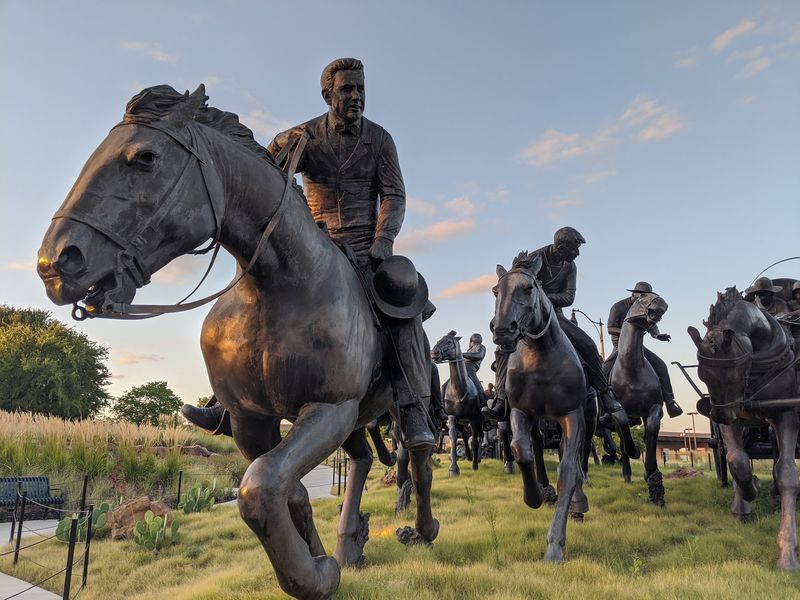
Few public art projects demand the kind of sustained commitment that sculptor Paul Moore poured into this installation. According to visitor accounts and available records, Moore spent more than twenty years bringing the Centennial Land Run Monument to life, a timeline that speaks volumes about the ambition behind the project.
The total cost reached approximately 6.2 million dollars, and the finished result comprises 45 individual bronze pieces. That scale puts it among the largest bronze sculpture installations anywhere in the world, a fact that tends to catch even well-traveled visitors off guard when they first encounter it in person.
What makes the achievement even more striking is the consistency of quality across all 45 figures. Each face carries a distinct expression.
Each horse mid-stride shows realistic muscle tension. Visitors frequently mention that the closer they look, the more detail emerges, from the texture of clothing folds to small animals scrambling out of the path of the oncoming rush.
Moore’s dedication to storytelling through physical form gives the entire installation a narrative depth that photographs simply cannot fully convey. Standing beside any single figure makes the scale of that creative effort feel personal and immediate.
Scale That Makes You Feel Small
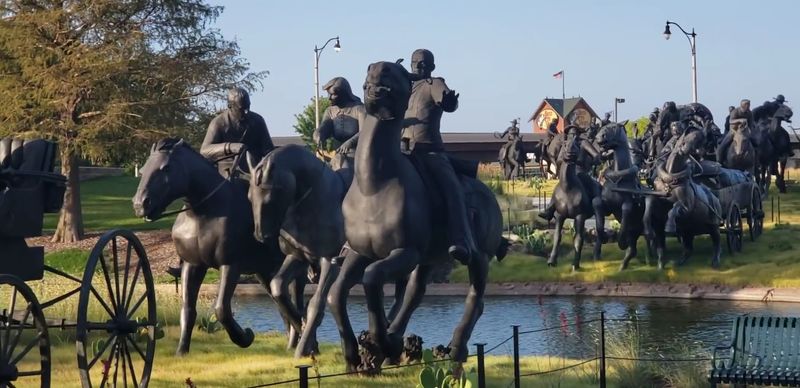
Nothing quite prepares first-time visitors for the sheer physical size of these sculptures. Standing beside one of the bronze horses, adults find themselves looking up at the animal’s chest, and the riders towering above are rendered at a scale that turns the viewer into a bystander rather than an observer.
One visitor described the experience as feeling like a spectator witnessing the actual moment in history, shrunk down to the size of a child watching giants race past. That sense of being dwarfed is not accidental.
Moore designed the figures to be larger than life precisely to communicate the magnitude of the historical event they represent.
When viewed from a distance, the full installation appears to stretch across the equivalent of a football field or more, with figures arranged in sequential groupings that suggest different stages of the rush. Up close, the experience shifts entirely.
Each sculpture becomes its own world of detail and emotion. Stepping back and then stepping forward again reveals two completely different encounters with the same artwork.
Visitors who allow themselves time to move freely through the installation, rather than viewing it all from one vantage point, consistently report a far richer and more memorable experience.
Storytelling Frozen in Motion
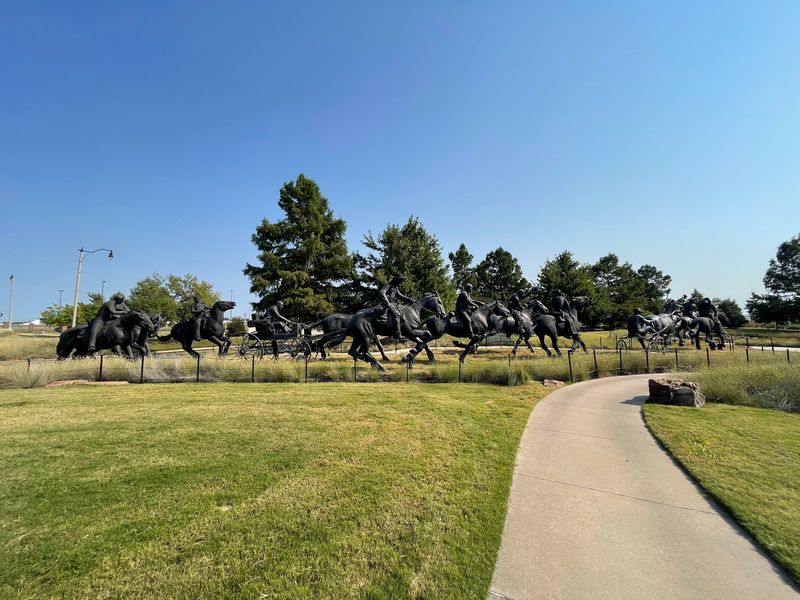
Movement is the monument’s most powerful trick. Horses are caught mid-stride with hooves lifted, manes streaming backward as if the wind is still blowing.
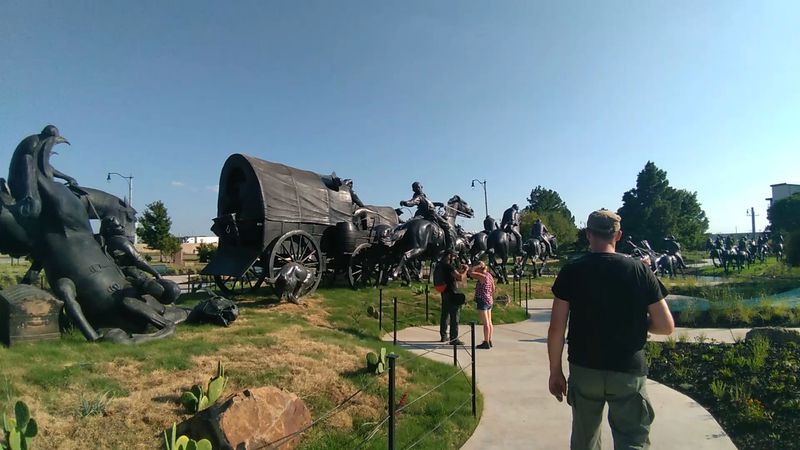
Riders lean forward urgently, their faces set with determination. Wagons tilt at angles that suggest rough ground and reckless speed.
The arrangement of the 45 figures across the site is not random. Moore organized them to tell a sequential story, building in tension and drama as visitors move from one grouping to the next.
Some figures are clearly winning the race, charging ahead with confidence. Others show the cost of the sprint, with at least one figure depicted having fallen in the rush, a sobering detail that adds emotional weight to what might otherwise feel like pure celebration.
Visitors have noted that the more attention they pay, the more connected the narrative becomes. Small details reward careful looking: a rabbit darting out of the way of pounding hooves, the expression on a child’s face in a passing wagon, the strain visible in a horse’s neck.
Each element was placed with purpose. The result is less a monument and more an open-air graphic novel rendered entirely in bronze, telling a story that unfolds as you walk through it.
The Detail Work Up Close
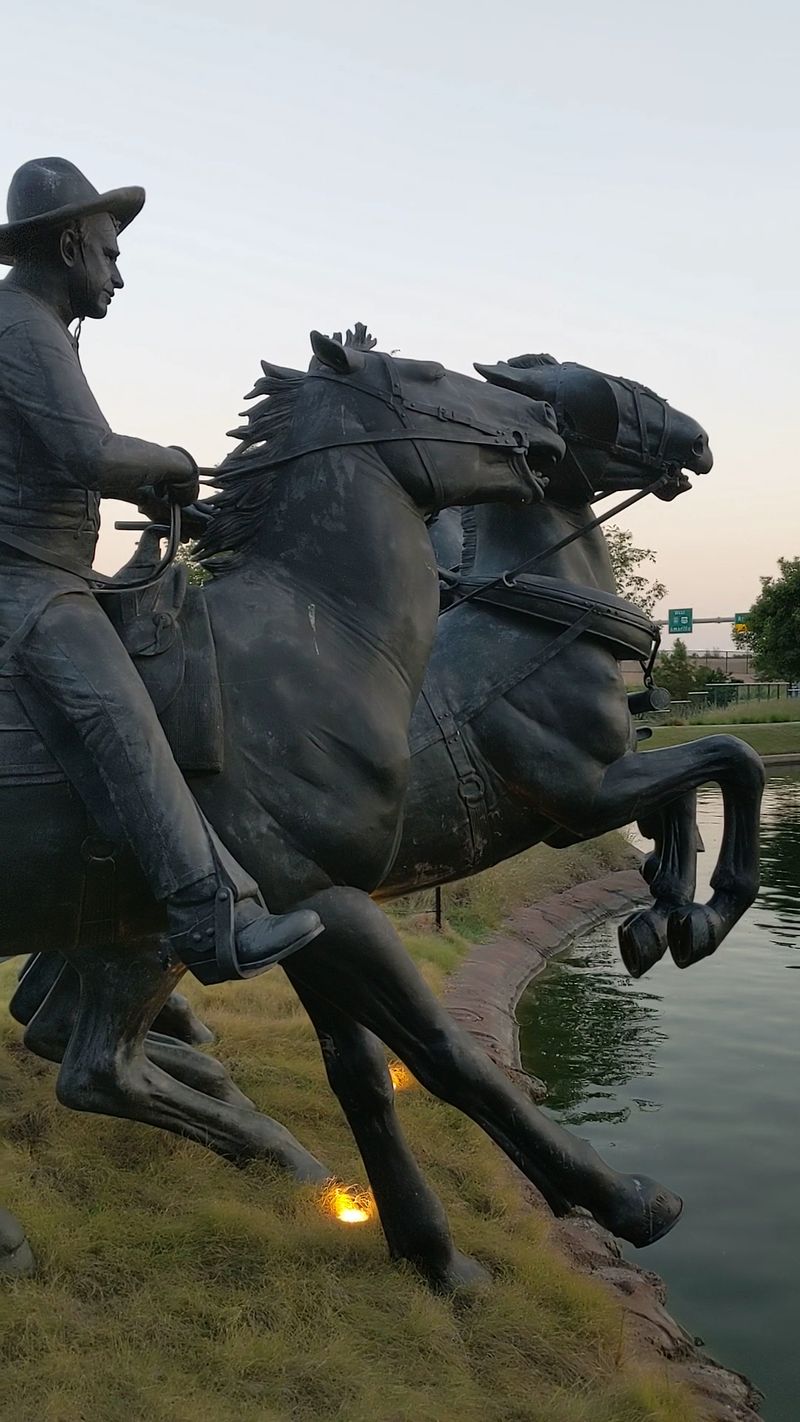
Photographs of the Centennial Land Run Monument tend to capture the drama of the overall scene, but they consistently fail to communicate what the sculptures look like from arm’s length. Up close, the level of craftsmanship shifts from impressive to genuinely astonishing.
Individual faces carry wrinkles, worry lines, and expressions ranging from fierce determination to visible exhaustion. Fabric folds in clothing are rendered with a realism that makes the bronze feel almost textile-like.
Harness straps, wagon wheel spokes, and boot buckles all receive the same careful attention as the figures themselves. Even small animals tucked into the composition, including a rabbit reportedly caught mid-leap near one of the groupings, are sculpted with the same commitment to accuracy.
Visitors who have spent time studying each piece mention that the experience rewards patience in a way that few public artworks manage. Rather than absorbing the monument in a single sweep, the best approach is to slow down and treat each figure as its own subject.
Multiple visitors have returned for second and third visits specifically because they felt they had only scratched the surface on their first time through. That kind of staying power is rare in any art form, let alone a free outdoor installation.
Free Admission and Open Around the Clock
Among the many things that make this monument stand out, the price of admission might be the most surprising: it costs nothing. Access to the Centennial Land Run Monument is completely free, with no ticketing, no timed entry, and no barriers between visitors and the artwork itself.
Operating hours are equally generous. The site is open 24 hours a day, seven days a week, every day of the year.
Early morning walkers have described the experience of having the sculptures nearly to themselves in the quiet hours, with the canal reflecting soft light and the bronze figures emerging gradually from the morning calm. Evening visits offer a different atmosphere entirely, with ambient lighting giving the horses and riders a dramatic, almost cinematic quality.
That accessibility makes the monument genuinely democratic in a way that many major attractions are not. Families on tight budgets, solo travelers passing through on a road trip, and locals looking for a meaningful morning walk all have equal access to one of the largest bronze sculpture installations in the world.
No reservation required, no parking fee attached to admission, just a short walk from wherever you leave your car and an experience that tends to exceed expectations by a considerable margin.
The Canal Walk Setting
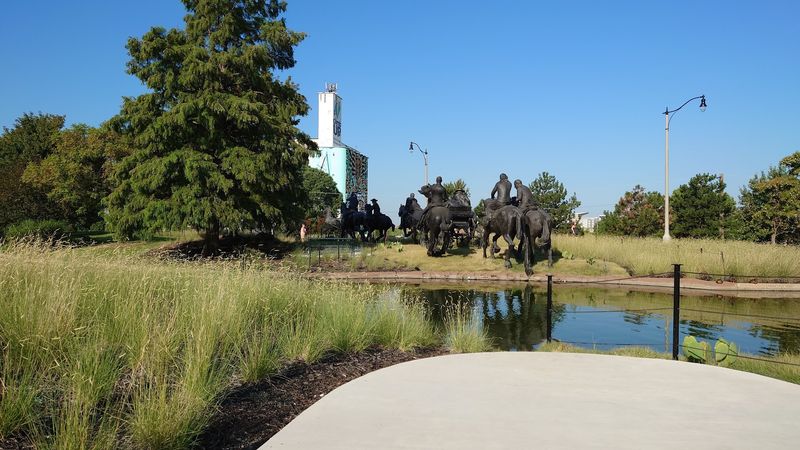
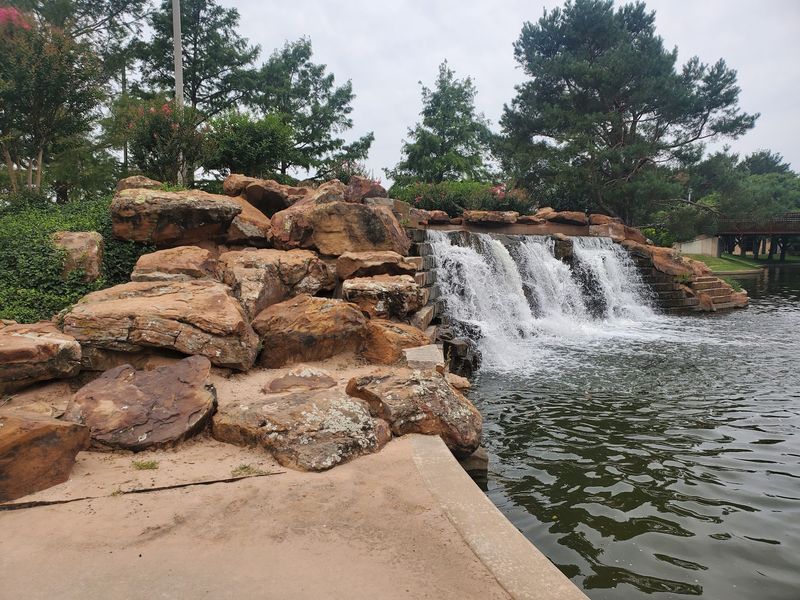
Walking the canal path alongside the monument adds a layer of atmosphere that a simple plaza setting could never replicate. The water runs quietly beside the sculptures, and the combination of open sky, green space, and bronze figures creates an environment that feels both grand and surprisingly peaceful.
Visitors frequently describe the canal walk portion of the visit as unexpectedly relaxing. After the visual intensity of the sculptures themselves, the path continues into a quieter stretch of riverside greenery that functions almost as a cooldown for the senses.
Several people have mentioned that they came specifically for the monument and left having fallen in love with the broader canal walk experience.
Boat tours of the canal are also available in the area, offering a completely different vantage point on the installation from the water. Seeing the bronze figures from below and at a distance gives the groupings a different kind of drama, with the figures appearing to charge toward the canal’s edge.
Whether on foot or by boat, the setting consistently enhances the artwork rather than competing with it. The thoughtful integration of the sculptures into the waterway landscape has been widely praised as one of the more tasteful examples of public art placement in the region.
Who Enjoys This Place Most
History enthusiasts tend to be the most vocal fans of the Centennial Land Run Monument, and understandably so. The installation brings a pivotal chapter of American history to life in a way that no textbook can replicate.
For anyone with roots in Oklahoma or family connections to the land runs, the experience carries an added emotional dimension that visitors have described as genuinely moving.
Photographers also find the monument endlessly rewarding. The combination of dramatic scale, intricate surface detail, and the natural light that shifts throughout the day means that no two visits produce exactly the same set of images.
Early morning and late afternoon light in particular create long shadows and warm tones that make the bronze sculptures glow.
Families with children benefit from the open layout and the storytelling structure of the installation, which gives kids a concrete visual narrative to follow rather than abstract historical information. Casual walkers and road-trippers passing through Oklahoma City have consistently noted that the monument exceeded their expectations by a wide margin.
The mix of artistic ambition, historical significance, and free access makes it one of those rare attractions that genuinely works for almost everyone, regardless of age, background, or how much time they have available.
Atmosphere at Different Times of Day
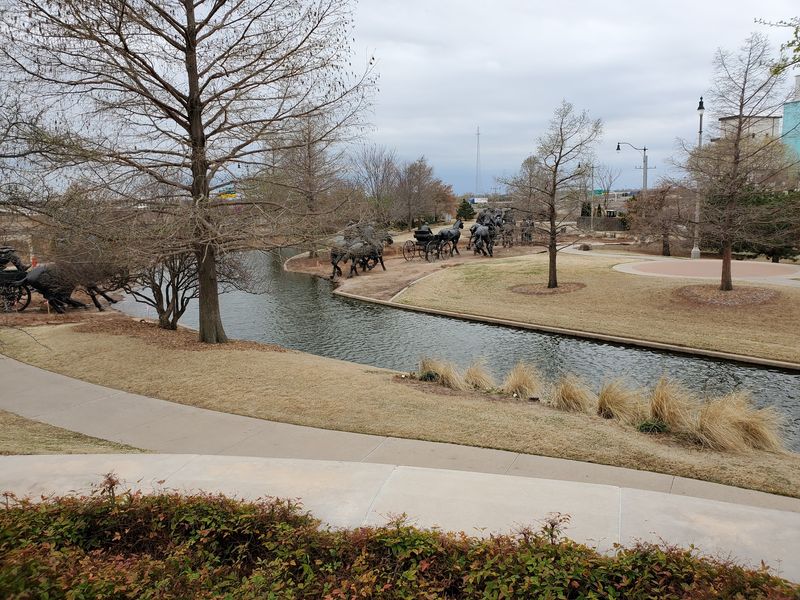
Visiting at different times of day produces genuinely different experiences at the Centennial Land Run Monument. Weekday mornings tend to be the quietest, with the site offering near-solitude that allows visitors to move slowly through the installation without distraction.
One visitor described a quiet weekday morning visit as almost cinematic, with the bronze motion frozen in silence along the canal.
Midday visits during warmer months bring more foot traffic and brighter overhead light, which flattens some of the sculptural detail but makes the overall scale of the installation easier to appreciate from a distance. Afternoon light, particularly in the golden hour before sunset, is widely considered the best time for photography, as the warm tones bring out the richness of the bronze patina.
Evening visits have their own appeal. Ambient lighting along the canal path illuminates the sculptures after dark, giving the figures a dramatic quality that daytime visits simply cannot match.
The sound of the canal and the relative quiet of the surrounding park at night creates a contemplative atmosphere well suited to the weight of the historical subject matter. Visitors who have experienced the monument at multiple times of day often recommend returning more than once to appreciate how dramatically the setting can shift.
Practical Visiting Notes
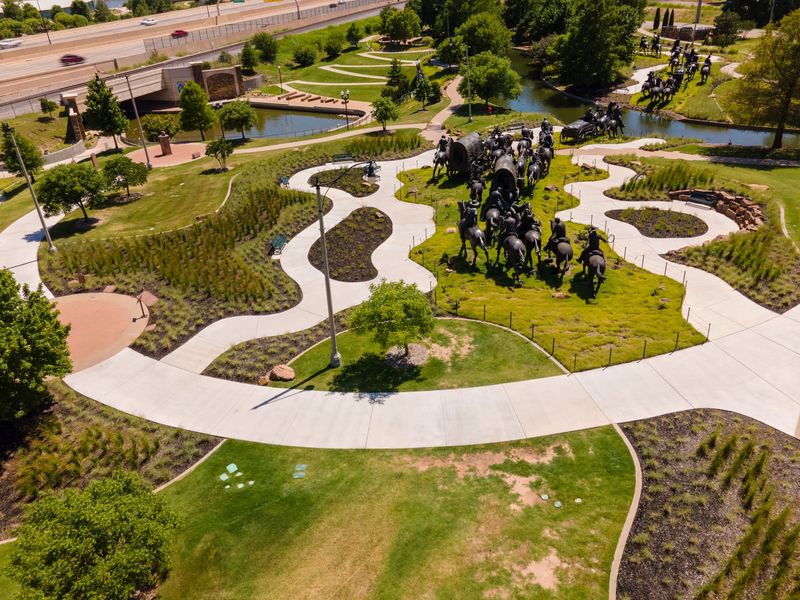
Getting to the Centennial Land Run Monument is straightforward once you know where to aim. The address is 200 Centennial Ave, Oklahoma City, OK 73102, and the site sits within the Bricktown district, which is well served by surface parking lots throughout the neighborhood.
Several visitors have specifically mentioned that parking is generally available without much difficulty, particularly on weekdays.
For those navigating by GPS, a useful local tip is to head toward the Bass Pro Shops location nearby and continue south from that parking area. The monument becomes visible as you approach the canal.
The installation can also be glimpsed briefly from the interstate for drivers passing through, though a proper visit requires stopping and walking the path.
Comfortable walking shoes are recommended since the visit involves covering a fair amount of ground along the canal path to see all 45 sculptures. There are no entry fees, no ticketing booths, and no formal check-in process.
The phone number for general inquiries is 405-297-8912, and additional visitor information is available at visitokc.com. Restrooms and other facilities are available in the broader Bricktown area nearby.
Given the 24-hour access, timing your visit around personal preference rather than operating hours is entirely possible.
Connections to Nearby Bricktown Attractions
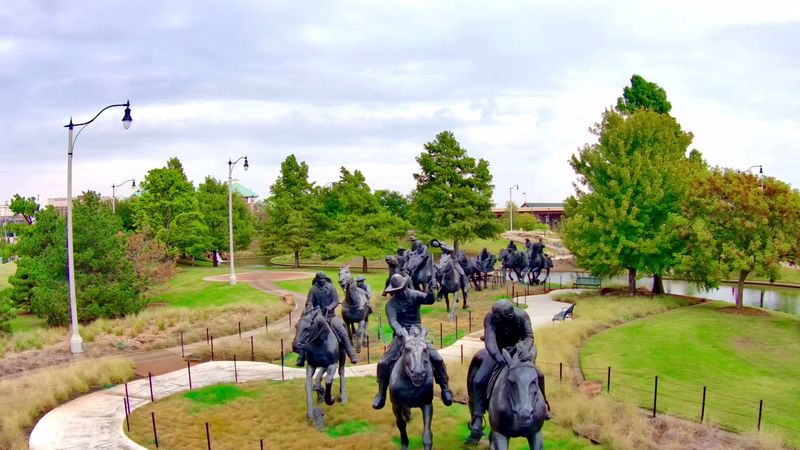
One of the practical advantages of the Centennial Land Run Monument’s location is how naturally it fits into a broader Bricktown visit. The neighborhood surrounding it is one of Oklahoma City’s most developed entertainment and dining corridors, meaning a morning at the monument can flow easily into an afternoon exploring the rest of the district.
Visitors have noted that the monument sits not far from other local landmarks and attractions, making it an efficient addition to a day of OKC sightseeing rather than a detour that requires its own dedicated trip. The canal boat tours that operate in the area offer a complementary experience, letting visitors see the sculpture installation from the water after having walked through it on foot.
For road-trippers passing through Oklahoma City on a longer journey, the monument represents the kind of stop that rewards spontaneity. Multiple visitors on cross-country trips have mentioned pulling off to see it and leaving genuinely glad they made the effort.
The combination of historical depth, artistic ambition, and zero cost makes it an easy yes for anyone with even an hour to spare in the city. Bricktown as a whole benefits from having this level of cultural anchor at its southern edge.
Why This Monument Stays With You
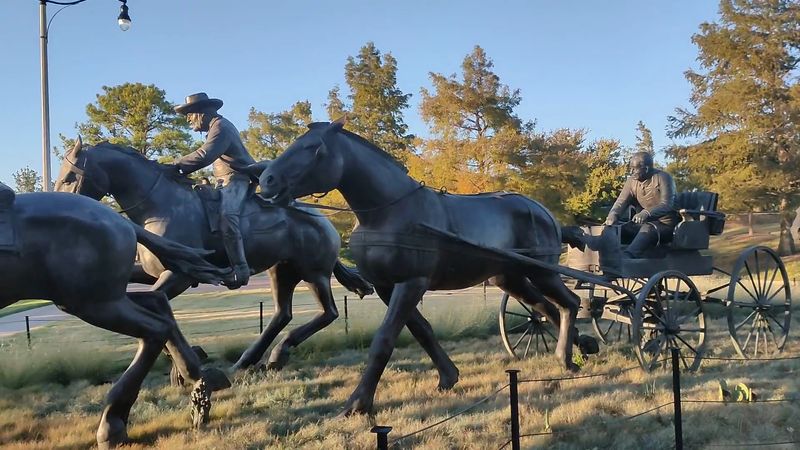
Some attractions are impressive in the moment and forgotten by the time you reach the parking lot. The Centennial Land Run Monument tends to operate differently.
Visitors consistently mention thinking about it long after leaving, turning over the details they noticed and the ones they wish they had looked at more carefully.
Part of what makes it linger is the combination of historical gravity and artistic achievement. The 1889 Land Run was a defining moment in American westward expansion, and Moore’s installation does not reduce it to a simple triumph.
The fallen figure, the strained faces, the animals scrambling out of the way, all of it suggests a more complicated story than a straightforward celebration. That honesty gives the monument a resonance that purely commemorative statues rarely achieve.
Visitors with personal family connections to the land runs have described the experience as emotional in ways they did not anticipate. Even those without any direct ties to Oklahoma history report leaving with a clearer sense of what that era actually felt like at a human level.
For a free outdoor installation accessible at any hour of any day, that kind of impact is remarkable. The Centennial Land Run Monument earns its place among Oklahoma City’s most worthwhile experiences without asking anything in return except your attention.
Share this story