Somewhere in Oklahoma, a generation of Tulsa-area kids grew up knowing exactly what it felt like to climb into a wooden coaster car and hold on tight as the chain lift clicked upward toward the sky. Bell’s Amusement Park at the Tulsa Fairgrounds was the kind of place that left a mark, and its signature wooden coaster, Zingo, was the ride that former visitors remember most.
The park ran for more than five decades before its lease ended after the 2006 season, and Zingo was dismantled the following year, leaving behind a wave of nostalgia that still surfaces whenever Tulsans start swapping childhood memories.
Bell’s Began as a Small Tulsa Attraction
Robert Bell did not start with grand ambitions. Before Bell’s Amusement Park took shape on the Tulsa Fairgrounds property, he had already been running a miniature train and a handful of children’s rides around the Tulsa area, learning the business one small attraction at a time.
When the park opened in 1951, it launched with just seven rides, and a contemporary Tulsa Tribune account noted that six of those rides were ones Bell had designed or built himself.
That detail says a lot about the man behind the park. Building your own rides from the ground up is not a casual undertaking, and it gave Bell’s a distinctly homegrown character from the very beginning.
The park was not imported wholesale from some national amusement company; it grew out of one Tulsa man’s hands-on work and local knowledge of what families in the area might enjoy.
Over time, that modest seven-ride starting point expanded considerably. The Oklahoma Historical Society’s entry on Oklahoma amusement parks documents Bell’s development from a small local attraction into a fairgrounds fixture that drew Tulsa-area visitors season after season.
The park’s location on the Tulsa Fairgrounds gave it a stable home and a built-in audience, and Bell’s made good use of both over the decades that followed.
What began as a scrappy, self-built operation eventually became a well-known part of Tulsa’s recreational landscape. That arc, from a few homemade rides to a full-scale amusement park, is part of what makes Bell’s story worth telling.
Zingo Put a Signature Coaster at Bell’s
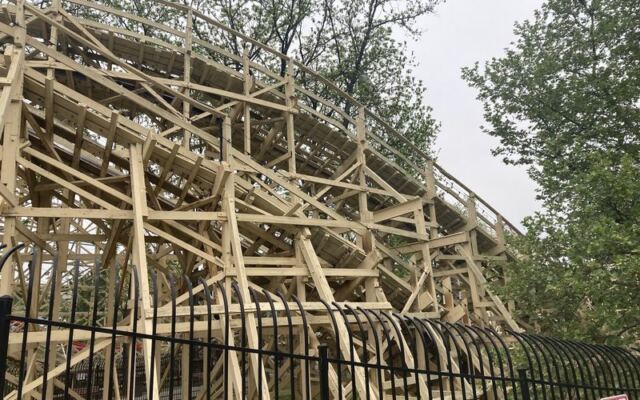
Wooden coasters have a sound that steel rides simply cannot replicate: the mechanical rhythm of a chain lift, the creak of aged timber, and the roar of cars banking through turns. Zingo brought all of that to Bell’s when it opened in 1968, and the ride quickly became the attraction most associated with the park’s identity.
The coaster’s design credentials were solid. The Roller Coaster Database records Zingo as a wooden coaster designed by John C.
Allen and built by the Philadelphia Toboggan Company, featuring a chain lift hill and no inversions. Allen was one of the most respected coaster designers of his era, responsible for numerous wooden coasters across the country, and his involvement gave Zingo a strong foundation both literally and figuratively.
The name itself carried history. Historical survey records from the Oklahoma State Historic Preservation Office connect Bell’s Zingo to the earlier Zingo coaster that operated at Crystal City Amusement Park in the Red Fork area of west Tulsa.
The two rides were not the same coaster relocated from one site to another; Bell’s Zingo was a new ride, built fresh by the Philadelphia Toboggan Company. The name was chosen to honor, or at least echo, the earlier attraction that west Tulsa riders had known.
Coasterpedia’s entry on Zingo confirms the ride’s basic specs and its standing as a traditional out-and-back wooden coaster. Among Tulsa-area visitors and coaster enthusiasts, it earned a reputation as Bell’s most recognizable attraction, a status built over nearly four decades of operation rather than through any single dramatic event.
Bell’s Was More Than a Fairground Ride
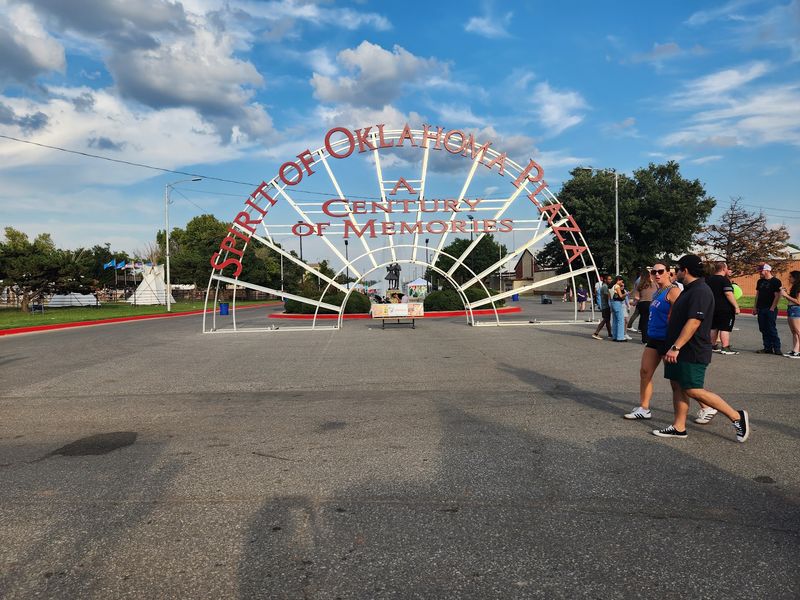
Calling Bell’s just a fairground ride would be like calling the Arkansas River just a drainage ditch. The park operated as a standalone amusement park on Tulsa Fairgrounds property throughout the year, open to visitors well beyond the annual state fair’s run.
It had its own identity, its own season, and its own loyal following among Tulsa-area families.
That said, the connection to the Oklahoma State Fair was real and meaningful. The Tulsa Skyride’s documented history of the fairgrounds describes how Bell’s became part of the fair’s midway experience during the annual event, drawing in fairgoers who might have come primarily for livestock shows or carnival food but ended up spending an afternoon on the rides.
The park and the fair complemented each other without one being defined entirely by the other.
Visitors to Bell’s could move among a variety of attractions, from kiddie rides near the park’s entrance areas to the larger thrill rides that anchored the midway-style layout. The 1980 Tulsa Tribune account paints a picture of a park with genuine range, not just a single coaster surrounded by a few spinning teacups.
For Tulsa-area residents, Bell’s occupied a specific place in the local calendar. It was the kind of spot where a summer afternoon could stretch into early evening without anyone noticing, and where the smell of popcorn and machine grease mixed in a way that became its own kind of memory trigger.
That’s the texture of a real neighborhood amusement park, not a temporary fairground sideshow.
A Growing Park Made Zingo Its Calling Card
Seven rides in 1951 was a respectable start. By 1980, Bell’s had grown into something considerably more substantial.
The 1980 Tulsa Tribune report on Robert Bell and his park described approximately 30 rides operating at Bell’s and specifically called out Zingo as one of the park’s best-known attractions.
That kind of growth over three decades reflects a park that kept reinvesting and expanding rather than coasting on its early momentum. Adding rides, maintaining equipment, and keeping families coming back season after season requires sustained effort, and Bell’s managed it across a changing Tulsa landscape that saw plenty of other entertainment options come and go.
Zingo’s role in all of this was straightforward but significant. When a park has roughly 30 attractions and one of them gets singled out by name in a newspaper profile, that ride has become the shorthand for the whole experience.
Visitors who might struggle to name every flat ride or kiddie attraction at Bell’s could almost certainly tell you about Zingo, because the wooden coaster was the kind of ride that demanded to be talked about after the fact.
The Oklahoma Historical Society’s documentation of the park supports this reading of Zingo’s cultural weight within Bell’s. The ride was not billed as the biggest or most famous coaster in Oklahoma in any verifiable ranking, but among people who visited Bell’s, it functioned as the park’s calling card, the thing you mentioned first when describing a trip to the fairgrounds.
The Lease Decision Ended Bell’s Fairgrounds Run
After more than fifty years on the Tulsa Fairgrounds, Bell’s Amusement Park completed its final regular operating season in 2006. The ending came not from a fire, a storm, or a single dramatic incident, but from a lease dispute that had been building between the park and the Tulsa County Public Facilities Authority.
The Journal Record’s November 2006 coverage of the lease termination captured the situation plainly: Tulsa County terminated Bell’s lease after more than fifty years, and the headline left little room for ambiguity about what that meant for the park’s future. Contemporary reporting described a mix of disagreements involving the park’s business plan, the terms of the lease itself, concerns from the surrounding neighborhood, and the general operating conditions of an aging amusement park on prime fairgrounds real estate.
No single explanation fully accounts for why the county chose not to renew. The situation reflected the kind of complicated institutional friction that builds up over decades when a long-term tenant and a public facilities authority start seeing a shared property through very different lenses.
Bell’s had been there since 1951, and by 2006, the relationship had run its course.
One point worth clarifying is how the ending actually unfolded. The county did not send in crews to suddenly demolish the park after the season ended.
The Tulsa Skyride’s history of the fairgrounds property makes clear that the lease nonrenewal required Bell’s to clear the property, which meant the park itself bore responsibility for removing its attractions. The county’s decision set the process in motion; the removal was a consequence of that decision, not a unilateral act of demolition by officials.
For former Bell’s visitors, the 2006 season’s end carried a weight that a simple lease termination notice cannot fully convey. A place that had been part of Tulsa summers for more than half a century was simply not going to be there anymore, and the reasons for that were messy and institutional rather than clean or satisfying.
Zingo Was Dismantled During the 2007 Clear-Out
Nostalgia has a way of compressing timelines. Many former Bell’s visitors think of the park as having simply vanished when the 2006 season ended, but the actual disappearance of Zingo and the other attractions was a slower, more visible process that stretched into 2007.
A Tulsa World report titled “Built to Last, a King of Coasters Is Coming Down” documented the dismantling of Zingo and described crews working to take apart the wooden coaster and the log ride as the fairgrounds cleared the former Bell’s site. The language of the headline alone captures the mixed feeling of watching a well-built structure come apart piece by piece.
BatesLine’s May 2007 archives offer additional local documentation of the removal process, reflecting the community attention that the dismantling attracted. People drove by to watch.
Some took photographs. The coaster that had been a fixture of Tulsa summers was coming down in sections, and that was news worth noting.
Not everything at the former Bell’s location was removed under the same circumstances. The Tulsa Skyride’s documented history explains that the Tulsa County Public Facilities Authority purchased the Skyride separately in January 2007, allowing it to remain at the fairgrounds as a distinct asset rather than disappearing along with Bell’s other attractions.
Zingo did not have that kind of institutional lifeline; it was part of Bell’s inventory, and when Bell’s cleared out, Zingo went with it.
The distinction matters for anyone trying to understand what “vanished from the fairgrounds” really means in this context. The phrase is fair as nostalgic shorthand, but the reality was a deliberate, documented removal process rather than an overnight disappearance.
The Bell’s Name Did Not Bring Zingo Back
After Bell’s closed, the name did not disappear quietly. A 2021 proposal surfaced to bring Bell’s back as a new development in Broken Arrow, generating genuine excitement among former park visitors who had grown up with the original.
The City of Broken Arrow’s development page for the Bell’s Amusement Park project documented the proposal and the local interest it attracted.
That excitement did not translate into an operating park. Public Radio Tulsa reported in May 2023 that the development company had decided to sell the Broken Arrow land rather than move forward with the project.
The revival plan was abandoned, which means the Bell’s name and the nostalgia surrounding it did not produce a new park, a relocated Zingo, or any operating attraction connected to the original Tulsa experience.
For present-day readers, the situation at the former Tulsa Fairgrounds location is equally straightforward: Zingo is not an operating ride, and the available sources do not establish that a complete, intact coaster exists in storage or is accessible to the public. Some enthusiast discussions have touched on what happened to individual components, but the documented record supports the conclusion that the coaster was dismantled during the 2007 clear-out and is not currently a ride anyone can board.
The Tulsa Skyride’s history of the fairgrounds offers useful context for understanding what did and did not survive from the Bell’s era. The Skyride itself continued because it was separately purchased; Zingo did not have that outcome.
Sharing the Bell’s name with a proposed new development was never the same thing as restoring what the original park actually was.
Why Former Tulsa Visitors Still Remember Zingo
Memory works differently than history. History records that Bell’s opened in 1951 with seven homemade rides, that Zingo arrived in 1968 as a John C.
Allen-designed wooden coaster from the Philadelphia Toboggan Company, and that the lease ended after the 2006 season before crews dismantled the coaster in 2007. Memory records something harder to quantify: the specific feeling of a summer afternoon at the Tulsa Fairgrounds, the sound of wooden coaster cars accelerating downhill, and the particular mix of anticipation and relief that came with surviving a ride on Zingo.
For many former Bell’s visitors, that combination is what the park represents. The Oklahoma Historical Society’s documentation of the park supports the idea that Bell’s and Zingo held genuine cultural weight in Tulsa’s recreational history, not as a verified statewide phenomenon, but as a meaningful part of the local landscape for the families and communities who visited regularly.
The Tulsa World’s coverage of Zingo’s dismantling captured why people paid attention: a well-built, long-running piece of Tulsa’s identity was coming apart, and that deserved to be witnessed and recorded. For anyone who rode Zingo, the coaster represents something that existed, mattered to real people, and is now genuinely gone – which is exactly the kind of thing that tends to stay with a person long after the ride itself has disappeared.
Share this story