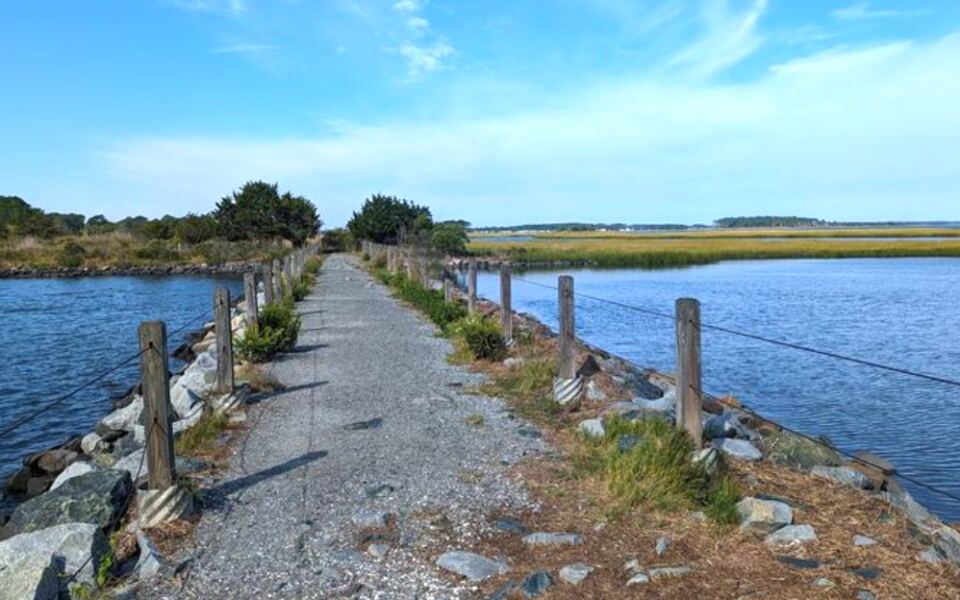
Delaware is the second-smallest state in the country, but its coastline punches well above its weight when it comes to natural variety. Between the popular resort towns and busy summer beaches, there are pockets of barrier islands, tidal marshes, bay shorelines, and maritime forests that have changed very little over time.
Some of these spots sit right on the open Atlantic, while others protect the quieter bays and wetlands that make up the larger coastal picture. A few are surprisingly close to crowded boardwalks, yet feel like an entirely different world once you step past the parking lot.
This list covers ten places where Delaware’s coast still operates on its own terms, shaped by tides, birds, and sand rather than souvenir shops and beach umbrellas. Whether you have a full day or just a few hours, each of these spots offers a genuine look at what this small state’s shoreline looked like long before the condos arrived.
1. Cape Henlopen State Park, Lewes, Delaware
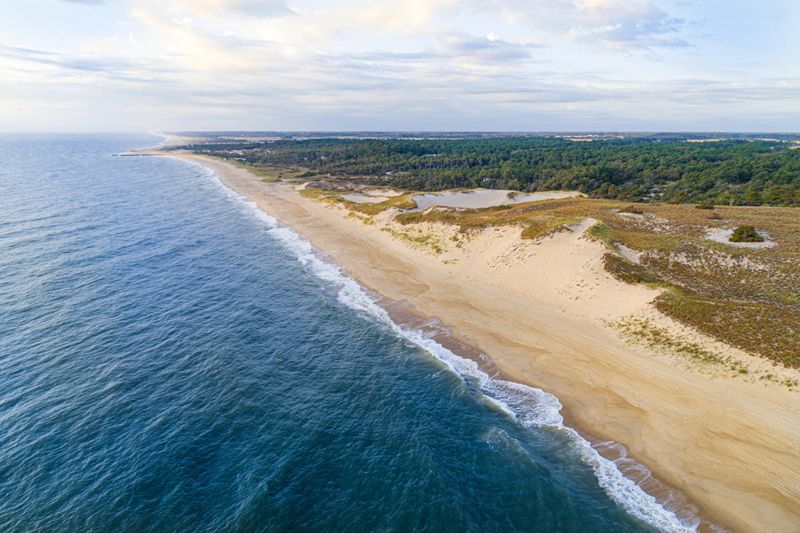
Few places in Delaware put the meeting of two major bodies of water on such clear display. Cape Henlopen sits at the exact point where Delaware Bay merges with the Atlantic Ocean, giving the park a geographic personality that most state parks simply cannot match.
Miles of shoreline run along both the bay and ocean sides, and the terrain shifts noticeably as you move between them. Pine woods give way to open dunes, and those dunes eventually flatten into wide sandy beaches with long, unobstructed views of open water.
History adds another layer here. A pair of World War II observation towers still stand in the park, reminders that this strategic peninsula once served a very different purpose than picnicking and birdwatching.
Hikers, cyclists, anglers, and birders all find their own corners of the park without too much overlap. Move away from the main swimming beach on a weekday and the crowds thin quickly, leaving long stretches of shoreline that feel genuinely undisturbed.
Cape Henlopen is a strong starting point for anyone building a list of Delaware’s wilder coastal places.
2. Gordons Pond, Rehoboth Beach, Delaware
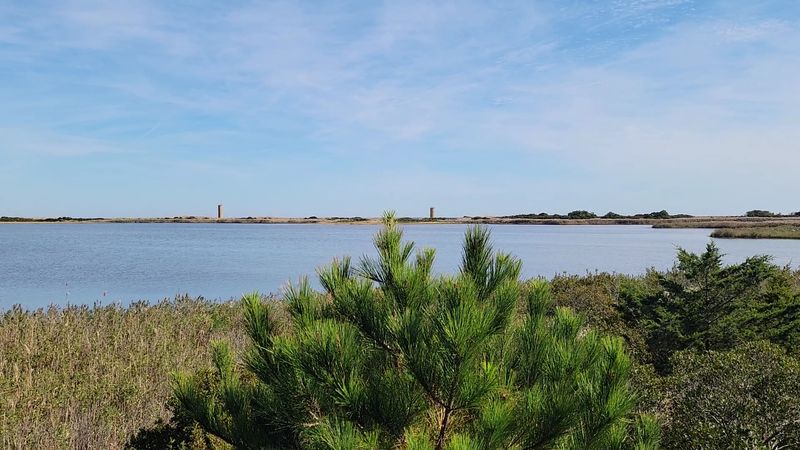
Just a short pedal or walk from Rehoboth Beach’s busy main strip, Gordons Pond manages to feel like it belongs to a completely different zip code. The 900-acre saltwater lagoon and the trail that wraps around it sit quietly inside Cape Henlopen State Park, separated from the resort energy by little more than a line of dunes.
The Gordons Pond Trail runs about 3.2 miles one way, following a crushed gravel and boardwalk path through salt marshes, coastal maritime forest, and open sandy terrain. Birders show up regularly because the pond sits along a significant waterfowl migration route, and species like ospreys, eagles, and great blue herons are common sightings at the overlook platforms.
One of the trail’s most talked-about features is the Great Dune, which rises 80 feet above sea level and offers a panoramic view that puts the whole coastal landscape in perspective.
Piping plovers, least terns, and black skimmers all nest in the protected areas nearby, so the park actively manages access during nesting season. For a low-effort route into genuine coastal habitat, this trail delivers without requiring any serious hiking gear.
3. Beach Plum Island Nature Preserve, Lewes, Delaware
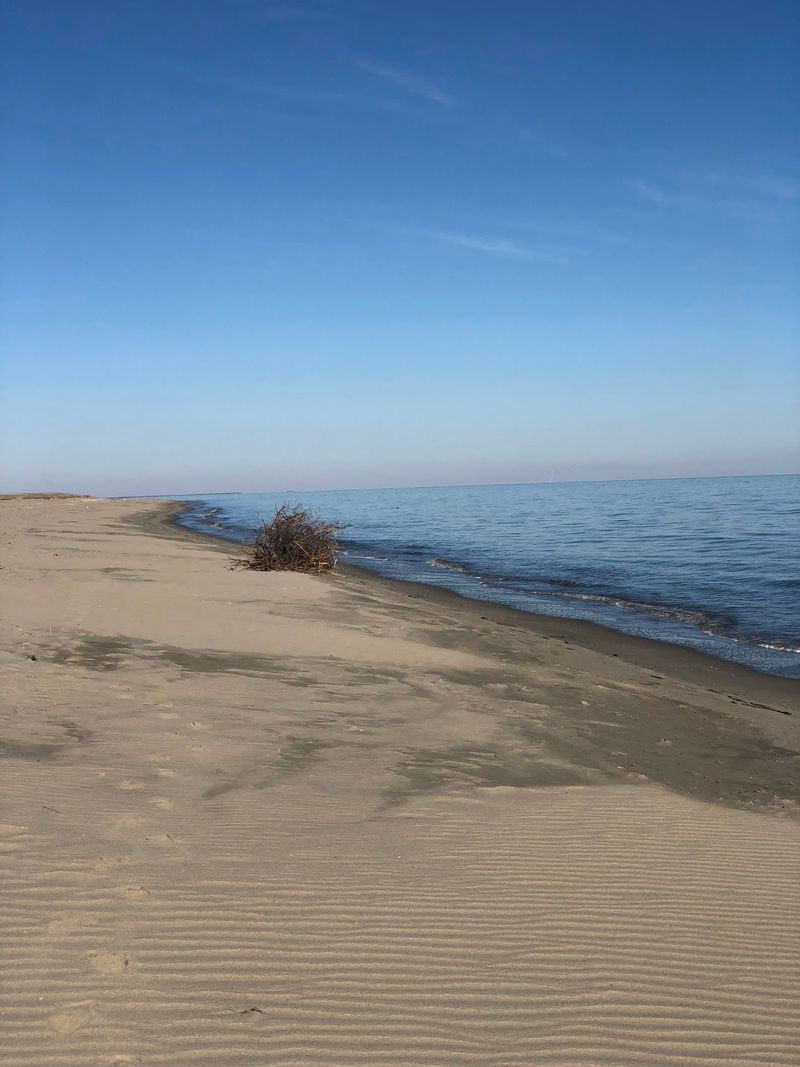
Delaware’s only publicly owned wilderness beach carries that title seriously. Beach Plum Island Nature Preserve was dedicated in 1990 with one clear goal: protect its barrier dunes, native plants, wildlife, and natural coastal processes from the kind of development that has claimed so much of the Mid-Atlantic shoreline.
The preserve spans roughly 127 to 129 acres near Broadkill Beach, on the western side of Roosevelt Inlet in Lewes. It is part of the Cape Henlopen State Park system, though its atmosphere is about as far from a managed recreation area as Delaware gets.
Visitors come to beachcomb, fish, and hike along a stretch of coast where the only structures are the dunes themselves. Vehicles with valid surf fishing permits can access part of the beach by driving on, and a tire air station is available at the entrance for anyone who needs to adjust pressure before heading out onto the sand.
The eastern end of the preserve is off-limits during spring months to protect nesting horseshoe crabs and shorebirds. That restriction alone tells you a lot about what kind of place this is: one where wildlife still sets the schedule.
4. Delaware Seashore State Park, Rehoboth Beach, Delaware
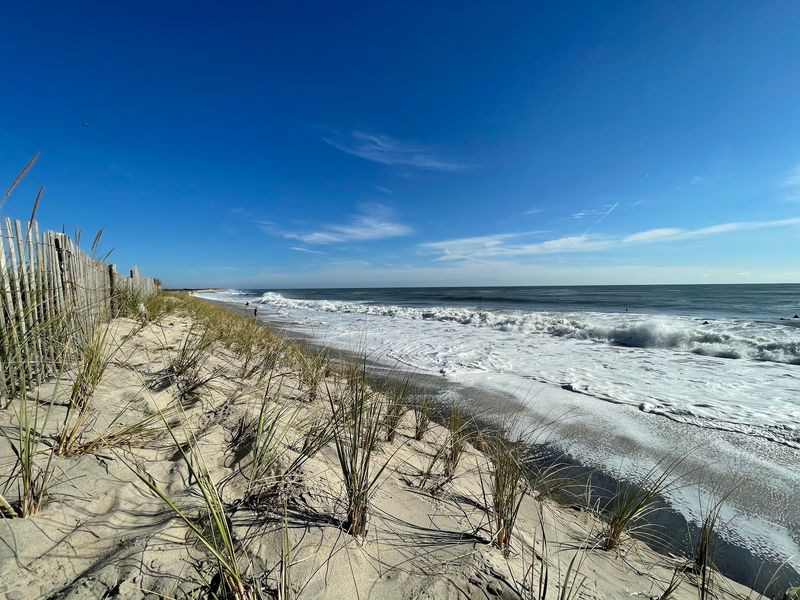
Six miles of ocean coastline and 20 miles of bay shoreline sounds like a lot for one park, and Delaware Seashore State Park absolutely delivers on that promise. The park protects a narrow barrier island running between Dewey Beach and Bethany Beach, with the Atlantic on one side and Indian River Bay and Rehoboth Bay on the other.
The Indian River Inlet cuts through the middle of the park, connecting the inland bays to the open ocean. That inlet creates some of the most productive fishing water on the Delaware coast and gives the park a dynamic, constantly shifting edge that flatwater parks simply cannot replicate.
Camping is available inside the park, which means visitors can stay long enough to see the beach at sunrise before the day-trippers arrive. That early window is when the barrier island landscape feels most like itself, with wide open sand and distant dunes in every direction.
Paddlers, surfers, anglers, and wildlife watchers all use the park regularly without stepping on each other too much. The park office sits at the Indian River Marina, which also serves as the starting point for the Burton Island trail covered later in this list.
5. Burton Island Trailhead, Rehoboth Beach, Delaware
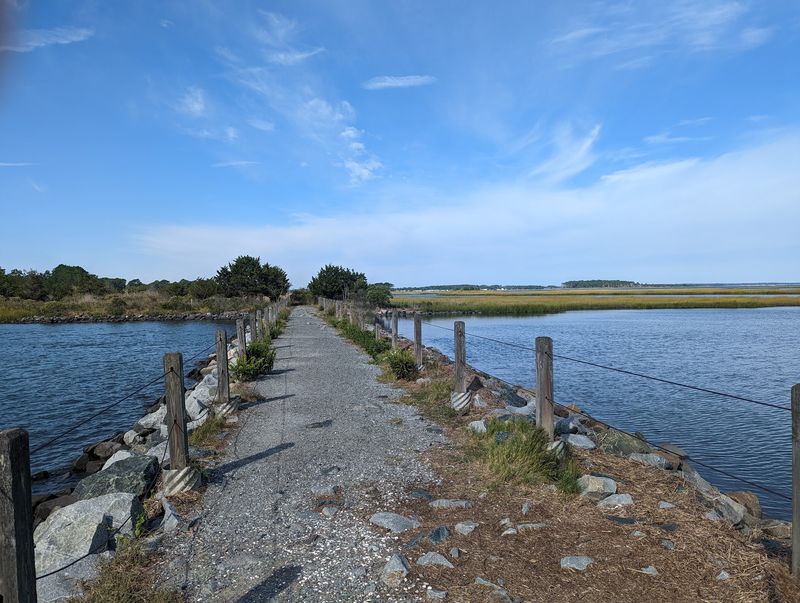
Not every worthwhile coastal experience in Delaware involves standing on an ocean beach. Burton Island makes its case entirely through salt marsh, tidal water, and the kind of close-up wetland scenery that most visitors drive straight past on their way to the shore.
The 1.5-mile loop trail starts at the Indian River Marina area of Delaware Seashore State Park and circles an island environment that includes upland forest, coastal vegetation, and two elevated boardwalks. Those boardwalks offer clear views across Indian River Bay, Rehoboth Bay, and the broad salt marsh that connects them.
Diamondback terrapins nest on the island in significant numbers, and the surrounding habitat supports birds, fish, reptiles, and various mammals that rarely show up on a typical beach walk. The island has a layered history, transitioning from farmland to a private retreat before eventually becoming a protected preserve.
Park staff and regular visitors both recommend visiting during cooler months, since insects can be persistent in summer. That advice is worth taking seriously, but even a warm-season visit on a breezy day offers a side of Delaware’s coast that feels genuinely removed from the resort-town version just a few miles away.
6. Fresh Pond Trailhead, Ocean View, Delaware
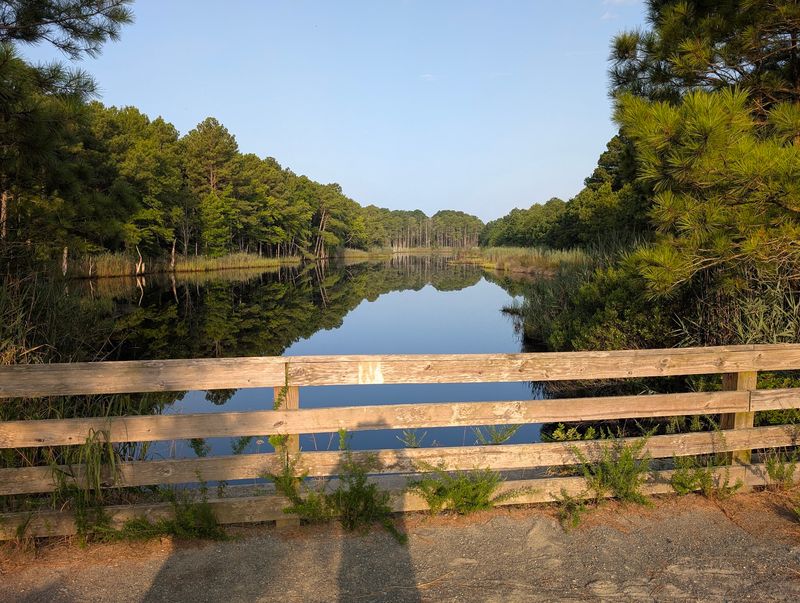
Most people associate Delaware’s coast with open sand and ocean views, so finding a trail that cuts through young forest, open meadow, and coastal wetland just a short drive from the beach can catch first-time visitors off guard in the best possible way.
The Fresh Pond area sits within Delaware Seashore State Park, closer to the Bethany Beach end of the park. Its main route, the Prickly Pear Trail, runs 3.5 miles in a loop and accommodates hikers, cyclists, and seasonal horseback riders.
The surface alternates between crushed stone and sand as it moves through different habitat zones.
At the northern end of the loop, the trail opens up to views of Beach Cove, an inlet of Indian River Bay. That water view arrives as a welcome surprise after stretches of quiet woodland, and it gives the loop a satisfying sense of variety from start to finish.
The trail closes during hunting season, so checking the Delaware State Parks website before visiting is a smart habit. Outside of that closure window, the flat terrain and accessible surface make Fresh Pond one of the more welcoming coastal nature trails in Sussex County for visitors of all fitness levels.
7. Fenwick Island State Park, Fenwick Island, Delaware
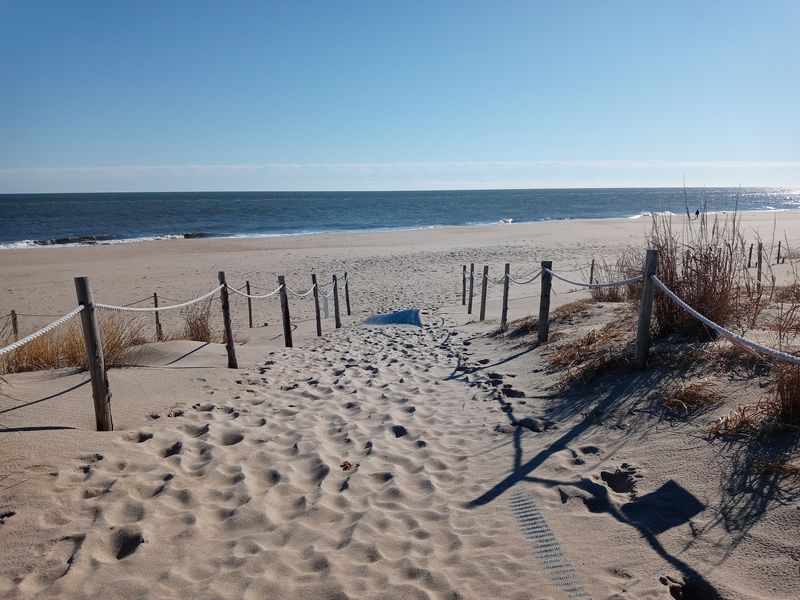
Delaware’s southernmost state park packs a remarkable amount of coastal geography into 344 acres. Fenwick Island State Park runs from the Atlantic Ocean all the way to Little Assawoman Bay, creating a narrow barrier island strip where ocean, dunes, and bay sit so close together that you can practically see all three at once from the right spot on the beach.
Three miles of ocean beach form the main attraction, and the designated surfing area gives the park a slightly more active energy than some of its neighbors to the north. Ghost crabs are a reliable sighting along the waterline, particularly in the evening hours when they emerge to do their sideways sprint across the sand.
History shows up here too. A World War II-era fire control tower still stands in the park, a concrete reminder of when this stretch of coastline served a military purpose.
The park also provides Mobi-Mat equipment for beach wheelchair access, making the shoreline reachable for visitors with mobility needs.
As summer crowds thin in September and October, the park takes on a different character. The broad beach stretches toward the Maryland state line with very little interruption, and the open Atlantic fills the view from one end of the horizon to the other.
8. James Farm Ecological Preserve, Ocean View, Delaware
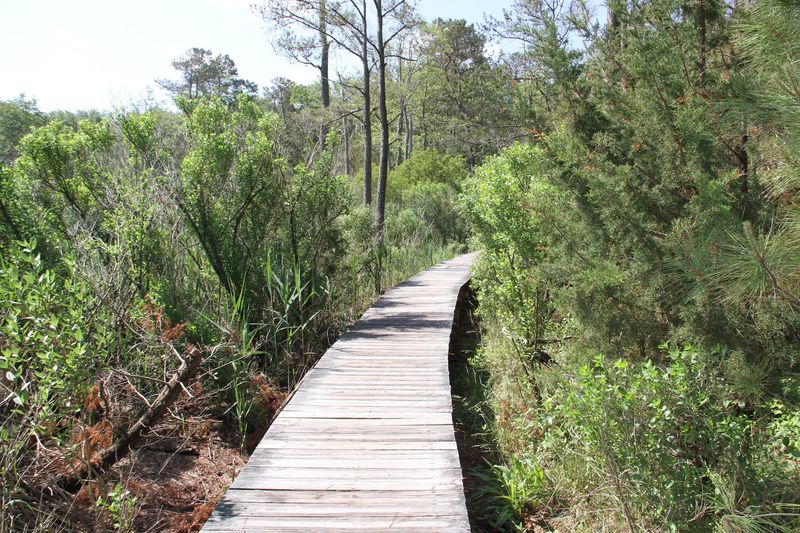
Donated to Sussex County in 1992 by Mary Lighthipe, a descendant of the farming family that worked the land for generations, James Farm Ecological Preserve carries a sense of local history that most nature trails do not. The Delaware Center for the Inland Bays has managed the property since 1998, keeping it open and free to the public from sunrise to sundown every day.
The 150-acre preserve packs seven distinct habitat types into a relatively compact area. Low marsh, high marsh, maritime forest, hardwood forest, and open meadow all appear along the trail network before the path reaches a small sandy beach on the edge of Indian River Bay.
Observation platforms, a boardwalk beach crossing, wildflower gardens, and informational kiosks are spread throughout the preserve, giving the visit structure without making it feel too controlled. Birders find the preserve particularly productive during spring and fall migrations, when the varied habitats concentrate a wide range of species in one accessible location.
Native plants including salt marsh cordgrass, loblolly pines, bayberry, holly, and sassafras line the trails, and diamondback terrapins and horseshoe crabs use the sandy beach as critical nesting habitat. Pets are welcome but must stay leashed, and all trash must leave with the visitor.
9. Holts Landing State Park, Dagsboro, Delaware
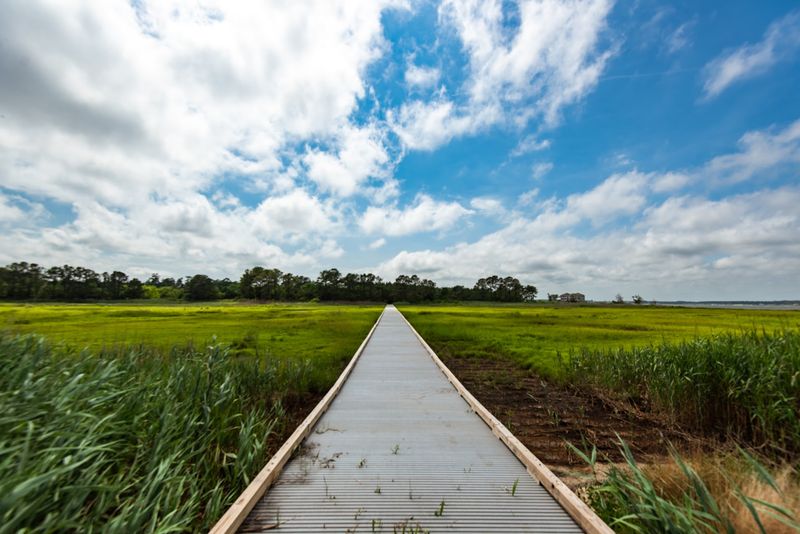
Named after the family that once owned the land, Holts Landing State Park takes a quieter approach to the Delaware coast than the ocean-facing parks further east. The 203-acre park sits along Indian River Bay, and its shoreline is defined by salt marsh, intertidal zones, and maritime forest rather than crashing waves and sandy dunes.
A fishing pier and a 24-hour boat ramp give anglers and paddlers direct access to the bay, making this a practical destination as much as a scenic one. Kayaks, canoes, and paddleboards all launch easily from the ramp, and crabbing from the pier is a popular activity for families throughout the warmer months.
The Seahawk Trail, a 1.3-mile ADA-accessible loop, connects salt marsh, maritime forest, and freshwater habitats in a route that takes most visitors about 45 minutes to complete. The trail’s accessibility makes it one of the more inclusive nature walks on Delaware’s bay side, and the habitat variety keeps the walk interesting from the first step to the last.
Birdwatching is consistently rated as one of the top activities here. The combination of open water, marsh, and wooded shoreline creates conditions that attract a wide range of species throughout the year, especially during migration season.
10. Prime Hook National Wildlife Refuge, Milton, Delaware
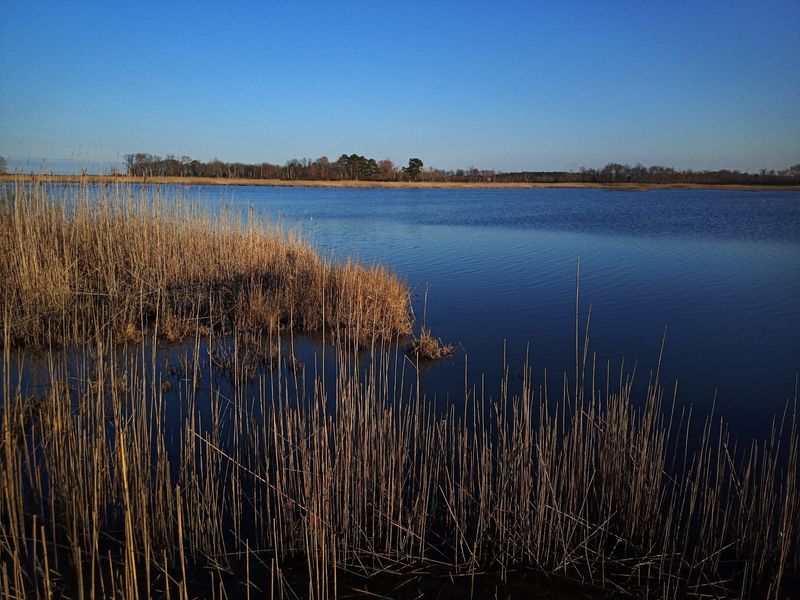
President John F. Kennedy established Prime Hook National Wildlife Refuge in 1963, and its original mission has not changed: provide a protected sanctuary for migratory birds along the Delaware Bay.
More than six decades later, the refuge has grown to cover over 10,000 acres and now ranks among the most significant birding destinations on the entire East Coast.
The numbers here are genuinely hard to picture. During peak migration periods in spring and fall, the refuge can host up to 100,000 snow geese and 80,000 ducks at a single time.
That kind of wildlife concentration turns an otherwise quiet wetland landscape into something that requires no imagination to appreciate.
Visitors have 7.5 miles of hiking trails and a 7-mile canoe trail to explore, with the canoe route winding through red maple swamps and cattail marshes that feel far removed from the nearby coastal towns. A visitor center with educational displays provides useful context before heading out into the refuge.
Fowler Beach, on the eastern edge of the refuge, is designated as a sanctuary for horseshoe crabs during their spring spawning season. There is no fee to enter Prime Hook, which makes it one of the most accessible large-scale natural areas anywhere on Delaware’s coast.
Share this story