Thailand is famous for its beaches, but the country holds so much more than coastline and islands. From ancient royal palaces to jungle waterfalls, ruined kingdoms to surreal white temples, the inland and urban attractions of Thailand are just as remarkable as anything you will find along the shore.
Whether you are planning a first trip or returning for another adventure, these spots offer history, culture, nature, and architecture that most travelers only discover after they stop chasing the sand. This list covers 15 real, currently operating attractions spread across Bangkok, Chiang Mai, Chiang Rai, Ayutthaya, and beyond, giving you a solid starting point for exploring the Thailand that does not require a swimsuit.
The Grand Palace, Bangkok
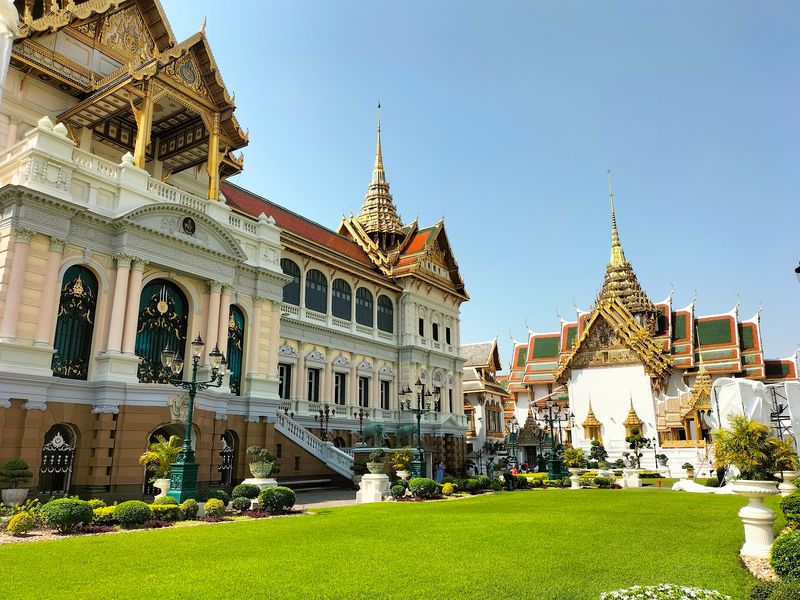
Built in 1782, the Grand Palace is the kind of place that stops you in your tracks the moment you step through the main gate. The enormous Bangkok complex served as the official residence of the kings of Siam for generations, and it still functions as one of the country’s most important ceremonial landmarks today.
Within the palace grounds sits Wat Phra Kaew, home to the revered Emerald Buddha, which is considered one of Thailand’s most sacred religious objects. The statue is small but its significance to Thai culture is enormous, and the surrounding temple buildings are covered in gold, glass mosaic, and hand-painted murals that take considerable time to fully appreciate.
The palace is open to visitors daily, though schedules shift when royal ceremonies are scheduled. Dress codes are strictly enforced, so covered shoulders and long pants or skirts are required before entering.
Plan for at least two to three hours here.
Wat Pho, Bangkok
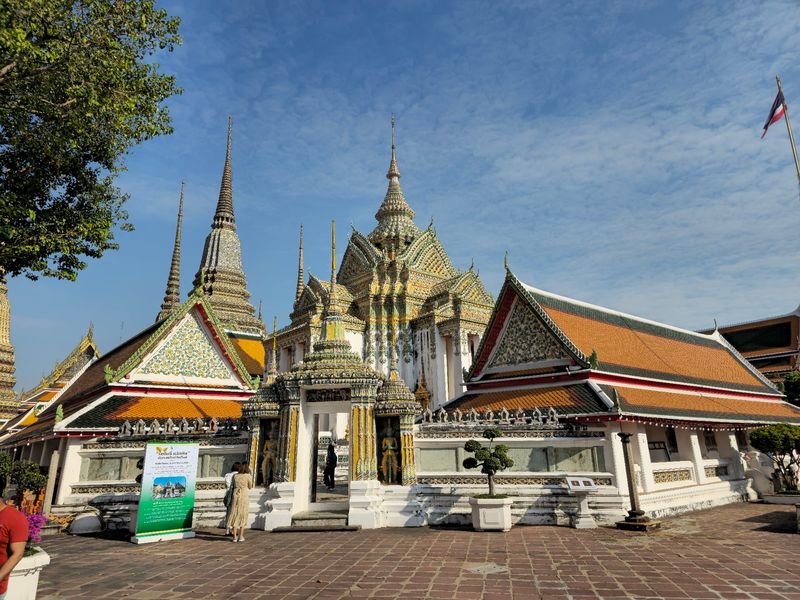
The reclining Buddha at Wat Pho stretches 46 meters long and 15 meters high, which means even in its lying position, the statue barely fits inside the building that houses it. The sheer scale of the figure is genuinely surprising in person, even for visitors who have seen photographs beforehand.
Beyond the famous Buddha, the temple complex spreads across a large area filled with colorful stupas, ornate pavilions, courtyards lined with stone statues, and beautifully decorated halls. Each section of the grounds offers something different, making a slow walk through the complex far more rewarding than a rushed visit.
Wat Pho also carries an interesting historical role in Thai medicine. The temple has long been associated with traditional healing practices, and a massage school operating within the complex continues that tradition today.
Visitors can book a traditional Thai massage right on the temple grounds after finishing their tour.
Wat Arun, Bangkok
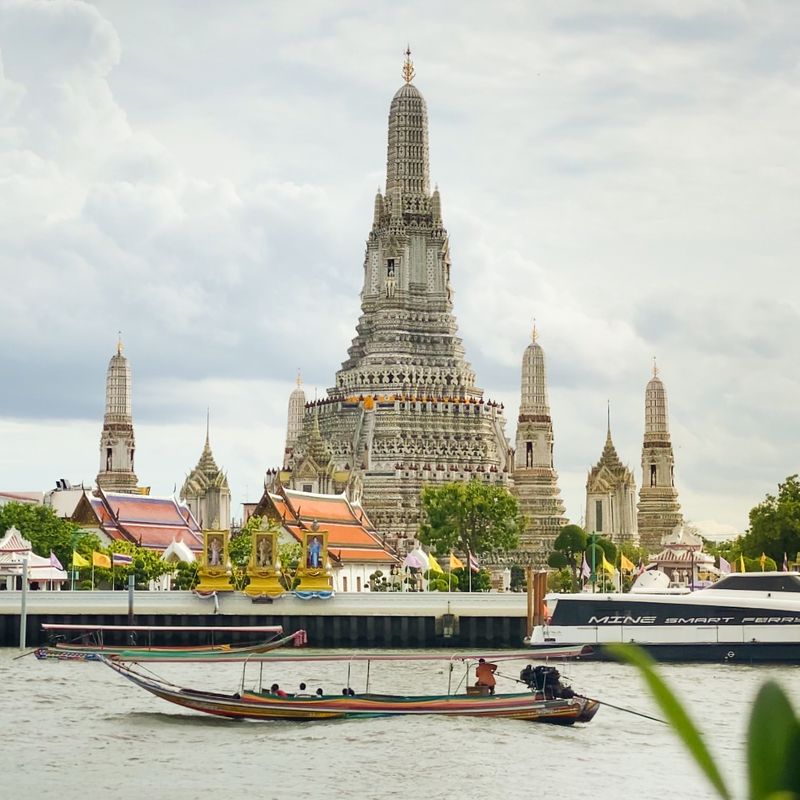
Rising along the western bank of the Chao Phraya River, Wat Arun is one of Bangkok’s most photographed structures, and it earns that attention from every angle. The central prang towers above the riverbank and is covered in an intricate decorative surface made from pieces of Chinese porcelain and ceramic, which creates a textured and colorful appearance that becomes more detailed the closer you get.
Despite its name translating to Temple of Dawn, the structure holds visual appeal throughout the entire day. Many visitors photograph it from across the river during afternoon light, while others prefer the quieter atmosphere of the grounds themselves during morning hours.
A short ferry ride across the Chao Phraya connects Wat Arun to the eastern bank, making it an easy addition to a day that already includes the Grand Palace or Wat Pho. The temple is open daily from 8 a.m. to 6 p.m. according to official visitor information.
Ayutthaya Historical Park, Ayutthaya
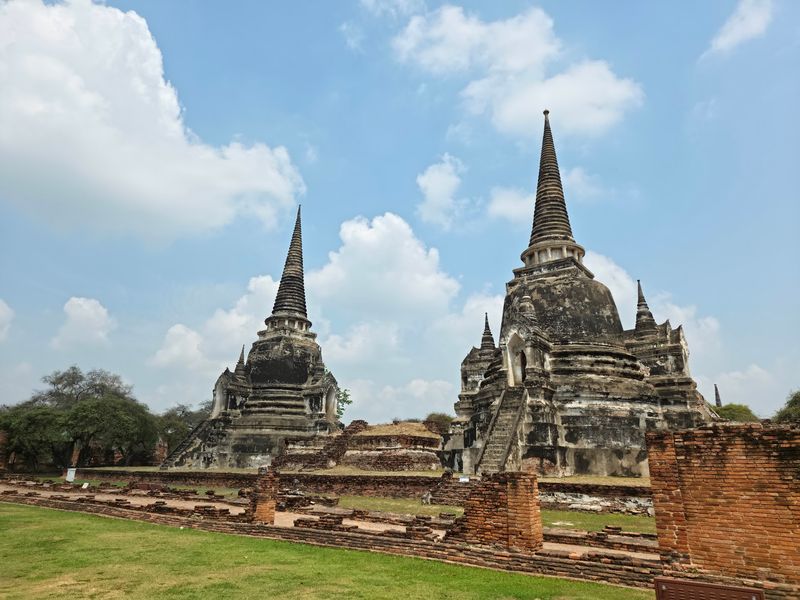
About 80 kilometers north of Bangkok, Ayutthaya was once one of the largest and most powerful cities in Southeast Asia. At its peak during the 14th through 18th centuries, the Ayutthaya Kingdom controlled major trade routes and attracted merchants and diplomats from across the world.
What remains today is a remarkable collection of ruined temples, crumbling towers, stone Buddha statues, and archaeological sites that fill an entire park.
UNESCO recognized the historic city as a World Heritage Site, and the scale of the ruins justifies that designation. The park contains hundreds of individual sites, and the most impressive ones cluster close enough together that a bicycle or tuk-tuk can connect them in a single day.
One of the most striking images in all of Thailand is found here: a stone Buddha head grown into the roots of a large bodhi tree. It has become iconic, and seeing it in person carries a different weight than any photograph can fully capture.
Sukhothai Historical Park, Sukhothai
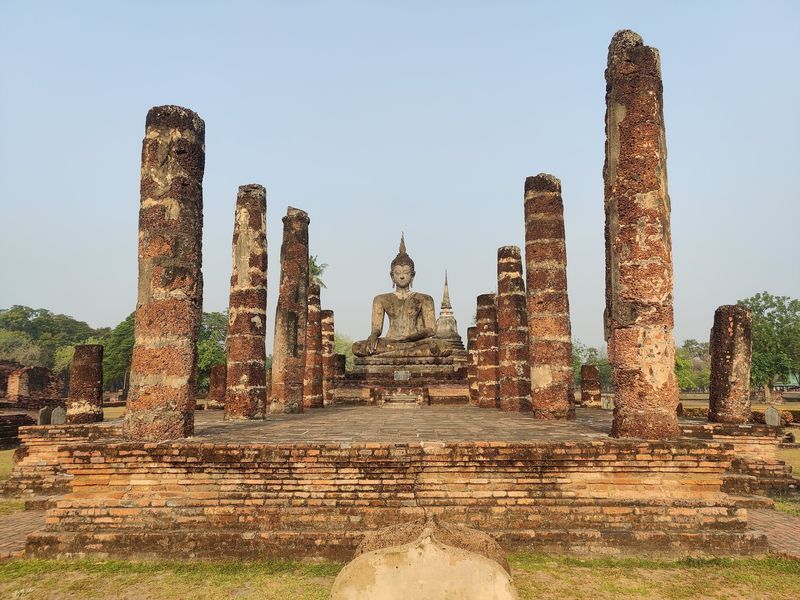
Sukhothai operates at a completely different pace than Bangkok or Chiang Mai, and that slower rhythm is part of what makes a visit here feel worthwhile. The former capital of the early Sukhothai Kingdom preserves a wide collection of temple ruins, ancient walls, Buddha images, and ceremonial ponds spread across a large open park setting.
Cycling is genuinely the best way to explore the grounds. Bicycle rentals are available near the park entrance, and the flat terrain makes it easy to move between sites without much effort.
The combination of wide open space, ancient structures, and reflecting pools creates a setting that feels calm and unhurried compared to Thailand’s busier historical destinations.
The historic city holds UNESCO World Heritage status, and Thailand’s tourism authority actively promotes Sukhothai as a major cultural destination. Visiting during early morning or late afternoon gives you better light for photography and cooler temperatures for walking.
The park can be reached by bus or private car from Phitsanulok.
Wat Rong Khun, Chiang Rai
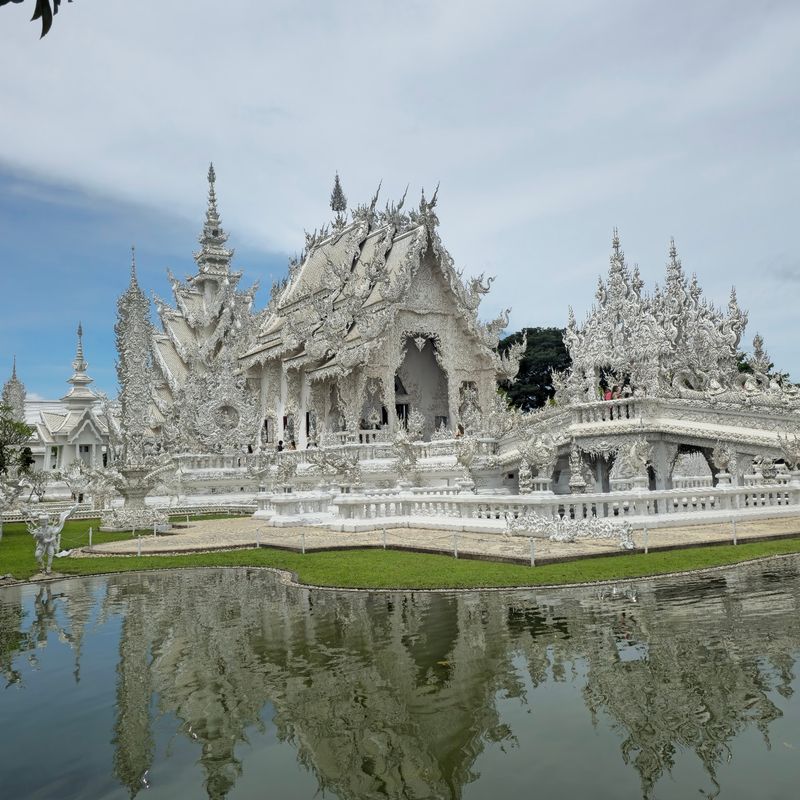
Wat Rong Khun does not look like a temple that belongs to any particular century. The entirely white structure, better known as the White Temple, was designed by Thai contemporary artist Chalermchai Kositpipat and has been under ongoing construction since 1997.
The result is something that blurs the line between religious architecture, fine art installation, and surrealist vision.
The white surface is embedded with mirror fragments throughout, which catch sunlight and create a glittering effect across the exterior. Sculptural elements around the grounds include both traditional Buddhist imagery and unexpected modern references that Kositpipat incorporates as part of his artistic philosophy.
The bridge leading to the main entrance passes over a pit filled with reaching hands, representing the cycle of suffering in Buddhist belief.
The temple is free to enter, though donations are welcomed. Photography rules apply inside the main building.
Wat Rong Khun sits about 13 kilometers from central Chiang Rai and is easily reached by songthaew or private transport. It remains one of the most visited cultural attractions in the north.
Wat Phra That Doi Suthep, Chiang Mai
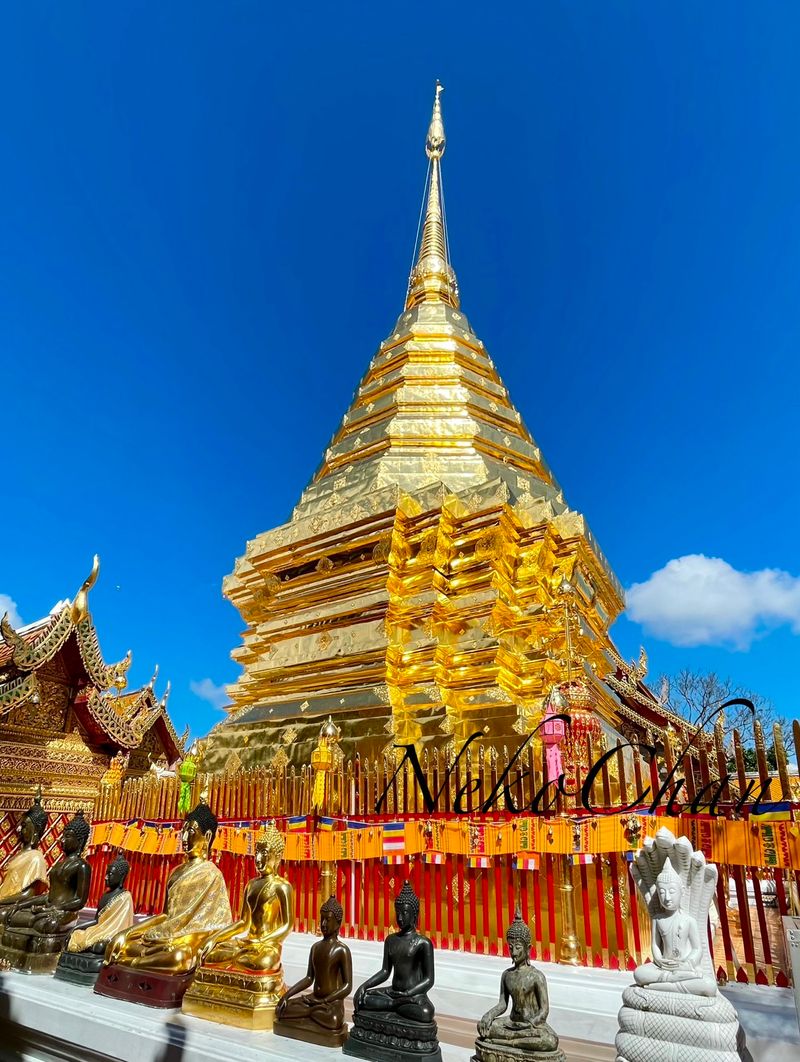
Sitting at roughly 1,080 meters above sea level on Doi Suthep mountain, this temple offers two reasons to visit: the sacred Buddhist site itself and the sweeping views over Chiang Mai that open up from the upper terrace. The combination makes it one of the most satisfying single stops in all of northern Thailand.
Visitors can reach the temple by climbing a staircase of 309 steps flanked by seven-headed naga serpent figures, or by taking a short cable car ride to the top. The golden central stupa, known locally as a chedi, is surrounded by shrines, hanging bells, and detailed carvings that reflect the Lanna artistic tradition specific to northern Thailand.
The temple holds deep religious significance for the people of Chiang Mai, and it remains an active place of worship. Respectful dress is required, with sarongs available at the entrance for visitors who need them.
Early morning visits tend to be quieter and cooler, making that the better window if you want space to move around freely.
Khao Yai National Park, Nakhon Ratchasima
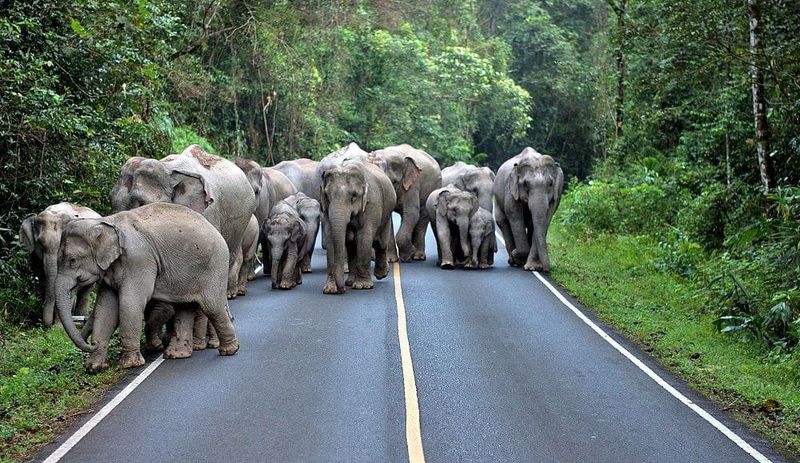
Khao Yai is Thailand’s oldest national park, established in 1962, and it covers more than 2,000 square kilometers of forest, grassland, and mountain terrain northeast of Bangkok. The landscape here is genuinely different from the coastal scenery that dominates most Thailand travel content, and the contrast is refreshing for visitors who want to see another side of the country.
The park is part of a larger UNESCO-recognized forest complex called the Dong Phayayen-Khao Yai Forest Complex. Wildlife in the area includes elephants, gibbons, hornbills, and other species that thrive in the protected habitat.
Several waterfalls, including Haew Narok and Haew Wang, are among the most popular destinations within the park boundaries.
Some individual trails and viewpoints close seasonally for weather or conservation reasons. The Pha Diao Dai trail and viewpoint, for example, is closed through September 30, 2026, while the wider park remains open.
Checking current trail status before your visit is a practical step worth taking.
Erawan National Park, Kanchanaburi
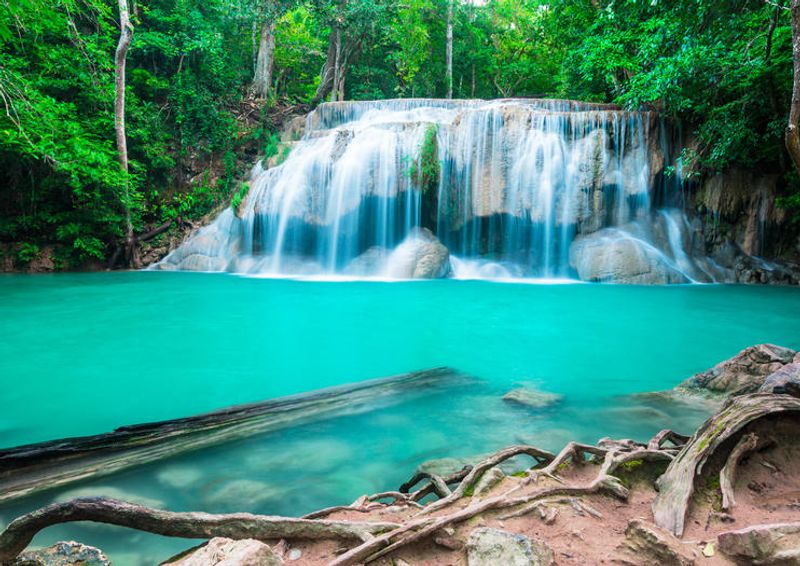
The seven-tiered Erawan Waterfall is the centerpiece of this park in western Thailand, and the color of the water is what people remember most. The pools shift between pale turquoise and deep green depending on light and depth, a result of the limestone geology underneath.
Fish visible in the shallower pools add to the appeal, and swimming is permitted in designated areas.
Trails allow visitors to climb alongside the cascade and reach the upper tiers, which require more effort but offer quieter pools and better scenery. The lower tiers tend to draw the most visitors, especially on weekends and holidays.
Going early on a weekday gives you noticeably more space to enjoy the falls without crowds.
The park temporarily closed in April 2026 due to wildfire smoke and elevated air pollution levels in the region. Thailand’s Department of National Parks confirmed it reopened on April 22 after conditions returned to safe levels.
The park is open again and welcoming visitors and overnight stays as of that date.
Phanom Rung Historical Park, Buriram
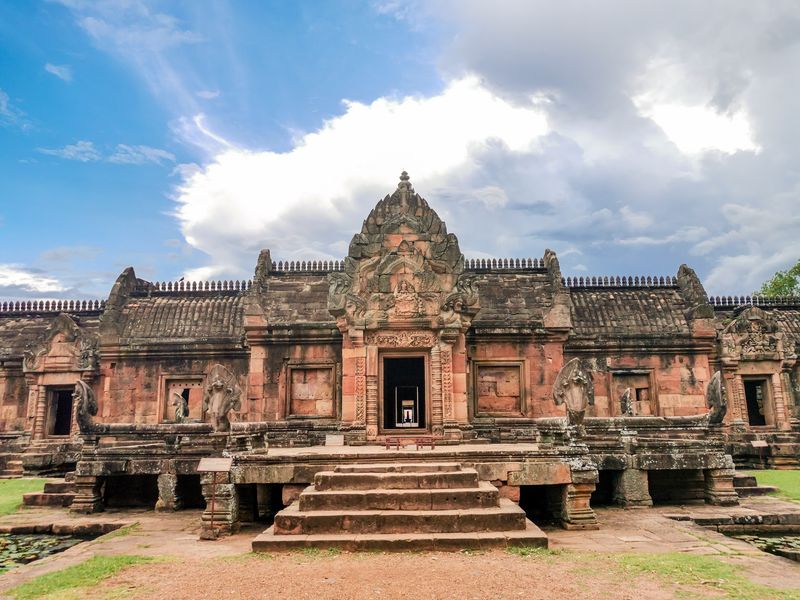
Phanom Rung sits on the rim of an extinct volcano in Buriram province, and the approach to the main sanctuary along its long ceremonial walkway is one of the most dramatic arrivals at any archaeological site in Thailand. The complex was built by the Khmer Empire over several centuries and originally functioned as a Hindu religious sanctuary, with dedications to Shiva reflected in much of the carved stonework.
The carved lintels at Phanom Rung are considered among the finest examples of Khmer artistry outside of Cambodia. Detailed figures, mythological scenes, and floral patterns cover the doorways and walls throughout the complex.
The alignment of the doorways is particularly notable: twice a year, during specific sunrises, light passes directly through all 15 doorways in a straight line.
The September sunrise alignment draws visitors who plan their trip specifically around the event. Outside of those dates, the site remains impressively quiet for its size and quality.
Buriram is accessible by train from Bangkok, making a weekend trip straightforward to organize.
Ancient City, Samut Prakan
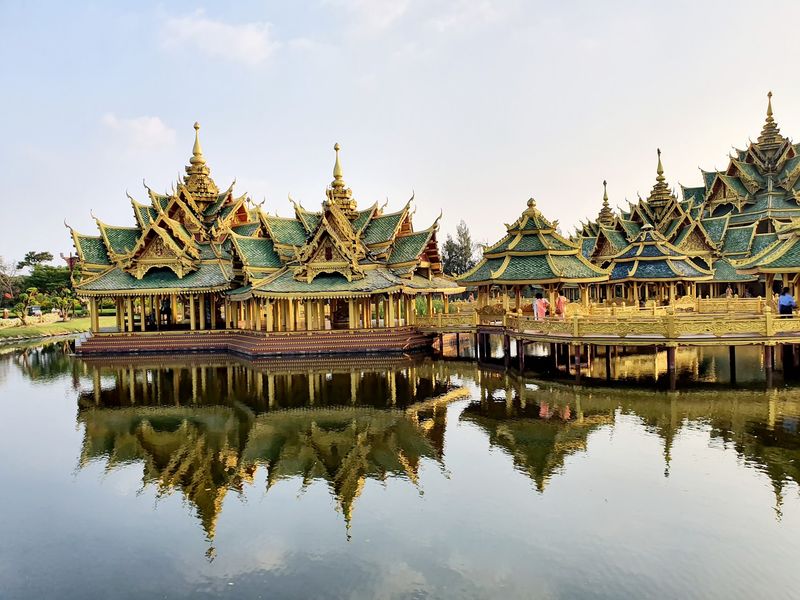
Ancient City, known in Thai as Mueang Boran, takes an unconventional approach to cultural education. Rather than visiting one historical site, visitors here encounter architectural replicas and reconstructions inspired by significant temples, palaces, monuments, and traditional buildings from across Thailand, all arranged within a single enormous outdoor museum.
The grounds cover roughly 600 rai, which is large enough that exploring on foot alone is not practical for most visitors. Bicycles, golf carts, and trams are available to help cover the distance between structures.
The layout of the park roughly mirrors the geographic shape of Thailand, so the location of each replica corresponds loosely to where the original stands in the country.
For travelers short on time who want a broad overview of Thai architectural styles and regional traditions, Ancient City offers a genuinely useful introduction. Thailand’s official tourism site continues to list it among the primary attractions of Samut Prakan, which sits just south of Bangkok and is reachable by BTS Skytrain.
Erawan Museum, Samut Prakan
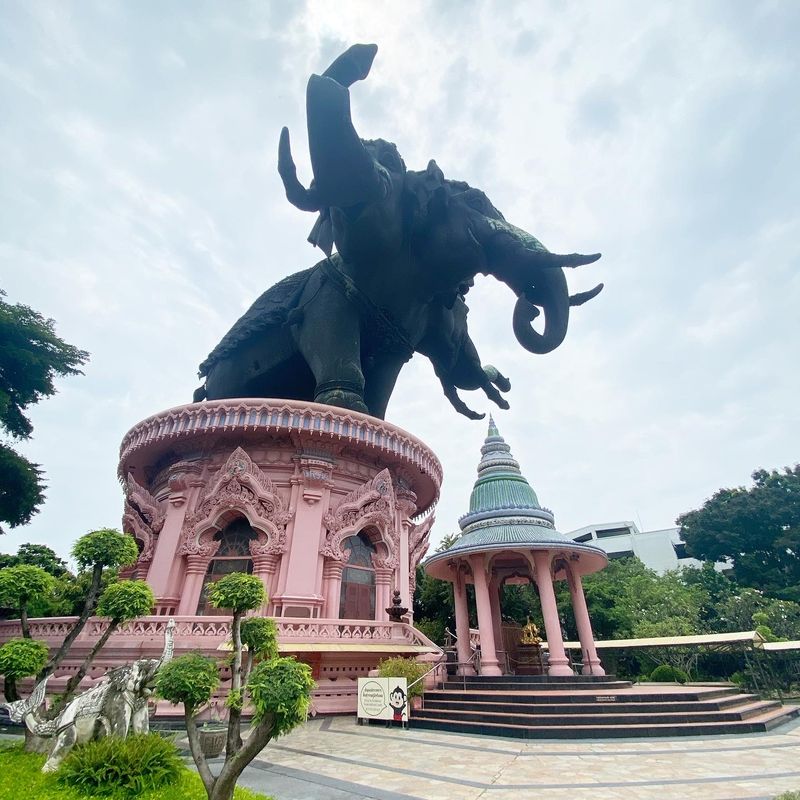
The three-headed elephant that towers above the Erawan Museum is not a subtle landmark. The enormous bronze figure stands roughly 29 meters tall and is visible from a considerable distance, making the museum one of the most visually distinctive buildings in the greater Bangkok area.
The structure beneath the elephant serves as the actual museum space, and the contrast between the fantastical exterior and the detailed interior is part of what makes this place memorable.
Inside, visitors move through symbolic levels that represent different planes of existence in Buddhist and Hindu cosmology. Elaborate staircases, stained glass ceilings, religious imagery, antiques, and decorative artworks fill the interior in a way that rewards slow exploration rather than a quick walk-through.
The museum is located in Samut Prakan, close enough to Ancient City that combining both in a single day is a reasonable plan. The Tourism Authority of Thailand lists Erawan Museum as one of the province’s major attractions, and it currently remains open to visitors.
Sanctuary of Truth, Pattaya
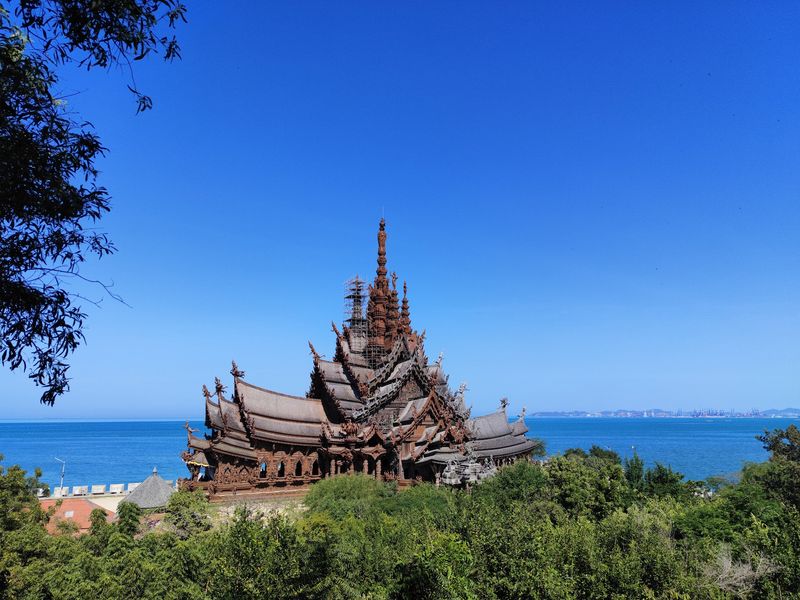
Pattaya’s reputation is built largely around its beaches and nightlife, but the Sanctuary of Truth stands apart from all of that. The structure is a massive wooden building, rising approximately 105 meters at its tallest point, and every surface is covered in hand-carved figures drawn from Buddhist, Hindu, Khmer, and Chinese artistic traditions.
No concrete or steel holds it together; the entire construction relies on traditional wooden joinery techniques.
What makes the project particularly unusual is that it has been under continuous construction since 1981 and is designed to never fully finish. As older carved sections weather and deteriorate, craftspeople carve new sections to replace them.
Visiting feels less like touring a completed monument and more like watching a living artistic process in progress.
The attraction is currently open daily and offers both daytime and evening tour options. Visitors are required to wear helmets inside due to ongoing construction overhead.
Elephant rides and cultural performances are also available on the grounds for those who want a longer visit.
Jim Thompson House Museum, Bangkok
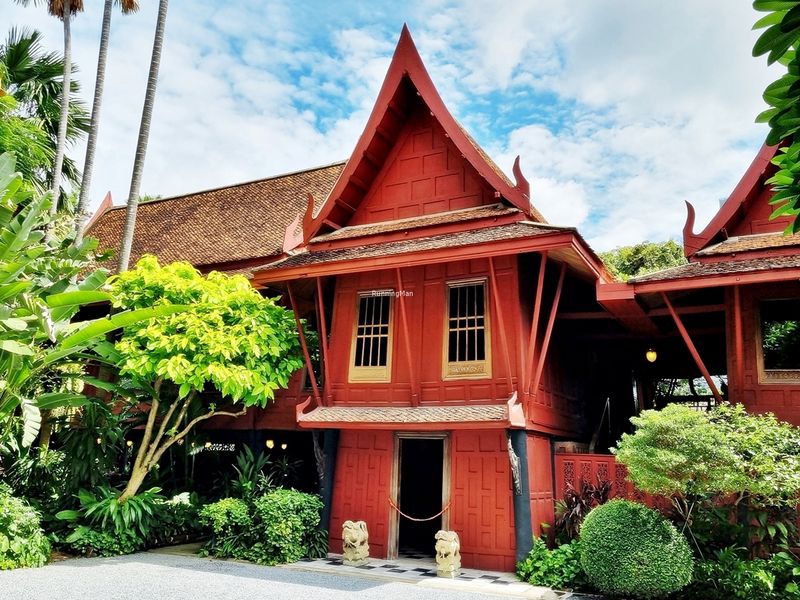
Jim Thompson was an American businessman who moved to Thailand after World War II and is widely credited with reviving the Thai silk industry for international markets. He lived in Bangkok in a collection of traditional Thai houses he assembled and restored along a canal in the Siam neighborhood, and those houses now form one of the city’s most intimate and unusual museums.
The property brings together six traditional Thai structures, some dating back to the 18th century, connected and arranged around a landscaped garden. Inside, Thompson’s personal collection of Southeast Asian antiques, ceramics, paintings, and decorative objects remains largely as he left it before his mysterious disappearance in Malaysia in 1967.
The circumstances of his vanishing have never been fully explained, which adds a layer of intrigue to any visit.
Tours of the main house are conducted with guides, which helps explain both the architecture and the collection in context. As of September 2026, the museum remains open every day and continues to offer guided visits for individual travelers and small groups.
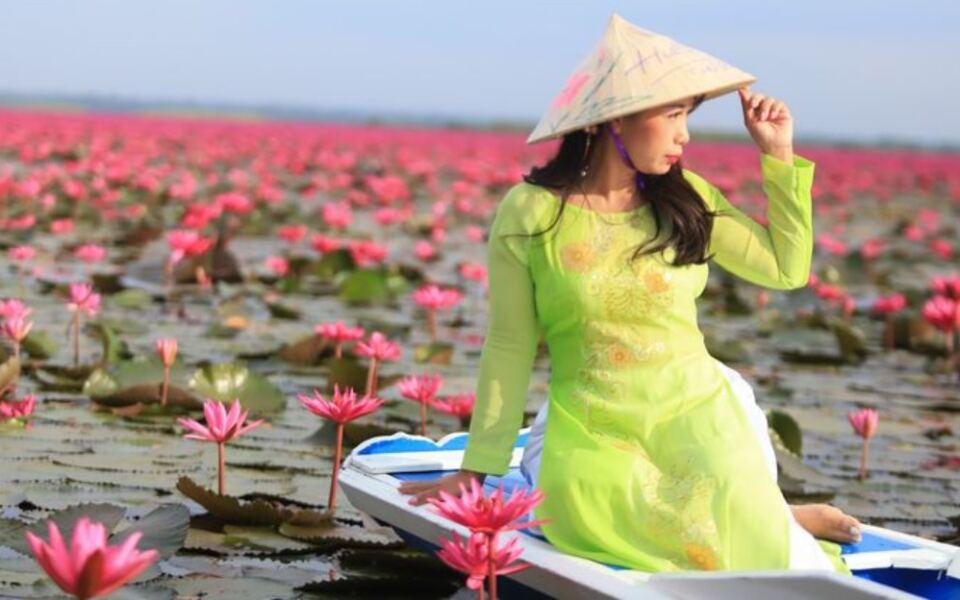
Red Lotus Sea, Udon Thani
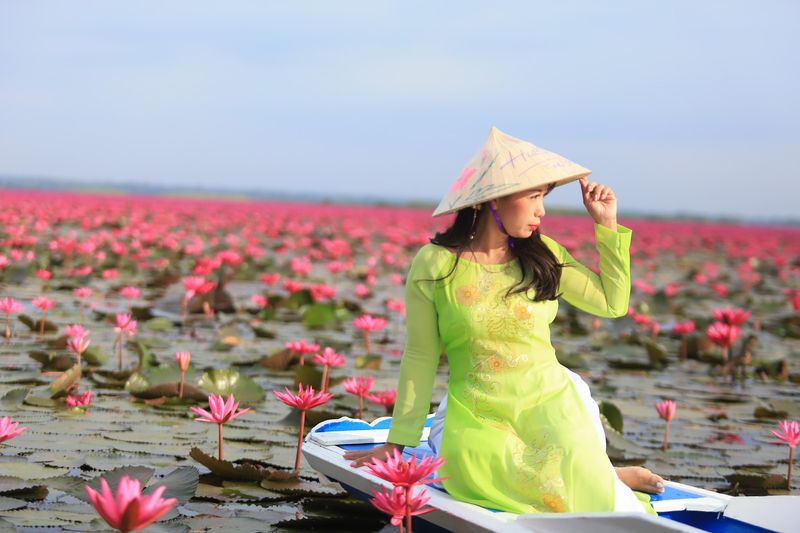
Nong Han Lake in Udon Thani does not look like much for most of the year. But between December and February, the surface of the lake transforms into a dense carpet of pink and reddish water lilies stretching across roughly 36 square kilometers.
The scale of the bloom is something that photographs suggest but do not fully prepare you for when you are actually out on the water.
Small boats carry visitors through the flowers during the bloom season, typically departing from the lake’s edge in the early morning when light is best and the flowers are fully open. Arriving at or before sunrise gives you the most dramatic views and the best conditions for photography before tour groups begin filling the boats.
The Tourism Authority of Thailand identifies December through February as the primary window for seeing the blooms at their peak. Outside that season, the lake reverts to a quieter wetland without the color show.
Udon Thani is well connected by domestic flights from Bangkok, making a short seasonal trip here easy to plan.
Share this story