Somewhere in Oklahoma, a bowl of ramen has been quietly turning heads and pulling people back through the door again and again. Most folks expect to travel halfway around the world to find broth this layered and noodles this satisfying, yet a local spot has been making that case right here in the heartland.
The story behind the bowl involves a founding team with deep Japanese roots, a menu built around regional Japanese traditions, and a following that keeps growing. If you have ever been curious whether truly Japanese-informed ramen can thrive far from the coasts, this is the Oklahoma place worth knowing about.
Tamashii is the likely Oklahoma match
Finding the restaurant behind a premise like this requires some detective work, and the most credible candidate is Tamashii Ramen House, an Oklahoma-based ramen counter with a story that reaches all the way back to Okinawa. According to Tamashii’s official About page, co-founder Wakana Sebacher was born and raised in Okinawa, Japan, while her partner Matthew Sebacher traveled to Japan to learn ramen-making skills firsthand from her family and other cooks before the restaurant ever opened.
Those are company-provided biographical details, so they should be understood as the founders’ stated background rather than independently verified culinary credentials, but they do explain why the Japanese connection is central to how Tamashii presents itself.
The restaurant opened on June 1, 2015, with a stated mission to introduce Japanese ramen and Japanese culinary experiences to Oklahoma. That framing, pulled directly from Tamashii’s homepage, tells you something important: the goal was never to approximate ramen or adapt it loosely for a local audience.
The intent, at least as the founders describe it, was to bring something genuinely shaped by Japanese tradition to a state where that style of bowl had not been widely available.
One fair caveat is worth naming early. The sources used here document Tamashii thoroughly, but they do not independently connect it to the original unnamed premise that sparked this article.
Tamashii is the likely match based on its Oklahoma footprint, its documented Japanese connections, and the character of its menu. Calling it a proven identification, though, would stretch further than the evidence allows.
Think of it as a well-supported lead, not a closed case.
Tonkotsu supplies the bowl’s documented richness
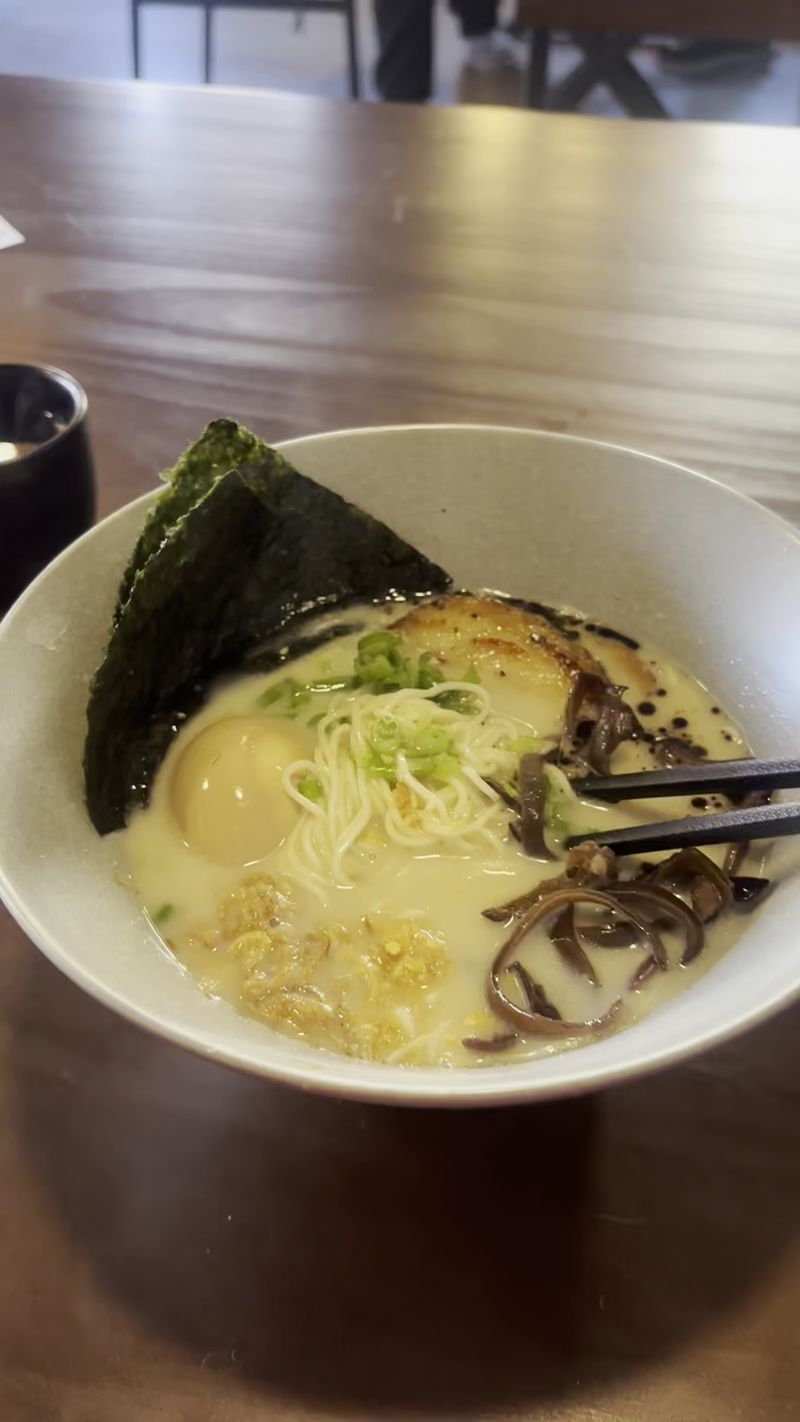
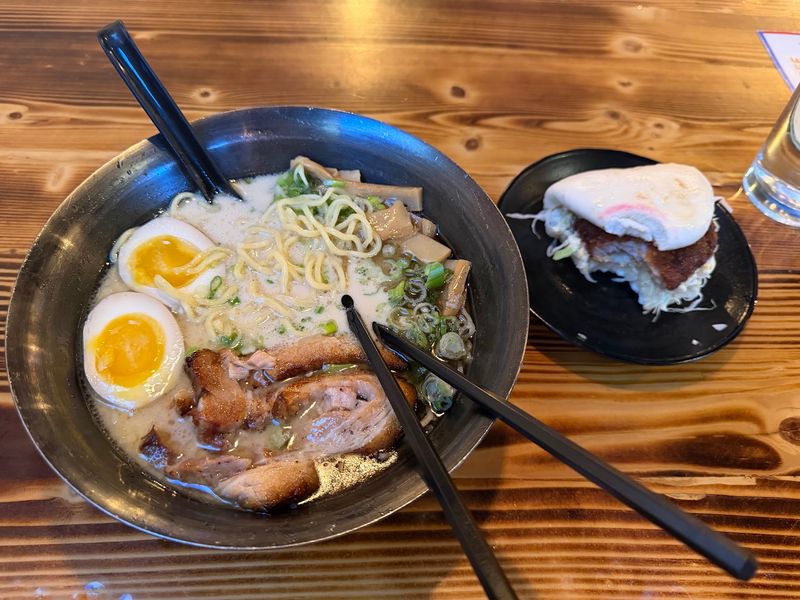
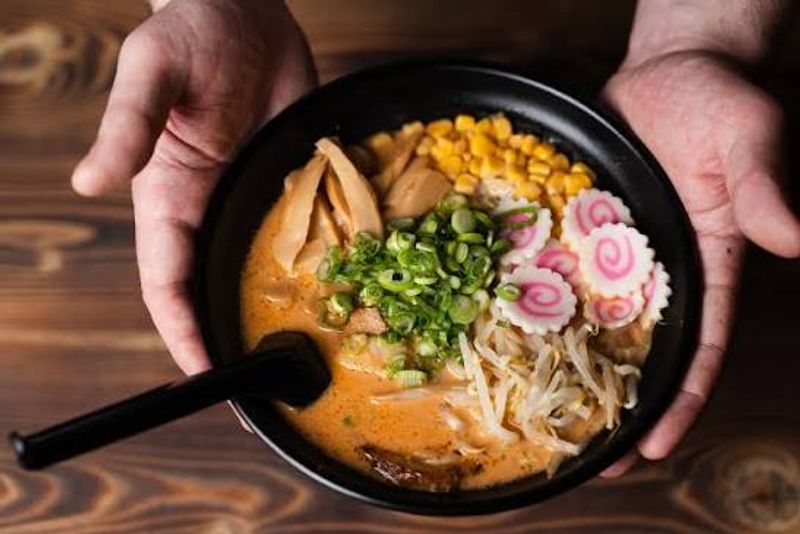
Pull up the Tamashii Midtown online menu and the tonkotsu bowl lays out its promise clearly: pork-bone broth simmered for hours to develop a deep, creamy character, springy noodles, chashu pork, a marinated soft-boiled egg, bamboo shoots, and sliced negi. Each of those components contributes something specific.
The chashu pork brings a savory, slightly caramelized layer. The marinated egg adds a silky, seasoned contrast.
The bamboo shoots cut through the richness with a mild crunch, and the negi keeps things bright at the surface.
The broth is the part that carries the most weight, literally and figuratively. Pork-bone broth built on a long simmer becomes opaque and almost milky in appearance, with a body that coats the noodles rather than running off them.
The menu describes this quality as deep and creamy, which matches what a well-executed tonkotsu is supposed to feel like. One thing worth clarifying: a third-party listing has repeated a specific 10-hour simmer claim, but the current official menu only says the broth is simmered for hours.
Until the restaurant confirms an exact duration for its current recipe, that precise number should not be treated as established fact.
What the menu does establish without ambiguity is a lineup of components that, taken together, can feel genuinely substantial. Richness in a ramen bowl is not just about fat content or broth density.
It comes from the layering of seasoned protein, a flavored egg that has absorbed its marinade, and noodles with enough chew to hold their shape in a hot, complex broth. The tonkotsu bowl at Tamashii, as described by the restaurant itself, checks each of those boxes on paper.
Whether it lands that way in the bowl is the part only a visit can answer.
Japan offers many ramen reference points
Ramen in Japan is not one dish with one flavor. According to Japan’s Ministry of Agriculture, Forestry and Fisheries, ramen is defined by a combination of soup, noodles, and toppings, and those elements shift considerably depending on where in Japan you are eating.
The broth might be built on pork bones, chicken bones, dried fish, soy sauce, miso, or some combination. Noodles can be thin and straight, thick and wavy, or somewhere in between.
Seasoning, fat content, and garnishes all vary by region and by the individual shop making the bowl.
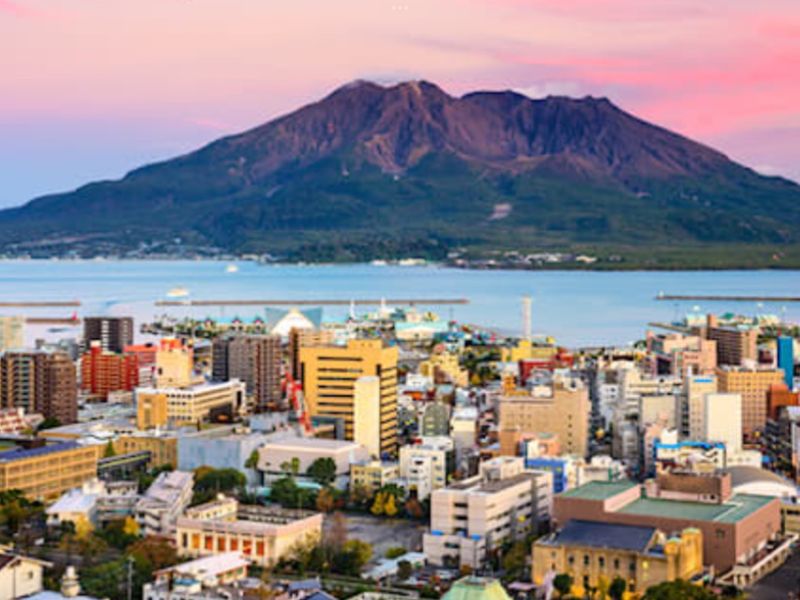
Pork-bone broth is most closely associated with Kyushu, the southwestern island where styles like Hakata and Kurume ramen developed their characteristic rich, cloudy soups. Tamashii’s tonkotsu bowl fits within that broad tradition by virtue of its broth base, but the restaurant’s menu does not classify the bowl as Hakata, Kurume, Kagoshima, or any other specific Kyushu regional style.
Without that designation from the restaurant itself, it would be overstepping to assign one here.
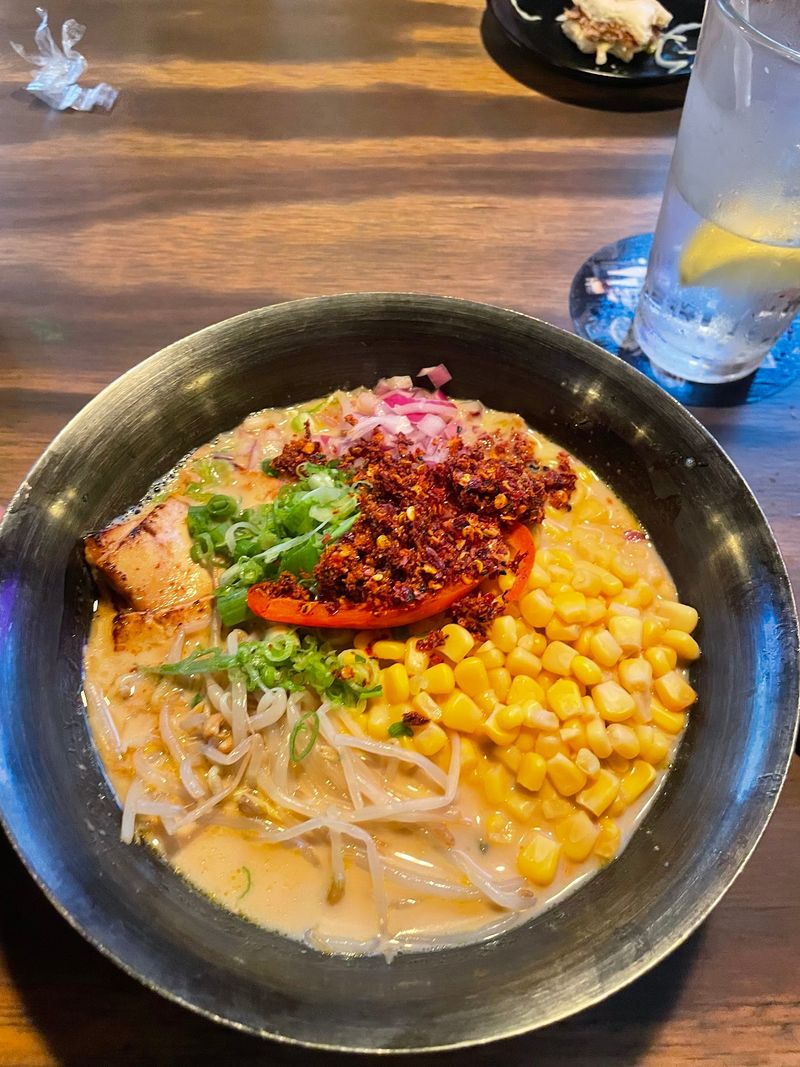
Tamashii’s miso butter corn bowl sits in a different regional conversation entirely. The Midtown menu identifies it as Hokkaido-inspired, which is a legitimate regional reference.
Hokkaido ramen is known for miso-based broths and cold-weather-friendly richness, and the corn and butter additions are classic regional touches. Calling the bowl Hokkaido-inspired is the accurate framing.
It signals a genuine regional reference without claiming the bowl is a replica of a specific Hokkaido shop or a definitive example of that style. The distinction matters because Japan’s ramen landscape rewards specificity, and honest menu language reflects that complexity rather than flattening it.
Local demand explains the comparison
Oklahoma Today recognized Tamashii’s tonkotsu ramen as a crowd favorite in its reader service coverage, which tells you something about the restaurant’s standing among people who follow Oklahoma dining closely. That kind of recognition does not come from a single visit or a passing trend.
It reflects a level of consistent repeat interest that builds over time, shaped by customers who know the menu well enough to return for a specific bowl.
A separate travel feature adds another data point. My Family Travels described Tamashii as a place with strong local repeat business and a rich, savory broth, and the headline of that piece references a one-hour wait.
That specific wait-time framing comes from a lifestyle travel article, not an independently audited or timed record. Conditions vary by location, day, and season, so treating it as a current or universal fact would be misleading.
What it does communicate is the kind of enthusiasm that makes a restaurant worth planning around.
Neither source proves that regulars broadly agree the bowl tastes straight from Japan, and that is a distinction worth holding onto. Local enthusiasm and repeat business are meaningful signals.
They suggest that people who have tried the bowl find it worth coming back for, which is a genuinely good sign. But a crowd favorite in Oklahoma and a bowl that objectively replicates a Japanese regional ramen are two different claims.
Tamashii earns the first one clearly. The second one belongs in the category of reported impression, not established fact, and the restaurant’s own story is compelling enough without needing that extra layer.
Choose the bowl that answers your ramen question
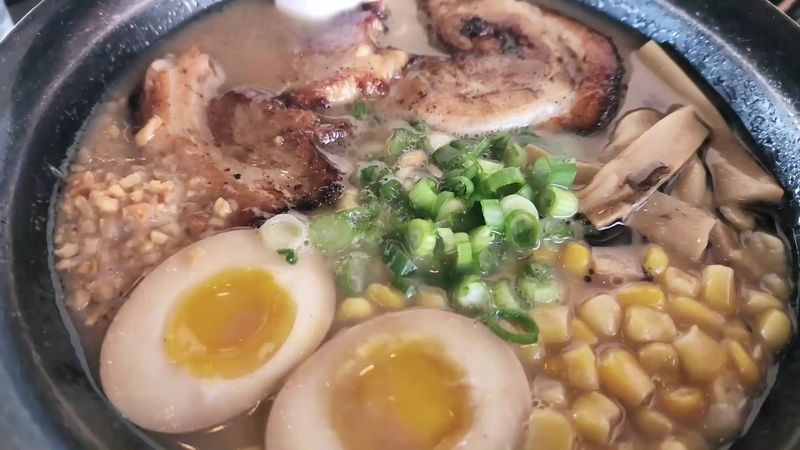
First-time visitors face a menu with several distinct directions, and the clearest starting point depends on what you are trying to understand about ramen. For the experience that most directly connects to the premise of this article, the tonkotsu bowl is the right call.
It is where the pork-bone broth, springy noodles, chashu, marinated egg, bamboo, and negi all come together in the combination that has drawn the most attention. If you want to know what Tamashii is actually about, start here.
Garlic tonkotsu is the move if you want that same creamy base pushed further. The garlic addition deepens the savory character considerably, shifting the bowl from rich to intensely seasoned.
Some diners find it more satisfying; others prefer the cleaner expression of the standard tonkotsu. Both are worth knowing about before you order, because the gap between them is noticeable.
According to the Tamashii Midtown menu, the garlic version is a distinct offering rather than a simple add-on, so treat it as its own choice.
The miso butter corn bowl answers a different ramen question entirely, one about Hokkaido-inspired flavors rather than Kyushu-adjacent broth traditions. Rich, umami-forward, and built around a miso base with butter and corn, it offers a regional contrast that shows the menu’s range.
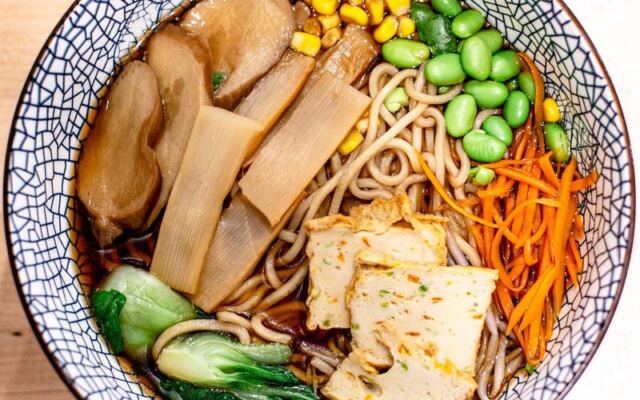
For diners who avoid meat, the vegan ramen provides a meat-free path through the menu without requiring substitutions or workarounds. Having that option available reflects a practical awareness that not every person at the table is chasing a pork-bone broth.
Knowing which of these four directions fits your appetite before you sit down makes the ordering process a lot more satisfying.
Multiple Oklahoma locations make a visit easier
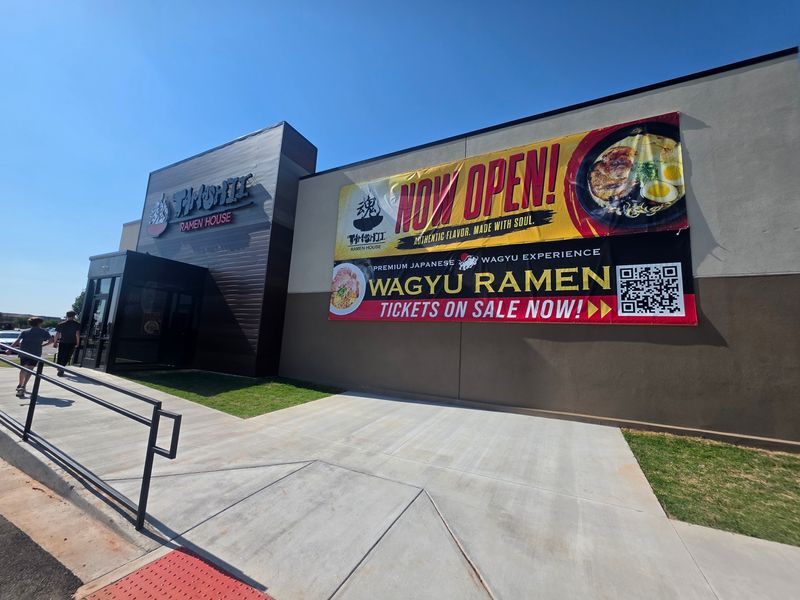
Tamashii currently operates four Oklahoma locations, spread across the Oklahoma City metro rather than across the entire state. The markets served include Oklahoma City proper, Edmond, Norman, and the Memorial area, which means the restaurant is accessible from multiple directions within the metro without requiring a long drive from most of the surrounding region.
That footprint makes it a realistic stop for Route 66 travelers passing through central Oklahoma, as well as for locals who might not live near one specific neighborhood.
Hours and addresses can shift, so the best move before heading out is a quick check of the official Tamashii locations page, which lists current information for each site. Relying on a cached search result or an outdated listing risks showing up at a location that has changed its schedule.
A thirty-second verification before you leave saves a wasted trip.
If you are planning a takeout order, a few practical steps keep the food safe between the restaurant and your table. USDA guidance on leftovers recommends refrigerating food promptly rather than letting it sit at room temperature.
For a large quantity of broth-based soup, dividing it into shallow containers helps it cool quickly and evenly. When reheating, bring leftovers to 165 degrees Fahrenheit to ensure they are safe to eat.
Ramen is best fresh, but if you are bringing extra home, those steps protect both the quality and the safety of the bowl. The USDA’s restaurant leftover tips cover the full picture if you want additional detail.
The Japan comparison works best as a qualified impression
Putting the full picture together, Tamashii Ramen House earns the comparison to Japanese ramen culture through several converging details. The founders’ stated backgrounds include growing up in Okinawa and learning ramen techniques directly in Japan.
The menu’s documented components match the structural logic of Japanese ramen: layered broth, seasoned protein, marinated egg, and noodles selected for texture. The Hokkaido-inspired bowl signals awareness of regional Japanese traditions beyond a single style.
And the local following, noted by Oklahoma Today and described by travel writers, reflects genuine repeat demand rather than novelty traffic.
What the sources cannot confirm is that Tamashii is the original unnamed restaurant behind the premise, that its bowl is identical to any specific Japanese regional style, or that regulars share a unanimous view about the comparison. As Japan’s own agricultural ministry makes clear, ramen varies so widely across the country that no single bowl could accurately represent all of it.
The fairest and most honest conclusion is that Tamashii offers an Oklahoma interpretation of ramen culture, one shaped by real Japanese connections, regional menu references, and a local following built over nearly a decade. That is a genuinely interesting thing to find in the heartland, and it holds up without needing the strongest version of the claim to be literally true.
Share this story