Fortresses were built to protect people, treasure, and power, and a few of them became famous for how hard they were to take. Some stood on steep cliffs, others rose behind thick walls, and a few sat on islands or rocky peaks.
Each one tells a story about clever design and human determination. Here are 14 places that earned a reputation for strength.
1. Masada, Israel
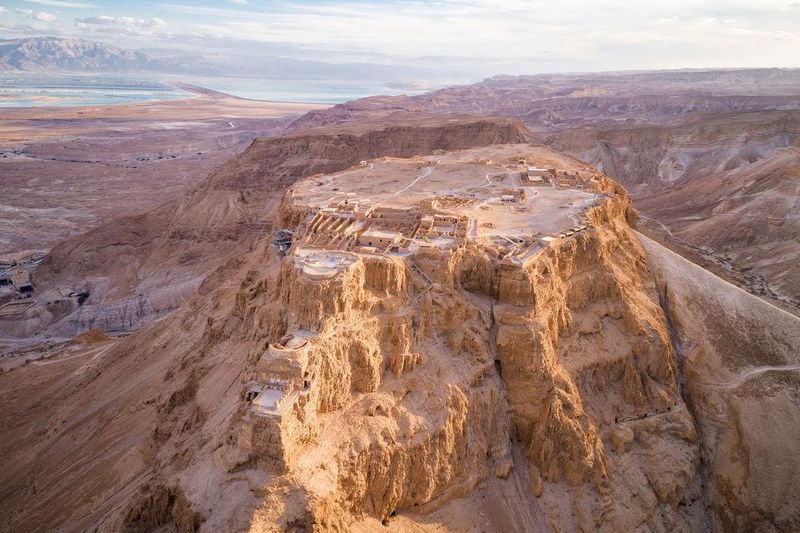
High above the Dead Sea, a flat rock stands alone in the desert. Masada sits on top of it, and the cliffs on its sides drop hundreds of meters.
King Herod built palaces and storerooms there around 30 BCE.
The fortress is best known for the Jewish revolt against Rome. In 73 or 74 CE, a group of rebels held the plateau after the fall of Jerusalem.
Roman troops had to build a huge ramp of earth and stone on the western side just to reach the walls.
Cisterns on the plateau collected rainwater, and large storerooms held food. That meant defenders could last a long time without leaving.
Today visitors can climb the Snake Path at dawn or take a cable car, and the ruins, mosaics, and Roman camps below still show how hard the siege must have been.
2. Krak des Chevaliers, Syria
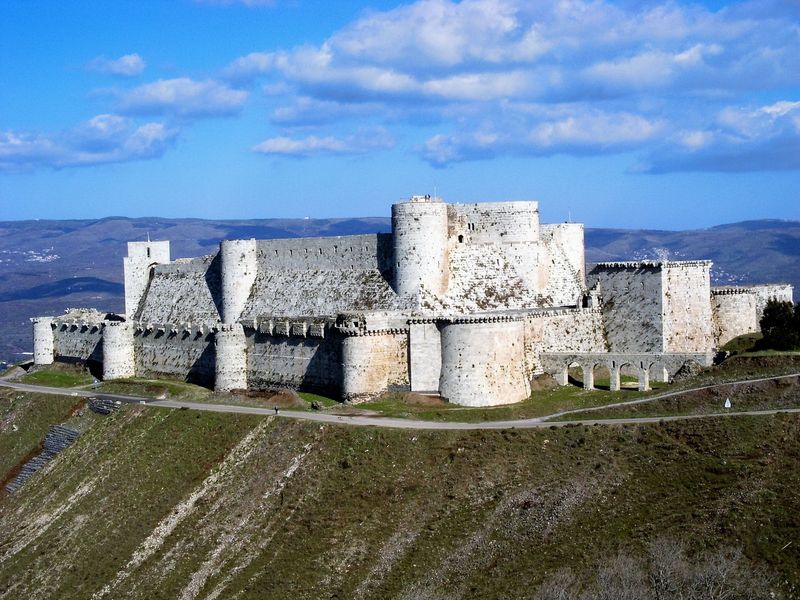
Imagine trying to attack a castle that has two full rings of walls, one inside the other. That was the challenge at Krak des Chevaliers.
The Knights Hospitaller expanded it in the 1100s and 1200s on a hill in western Syria.
Attackers who broke through the outer wall still faced a deadly gap between the rings, with archers and defenders above them. A sloping stone base on the inner wall made climbing and digging tunnels very difficult.
The castle could hold a large garrison and had stables, a chapel, and huge food stores.
The fortress withstood many sieges. It finally fell in 1271 to the Mamluk sultan Baybars, who used a letter, likely forged, to persuade the knights to surrender.
UNESCO now lists it as a World Heritage Site.
3. Mehrangarh Fort, India
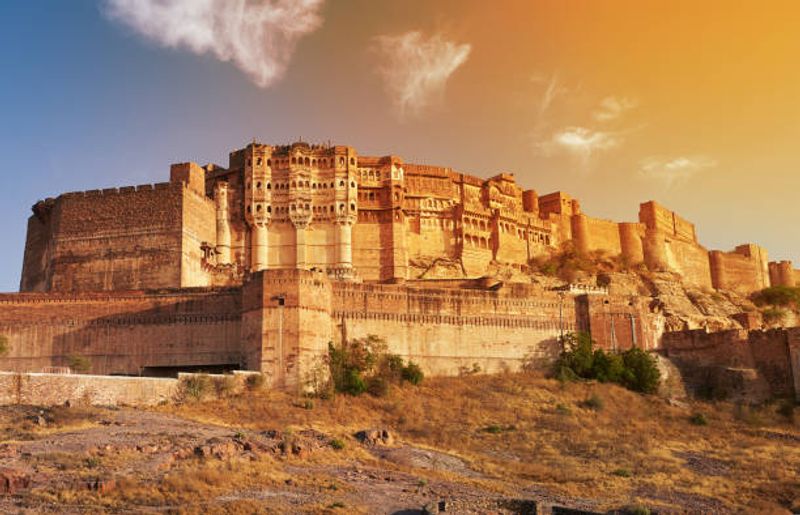
Rudyard Kipling once described it as the work of giants, and standing below its walls, you can see why. Mehrangarh rises about 120 meters over Jodhpur in Rajasthan.
Rao Jodha began building it in 1459.
The walls are as much as 36 meters high in places and up to 21 meters wide. Several gates were placed along a winding path so enemies could not charge straight in.
Iron spikes on the gates helped stop war elephants.
Look closely at the Jayapol gate and you will find cannonball marks from old battles. Inside, the palaces hold painted rooms, royal cradles, and weapons.
Rulers of Marwar held the fort for centuries, and today it is one of the best preserved forts in India.
4. Château de Gaillard, France
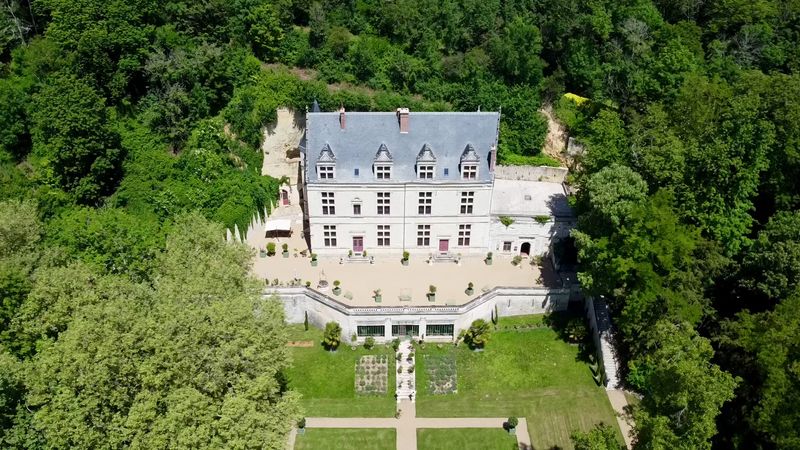
King Richard the Lionheart reportedly built this castle in only about two years, finishing it in 1198. He placed it on a chalk cliff above the Seine, where it blocked the road to Rouen.
Richard was said to be proud of it and called it his beautiful castle.
Its design was ahead of its time. It had a ditch cut from rock, a strong keep, and walls shaped to deflect attacks.
Defenders could watch the river valley for miles.
Still, nothing is truly unbeatable. After Richard died, King Philip II of France besieged it for months in 1203 and 1204.
His men finally entered through a latrine chute or window, and the fall of the castle helped France take Normandy. Today the ruins offer sweeping views.
5. Malbork Castle, Poland
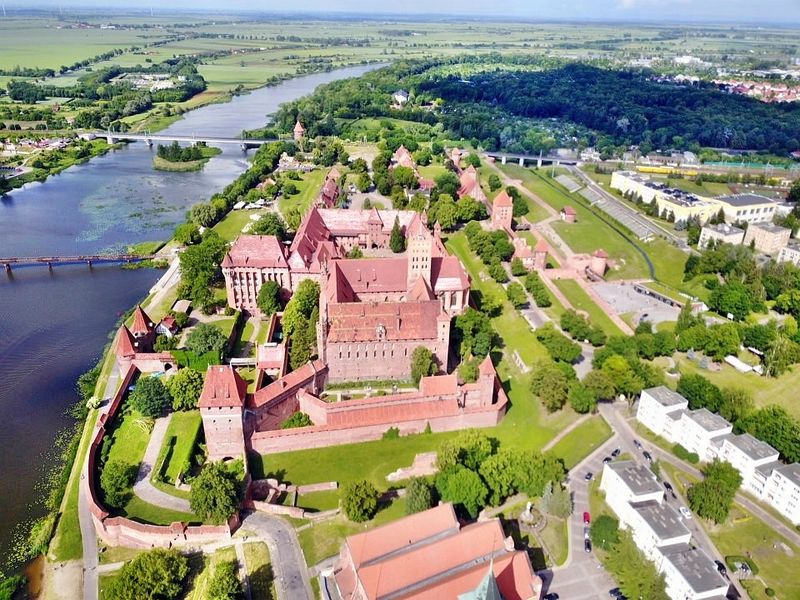
Here is a number that surprises many people: Malbork is often called the largest castle in the world by land area. The Teutonic Knights began building it in the late 1200s, and it grew into a vast brick complex beside the Nogat River.
They used it as the headquarters of their order.
The castle has three main parts, each with its own defenses. Moats, drawbridges, and thick walls protected it, and the river helped guard one side.
Inside were chapels, halls, workshops, and even a heating system under the floors.
Armies tried to take it more than once. In 1410, after the Battle of Grunwald, Polish and Lithuanian forces besieged it but could not capture it.
It was later damaged in World War II, and careful rebuilding has restored much of it.
6. Alamut Castle, Iran
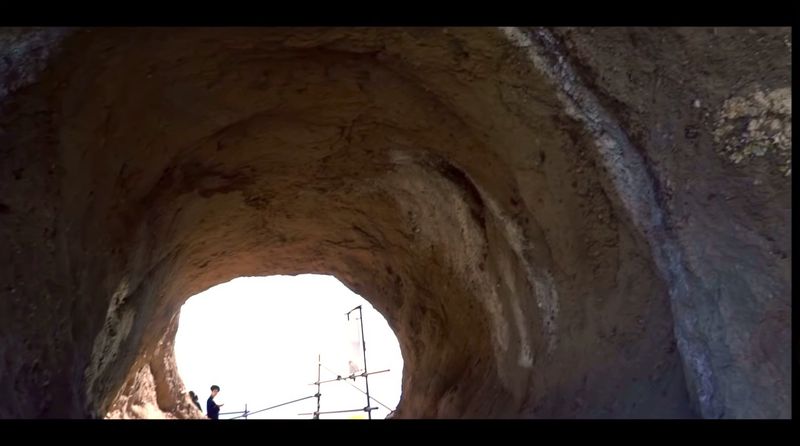
Some fortresses rely on walls, but Alamut relied mostly on a mountain. It sits on a narrow rock in the Alborz range of northern Iran, about 2,100 meters above sea level.
Hassan-i Sabbah took control of it in 1090 and made it the center of the Nizari Ismailis.
Approaching the castle meant climbing steep, exposed paths where a few defenders could stop many attackers. Records describe a library, storerooms, and water channels cut into the rock.
Supplies for long sieges were stored inside.
For about 166 years the fortress stood against rulers in the region. Mongol forces under Hulagu Khan finally forced its surrender in 1256, and the castle was largely destroyed.
Hikers still visit the ruins today, though only a small part of the original stronghold remains.
7. Hohensalzburg Fortress, Austria
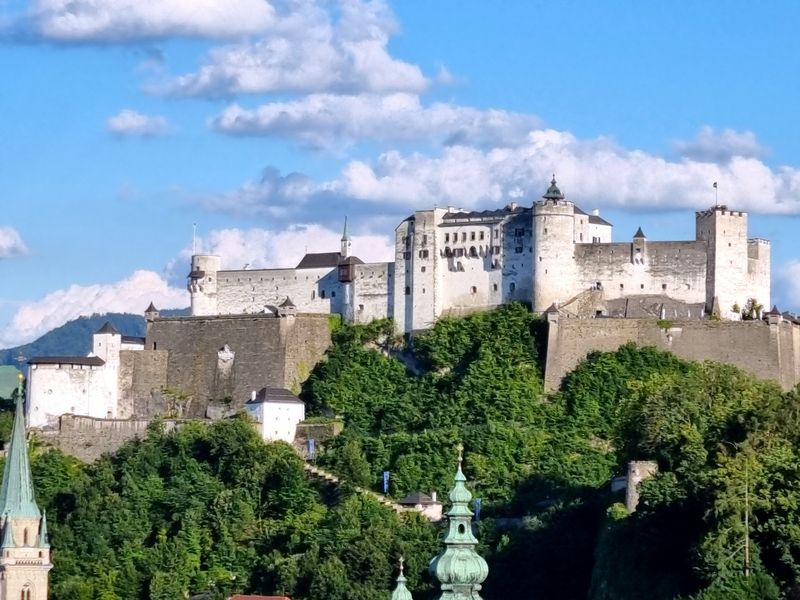
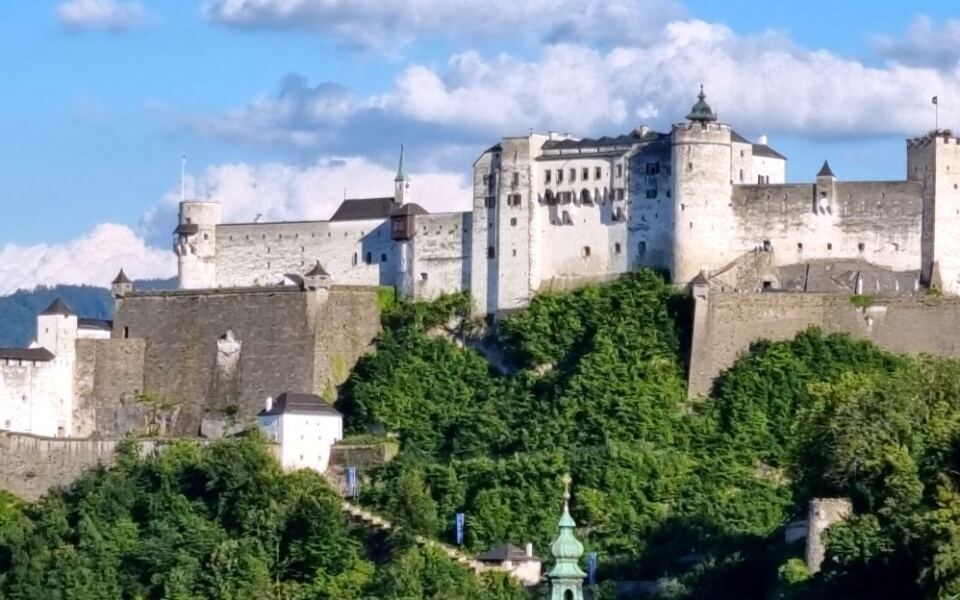
If a fortress could win by never being attacked, this one would have a perfect record. Hohensalzburg looms over Salzburg from a hill called the Festungsberg.
Construction started in 1077, and later rulers kept adding to it.
The archbishops of Salzburg used it as both a home and a safe retreat. Its walls, bastions, and high position made an assault look foolish.
Even during the Peasants’ War in 1525, rebels besieged it without success.
The fortress is among the largest fully preserved castles in Central Europe. In 1800, French troops reached Salzburg, and the city gave up without a fight.
Visitors today can ride a funicular up the hill, tour the state rooms, and enjoy views over rooftops and mountains.
8. Königstein Fortress, Germany
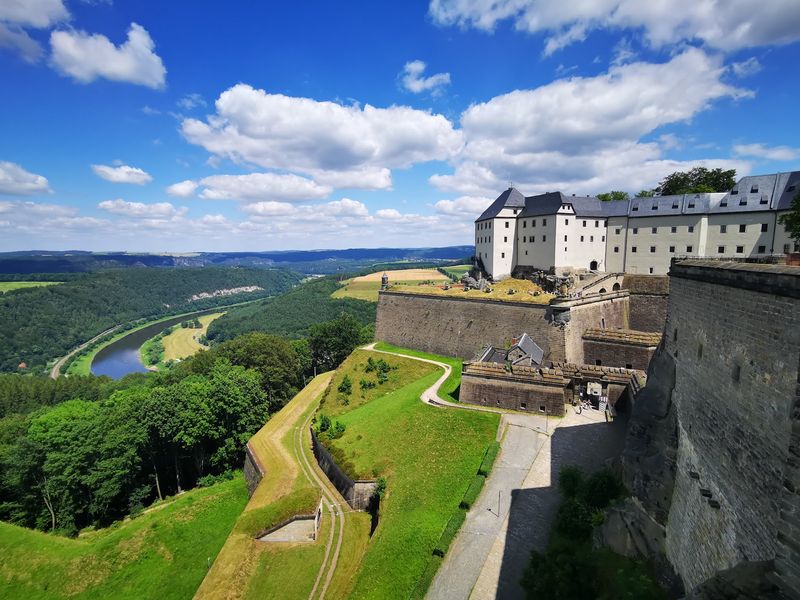
A well that is 152 meters deep sounds like a strange detail for a fortress. At Königstein it was the key to survival.
The stronghold stands on a sandstone plateau above the Elbe River in Saxony, and workers dug the well by hand to reach water.
The cliffs around the fortress are steep, and its walls rise from the rock. Over the centuries, Saxon rulers strengthened it with bastions, barracks, and storehouses.
It also served as a state prison.
Remarkably, enemy forces never took it by force. That record earned it a place in German military history.
Visitors today can walk the ramparts, see the old arsenal, and look out over the Elbe valley and the unusual rock towers of the Saxon Switzerland region.
9. Edinburgh Castle, Scotland
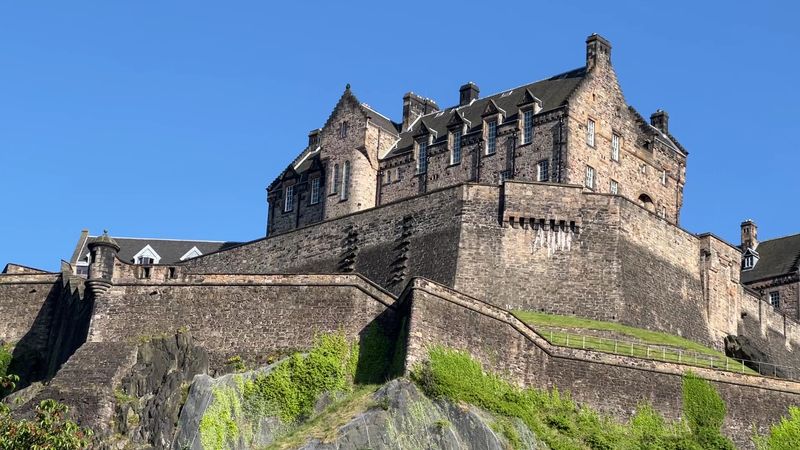
Edinburgh Castle sits on top of an ancient volcanic plug, and that rock is its best weapon. Three sides drop away in steep cliffs, leaving only one gentler slope to the east.
People have lived on Castle Rock for thousands of years.
That single approach made attack difficult, but not impossible. The castle changed hands many times during the Wars of Scottish Independence.
In 1314, a small group led by Thomas Randolph climbed the cliff at night and surprised the English garrison.
It also survived the long Lang Siege of 1571 to 1573, which ended only after heavy cannon fire. Today the castle houses the Scottish crown jewels, the Stone of Destiny, and the famous One O’Clock Gun, which fires every day except Sundays.
10. Gibraltar Fortress, Gibraltar
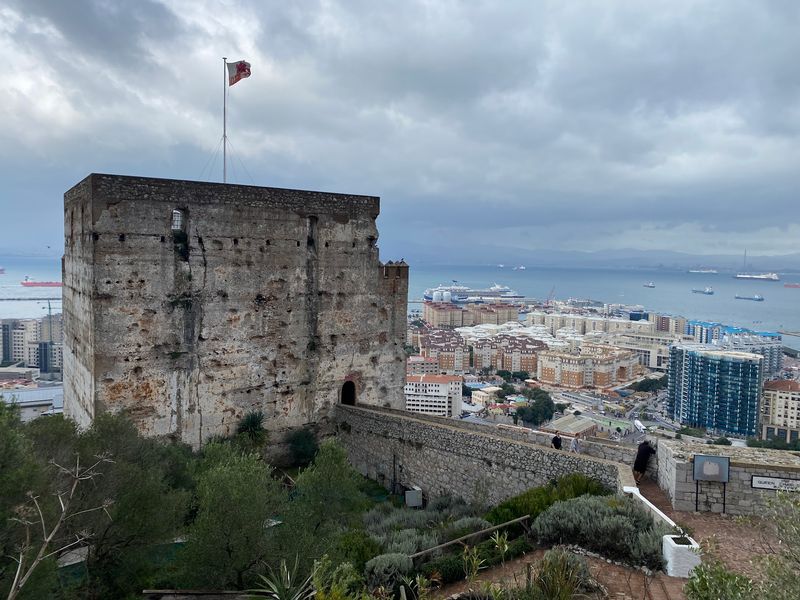
Few places have faced as many sieges as the Rock of Gibraltar. This towering limestone mass guards the entrance to the Mediterranean.
Whoever held it could watch ships passing through the narrow strait.
Spain, France, and Britain all fought over it. Britain captured it in 1704, and the Great Siege of 1779 to 1783 became the most famous attempt to take it back.
Defenders dug tunnels into the rock to place cannons high on the cliff face.
Those tunnels grew into a huge network, and more were added during World War II. Many miles of passages now run through the Rock.
Visitors can explore the Great Siege Tunnels, see old guns on the ramparts, and meet the Barbary macaques that live on the upper slopes.
11. Suomenlinna, Finland
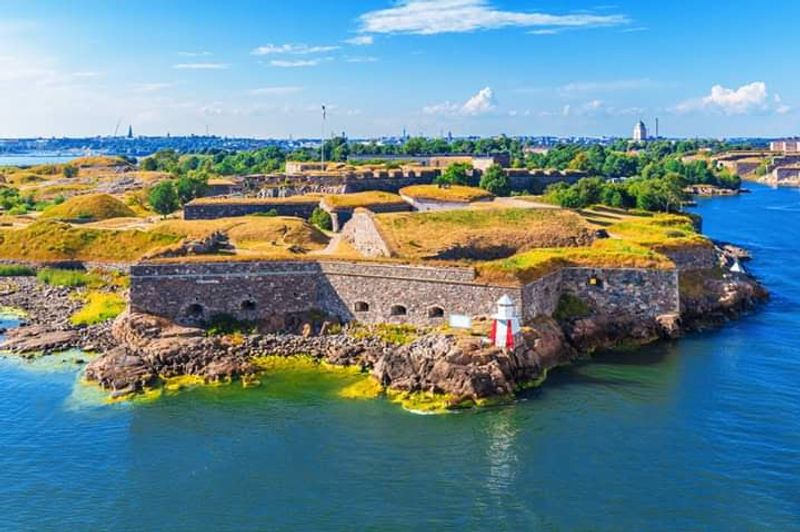
A short ferry ride from Helsinki brings you to a fortress built across a group of islands. Suomenlinna began in 1748, when Sweden, which then ruled Finland, wanted a strong base against Russia.
Officers nicknamed it the Gibraltar of the North.
Engineers designed it using star-shaped bastions and thick walls, with cannons covering the sea lanes. Working on islands made it hard for enemy troops to land and surround it.
Supplies could arrive by water from the Swedish side.
Even so, the fortress surrendered to Russia in 1808 during the Finnish War, with little fighting. Later it served as a Russian base, and after 1918 it became Finnish.
People now live and work there, and it is a UNESCO World Heritage Site with museums, cafes, and a submarine to tour.
12. Gwalior Fort, India
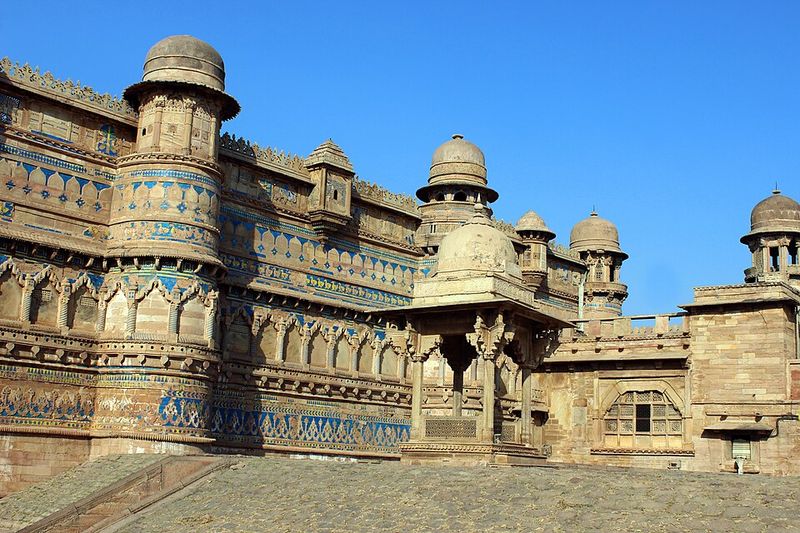
Gwalior Fort has been called the pearl in the necklace of the forts of India. It stands on a steep sandstone hill in Madhya Pradesh, with walls that follow the edge of the cliff.
The hill rises roughly 100 meters above the city.
A fort has stood here for well over a thousand years, and many dynasties ruled it. Entry was through a series of gates along a sloping road, which slowed any army.
The Mughal emperor Babur reportedly called it one of the jewels among the forts of Hind.
Inside, the Man Singh Palace shines with blue and yellow tiles. Temples and carved Jain figures cut into the rock add to the site.
Many rulers fought for the fort, and it changed hands several times, but its strong position made every attack costly.
13. Carcassonne, France
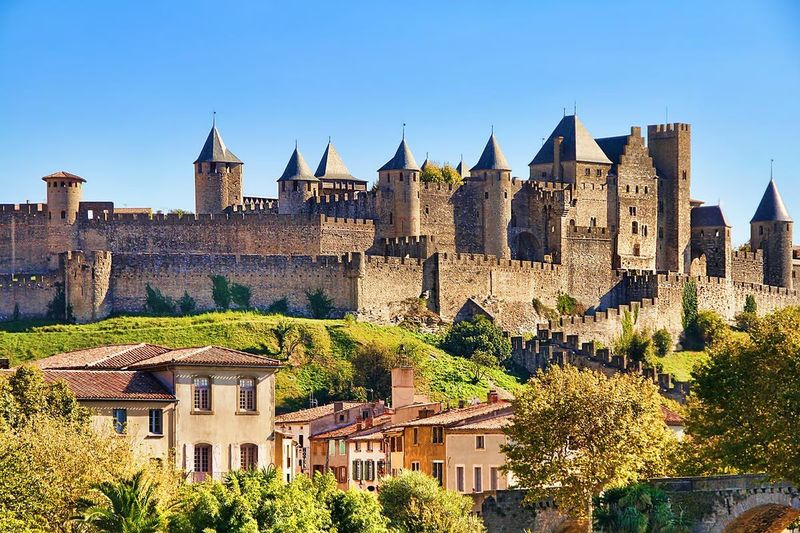
Walk up to Carcassonne and you may feel like you have stepped into a storybook. The old city has 52 towers and about 3 kilometers of walls.
Its two rings of defense made it one of the strongest fortified towns in Europe.
The site dates back to Roman times, and the main medieval walls grew over many centuries. Attackers who crossed the outer wall found themselves in a narrow space under fire from the inner wall.
The Cathar crusade tested the town in 1209, when it fell after a short siege caused by a lack of water.
Later, the French crown strengthened it, and the nearby border moved away, so it lost military value. In the 1800s architect Eugène Viollet-le-Duc restored it.
Today it is a UNESCO World Heritage Site that draws many visitors.
14. Rumeli Hisarı, Turkey
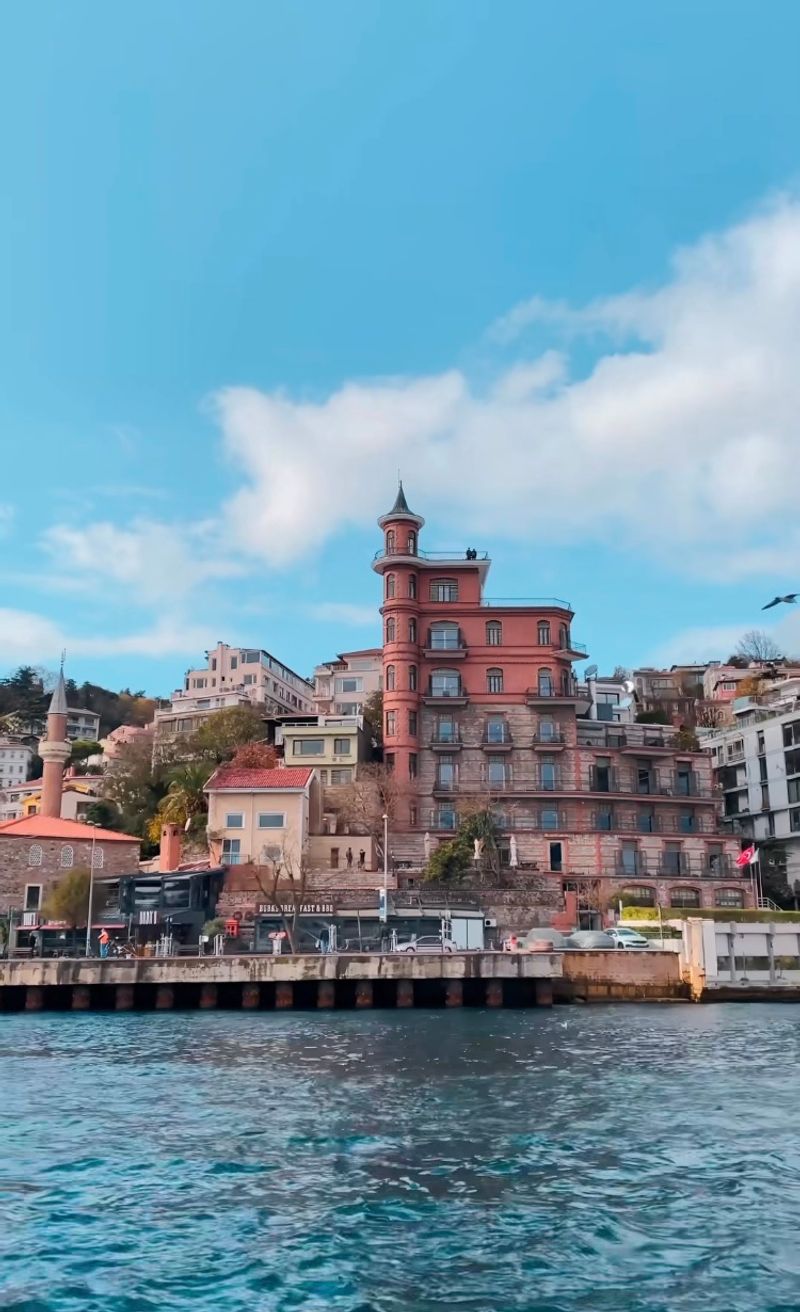
Sometimes a fortress is strong because it is built very fast. Sultan Mehmed II had Rumeli Hisarı finished in about four and a half months in 1452.
He wanted to control the Bosphorus before attacking Constantinople.
The fortress sits at the narrowest point of the strait, directly across from an older Ottoman fort on the Asian shore. Cannons there could fire on any ship trying to pass.
Three large towers and thick walls follow the steep hillside down to the water.
Ships that ignored the rules were sunk, and the fort helped cut off supplies to the Byzantine capital. Constantinople fell in 1453.
Today the fortress is a museum, and in summer it hosts concerts in its open-air theater with views of the Bosphorus.
Share this story