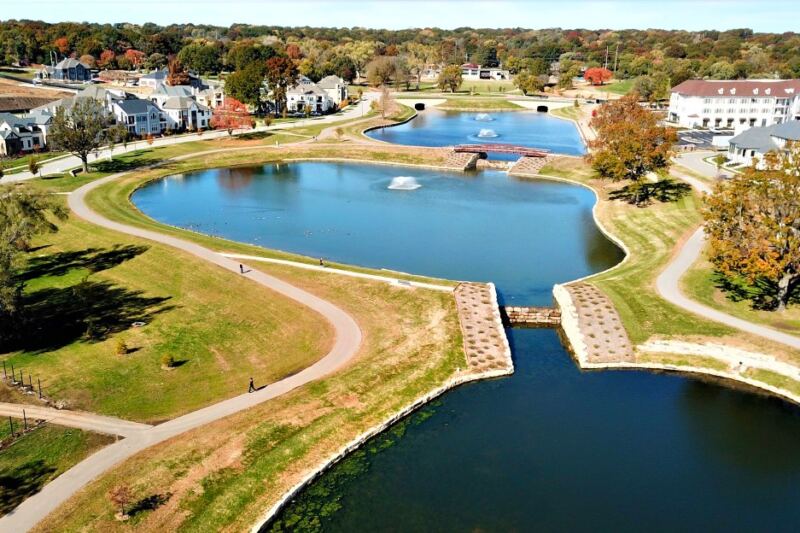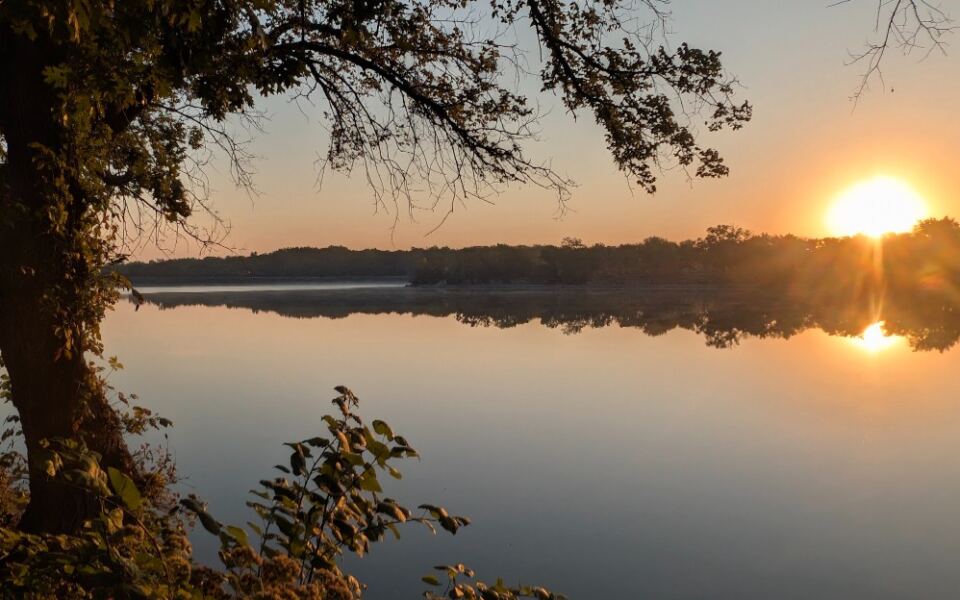
Wooded hills, rock ledges, and a 150-acre lake are probably not what most travelers picture when they think of Kansas. Crawford State Park packs all three into a quiet corner of the state near the edge of the Ozark highlands.
The lake itself was built by Civilian Conservation Corps workers during the 1930s, and their work still shapes a park where visitors can hike, paddle, swim, fish, camp, or spend the night in a cabin.
Four trails range from short, accessible walks to a seven-mile mountain bike loop around the lake. There is also a swimming beach, boat ramps, campsites overlooking the water, and even a seasonal cafe near the marina.
Another surprise waits below the dam. Farlington Fish Hatchery raises multiple species of fish as part of the system that helps stock public waters around Kansas, adding another layer to a state park that offers far more than its quiet setting initially suggests.
Finding a Hidden Kansas Oasis
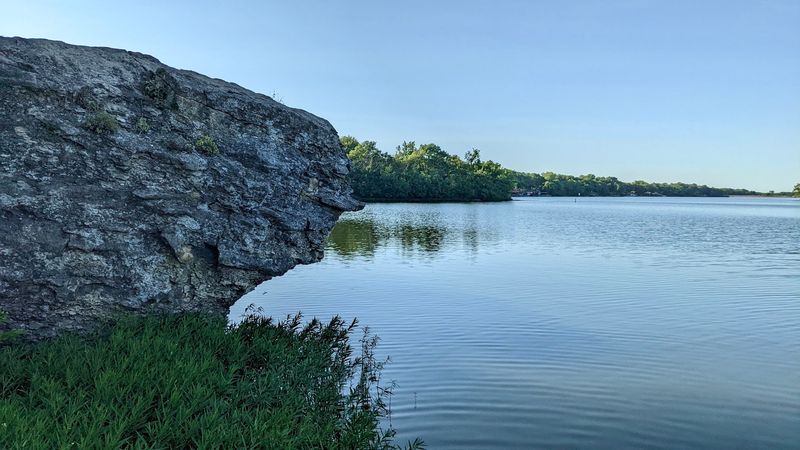
The address is 1 Lake Rd, Farlington, Kansas 66734, and the park sits in Crawford County. Crawford State Park lies about nine miles north of Girard, and K-7 highway leads right to it.
Rolling hills and quiet farm roads carry you in. The paved park roads are smooth, and the air feels calmer the moment you cross the entrance.
The park sits near the edge of the Ozark highlands, so the scenery looks different from the flat Kansas many people picture. Oak woods crowd the shoreline, and rock ledges peek out around the water.
Vehicle permits are required for entry, so check the Kansas Department of Wildlife and Parks website before you leave home. I like to arrive early, grab a map, and let the day unfold slowly.
Next comes the story of how this lake came to exist at all.
A Lake Built by Young Hands
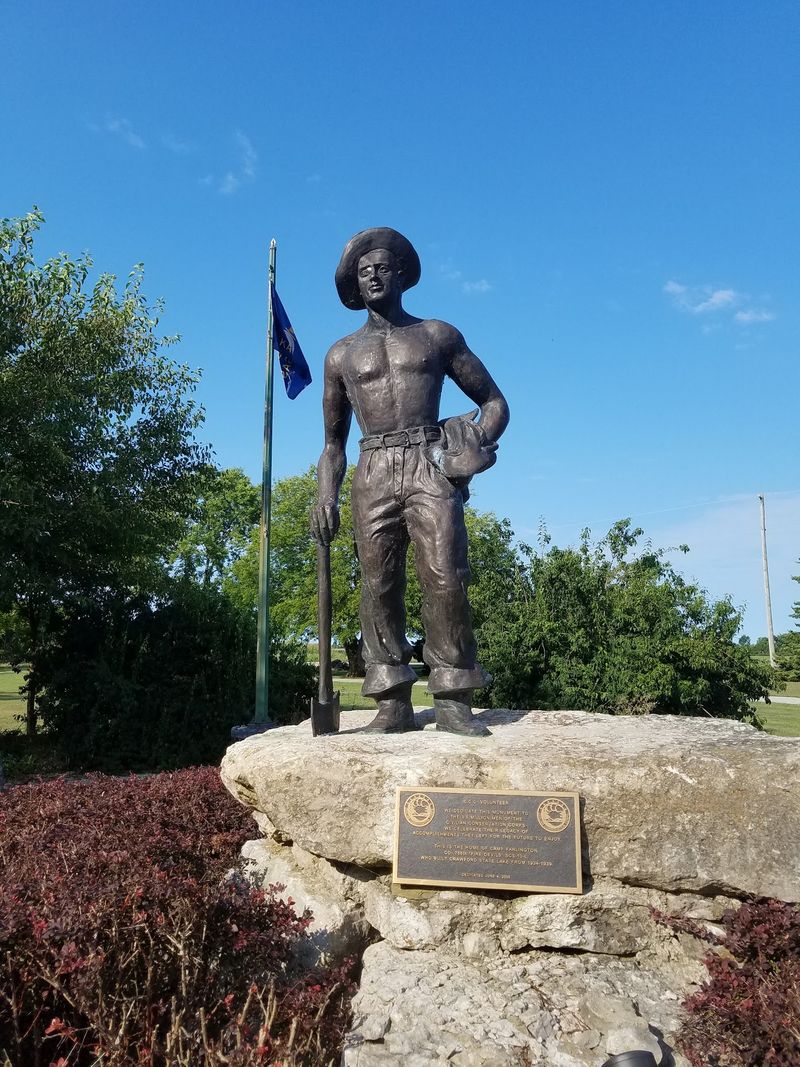
Picture young men in the 1930s swinging tools where a lake now glitters. The Civilian Conservation Corps built the 150-acre lake and shaped the park over about four years.
President Franklin Roosevelt started the program to provide jobs during the Great Depression. The crews focused on forestry, soil protection, and flood control.
A paved quarter-mile path called the CCC Memorial Trail leads to a monument honoring those workers. It is short, flat, and easy for any visitor to enjoy.
I read the marker slowly and then looked out at the water. Every picnic, paddle, and campfire here rests on their effort.
Plan to stop here early in your visit, because it adds meaning to everything that follows. Up next, the trails that let you roam the woods they planted and protected.
Four Trails, Four Moods
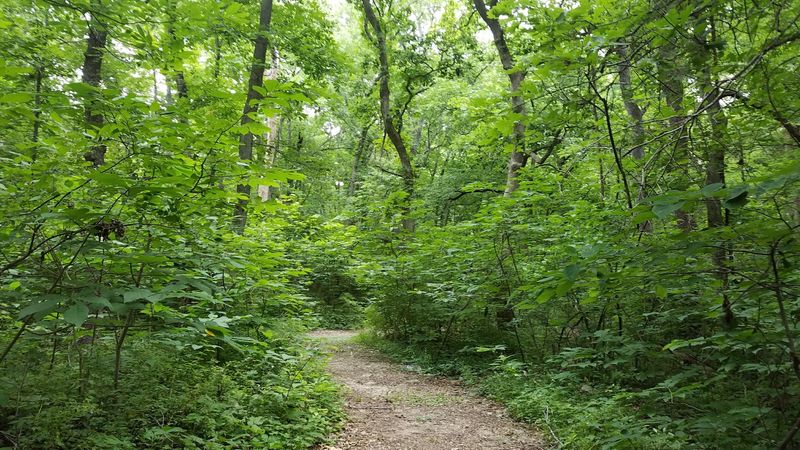
Four trails wind through the park, and each one has its own mood. Three are short and paved or hardened, which makes them friendly for strollers and wheelchairs.
The Deer Run Nature Trail covers three quarters of a mile and has signs about local plants and animals. The Spiderleg Bridge Trail runs half a mile, and the CCC Memorial Trail stretches a quarter mile.
Serious riders head for the Drywood Creek Mountain Bike Trail. This seven-mile loop of dirt, gravel, and grass circles the entire lake.
Expect twists, rolling climbs, and a couple of stream crossings in most weather. Races have been held on it.
Hikers who want a long walk may find the paved options brief, so pair a couple of them together. Bring water either way, because shade is plentiful but the air can turn humid.
On the Water at Lake Crawford
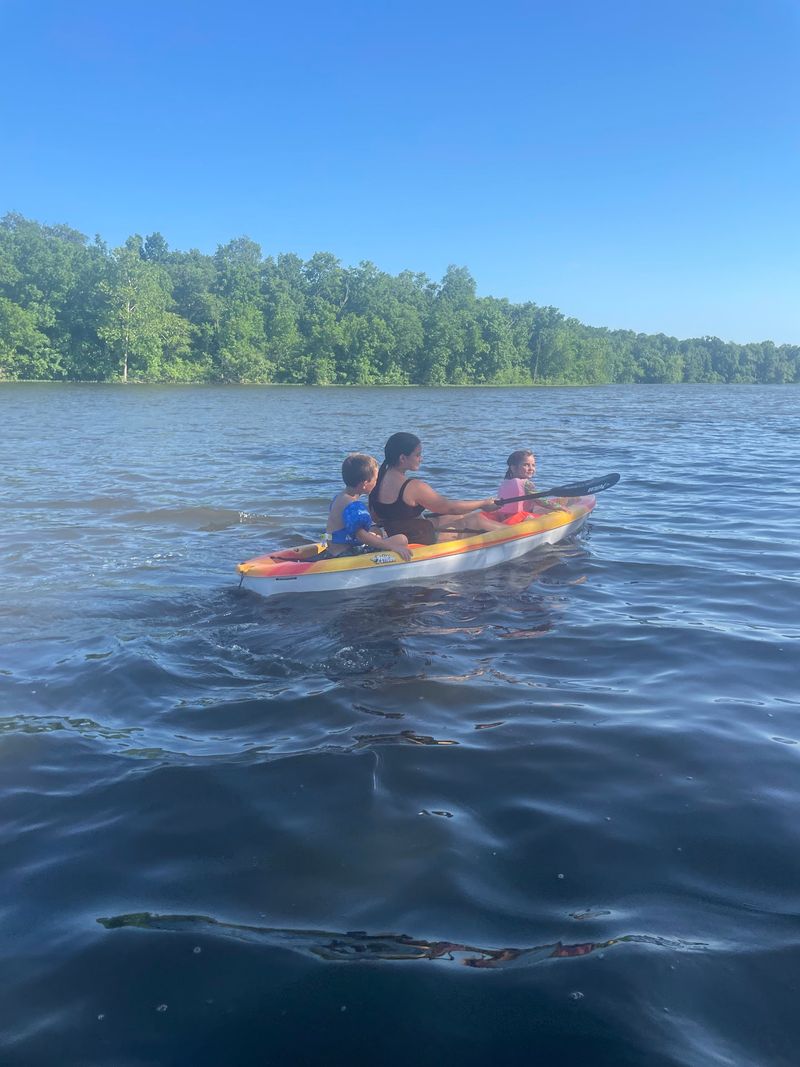
Calm water makes a friendly first lesson for new paddlers. Lake Crawford, also called Farlington Lake, covers 150 acres and reaches 48 feet at its deepest point.
Two boat ramps give you choices. One sits on the north end near the dam, and the other is below Shady Rest Campground on the southwest fork.
Kayaks, paddleboards, skis, and personal watercraft all share the lake. Rock cliffs and wooded banks line the shore, so there is always something to look at.
A swimming beach on the north side has showers close by and a playground nearby for the kids. Boat wakes can ripple the swim zone, so paddleboarders may prefer early mornings.
I slid my kayak in near the quieter south side and drifted for an hour. Coming up, we will talk about where to spend the night.
Where to Pitch a Tent or Claim a Cabin
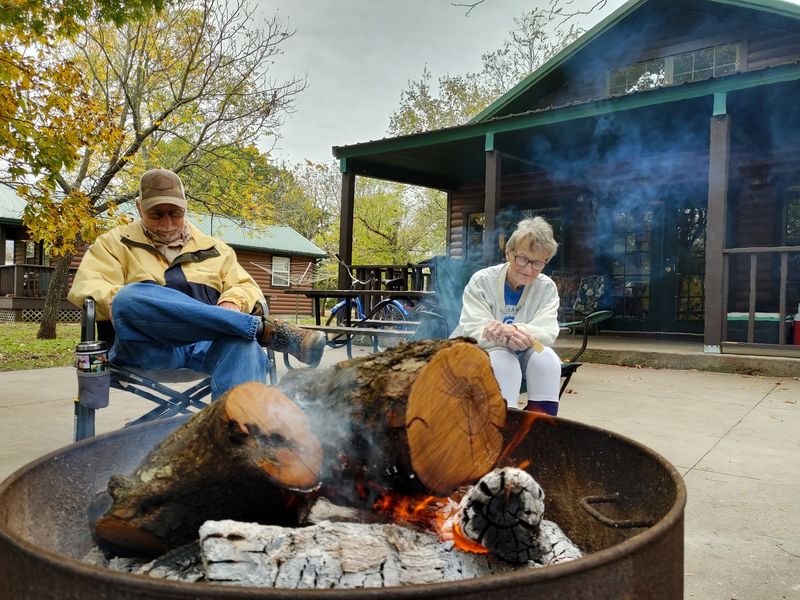
Six campgrounds spread across the park, including Rocky Cove, Oak Point, and Osage Bluff. Between roughly 100 and 114 sites give you plenty of choices.
Forty-five sites offer 50-amp electric and water, and 28 offer 30-amp electric only. Another 28 are primitive for campers who like it simple.
Many sites have lake views, and some have level concrete pads. Rocky Cove has no bathhouse, so plan around that.
Five deluxe cabins stay open all year. They include heating, air conditioning, private bathrooms, grills, and fire rings.
Reserve two to three months ahead for busy seasons. Campers who want hookups should book water and electric sites, since electric-only spots can feel short.
Lights are few here, so the night sky shows off. Next, meet the seasonal color and creatures that share it.
Redbuds, Foliage, and Feathered Neighbors
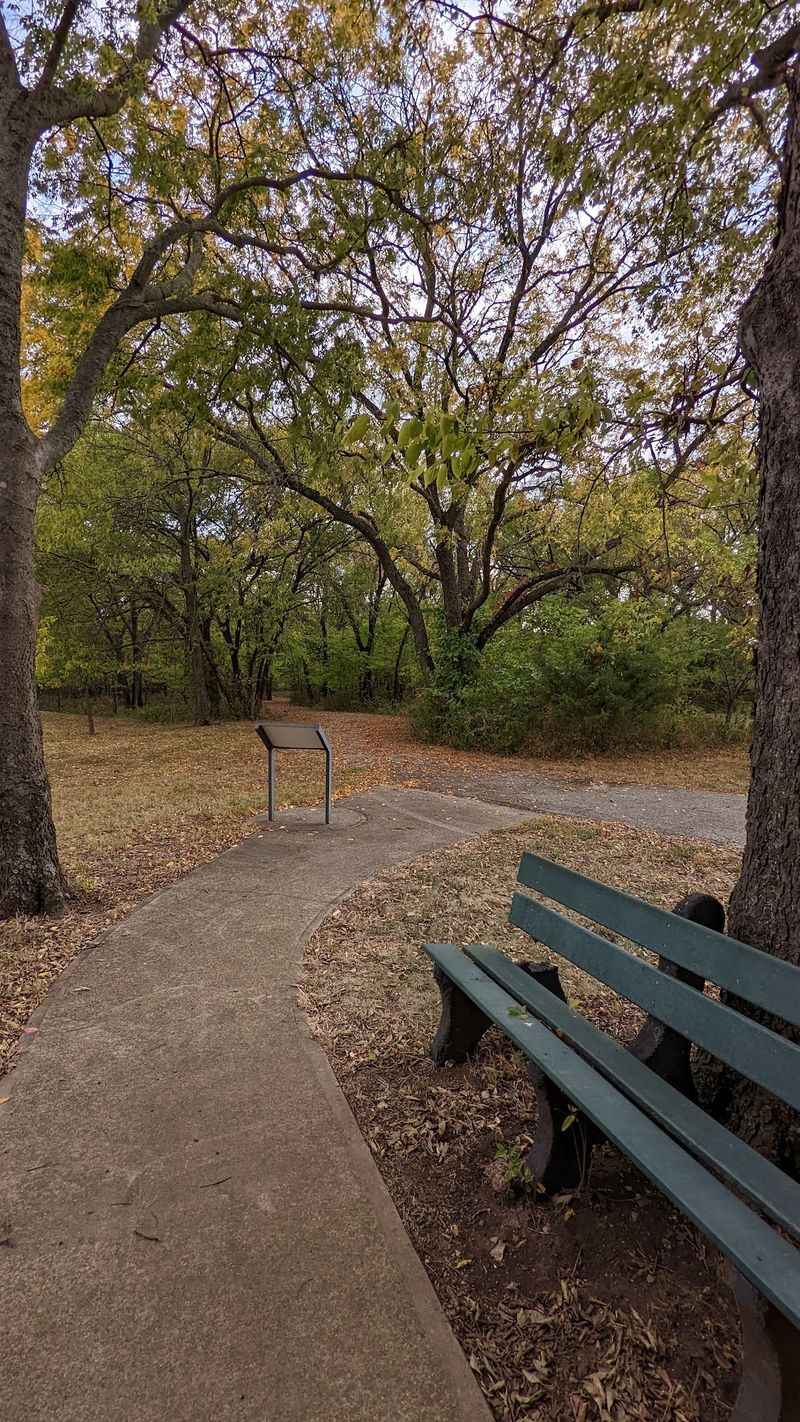
Spring paints the woods pink. Redbud trees bloom across the park, joined by wildflowers along the trails.
Summer turns the oak canopy into a cool green roof. Autumn follows with a warm mix of reds, golds, and browns, and October is a favorite month for hiking.
Birds keep things lively. Titmice, orioles, cardinals, and hummingbirds flit around the trees and shoreline.
Deer and rabbits show up on quiet walks. Kids may chase lizards near the cabins, and butterflies drift through a small garden.
I carried binoculars and a light jacket, and both earned their space. Morning and evening give the best chances for wildlife.
All that walking builds an appetite, and the park has a clever answer waiting at the marina.
A Cafe with a View
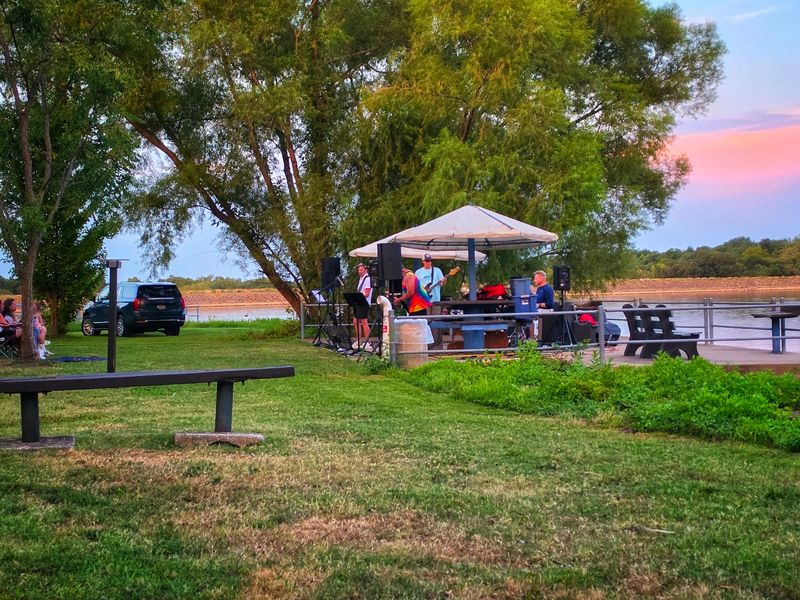
Crawford State Park has something many small state parks lack: food available right beside the water. The marina restaurant offers limited convenience items along with meals, making it possible to spend a weekend at the lake without driving into town every time somebody gets hungry.
The official park information currently says meals are available from Friday breakfast through Sunday. Because marina operations are seasonal and business schedules can change, confirm current hours before planning an entire day around breakfast or dinner there.
The location is part of the attraction. Eating near the lake feels different from stopping at a restaurant beside a highway, particularly after several hours of hiking, paddling, or swimming.
The source article also describes live music on some Friday evenings during the warmer part of the year. Treat that as a seasonal feature to verify for your specific weekend rather than guaranteed entertainment every Friday.
Bring backup food if you are camping. A cooler with breakfast supplies, snacks, and an easy dinner prevents changing restaurant hours from becoming a problem.
Girard and other nearby communities can provide additional groceries, fuel, and dining when necessary, but staying inside the park preserves the slower rhythm that makes Crawford appealing. Grab a meal, watch the lake, and resist checking the time.
Afterward, take another walk. One of the shortest trails leads into a surprisingly complicated chapter of Kansas history involving soldiers, settlers, and the frontier.
Soldiers, Settlers, and Old Stories
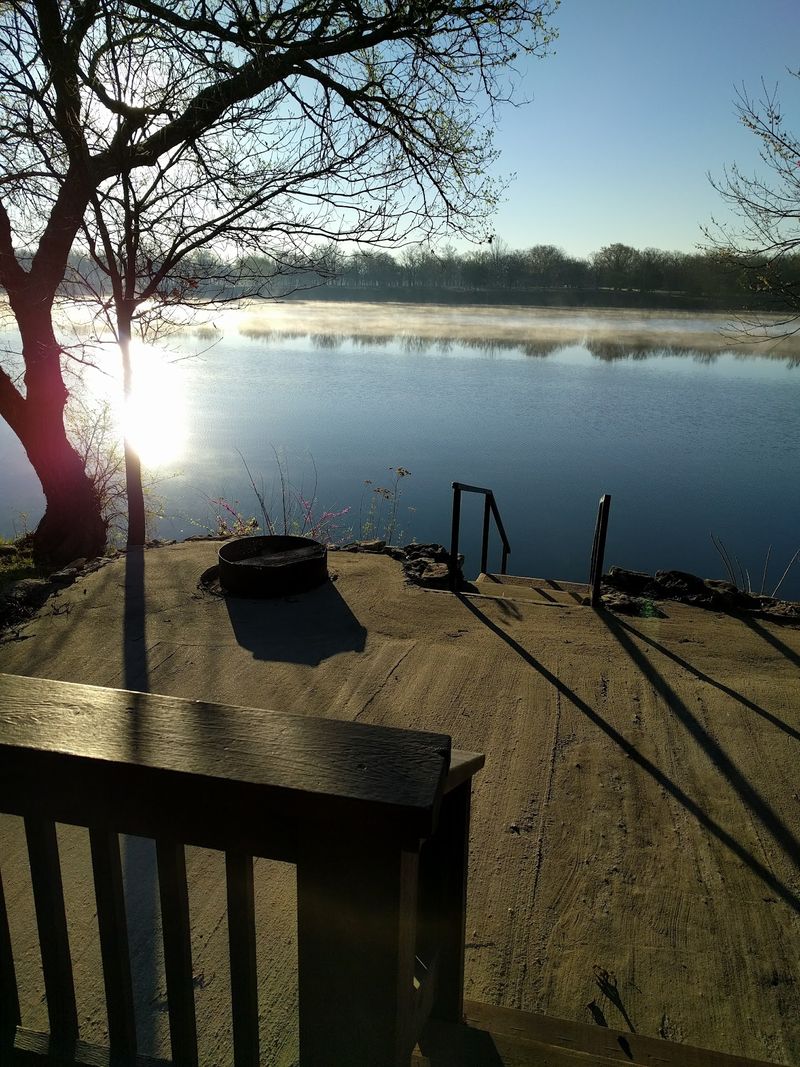
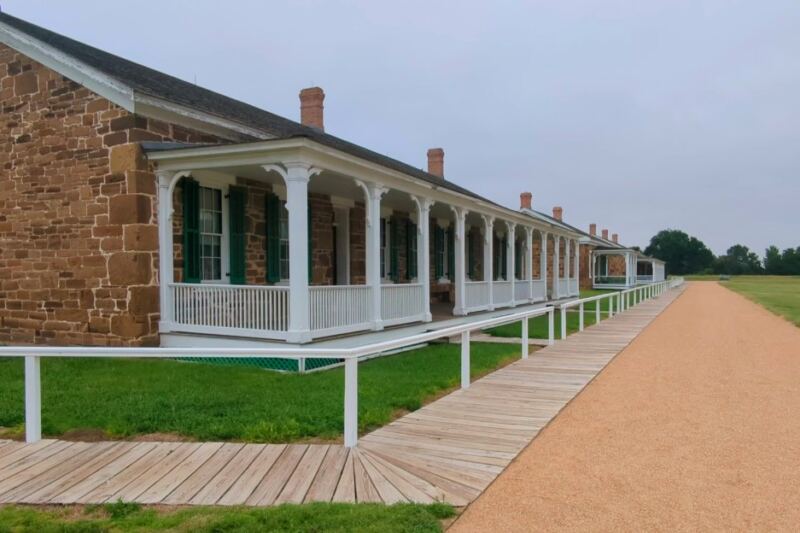
Crawford State Park contains more history than its peaceful campgrounds initially suggest. Kansas officials identify two recorded archaeological sites within the park, including remnants of a 19th-century United States military outpost.
The Spiderleg Bridge Trail provides one way to explore this historical landscape. The half-mile route is open year-round and ADA accessible, allowing visitors to combine an easy walk with a glimpse into the region’s frontier-era past.
Crawford also lies along the Frontier Military Historic Byway. The 167-mile route follows eastern Kansas and links locations associated with the military roads, forts, communities, and conflicts that shaped settlement along the state’s eastern edge.
The source article says troops arrived in the 1850s to protect Cherokee lands from settlers. The current park materials confirm the military-outpost remains but provide less detail about that particular interpretation, so I would avoid presenting the more specific claim as settled without additional historical documentation.
What is certain is that archaeological resources deserve protection. Stay on established routes, leave artifacts where you find them, and resist the temptation to treat old foundations or objects as souvenirs.
A quiet walk works better here anyway. Knowing that soldiers and travelers once moved through this same landscape gives the woods another dimension.
Then follow the park’s history forward again. Below the dam, a fish hatchery begun before World War II still supports fishing far beyond Crawford’s shoreline.
Fishing and the Hatchery Below the Dam
Fishing remains one of Crawford State Park’s major attractions. Kansas wildlife officials specifically highlight channel catfish, crappie, and striped bass, while the broader park guide also lists bluegill and largemouth bass among fish anglers may encounter.
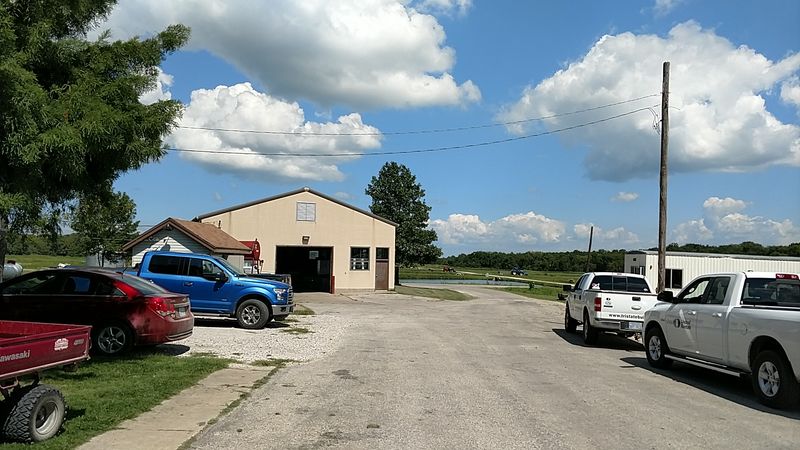
A particularly interesting operation sits below the lake. Construction on Farlington Fish Hatchery began in 1939, stopped during World War II, and was completed after the war.
Today, 30 earthen production ponds provide more than 32 surface acres of water for raising fish.
The species list is surprisingly broad. Farlington raises blue and channel catfish, grass carp, hybrid sunfish, largemouth bass, redear sunfish, sauger, saugeye, striped bass hybrids, and walleye.
It forms part of Kansas’s four-hatchery system supplying fish for public waters around the state.
Tours are available by prior arrangement rather than as an automatic walk-in activity. The hatchery recommends April and June for visitors hoping to see a greater variety of fish in its fish house.
Anglers should check current licensing and length or creel regulations before fishing. Several methods are specifically prohibited at Crawford: bowfishing, trotlines, setlines, and floatlines.
A simple rod and reel is enough for a relaxed shoreline session. Bring patience too.
Fish have never cared about vacation schedules.
Smart Planning Tips
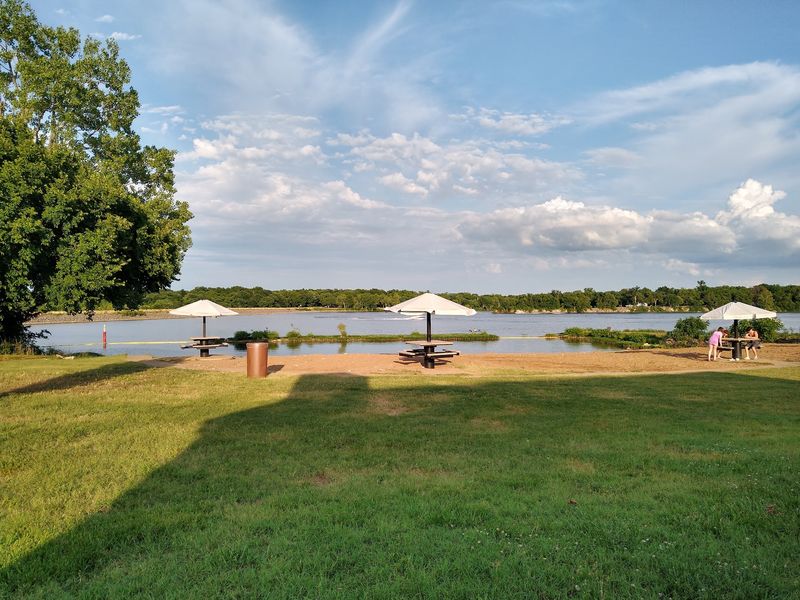
A few small steps save headaches. A vehicle permit is required, and card payment can be tricky if no one is at the booth, so check the official website for current rates.
Spring and fall are the most popular seasons. Redbuds bloom in spring, and October brings color and cool hiking weather.
Summer is great for swimming but can be humid with bugs. Winter brings cold and occasional snow, and some water facilities close, though cabins stay open.
Quiet hours run from 11 p.m. to 6 a.m. Cell service may be weak, which makes a nice break from screens.
One key detail for later dates: from July 13, 2026, into summer 2027, K-7 north of 710th is restricted or closed. Approach from the south through Girard.
A Quiet Place Worth Returning To
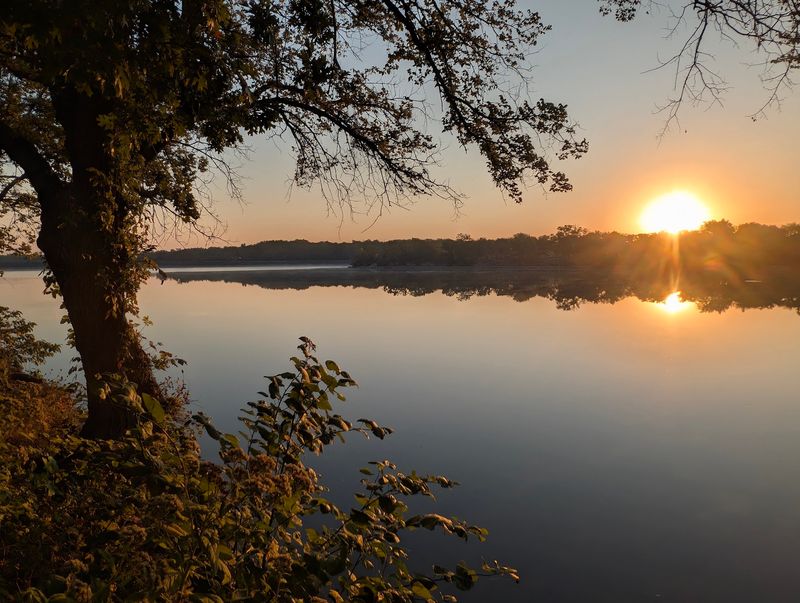
Some places earn a second visit before you even leave. The lake, trails, and campgrounds here fit together so well that a short trip can feel like a long exhale.
The park holds a Depression-era story, a frontier past, and a hatchery that supports fishing across Kansas. All of it sits within easy reach of one another.
I left with sandy shoes and a head full of small details. The cafe, the rock ledges, and the dark night sky stuck with me most.
Pack a camera, a light jacket, and some patience for slow mornings. Then pick one trail and begin.
Crawford State Park does not shout for attention. It simply waits, quiet and green, for you to arrive.
Share this story