Delaware may be small, but its history stretches across centuries of colonial settlement, revolution, religious change, and local legends. Old chapels, schoolhouses, courtrooms, museums, and riverbanks preserve stories that are easy to miss from the road.
These 12 Delaware landmarks reveal some of the fascinating tales hiding behind ordinary historic signs. From the site where a colony began to secret attic escapes and unusual museum artifacts, each offers a surprising reason to stop and explore.
1. Fort Christina Park, Wilmington, Delaware
A colony started on a pile of rocks, and that is no exaggeration. On March 29, 1638, Swedish and Finnish settlers stepped ashore at a spot called The Rocks and founded New Sweden.
Their ships were the Kalmar Nyckel and the Fogel Grip. The fort they built was named for Queen Christina of Sweden.
The colony traded beaver pelts with the Lenape people. It also clashed with the Dutch, who built Fort Casimir nearby in 1651.
In 1655, Peter Stuyvesant captured the fort after a ten-day siege. The Dutch renamed it Fort Altena, yet many Swedish colonists stayed and kept their language and faith.
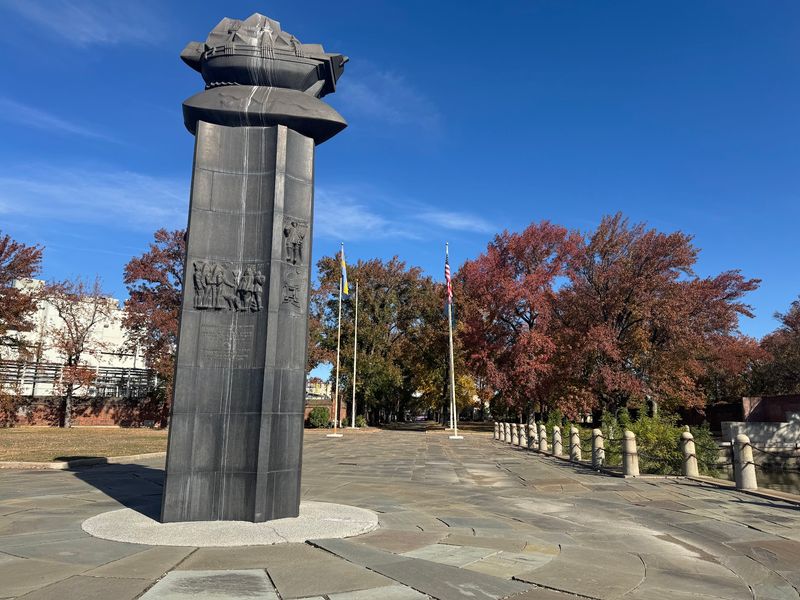
No original fort buildings remain today. The Rocks are still visible, and a monument topped with a sculpture of the Kalmar Nyckel stands nearby.
Sweden gave it as a gift in 1938, and President Franklin D. Roosevelt helped dedicate it.
In 2013, the king and queen of Sweden joined Vice President Joe Biden to reenact the landing on a replica ship.
2. Old Swedes Historic Site, Wilmington, Delaware
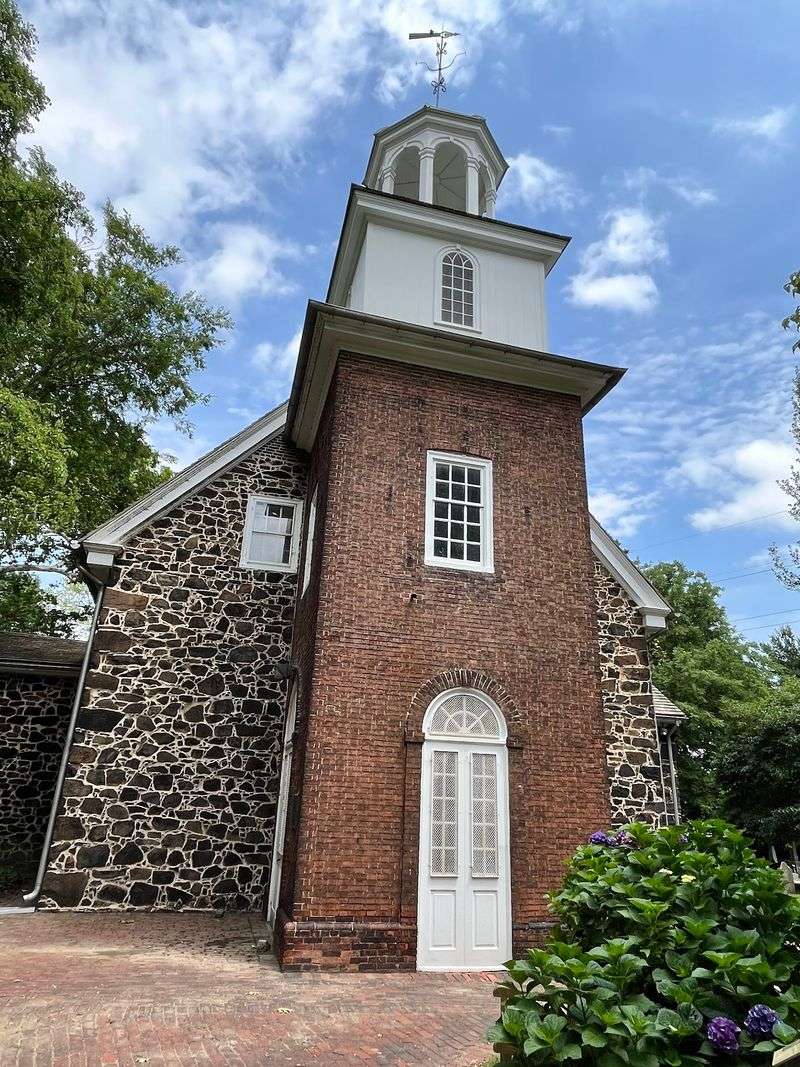
Few churches can claim to be the oldest in the country still used as built, but this one can. Holy Trinity Church was consecrated on June 4, 1699, and it still serves its congregation.
Builders used local blue granite and Swedish bricks that once rode across the ocean as ship ballast. The ground itself served as a burial site for Fort Christina as early as 1638.
The churchyard holds an estimated 15,000 burials. Among them are 44 Revolutionary War veterans, Wilmington’s first mayor Richard Bayard, three U.S.
Senators, and suffrage leader Florence Bayard Hilles.
Services were held in Swedish well into the 1700s. In 1777, British and Hessian soldiers were quartered inside, which paused worship for a while.
The parish joined the Episcopal Church in 1791. On the grounds, the Hendrickson House, a farmhouse from around 1722, was moved here in 1960 and now works as a museum and research space.
Carved angels beneath the organ loft were carbon-dated in 2000 and found to be made of yellow pine.
3. Cooch’s Bridge Historic Site, Newark, Delaware
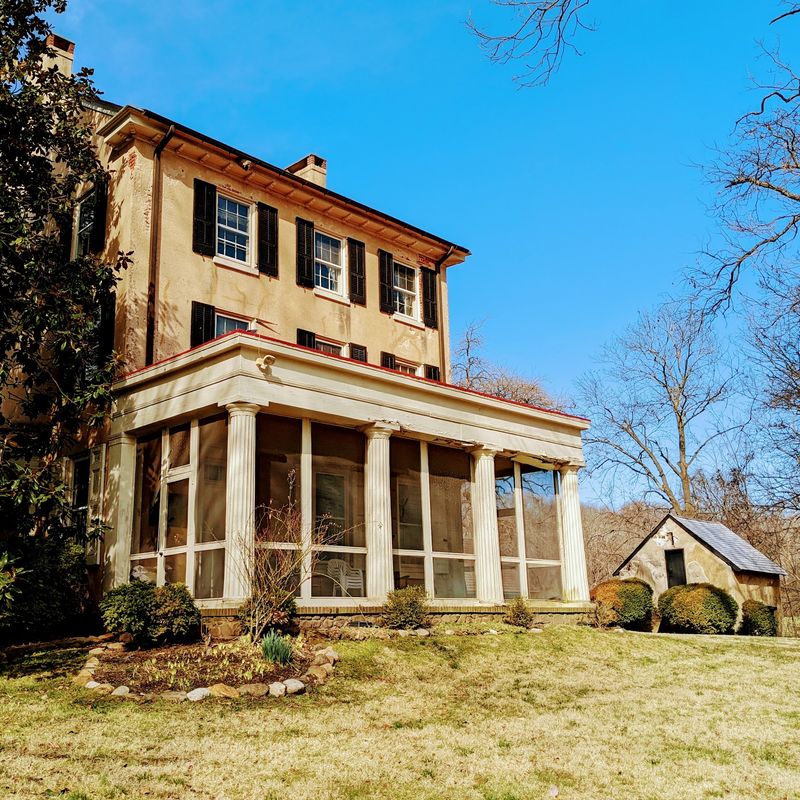
Delaware fought exactly one land battle during the Revolution, and it happened right here. On September 3, 1777, American troops met British and German forces as part of the Philadelphia Campaign.
Tradition says the new Stars and Stripes flew in battle for the first time. General William Maxwell’s light infantry fought a retreat toward Iron Hill, then crossed back over the bridge when ammunition ran low.
Afterward, General Charles Cornwallis used the Cooch house for five days. Family legend says Colonel Thomas Cooch buried his silver before heading to Pennsylvania, and it was never found.
The story reaches well past the battle. The Cooch family lived here for seven generations, and the farm relied on enslaved and free Black labor, a history now being researched and shared.
The site includes the homestead and the mill complex, with more than 250 years of milling and farming. Preservation work is underway, so access is limited to registered programs and guided tours.
Book ahead before visiting.
4. New Castle Court House Museum, New Castle, Delaware
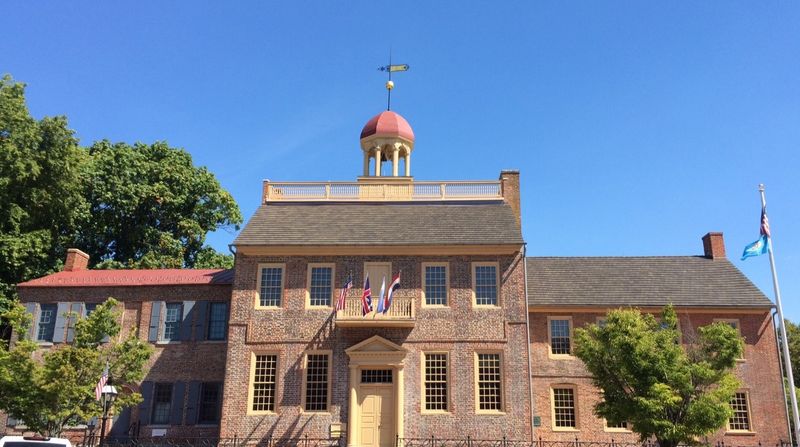
“If anyone knows a fugitive who wants a shelter, and a friend, send him to Thomas Garrett.” He said it inside this very courtroom, and he said it after losing his case.
In 1848, abolitionists Thomas Garrett and John Hunn were tried here for helping the Hawkins family escape slavery in Maryland. The judge was U.S.
Supreme Court Chief Justice Roger B. Taney.
Hunn pleaded guilty. Garrett chose a trial and used it as a public platform.
Both men were found guilty and fined so heavily that they lost homes, businesses, and property. Garrett did not back down, and he kept at his work until the Civil War, helping an estimated 2,700 people reach freedom.
The courthouse is one of the oldest in the country and was Delaware’s first statehouse. It served as the seat of government until 1777.
In 2003, it was named a National Historic Underground Railroad Site. Guided tours and exhibits cover portraits, furniture, and artifacts from Delaware’s courts and assembly.
5. Corbit-Sharp House, Odessa, Delaware
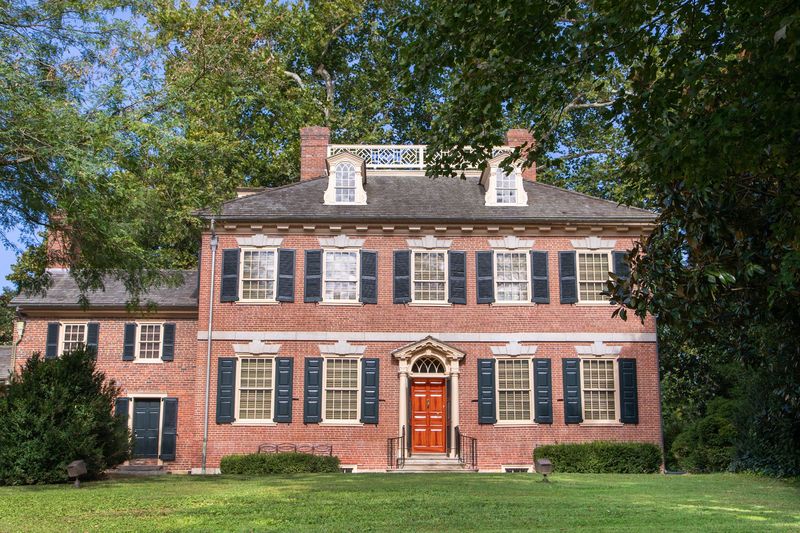
The attic door in this house is so small that a sheriff never imagined a person could fit behind it. That mistake saved a life in 1845.
A man named Sam, who had escaped slavery in Maryland, arrived seeking help. Mary Corbit was home alone, so she hid him behind the little door and gave him food and a quilt.
Soon the local sheriff came, saying a fugitive had been seen entering. Mary allowed a search but kept his dogs outside, and the sheriff left empty-handed.
That evening Daniel Corbit returned, gave Sam food and money, and sent him north toward Philadelphia. The episode earned the house a place in the National Underground Railroad Network to Freedom.
William Corbit, a wealthy tanner, built the house between 1772 and 1774. It is a fine example of Philadelphia-Georgian style and holds furnishings by cabinetmaker John Janvier.
The Historic Odessa Foundation runs tours here. The house also sits on the Harriet Tubman Underground Railroad Byway.
6. John Dickinson Plantation, Dover, Delaware
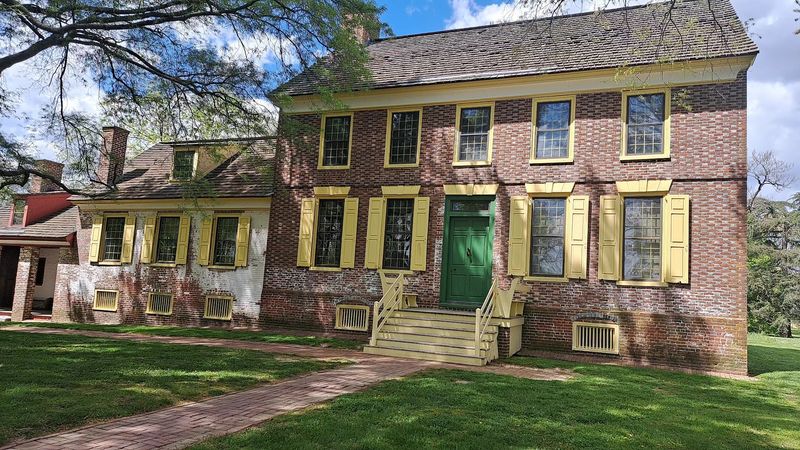
Nicknames can hide as much as they reveal. John Dickinson was called the Penman of the Revolution, yet his family farm tells a more complicated tale.
He wrote powerful essays defending colonial rights and later signed the U.S. Constitution.
Meanwhile, his estate, Poplar Hall, relied on enslaved labor that he inherited in 1760.
Dickinson came to call slavery a stain. He freed many of the people he enslaved on a conditional basis in 1777, then freed all of them outright in 1786.
Today the Plantation Stories Project researches everyone tied to the land, including enslaved people, free Black residents, indentured servants, and tenant farmers. One example is Dinah, a skilled spinner who married a free Black farmer named Peter Patten after her freedom.
In March 2021, an African burial ground was identified on the property. Its location had been lost for generations.
Visitors can see Dickinson’s 1740 brick house, rebuilt farm buildings, and a log dwelling that represents homes of enslaved people and tenants. A gravel road leads to the St. Jones River.
7. Zwaanendael Museum, Lewes, Delaware
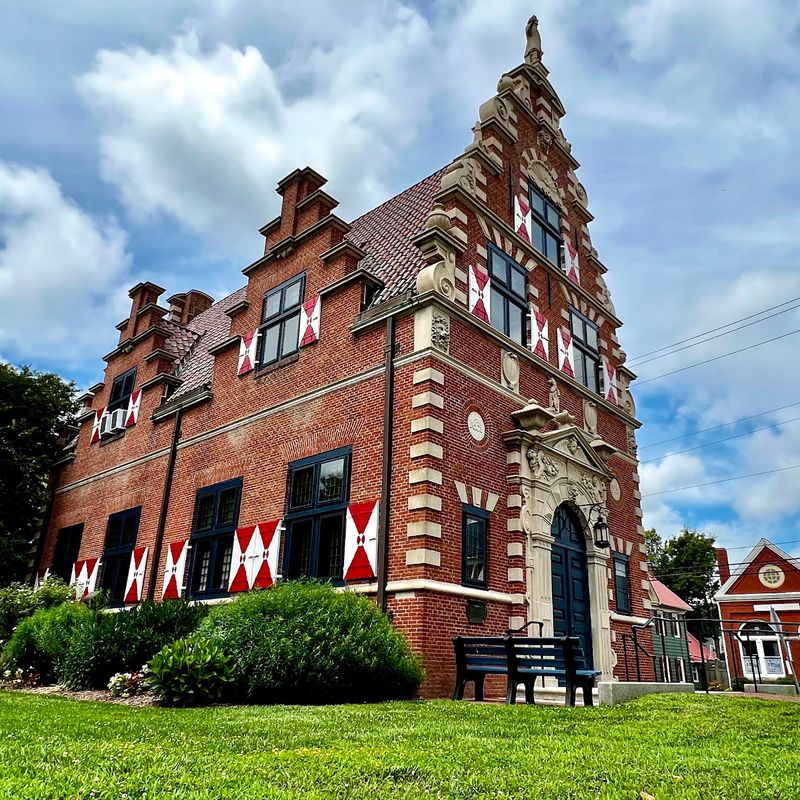
A Dutch town hall in coastal Delaware sounds like a travel mix-up, but it is entirely on purpose. The museum was built in 1931 to mark 300 years since the first European colony here, called Swanendael, meaning Valley of the Swans.
It copies the town hall in Hoorn, Netherlands, with a stepped gable, carved stonework, and decorated shutters. A statue of David Pietersen de Vries stands on the front.
Dutch colonists settled near Lewes in 1631 to pursue whaling and farming. A misunderstanding with local Native people over a tin sign taken from a post led to violence, and the colony ended within about a year.
De Vries arrived in December 1632, found the burned settlement, and negotiated peace before leaving.
Inside, exhibits cover maritime, military, and social history. Artifacts from the British warship DeBraak, which sank in 1798, are on display.
The star oddity is a Feejee Mermaid, a monkey head sewn onto a fish body. It makes a strange but memorable souvenir of 19th-century showmanship.
8. Indian River Life-Saving Station Museum, Rehoboth Beach, Delaware
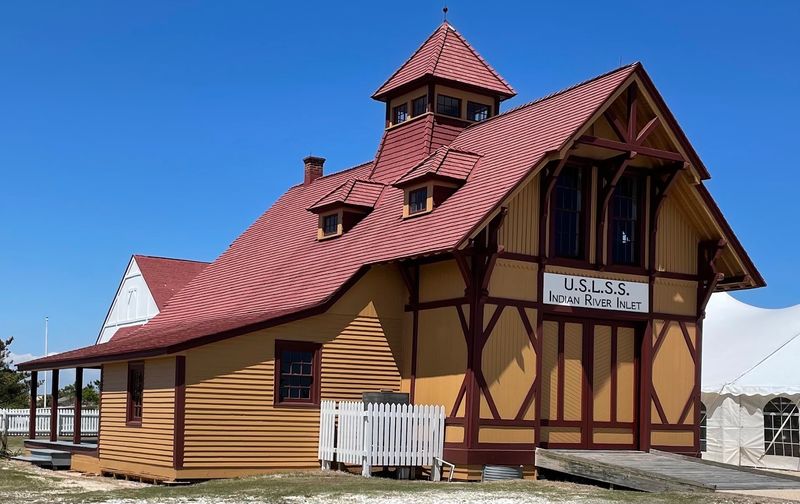
Between 1876 and 1915, the crew here answered more than 60 wrecks and saved 419 lives. That record came from simple tools and a strict routine.
The station was part of the United States Life-Saving Service, a forerunner of the Coast Guard. It sat between Bethany Beach and Rehoboth Beach, where shoals trapped many ships.
A keeper and six to eight surfmen lived on site for months at a time. By day, someone watched from the lookout tower, and at night or in fog, they walked the beach and lit flares to warn ships away.
For rescues, they launched surfboats or used the breeches buoy. A Lyle Gun shot a line over a wrecked vessel, which then carried a rope system to bring people ashore.
Washington Vickers served as keeper for 24 of the station’s 39 years of operation.
Dunes built up around the station soon after it opened, so it was moved in 1877. The Ash Wednesday Storm of 1962 partly buried it, and it was later restored to its 1905 look and opened as a museum.
9. Barratt’s Chapel & Museum, Frederica, Delaware
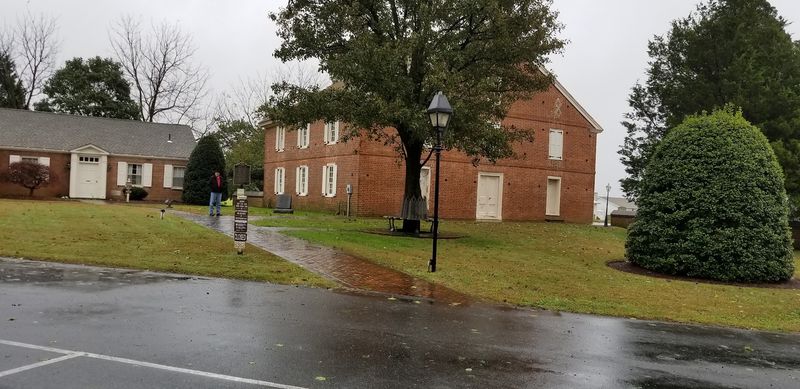
One surprise hug helped create a denomination. On November 14, 1784, Thomas Coke was preaching here when Francis Asbury walked in unannounced.
Coke had been sent from England by John Wesley to organize American Methodism. He came down from the pulpit and embraced Asbury, and a star in the chapel floor marks the moment.
That same service included the first baptisms and Holy Communion given by ordained Methodist clergy in America. Afterward, the two leaders met in a nearby home and planned a gathering of preachers in Baltimore.
That meeting, the Christmas Conference of 1784, formed the Methodist Episcopal Church.
The chapel was built in 1780 on land from Phillip Barratt. It is the oldest surviving church building in the country made by and for Methodists, and it earned the nickname Cradle of American Methodism.
Its ceiling is a plain barrel vault made of heart pine. A museum on site covers Methodism on the Delmarva Peninsula, and an eleven-acre cemetery dates from 1785 to the present.
10. Auburn Valley State Park, Yorklyn, Delaware
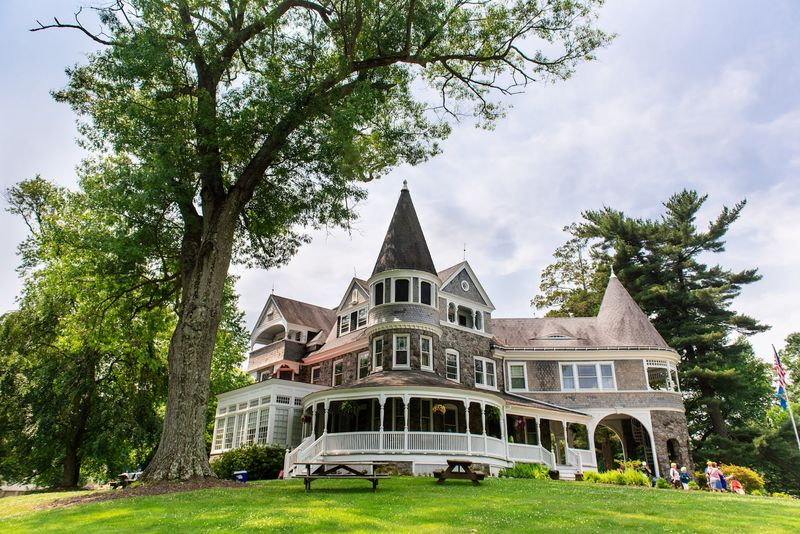
This park holds the world’s largest operating collection of Stanley steam cars. That alone makes it worth a trip to Yorklyn.
The land once belonged to the Marshall family, who made paper and vulcanized fiber. Their mills shaped the Red Clay Valley and played a part in early American manufacturing.
T. Clarence Marshall built the Marshall Steam Museum in 1947 to house his antique cars.
Inside are a working 1916 electric car, a 1914 Model T, and two 1930s Packards.
On Steamin’ Days, visitors ride in vintage autos and on small coal-fired steam trains of the Auburn Valley Railroad.
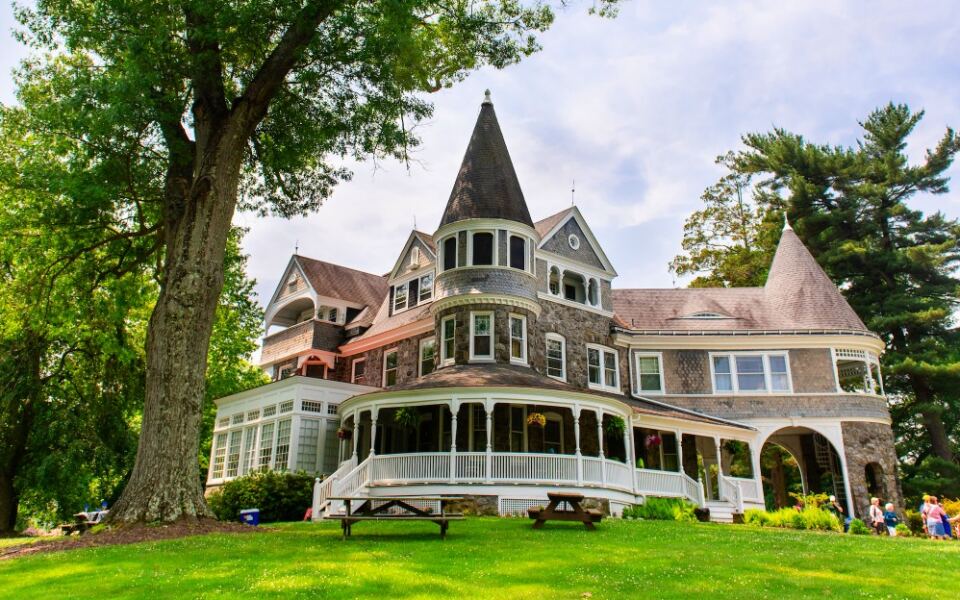
The 1897 Queen Anne mansion, Auburn Heights, was built by inventor Israel Marshall. It had indoor plumbing, electric lighting, and steam heat from the start.
The Marshall Brothers Paper Mill still waits for new life as a museum space. Rare 19th-century bridges from around the country have been restored and moved here, and trails like the Oversee Farm Trail lead past a historic farmhouse and bank barn.
11. Prince George’s Chapel, Dagsboro, Delaware
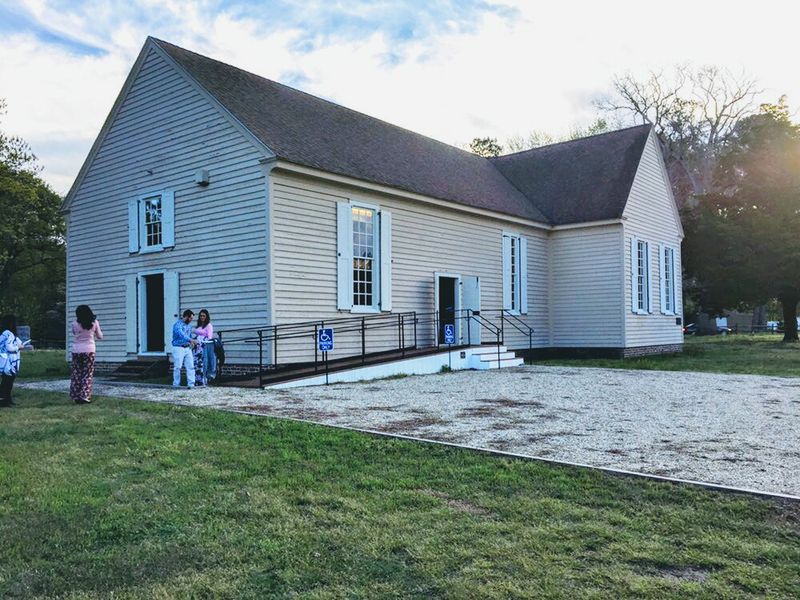
Maryland approved the building of this Delaware chapel, thanks to a border dispute that left the line unsettled. On July 5, 1755, the Maryland Assembly authorized construction after local Church of England members asked for it.
It was a chapel-of-ease, meant to serve people living far from the main parish church. It was dedicated on June 30, 1757, and named for Prince George, the future King George III.
Inside, a barrel-vaulted ceiling of plain heart pine planks reflects the wood that was easy to find in the area.
By 1850, the building had declined enough that regular services stopped. The Sussex County Laymen’s League funded a major restoration in 1928, and a rededication followed in 1929.
The State of Delaware took ownership in 1967 and made further repairs with help from the National Park Service. The nave is original, while the east transept with its large window and octagonal pulpit was rebuilt.
General John Dagworthy, who feuded with George Washington, is buried here. Visits are usually arranged ahead of time.
12. Iron Hill School Museum, Newark, Delaware
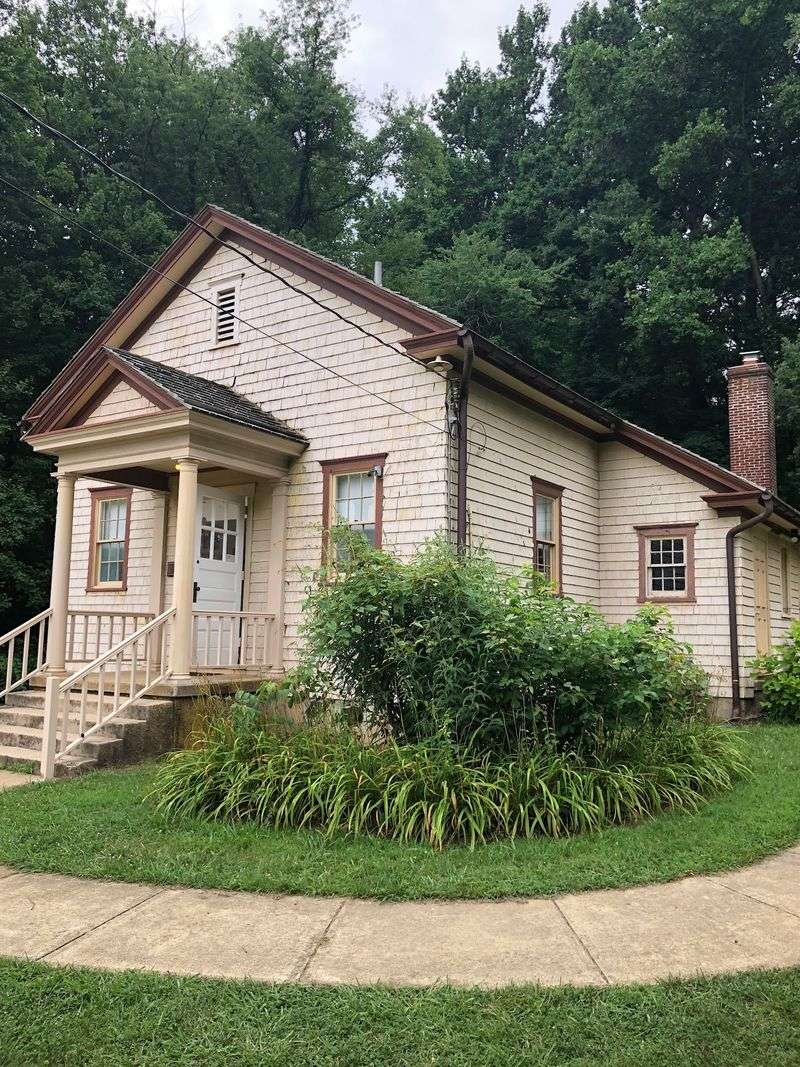
Children once wrote thank-you letters to a wealthy businessman for giving them a better school. In 1926, students sent notes to Pierre S. du Pont, who paid for the building.
Between 1919 and 1928, du Pont financed more than 80 modern schools for Black students in Delaware. Architect James Oscar Betelle designed this one in 1923 at a cost of $9,000.
Earlier schools for Black children were often crowded, underfunded, and hard to reach. Iron Hill School offered grades 1 through 6 with one teacher, and attendance rose after it opened.
Former students remembered it as clean, bright, and cheerful, and they recalled the pot belly stove used for heat and sometimes hot lunches.
The school closed in 1964, and segregation ended in the area in 1965. It is now one of the few architecturally intact du Pont schools.
Today the Iron Hill Museum, run by the Delaware Academy of Science, covers iron ore mining, Lenni Lenape culture, and local rocks and fossils. An African American History Trail opened nearby in 2021.
Share this story