Some animals look so unusual that they seem to come from a storybook. Around the world, certain places are home to creatures that swim in odd ways, walk in huge groups, or glide through the night.
Learning where these animals live helps us understand how nature adapts to different homes. Here are fifteen destinations where the wildlife is truly one of a kind.
1. Galápagos Islands, Ecuador: Marine Iguanas
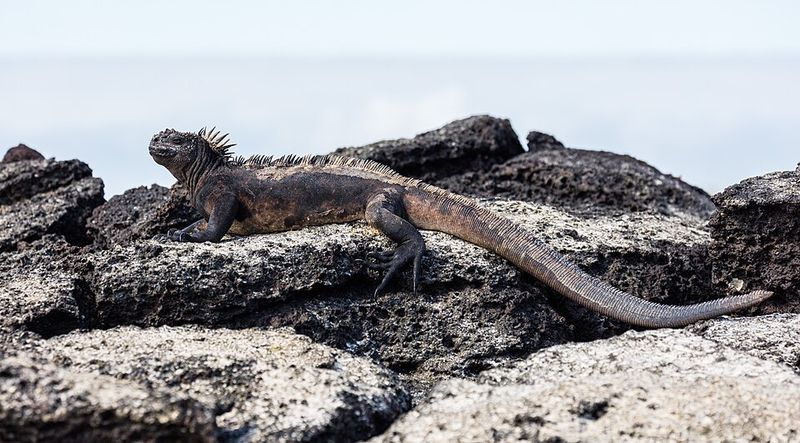
Picture a lizard that swims in the sea, sneezes salt, and looks like a tiny dragon. That is the marine iguana, found only in the Galápagos Islands off the coast of Ecuador.
No other lizard in the world feeds in the ocean like this.
These reptiles dive into cold water to graze on algae growing on underwater rocks. Afterward, they climb back onto warm black lava to heat up again.
Special glands near their noses remove extra salt from their bodies, which they blow out in little sprays.
Different islands have iguanas with different colors and sizes. Some even show red and green patches during breeding season.
Charles Darwin visited the islands in 1835 and called these animals imps of darkness. Today, visitors can watch them from marked paths, keeping a respectful distance so the iguanas stay calm and wild.
2. Komodo National Park, Indonesia: Komodo Dragons
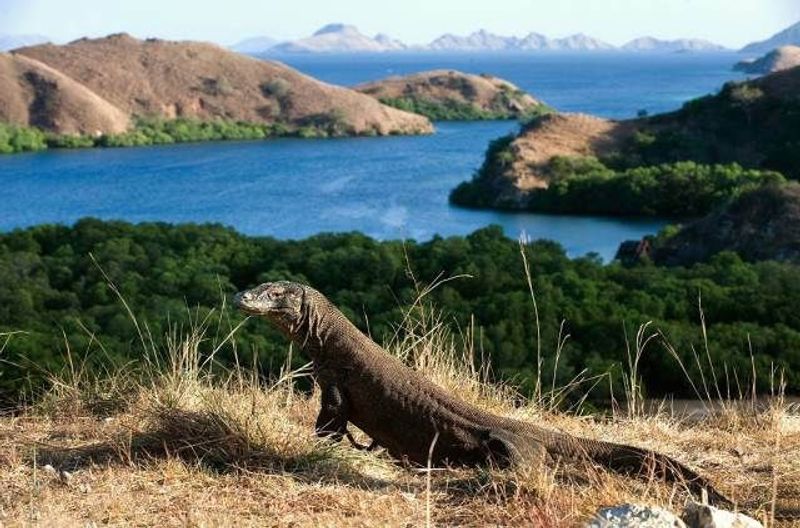
Few animals carry a name as bold as the Komodo dragon, and this one earns it. It is the heaviest lizard on Earth, growing up to about ten feet long.
Komodo National Park in Indonesia protects the main population of these giants.
Komodo dragons hunt deer, pigs, and sometimes water buffalo. Their bite delivers venom that lowers blood pressure and keeps prey from clotting.
They also have a keen sense of smell, using a forked tongue to pick up scents from far away.
Rangers guide all visitors on walks, since the lizards can sprint in short bursts and are not to be taken lightly.
Here is a surprising fact: young dragons spend their early years in trees to stay safe from larger adults. Life on these dry islands is not easy, even for a dragon.
3. Rottnest Island, Australia: Quokkas
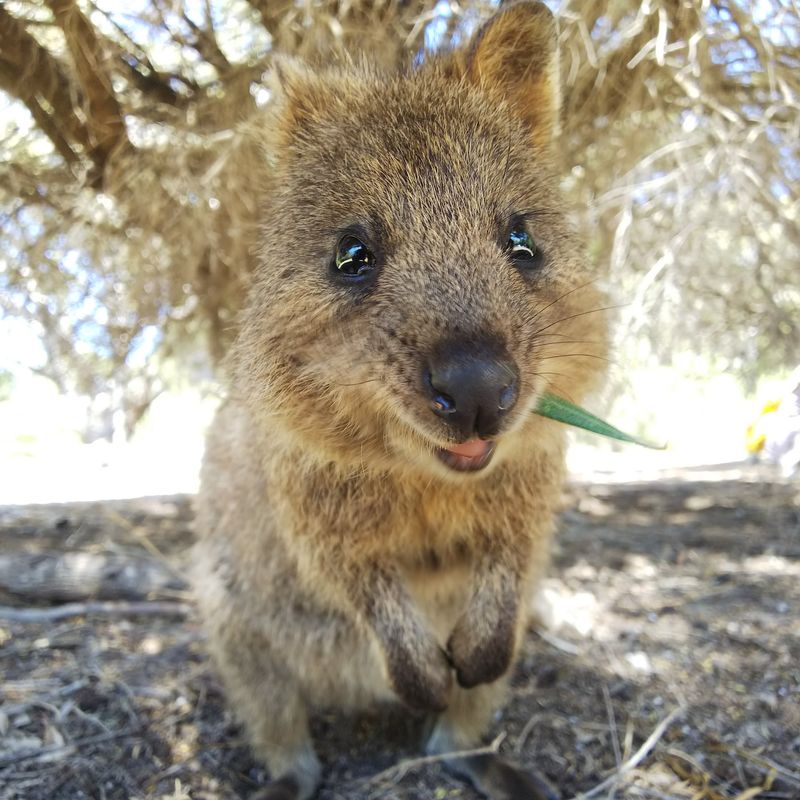
Smiling for the camera comes naturally to the quokka. This small marsupial, about the size of a house cat, seems to wear a permanent grin because of its rounded cheeks and mouth shape.
Rottnest Island, just off Western Australia, has one of the largest quokka populations anywhere.
Quokkas have little fear of people, which makes them popular with travelers. Still, rules are strict.
Feeding them or touching them is not allowed, and fines can be heavy because human food makes them sick.
During the dry summer months, quokkas rest in shade and gather near the few water sources. They store fat in their tails to help them get through hard times.
Early Dutch sailors in 1696 mistook them for giant rats, and the island’s name means rat nest. Luckily, the name never described the animals very well.
4. Christmas Island, Australia: Red Crabs
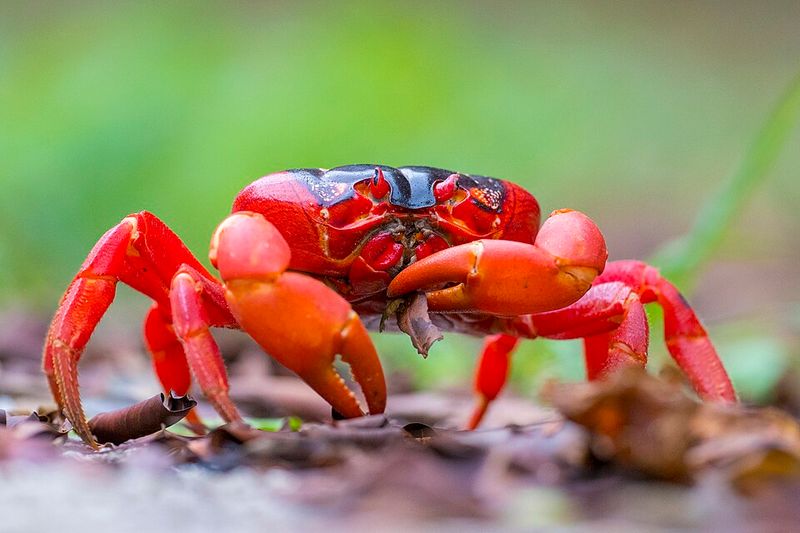
Every year, a moving red carpet covers Christmas Island in the Indian Ocean. Millions of red crabs leave the forest and march toward the sea to breed.
It ranks among the largest animal migrations on land.
The trip usually begins with the first rains of the wet season, often between October and December. Crabs crawl over roads, cliffs, and even houses.
Islanders build special bridges and close roads so the crabs can pass safely.
Once at the shore, females release thousands of eggs into the waves. Tiny young crabs later come out of the water and climb back inland.
These crabs also shape the forest. By eating fallen leaves and seedlings, they help decide which plants grow.
The island’s whole landscape depends on them in quiet ways.
5. Borneo, Malaysia: Proboscis Monkeys
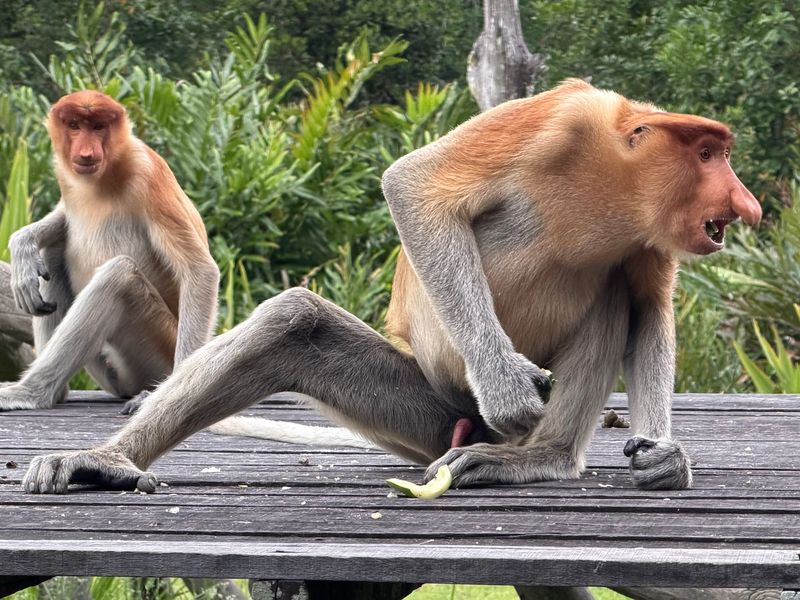
One look at a male proboscis monkey and you will not forget that nose. It can grow longer than four inches and hangs down over the mouth.
Scientists think the big nose helps males attract mates and makes their calls louder.
These monkeys live in the mangroves and riverbanks of Borneo, including Malaysian areas like Sabah’s Kinabatangan River. They have rounded bellies because they eat leaves, which take a long time to digest.
They are also strong swimmers. Partly webbed feet let them paddle across rivers, and sometimes they leap from trees into the water.
Habitat loss from farming has made their numbers drop, so protected riverside areas matter more than ever. Boat tours at dawn or dusk offer the best chance to see troops settling for the night.
6. Bohol, Philippines: Philippine Tarsiers
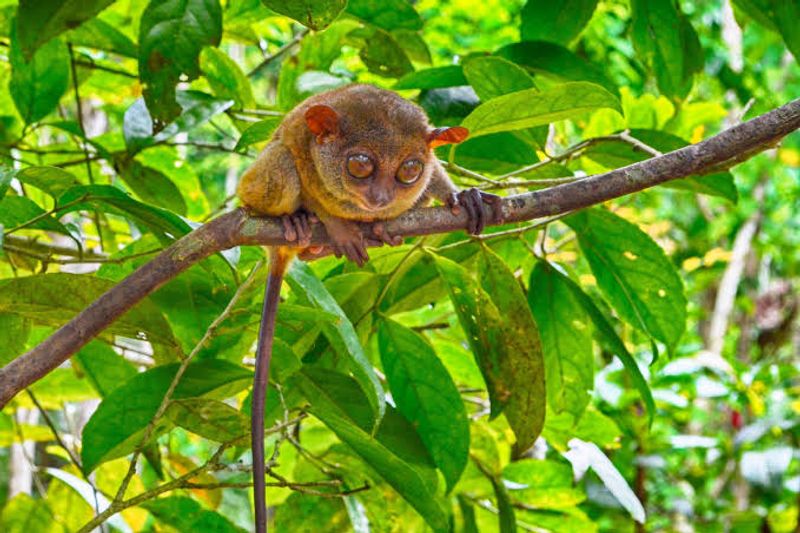
Huge eyes, tiny body, and fingers like little suction cups: the Philippine tarsier looks like a creature from a cartoon. It is only about five inches tall, yet each eye is roughly as large as its brain.
Bohol is the best-known home for this small primate. The animal is nocturnal, so those giant eyes help it spot insects in the dark.
It can turn its head almost all the way around, much like an owl.
Tarsiers are easily stressed by noise and camera flashes. Sanctuaries on Bohol ask visitors to speak softly and keep lights off.
They leap from tree to tree, catching insects, lizards, and even small birds in mid-air. Few mammals of this size are such skilled hunters.
7. Madagascar: Aye-Ayes
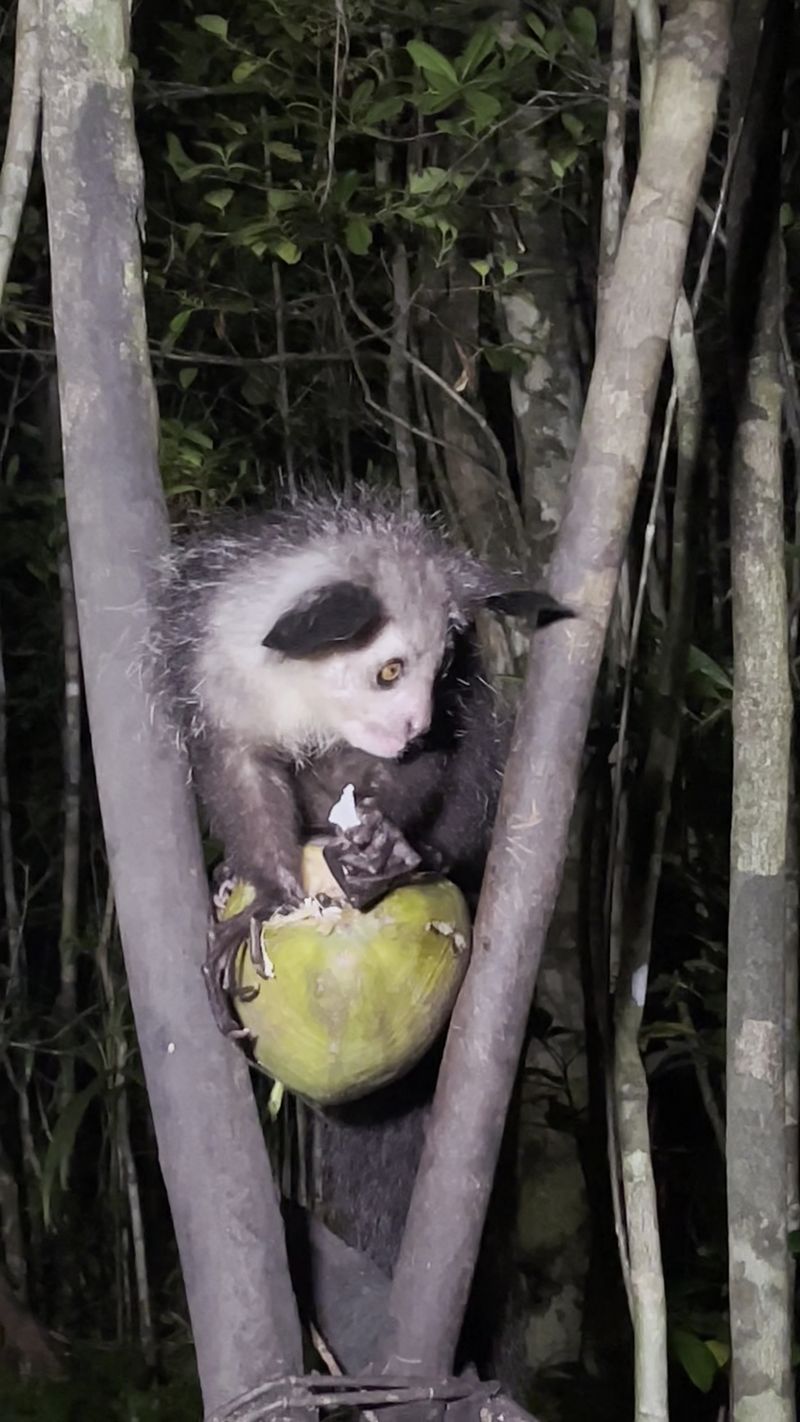
Knock, knock. Who is tapping on that tree at midnight?
In Madagascar, the answer might be an aye-aye, a lemur with a skinny, extra-long middle finger.
The animal taps on wood and listens for hollow spots where insect larvae hide. Then it gnaws a small hole with its constantly growing front teeth and fishes out a snack with that special finger.
Scientists call this feeding style percussive foraging.
Aye-ayes have large ears, bushy tails, and wide, glowing eyes. They sleep in leaf nests high in the trees during the day.
Local legends once labeled them bad omens, and people sometimes harmed them out of fear. Today, the aye-aye is endangered, and conservation groups work with villages to protect both the animal and the forests it needs.
8. Tasmania, Australia: Tasmanian Devils
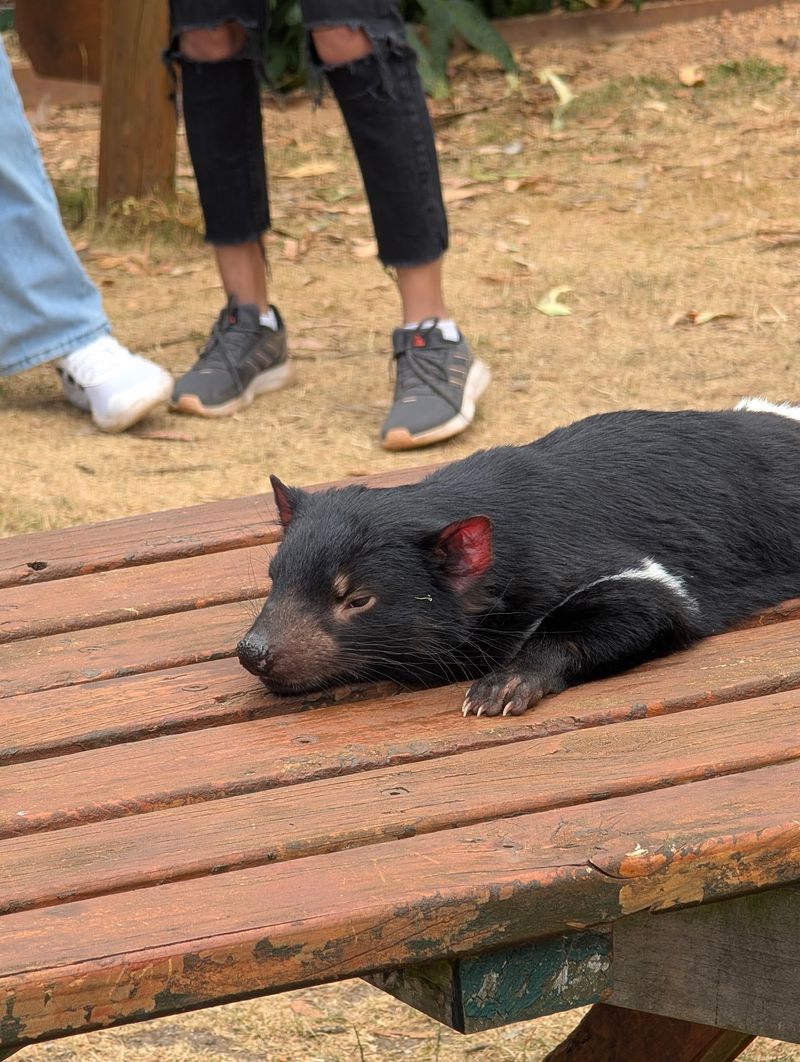
A scream in the night, a growl, a snarl: the Tasmanian devil has a sound that fits its name. Early settlers on the island of Tasmania heard those noises and gave the animal its fiery nickname.
In truth, it is a stocky marsupial about the size of a small dog. It has one of the strongest bites for its size among mammals, which lets it crunch through bones while feeding on carrion.
Devils once lived across mainland Australia, but today they survive in the wild only in Tasmania. A contagious cancer called devil facial tumor disease has cut their numbers sharply since the 1990s.
Researchers have set up healthy backup groups and are studying vaccines. Wildlife parks around the island let visitors see feeding times up close and support that research.
9. Churchill, Canada: Polar Bears
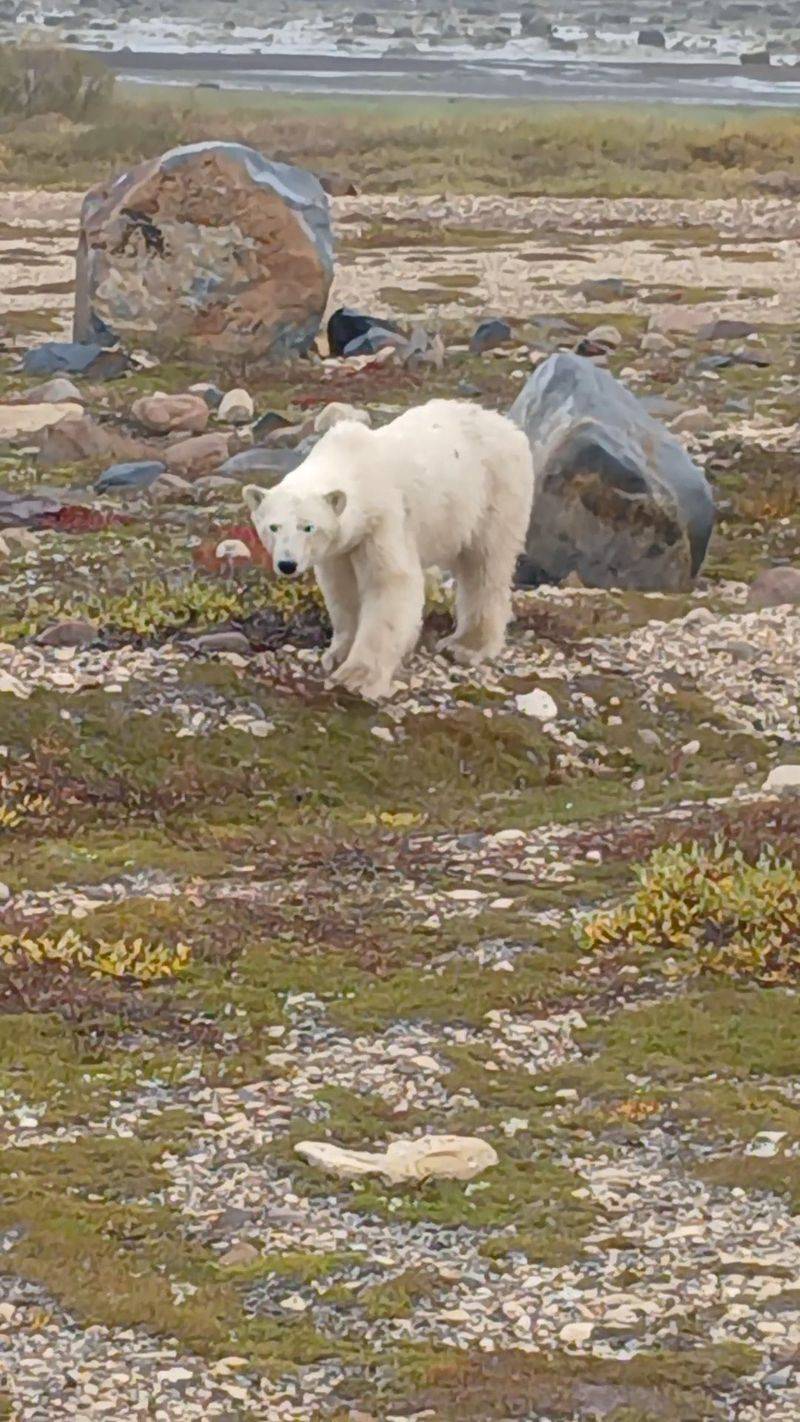
Known as the polar bear capital of the world, Churchill sits on the western shore of Hudson Bay in Manitoba. Each autumn, bears gather here while waiting for the sea ice to freeze so they can hunt seals.
The town has its own rules for living alongside them. Residents leave car doors unlocked so people can escape in an emergency, and a bear patrol watches the streets.
Visitors travel in tundra buggies, huge vehicles built high off the ground, for safe viewing. Bears often come close enough to sniff the windows.
Polar bears may look white, but their fur is actually clear and hollow, and their skin is black. That design helps trap heat.
Warmer climates and later freezing now shorten their hunting season, which makes research in Churchill especially valuable.
10. Okunoshima, Japan: Large Population of Rabbits
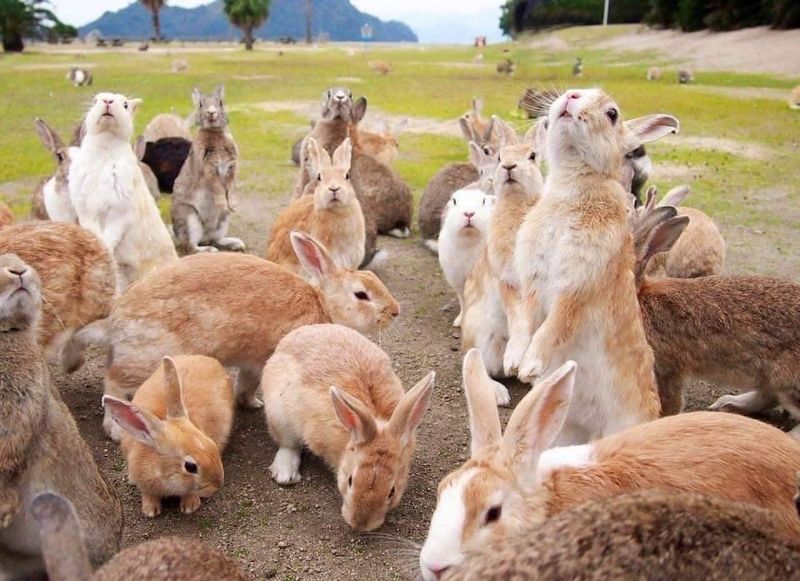
Step off the ferry onto Okunoshima, and you may be surrounded in seconds. Hundreds of rabbits roam this small island in Japan’s Seto Inland Sea, hopping up to visitors for snacks.
The island has a complicated past. During the twentieth century, a military facility operated there in secret.
The rabbits living there today are widely believed to descend from pets released later, though stories differ about the exact origin.
With no cars allowed and few natural predators, the rabbits have thrived. They are bold, curious, and used to people.
Travelers are encouraged to bring rabbit-friendly food, such as pellets or cabbage, and avoid feeding bread or sweets. Visitors can also stop at a small museum that explains the island’s history, adding a thoughtful side to a cheerful trip.
11. Nara, Japan: Free-Roaming Sika Deer
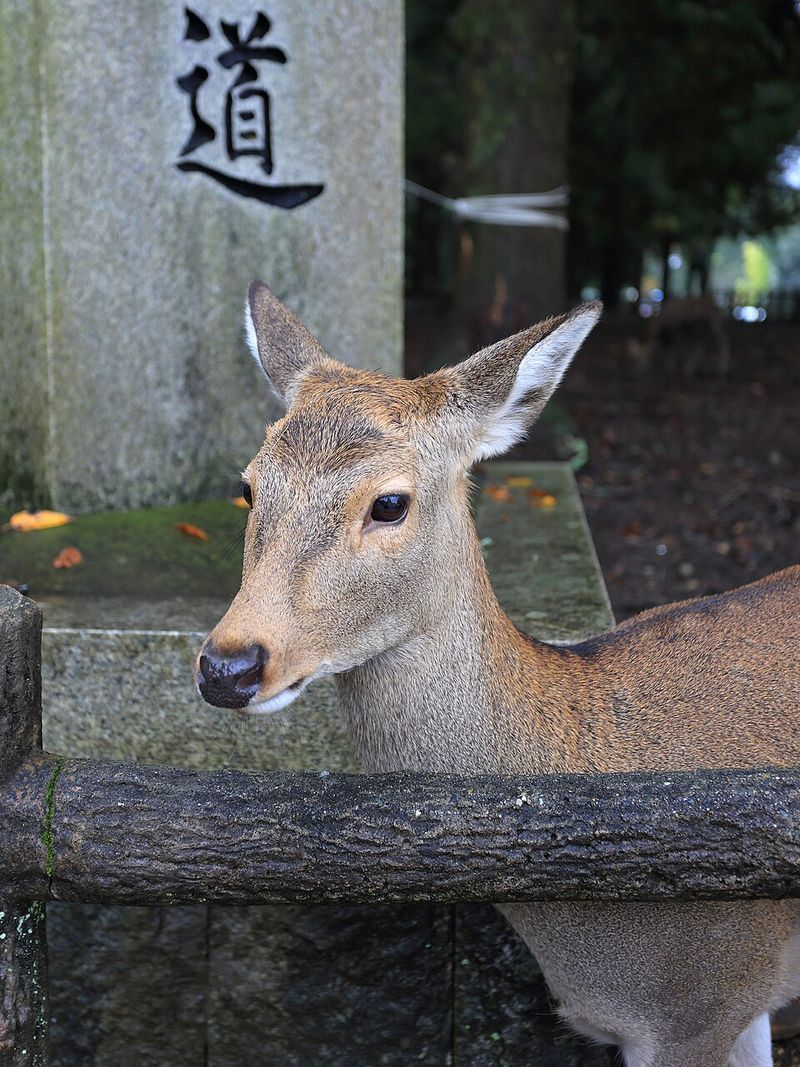
Bowing deer sound like a legend, yet in Nara they are real. More than a thousand sika deer wander freely through the city’s park and temple grounds, and many learn to nod their heads when tourists offer crackers.
Local tradition has long considered the deer messengers of the gods connected to Kasuga Shrine. For that reason, people protected them for centuries, and they are still treated as national treasures.
Special deer crackers, sold at small stands, are the only food visitors should give. Other snacks, and especially plastic bags, can hurt the animals.
In autumn, stags can become pushy during mating season, so staff trim their antlers in a yearly ceremony. Watching deer stroll beside ancient wooden temples makes Nara feel like a place where old stories still walk around.
12. Pig Beach, Bahamas: Swimming Pigs
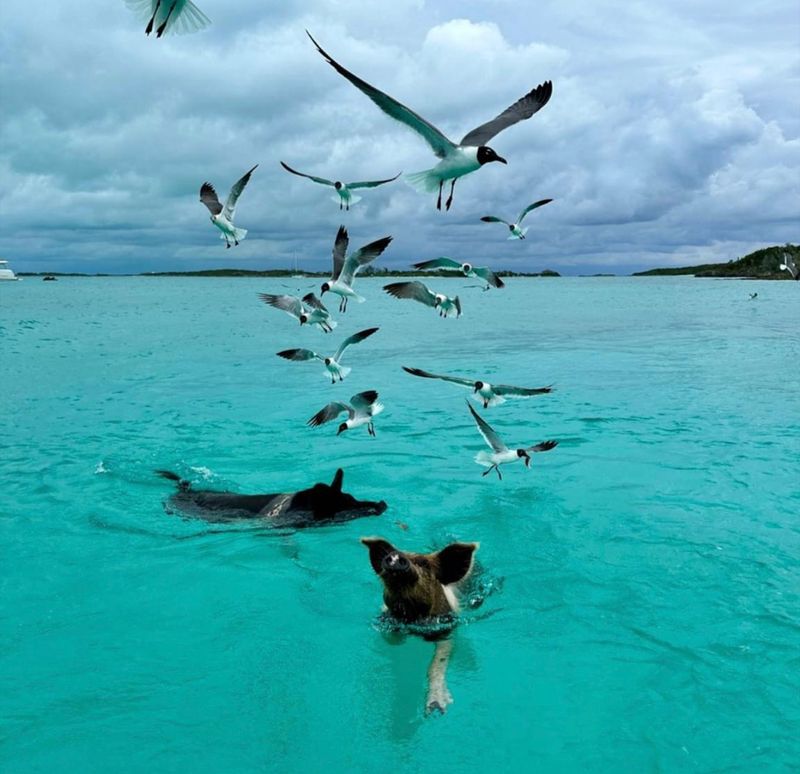
Pigs are not known as beach lovers, but on Big Major Cay in the Exumas, they paddle through turquoise water like seasoned swimmers. Boats arrive, and the pigs splash out to greet them.
No one knows for sure how they got there. One popular tale says sailors left them on the island to provide food for later, while others suggest they swam from a shipwreck.
Either way, they have lived there for decades.
Visitors are asked to follow guidelines. Fresh water is helpful, but sugary or processed foods can make the pigs ill.
Sunburn is also a risk, so shade spots are important.
Nearby islands have their own animals, including swimming sharks and iguanas, making this part of the Bahamas a surprise at every turn.
13. Monkey Forest, Ubud, Indonesia: Long-Tailed Macaques
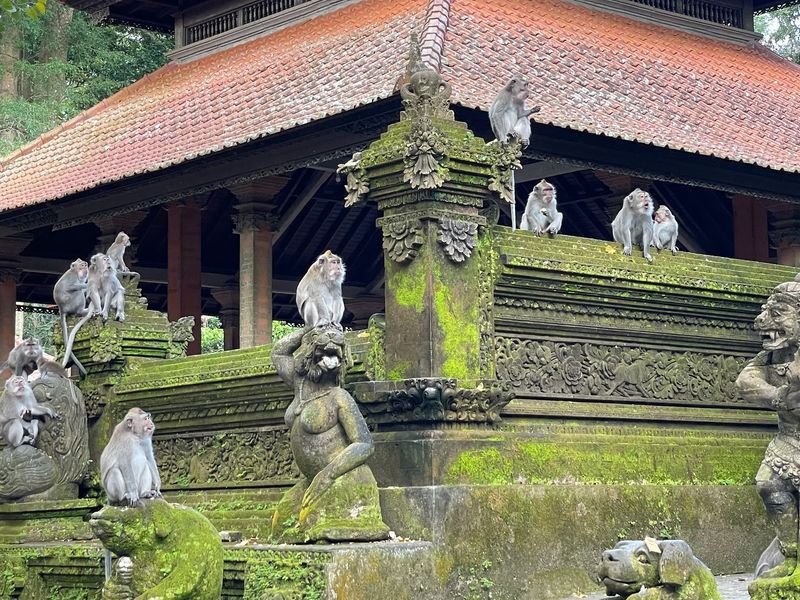
Ancient stone temples covered in moss, towering trees, and hundreds of mischievous monkeys: this is the Sacred Monkey Forest in Ubud, on the island of Bali. Long-tailed macaques rule the place with confidence.
The forest is more than a tourist stop. It holds three Hindu temples, and the monkeys are part of a belief system that values balance between people, nature, and the spiritual world.
Macaques here are famous for grabbing sunglasses, hats, and water bottles. Staff recommend keeping loose items zipped away and avoiding direct eye contact, which monkeys may treat as a challenge.
Troops have their own social ranks, and grooming is a major part of daily life. Watching them can feel like observing a busy neighborhood, full of friendships, arguments, and sudden bursts of play.
14. Kaziranga National Park, India: One-Horned Rhinoceroses
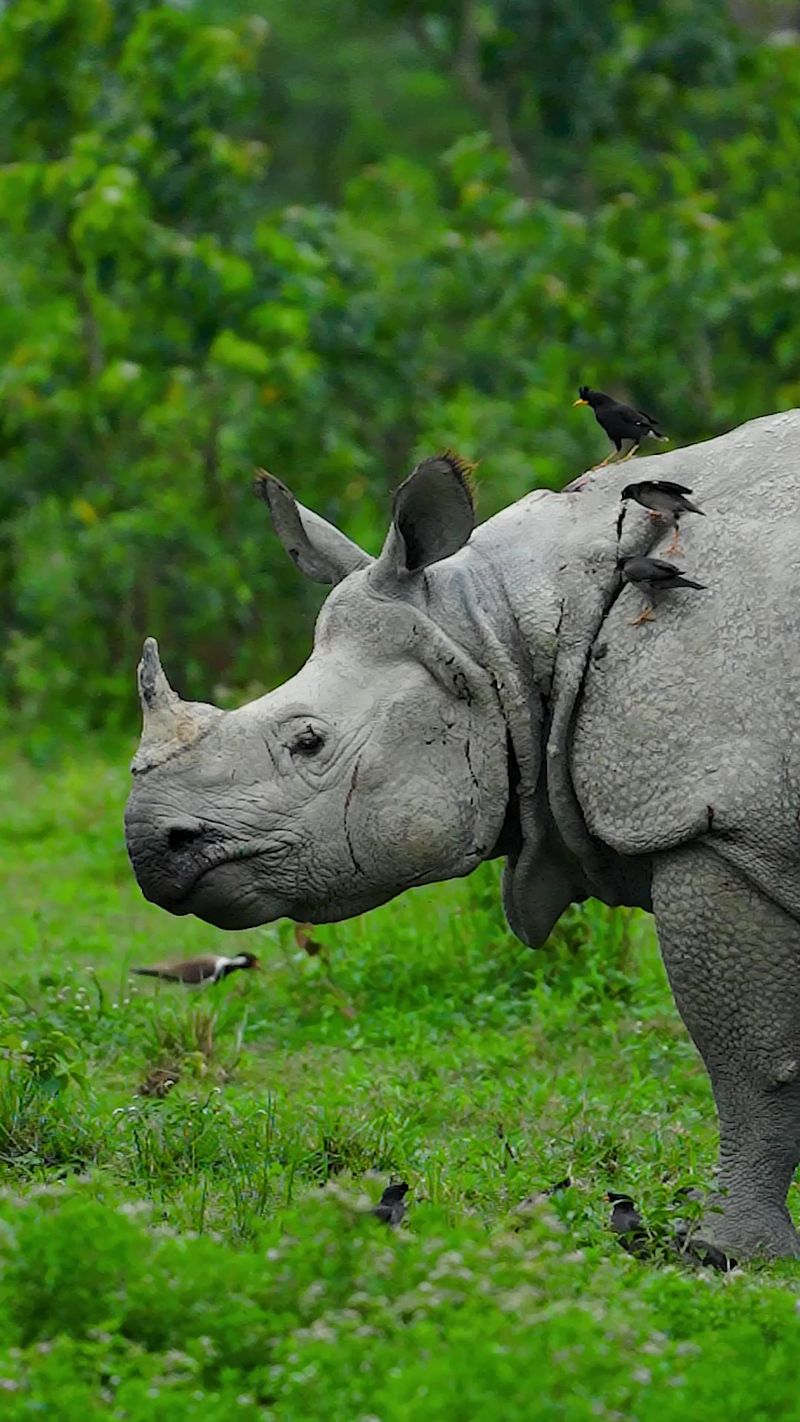
Standing nearly six feet tall at the shoulder, with skin folded like plates of armor, the greater one-horned rhinoceros looks like a living relic. Kaziranga National Park in Assam, India, shelters about two thirds of the world’s population.
The park’s tall grasslands, wetlands, and rivers create ideal living space. During monsoon floods, rhinos and other animals move to higher ground, sometimes crossing roads, so drivers must slow down.
A century ago, hunting had pushed these rhinos close to disappearing. Strong protection, anti-poaching patrols, and local community support have helped numbers rise to thousands.
Visitors can explore by jeep or elephant-back safari in cooler months. Besides rhinos, the park holds tigers, wild water buffalo, and many birds, making it one of Asia’s richest wildlife areas.
15. Danum Valley, Malaysia: Sunda Colugos and Other Unusual Wildlife
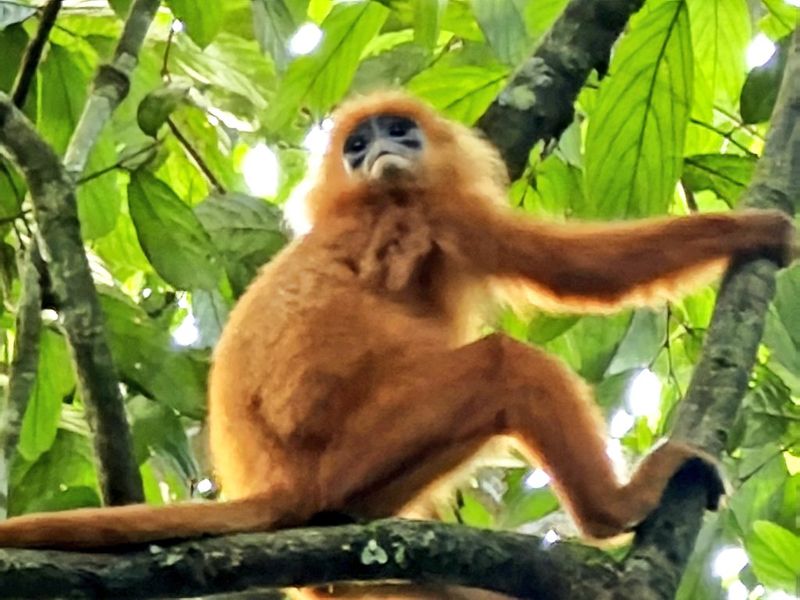
Gliding silently between trees, the Sunda colugo is often called a flying lemur, though it neither flies nor is a lemur. A wide skin flap stretches from its neck to its tail, letting it sail more than 300 feet in a single glide.
Danum Valley, a protected rainforest in Sabah, Malaysia, is one of the best places to find this animal. Its mottled fur blends perfectly with bark, so spotting one takes patience.
The forest holds many more surprises. Researchers have recorded orangutans, pygmy elephants, clouded leopards, and rhinoceros hornbills here.
Danum Valley has been left almost untouched by logging, which makes it valuable for science. Guided night walks reveal glowing eyes, tree frogs, and insects that look like leaves, showing just how creative evolution can be.
Share this story