Some stairs lead to the next floor. Others lead to the clouds, a hidden monastery, or a city lost to time.
Around the world, people have chiseled steps into rock for thousands of years, and many of them still hold up today. Grab your imaginary hiking boots, because these climbs are unforgettable.
Huashan Plank Path, China
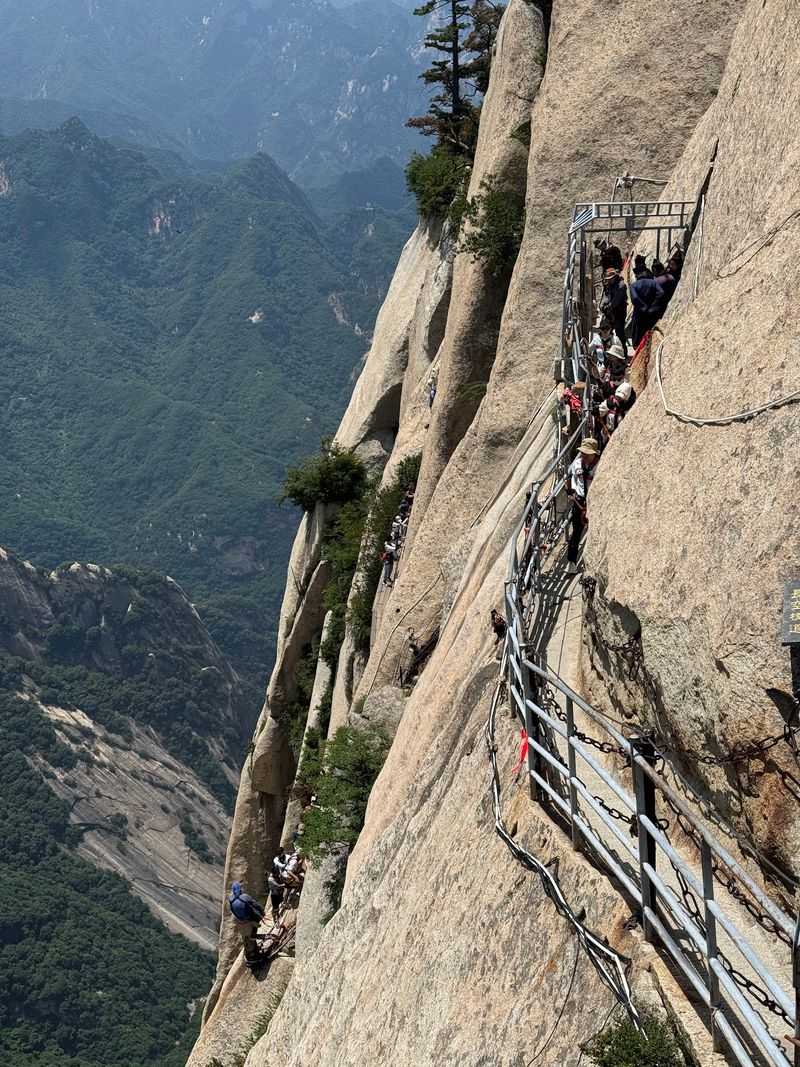
Your knees will wobble before your brain catches up. The Huashan Plank Path is a set of wooden boards nailed to a vertical cliff face, hundreds of feet above the valley floor.
Hikers clip into a safety harness and shuffle along, one nervous step at a time.
The trail sits on Mount Huashan, one of China’s five sacred mountains. Taoist monks first climbed here many centuries ago to find peace and a bit of solitude.
The stone stairs leading up to the plank walk are also steep, and some sections feel more like ladders than stairs.
Visitors often say the hardest part is not looking down, though the view is half the reason to come. Mist drifts through the granite peaks, and the air smells like pine and wet rock.
Wear shoes with strong grip, bring a snack, and keep your phone zipped away while you cross.
Go early in the morning to beat the crowds. Lines can form at the plank section, and waiting on a cliff edge is nobody’s idea of fun.
Take your time, breathe slowly, and enjoy the bragging rights that come with finishing.
Tiger’s Nest Steps, Bhutan
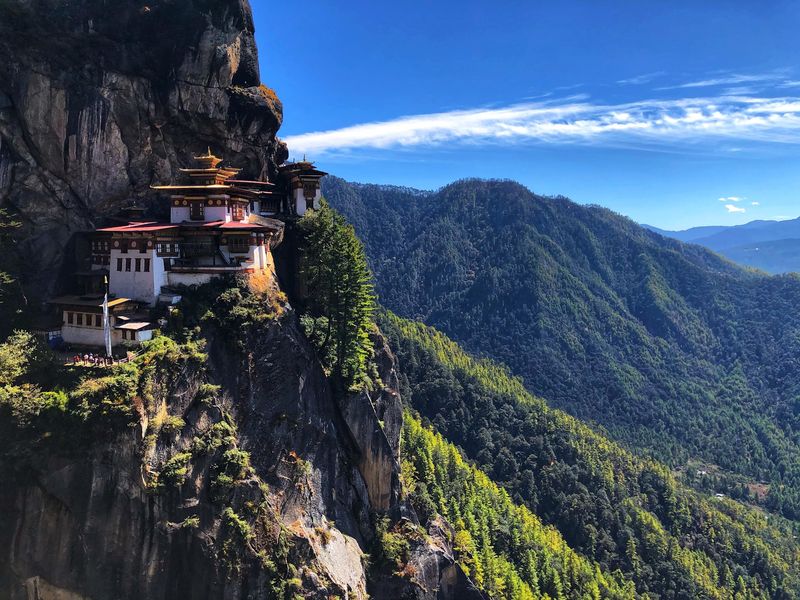
Legend says a flying tigress carried a guru to this very spot. Today, travelers need their own two legs.
The path to Paro Taktsang, known as Tiger’s Nest, climbs about 900 meters above the valley floor.
The route starts as a dirt trail through pine forest, then turns into stone steps near the top. Prayer flags snap in the wind, and the monastery appears around a bend like a white dot stuck to the cliff.
Over 700 stone stairs lead down and back up near the end, which surprises many tired hikers.
Most people take about two hours to reach the viewpoint. A small tea house halfway up serves hot drinks and simple food, and it is a lovely place to rest your legs.
Ponies can carry you part of the way if you prefer.
Inside the monastery, visitors must leave cameras and phones at the entrance. That means you get to simply look, listen, and enjoy the quiet.
Dress in layers, since the weather can change fast at this height.
Inca Steps of Machu Picchu, Peru
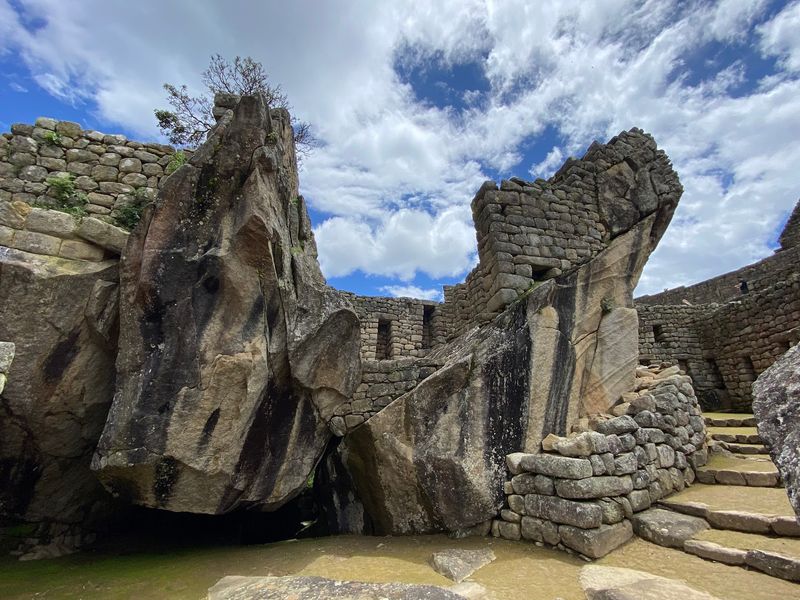
Here is a quirky fact: the Inca built Machu Picchu without wheels or iron tools. They still managed to carve thousands of perfect steps into the mountainside.
Many of those stairs are still in use more than 500 years later.
Stone stairways link the terraces, temples, and homes of the old city. Some are built right into the rock, so the steps look like they grew there.
Others are tucked beside walls that were fitted together so tightly a knife blade cannot slip between the stones.
The steepest climb is up to Huayna Picchu, the peak behind the ruins. Its narrow stairs are cut into the cliff, and a cable offers a little help along the way.
Permits are limited, so book well ahead.
Wear sturdy shoes, because wet stone gets slippery in the rainy season. Bring water and sun protection, since the sun feels strong at this altitude.
Take a moment at the top to enjoy the quiet, the view, and your hard-earned snack.
Sigiriya Rock Stairs, Sri Lanka
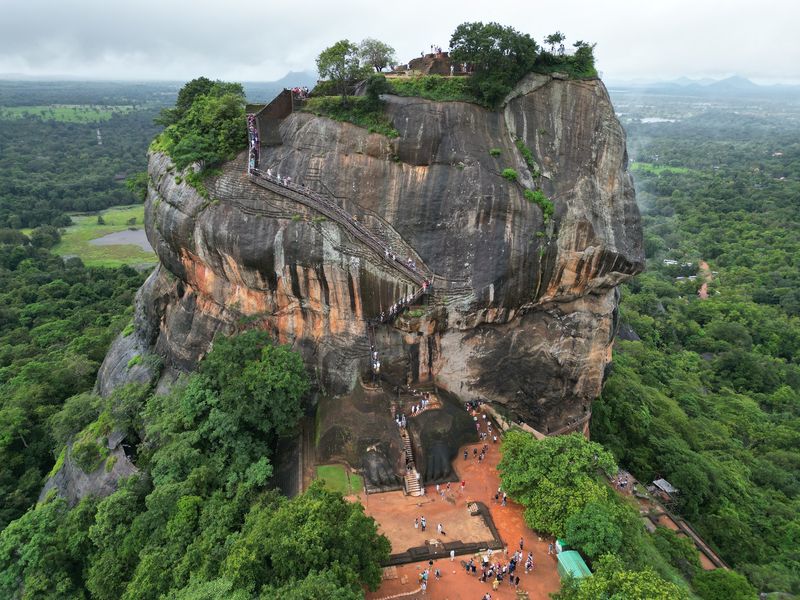
Picture a king who built his palace on top of a giant rock because he did not trust anybody. That was King Kashyapa in the fifth century.
The rock rises about 200 meters from the Sri Lankan jungle, and visitors still climb it today.
The route winds past water gardens, boulders, and a gallery of faded cave paintings. Then comes the Lion Gate, where the stairs pass between two enormous stone paws.
Only the paws remain, but they hint at how scary the entrance once looked.
Metal stairs now bolt onto the rock face in places, which makes the climb safer. Even so, around 1,200 steps stand between you and the top.
Take breaks and drink water often.
The summit shows the ruins of the palace and a view of treetops stretching to the horizon. Arrive at sunrise to avoid the heat and the tour groups.
Wasps sometimes nest on the rock, so keep your voice low and your steps calm.
Skellig Michael Steps, Ireland
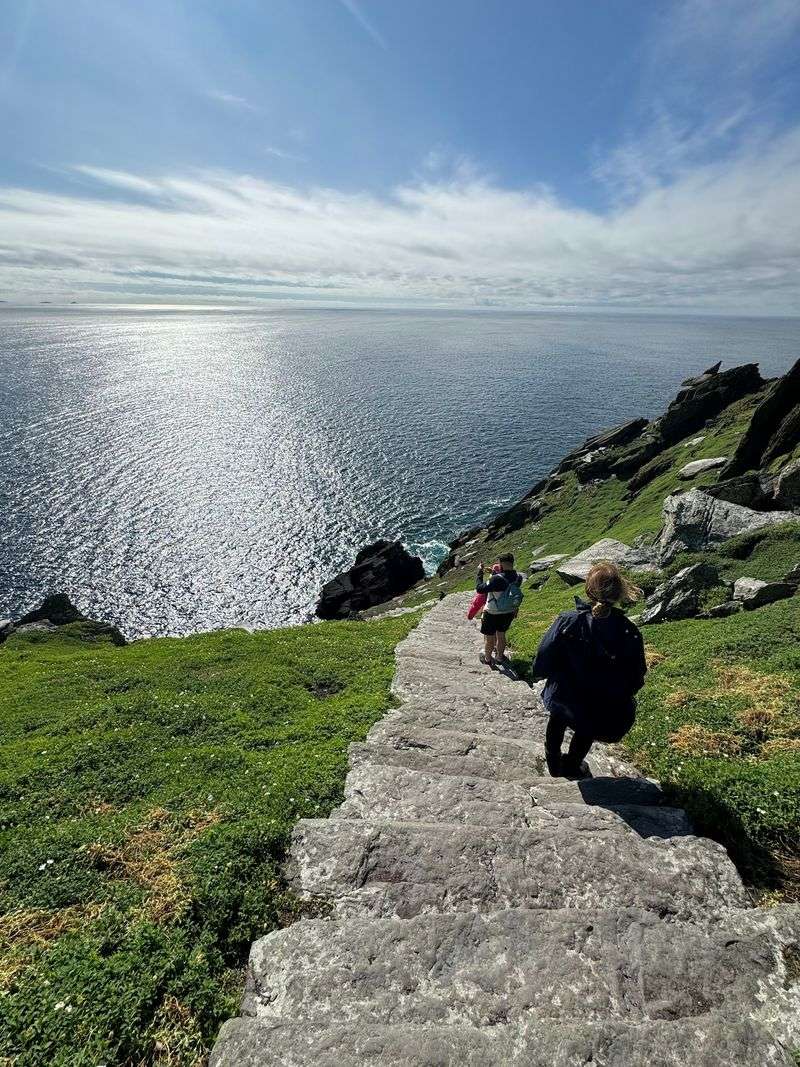
Puffins waddle across the path like tiny, feathered security guards. They are the first locals you meet on Skellig Michael.
This steep island off Ireland’s southwest coast holds a monastery built more than 1,000 years ago.
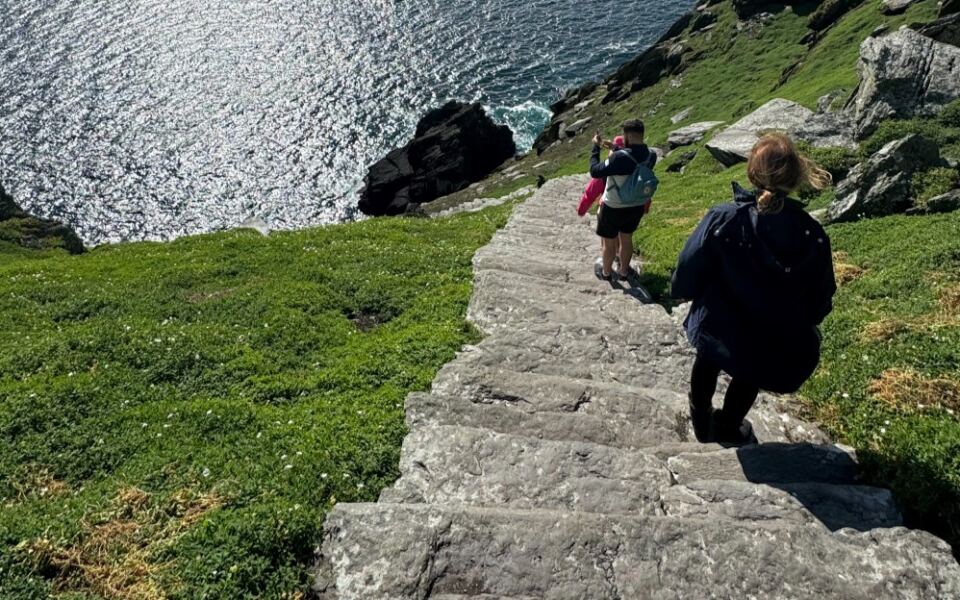
Monks carved around 600 stone steps into the rock to reach their stone huts near the summit. There are no handrails in many places, and the Atlantic crashes far below.
The steps are uneven, narrow, and worn smooth by centuries of feet.
Visitors arrive by small boat, and the ride can be bumpy. Landings depend on the weather, so some trips get canceled.
Tour numbers are limited to protect the site, and spots fill up fast.
Fans of space movies may recognize the island from a certain galaxy far away. The real history is just as dramatic.
Bring a rain jacket, sturdy shoes, and a good sense of balance. Once you reach the beehive huts, the view of the sea makes every step feel worthwhile.
Mount Tai Stairway, China
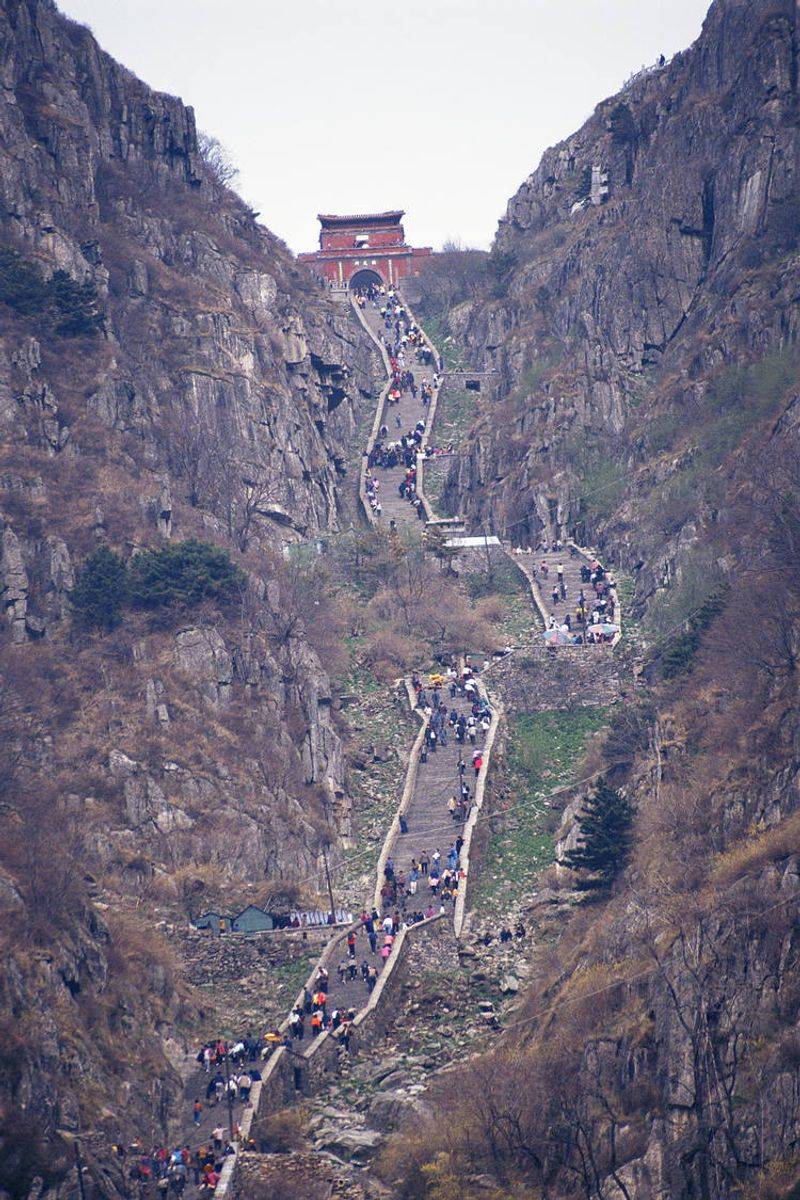
Emperors once climbed these steps to talk to heaven. The stairway up Mount Tai in Shandong has around 6,600 stone steps, and people have been walking it for over 2,000 years.
That is a lot of footprints.
The trail passes temples, old pine trees, and rock walls covered in poems carved by past visitors. Some of the writing is huge, painted in red and gold.
It feels like reading a very old, very patient message board.
The final section, called the Eighteen Bends, is the toughest part. It is steep, narrow, and crowded with climbers who all seem to be panting at the same time.
A cable car is available if your legs say no.
Many hikers start at midnight to reach the summit for sunrise. They carry flashlights and rent warm coats from sellers along the way.
When the sun finally rises over a sea of clouds, the sore legs are quickly forgotten.
Petra Monastery Stairs, Jordan
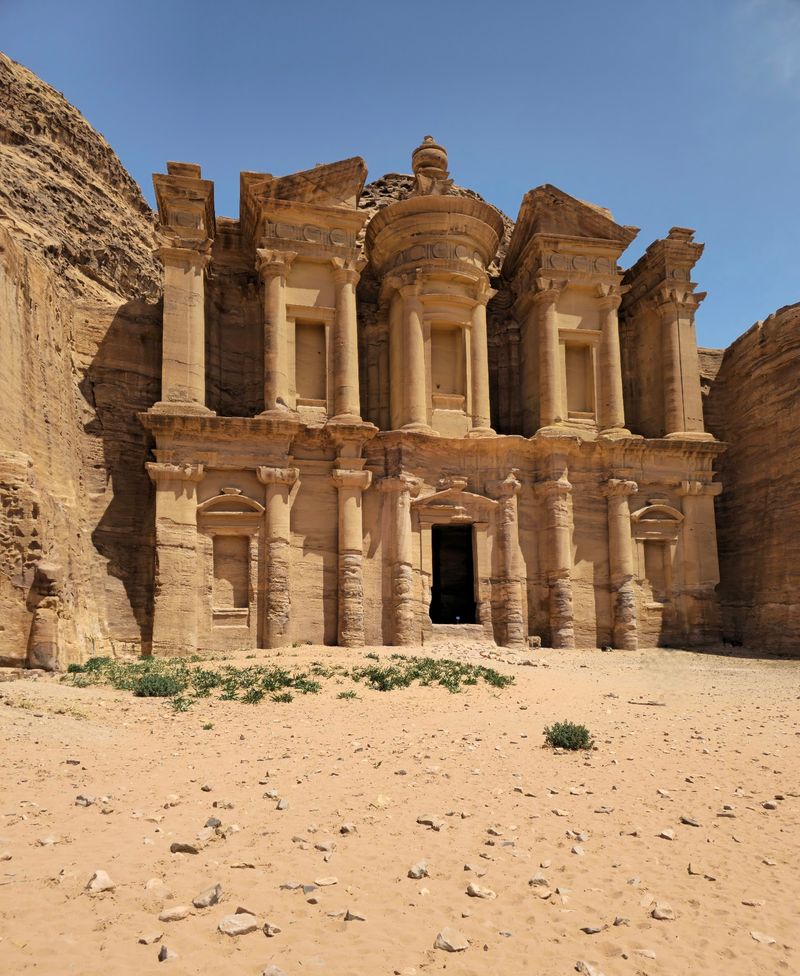
The pink rock glows like a sunset that forgot to leave. That is the first thing you notice on the way up to Petra’s Monastery.
About 800 steps carved into sandstone lead you there.
The Nabataeans, who built Petra over 2,000 years ago, cut the stairs right into the canyon walls. Along the way, local vendors sell tea and trinkets from small stalls.
Donkeys wait at the bottom, and some visitors choose to ride them, though many walkers feel that is unfair to the animals.
The Monastery itself is wider and taller than the famous Treasury, yet far fewer people visit it. The facade rises nearly 50 meters, and it is carved from a single rock face.
Standing in front of it makes you feel very small.
Start early to dodge the midday heat. Carry plenty of water and wear a hat.
After the climb, grab a seat at the cafe opposite the Monastery and enjoy a well-earned cup of sweet mint tea.
Haiku Stairs, Hawaii
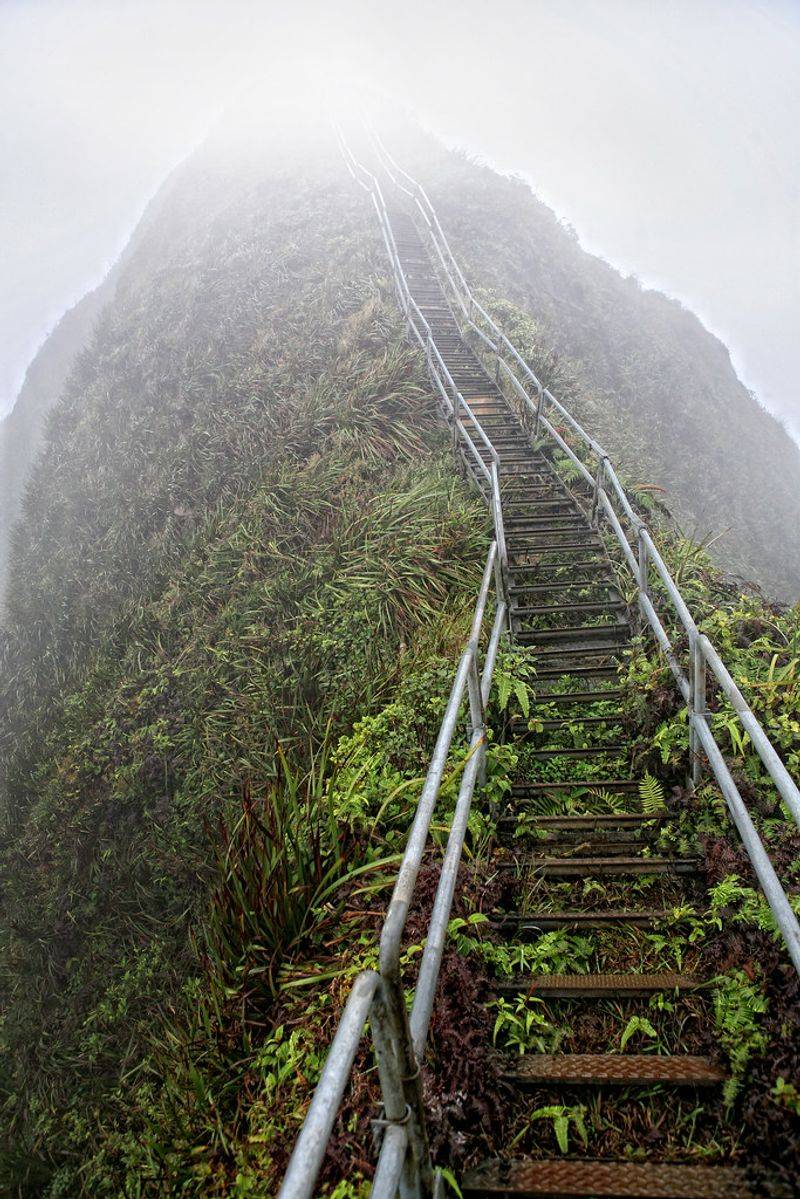
Nicknamed the Stairway to Heaven, this one has a complicated past. The Haiku Stairs climb a ridge in the Koolau Mountains on Oahu.
About 3,900 steps rise steeply through clouds and green jungle.
The U.S. Navy built a wooden ladder here in 1942 to reach a secret radio station.
Later, metal steps replaced the wood. For decades, adventurous hikers snuck up the stairs for the view of Kaneohe Bay.
The climb was officially closed to the public because of safety and trespassing concerns, and the city has been working on removing the stairs. Many locals have strong feelings about it, and the debate continues.
It is a good reminder to always check access rules before you travel.
If you want a similar view legally, try the Moanalua Valley Trail or the Koolau Summit Trail. These paths lead to ridgeline views without the risk of fines.
Pack water, check the weather, and respect the land and the people who live near it.
Stairs of Kotor Fortress, Montenegro
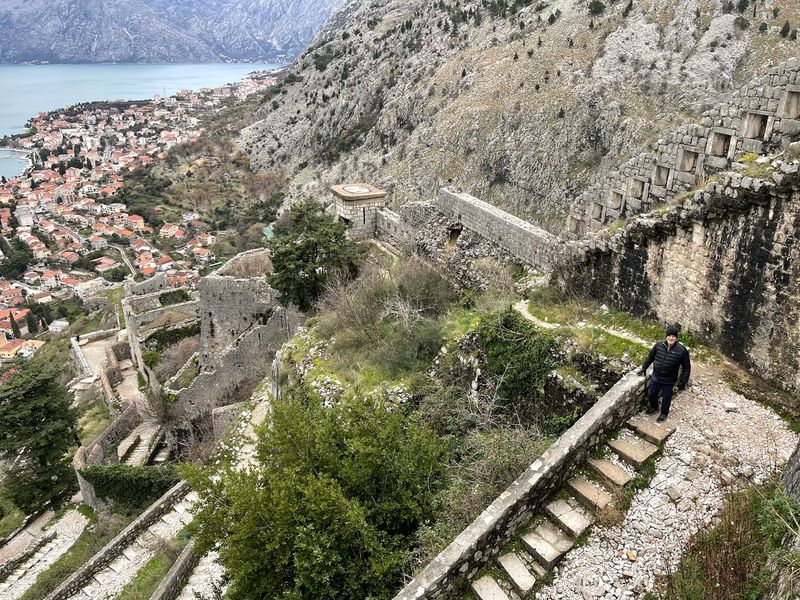
Kotor has a mountain right in its backyard, and its stairs are the main attraction. Roughly 1,350 steps zigzag up the hillside to San Giovanni Fortress.
The walls follow the slope like a long stone ribbon.
The climb starts inside the old town, near the city gate. You pass a tiny church called Our Lady of Health, perfect for a short breather.
Many steps are uneven or worn, so watch your feet.
At the top, the Bay of Kotor spreads out below like a deep blue fjord. Red roofs crowd the town, and cruise ships look like toys in the water.
Cats sometimes lounge on the warm stones, completely unimpressed by your effort.
The best time to climb is early morning or late afternoon, when the heat is mild. There is an entry fee during the day, but the trail is free before the ticket booth opens.
Bring a water bottle and good sneakers. Afterward, treat yourself to a scoop of local ice cream.
Cliffside Stairs of Santorini, Greece
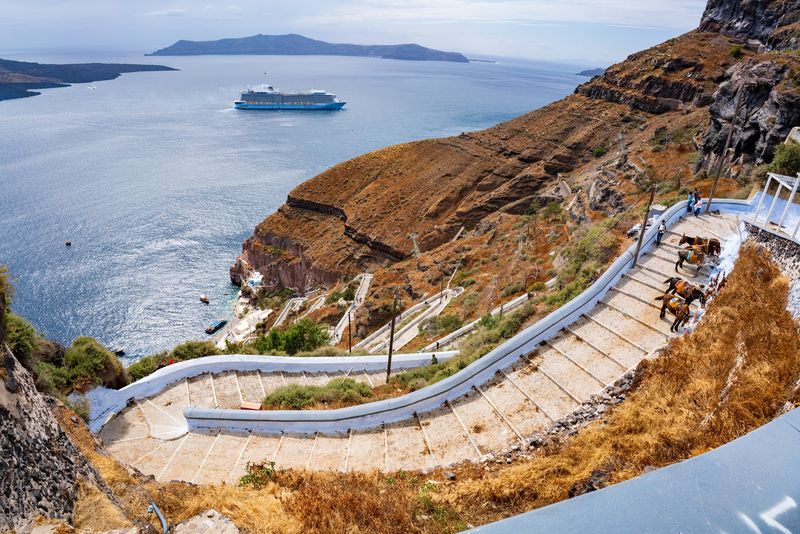
Watch where you step, because donkeys have the right of way here. The zigzag path from Fira to the old port in Santorini has about 588 steps.
It was once the main route for goods and travelers coming from the sea.
The stairs are cut into the volcanic cliff, with white walls and blue domes above. The view is stunning, but the surface can be slippery and, well, a bit smelly from the donkeys.
Walk on the side and give the animals plenty of room.
Many visitors walk down and then take the cable car back up. That is a smart plan, since the climb in the summer heat can be exhausting.
A few brave travelers do the whole thing on foot and arrive at the top sweaty and proud.
Go early or near sunset when the light turns the caldera gold. Wear shoes with a good grip, bring water, and take your time.
The old port below has small cafes where you can rest before heading back.
Angkor Wat Temple Stairs, Cambodia
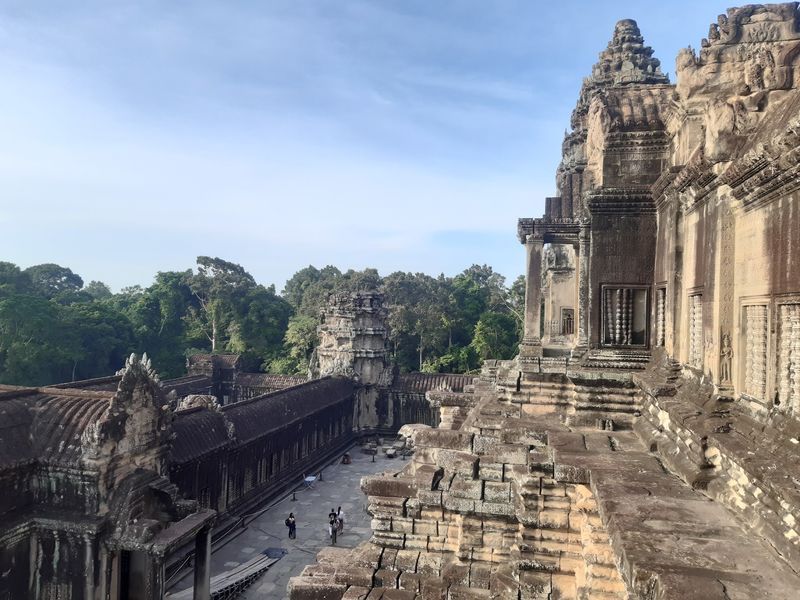
“Whoa, that is steep,” is the most common comment at the foot of Angkor Wat’s upper stairs. The steps rise at a sharp angle toward the central tower.
Builders designed them that way on purpose, so visitors would climb on hands and knees, as a sign of respect.
Angkor Wat was built in the twelfth century by the Khmer king Suryavarman II. It is the largest religious monument in the world.
The stone walls are covered in carvings of dancers, battles, and gods.
Each step is narrow and shallow, so your feet barely fit. A wooden staircase with a railing has been added to help modern visitors.
There is also a dress code, so cover your shoulders and knees.
Arrive for sunrise, but know that you will share the view with many other early birds. If you want quiet, return in the afternoon, when the crowds thin out.
Carry water, wear a hat, and take it slow. The view from the top across the jungle is well worth the careful climb.
Share this story