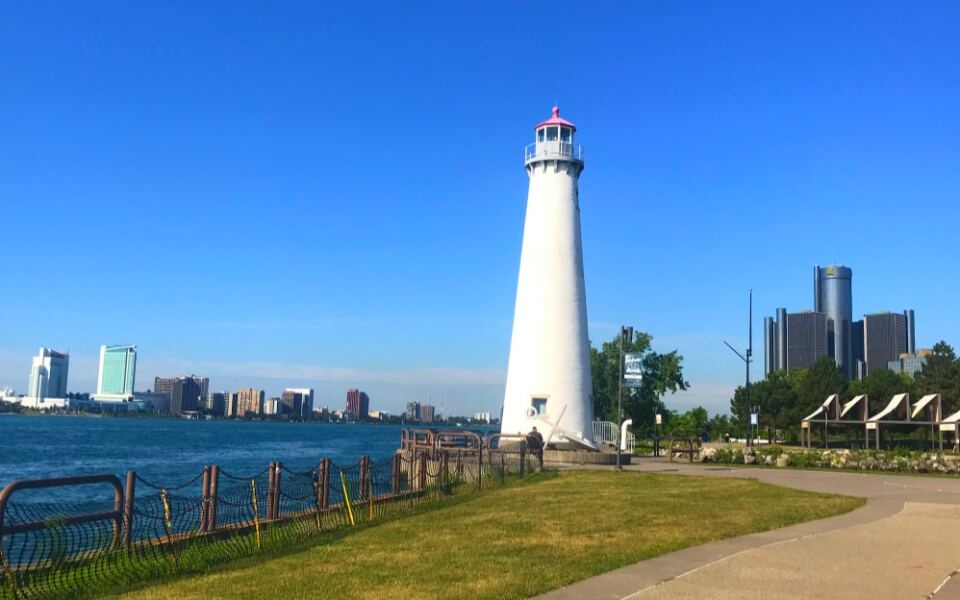
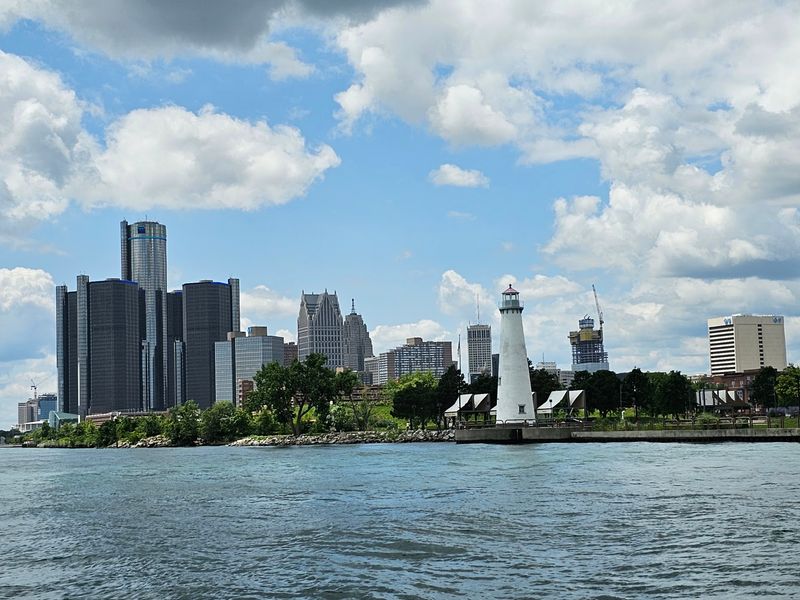
Detroit has a 63-foot lighthouse just east of downtown, with skyscrapers behind it and Canada across the river. It stands at the entrance to a 52-slip harbor, where visitors can watch Great Lakes freighters pass along one of North America’s busiest waterways.
The lighthouse is a scaled-down replica of the historic Tawas Point Lighthouse on Lake Huron. It is part of William G.
Milliken State Park and Harbor, Michigan’s first urban state park, and sits directly along the Detroit RiverWalk.
What makes this spot worth exploring is everything surrounding the tower. A restored wetland, shoreline fishing areas, and waterfront paths give visitors more to discover than a quick photo stop.
You can reach the park on foot or by bicycle without paying an entrance fee.
A City Lighthouse With a Real Address
Milliken State Park Lighthouse sits inside William G. Milliken State Park and Harbor along Atwater Street in Detroit, Michigan 48207, United States.
It is part of the east riverfront, just steps from the busy heart of downtown.
The park holds a special title. It was Michigan’s first urban state park, and it was named for William G.
Milliken, a longtime governor of the state.
The lighthouse itself stands at the harbor entrance. It is a working-style tower that helps mark the opening where boats slip in and out of the small marina.
What I find interesting is how normal it feels in that spot. A lighthouse usually belongs on a rocky shore or a lonely point, not across from office towers and parking garages.
Here, the setting makes sense. The Detroit River is a busy shipping lane, and this city has always lived beside the water.
Getting there is simple because the lighthouse sits right off the Detroit RiverWalk. You can stroll in from downtown on foot, which already sets this lighthouse apart from most others in Michigan.
The bigger question is why it looks so familiar to lighthouse fans.
Modeled After a Lake Huron Classic
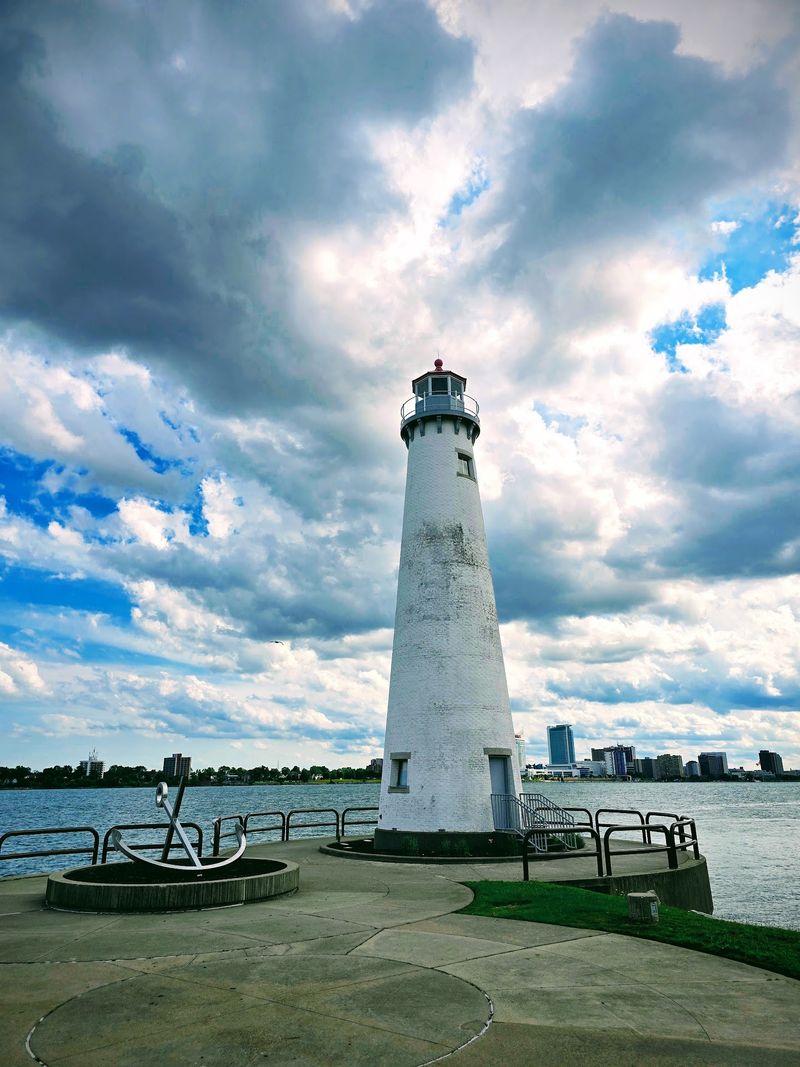
Lighthouse lovers often do a double take here. The tower was built as a replica inspired by the Tawas Point Lighthouse, a historic light on Lake Huron in northern Michigan.
That choice gives Detroit a small link to the wider Great Lakes story. The tall white body and dark lantern room follow the look of lights that once guided ships around Michigan’s long coastline.
The Detroit version is much newer, though. It went up as part of the riverfront and state park development in the early 2000s, when the city worked to turn old industrial land into public space.
I like that it honors an older design instead of trying to look ultra modern. It feels like a nod to the sailors and keepers who worked the lakes for generations.
Keep in mind that this is a modern structure. It was built to serve the harbor and the park, not to house a keeper or a family.
Knowing that history makes the view more meaningful. The tower connects a downtown Detroit stroll to the far-off shores of Lake Huron, and that link becomes clearer once you notice what sits right behind it.
Skyline Behind, Canada Ahead
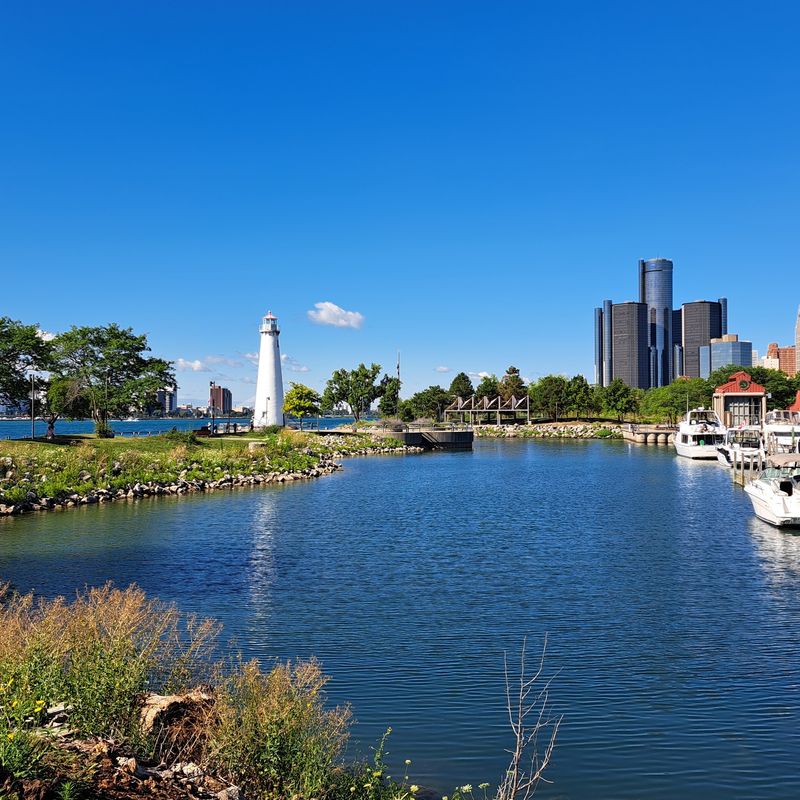
Turn one way and you see the Renaissance Center towering over the riverfront. Turn the other way and Windsor, Ontario, sits right across the water in Canada.
That double view is a big reason people bring cameras here. The lighthouse makes a clean, simple shape in the front, while the city fills the space behind it.
Photographers often line up the tower with the downtown towers in the background. Couples also choose this spot for engagement photos, which makes sense once you see the layout.
Sunset is worth planning around. The sky over the river can shift into warm colors, and the white lighthouse picks up that glow nicely.
Winter gives the scene a different personality. Ice and snow along the shore make the lighthouse look even more at home, like a light on a cold northern coast.
A phone camera is plenty for good shots. Still, I would bring a lens cloth, since breezes off the river can carry mist and dust.
Of course, the best views here are not always of buildings. Sometimes something huge floats right past the frame.
Freighters Make Surprise Appearances
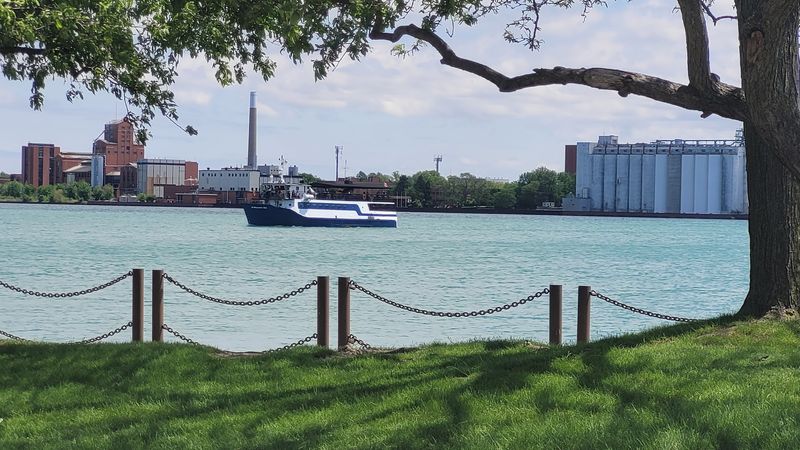
Few lighthouses get to watch giant ships glide by so close to a downtown. The Detroit River links Lake Huron and Lake Erie, so Great Lakes freighters and other vessels pass here regularly.
Ship watching is one of the quiet pleasures of this spot. You can sit on a bench and wait for a long cargo ship to slide past, sometimes with Canada as the backdrop.
Kids especially may enjoy guessing how long a passing ship really is. Some Great Lakes freighters stretch hundreds of feet, so a single ship can take a while to pass the lighthouse.
I would recommend checking a ship tracking app before heading out. Several free tools show vessels moving on the river, which helps you time your visit.
Smaller boats bring their own action too. Pleasure boats come and go from the harbor right beside the lighthouse during the warmer months.
That marina is the reason the tower stands where it does. It marks the harbor entrance, giving boaters a clear landmark as they head back inside.
Watching all that traffic makes the river feel alive, and the next stop shows a calmer side of the park.
Wetlands Where Factories Once Stood
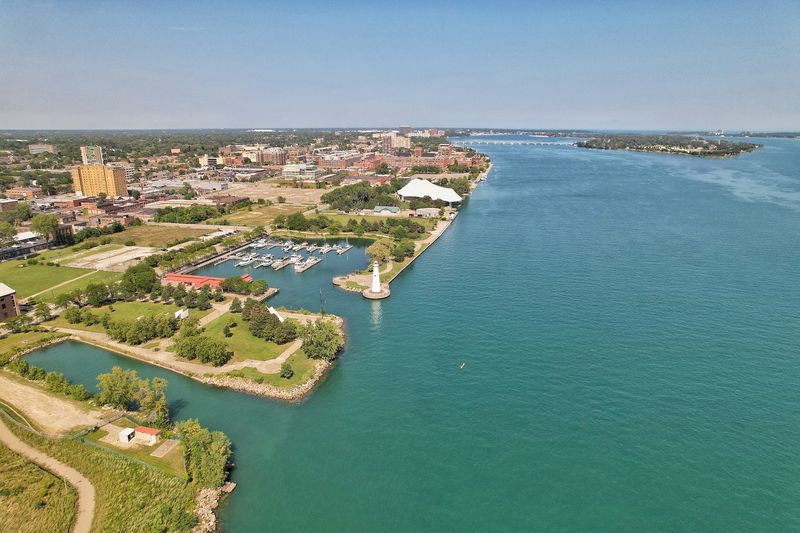
Cattails and native grasses grow just a short walk from busy downtown streets. The park includes a restored wetland area that helps clean storm water before it reaches the river.
This land once looked very different. Much of Detroit’s east riverfront was lined with industrial sites, rail yards, and warehouses for many years.
Turning that land into green space was a major project. Now the area supports birds, plants, and small wildlife right in the middle of the city.
I find that change one of the most hopeful parts of the park. You can see nature coming back where heavy industry once stood.
Along the path, informational signs explain wildlife and nature details. Reading a few of them turns a casual walk into a mini lesson.
Bird watchers may want to slow down near the water. Ducks, gulls, and other river birds often appear along the shoreline and in the plantings.
Spring and summer are good times to see the wetland at its greenest. Fall can bring golden colors to the grasses.
The quiet here makes a nice contrast with the active walkway leading toward the lighthouse, which has its own stories to tell.
History Markers Along the Path
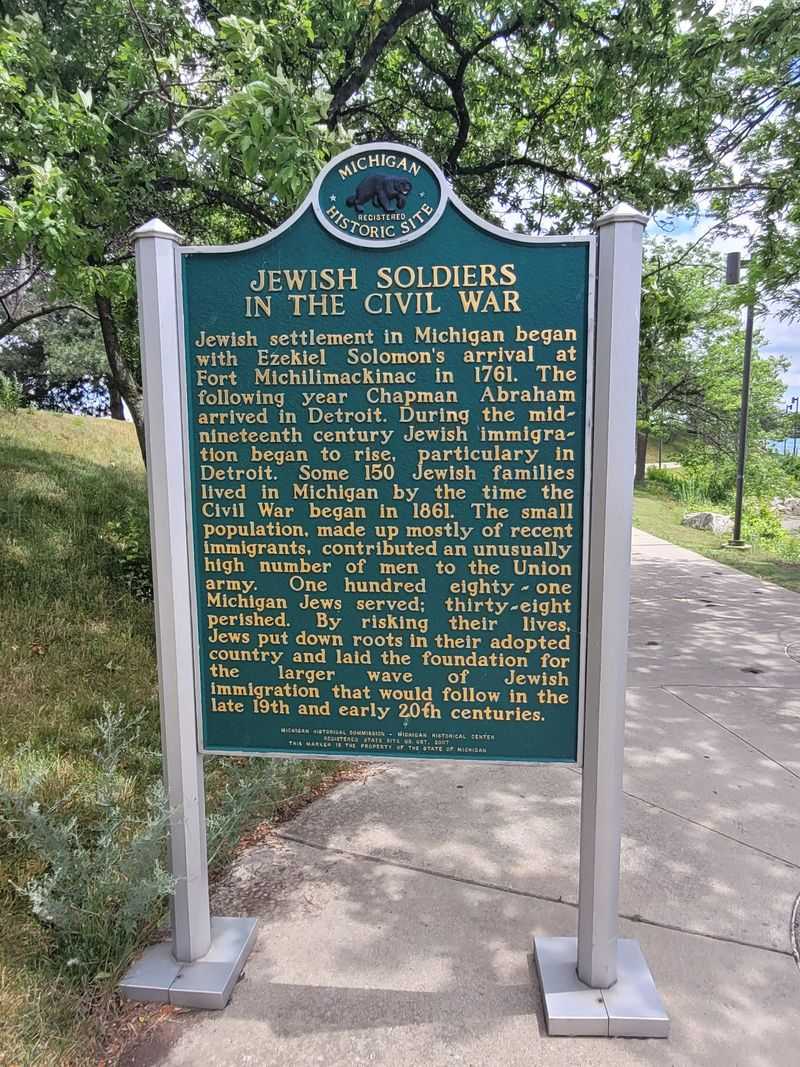
Small history lessons line the walkway out to the lighthouse. Historical markers and informational displays stand along the path, so you can learn as you stroll.
Detroit’s riverfront has a deep past. The river shaped the city’s growth, its trade, and its role in the wider Great Lakes region.
The markers give that past a place to live. Instead of just enjoying the view, you can stop and connect the scene to the people and events that came before.
I like reading markers like these on the way out and enjoying the view on the way back. It splits the walk into two easy parts.
The path itself is smooth and level, which helps a lot of visitors. It works well for strollers and wheelchairs, making the lighthouse reachable for many people.
Benches appear along the route too. They make it easy to stop, read, or simply rest and watch the water.
For families, the markers can spark good questions from kids. A short walk might turn into a talk about ships, rivers, and how cities change.
Once you reach the tower, though, many people turn their attention to the water instead.
An Easy Stop for Bikes and Walkers
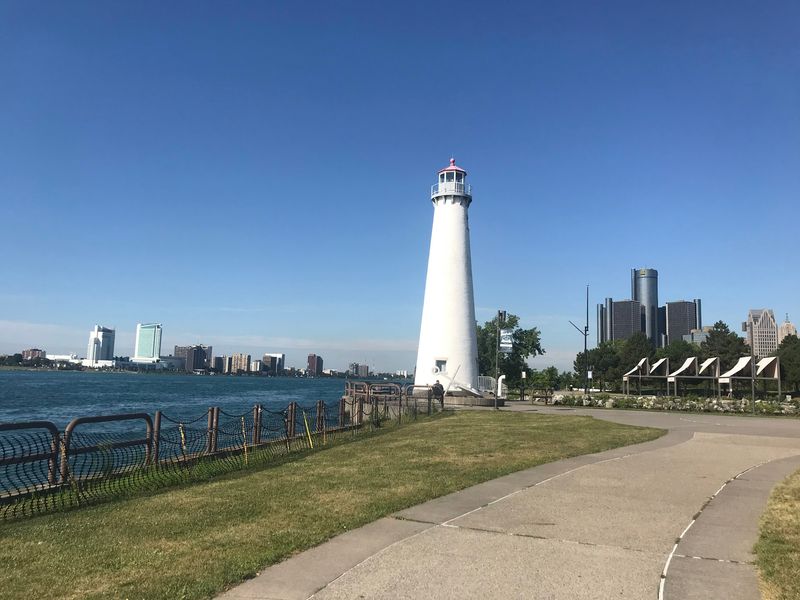
Cyclists heading from downtown toward Belle Isle often roll right past this lighthouse. The park sits along the Detroit RiverWalk, a long waterfront path that connects many riverfront spots.
Walking from downtown is very doable. The route is mostly flat, and the views of the river keep it interesting the whole way.
Bike rentals and scooters are often available along the riverfront. That makes it easy to cover more ground and add the lighthouse to a longer outing.
I would plan this as part of a bigger riverfront day. You could start near the Renaissance Center, ride east, pause at the lighthouse, then continue on.
Dog walkers love the route too. Leashed pups are a common sight, and the open space gives them room to sniff around.
Wind can be a factor near the water. Even on sunny days, a breeze off the river may feel cooler than the streets downtown.
Packing a light jacket helps in spring and fall. In winter, gloves and a hat make the walk much more pleasant.
Of course, arriving by car takes a little more planning, especially when it comes to parking.
Parking Tips and the Small-Park Reality
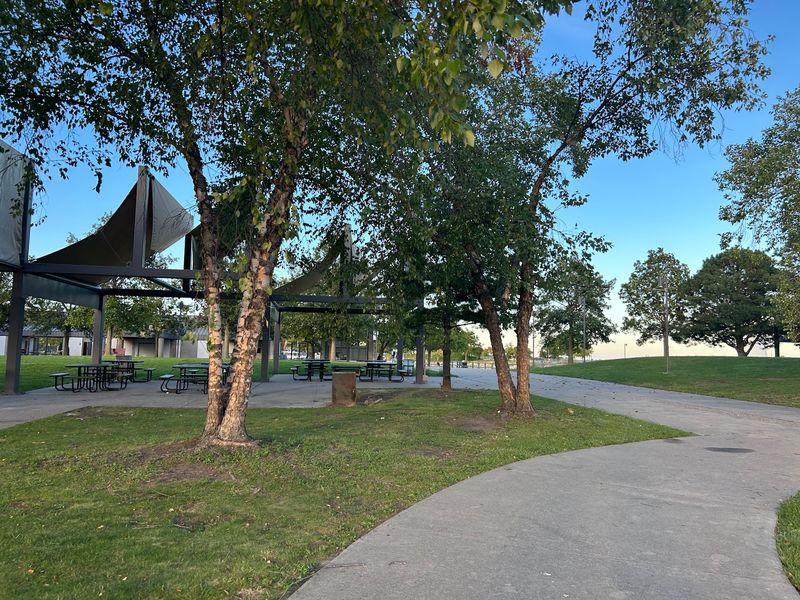
Driving to the lighthouse is easy, but parking takes a little thought. Street parking right beside the park is limited, so having a plan saves time.
Paid lots sit across the street and nearby. Some visitors with a Michigan Recreation Passport may find parking options tied to the state park, so check current rules before you go.
The park is also smaller than some people expect. It is easy to drive past the entrance if you are not watching closely, since plants can grow around the sign.
I would set a map pin before leaving home. That makes finding the right turn on Atwater Street much simpler.
Visiting the lighthouse grounds is free. Climbing the tower is not something visitors should count on, since it has not been open for climbs during recent visits.
Plan to enjoy it from the outside instead. The best views come from the path and shoreline anyway.
Because the park is small, a visit can be short and relaxed. That makes it a nice add-on to other riverfront plans.
Timing your trip around the seasons can change the whole mood of the place.
Four Seasons, Four Different Moods
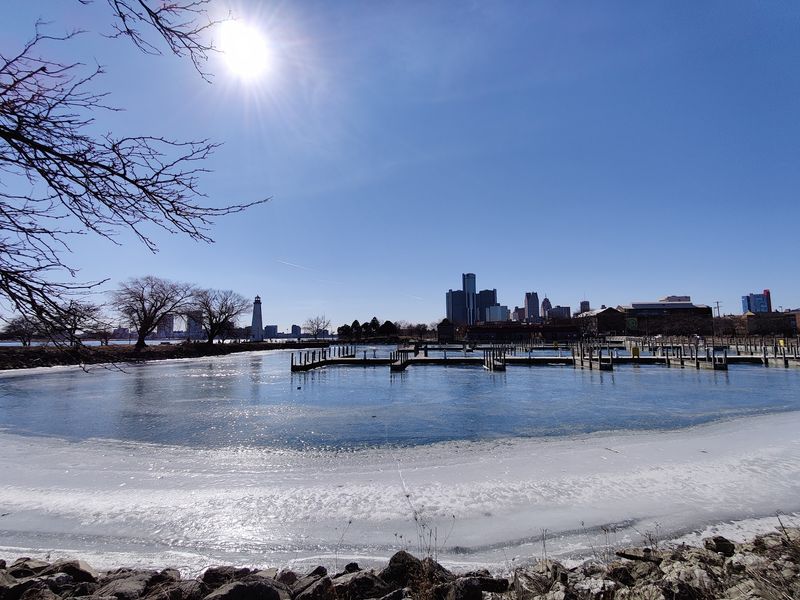
Snow on the lighthouse might be the most surprising sight of all. In winter, ice forms along the river and the tower looks like it belongs on a frozen northern coast.
Fewer people visit during the colder months. That makes it a peaceful time for photos, quiet walks, and maybe meeting an artist with an easel.
Spring brings green grass and blooming plants. The wetland area wakes up, and birds become more active along the shore.
Summer is the busiest season. Boats fill the harbor, the RiverWalk gets lively, and long evenings stretch sunset viewing later.
Fall might be my favorite on paper. Cooler air, golden grasses, and clear skies can make the skyline look extra sharp behind the white tower.
Each season changes what you should pack. Sunscreen and water work well in summer, while warm layers are a must from late fall through early spring.
Weekday mornings are generally quieter than weekend afternoons. If you want the lighthouse mostly to yourself, aim for an early visit.
No matter the month, the mix of river, city, and lighthouse stays the same, and it feels right at home in Detroit.
Share this story