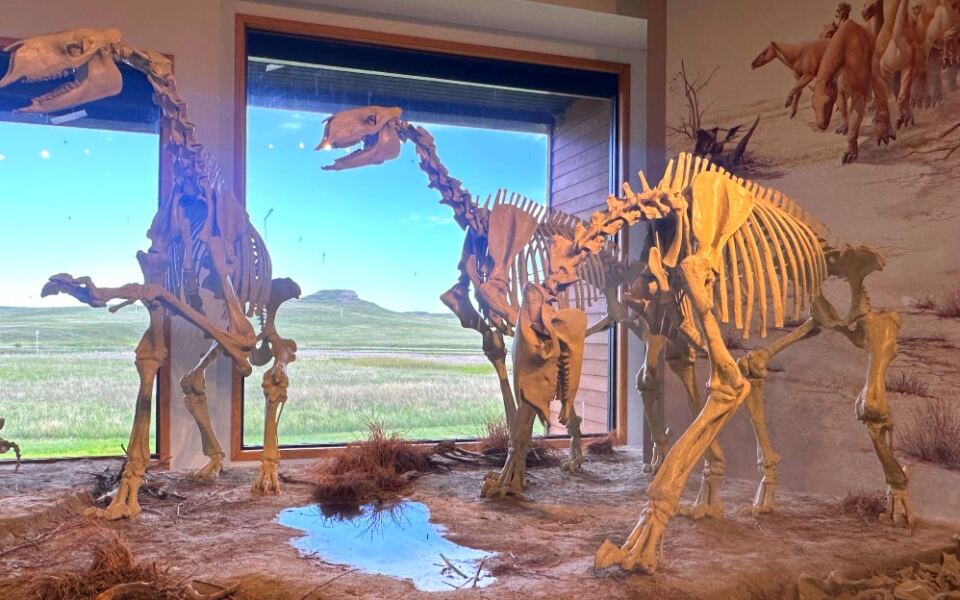
Nebraska is famous for cornfields, cattle, and long, flat highways. Millions of years ago, though, the same ground hosted rhinos, three-toed horses, camels, and mammoths taller than a school bus.
Some of those animals left behind stunning evidence. A volcanic eruption far to the west dropped ash on an ancient watering hole, keeping whole skeletons in place.
Grassy hills in the northwest hid bones that changed how scientists understand mammals. Even a pair of giant tusks tells a dramatic story of two animals that refused to back down.
The best part is that you can still see much of this history today. Some stops let you watch scientists dig.
Others pack their halls with towering skeletons and ancient sea creatures. A few let you hike across rock layers older than most mountains.
Keep reading to find out where to go, what to look for, and which tips will make each visit smoother. By the end, you may never look at a Nebraska road trip the same way again.
1. Ashfall Fossil Beds State Historical Park, Royal, Nebraska
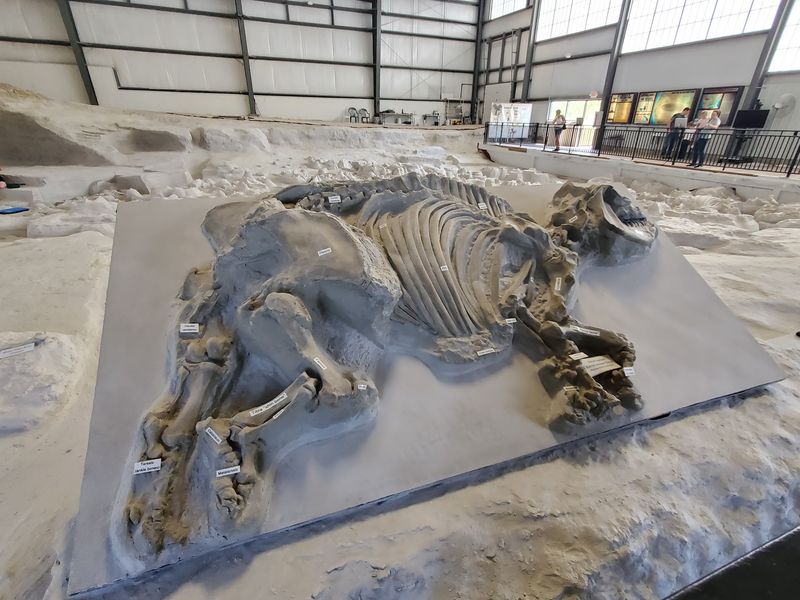
About 12 million years ago, a volcano in what is now Idaho sent a thick cloud of ash drifting east. It settled over a Nebraska watering hole and buried the animals gathered there.
Today, people call the site the Pompeii of prehistoric animals. Rhinoceroses, horses, camels, and birds remain right where they were found.
The star attraction is the Hubbard Rhino Barn. Walkways let you look straight down at skeletons still resting in the ground, and many are complete from nose to tail.
Paleontologists keep working here, so you might catch them brushing away ash. The fossil preparation lab lets visitors ask questions about recent finds.
Outside, a mile-long trail loops through grassy hills with signs about local plants, animals, and geology. Picnic areas make it easy to plan a lunch break.
Plan ahead before you go. The park runs seasonally and is scheduled to reopen in spring 2027.
You will need a park entry permit plus an admission fee for anyone age three and older.
2. Toadstool Geologic Park, Harrison, Nebraska
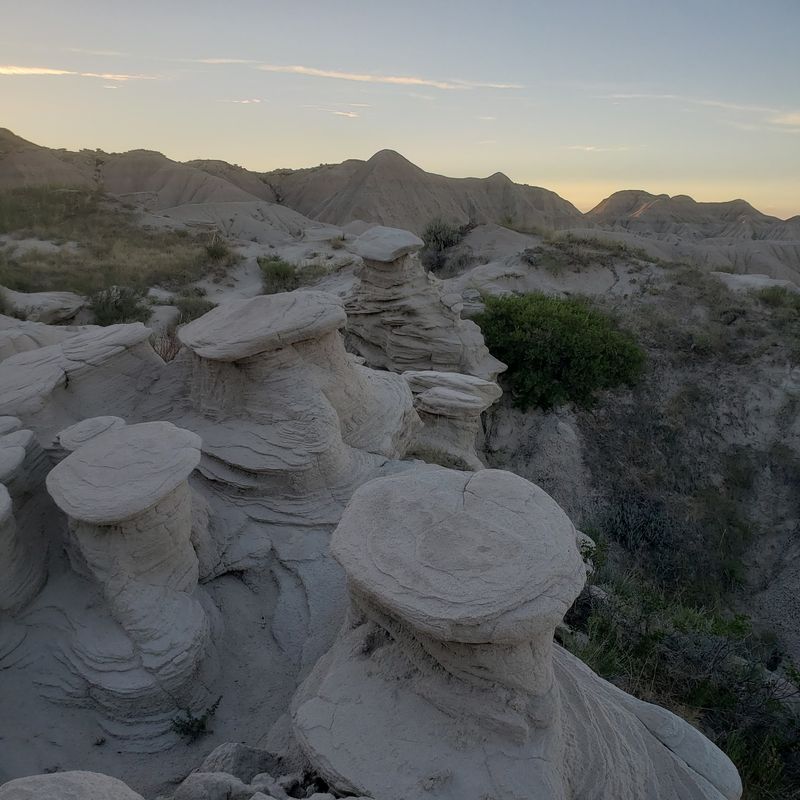
Nobody expects to find giant stone mushrooms in Nebraska. Yet here they are, standing in a stretch of badlands that looks ready for a space movie.
Erosion carved these toadstools by wearing away soft clay beneath harder sandstone caps. The layers around them stretch back about 30 million years.
Scientists have found evidence of tortoises, rhinos, saber-toothed cats, three-toed horses, camels, and lizards in these rocks. Fossil trackways even show how some animals moved across the ancient ground.
Three trails start at the campground trailhead. The one-mile loop is a great pick for families, since it passes the most famous formations without wearing anyone out.
Hikers wanting more can take the three-mile Bison Trail, which runs one way to the Hudson-Meng center. Bring plenty of water because shade is hard to find.
Near the trailhead, a rebuilt sod house shows how homesteaders made homes from prairie soil. One firm rule applies everywhere in the park: fossils stay where you find them.
3. Trailside Museum of Natural History, Crawford, Nebraska
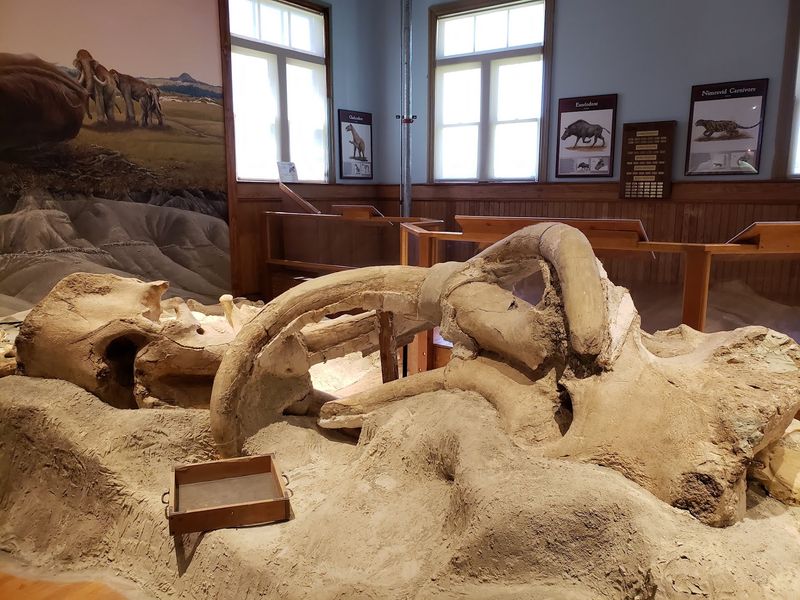
Talk about a stubborn rivalry. Two Columbian mammoth bulls locked tusks during a fight thousands of years ago and never managed to pull apart.
Their fossils were discovered in 1962, only about 13 to 15 miles from the museum. Now they form the famous Clash of the Mammoths exhibit, backed by a mural showing the showdown.
The Trailside Museum sits inside Fort Robinson State Park, in the old Army Theatre building. A life-size skeleton of a Columbian mammoth, Nebraska’s state fossil, also greets visitors.
Other displays cover Cretaceous sea fossils, Ice Age wildlife, and animals living on the plains today. Kids can try hands-on science activities in the Encounter Center.
A rock and souvenir shop sells small keepsakes for young collectors. The main floor is wheelchair accessible.
Timing matters for this stop. The museum usually closes from late October to late March, and visitors need both museum admission and a Nebraska State Park entry permit.
Pair it with a day exploring the historic fort grounds.
4. Morrill Hall, Lincoln, Nebraska
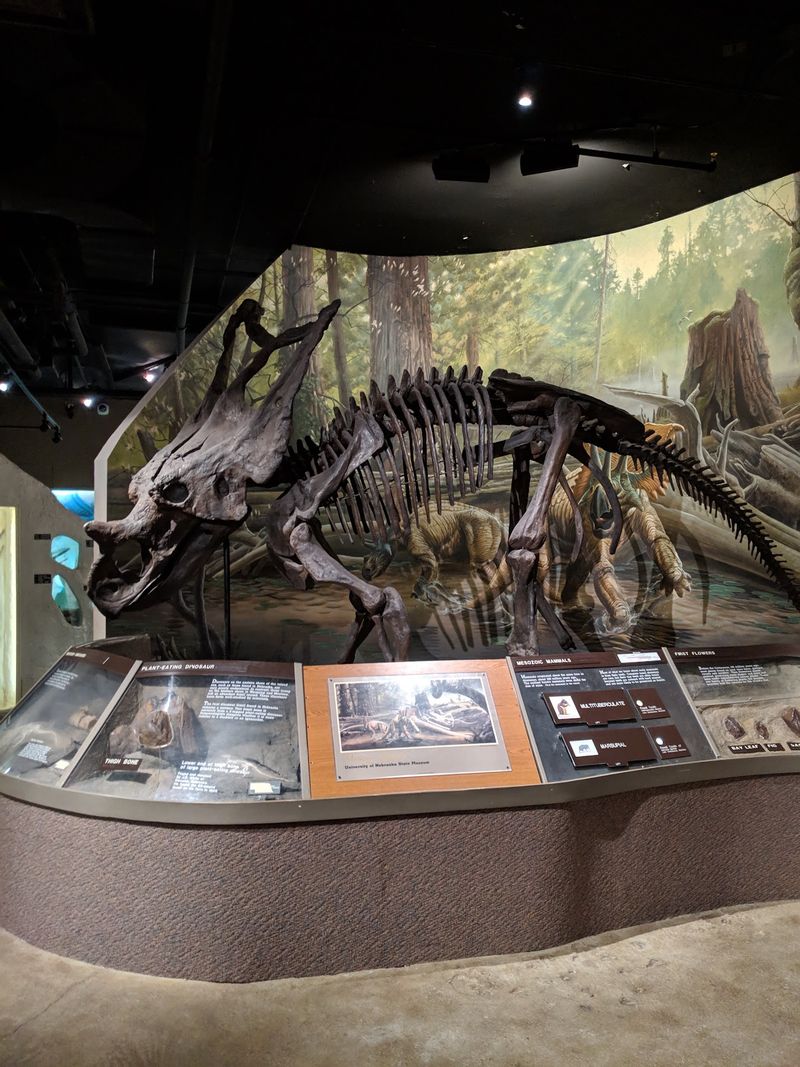
Meet Archie, a Columbian mammoth with serious bragging rights. He is the world’s largest fully mounted fossil of his kind, and he rules Elephant Hall at the University of Nebraska State Museum.
Archie has plenty of company. The hall is lined with mammoths and mastodons, showing how many giant relatives once roamed North America.
Founded in 1871, the museum now holds more than 13 million specimens. Four floors cover Nebraska’s ancient seas, a Jurassic dinosaur gallery, early mammals, and a rhino gallery tied to Ashfall Fossil Beds.
Look for the Visible Lab, where staff prepare specimens in view of visitors. It shows the slow, careful work behind every display.
Families should head to the Marx Discovery Center. Its Nature’s Builders theme lets kids dig for fossils in a sandbox and build animal burrows.
Mueller Planetarium sits inside the building and runs shows on select days. Check the schedule ahead of time so you can add some star power to your fossil day.
5. Petrified Wood Gallery, Ogallala, Nebraska
Twin brothers Howard and Harvey Kenfield spent more than 50 years turning ancient trees into art. Their patience is the reason this small Ogallala museum exists.
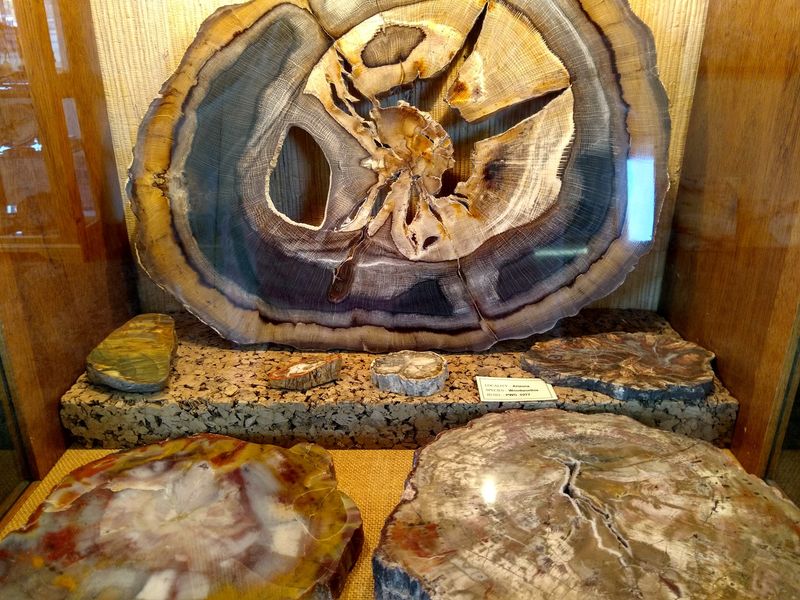
Petrified wood forms when minerals slowly replace the wood of a buried tree. The result keeps the original grain but becomes solid stone, often with bright reds, yellows, and blues.
The Kenfields collected, cut, and polished pieces from around the world. Then they built detailed music boxes and three-dimensional scenes from them.
Visitors can compare raw specimens with finished artwork side by side. It is a fun way to see geology and craftsmanship in one stop.
The gallery also shows fossils, gemstones, and a large group of Native American artifacts and arrowheads, many found nearby. Loaned exhibits and work from visiting artists rotate through as well.
Admission is free, though donations help keep the doors open. The gift shop carries unusual souvenirs, and the location just off Interstate 80 makes it an easy break on a long drive.
6. Hudson-Meng Education and Research Center, Crawford, Nebraska
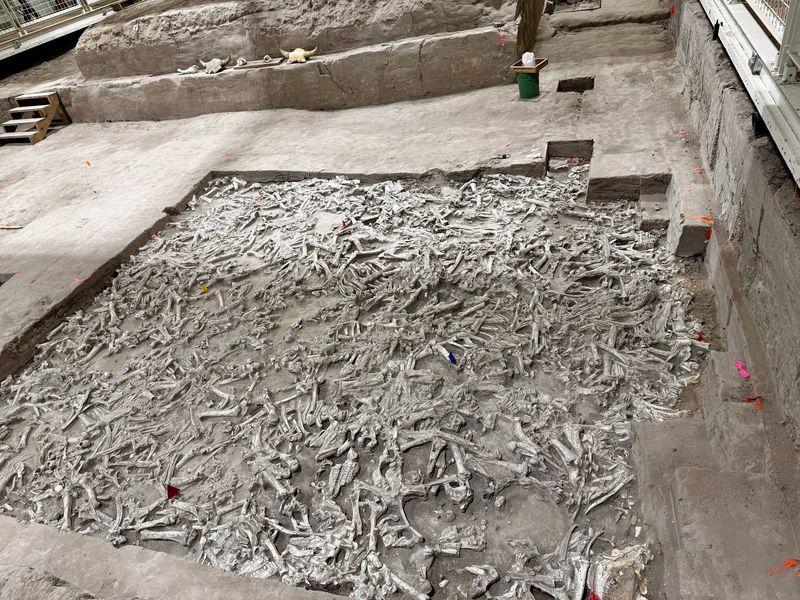
Here is a cold case worthy of any detective show. Around 10,000 years ago, as many as 600 extinct Bison antiquus ended up in one spot, and nobody knows exactly why.
Ranchers stumbled on the bonebed in 1954. Since then, it has become one of the most important paleo-archaeological sites in North America.
Scientists still argue about the cause. Some think early hunters were involved, while others point to a natural event.
The visitor center lays out the evidence and invites you to form your own theory. Then you can tour the enclosure built over the bones.
Guided tours add details about current research. Ask questions, since the guides enjoy discussing the mystery.
Active visitors can hike the three-mile Bison Trail, one way, across the Oglala National Grassland to Toadstool Geologic Park. Arrange a ride back or plan for six miles total.
Hours are limited and seasonal, usually between Memorial Day and Labor Day. Call the Pine Ridge Ranger District ahead to set up a tour.
7. Agate Fossil Beds National Monument, Harrison, Nebraska
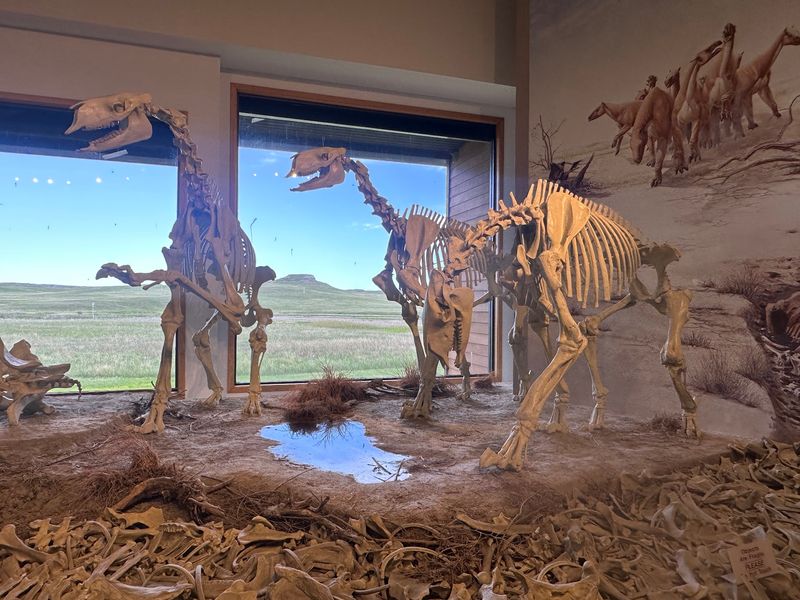
Agate Fossil Beds is known worldwide for its Miocene mammals. Scientists found pony-sized rhinos called Menoceras, bear dogs, the giant Dinohyus, and the clawed plant-eater Moropus.
One of the oddest finds is Daemonelix, nicknamed the devil’s corkscrew. These spiral fossils are actually burrows dug by an ancient land beaver called Palaeocastor.
Two trails cover about four miles in total. The Fossil Hills Trail is wheelchair accessible and crosses the Niobrara River wetlands, while the Daemonelix Trail shows off those twisty burrows.
Trails stay open from dawn to dusk all year. Visitor center hours change with the seasons, so check before driving out.
Fill your gas tank early. The nearest fuel and services sit 30 to 50 miles away, and cell signal is spotty across the area.
8. Eleanor Barbour Cook Museum of Geology, Chadron, Nebraska
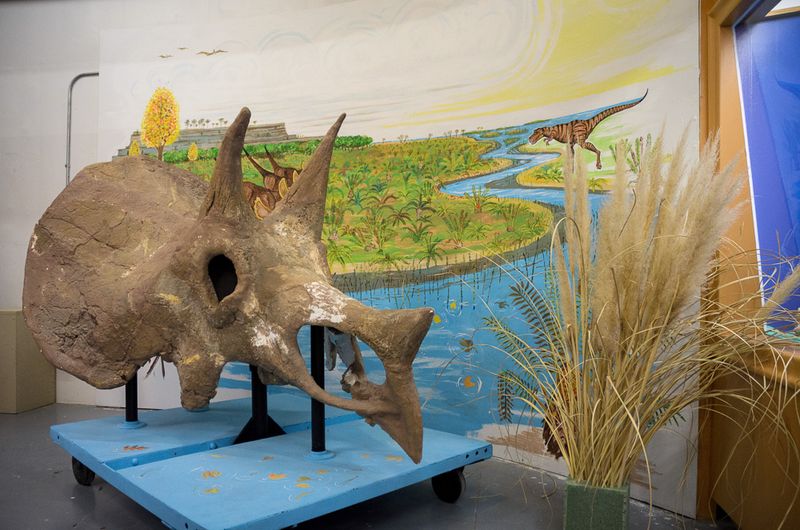
College students have been learning from these rocks for more than a century. What began as a teaching collection at Chadron State College has grown into a museum anyone can visit.
Most specimens come from the Great Plains and the Rocky Mountain region. Shelves hold fossils, minerals, rocks, and prehistoric animal remains that explain western Nebraska’s deep past.
The fluorescent minerals room is a crowd favorite. Under ultraviolet light, ordinary-looking stones reveal bright colors you would never guess they had.
The Ohme collection adds agates, jade, and petrified wood. Agates are especially fitting here, since Nebraska’s state rock is the Blue Agate.
In fall 2023, the museum moved into a larger space inside the Math Science Center of Innovative Learning. The new layout mixes classic displays with hands-on activities.
Bring your phone, because some specimens have QR codes with extra details. The museum is generally open when classes are in session, from 7:30 a.m. to 4:30 p.m., and appointments can be made for other times.
9. Ash Hollow State Historical Park, Lewellen, Nebraska
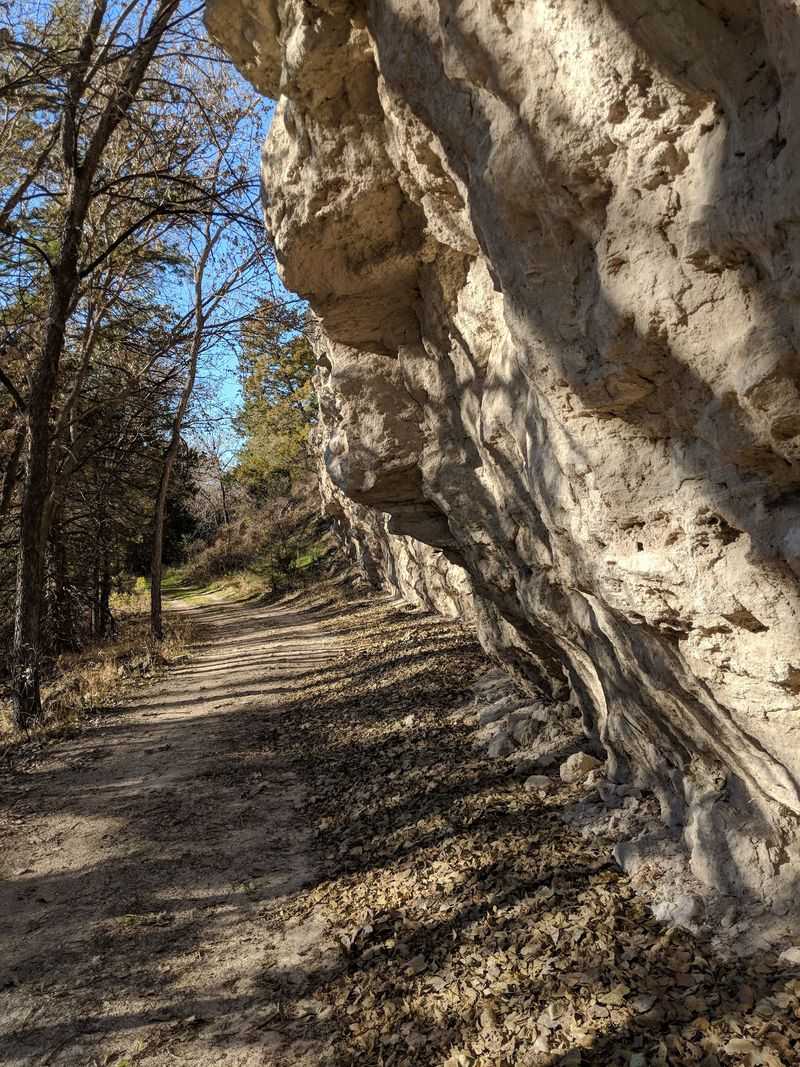
Fresh spring water has a way of attracting company. For almost 10,000 years, people kept returning to this sheltered valley, and long before them, rhinos, mammoths, and mastodons wandered through.
The park holds more than 30 million years of geologic history. Fossils on display help visitors picture the animals that once called the area home.
Ash Hollow Cave adds the human side of the story. Early inhabitants used it as far back as 6,000 years ago, and an interpretive center now sits over its entrance.
Pioneer history shows up too. At Windlass Hill, deep wagon ruts mark the steep descent that Oregon and California Trail travelers dreaded.
Nine miles of trails welcome hikers, bikers, and horseback riders. The views over the North Platte valley reward anyone who climbs the hills.
Grounds stay open year-round from 8 a.m. to sunset. Plan your visit during visitor center hours if you want to see the cave and the historic stone schoolhouse.
10. Hastings Museum, Hastings, Nebraska
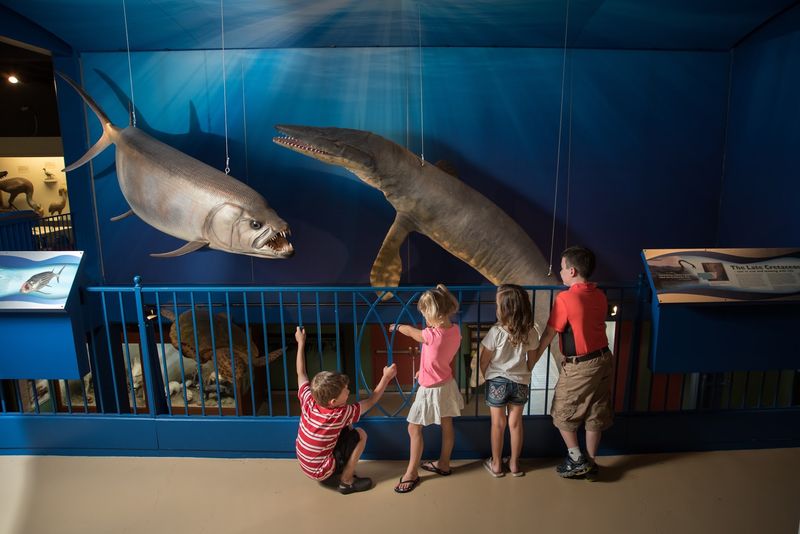
Surfing in Nebraska sounds like a joke, but the state really was underwater once. During the Cretaceous Period, a huge inland sea covered the region, and the Hastings Museum brings that ocean back to life.
The Cretaceous Sea exhibit stars a 30-foot Tylosaurus, a giant marine reptile. Nearby are a 17-foot Xiphactinus fish and a Protostega sea turtle, all made by paleo-artist Gary Staab.
Upstairs, real and replica fossils follow the timeline from Cambrian seas to Ice Age mammals. Look for mammoth tusks, ancient bison skulls, giant sloth bones, and mastodon teeth.
This is the largest municipal museum between Chicago and Denver. It opened in 1927 and is accredited by the American Alliance of Museums.
Fossils are only part of the fun. A full-dome planetarium runs more than 550 shows a year, and a large-format theater has a screen about 65 to 70 feet wide.
Families who want a big overview without a long rural drive will find this stop a smart choice.
11. Mari Sandoz High Plains Heritage Center, Chadron, Nebraska
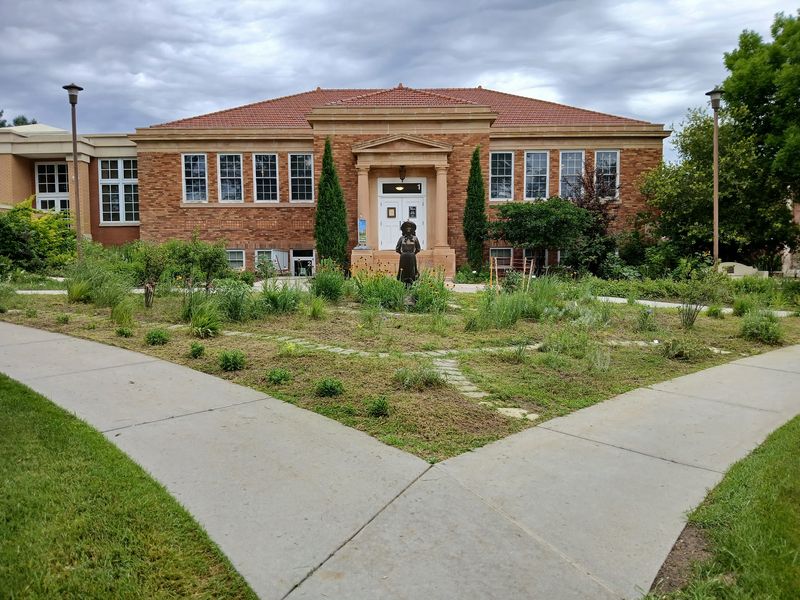
Writer Mari Sandoz once found fossils on her own family land and wrote to a famous scientist about them. That exchange helps explain why a literary center also displays ancient bones.
The center, on the Chadron State College campus, mainly honors Sandoz, one of Nebraska’s best-known authors. Her books captured pioneer and Native American life on the High Plains.
An exhibit called Who lived here before? shares her letters with E.H. Barbour, founder of the University of Nebraska State Museum.
Their conversation connects storytelling with science in a personal way.
Regional paleontology fills other cases. Visitors can see remains of Ice Age animals such as bison, woolly mammoths, mastodons, giant ground sloths, saber-tooth cats, and ancient horses.
Plant lovers have options too. A touch-screen kiosk features Flora Sandoz’s wildflowers, and the Claude Barr Garden shows off native prairie plants.
Pair this visit with the Cook Museum of Geology on the same campus. Together, they make an easy half-day in Chadron before heading to more remote sites.
Share this story