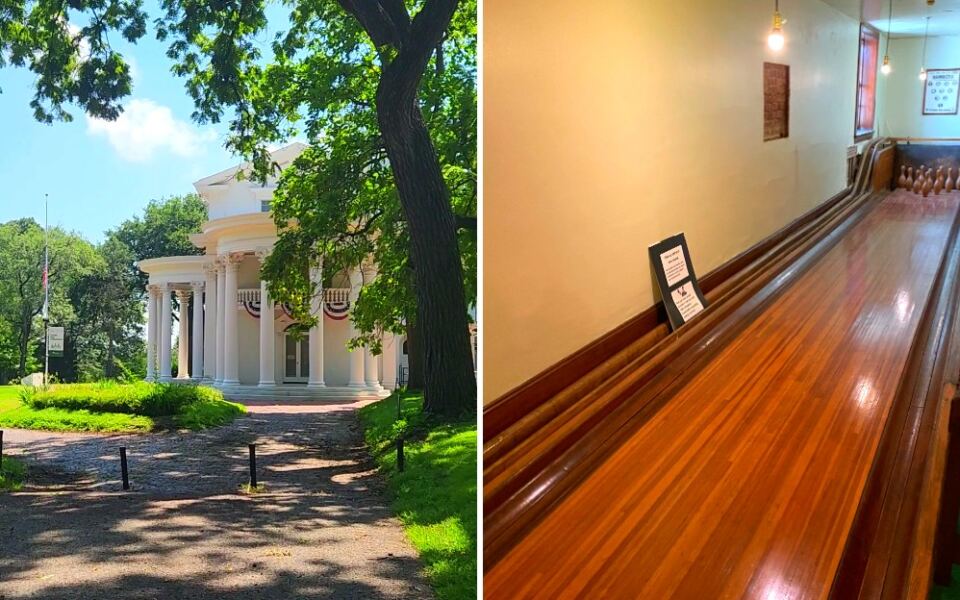
A 52-room mansion with a Tiffany skylight and a bowling alley in the basement would be unusual enough on its own. Arbor Lodge has something even bigger in its history: this Nebraska City estate was home to J.
Sterling Morton, the man behind Arbor Day.
Morton and his wife, Caroline, arrived in Nebraska Territory in 1854 after leaving the much greener landscape of Michigan. Their desire for more trees eventually helped inspire a tree-planting movement that spread far beyond their own property.
The home grew along with the family, expanding from a tiny structure into the 52-room mansion visitors can tour today. Inside are family furnishings, historical artifacts, Morton’s study, the colorful skylight, and that unexpected basement bowling alley.
Outside, the story continues across an arboretum filled with more than 270 varieties of trees and shrubs. It is a fitting setting for exploring how one Nebraska family’s enthusiasm for planting trees helped create a tradition still celebrated today.
A Grand Address on Arbor Avenue
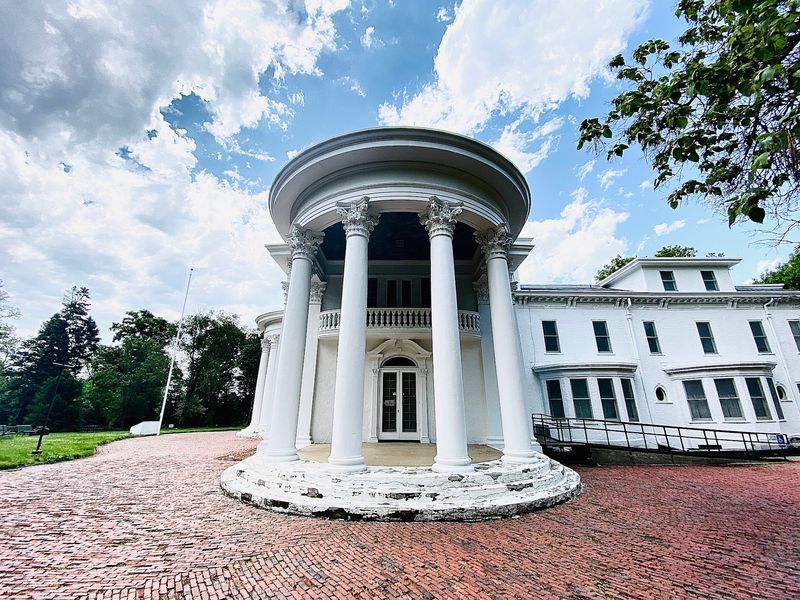
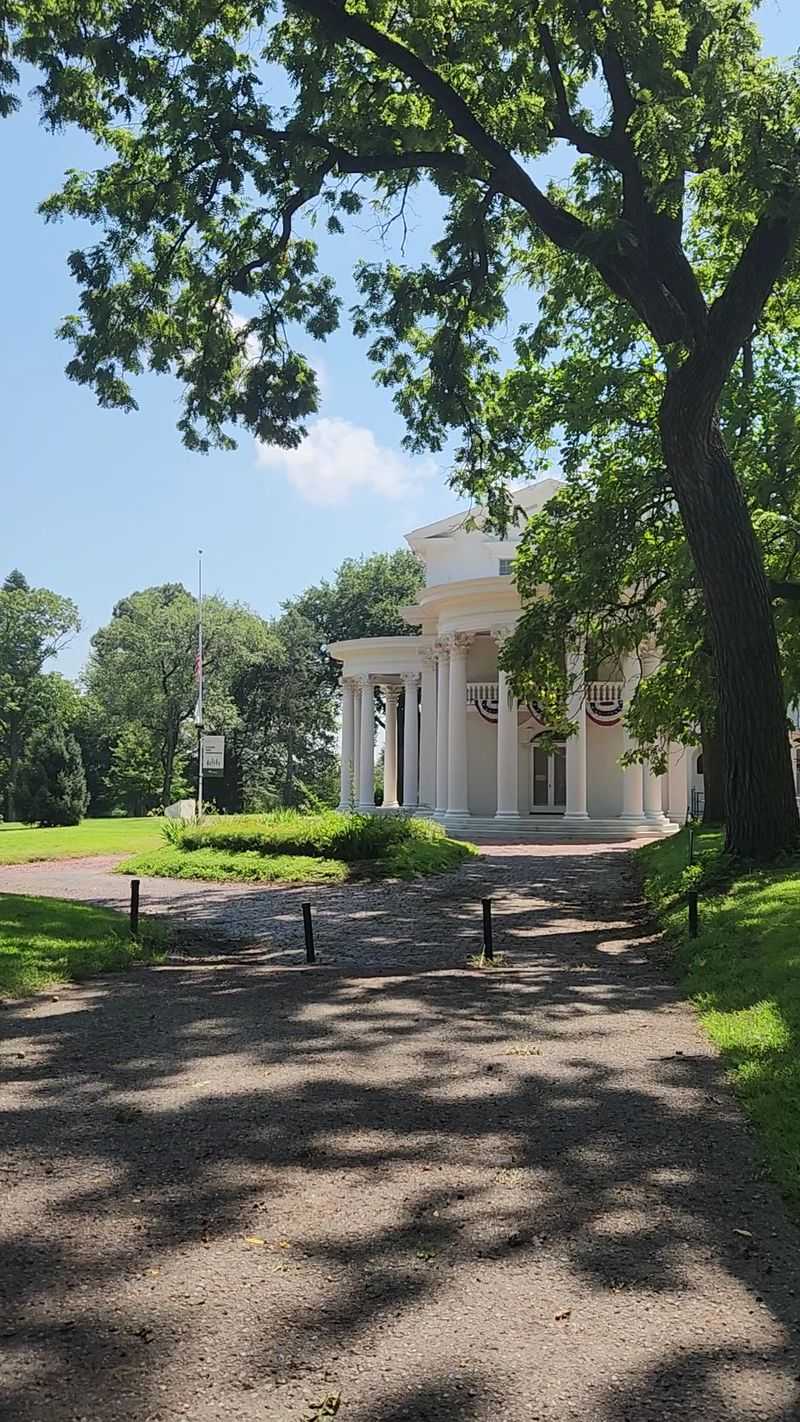
Find 2600 Arbor Avenue in Nebraska City, Nebraska, and you have found the home of Arbor Lodge State Historical Park. The columned mansion sits on a 72-acre estate that feels far bigger than the small town around it.
The white exterior looks formal, yet the lawn around it invites slow wandering. I parked, stretched, and noticed how many shade trees guard the drive.
This was the home of J. Sterling Morton, the man behind Arbor Day.
The house itself holds 52 rooms, which is plenty of space to get happily lost.
The mansion is open most days from 11 AM to 5 PM, and Mondays are closed. The grounds stay open all year with no fee.
Before heading inside, though, I wanted to know why a house in such a leafy spot began on a bare plain. The answer starts with a young couple and a very empty horizon.
Two Settlers and One Empty Horizon
Picture a landscape so open that wind rolled across it without hitting a single trunk. That was the Nebraska Territory in 1854, when Julius Sterling Morton and his wife Caroline arrived.
They came from Michigan, where forests were part of daily life. On their 160 acres near Nebraska City, shade, fuel, and shelter from wind were hard to find.
Morton worked as a journalist and editor, so he used his newspaper to urge neighbors to plant trees. His words were practical, not fancy.
Trees meant lumber, firewood, and fewer dusty gusts. They also meant a place that felt like home.
Caroline, called Carrie, shared that vision and helped shape the household that grew here. Their small beginning matters because it explains every branch on the property today.
Next comes the single idea that turned their wish into a holiday.
The Day Nebraska Planted a Million Trees
On January 4, 1872, Morton stood before the State Board of Agriculture in Lincoln with a bold resolution. He asked to set aside April 10 of that year for planting trees across Nebraska.
Some members liked the name Sylvan Day. Morton preferred Arbor Day, since it covered both forest and fruit trees.
The board approved it, and the response was huge. People are believed to have planted more than one million trees on that first day.
Prizes for counties and individuals added some friendly competition. Who knew shovels could stir up so much rivalry?
By 1882, schools around the country joined in. In 1885, Nebraska made Arbor Day a legal state holiday on April 22, Morton’s birthday.
That is a lot of growth from one meeting. Now let me show you how the family home grew just as steadily.
From Two Rooms to Fifty-Two
Hard to believe, but this mansion started in 1855 as a modest four-frame structure with just two rooms. During Morton’s lifetime, the house was remodeled seven times.
An 1874 update added a decorative porch and three Gothic-style dormers. That is a rare sight for Nebraska.
In 1875, the family gave the home its name, Arbor Lodge. Remodels in the 1880s brought two full stories and an Italianate look.
Each change fit the style of the day and the family’s growing success. Think of the walls as pages that were rewritten again and again.
I enjoyed spotting where the older bones show through the newer finishes. A guide at the desk can point out clues if you ask.
The biggest makeover, however, did not happen until Morton’s son took charge. That chapter changed the whole look of the front.
Joy Morton and the Columned Makeover
After J. Sterling Morton passed in 1902, his eldest son Joy inherited the estate.
Joy founded the Morton Salt Company, so he had both vision and the means to reshape the home.
By 1903, the house had doubled in size. He gave it the Neo-Classical Revival look, with a signature columned portico and stucco exterior.
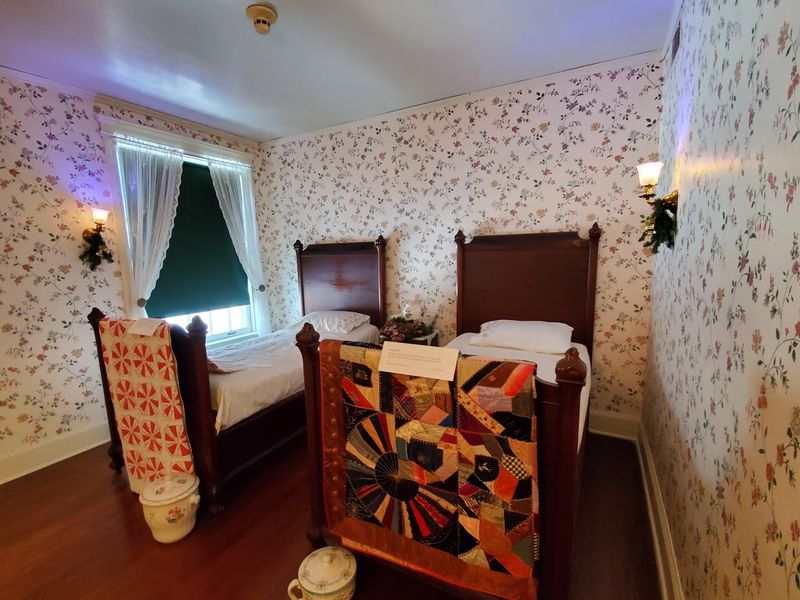
The family used the lodge as a summer retreat for about twenty years. Joy kept many of his parents’ older furnishings, which adds charm to the rooms.
In 1923, he donated the entire 72-acre estate to the State of Nebraska. It became the state’s second state park.
Today, the Nebraska Game and Parks Commission owns it, and the Arbor Day Foundation manages it. That generous gift is why anyone can wander here today.
Inside, the rooms hold even more surprises than the front steps suggest.
Inside the Victorian Rooms
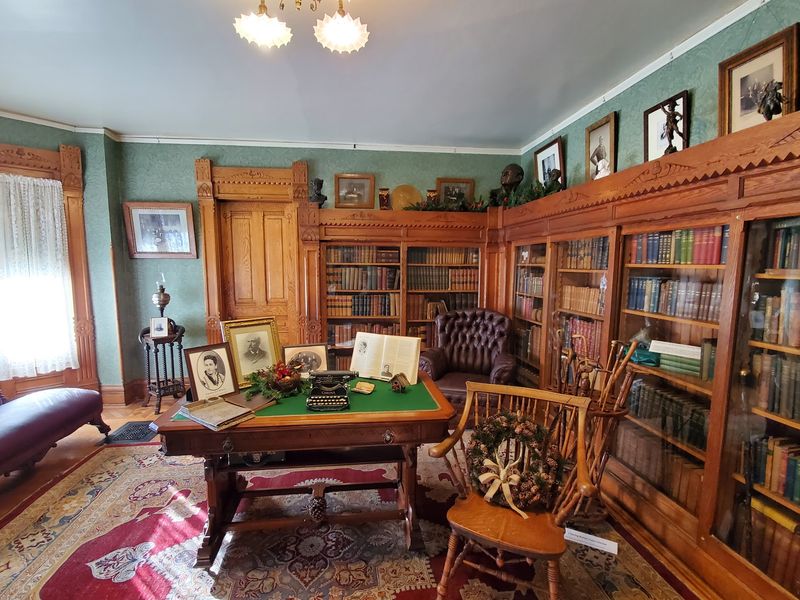
The front door opens to rooms that feel warm rather than stiff. Authentic Victorian and Empire furnishings fill the spaces, and many pieces belonged to the family.
Hundreds of artifacts are on display, from books and artwork to personal belongings. A visitor who loves details can spend hours here.
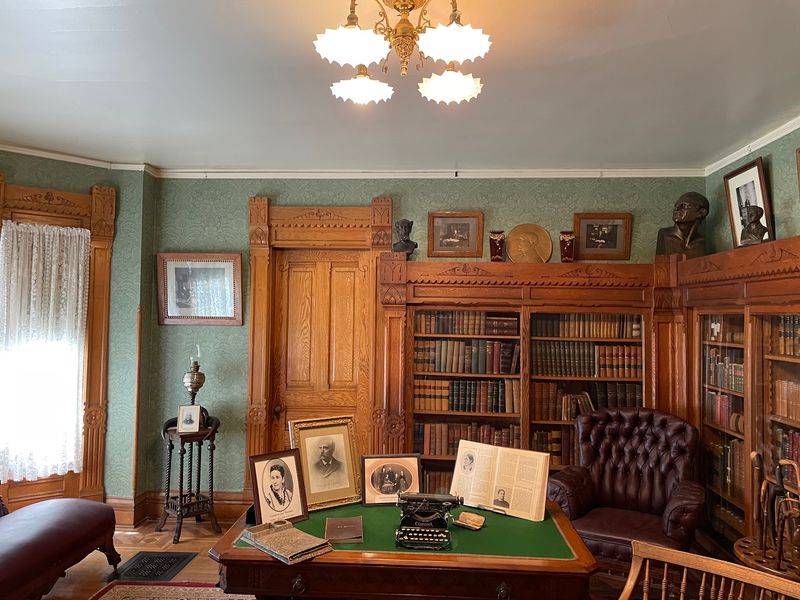
J. Sterling Morton’s study is a favorite stop.
It feels like a working room where big ideas were scribbled down.
Plenty of stairs link the four floors, so wear comfortable shoes. The mansion is not wheelchair friendly, which is worth knowing before you go.
Staff at the front desk are friendly and happy to share stories you will not find on a sign. I learned several new facts just by asking a question.
The third floor tells what the descendants did as they grew up. Before that, though, a certain colorful skylight deserves its own moment.
A Tiffany Skylight and a Bowling Alley
Look up in the sun parlor, and a Tiffany skylight greets you with a grape trellis design. Soft color spills across the room whenever daylight peeks through.
It is the kind of detail that makes a quick tour stretch into a long one. I tilted my head back until my neck complained.
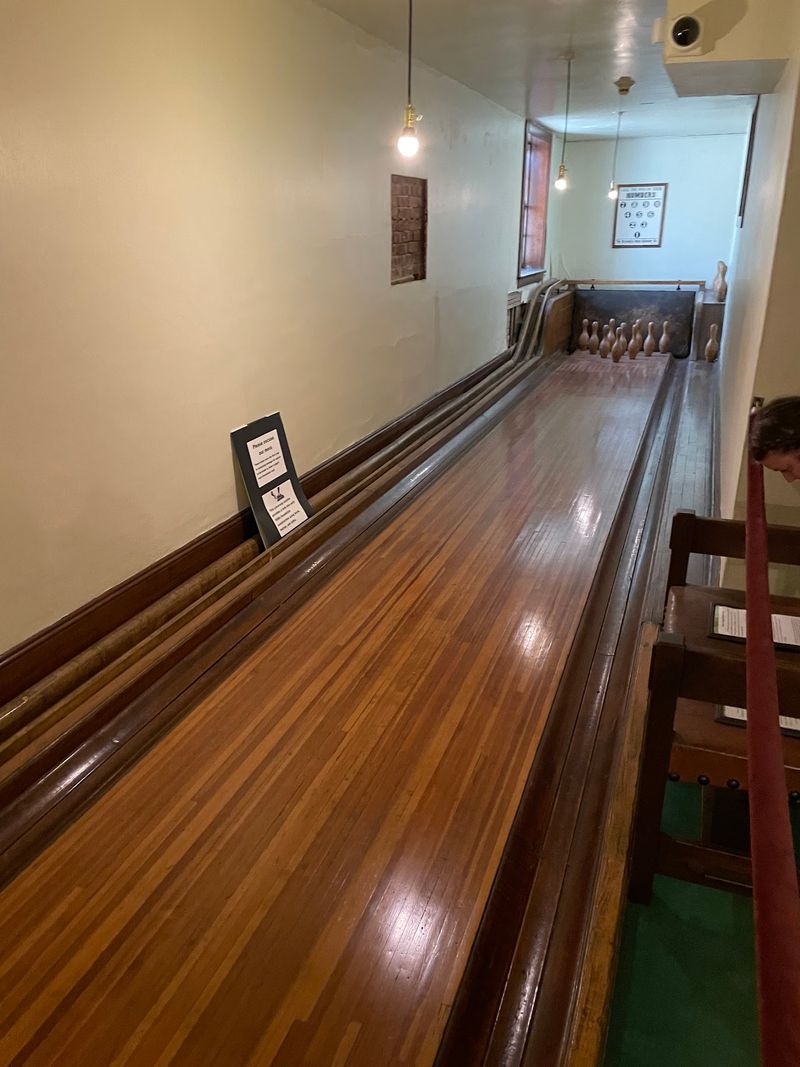
Then there is the basement, which holds a bowling alley. Visitors love hearing how a boy was paid ten cents to set up and recover bowling balls for the day.
I had never pictured a lane under a Nebraska mansion. It makes you want to dig one in your own yard.
Both features show that the Mortons enjoyed fun as much as elegance. They also prove that history can be playful.
After the rooms, the story continues in the museum displays, where salt and sunflowers share the spotlight.
Exhibits From Salt to Secretary
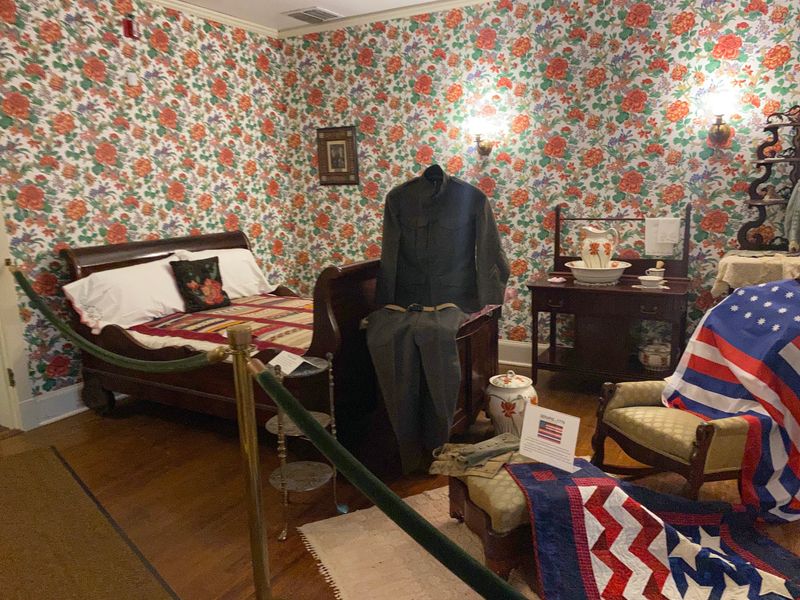
The mansion doubles as a museum, and the exhibits tie family life to a bigger story. Displays cover the Arbor Day movement, local history, and the Morton family legacy.
One section explains that J. Sterling Morton served as U.S.
Secretary of Agriculture under President Grover Cleveland. Another shares artifacts from the Morton Salt Company, which Joy built into a household name.
Yes, the umbrella girl’s story starts near here. Many guests are surprised to learn that salt and trees share a family tree.
Temporary exhibits change from time to time. During one stop, quilts made for veterans hung in the rooms, which added a touching layer to the visit.
If you enjoy reading, bring extra time. Signs and labels are thorough and easy to follow.
Once you have soaked up the indoor history, the real star waits outside among the leaves.
Walking Among Century-Old Trees
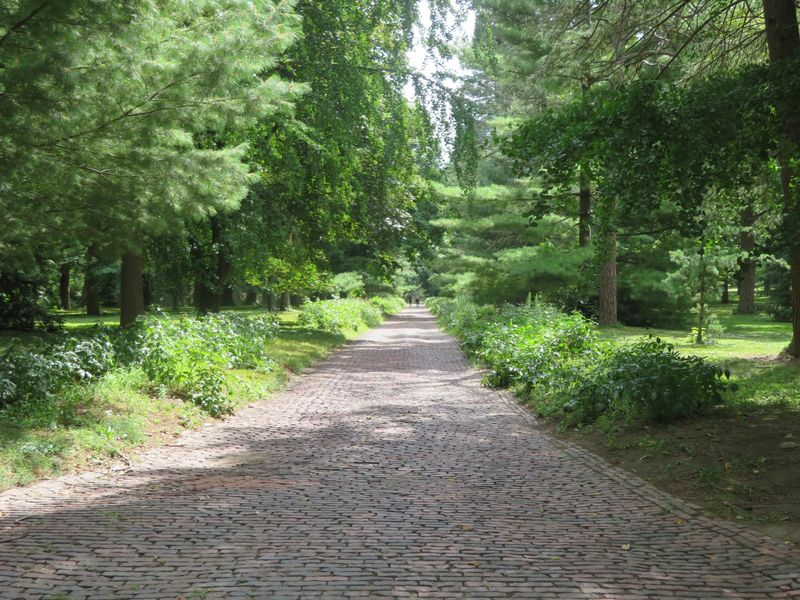
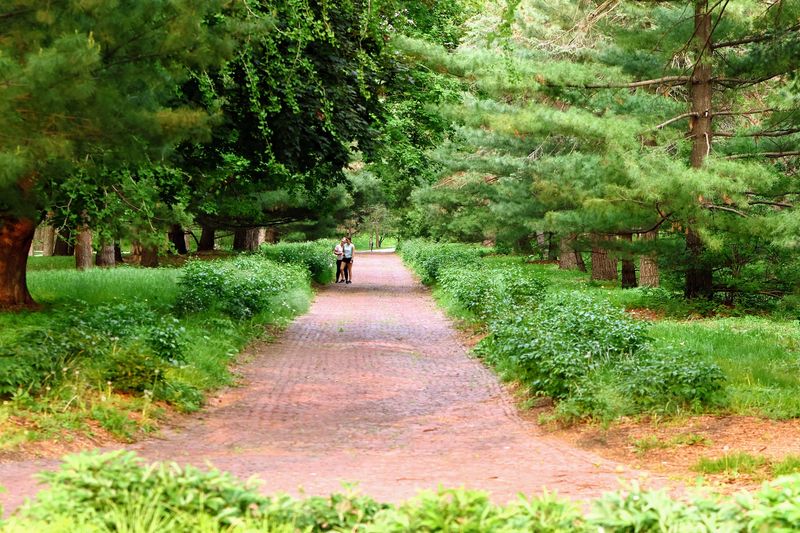
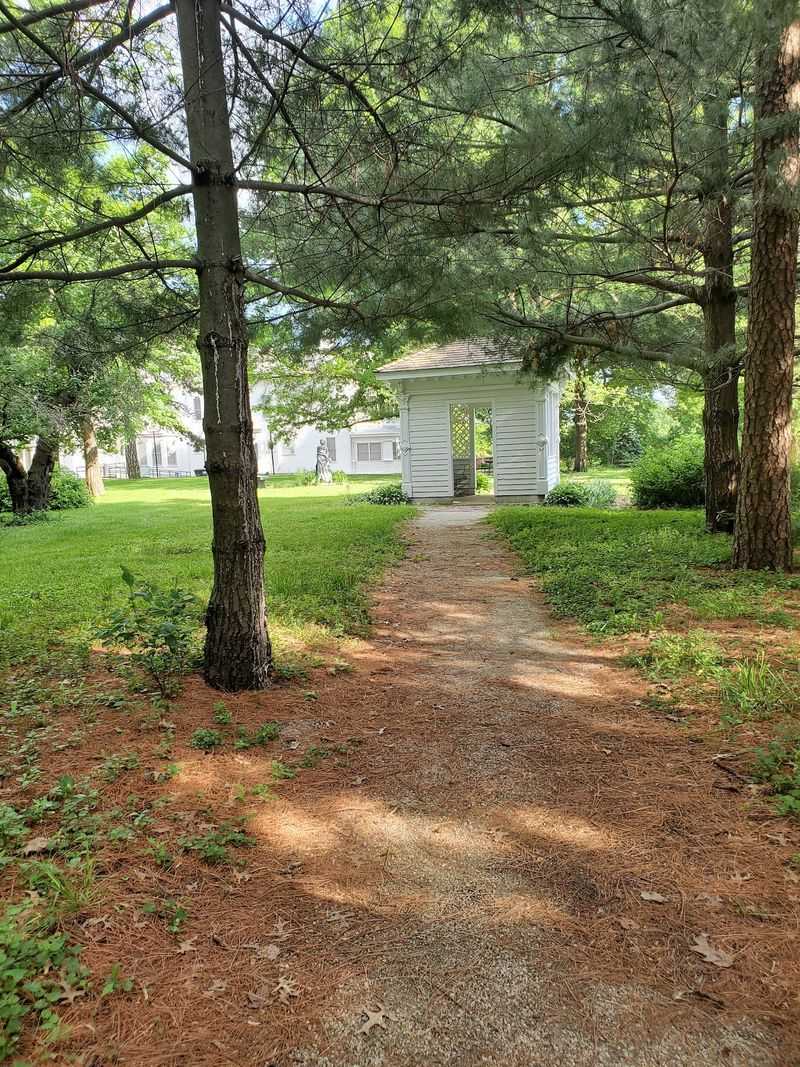
Outside, the arboretum steals the show. More than 270 varieties of trees and shrubs grow across the grounds, including oaks, maples, chestnuts, and pines.
Many trees carry labels with common and scientific names. That turns a simple stroll into a mini lesson.
Morton brought in species from many places to test which ones could handle Great Plains weather. Some of today’s giants trace back to his early plantings.
There are also more than 200 varieties of lilacs, which must smell wonderful in spring. The shaded trails keep summer afternoons comfortable.
I found a quiet bench and just listened to leaves rustle. Not a bad way to spend twenty minutes.
The formal gardens add another side to the grounds, and they are the next stop on my route.
Terraces, Roses, and a Whispering Bench
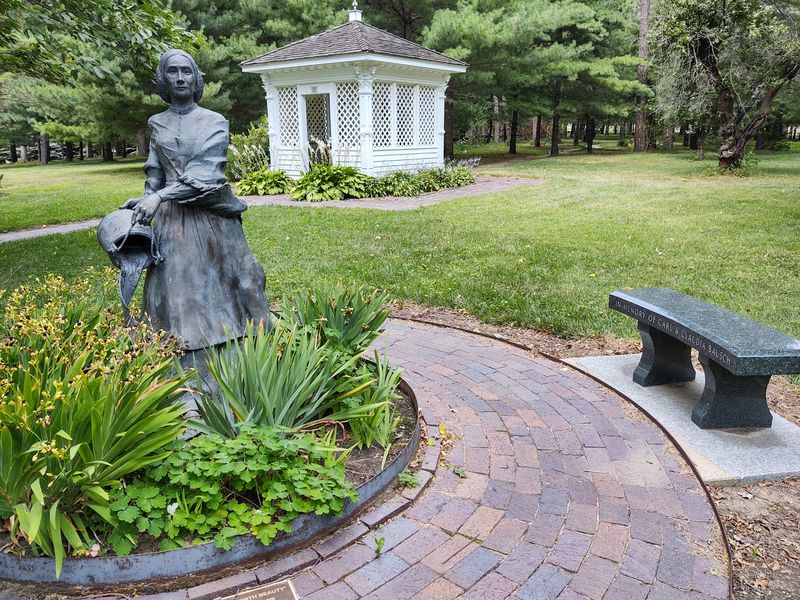
Flowers get their moment in the formal Italian terraced garden. Neat beds step down the slope in tidy lines, a lovely contrast to the wilder groves nearby.
The rose garden adds delicate color and a sweet scent in season. A whispering bench invites you to pause and chat quietly.
Three areas near the mansion host weddings: the Meadow, the Heart-Shaped Lawn, and the Terrace Garden. After seeing them, I understood why couples choose this backdrop.
Photographers love the light here, too. Columns, greenery, and open sky make for easy pictures.
Bring a camera and a bit of patience for the best shots. Early morning tends to be calm.
Gardens are only one part of the park’s activity list, and a few special events add even more reasons to return.
Events, Tours, and Hands-On Fun
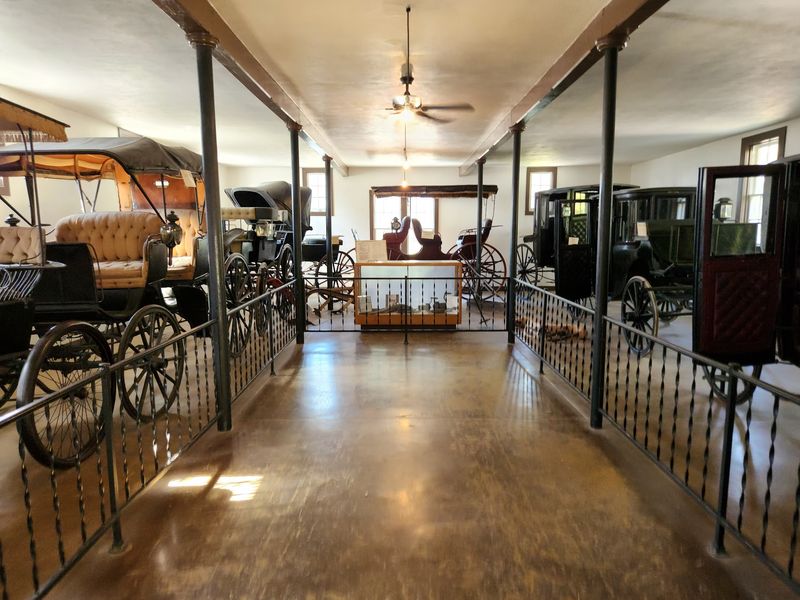
Self-guided tours let you set your own pace, but the calendar is where this place gets lively. Events include Mysteries at the Mansion, Teas in the Sunroom, and living history programs.
Costumed interpreters sometimes share daily life from the Mortons’ era. On weekends, antique cider press demonstrations take place at the carriage house.
Families enjoy seasonal activities, too. One holiday elf search kept a young guest happily busy through every room.
Locals can buy a yearly pass, since events happen all year. Arbor Day weekend often brings free admission, so check ahead.
Do not skip the carriage house behind the mansion. It is a short walk and worth the extra steps.
With all that in mind, a little planning will help you fit everything into one trip.
Planning Your Visit
Mansion admission is $9 for adults and $7 for youth ages 3 to 12, and children 2 and under are free. Residents of the 68410 zip code can enter free during regular hours with proof of residency.
Hours run 11 AM to 5 PM, Tuesday through Sunday, with Monday closed. Call 402-873-8733 or check the Arbor Day Farm website for updates.
The grounds and arboretum are open all year with no fee. That makes them a flexible stop on a road trip, since Interstate 80 is not far away.
Plan about an hour for the house and more if you love reading exhibits. Add time for the trails, the carriage house, and the nearby Tree Adventure.
Wear sturdy shoes because of the stairs. Then relax and enjoy a day where history and shade work together.
Share this story