Long before billboards and social media, rulers had a clever way to tell everyone who was boss. They built temples so huge that ordinary people had to tilt their heads back just to see the top.
Giant stone kings sat at the doors. Carved serpents stared down from staircases.
Some walls even listed royal family trees, with a few awkward relatives quietly left out. These buildings honored gods, but they also carried a very clear political message: respect the throne, and do not cause trouble.
In the pages ahead, you will travel across Mexico, Egypt, Cambodia, Peru, Indonesia, Syria, and Greece. You will meet a queen who wore a fake beard in her official portraits, a king who ruled for almost 70 years, and a pyramid that works as a giant stone calendar.
Each stop reveals the tricks ancient builders used to impress, intimidate, and inspire. Many of these places still welcome visitors today, so you might pick up a travel idea or two.
Grab your imaginary passport and keep reading, because the first temple sits right under one of the busiest cities on Earth.
1. Templo Mayor, Mexico City, Mexico
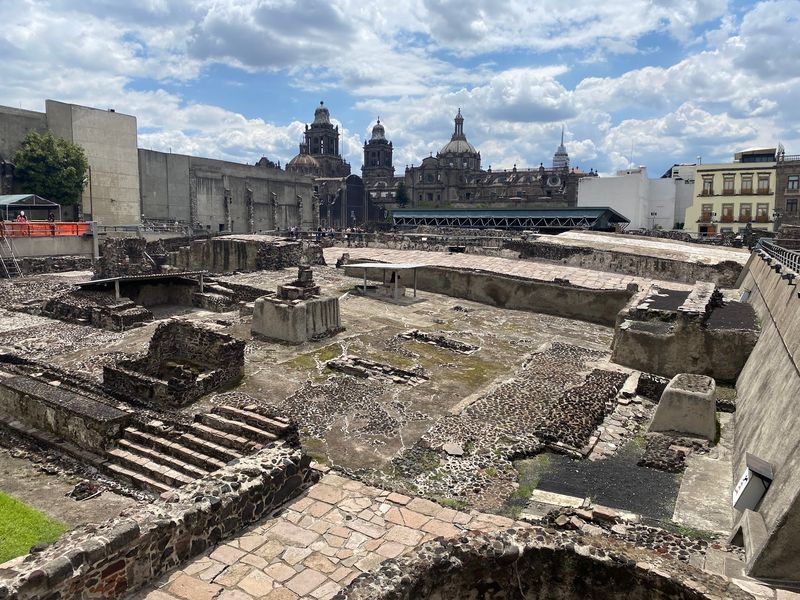
Modern Mexico City has an ancient secret hiding beneath its downtown streets. Workers digging for electrical lines in 1978 found a giant carved stone, and that discovery led straight to the Templo Mayor.
The Aztecs built this pyramid at the center of their capital, Tenochtitlan. Two shrines sat on top.
One honored Tlaloc, the rain god, and the other honored Huitzilopochtli, the god of war.
Archaeologists found seven building phases stacked inside each other. Each new ruler made the temple bigger, often after winning battles, so the message of power kept growing along with the walls.
Major ceremonies here included harsh rituals meant to keep the gods satisfied, which made the site both sacred and intimidating.
Today, a walkway lets visitors see the layered foundations up close. The on-site museum displays the famous stone disc of the goddess Coyolxauhqui.
Plan for at least two hours, since the museum alone has eight rooms.
2. Temple of the Feathered Serpent, Teotihuacán, Mexico
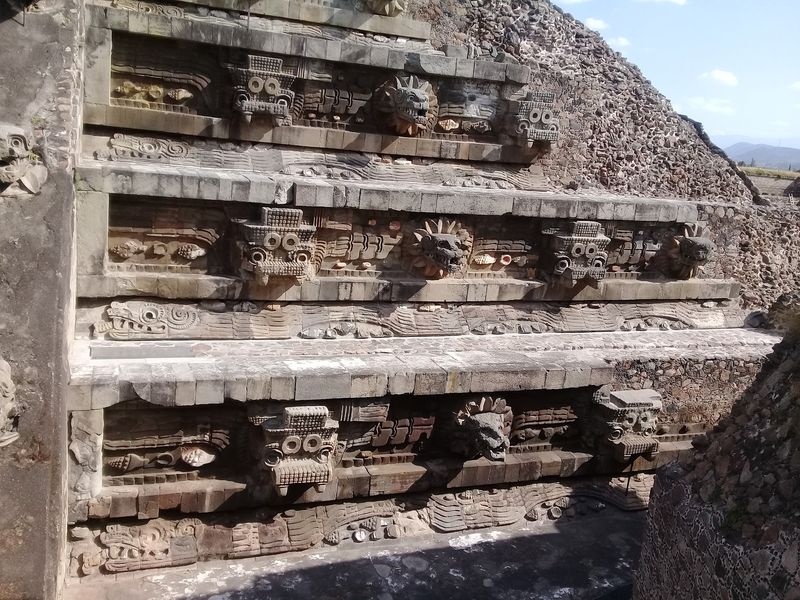
Fangs, feathers, and goggle eyes cover the front of this pyramid like a stone parade of monsters. Talk about a strong first impression.
Teotihuacán was a massive city long before the Aztecs arrived. Its builders placed this temple inside the Ciudadela, a huge walled plaza that may have served as the political heart of the city.
The serpent heads are thought to represent a feathered serpent god. Next to them are carvings of a headdress figure linked to war and time.
Archaeologists found more than 100 people buried in careful groups around the foundations, many wearing military-style ornaments. That discovery suggests the temple was dedicated with grim state rituals designed to show the rulers’ control.
Visitors can view the carved facade from the plaza. Arrive early, because the Ciudadela sits at the far end of the Avenue of the Dead, and the walk from other pyramids takes a while.
3. Great Temple of Abu Simbel, Abu Simbel, Egypt
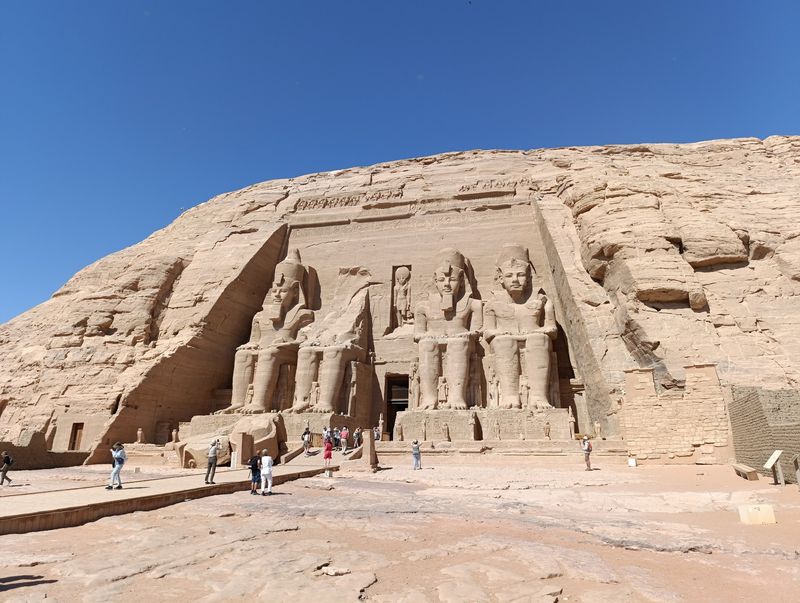
Ramesses II clearly did not believe in being modest. He had four statues of himself carved into a cliff, each about 69 feet tall.
The Great Temple of Abu Simbel was built in the 13th century BCE near Egypt’s southern border with Nubia. Anyone traveling north along the Nile would see these giant kings first.
The message was simple: Egypt is strong, and this pharaoh is in charge.
Inside, wall carvings show Ramesses at the Battle of Kadesh. He appears fearless and victorious, even though historians say the battle was closer to a tie.
Twice a year, around February 22 and October 22, sunlight reaches the inner sanctuary and lights up statues of gods and the king himself.
Fun fact: in the 1960s, engineers cut the whole temple into blocks and moved it uphill to save it from rising lake waters. Many tourists visit on a day trip from Aswan.
4. Karnak Temple Complex, Luxor, Egypt
Some pharaohs built a temple. Others kept adding to one for about 2,000 years.
Karnak is one of the largest religious sites ever constructed. Ruler after ruler added gateways, obelisks, and shrines to honor Amun, the king of the Egyptian gods.
Each addition was a way of saying, “Look what I can afford.”
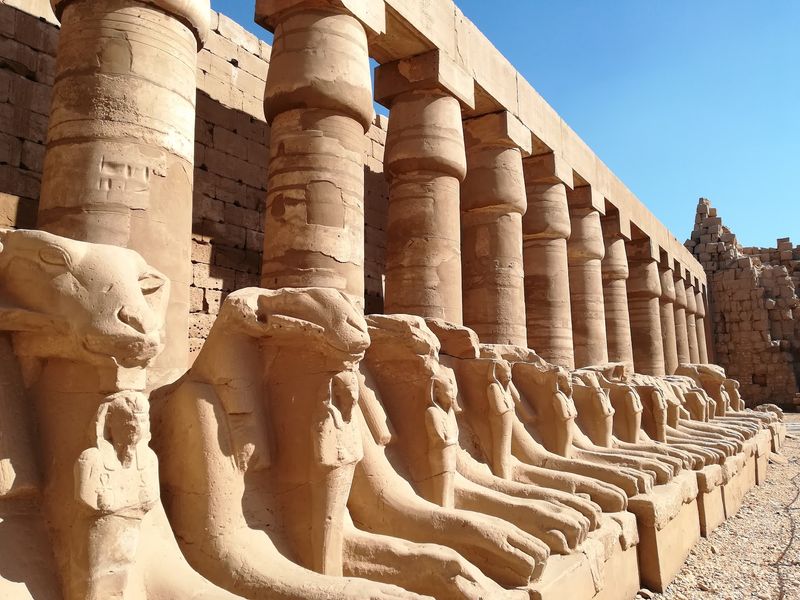
The star attraction is the Great Hypostyle Hall. It holds 134 enormous columns, and the tallest ones in the center reach about 70 feet.
Visitors usually feel very small here. That was the point.
A farmer walking through this hall would have understood the huge resources and workforce the pharaoh controlled.
Practical tip: Karnak is big, so wear comfortable shoes and bring water. An avenue lined with sphinx statues connects it to Luxor Temple, about two miles away.
Many travelers visit both sites on the same day.
5. Temple of the Warriors, Chichén Itzá, Yucatán, Mexico
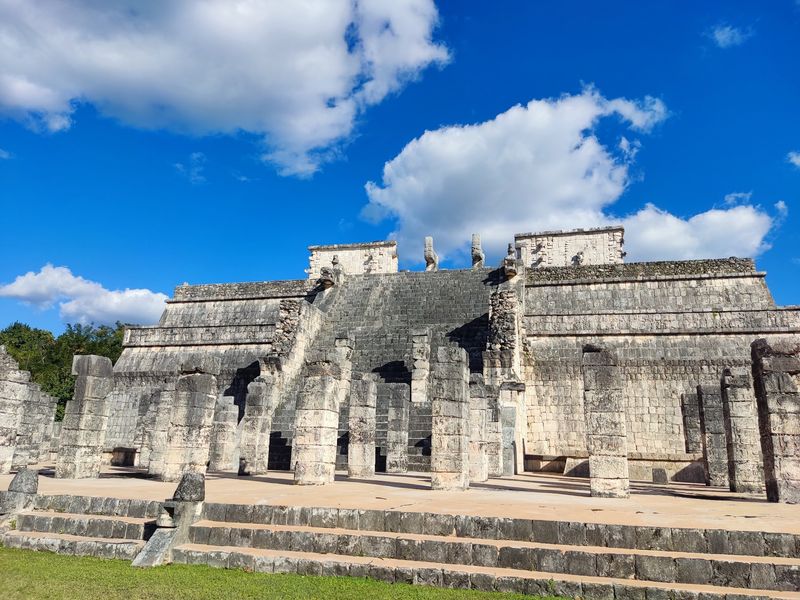
Rows and rows of carved fighters guard this temple, and none of them ever take a day off.
The Temple of the Warriors stands on the eastern side of Chichén Itzá. Its name comes from the many stone columns covered with images of armed figures in feathered headdresses, carrying shields and spears.
At the top sits a Chac Mool. The reclining statue holds a flat dish on its stomach, which was likely used for ritual offerings.
Placing it at the summit made the ceremonies visible to crowds below.
The style shows influences from central Mexico, suggesting contact between powerful groups. Military strength was clearly a big part of the city’s identity.
Visitors cannot climb the temple anymore. You can still get great views from marked paths nearby.
The nearby Group of a Thousand Columns makes an excellent photo spot, especially in the morning before tour buses arrive.
6. Bayon Temple, Angkor Thom, Siem Reap Province, Cambodia
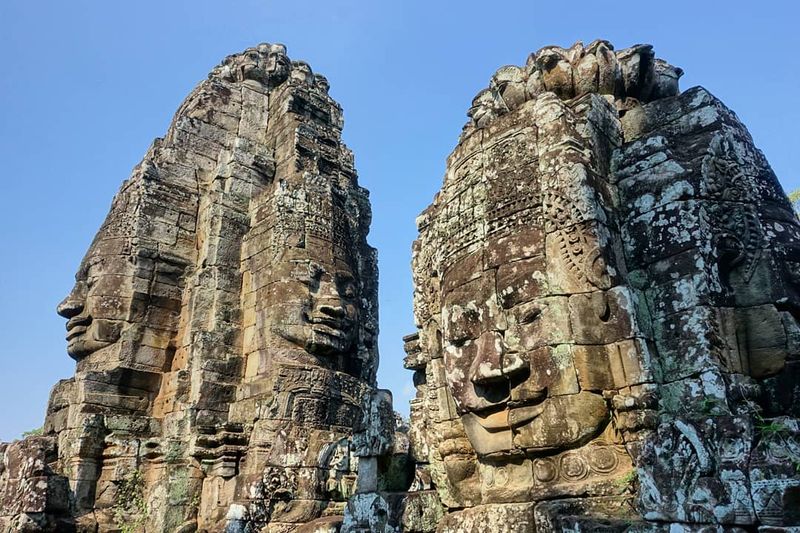
Around 200 giant faces keep watch at Bayon. Wherever you stand, at least one of them seems to be looking right at you.
King Jayavarman VII built Bayon in the late 12th century at the exact center of his walled city, Angkor Thom. That location mattered.
It placed the temple, and the king, at the heart of his kingdom.
About 37 towers survive today. Scholars still debate who the calm faces show.
Some say the king, others say a Buddhist figure of compassion, and some think both.
Either way, the effect works. People could feel watched by a powerful presence at all times.
Don’t skip the outer galleries. Their carvings show naval battles, market scenes, and even people cooking.
Visit early in the morning, and buy an Angkor pass in advance, since one ticket covers many temples.
7. Temple of Hatshepsut, Deir el-Bahari, Luxor, Egypt
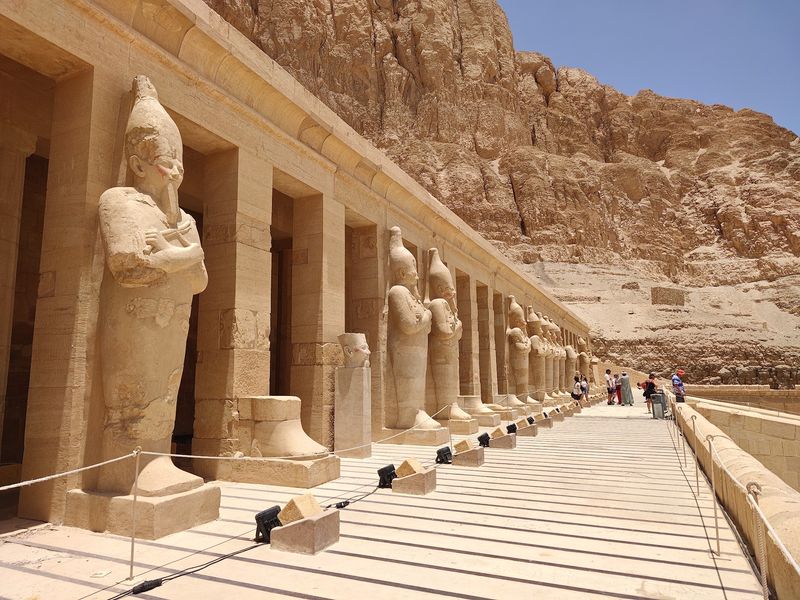
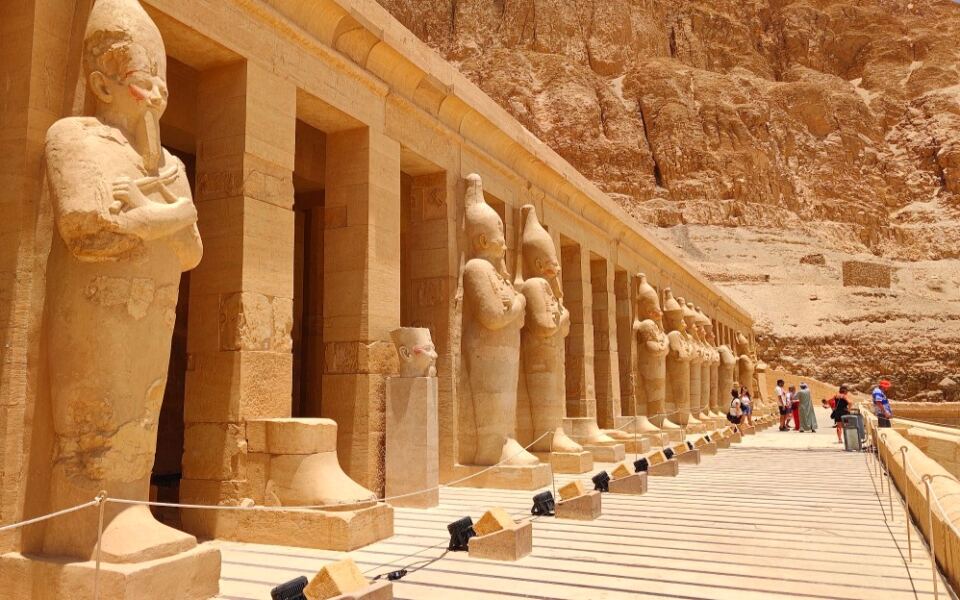
A female pharaoh in ancient Egypt had a tough sales job. Hatshepsut solved it with a fake beard and one of the most stylish temples ever built.
She ruled around 1479 to 1458 BCE. Her memorial temple at Deir el-Bahari sits against tall cliffs on Luxor’s West Bank, with three wide terraces stacked like giant steps.
Statues often show her with the traditional beard and royal headdress of a male king. That choice helped people accept her as the rightful ruler.
Wall carvings tell a story of her “divine birth,” claiming the god Amun was her father. Another series shows her trading trip to the Land of Punt, with ships carrying incense trees.
Later rulers tried to erase her name, yet her temple still stands. Visit before 9 a.m. if possible.
Shade is limited, so pack a hat.
8. Chavín de Huántar, Huari Province, Áncash, Peru
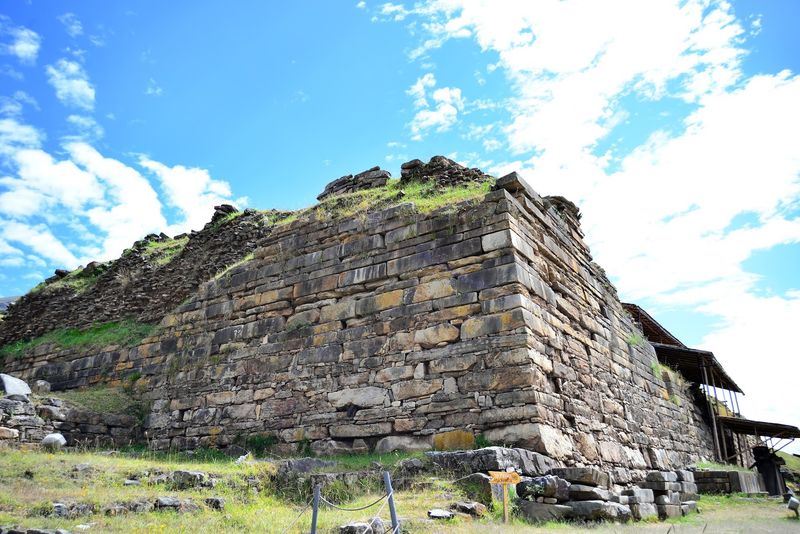
Forget towering heights. At Chavín de Huántar, the real power was hidden underground.
This Andean ceremonial center flourished from about 900 to 200 BCE, long before the Inca. Pilgrims traveled from far away to visit it.
Inside the Old Temple, narrow stone tunnels lead to the Lanzón. This tall granite carving shows a figure with fangs and snake-like hair.
Only religious leaders could reach it, which made their role seem very special.
Builders also added water channels beneath the site. Researchers believe they helped create dramatic ritual experiences for visitors.
Outside, carved stone heads once lined the temple walls, showing faces changing from human to animal.
The site sits about 10,000 feet above sea level, so take it slow. A local museum nearby holds many original carvings.
Most travelers reach Chavín by bus or tour from the city of Huaraz.
9. Temple of the Inscriptions, Palenque, Chiapas, Mexico
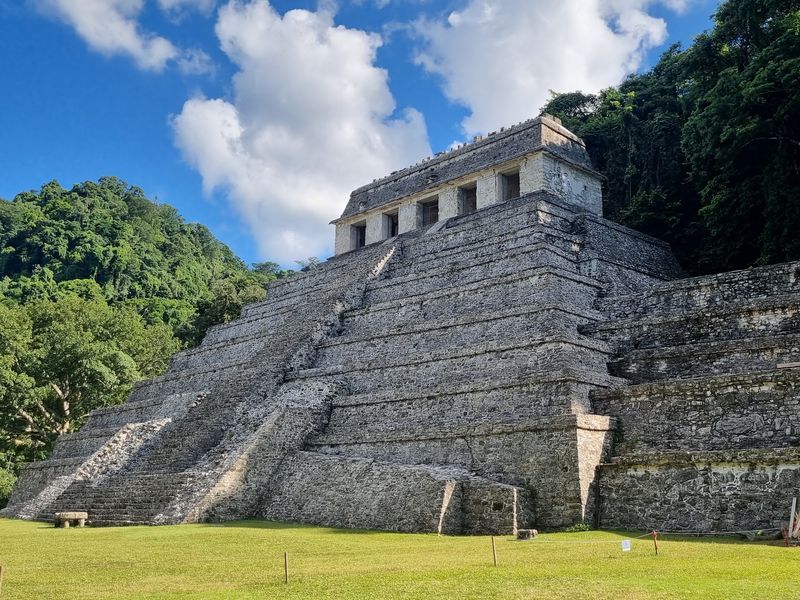
Nearly 70 years on the throne gave King Pakal plenty of time to plan his legacy.
K’inich Janaab’ Pakal ruled the Maya city of Palenque in the 600s CE. He ordered this tall stepped pyramid as his final royal monument, and his son finished it.
The temple gets its name from three stone panels inside. They hold one of the longest Maya texts ever found, about 617 glyphs.
The writing links Pakal’s family to gods and ancient history, proving his right to rule.
In 1952, archaeologist Alberto Ruz Lhuillier noticed a stone slab with holes in the temple floor. Beneath it was a hidden staircase leading to Pakal’s chamber and a famous carved stone lid.
Visitors cannot enter the inner chamber today. The site museum has a replica, and the surrounding rainforest makes the trip worthwhile.
10. Prambanan Temple, Sleman Regency, Special Region of Yogyakarta, Indonesia
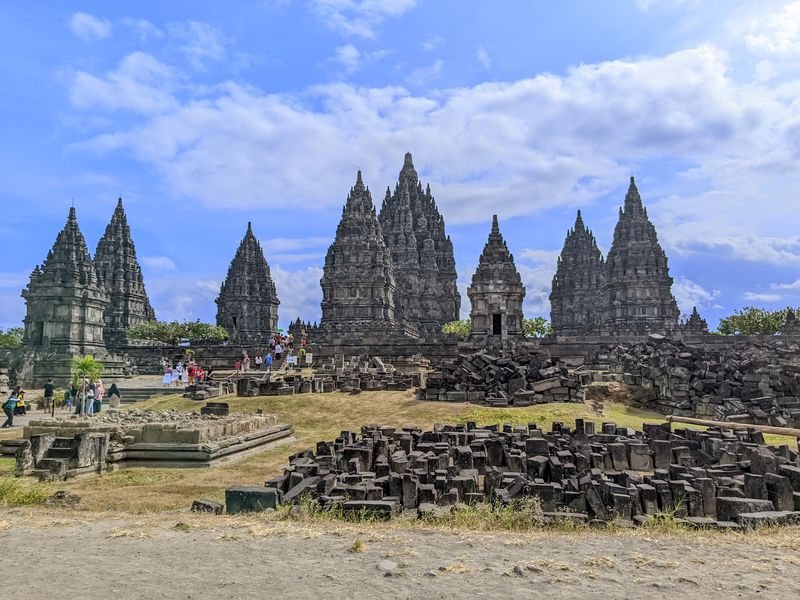
Pointy, tall, and impossible to ignore, Prambanan’s towers were designed to grab attention from miles away.
This Hindu temple complex was built in the ninth century in central Java. The main tower honors Shiva and rises about 154 feet.
Two neighbors honor Vishnu and Brahma.
Originally, the site held 240 temples arranged in neat rings around the center. That careful layout represented the order of the universe, with the rulers placed close to the gods.
Carvings around the main temples tell the story of the Ramayana, a famous Hindu epic. Reading them in order means walking clockwise around the building.
Earthquakes have damaged Prambanan several times, including in 2006, but restoration continues. Evening performances of the Ramayana ballet take place on an open-air stage nearby during the dry season.
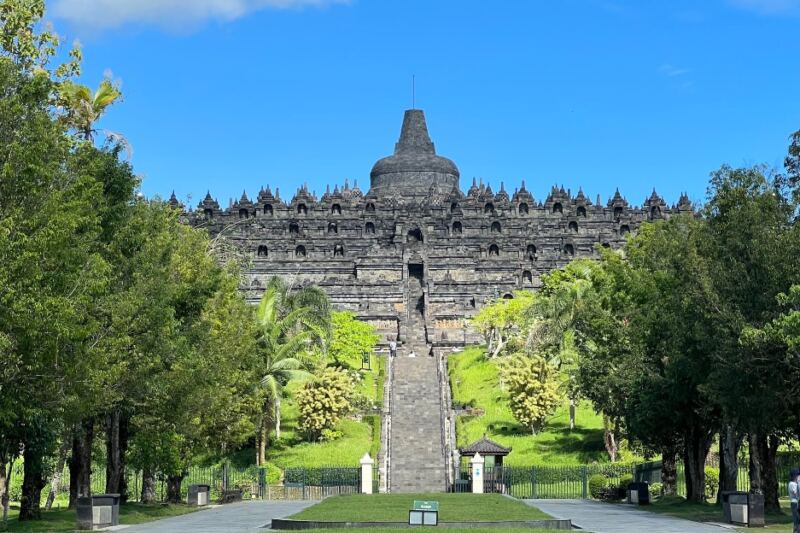
Combine your visit with Borobudur, about an hour away.
11. Temple of Seti I, Abydos, Sohag Governorate, Egypt
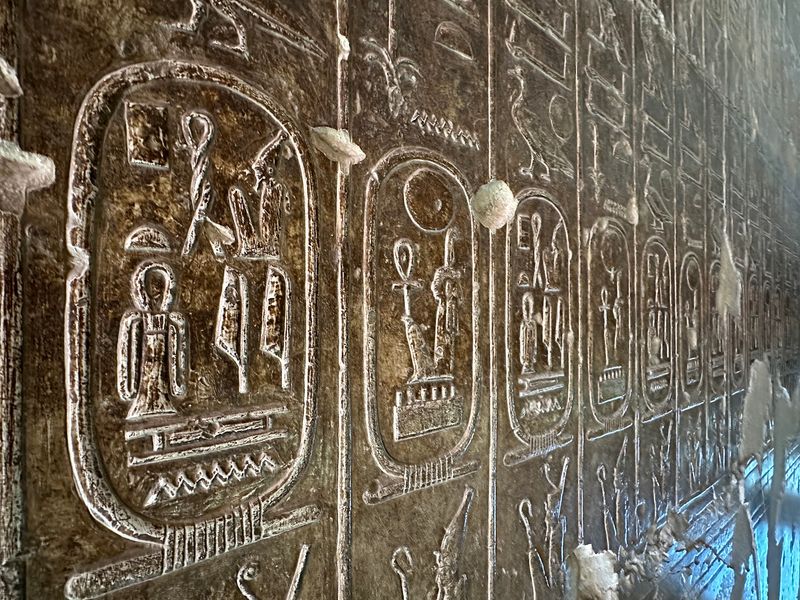
Who gets left off a list can say more than who gets included. Pharaoh Seti I understood this perfectly.
His temple at Abydos was started in the 13th century BCE and finished by his son, Ramesses II. It honors Osiris and other major gods.
Instead of extreme size, this temple impresses with detail. Its wall carvings are some of the finest in Egypt, and many still show original paint.
They picture Seti making offerings to gods.
The real headline is the Abydos King List. It names 76 earlier kings in order, connecting Seti to a long royal line.
Some rulers are missing, including Hatshepsut and Akhenaten. Leaving them out was a quiet political edit.
Abydos sees fewer tourists than Luxor, so you can often explore in peace. It is about a three-hour drive north of Luxor.
12. Temple of Kukulcán, Chichén Itzá, Yucatán, Mexico
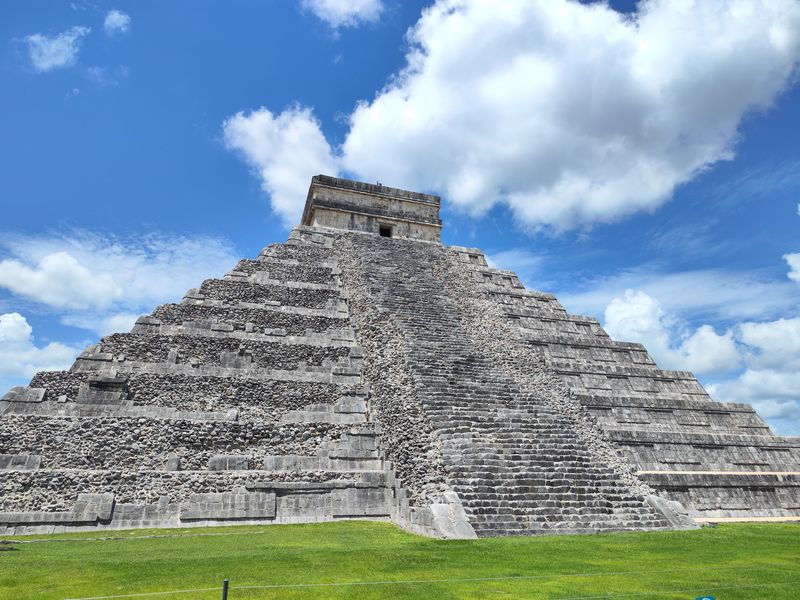
Here is some pyramid math. Four staircases with 91 steps each, plus the top platform, equals 365, one for each day of the year.
The Temple of Kukulcán, also called El Castillo, rises about 98 feet over the main plaza of Chichén Itzá. It honors Kukulcán, the feathered serpent god.
Every spring and fall equinox, afternoon sunlight forms triangle shadows along the northern staircase. They connect to a stone serpent head at the bottom, making it look like a snake sliding down.
Thousands of people still gather to watch this event each March. For the ancient Maya, it showed that their rulers understood time and the heavens.
Inside, archaeologists found an older pyramid hidden beneath. Climbing is no longer allowed.
Clap your hands in front of the stairs, and the echo sounds a bit like a bird call.
13. Temple of Bel, Palmyra, Homs Governorate, Syria
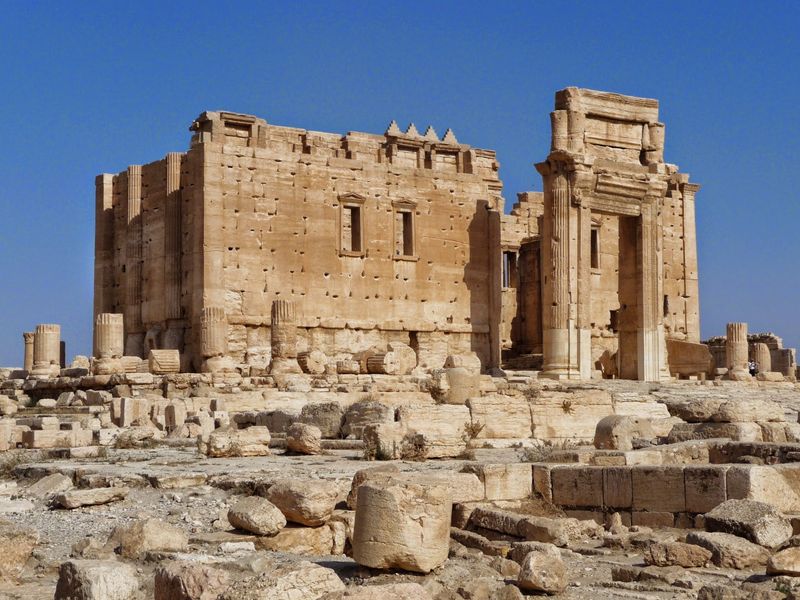
Trade made Palmyra rich, and the Temple of Bel was the city’s way of showing off.
Palmyra sat along desert caravan routes linking the Roman world with Persia and beyond. Merchants moved silk, spices, and other goods through the city.
The temple was dedicated in 32 CE to Bel, the city’s top god. A huge walled courtyard, about 650 feet on each side, surrounded the main shrine.
Its design mixed local traditions with Roman building styles. That blend reflected Palmyra’s position as a meeting point of cultures and a proud regional power.
Sadly, the main sanctuary was largely destroyed by ISIS in 2015. Its stone gateway still stands.
Researchers use old photos and 3D scans to study and record the temple. Travel to the area remains limited, but museum exhibits and digital models let people explore it from home.
14. Temple of Zeus, Ancient Olympia, Elis, Greece
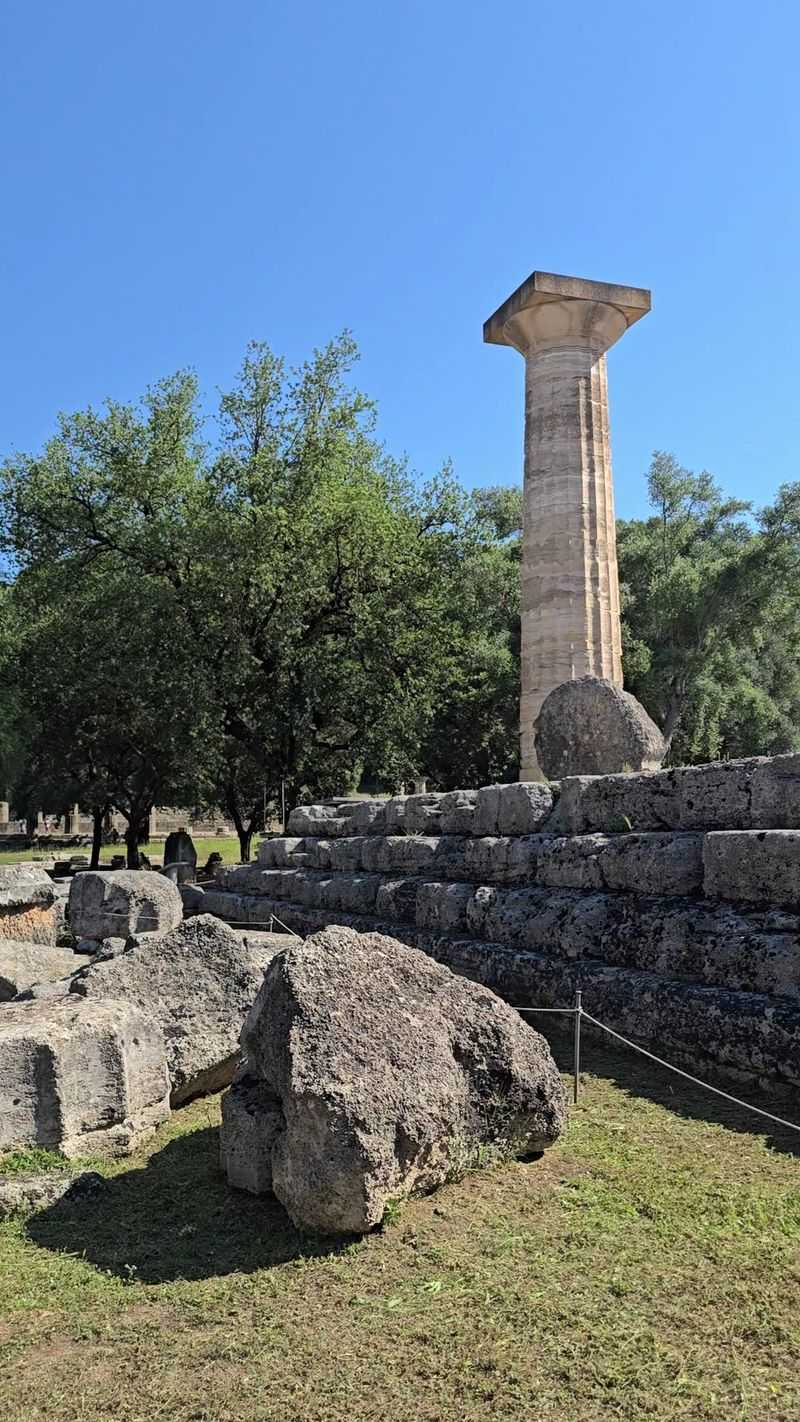
Athletes at the ancient Olympics competed for glory, but everyone knew the real champion lived inside this temple.
The Temple of Zeus was built around 470 to 456 BCE at Olympia. It was the largest temple in the region.
Inside stood a gold-and-ivory statue of Zeus by the sculptor Phidias. It was about 40 feet tall and became one of the Seven Wonders of the Ancient World.
Visitors joked that if Zeus stood up, he would break the roof.
Sculptures on the building showed a legendary chariot race and a battle between Lapiths and centaurs. The theme was clear: order wins, and Zeus keeps it that way.
Today, giant column pieces lie on the ground, and one column has been restored. The Olympia museum displays the original sculptures.
Visit the ancient stadium next door and try a sprint on the track.
Share this story