Some train stations are so grand that you might forget you came to catch a train. Across Europe, cities built huge halls of glass, iron, marble, and tile to welcome travelers in style.
Many of these buildings are still busy every day, but they also make great places to stop, look up, and snap a photo. Here are 15 stations that turn a simple journey into an adventure.
Antwerpen-Centraal, Antwerp, Belgium
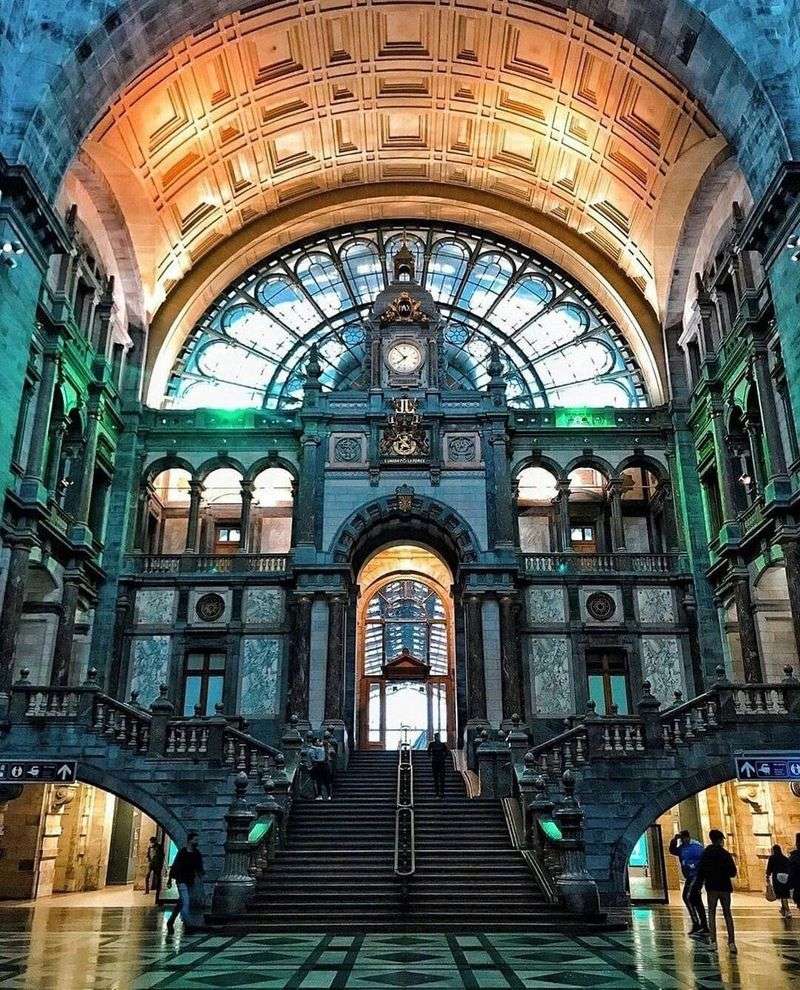
Locals call it the Railway Cathedral, and one look at the dome shows why. Antwerpen-Centraal opened in 1905 and still greets visitors with carved stone, golden details, and a staircase made for dramatic entrances.
Step inside and tilt your head back. The ceiling soars high above the crowd, and the big clocks seem to say that time is worth watching here.
Behind the hall, a giant iron-and-glass shed covers the tracks with a curved roof full of light.
The real surprise sits below your feet. Engineers rebuilt the station so fast trains could pass straight through, adding platforms on several levels.
The old building stayed beautiful, while the new rail system tucked itself neatly out of sight.
Plan a few extra minutes if you pass through. Walk the main hall, then head to the upper platforms for a view back toward the entrance.
Early mornings are calmer, which makes photos easier and gives you space to enjoy the echo of footsteps on stone.
Many people come here with no ticket at all, just to look around. That says a lot.
Few stations can make a quick stop feel like a visit to a palace, and Antwerp does it with confidence.
São Bento Station, Porto, Portugal
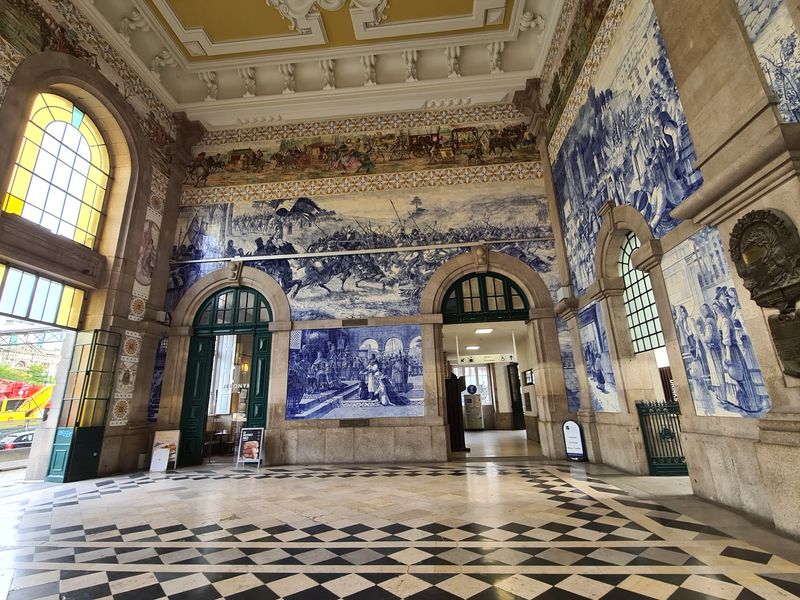
Blue and white tiles cover the walls from floor to ceiling, and commuters stroll past them like it is no big deal. São Bento is a working station in the middle of Porto, yet its main hall feels like a free art museum.
About 20,000 azulejo tiles tell stories from Portuguese history.
Artist Jorge Colaço painted the huge panels in the early 1900s. Look closely and you will spot battles, royal scenes, harvest days, pilgrimages, and old forms of travel.
Each panel is like a comic strip made of ceramic.
The station stands where a convent once stood, and architect José Marques da Silva gave it a grand look outside too. The glass-and-iron roof still lets in daylight over the tracks.
Here is a handy tip. Visit early in the morning or later in the evening, when fewer people crowd the hall.
You will get cleaner photos and more time to read the story on the walls.
You do not need a train ticket to step inside. Just walk in, look up, and let the tiles do the talking.
St Pancras International, London, England
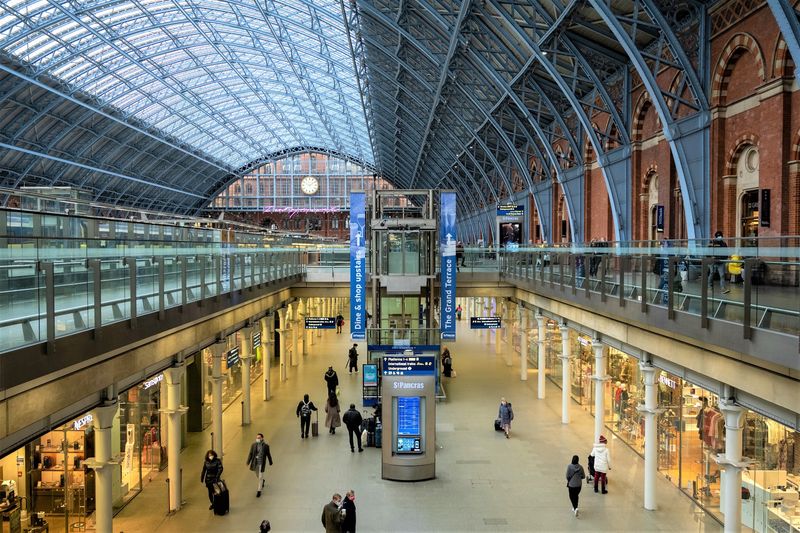
A Gothic fairy-tale front, a giant iron roof behind it, and Eurostar trains humming below: that is St Pancras. George Gilbert Scott designed the red-brick frontage in a Gothic Revival style that looks almost like a castle.
Behind it, engineer William Henry Barlow built a train shed in the 1860s. It stretched about 240 feet across with no support posts in the middle, which was a huge feat back then.
The iron ribs still sweep overhead in a dramatic arch.
The station was carefully restored when Eurostar arrived. The Grade I-listed structure stayed true to its past while welcoming modern international trains.
Stand on the upper level to see the whole roof stretching away. It is the best spot for photos, and a perfect place to pause with a snack from one of the shops or restaurants in the former undercroft.
Do not miss the details outside, such as the pointed windows and towers. If you arrive from Europe, this is a grand way to say hello to London.
Helsinki Central Railway Station, Helsinki, Finland
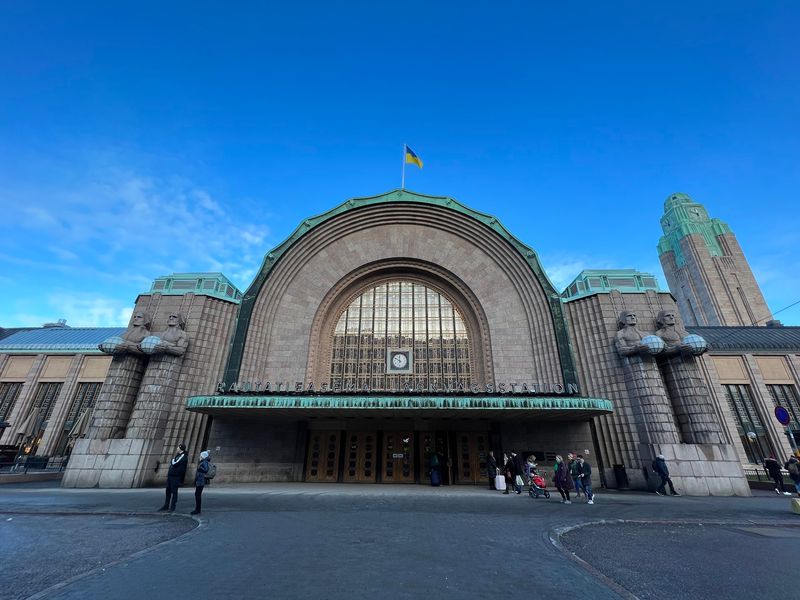
Four stone giants stand guard at the front door, each holding a glowing lamp. They are the Lantern Carriers, carved by sculptor Emil Wikström, and they make the entrance of Helsinki Central unforgettable, especially after dark.
Eliel Saarinen designed the station, which opened in 1919. Its Finnish granite walls blend Art Nouveau ideas with a bold, simple style that was new at the time.
The tall clock tower rises above everything and makes a handy meeting spot.
About 200,000 people pass through each day, so this is no museum piece. Commuters rush by while visitors pause to admire the arches and stone details.
If you visit in winter, the glowing lamps look extra cozy against the snow. Try to see them in the evening for the best effect, then step inside to warm up.
Finland has a reputation for clean, thoughtful design, and this station shows why. It is sturdy, stylish, and proudly part of daily life.
Madrid-Puerta de Atocha-Almudena Grandes, Madrid, Spain
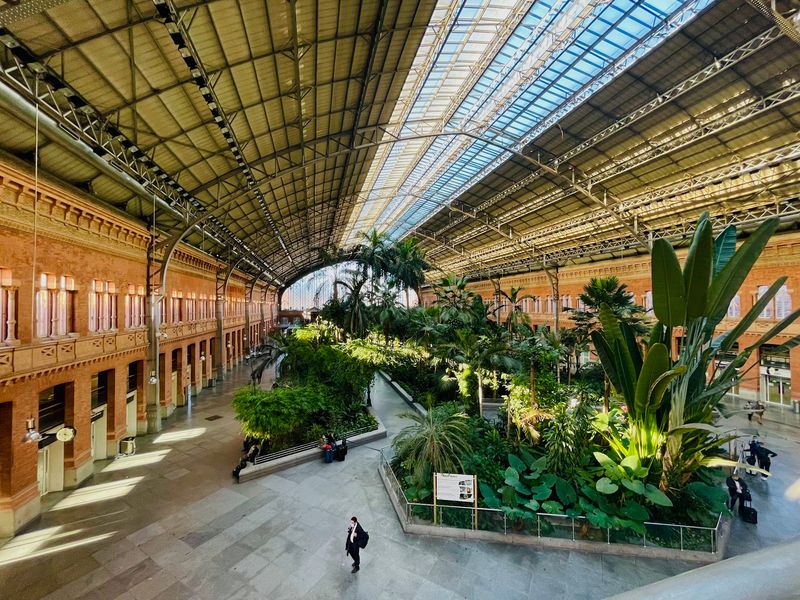
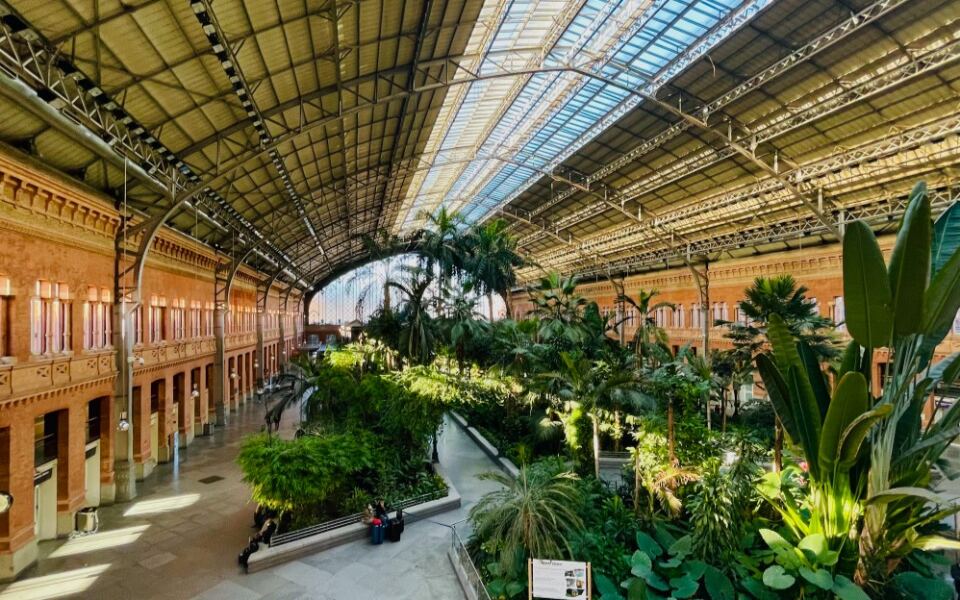
Palm trees inside a train station sound like a travel joke, but Atocha made it real. The historic hall dates from 1892 and is covered by a giant iron-and-glass roof about 152 meters long and 27 meters high.
Architect Rafael Moneo reworked the complex as Spain prepared for high-speed trains. The old train hall became a public space with a lush tropical garden, giving travelers a green spot to pause.
Here is an important tip. Madrid tourism says the garden is temporarily closed for construction, so do not count on a leafy stroll.
Check current news before you go.
Even with the work underway, the structure is a major sight. The arching roof and light-filled space remain among the most recognizable railway buildings in Spain.
Pair your visit with a short walk to nearby museums and parks. Atocha makes a smart starting point for a Madrid day, with or without the plants.
Milano Centrale, Milan, Italy
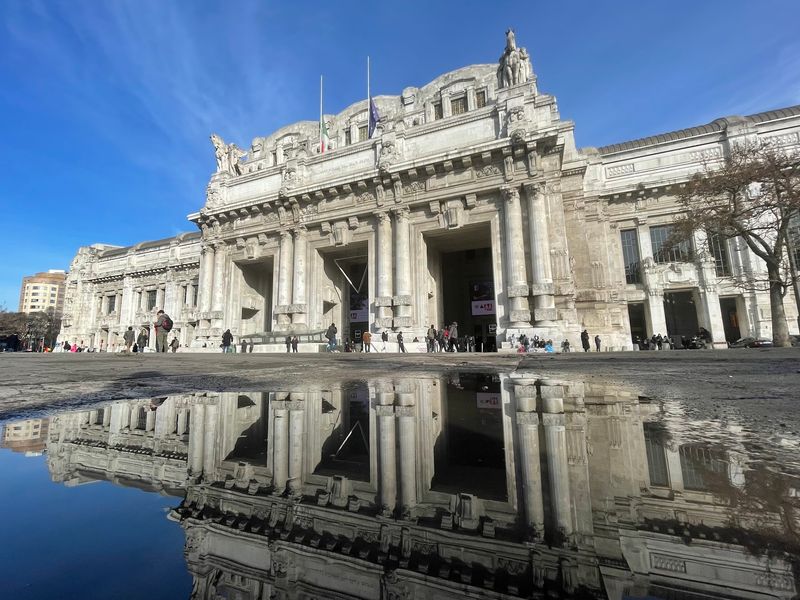
Nothing about Milano Centrale whispers. Its huge facade, towering halls, and stone sculptures shout power, which is why the city tourism office calls it a Cathedral of Movement.
Inside, the style mixes heavy classical shapes with Art Deco touches. Spaces like the Galleria delle Carrozze and Galleria di Testa give you room to wander and look up at every carved detail.
The station also holds a serious chapter of history. Below the main passenger level, the Shoah Memorial preserves the area where Jewish prisoners and other deportees were put on trains during World War II.
Visiting it adds quiet meaning to the trip.
Give yourself time. The building is big, and the sights are spread out, so a quick look at the front will not tell the full story.
Milano Centrale is a busy transport hub, a landmark, and a place of memory all at once. Few stations carry that much weight so well.
Praha hlavní nádraží, Prague, Czechia
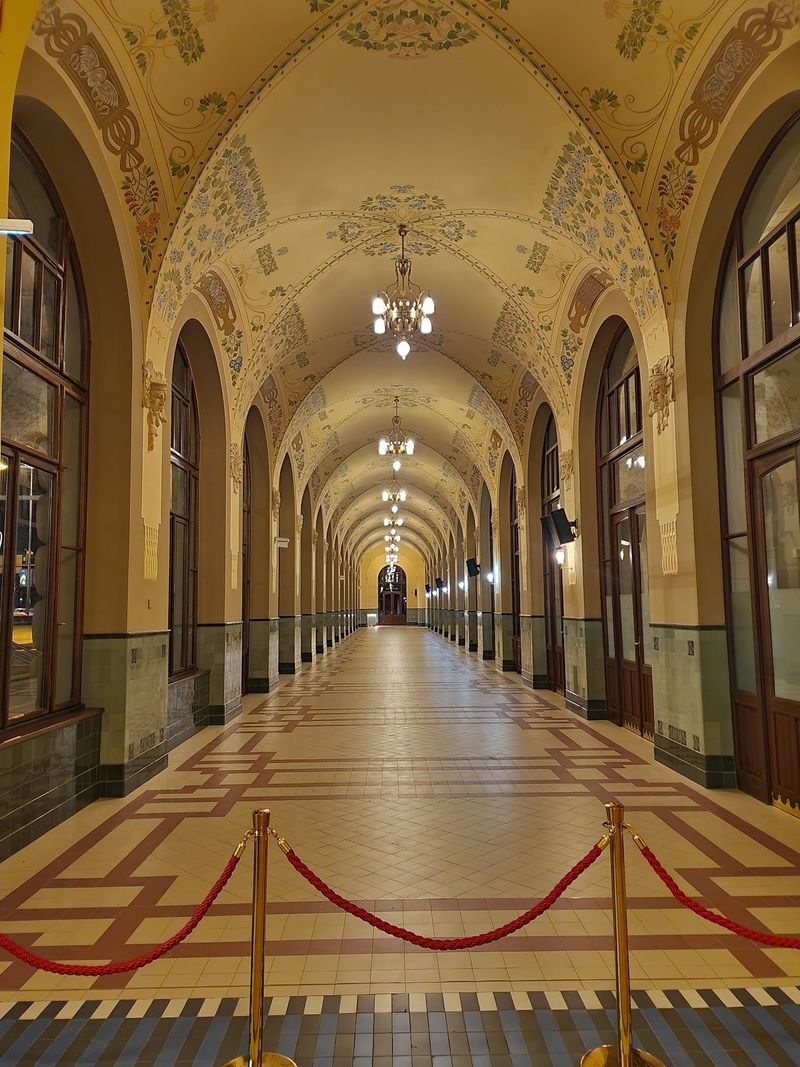
Prague’s main station kept running while builders reshaped it, which is quite a juggling act. Architect Josef Fanta led the Art Nouveau redesign between 1901 and 1909, and the result still impresses.
The old entrance pavilion has flowing curves, sculpted decoration, and a large arched window. Above it, a dome shows symbols of Czech cities, as if the whole country is saying welcome.
The original station began in a Neo-Renaissance style, and you can still sense layers of history. Today the lower level is modern and practical, full of shops and ticket areas.
The upper spaces keep the old charm.
Try walking up to the historic hall rather than rushing straight to the platform. A few minutes there gives you a taste of the early 1900s, with golden light and sweeping lines.
Prague City Tourism counts the station and its train hall among the country’s most important Art Nouveau monuments. That makes a layover here feel like a bonus sightseeing stop.
Estació del Nord, Valencia, Spain
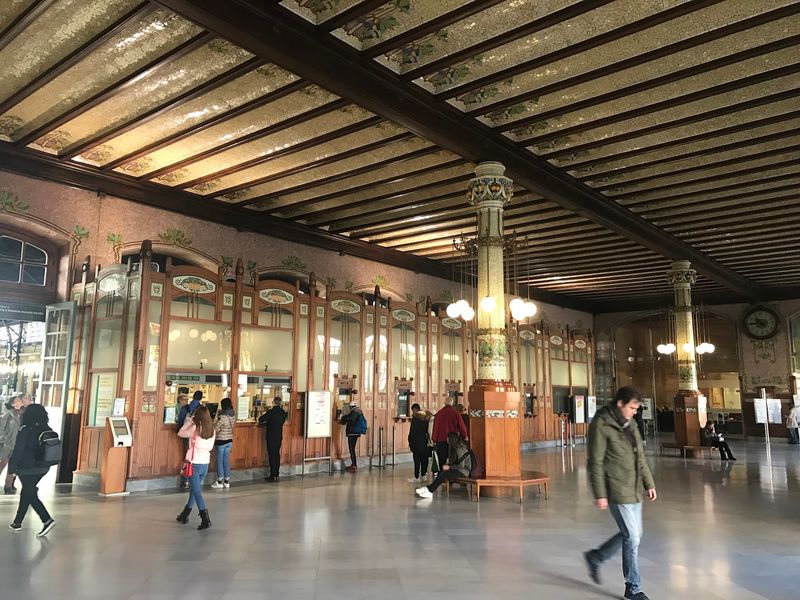
Oranges are everywhere here, and not on a fruit stand. Look at the tiles and mosaics in Valencia’s North Station and you will spot oranges and orange blossoms again and again.
Architect Demetrio Ribes designed the building, which opened in 1917. Its Modernist style borrows from the Viennese Secession, then adds local touches that celebrate Valencia’s citrus trade.
Inside, colorful ceramics cover walls and ceilings. You will also find carved wood, stained glass, metal details, and marble.
It is a feast for the eyes, and it all feels very Valencian.
The station sits right next to the historic center, so it is easy to add to a walking tour. Commuters and regional travelers still use it daily, which means you can enjoy the interior as part of an ordinary trip.
Take a slow lap around the main hall and the ticket area. The small details, like painted fruit and leafy patterns, are the best part.
Liège-Guillemins, Liège, Belgium
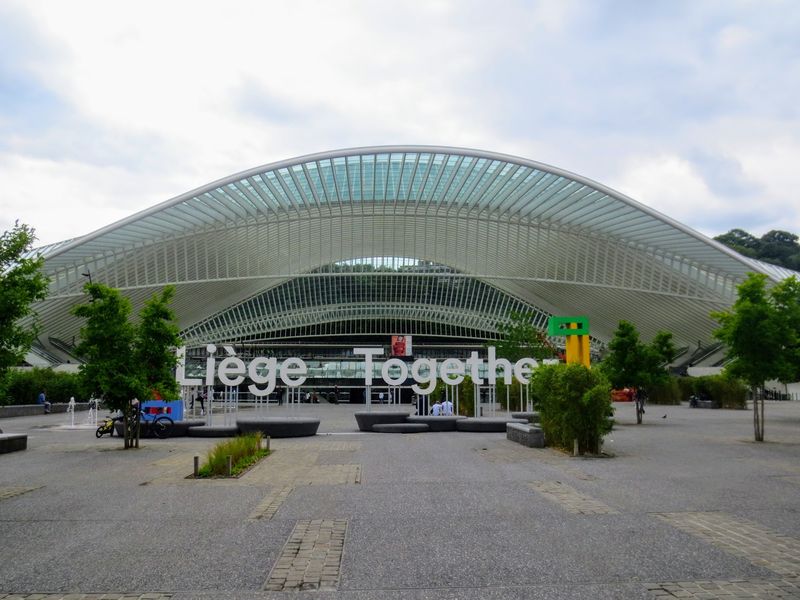
White ribs sweep overhead like the skeleton of a giant, graceful creature. Liège-Guillemins proves that a station can wow without old-fashioned decoration.
Spanish architect Santiago Calatrava designed the terminal using glass, steel, and repeating curved forms. Instead of a closed front, the building opens toward the city under a long vaulted roof, letting daylight pour across the platforms.
The station became a centerpiece of Liège’s urban makeover. It now handles international and local trains, linking Belgium with Germany and nearby countries.
Visit on a sunny day if you can. The light moves across the white steel and creates changing shadows, which makes it a joy to photograph.
Local tourism officials proudly list the station as one of the city’s top architectural sights. It is a bold, modern welcome, and it might be the most striking arrival in Belgium.
Leipzig Hauptbahnhof, Leipzig, Germany
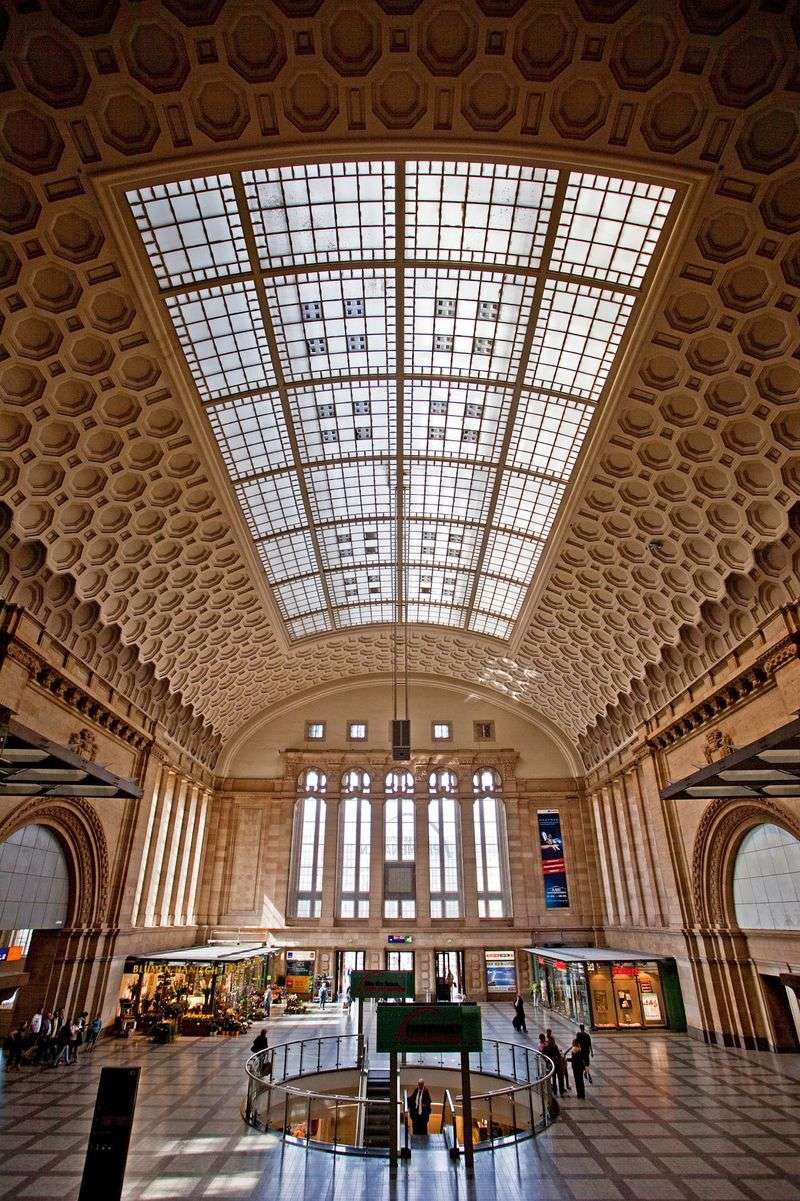
Thirteen years of construction went into this giant, and it shows. Leipzig Hauptbahnhof opened in 1915, and its long sandstone front stretches across one of Germany’s biggest railway complexes.
Leipzig tourism calls it Europe’s largest terminus station. The City Tunnel now lets some trains pass beneath the old terminal rather than end there, but the grand building still dominates the area.
Inside, huge concourses connect to a three-level shopping complex with more than 140 businesses. You can grab lunch, browse stores, and still feel the sweep of the historic space around you.
A good plan is to walk the main hall first, then explore the shops. Notice how the tall arches and wide spaces were built to impress travelers a century ago.
Many stations have been squeezed by modern life. Leipzig has managed to keep its civic pride while welcoming everyday shoppers and commuters.
Amsterdam Centraal, Amsterdam, Netherlands
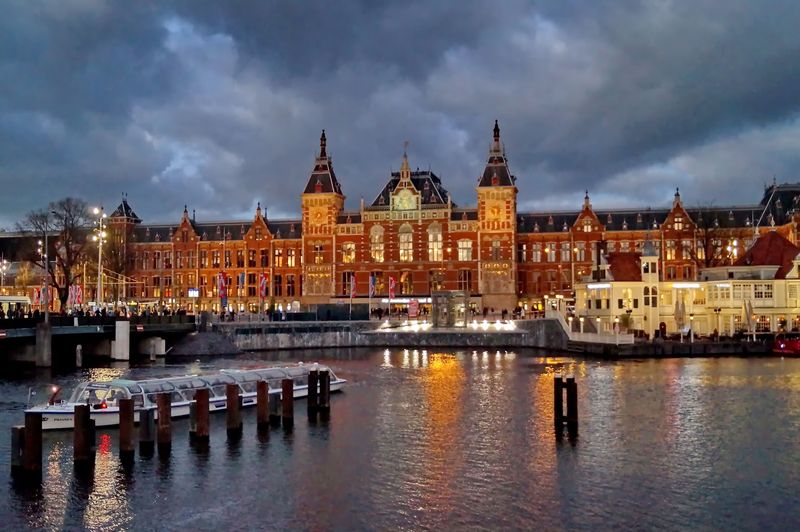
This station stands on 8,687 wooden piles, which means the whole building balances on a forest of logs. Amsterdam Centraal sits on three artificial islands in the IJ, and engineers had to be very clever to make it work.
Pierre Cuypers, who also designed the Rijksmuseum, gave it a rich brick and stone front with Renaissance and Gothic touches. It opened in 1889 and looks more like a city palace than a place to catch a tram.
Twin towers, carved details, and long roofs form the gateway to the historic center. Step outside and canals, bikes, and boats appear almost at once.
More than 250,000 passengers use the complex on a typical day. Even so, the original building still draws cameras and curious looks.
Try snapping a photo from across the water for the best view. Then wander inside and admire the ironwork above the platforms before you head into town.
Rotterdam Centraal, Rotterdam, Netherlands
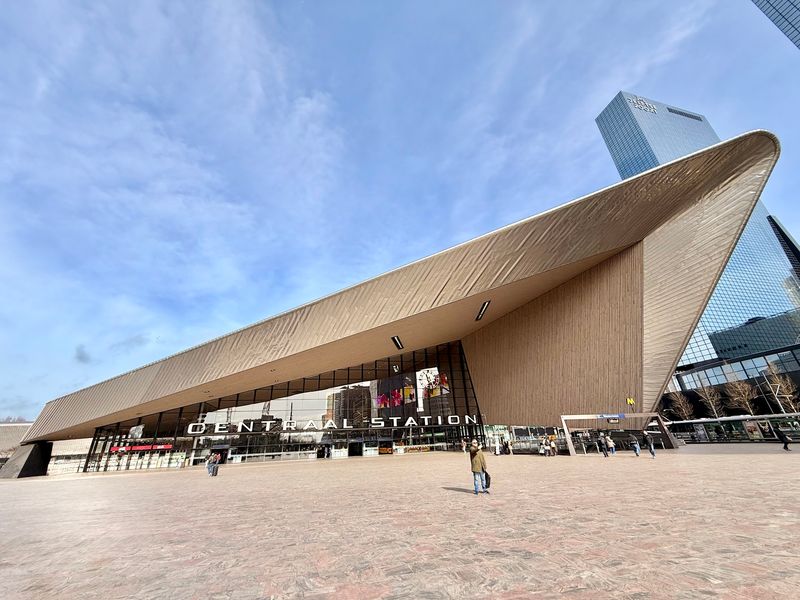
Rotterdam looked forward while its neighbor looked back. The current Rotterdam Centraal opened in 2014, designed by Team CS, and it points toward the city like a bold arrow.
The angled roof is the star. It stretches out above the entrance, while huge glass walls give clear views between the station and the skyline beyond.
Inside, steel, wood, and daylight set the mood. The space feels open and airy, with simple lines that guide you from platform to street.
Rotterdam was largely rebuilt after World War II, and it loves daring architecture. Its tourism authority lists the station among the city’s ten essential architectural sights, right beside museums and major landmarks.
Step outside and look back at the roof. It is a great spot for a photo, and a perfect first taste of what Rotterdam is all about.
Gare de Lyon, Paris, France
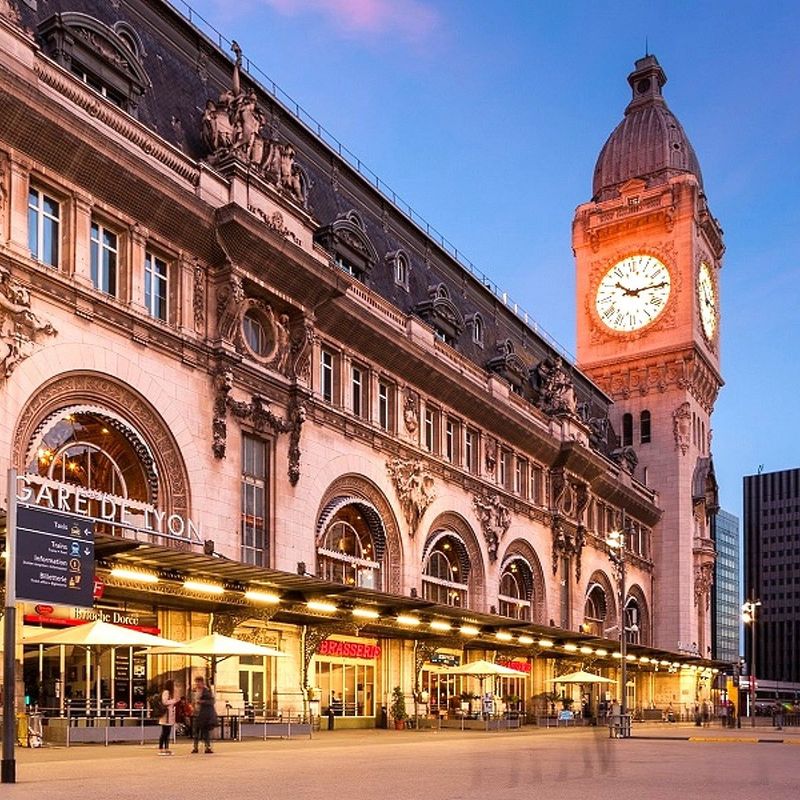
Want to eat dinner under painted ceilings and golden decor? Head upstairs at Gare de Lyon to Le Train Bleu, a restaurant that looks like a ballroom that wandered into a station.
The station was enlarged for the 1900 Exposition Universelle, and it still shows off Belle Époque confidence. Architect Marius Toudoire designed the passenger buildings, and the tall clock tower rises above the streets as a Paris landmark.
Hall 1 is where the extra sparkle lives. Chandeliers, gilding, and painted scenes make even a coffee stop feel fancy.
SNCF is currently carrying out a major restoration of the historic facade, planned across several years. Expect some scaffolding, but the grandeur still shines through.
If you have a long connection, skip the rush. Gare de Lyon rewards slow visitors with history, style, and one of the most theatrical station restaurants in Europe.
Rossio Station, Lisbon, Portugal
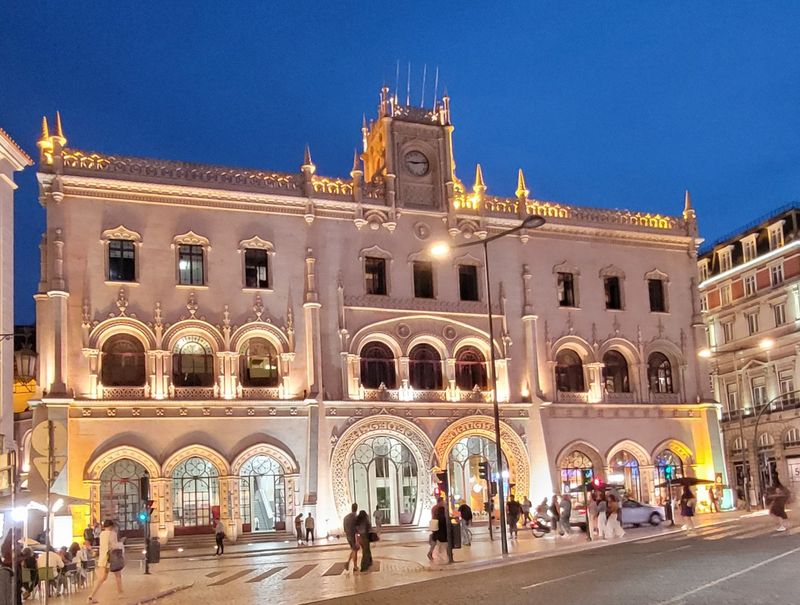
Many first-time visitors walk past Rossio and never guess it is a train station. The front looks like a decorated palace, with two giant horseshoe-shaped doorways and lacy stone carving.
Built in the late 19th century, it uses Neo-Manueline style, inspired by the rich Portuguese architecture from the Age of Discovery. A central clock sits above the entrance like a crown jewel.
Behind the pretty face, the tracks are surprisingly high. Trains climb toward elevated platforms, then slip into a long tunnel beneath Lisbon’s hills on the way to Sintra.
That mix of fancy decoration and practical engineering is what makes Rossio memorable. It is a bit like finding a tidy workshop behind a fancy door.
Since it sits right in the middle of the city, you might stumble across it on a stroll. Stop to admire the stonework before you move on to the cafes nearby.
Toledo Railway Station, Toledo, Spain
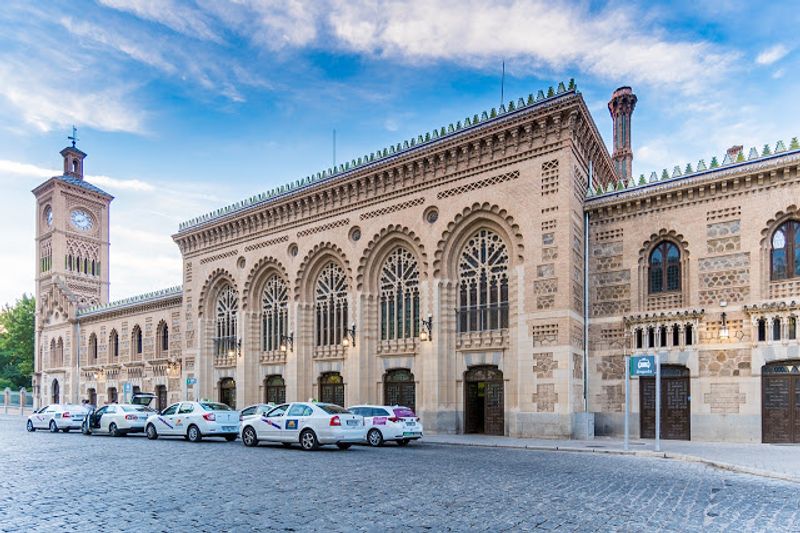
Arriving in Toledo by train feels like the first stop on a sightseeing tour. The station opened in 1919 and wears a Neo-Mudéjar style inspired by the city’s Islamic and medieval art.
Outside, brickwork, arches, and a tower link the building to Toledo’s historic skyline. It does not look like generic railway infrastructure at all.
Inside, craftspeople added carved wood, wrought-iron lamps, ceramic tiles, and decorative mosaics. Even the ticket office fittings were made with careful detail.
Spain’s rail infrastructure authority classifies the building as a protected cultural property and praises its craftsmanship. That is a big honor for a station in a small city.
Give yourself ten minutes to wander before heading uphill to the old town. Look for the tilework and the lamps, and you will see why this station deserves a spot on the list.
Share this story