Long before television or social media, rulers had one big way to send a message: build something huge. Palaces, tombs and temples showed everyone who was in charge, how rich the kingdom was, and who stood behind the crown.
Centuries later, these places still make visitors gasp. Take a tour of fifteen sites where stone did the bragging.
Great Pyramid of Giza – Egypt
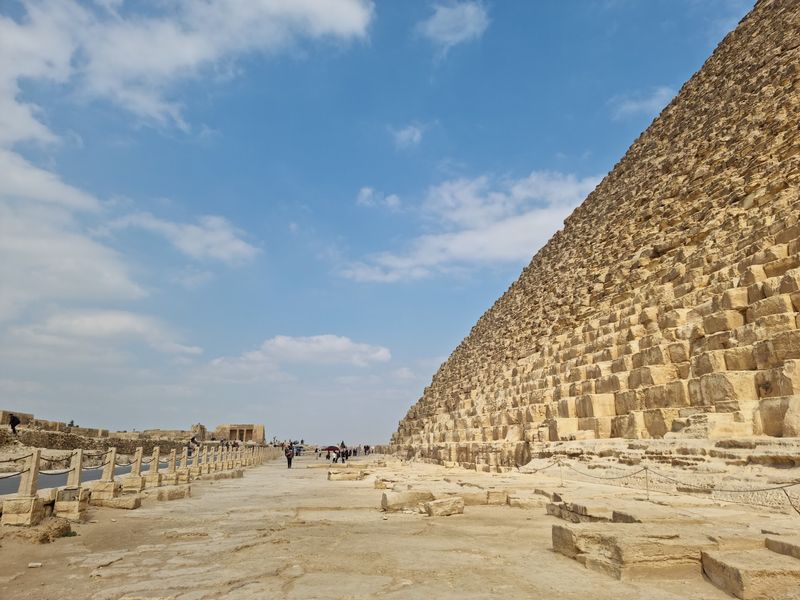
Picture a stack of about two million stone blocks, and then picture the crew that put it together. The Great Pyramid, built for Pharaoh Khufu, still towers over the Giza plateau after thousands of years.
It is the only surviving Wonder of the Ancient World.
Here is the real flex: the pyramid was never just a tomb. Building it meant feeding workers, moving stone, planning schedules and gathering skilled crews.
Only a very strong government could pull that off.
The size sent a clear message. The pharaoh stood far above everyone else, in both religion and daily life.
Ordinary people could look up at the monument and understand exactly where they stood.
It sat within a larger royal burial ground linked to the ancient capital of Memphis. UNESCO calls the pyramid fields exceptional evidence of the power and organization of that capital.
Visitors today often say the photos do not prepare you for the scale. Standing at its base, you feel tiny, which was part of the plan all along.
Not bad for a project finished without cranes or trucks.
Persepolis – Iran
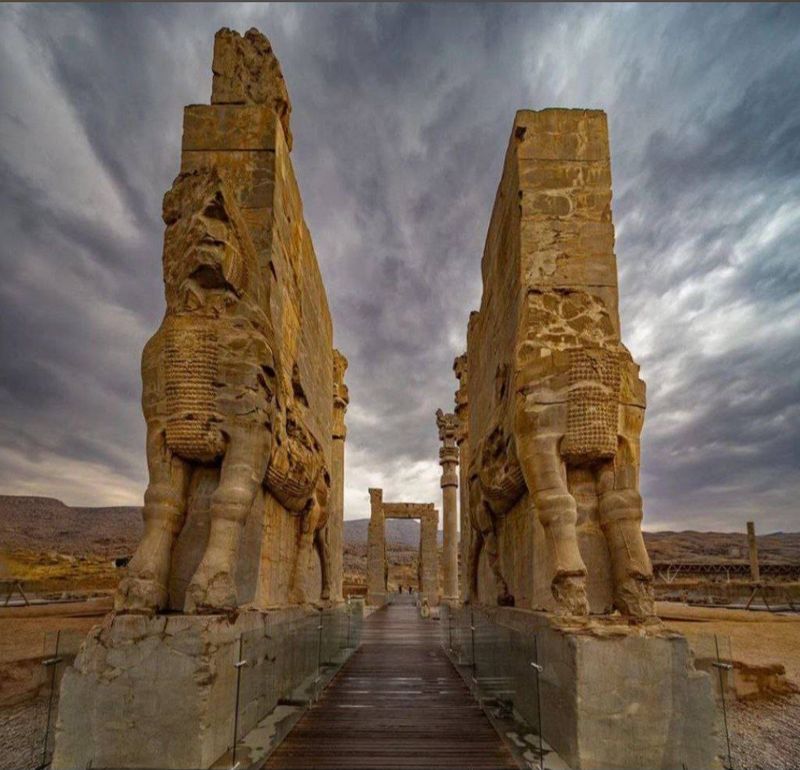
Walk up a staircase so wide that whole groups of visitors could climb it together. That was the opening move at Persepolis, begun by Darius I around 518 BCE.
Later Achaemenid kings kept adding to it until it became a ceremonial showpiece.
Gateways, reception halls and palaces waited at the top. Every wall seemed to have something carved on it.
Guards, officials and nobles marched in stone lines across the surfaces.
The most famous reliefs show delegations from many peoples bringing gifts to the king. Each group wears its own clothing and carries its own treasures.
Together they paint a picture of an empire with enormous reach.
The message was simple. The king ruled many lands, and the world came to him.
UNESCO describes the site as a showplace for royal receptions and festivals. Imagine arriving as a guest, tired from a long journey, and facing those towering gateways.
You would probably think twice before arguing with the host.
Mausoleum of the First Qin Emperor – China
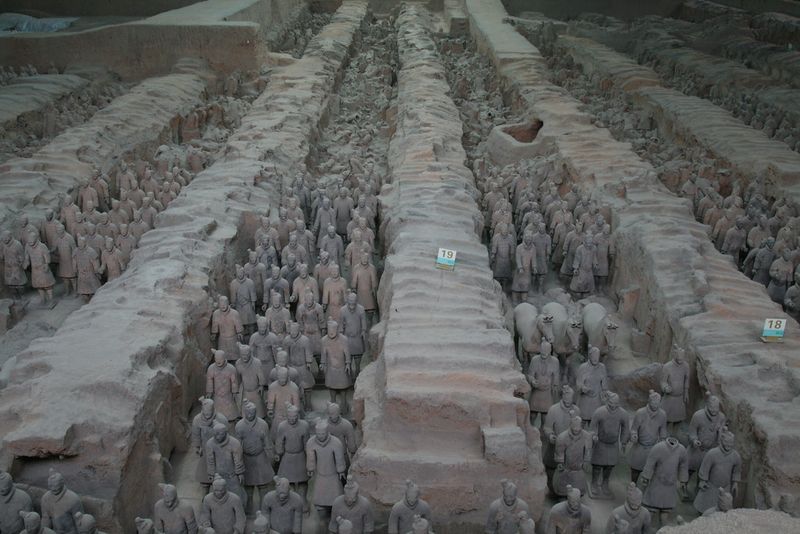
Buried soldiers sound like a ghost story, but this one is real. Near Xi’an, thousands of life-size terracotta warriors stand in battle lines beneath the earth.
They guard the tomb of Qin Shi Huang, who unified China in 221 BCE.
Each figure has its own face, and horses and chariots join the ranks. The whole army was meant to serve the emperor in the afterlife.
Few rulers have ever planned a military parade for eternity.
The tomb itself was designed as a smaller version of the empire he ruled. Its layout echoed the imperial capital, so his authority would continue after death.
UNESCO notes that the complex reflects the unprecedented political, military and economic power of the Qin state. Think about the labor involved.
Craftspeople shaped, fired and painted thousands of figures, and all of it was hidden underground.
That is a bold kind of power. The emperor did not need anyone to see it while he lived.
Colosseum – Italy
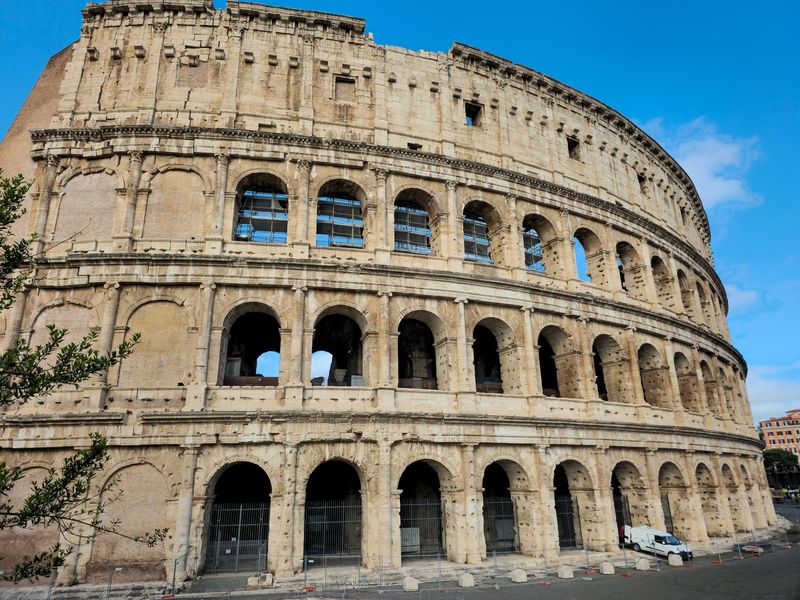
Roar of the crowd, dust in the air, and a emperor watching from a special seat. That was the scene at the Colosseum, opened in 80 CE under the Flavian emperors.
Tens of thousands of Romans filled its seats for the show.
Free entertainment was a smart political tool. Emperors who gave the public gladiator fights and animal hunts earned loyalty and cheers.
The games kept the people happy and reminded them who paid for the fun.
UNESCO notes that Roman emperors were central organizers of these spectacles and used public favors as part of keeping popular support.
The building itself said plenty. Its huge arches, stacked levels and clever entrances showed off Roman engineering skill.
Crowds could pour in and out with surprising speed.
Today the ruined walls still look massive. Visitors often notice how many arches there are and how the stone seems to go on forever.
Rome wanted people to feel that its empire had no limits, and this stadium helped deliver that idea.
Hagia Sophia – Türkiye
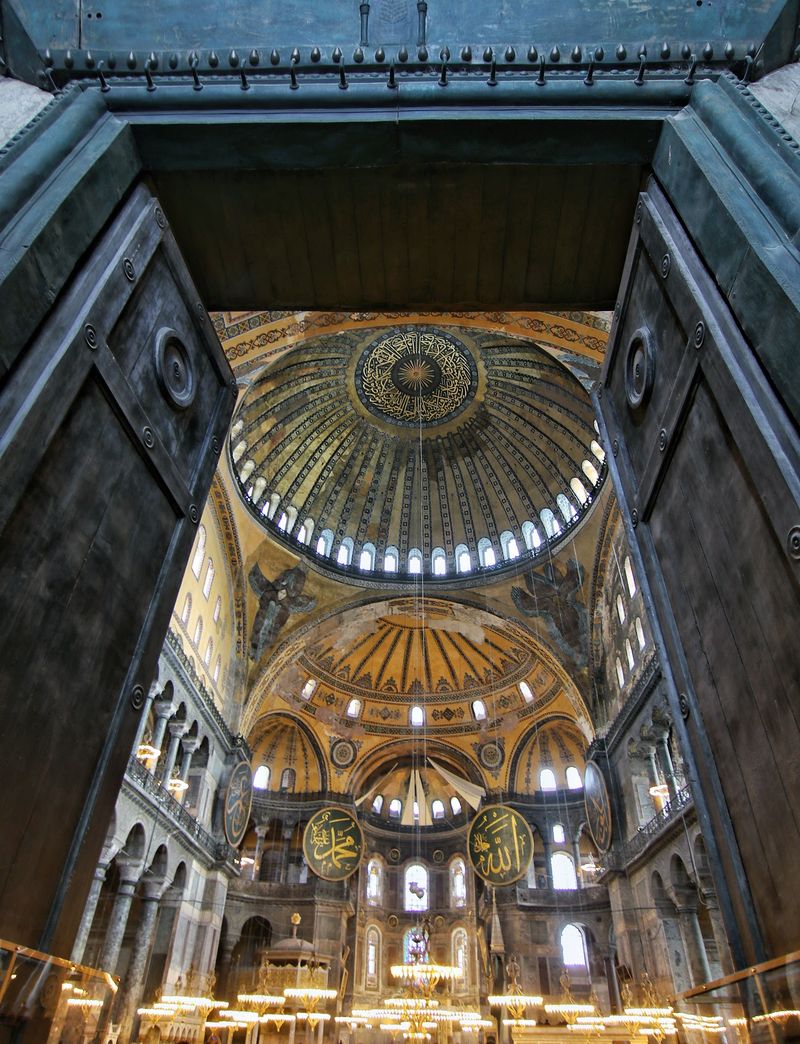
Look up and the dome seems to float. Emperor Justinian I wanted that effect when he ordered Hagia Sophia built in Constantinople.
Workers finished it between 532 and 537, in a remarkably short time.
The huge dome and rich interior made a bold announcement. Constantinople was the center of a powerful Byzantine Empire.
Visitors stepping inside were meant to feel awe.
In Byzantine rule, faith and politics went hand in hand. The church stood next to the emperor’s palace, right in the heart of the capital.
Few buildings linked heaven and government so closely.
Its design later inspired many churches and mosques across the region. Builders kept studying its dome for centuries.
UNESCO calls it a unique masterpiece of Byzantine architecture. Travelers often mention the glow of light in the great space and how small people look beneath the dome.
That sense of scale was exactly what Justinian was after.
Angkor Wat – Cambodia
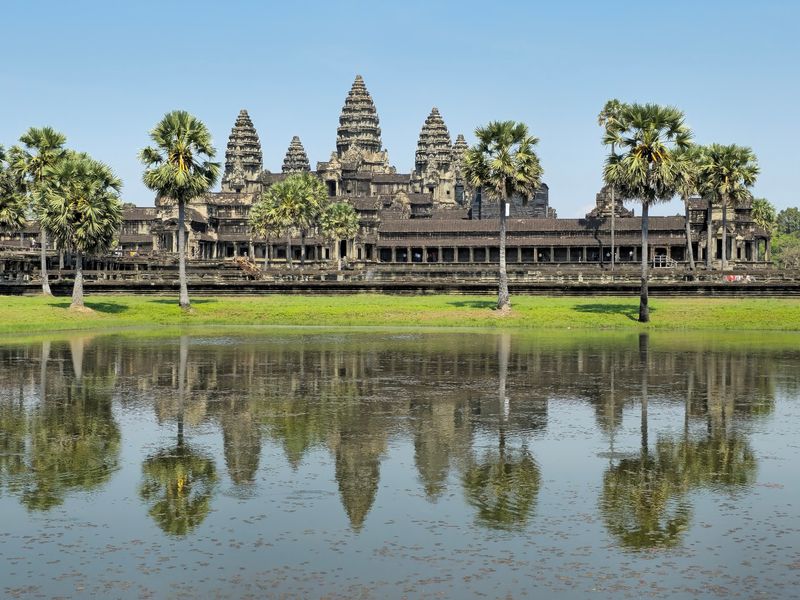
Sunrise at Angkor Wat is a photographer’s dream, with five towers glowing against a pink sky. The temple rose during the height of the Khmer Empire, and tradition links it to King Suryavarman II in the early 12th century.
Its galleries, towers and carvings are arranged with great care. Stone scenes of gods and heroes cover the walls.
The design tied the king to the sacred universe itself.
Angkor Wat is only one piece of a much bigger region. Successive Khmer rulers added temples, reservoirs, roads and whole cities.
Managing all that took serious planning.
UNESCO notes that Angkor’s architecture and city planning show a remarkable degree of social organization and hierarchy.
So the temple served two jobs at once. It showed devotion to the gods, and it showed that the kingdom could gather workers, food and skill on a giant scale.
Not a bad résumé for a building made of sandstone.
Alhambra – Spain
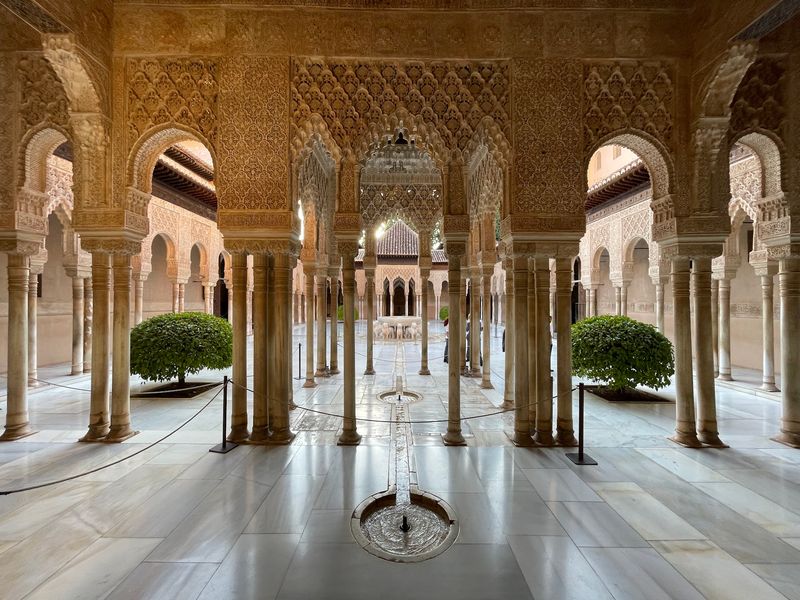
Tiny details, big message. The Alhambra sits high above Granada, and its walls look tough from the outside.
Step through the gates and the mood changes to calm courtyards and shimmering water.
The Nasrid dynasty shaped much of it during the 13th and 14th centuries. The palace was part fortress, part royal home and part government center.
Few places packed so many roles into one hilltop.
Inside, carved stucco looks almost like lace. Pools mirror the arches, and windows frame views of the city below.
Everything feels carefully staged.
That was the point. Strength alone was not the only way to impress.
The Nasrid rulers wanted to show taste, wealth and skill, the qualities of a court that knew how to rule.
UNESCO considers the Alhambra the finest surviving example of Nasrid architecture and the only preserved palatine city from the Islamic period. Visitors often leave talking about the quiet beauty more than the walls.
El Escorial – Spain
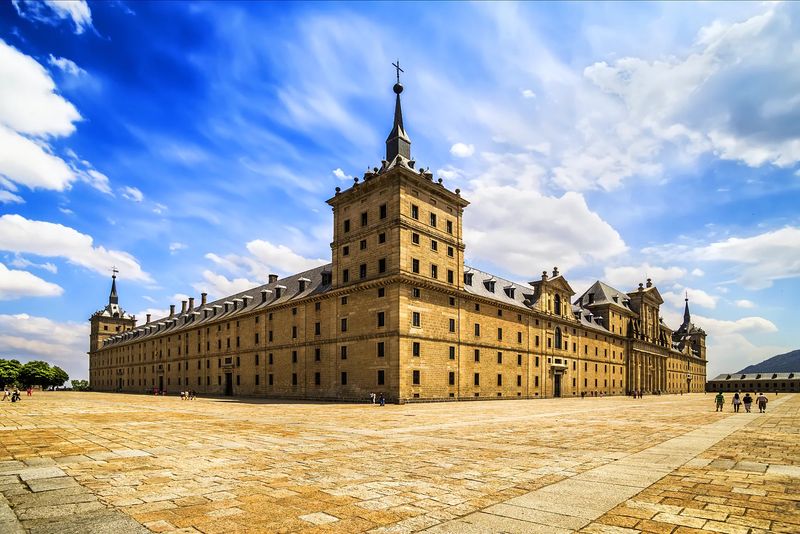
Plain on the outside, packed with purpose on the inside. El Escorial, begun in 1563 by Philip II of Spain, looks stern and almost bare.
Its grey granite walls do not try to dazzle with fancy decoration.
Inside, the complex holds a palace, a monastery, a basilica, a library and a royal burial place. One huge site handled prayer, study, government and family tombs.
Philip could rule and pray without going far.
His monarchy stretched across Europe and well beyond it. From this quiet fortress of stone, he sent orders to distant lands.
Paperwork was his weapon of choice.
UNESCO describes El Escorial as the ideological and artistic expression of the Spanish Catholic monarchy during its Golden Age. It also notes that the site became the center of one of the greatest political powers of the period.
The strict style fits the king’s serious image. Power here does not shout.
It stands there, solid and unbothered.
Forbidden City – China
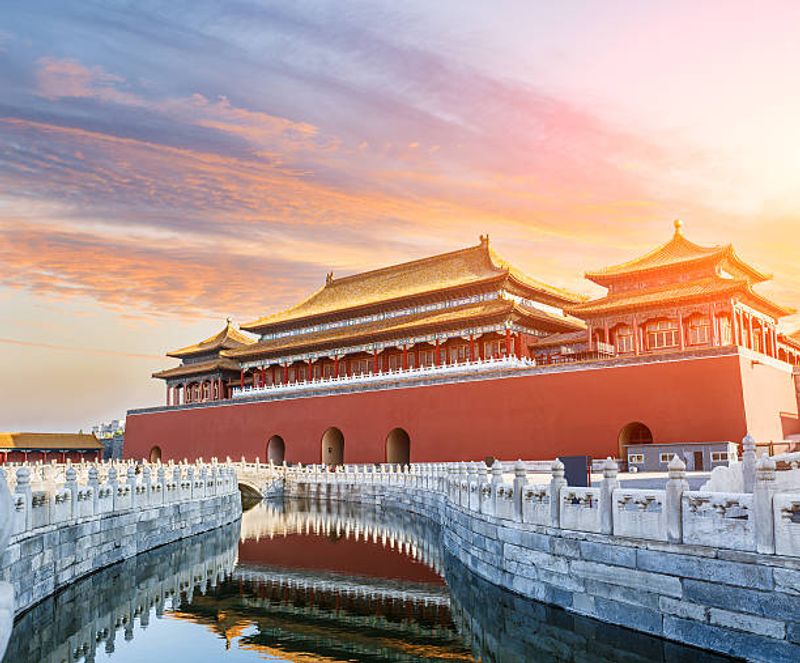
Gates, gates and more gates. To reach the emperor in Beijing’s Forbidden City, a visitor had to pass through a long series of them.
Each step led deeper into a more exclusive space.
Builders worked from 1406 to 1420 under the Ming emperor Yongle. The palace then served as the main imperial home and political center for Ming and Qing rulers.
Red walls and golden roofs made sure nobody missed its importance.
Huge courtyards were built to hold large ceremonies. Officials lined up in strict order, and the layout reinforced rank at every turn.
Even where you were allowed to stand told you your status.
Access itself became a show of authority. Most people never got past the outer areas.
UNESCO calls it the center of state power in late imperial China and records that 14 Ming and 10 Qing emperors were enthroned there across more than five centuries. That is a long run for any address.
Taj Mahal – India
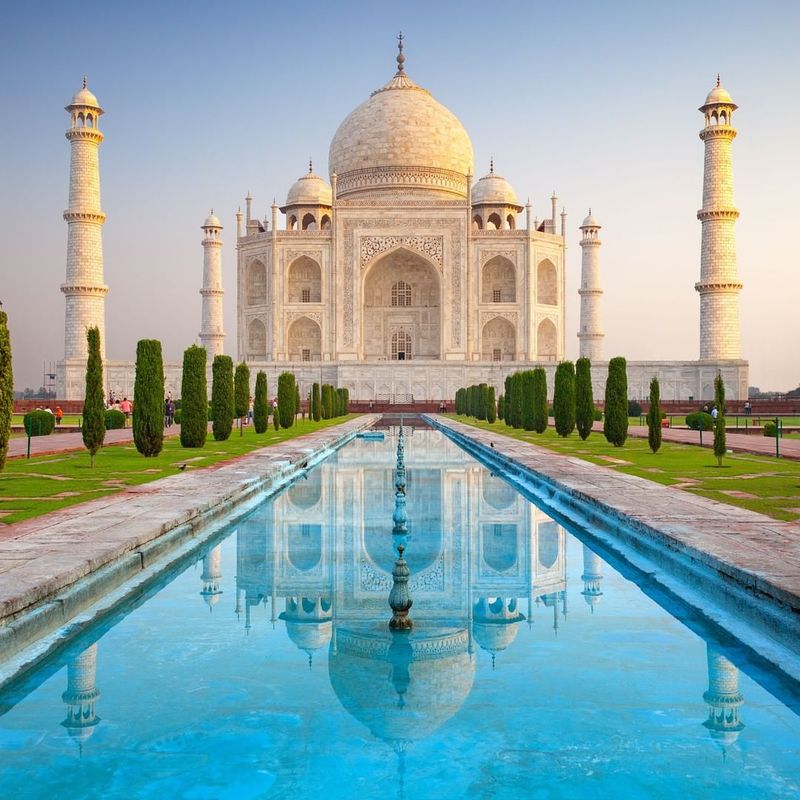
Love story or power move? The Taj Mahal manages to be both.
Shah Jahan built it for his wife Mumtaz Mahal, and the tale still draws millions of visitors each year.
Look closer, though, and the scale tells another story. Work began in the 1630s, and masons, stonecutters, calligraphers and painters came from across the Mughal Empire and beyond.
Gathering that many experts took money and command.
The result is a perfectly controlled picture. White marble glows, stone inlay forms delicate flowers, and gardens lead the eye straight to the tomb.
Nothing feels accidental.
The emperor was later buried beside his wife, which adds a final touch to the site’s emotional pull.
Still, the monument also announced the wealth of the Mughal court at its height. Only a ruler with deep treasuries and tight organization could order a project like this.
Romance may have been the reason, but resources made it real.
Palace of Versailles – France
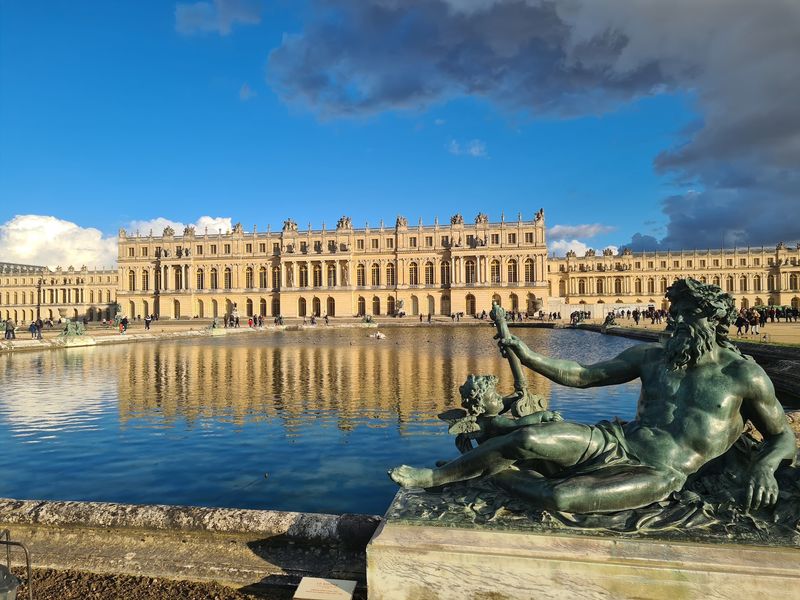
Imagine having to ask permission just to watch the king get dressed. At Versailles, that was a real honor.
Louis XIV turned daily routines into public ceremonies.
The palace began as a fairly modest royal residence. It grew into a giant complex with formal gardens, fountains and grand ceremonial rooms.
Nobles moved in and competed for the king’s attention.
That was clever politics. Courtiers busy with rituals had less time to plot against him.
Court life became part of the machinery of control.
The Hall of Mirrors may be the star attraction. Its glittering walls celebrated royal achievements and showed off French wealth and art.
UNESCO describes Versailles as both a royal residence and the exercise of monarchical power, calling it the absolute seat of the monarch. It also notes that courts across Europe copied the model.
Other kings wanted their own Versailles, though few could afford one.
Schönbrunn Palace – Austria
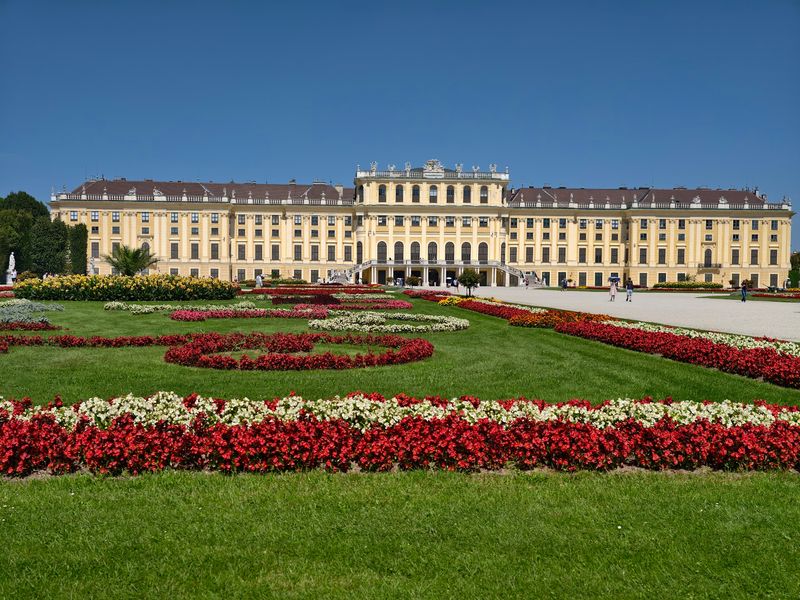
Yellow walls, endless gardens and a hilltop pavilion with a view. Schönbrunn in Vienna looks like a postcard, but it was built to impress.
The Habsburg dynasty used it as an imperial summer residence.
The Habsburgs shaped European politics for centuries, and this palace shows their ambition. Ceremonial rooms inside were made for receptions and court life.
Outside, the grounds stretch far beyond what any family would need for a picnic.
Landscaped paths and carefully planned views guide visitors across the gardens. A monumental structure called the Gloriette crowns the hill, drawing the eye upward.
UNESCO directly describes Schönbrunn as a potent material symbol of the power and influence of the House of Habsburg.
The estate kept changing under later rulers, so different tastes remain visible today. Through every update, one idea stayed the same.
This was where a mighty dynasty went to relax, and it wanted everyone to know it.
Royal Palace of Caserta – Italy
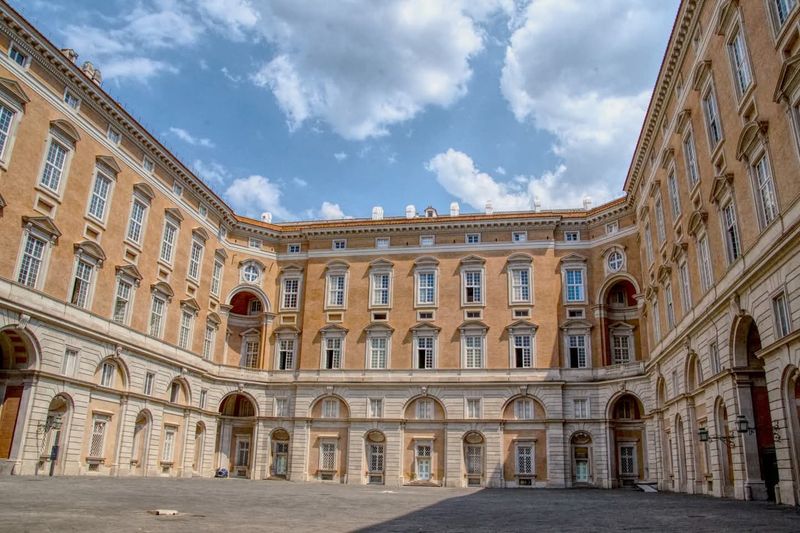
Keeping up with the neighbors is easier when the neighbors are Versailles and Madrid. Charles of Bourbon wanted a palace that could stand beside Europe’s best, and Caserta was his answer.
Luigi Vanvitelli planned it in the 18th century. The giant complex near Naples had a monumental palace, huge gardens, woodland and an aqueduct to feed the water features.
It even included a silk-producing community.
UNESCO specifically notes that the project was conceived to rival Versailles and the Royal Palace in Madrid. That is a bold goal for any builder.
Caserta was about more than luxury. The Bourbon monarchy used it to prove it could manage architecture, engineering, landscape design and economic planning all at once.
Standing at the foot of the long garden axis, visitors can see how everything lines up toward the palace. Order was the message, and a king in control was the point.
Potala Palace – Tibet
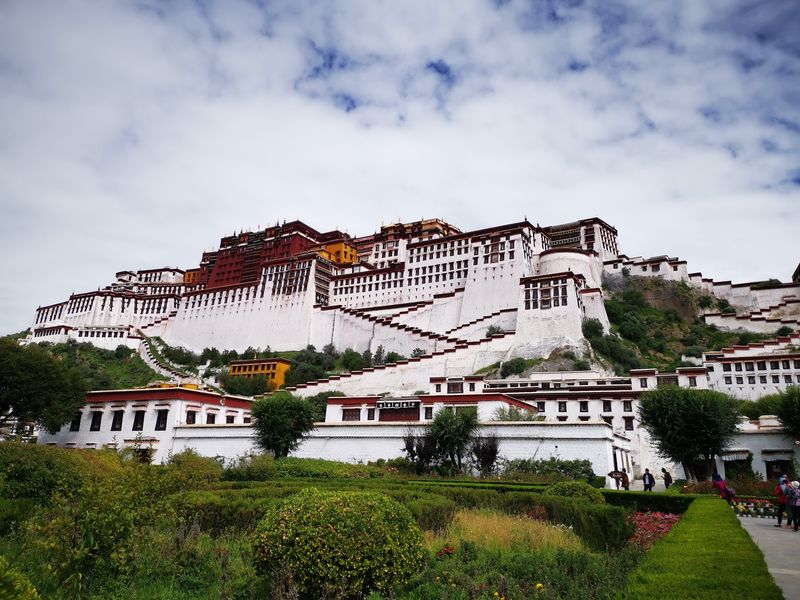
Few buildings crown a skyline quite like this one. The Potala Palace rises above Lhasa on a hill, with white and red walls climbing toward the sky.
You can spot it from far away.
Its roots go back to the seventh century. Much of what stands today came from rebuilding under the Fifth Dalai Lama in the 17th century.
That rebuilding made it a center for both rule and faith.
The White Palace held ceremonial halls, private rooms and spaces for government. The Red Palace was devoted to religion and contains the tombs of earlier Dalai Lamas.
Under one roof, politics and prayer lived side by side.
The position above the city made its role impossible to miss. Anyone in Lhasa could look up and see where authority sat.
UNESCO describes the Potala as an exceptional symbol of the integration of secular and religious authority. Few monuments make that idea so visible.
Nemrut Dağ – Türkiye
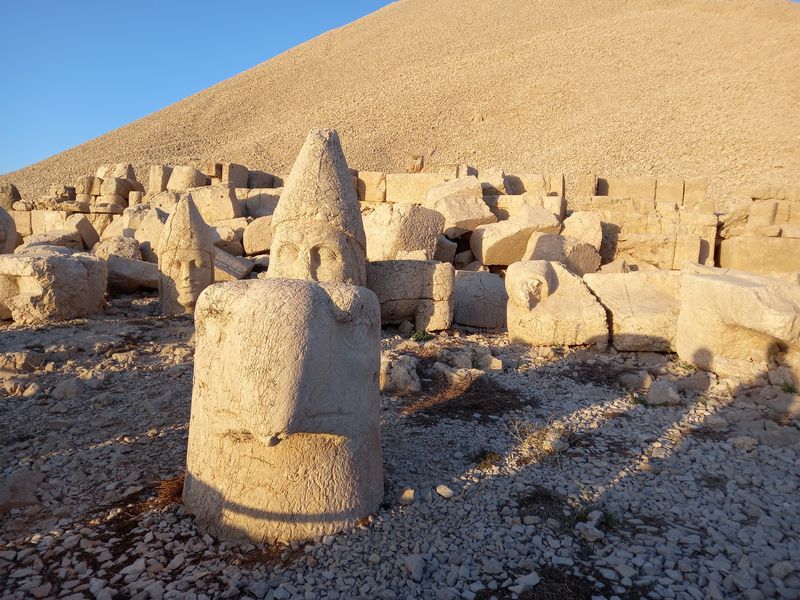
Giant stone heads sit on a mountaintop, staring at the sunrise. That is the odd and wonderful scene at Nemrut Dağ.
King Antiochos I of Commagene built it in the first century BCE.
He had a massive funerary mound raised on the summit, ringed by terraces. Colossal seated statues represented gods and the king himself.
Figures from his claimed ancestry stood nearby.
The reliefs tied Antiochos to Persian and Macedonian royal lines, including the families of Darius and Alexander. His kingdom was fairly small, so the message was a clever one.
He wanted the world to see him as an equal to the greatest rulers of the past.
UNESCO describes Nemrut Dağ as one of the most ambitious constructions of the Hellenistic period and notes the dynastic ambition shown through its genealogy.
Some call it a family tree carved in stone. Others call it the boldest brag in ancient history.
Either way, the king picked a very high spot to say it.
Share this story